
Building Safer Roads Through Policing, Technology, Data and Human-Centred Infrastructure
India is witnessing an unprecedented transformation in mobility. Roads and highways are expanding, vehicles are becoming more sophisticated, technology is reshaping traffic management, and the movement of people and goods is increasing at a remarkable pace.
Yet, alongside this transformation lies one of the country’s most persistent
public-safety challenges – the human cost of road crashes.
Road safety can no longer be viewed simply as a matter of traffic rules, challans,
speed limits or enforcement. It is a much larger ecosystem involving road engineering,
vehicle safety, licensing and driver training, traffic management, technology, emergency response, healthcare, public awareness, and above all, coordination among multiple agencies.
Increasingly, the emphasis is also shifting from accepting crashes as an inevitable consequence of mobility towards preventing them and reducing their consequences when they do occur. The Safe System approach, which seeks to design roads, vehicles and systems in a manner that anticipates human error and minimises the possibility of fatal outcomes, offers an important direction for the future.
It is within this evolving landscape that Punjab has been pursuing a distinctive approach to road safety. The establishment of the Sadak Surakhiya Force, the development of
the Punjab Road Safety & Traffic Research Centre, the deployment of rapid-response resources
and the increasing use of data and technology represent an attempt to bring prevention,
enforcement, emergency response and research into a more integrated framework.
At the centre of this effort is a simple but powerful philosophy –
road safety is ultimately about saving lives.
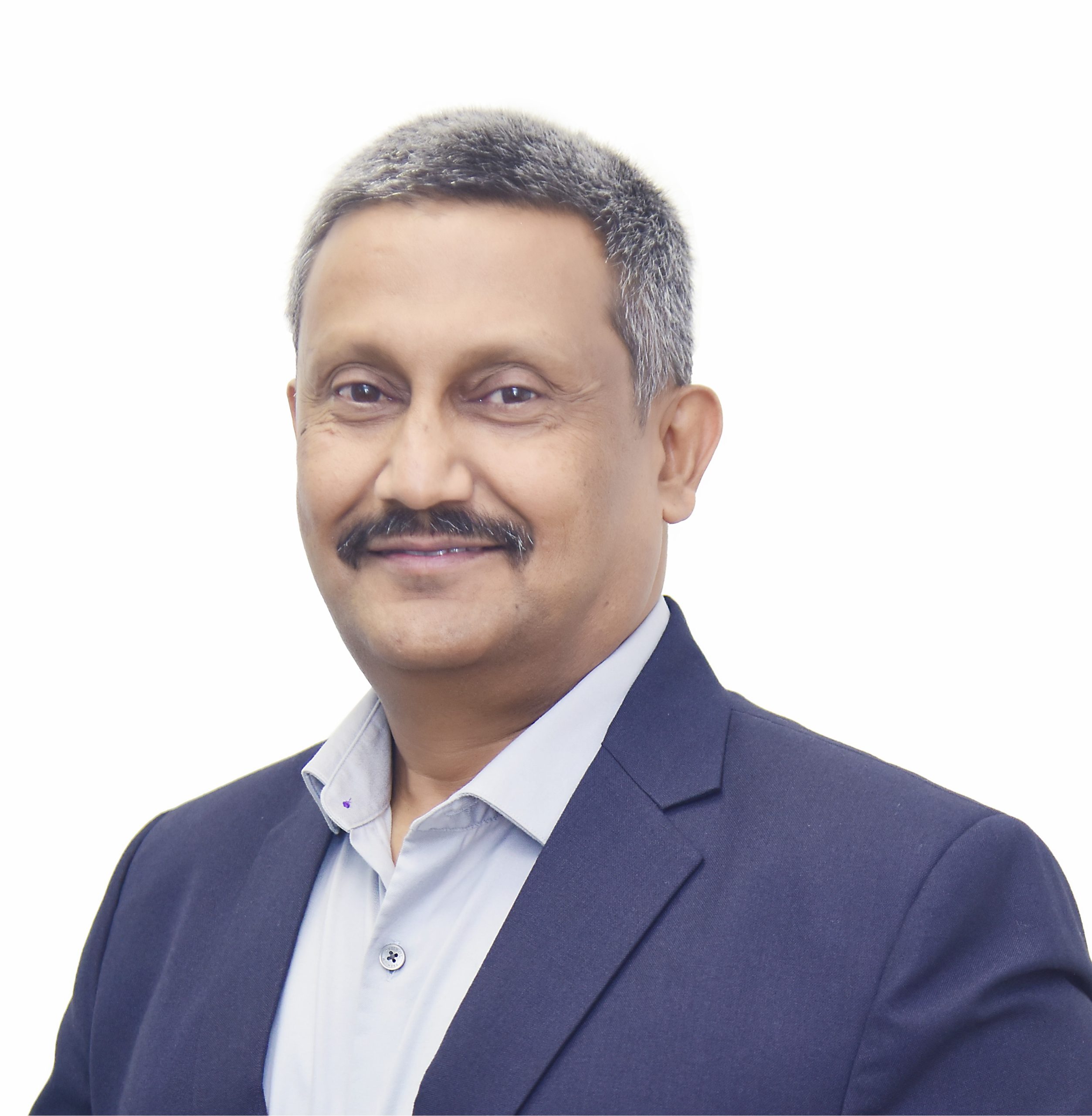
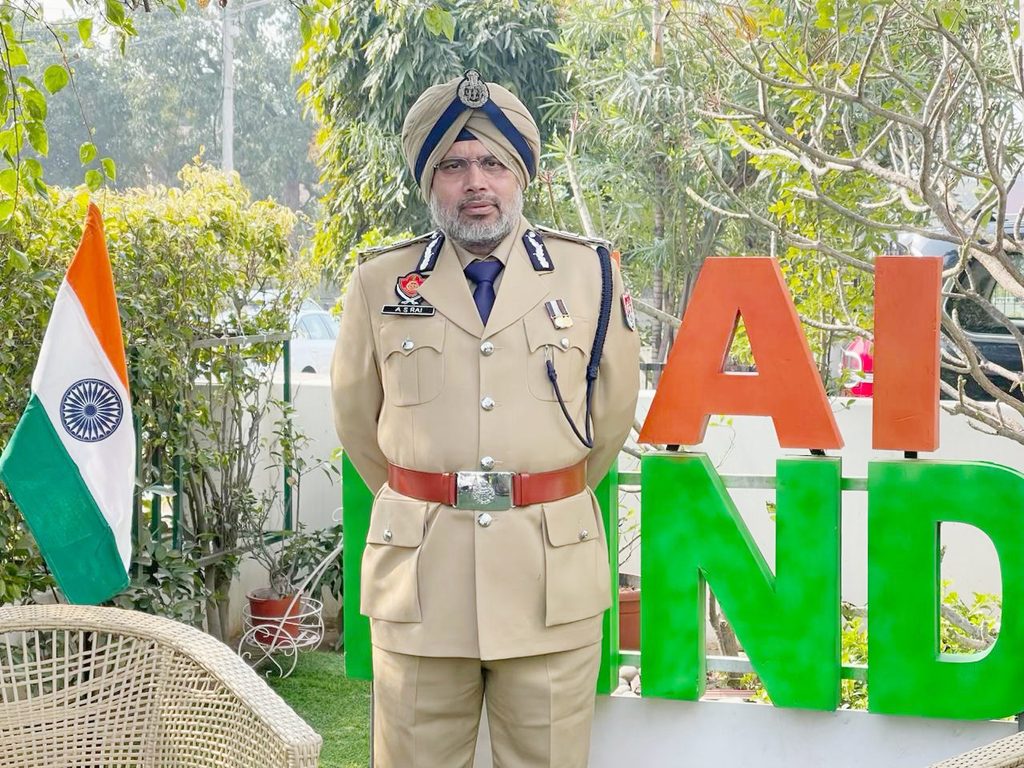
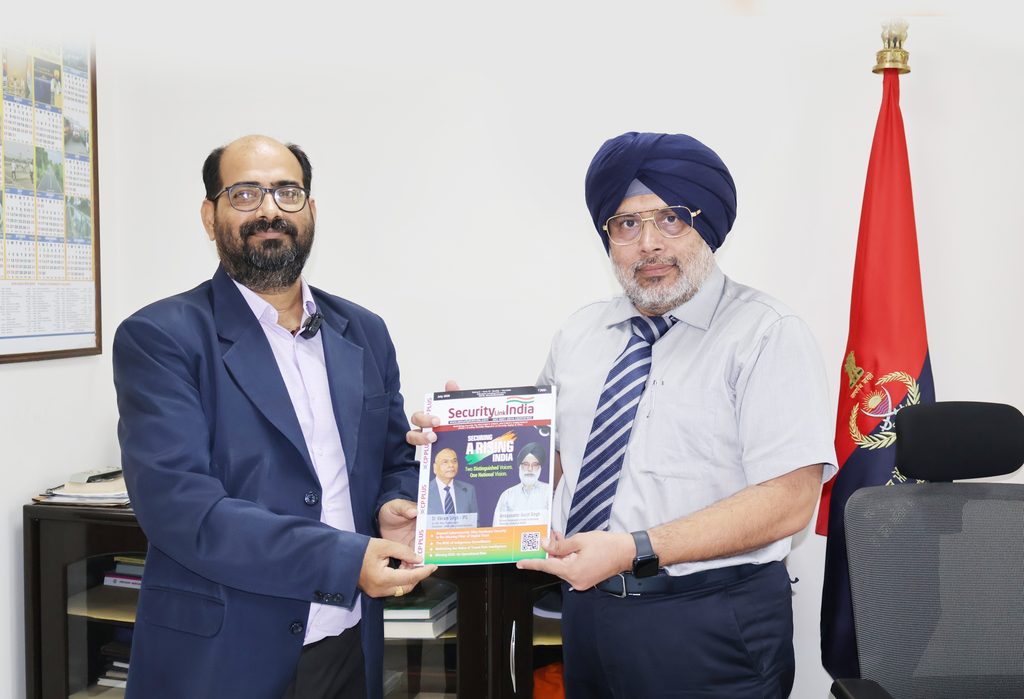
In this exclusive interaction with SecurityLinkIndia, Amardeep Singh Rai (A. S. Rai), IPS, Special Director General of Police, Traffic & Road Safety, Punjab Police, shares his perspective on India’s road-safety challenge and the changing role of policing in creating safer mobility.
Shri A. S. Rai, IPS, is a senior Punjab-cadre police officer currently serving as Special Director General of Police, Traffic & Road Safety, Punjab. His present assignment places him at the forefront of the state’s efforts to address one of India’s most complex public-safety challenges –
the prevention of road crashes and reduction of fatalities.
Mr. Rai’s approach to traffic and road safety reflects a shift from conventional enforcement towards a more integrated, technology-enabled and data-driven model. In his public statements, he has emphasised the use of technology as a force multiplier, scientific analysis of traffic conditions, greater public participation and stronger coordination among the agencies responsible for road safety.
What distinguishes Mr. Rai’s perspective is the emphasis on seeing road safety not merely as traffic regulation, but as a broader public-safety responsibility – one that brings together infrastructure, enforcement, technology, data, emergency response and citizen behaviour.
In this exclusive conversation with SecurityLinkIndia, A. S. Rai discusses the road-safety
challenges facing India, Punjab’s experience with the Sadak Surakhiya Force,
the role of technology and data, safer road design, speed management,
pedestrian safety and the road ahead towards 2030 and beyond.
It is a conversation about infrastructure, technology and enforcement – but, ultimately,
it is a conversation about protecting human life.
Here are the excerpts:
India continues to record a very high number of road crashes and fatalities. From your experience, what do you consider the most fundamental reasons behind this challenge?
India is a developing country and we have now reached a critical stage of our development. Infrastructure is increasing at a massive pace. Along with infrastructure, the number of vehicles is increasing, the movement of people is increasing and the movement of logistics is increasing.
It is therefore important that our regulatory framework keeps pace with this rapidly changing infrastructure and mobility environment. We need to see how the regulatory framework can be built into the infrastructure itself.
The Government of India has initiated a number of important schemes such as Gati Shakti, which provides a platform for the movement of goods. Similarly, new avenues for the movement of people are being explored, including waterways and other modes of transportation.
There are many positive developments taking place, but the sheer scale of India’s population, infrastructure and mobility means that the numbers involved are very large. That is one of the reasons why the absolute number of fatalities remains a major concern.
Despite better highways, safer vehicles, technology and stronger traffic regulations, road fatalities remain extremely high. Where are we falling short as a country?
See, as far as road fatalities are concerned, one thing which we have to recognize is that it’s a shared responsibility. The framework for that shared responsibility is still evolving, and different states are working towards creating stronger mechanisms for coordination between the agencies involved in road safety.
The Supreme Court has taken a number of initiatives which have resulted in the establishment of State Road Safety Lead Agencies. These are emerging as both regulatory and coordination mechanisms among the different agencies associated with road safety. Such initiatives are likely to help bring down fatalities in the coming years.
At the same time, since we are developing infrastructure at such a massive pace, there also needs to be some rethinking about the nature of that infrastructure and its suitability for Indian conditions.
There is a growing global approach of treating road crashes as preventable rather than inevitable accidents. How important is it for India to adopt this philosophy more strongly, and what would it mean for policing and road planning?
It is a very wise strategy that we should move towards prevention. There is an old principle that prevention is better than cure. We should create our infrastructure in such a manner that it leaves as little scope as possible for human error. And where human error does occur, there should be mechanisms through which its consequences can be compensated or minimised.
This is essentially what is referred to as the Safe System approach. The philosophy needs to be incorporated right from the initiation and planning stage itself, rather than being considered only after a road or infrastructure has been created. The objective should be to build a road-safety environment in which errors do not automatically translate into loss of life.
Do you believe India needs a more integrated and clearly accountable national road-safety policy, with measurable responsibilities for Police, Transport, Road authorities, municipalities, vehicle manufacturers and healthcare agencies? Where do you see the biggest policy gap today?
The thinking is already there within the Government of India that we need more of a total-government approach to issues in various areas, including road safety.
Road safety is a subset of the responsibilities of several agencies. Therefore, ensuring that fatalities remain low requires all these agencies to work together rather than treating road safety as the responsibility of one department alone.
How adequate is our present system of driving licences, learner training, testing and periodic assessment? Should obtaining a driving licence be made more rigorous, particularly for commercial and heavy-vehicle drivers?
Definitely, there is a need to ensure that commercial and logistics vehicles are driven by people who have adequate training in that field and are capable of compensating for various flaws that may exist in our road infrastructure.
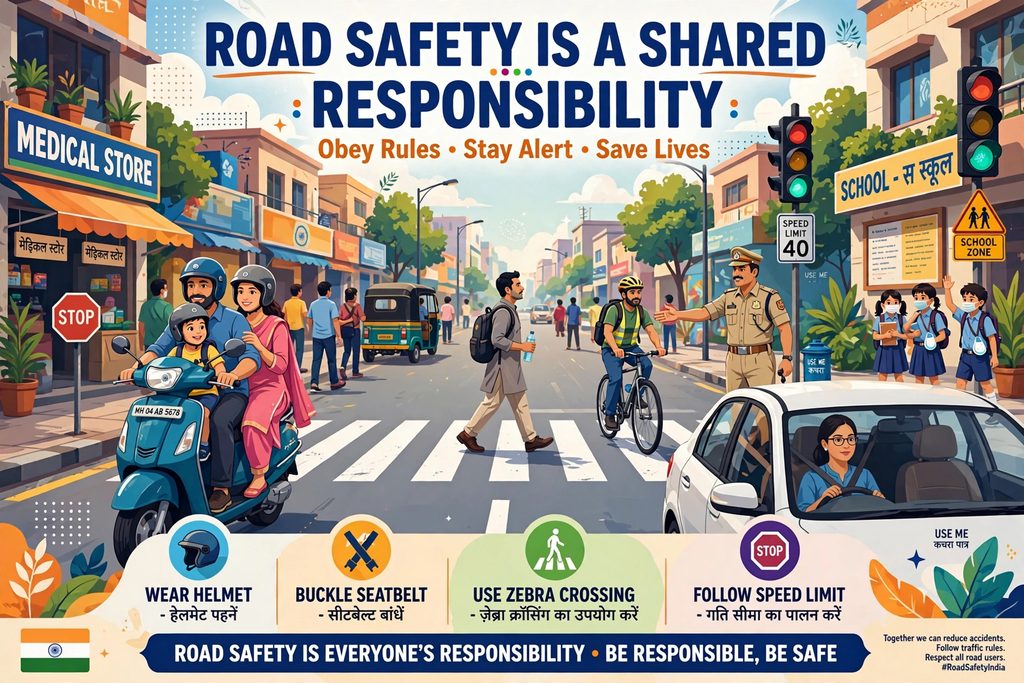
We are moving towards digitisation of driving licences, and I am sure that in the very near future we will have a system which is not merely comparable with, but potentially better than, systems in many Western countries.
At the same time, there is a significant gap because there are people who drive without proper licences, and youngsters also sometimes operate cars and motorcycles without adequate training.
These are areas we are now trying to address through technology.
Increasingly, testing and aspects of the driving-licence process are being undertaken through computer-based systems. Technology can therefore help make both training and testing more objective and transparent.
India has invested enormously in building and upgrading roads. But does better road quality always mean safer roads? What characteristics – junction design, lane discipline, lighting, pedestrian facilities, median design, signage, speed management etc. – actually determine whether a road is safe?
So, you are very right. Infrastructure construction is taking place at a massive pace, but there are certain characteristics which are unique to India. India is the most populated country in the world, and while we provide road space for people to use their vehicles, we must also ensure that the road space does not interfere with the lives and movement of people living in those areas. That is a challenge we have to address.
The construction of a road alone does not determine its safety. A number of factors come into play, and all of them have to be viewed holistically if we want to bring down fatalities.
In Punjab’s road-safety department, we have given ourselves a very simple objective – We are in the business of saving lives. And that should be the fundamental motto – ensuring that the number of fatalities comes down.
Over-speeding is consistently identified as a major contributor to fatal crashes. Should India move towards road-specific and risk-based speed management, rather than relying primarily on conventional speed limits and enforcement?
Definitely, there is a need for more granular thinking in this area. Some of the roads we have built are world-class roads. The infrastructure available on those roads is comparable with the best anywhere in the world.
On specific roads where the infrastructure matches those standards, we can consider higher speed limits, and the vehicles available today are also capable of travelling at such speeds. But in more populated areas, where there is a greater variety of traffic and different modes of transport, there is a need for speed calming.
Speed management, therefore, has to take into account the nature of the road, the surrounding environment and the mix of road users.
Today’s vehicles are increasingly powerful, technologically advanced and safer – with better braking systems, stability control, airbags, ADAS and other safety features. At the same time, we continue to place stringent speed restrictions and increasingly rely on automated speed detection. How do you view this apparent contradiction? How reasonable is it to assess speed in isolation, rather than considering the vehicle’s safety capability, road design, traffic density, weather and surrounding conditions? Should India move towards a more intelligent, road- and risk-specific approach to speed management?
It is not contradictory that we regulate speed. We have different categories of roads. There are expressways where high-speed vehicles can travel at higher speeds and where adequate safety mechanisms are built into the infrastructure.
The vehicles themselves also have safety mechanisms which, as you mentioned, allow them to remain under control at higher speeds. But on roads in populated areas, we need speed control because the surrounding environment and the variety of road users are completely different.
The answer, therefore, lies in matching speed with the characteristics and safety conditions of the road.
ANPR, AI-enabled cameras, red-light cameras, speed detection and integrated command centres are transforming traffic enforcement. Do you see technology primarily as an enforcement mechanism, or can it evolve into a genuine predictive road-safety system that identifies high-risk locations and behaviours before crashes occur?
Technology is a great force multiplier. It helps us regulate traffic in a much better way. As far as road safety is concerned, we certainly need more technology on our roads.
But technology alone will not be enough. We need a system in which human compassion is also present. It is in this context that we have created the Sadak Surakhiya Force in Punjab, which has been a major game changer for road users in the state.
With AI, connected vehicles, ADAS, V2X communication and real-time traffic analytics developing rapidly, what technologies do you believe could have the greatest practical impact on saving lives in India over the next five to ten years?
See, each technology has its own role to play. What I believe is that it is the collaboration between different technologies that can help us ensure safer roads. For example, an Automatic Number Plate Recognition system can be integrated with databases to identify vehicles or riders involved in high-speed violations and other offences.
The more data we have, and the better our data-mining and data-retrieval processes become, the more effectively we can use technology. Therefore, data management is one of the most important components of modern road safety.
Even with excellent infrastructure and technology, unsafe driving behaviour remains a problem. How do we move from fear of enforcement to a genuine culture of road discipline and voluntary compliance?
Human error and human complacency are factors that contribute to accidents, even when we have the best infrastructure and vehicles. My personal belief is that – to regulate human behaviour, we need systems that nudge people towards better behaviour.
That nudging can be achieved through various sanctions for irregular behaviour on the roads – behaviour that not only endangers the individual but also the safety and security of other road users.
But regulation must also be accompanied by awareness and education from childhood level.
How can awareness programmes become more effective, particularly when conventional penalties and challans may not always deter dangerous behaviour?
One important aspect is to start with people while they are young. Road-safety education and awareness should become part of the school curriculum. At that age, the learning process is stronger and these lessons become embedded in the mind.
In Punjab, we have worked on this through an interesting initiative in which children issue challans to their parents. Children are given challan books and point out to their parents when they have committed a traffic violation.
It makes the parent more conscious of the behaviour and creates a different kind of social pressure – not simply enforcement by the police, but awareness within the family itself.
India presents a fascinating contrast – different states have very different traffic patterns, enforcement models, road infrastructure and road-user behaviour. Which states do you believe are currently doing particularly well in road safety, and what can Punjab and other states learn from them?
Punjab is certainly one of the states where we have adopted a unique approach to road safety. The cornerstone of our approach is the belief that people have a right to safe movement on the road. That is why we started the Sadak Surakhiya Force. It is not merely about enforcement of rules. It is also a service to the people. Whenever people experience a breakdown on the road or find themselves in distress, they can reach out to SSF vehicles positioned along the national and state highways.
Pedestrian crossings and pedestrian movement remain a major challenge in India. How can we create greater respect and safety for people travelling on foot?
You have very rightly pointed this out. This has also been one of our focus areas. We want to encourage pedestrian movement. In certain districts, senior officers have taken the initiative of walking to their offices. Punjab also has a tradition of walking.
We are trying to encourage that tradition, and at the same time, create safe footpaths so that people have the autonomy to move safely along designated paths.
Punjab’s Sadak Surakhiya Force is perhaps one of the most distinctive road-safety initiatives in the country, with dedicated personnel, patrol vehicles, rapid response and specialised equipment. From your experience, what has been the most significant impact of the SSF since its introduction, and what have been the key lessons from its implementation?
The Sadak Surakhiya Force was conceived as a mechanism to ensure that our fatality rate comes down. We observed that there were certain locations where accidents were repeatedly taking place. If we could retrieve accident victims quickly and take them to the nearest hospital, we would be able to save lives.
With this objective, we placed vehicles along the national and state highways in Punjab. In the event of an accident, the objective is immediate evacuation of the injured person to the nearest hospital. Our vehicles are able to reach an accident site within approximately seven to eight minutes.
Through this mechanism, we have been able to save more than 50,000 lives and provide first aid to more than 60,000 people over a period of two years, according to our assessment. This has been a major success for us.
At the same time, while the national road-fatality trend has been increasing, Punjab has witnessed a decline in fatalities despite an increase in the number of vehicles.
Punjab has established the Punjab Road Safety & Traffic Research Centre with the objective of bringing research and data into traffic-safety decision-making. How is this changing the way Punjab identifies accident-prone locations, analyses crash causes and decides where enforcement or engineering interventions are required?
This was, in many ways, a precursor to the establishment of the Sadak Surakhiya Force. Our belief is that data should be used for decision-making. The Punjab Road Safety & Traffic Research Centre was established as a specialised institution to collect and analyse data and determine where SSF vehicles should be positioned to achieve maximum effectiveness.
The centre continuously collects accident-related data. Importantly, we recognise that black spots are dynamic. As accident patterns change, the location of black spots can also change. Therefore, the deployment of our vehicles is adjusted in accordance with the changing accident pattern.
While permanent rectification of a black spot may take time, we can use our rapid-response mechanism in the intervening period so that, if an accident occurs, the victim can be moved to hospital immediately. This is where data and operational response come together.
Punjab appears to be experimenting with a combination of dedicated road-safety policing, research, technology, rapid emergency response and data-driven intervention. Do you believe this integrated model can become a template for other Indian states? If so, which elements are most readily replicable, and which depend on Punjab’s particular circumstances?
We are trying to reinvent the road-safety system in Punjab. We are recruiting people into the road-safety division who have knowledge of road infrastructure, road construction, safety audits and modern vehicles, as well as an understanding of the technologies and possibilities that the internet and digital systems have opened up for road safety.
We are also bringing in people with specialised skills to deal with accident victims. When an accident takes place, it is important to recognise that the consequences are not limited to the person who is physically injured. There can also be severe trauma among family members and people who witness the death or serious injury of someone close to them. We are therefore trying to create a systematic approach to dealing with the entire road-safety challenge.
What role do you see for civil society, NGOs, knowledge partners and professional platforms in creating greater road-safety awareness?
Involvement of civil society and experts is a very important cornerstone of a road-safety strategy. We have brought various knowledge partners on board – people with specialised expertise in different areas related to traffic and road safety.
We have entered into memoranda of understanding with organisations such as the SaveLIFE Foundation, including work relating to zero-fatality districts. It is an ambitious project. We are also working on crash investigation, because every crash can have multiple causes. An accident may involve road infrastructure, vehicle-related technical issues, driver behaviour or several other factors.
Each of these factors needs to be investigated so that future strategies can be based on evidence and ultimately bring down the number of crashes. We are also keen to involve schoolchildren because they are the future. Our Traffic Education Cells operate in districts and coordinate with schools, regularly engaging with children on traffic safety. The initiative of children issuing challans to their parents is another part of this effort.
The early results from Punjab’s road-safety initiatives have been encouraging, but road safety is a long-term challenge. Looking at the experience so far, where do you believe Punjab still has the biggest gaps – enforcement, road engineering, driver behaviour, licensing, emergency medical response, technology, or inter-agency coordination?
There will always be gaps, and those gaps are revealed as we implement our policies. Wherever we identify a gap, we try to determine how it can be filled by bringing other agencies on board. We have been receiving good support from the Punjab Transport Department and from the Road Safety Lead Agency in Punjab. Road safety is therefore an ongoing process.
If you were given the authority to make three major changes to India’s road-safety system tomorrow, what would they be?
My personal feeling is that the safety of the commuter and the safety of road users should be the paramount consideration. For this purpose, we need a multi-agency approach to dealing with road-safety issues. We also need a nodal agency with adequate availability of funds for the executing agencies. It has been observed that even small measures on roads can have major consequences and significant benefits in saving lives.
For example, in Punjab, fog during December and January, combined with heavy traffic, can result in vehicle pile-ups. We identified locations where such pile-ups were occurring and painted the road surface yellow. The yellow surface is more visible during foggy conditions, and this relatively simple intervention has helped prevent such pile-ups and consequent accidents. This demonstrates that road safety does not always require enormous interventions. Sometimes, small, targeted and evidence-based interventions can save lives.
Finally, what is your vision for Traffic Security and Road Safety in India – and particularly Punjab – over the next decade? What would you like to see changed by 2030 or 2035 so that we can genuinely say that India has moved towards a safer road environment?
One of our goals for 2030 is to reduce traffic accidents by 50 percent. Looking further towards 2047 and the concept of Viksit Bharat, I would like to see a system that becomes more democratic and provides more and more ordinary people with accessible options to move from one place to another through public transport.
That should be a focus area. Public transport can facilitate mass movement of people and reduce dependence on individual vehicles.
Conclusion
Beyond Enforcement: Building a Culture of Saving Lives
The conversation with Mr. Rai offers a perspective on road safety that extends well beyond traffic enforcement. At its heart is a simple but consequential idea – road crashes should not be accepted as an inevitable price of mobility.
India’s rapidly changing mobility landscape demands an equally dynamic road-safety ecosystem – one in which road engineering, vehicle safety, licensing, driver education, technology, data, enforcement, emergency response and healthcare work together rather than in isolation.
The Safe System philosophy discussed in this conversation reinforces an important principle – people will make mistakes, but a well-designed system should ensure that those mistakes do not automatically become fatal. That requires anticipating human error, designing safer infrastructure, using technology intelligently, responding rapidly when crashes occur, and continuously learning from data.
Punjab’s experience with the Sadak Surakhiya Force and the Punjab Road Safety & Traffic Research Centre illustrates how this philosophy can translate into operational practice. The emphasis on rapid response, changing deployment according to accident patterns, specialised expertise and evidence-based interventions reflects an understanding that road safety is not a one-time project. It is a continuous process of identifying risk, responding to it and learning from the results.
Perhaps the most significant message emerging from the conversation is that road safety is ultimately not about roads or vehicles – it is about people. It is about the commuter trying to reach home, the pedestrian crossing a busy road, the family waiting for someone to return, and the emergency responder racing to save a life.
As India looks towards 2030 and beyond, the challenge is therefore not merely to build more roads or deploy more technology, but to build a road-safety culture in which every stakeholder understands that they have a role in protecting human life.
Mr. Rai’s stated objective of reducing traffic accidents by 50 percent by 2030 provides a measurable ambition. Achieving such a goal will require sustained coordination, investment, accountability and public participation. But it will also require a change in mindset – from responding to crashes to preventing them, from treating road safety as enforcement to treating it as a shared public responsibility.
Because, ultimately, safer mobility is not simply about reaching our destination faster. It is about ensuring that everyone reaches home.