
ASIS New Delhi India Chapter Meet | 23 September 2026 | Adobe Systems, Noida
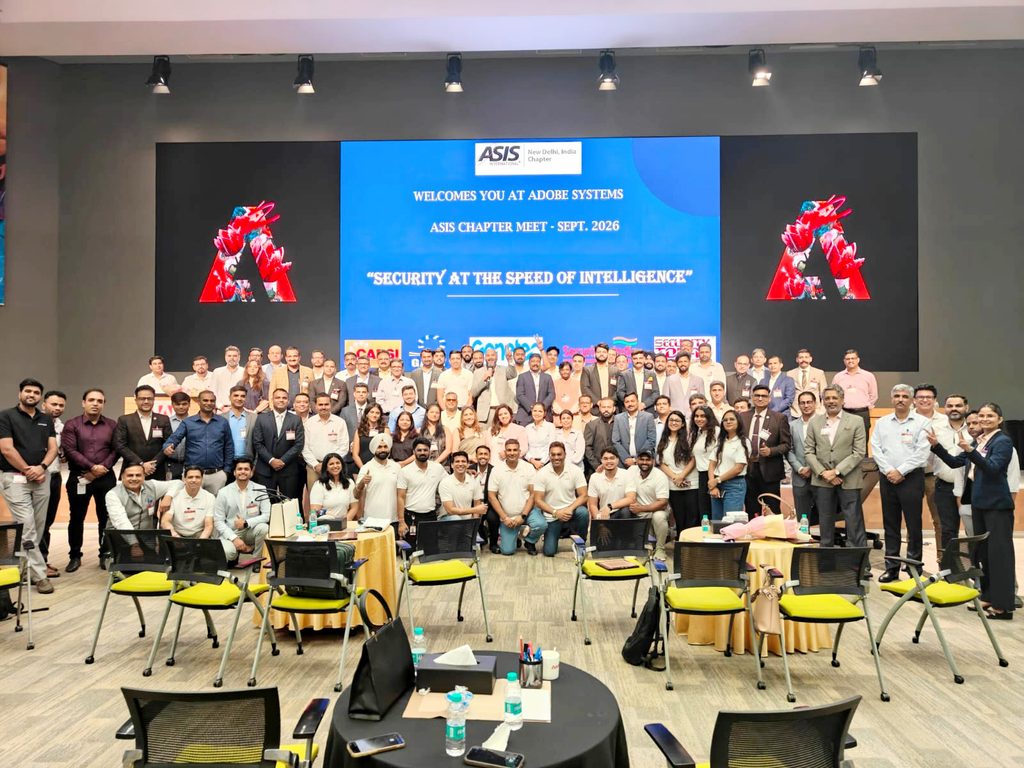
The ASIS New Delhi India Chapter hosted its latest Chapter Meet on 23 September 2026 at Adobe Systems, Noida, bringing together more than 150 security professionals, leaders and practitioners for an afternoon of knowledge sharing, thought leadership and networking around a critical question – “What will physical security look like in 2030 when humans, artificial intelligence and autonomous technologies increasingly work together?”
Hosted by Adobe Systems, with Genetec as Technology Partner, and SecurityLinkIndia as Official Media Partner, the programme featured two thought-provoking panel discussions focusing on the evolution of the Intelligent GSOC and the broader transformation towards Human + AI + Autonomy.
Opening the Conversation
The programme commenced with the opening address by Mahesh Singh Chauhan, Chairman, ASIS New Delhi India Chapter, who welcomed the distinguished guests, Adobe leadership, speakers, panelists, Genetec and members of the security fraternity.
The discussion was positioned around a fundamental transformation in physical security – from traditional surveillance and guarding models towards an interconnected ecosystem where people, technology, data, intelligence and autonomous capabilities work together.
The central issue was not whether technology will replace people, but how security professionals can harness technology while retaining the human judgement, accountability and leadership essential to effective security.
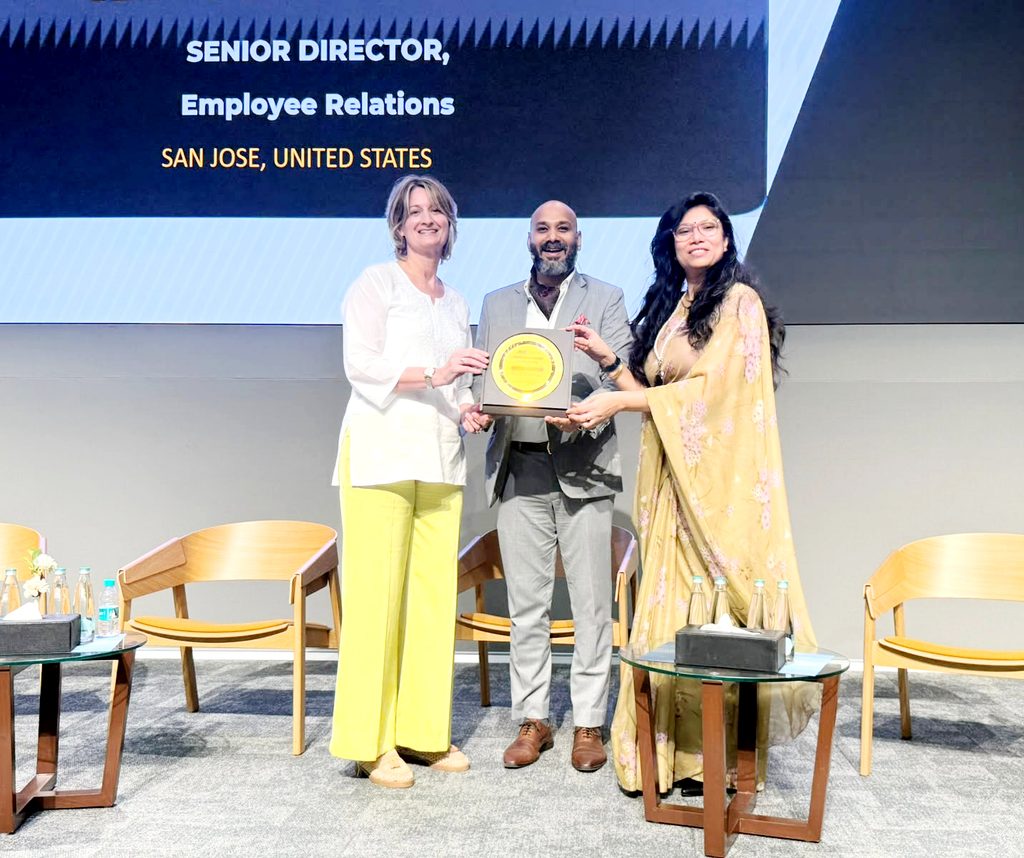
Adding an international dimension, Kimberly Shaw, Senior Director, Adobe Systems, joined the programme during her business visit from the United States. Rekha Gairola, Director – Global Safety and Security, Adobe, also shared perspectives on protecting people, workplaces and business operations in an increasingly connected global environment.
The Adobe leadership perspective reinforced how modern security increasingly intersects with technology, business operations, resilience, workplace safety and enterprise risk.
The programme rundown was presented by Mohit Hooda, Treasurer, ASIS New Delhi India Chapter.
PANEL I: The Intelligent GSOC
From Hundreds of Screens to One Security Brain
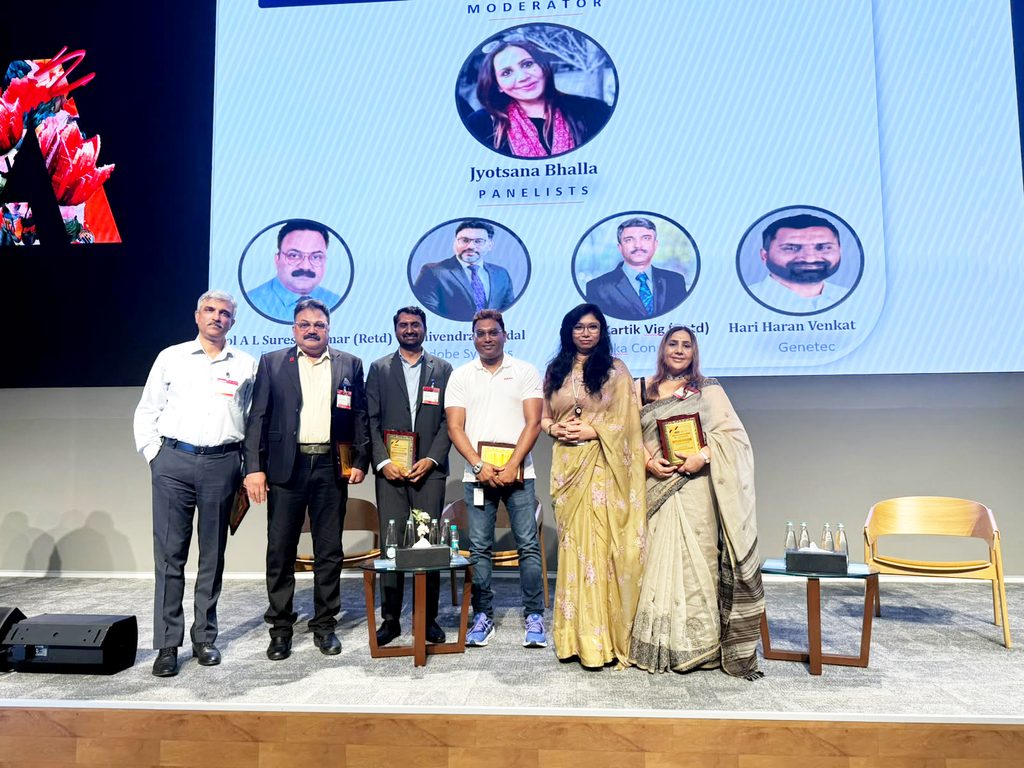
The first panel, moderated by Jyotsana Bhalla, Secretary, ASIS New Delhi India Chapter, examined how a traditional GSOC can evolve from a room filled with screens into an intelligent decision-support environment.
The panel comprised Col A L Suresh Kumar (Retd), Cdr Kartik Vig (Retd), Hari Haran Venkat and Shivendra Mandal.
A key challenge discussed was the integration of physical security, cybersecurity, IoT, intelligence and operational data without overwhelming operators. Organisations may already possess multiple platforms and enormous volumes of information, but simply placing them on one dashboard does not create intelligence.
The real challenge is determining what information matters, when it matters and who needs to act upon it.
This led to an important shift in thinking – from “How much can we see?” to “What do we need to know right now?”
The panel also emphasised that technology alone cannot determine the quality of a security decision. Future GSOC personnel will require analytical capability, incident-management skills, intelligence interpretation, technology understanding and the ability to distinguish genuine threats from background noise.
Another important discussion concerned the organisational role of the GSOC. Rather than remaining a monitoring facility or cost centre, the GSOC increasingly needs to become a strategic intelligence and decision-support function, capable of feeding meaningful insights into business decisions.
True unification, the panel noted, is not merely putting multiple systems on one screen. It means connecting information, understanding relationships between events, prioritising risk and enabling appropriate action.
PANEL II: Security 2030 —
Human + AI + Autonomy
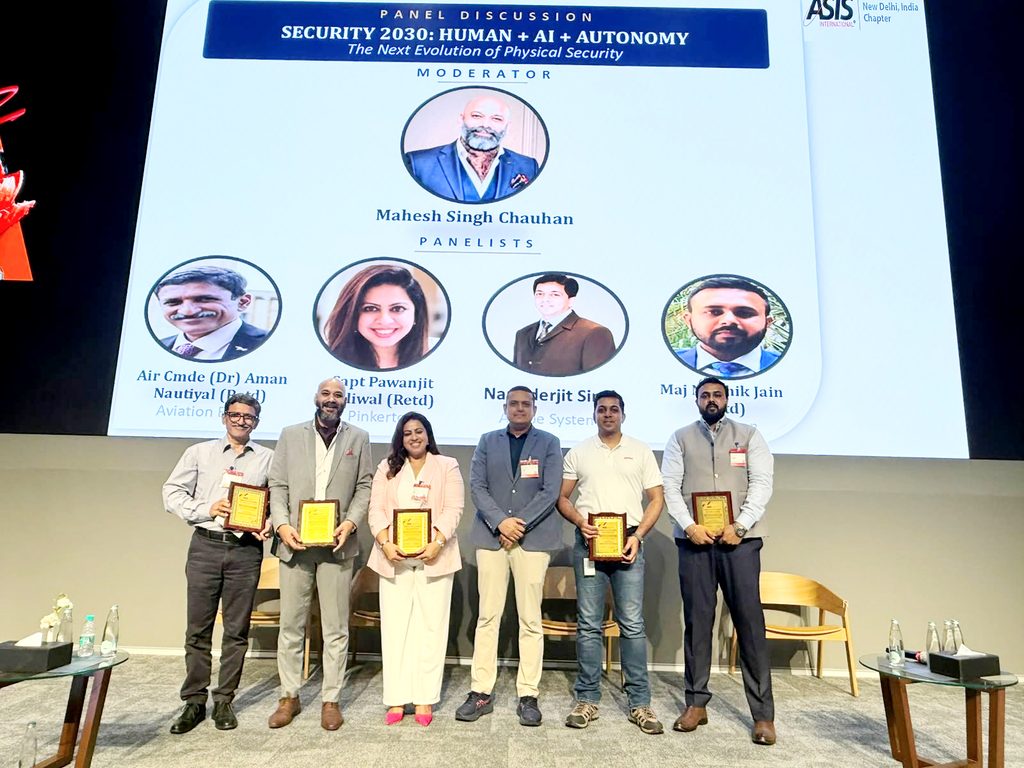
The second panel, chaired by Mahesh Singh Chauhan, explored how security operations could evolve by 2030. The panel comprised Air Commodore (Dr.) Aman Nautiyal, VM (Retd.), Capt. Pawanjit, Narinderjit Singh and Maj. Nirbhik Jain.
Drawing upon his 34 years of fighter aviation experience, Air Commodore (Dr.) Aman Nautiyal highlighted lessons relevant to corporate security, particularly the importance of rapid decision-making, situational awareness, disciplined processes and operating effectively despite incomplete information. This raised a fundamental question for the autonomous era – “Where should organisations draw the line between human judgement, human accountability and machine autonomy?”
The discussion then examined what ‘normal’ security operations might look like five years from now, including how security is planned, managed, monitored, analysed, responded to and integrated with wider business operations.
The future of the security workforce was another major theme. Rather than focusing simply on whether AI will replace guards and security professionals, the discussion explored how roles may evolve. Future professionals may increasingly be required to interpret intelligence, manage technology, validate AI-generated alerts, handle complex incidents, make contextual decisions, manage autonomous systems, conduct risk analysis and coordinate human-machine responses.
The panel also addressed how security effectiveness should be measured. Traditional metrics such as incident numbers, response time, guard strength, manpower efficiency and closure time may need to be complemented by measures of risk reduction, prediction, prevention, resilience, decision quality and business impact.
As AI-driven systems become more capable, human capabilities such as judgement, leadership, contextual understanding, ethical reasoning, communication and decision-making under uncertainty will remain important.
The discussion culminated in the ethical question – “Just because technology can make a decision or take an action autonomously, does it mean that it should?”
The emerging principle was clear – autonomy must be accompanied by accountability. The objective should not be maximum automation, but appropriate automation operating within clearly defined human governance and accountability frameworks.
From Screens to Intelligence –
and Intelligence to Autonomy
Across both panels, a clear progression emerged:
Data → Information → Intelligence → Decision → Action → Autonomous Response
Yet one element remains constant throughout the journey: human judgement.
Technology can increase the speed, scale and precision of security operations, but leadership determines its purpose, governance and boundaries.
The programme concluded with the Vote of Thanks by Girish Kaushik, Vice Chair, ASIS New Delhi India Chapter, who acknowledged the speakers, panellists, Adobe Systems, Genetec, Chapter leadership and participants.
With more than 150 security professionals in attendance, the event reflected the growing interest within the security community in substantive conversations around technology, leadership and the future of the profession.
Looking Ahead
The 23 September Chapter Meet was ultimately not just about AI. It was about the future of security leadership – whether organisations can transform enormous volumes of information into meaningful intelligence, whether GSOCs can evolve into strategic decision-support functions, and how AI and autonomous technologies should operate alongside people.
The message emerging from the discussions was clear – The future of physical security will not be Human vs. AI. It will be Human + AI + Autonomy.
The responsibility of today’s security leaders is to ensure that this future is built not merely on technological capability, but on sound judgement, accountability, governance, ethics and a clear understanding of what security is ultimately meant to protect – people, business and resilience.