


Category: National
Axis Facial Recognition and IP Audio Solutions for India
Axis Communications has recently launched an array of solutions and products that can be customised for different industry verticals – smart city, retail, defence and manufacturing, and the transportation sector. The latest technology and offerings in the surveillance industry include IP audio and facial recognition leading the way. Facial recognition is a technology software that identifies real time video with a database of stored images. The application can be easily integrated to trigger an alarm and reduce response time, for instance, of an unforeseen intruder alert. To strengthen its network video offering, Axis has introduced a networkbased audio systems that can be easily installed and integrated to an existing system since it’s on open standards with other systems. The range of audio portfolio includes network hornspeakers and audio accessories that complement Axis’ network cameras. With the use of IP and analytics in network video, the surveillance industry is going beyond cameras. Axis Communications offers complete high-quality audio systems best suited for background music and announcements that can be used in retail formats and other applications combining with the possibilities of working with their partners who can customise the requirement for facial recognition. Other innovations on the offering include Axis perimeter defender, TCO and Zipstream technology. With the growing importance of cybersecurity, constant enhancement and upgradation of cybersecurity will be a never-ending task, because well-resourced cyber-criminals will never stop looking to exploit vulnerabilities in any new technology. As the number of connected devices grows exponentially, so too do the potential flaws, and the answer is proactivity and a systematic process for ensuring that patches are implemented as soon as they are available. “We are seeing an increasing trend in India, where intelligent building systems is aiding in the convergence of multiple networks over an IP backbone. At Axis Communications, we are continuously innovating our existing line of products and solutions that are capable to cater to the high end requirements of the retail sector to the high security need of the Indian defence and border security. We are thereby increasing our offerings and presence in the enterprise segment with products that make surveillance solutions more efficient and intelligent” – Sudhindra Holla Sales Director, India and SAARC, Axis Communications
Synology New 18-Series NAS Products for India
Synology announced the availability of its new 18-series products, which includes DS218j, DS218+, DS418j, DS418, DS418play, DS718+, DS918+, NVR1218 and VS960HD in India. “India has a variety of businesses at all scales, and people are paying more attention to what they are getting,” said Mike Shay, Sales Manager of Synology Inc., “That’s why we are excited to launch our 18-series in India. We believe whatever their scale, our customers can find the right Synology server that provides smart and effective storage solutions to their needs.” New 18-series Synology NAS and NVR products DS218j, DS418j and DS418: These 18-series entry-level NAS servers are designed for individual and home users, which became the best sellers after its launch. These versatile yet budgetfriendly NAS servers can not only serve as personal cloud storage, but also provide features with data backup, media streaming, photo management, file sharing, and more. With the user-friendly interface, users can manage, protect and share all your digital assets easily and efficiently. DS418play: Ideal for IT enthusiasts, home users and creative professionals who want to store large collections of photos and videos in one place. DS418play is equipped with Intel® Celeron® dual-core 2GHz processor capable of bursting up to 2.5GHz, providing excellent encrypted file transmission speed. It comes with a 2GB memory by default which is scalable to up to 6GB. DS418play supports up to two channels of H.265/ H.264 4K video transcoding, which is ideal for serving as the home multimedia centre. DS218+, DS718+ and DS918+: These three High Performance Plus series NAS servers are specifically engineered for SMEs and IT enthusiasts. DS218+ is a compact 2-bay all-in-one NAS server which is ideal for studio and small offices with limited working space. Equipped with an Intel® Celeron® dual-core processor and AES-NI hardware encryption engine, DS218+ delivers exceptional file transfer speeds and advanced performance. DS718+ and DS918+ are equipped with Intel® Celeron® quad-core processor, delivering blazing fast file transfer experience. They are also available for expanding up to 7 and 9 drives, 6GB and 8GB RAM, providing a cost-effective solution that is both versatile and flexible for SMEs future demands. NVR1218, VS960HD: NVR1218 is a network video recorder which provides an all-in-one, stand-alone private surveillance solution for PC-less management and live monitoring. NVR1218 supports 12 concurrent recording channels and a COM port interface that works perfectly to support POS integration which makes it suitable for retail. VS960HD is a palm-sized local display companion to surveillance station with up to 96-channel HD live view and dual HDMI for 4K and 1080p output. When configured with a paired Synology NAS or NVR, VS960HD makes an ideal TV wall solution.
VIVOTEK and Videonetics Thriving Partnership for Better Security
VIVOTEK and Videonetics successfully wowed audiences at yet another global, safety and security exhibition – Secutech India in Mumbai. Secutech India is a flagship show of Intersec Dubai, catering to leading security and safety companies around the world. While VIVOTEK showcased its full stack collection in the realm of IP surveillance, Videonetics exhibited Unified Video Center. Elaborating on security and surveillance market in India, Sanjeev Gulati, India and SAARC Country Manager, VIVOTEK Inc. commented, “It is exciting to watch India’s surveillance market come of age, even as it is expected to top $2.4 billion by 2020. This event, its success in drawing the best and brightest in India’s safety and security sector, and the products and services on display are evidence that driven by declining prices and rising demand, India is catching up with global security standards. We were pleased to receive such interest from the attending audience, and look forward to continuing conversations and pursuing leads that we gained from this event.” Avinash J Trivedi, VP – Business Development, Videonetics added, “Being a part of Secutech India has always been a pleasure, and this year has been no different. Such shows are important for us as they provide a platform to showcase our unique offerings to end users, consultants, channel partners and other stakeholders of the eco-system.”
COM-SUR Bags the Special Jury Award
COM-SUR has received a special Jury award for ‘Capacity Building Effort of the Year’ at the Secona Shield Awards 2018. This award is in recognition of one’s substantial contribution in making a difference to the industry, as well as to the community at large. “We are extremely honoured and delighted for being the recipient of this very special award. We won the Secona Shield Award in 2017 for the Innovate Product of the Year in Software. This year, however, is even more special since it is a Jury Award. We are grateful that this industry is recognising the value of COM-SUR and the efforts that we are putting in to make a difference in the surveillance industry. COM-SUR can change video surveillance across the globe – from helping the Home/ Defence Ministry to the Finance and all other Ministries, Election Commission – from solving crime to solving compliance issues. COM-SUR has a role to play in every area, which is covered by CCTV/ video surveillance. We are especially focused on the education sector at the moment. After the horrifying case of the murder of a young child at a reputed school in Gurugram, we have documented 102 cases of abuse against children. Something is clearly and fundamentally wrong here and we want to help change them,” says Gautam Goradia, CEO & MD, COMSUR. “We are also trying to create a new breed of professionals called CCTV video footage auditors. Not only can this help the Government in job creation but in community policing as well. By training people to audit CCTV cameras as a SOP, we can ensure that the millions of eyes across the globe that are currently in sleep mode, will wake up and deliver rich visual information, (which is being wasted right now, since nobody sees what the cameras saw) that can be used by Governments to gain actionable intelligence. By adding more CCTV cameras, we are gathering more information; but are we gaining full benefits,” added Mr. Goradia. COM-SUR is the world’s leading provider of CCTV video footage auditing, smart back up and intelligent reporting software.
Night Vision Color CCTV Cameras & Smart Cloud DVRs
The demand for CCTV solutions is increasing with increased crime rates and the need for protection against such crimes. Most crimes happen during night. Unfortunately, CCTV solutions available presently do not provide good clarity in dark conditions and at night. iBall, a brand known for its innovative and latest technology products, realizes the need for better clarity during night and has launched a series of CCTV cameras (dome and bullet) under its ‘Night Vision Series’ earlier. These cameras keep crime at vigilance not only during day but also provide the best clarity in dark conditions and at night. After that successful series, iBall now launches 2.0MP HD Starlight Colour Night Vision Camera, which can help view the visuals in color under dark conditions, more clearly with precision. It comes equipped with Starlight technology, which is engineered especially for challenging ultra-low light conditions. It offers best-in-class light sensitivity, using a set of optical features to balance light throughout the scene. This captures colour details clearly, resulting in clear images in dark environment. Easy to configure, the iBall Guard colour night vision security camera comes with 1080p high resolution and a high aperture lens of 4mm, capturing every detail vividly and brightly. Using the 1/2.8” Sony Starvis BSI image sensor, the vision is crystal clear. It features a wall-mountable and compactly designed structure. It can also be affixed at the juncture of two walls and the ceiling, effortlessly. The camera operates effortlessly smooth even during extreme weather conditions because of its IP66 rated weather-proof housing. It comes with a real-time video transmission, allowing the users an omnipotent visibility. Under the distance range of 500m, the user can see what the camera captures just by connecting a coaxial cable. Along with the night vision series, iBall Guard also brings HD Smart Hybrid Cloud DVR, loaded with smart functions and remote accessi bility. Not just that it can save recorded data in the Google Drive and Dropbox, it can also acknowledge the area intrusion and line crossing, 24×7. The special iBall Cloud feature of the DVR enables the users to remotely manage the data fast and efficiently at fingertips. The unique motion detection feature triggers an alarm immediately to notify the trespasser. The automatic updates feature keeps the hybrid cloud DVR up-to-date with latest updates. This DVR is one of India’s first with exclusive smart features in its price segment. “iBall Night Vison series is getting very good feedback from customers. Now, we are delivering on the next phase of security systems with Night Vision Colour and Smart Cloud DVRs,” said Sandeep Parasrampuria, CEO and Director of iBall. These products are available with the leading retail stores pan-India.
Hid Direct-to-Card (DTC) Printer/ Encoder Line
HID Global has recently unveiled their latest Direct-to-Card (DTC) printer/ encoder line at Secutech India Mumbai, bringing new convenience and security features to its proven entry-level offering while reducing ID card printing expenses for cost-conscious organizations. Visitors at the event saw and got hands-on experience of HID’s mobility and latest smart card solutions including demo of their mobile access control solutions and Direct-to-Card™ printer/ encoder. “Our latest printer/ encoder enables organizations to issue counterfeit-resistant cards and IDs at a fraction of the cost of comparable alternative solutions, without sacrificing quality, by adding high-capacity consumables, new security features and enhanced capabilities,” said Wei Jin Lee, Regional Director, Secure Issuance, APAC HID Global, “The DTC1500 printer/ encoder delivers the most popular features of our desktop printer line and is ideal for government ID projects, universities, colleges, primary and secondary education, healthcare facilities and small-to-medium businesses.” HID demonstrations at the show include: HID Mobile Access®, powered by Seos: HID Mobile Access capabilities, including support for wearables such as the Apple Watch and Android Wear, plus HID Mobile Access Portal and App software developer kits (SDKs) that enable partners and end-users to create innovative, customized mobile access solutions (that can be fully integrated into their back-end systems). The solution supports NFC and Bluetooth Smart that enables HID Global‘s ‘twist and go’ gesture technology. DTC1500 printer/ encoder: The new printer/ encoder contains built-in security features including a new customer watermark capability for applying transparent logos, symbols, text and other permanent security images within the overlay panel. A unique data protection feature makes information printed within the resin panel unreadable, and an additional security is available through standard password protection and AES 256 data encryption. The hardware is low-cost, high-capacity and has half-panel color ribbons which helps reduce the cost-per-card significantly without any compromises on the quality.
Synology® DiskStation Manager 6.2 Beta
Synology®, the global leading provider of Network Attached Storage (NAS), IP Surveillance and network equipment solutions releases DiskStation Manager (DSM) 6.2 Beta and several packages, inviting the Synology community to experience the latest software and participate in the development process. “Synology continuously observes the market and enterprise users’ needs such as network security, data protection, disaster recovery, high-performance storage and productivity applications,” said Vic Hsu, CEO, Synology Inc., “Synology NAS does not just provide network storage devices, but a powerful wide range of application services for business.” Key new features in DSM 6.2 include Exciting storage technologies for efficiency enhancement Storage manager: A new storage component, Storage Pool, is introduced to provide a highly consistent and smooth storage management experience; a new dashboardlike overview comes with rich and useful information. With smart data scrubbing, it gives an easier way to prevent bit rot without sweat. iSCSI Manager: a revamped, dedicated management tool for iSCSI service, providing a new LUN type with the refined snapshot technology based on Btrfs file system that enables snapshots to be taken within seconds regardless of LUN size. Maximize service uptime with reliable failover plans Synology high availability: New mechanisms allow SHA to be set up and run within 10 minutes, providing a refined user experience. With its built-in and improved monitoring tools, IT admins can easily monitor the active and passive server and perform maintenance. Comprehensive security protection for login and connection Security advisor:Security Advisor uses intelligent techniques to dissect abnormal login and analyze the attacker’s location. DSM will send notifications when having detected any unusual login activities. With a simple click, IT admins can review a daily or monthly report on DSM system security scan. TLS/ SSL profile level: TLS/ SSL Profile Level chooser provides each network services to have its own TLS/ SSL connection profile. It gives users a more flexible way to configure the network security environment. Optimized communication and seamless collaboration Chat and calendar: Chat welcomes the long-awaited desktop application on Windows, MacOS and Linux, and features including poll, bots, threaded message, and third-party video conference integration. Calendar now allows to attach files to events to centralize all the relevant information, and comes with week numbering and keyboard shortcuts to view the calendars with ease.

Skybox Security New Appointments
Skybox Security has appointed Gerry Sillars as the Vice President for Asia Pacific. In his role, Sillars will be the cor- nerstone of the company’s APAC operations, fo- cusing on the continued expansion of Skybox’s footprint in the entire region, as well as evolving the company’s channel business. Skybox experienced 433 percent year-over-year growth in APAC for 2017 – including 350 percent growth in India. Sil- lars will increase hiring in APAC to further sup- port the needs of customers and build on the company’s foundation of business. He will also focus on expanding regional distribution through resellers, system integrators and managed security service providers. Sillars has more than 15 years of experience building scalable software businesses in APAC, including such companies as Commvault Systems, Alcatel Lucent and UpGuard. As Commvault’s first employee in APAC, he established their business in the Australia/ New Zealand region prior to building businesses throughout Asia – driving significant double and triple digit growth during his tenure. In his last two years, he served as the Worldwide VP of Commvault’s Cloud Solutions Group where he built the Commvault Global Systems Integrator group in India and developed the regional business from the ground up. “I’m joining Skybox at an extremely exciting time. The Skybox platform serves a huge market need in this region, as there is a real thirst for solutions that simplify and automate day-to-day cybersecurity workflows and processes, especially as networks are increasing in size and getting more complex. Companies are quickly moving workloads to the cloud – or jumping to a cloud–first solution altogether. This is making the CISO’s job ever more challenging. They’re looking for a platform like Skybox that gives them a single view to their hybrid networks, and a way to easily manage and quickly address risk” – Gerry Sillars Vice President, Asia Pacific, Skybox Skybox Security has also appointed Rahul Arora as the new Regional Sales Director for India and SAARC. Mr. Arora has a background in cloud networking that complements the company’s capabilities in virtual and multi-cloud environments. Prior to joining Skybox, Rahul worked with Citrix as the Director of Cloud Networking for India, running their Netscaler business in the region. Previous to that, he worked for SevOne Inc., as the Regional Director for India and SAARC where he built and ran Akamai’s Enterprise group in India.
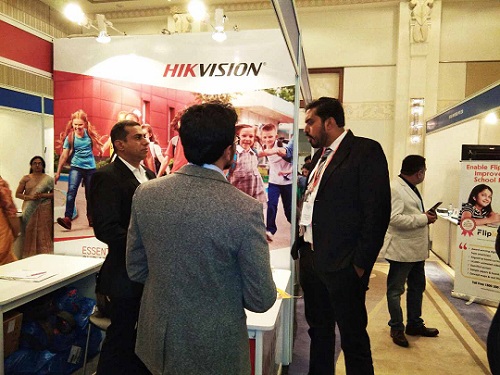
Hikvision participates at ELETS School Leadership Summit 2018
Hikvision was part of the recently held ELETS 2018, the 5th School Leadership Summit to showcase its innovative solutions for the education sector in Bengaluru. “Hikvision has been spearheading ‘School Security Program’ to focus on the education security issues, which can be addressed effectively through innovative security solutions. The School Leadership Summit is the perfect platform. Hikvision has a wide range of security solutions which specifically cater the education sector. We also explored newer opportunities like the broadcasting solution. Hikvision presents the vertical specific product basket to the education fraternity to promote the optimal usage of cameras and DVRs for a higher purpose and remote learning,” said Ashish P. Dhakan, MD & CEO, Prama Hikvision, “Hikvision’s smart solution for schools and campuses secures educational facilities with its advanced technology, powerful cameras, and critical recording devices.” Hikvision focused on promoting the broadcasting solution, which has a PTZ camera with a smart tracking option, which tracks the teacher during the lecture and zooms when the teachers writes something on the board. This feed can be streamed live to other classes in the building or even to any part of the world. It even records the whole lecture to be played or seen later by anyone anytime. Other Hikvision solution displayed at the event was face recognition solution. This was a one day conference and over 200 participants graced the event, the notable among them were Neti Srinivasan, COO, Ryan Group; Ms. Vandana Lulla, Director of the Podar Group of International Schools; Amol Arora, VC and MD, Shemrock and Shemford group of Schools, and others. The Hikvision stall at ELETS School Leadership Summit attracted a good number of Industry specific visitors, which included decision makers from the education institutions. The overall response was good as the event generated some relevant enquiries.

Role of Women in the Fire Safety Industry
The economic development of the nation is dependent on the participation of all sections of the society, more particularly women, who constitute fifty per cent of the population. There are massive employment potentialities that can be utilized by women folk. India is the world’s fastest growing economy, but has one of the lowest rates of female employment. This is the most true especially in the firefighting industry which has seen a major dearth of women in professional roles. Women are both the victims as well as strong enablers when it comes to the fire safety industry. In India, 17,700 Indians died due to fire incidents in 2015. About 48 people die of fire accidents every day out of which 62% are women. While the numbers continue to rise, the awareness on fire safety has hardly gained much recognition. Strikingly, in this whole conversation on fire safety, the female voice is missing. Unlike in the West, where a job in the fire safety industry is revered and a matter of great pride, India still has a long way to go. The instances of women working in the firefighting industry in India are far and few. In 2003, the Tamil Nadu Fire and Rescue Services appointed Priya RaviRole of Women in the Fire Safety Industry chandran as a Divisional Fire Officer, making her one of the first female fire officers in the country, and the first one to win Anna Medal for Bravery in Tamil Nadu. In 2013, the department inducted its second batch of women firefighters. In 2012, the Mumbai Fire Brigade inducted five women firefighters, making them the first in the history of the organisation. One of the biggest reasons for the low participation is the absence of a female role model. Over the last several decades, it has become an accepted understanding that improving the status of women is one of the most critical levers of international development. When women are educated and can be employed, a volley of good results follow. According to a recent study by McKinsey, if women played an identical role in labour markets to that of men, as much as US$28 trillion could be added to the global annual GDP by 2025. We require more and more women in the industry as they have the right ability to prove their mettle in various fields including defense services. One such example can be the appointment of Shrimati Nirmala Sitharaman as the Defence Minister of India. Recently Avani Chaturvedi, has also been appointed as the first Indian woman fighter pilot to fly solo. The fighter stream was opened for women in 2015 and Avani Chaturvedi, along with two other women, Mohana Singh and Bhawana Kanth were inducted into the Indian Air Force fighter squadron in 2016 where they have undergone strenuous training programme to fly fighter jets. Fire safety should also be considered as an industry to support and encourage women diversity and empowerment. The policy of fire and safety industry to recruit only male officers might be reinforcing gender stereotypes and should keep pace with international trends. While even in the West, the number of women staff is very low, but in India its much below the international statistics. One has to remember that the practice of hiring only men could be construed as demeaning to the female gender. We, in the industry, know their real purpose is to provide the safety of everyone in case of emergencies. While women have made significant gains in the past decade in terms of their noteworthy roles in different spheres of life including education, health, technology, economic participation, and political leadership, we as a nation still have a long way to go when it comes to attaining gender equality. By – Rohit Harjani Country Manager, Indian Sub-continent, Hochiki