
securitylinkindia

Smart City Solution

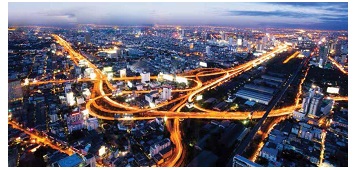
Ever expanding, cities today must pay more attention to protect their people and properties. It is evident to anyone with access to global news that now even the most developed cities are faced with huge safety threats, ranging from terrorists’ attacks aiming at well-populated areas and historically significant places to road accidents that keep increasing with the number of automobiles. A smart and integrated system for urban security is an urgent need, which Dahua is competent to provide. Time to do it smartly Boasting its AI technologies and highly integrated platform, Dahua smart city solution aims to address safety issues of mega-cities without dramatically expanding police forces. To be more specific, the deep-learning empowered video surveillance performs timely and effective risk detection. The unified platform allows faster emergency response, and the powerful data mining helps get more insights from the data front-end systems collected. Combined together, Dahua smart city solution gives unprecedented advantages. For example, the deep-learning redefines the capabilities of video analysis. Dahua achieved 99.78% facial recognition accuracy in LFW (Labeled Faces in the Wild, a well-known facial recognition benchmark for academic purpose) in October, 2016. Moreover, deep-leaning even allows instant classification of human and vehicle appearing in video, capturing extract detailed features such as clothe color, gender, headwear, bag for human and license plate number, vehicle color, size, mark, model, cellphone usage, seat belt usage for vehicle etc.  Four working stages of Dahua smart city solution The overall working process of Dahua smart city solution can be viewed in four stages that are prevention, detection, response and investigation. By improving each, it can improve the city running in general. The Stage of Prevention means picking out and focusing on potentially dangerous persons and factors before they really do harm to public safety. This requires the ability of collecting and analyzing big data. Dahua’s smart city solution provides advanced forecasting models that give a better chance of predicting events. For example, with comprehensive analysis of violation data collected by traffic enforcement cameras, the system can generate a watch list for the vehicles with numerous violation records. The Stage of Detection involves real time surveillance in various forms, including deployment of 360-degree panoramic camera and ultra-long range, all weather monitoring thermal camera etc. In addition to multifunctional cameras, Dahua’s deep-learning empowered smart video surveillance can automatically detect risky individuals and activities from massive data collected. In fact, Dahua traffic enforcement system helped Hangzhou city automatically detect 29,823 vehicles’ illegal behavior during G20 Summit, which greatly reduced the burden on policemen who thus could put more focus on protecting key summit area. The Stage of Response enables key organizations in the city to react to security threats in real time. Dahua improves the communication efficiency through its integrated platform, allowing unified command and centralized data storage as well as cross-department information sharing. if a natural disaster takes place in the city, Dahua smart city solution can report it on a single e-map with available emergency response resources to all relevant departments and agencies, while providing seamless monitoring of the site to all units approaching. The Stage of Investigation analyzes all data collected by different systems and provide insights to facilitate the recovery of crucial incident like crime after it happened. In this stage, technologies such as video synopsis provide a short summary including all moving objects of a long video and supports query moving object according to different characteristics like size, color, direction and speed. Besides, there’re a rich set of data mining methods like active area analysis, active target analysis and trajectory analysis. So if a criminal tries to escape with different clothes or cars he is highly unlikely to make it in a city equipped with Dahua smart city solution. Multidimensional benefits Smart City Solution delivers on Dahua’s promise of ‘Safer society, smart living’ in 4 key metrics. Government investment measures the level of continued commitment by governments to maintain good function and development of systems in place. After deploying smart city solution, London’s police investment declined by 10% yet the criminal activity prevention score actually improved by 0.5% since 2015. Safety result measures changes in the levels of crime and risk to citizens. It also assesses the public’s perception of how well the city’s authorities can respond to incidents. This is improved by the efficiency savings that Dahua’s surveillance systems provide. Social benefits assess the ability of the public to enjoy entertainment and leisure activities safely and how their affinity for the government changes. Economic benefit accounts for personal wealth, spending on tourism and retail along with employment rates and the city’s protection against short-term economic fluctuations. Smart city solutions benefit everyone in all four aspects above. Governments can decrease spending and crime rates at the same time whilst increasing citizen safety, survival rates and citizen approval rating. Citizens will be safer and enjoy better living standards without the burden of increased public spending. In short, they will be happier with both the government and their lives. Summary By remaining ahead of the market with expertise in intelligent visual processing technologies and emphasizing its core value propositions of innovation, quality and service, Dahua Technology will continuously contribute to a safer society and smarter living, benefiting city dwellers worldwide.   By Balasubramanian Jayam Head of Marketing (India & SAARC) Dahua Technology Co., Ltd.  

Read More

Taking the Pulse of City Traffic

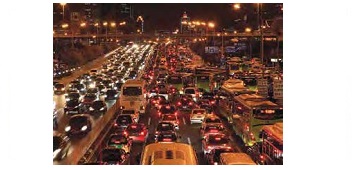
Smart sensors provide insight in city traffic dynamics and provide the basics for informed decisions and traffic improvements The problem of traffic congestion in cities is not likely to go away in the next decades. In order to get a grip on the problem, city authorities around the world are increasingly making use of smart technologies to get real-time insight into their traffic situation. By collecting traffic data, they are hoping to make informed decisions to improve the quality of life of anyone living, working and travelling in the city. Economic development and quality of life has always been a difficult marriage for city authorities and urban planners. Traffic congestion is considered to be a necessary by-product of economic growth. But at the same time, idling times and traffic jams are very costly to the economy and thus pose a serious threat to further economic growth. In an estimate made by the U.S. Environmental Protection Agency (U.S. EPA) long duration idling is said to consume over one billion gallons of diesel fuel annually, at a cost of over $5 billion. In addition, congestion creates frustration with traffic users, and it results in more emissions, more pollution and increased health risks. Enabling smart cities Next to promoting public transportation use, carpooling and ride sharing, city authorities increasingly turn to smart technologies to make the city traffic run smoother and more efficiently. One measure that has already proven to be very efficient in many cities is the installation of traffic sensors to control the operation of traffic signals. By monitoring traffic at intersections, traffic signal scheme scan be adapted according to the amount of traffic, which as a result can reduce vehicle idling times and relieve city traffic. As an example, the UK’s national Automobile Association stated that cutting queuing time by just one minute per day on three major roads leading into a city could save more CO2 than switching off 2,000 streetlights. The use of road sensors and software systems fits into the broader idea of smart cities, a vision which aims at better managing the city’s assets including transportation, law enforcement, power plants, hospitals, and many more, and as a result improving the quality of life in the city. By integrating smart technologies into the city infrastructure, real-time traffic data can be collected to provide a basis for smarter decisions on traffic management, parking management, urban planning, energy management and many more. Smart city sensors FLIR Systems has been providing smart sensors to traffic authorities for many years, in order to collect real-time data at intersections and arterial roads, which are typical traffic bottlenecks. Smart sensors from FLIR are based on visual CCTV and thermal imaging technology and can be used to measure a variety of parameters and provide valuable insight into traffic flows. FLIR video detection sensors are a highly reliable and accurate alternative to loops and other detection technologies for signalized intersection control and management. FLIR’s integrated visual sensors provide information on the presence of vehicles approaching or waiting at an intersection, information that can be used to control the traffic lights more efficiently. Pedestrian presence detectors are able to give pedestrians the appropriate green-time and visibility, so mobility and safety of both motorists and vulnerable road users are guaranteed. Thermal imaging sensors use heat energy emitted from vehicles and bicyclists to make a distinction between both and make it possible to adapt green times according to the specific road user type (bike or other vehicle). Traffic sensors can also be used to collect a variety of relevant traffic data, like volume, average speed and occupancy. Better insight, better decisions The collection of various types of traffic data ultimately allows traffic authorities and urban planners to make more informed decisions, on a wide variety of topics. Intersection traffic control Traffic data can be used to better manage traffic lights and to provide dedicated signal schemes according to traffic volume. Traffic authorities can use real-time data to keep traffic moving and impose variable speed limits or dynamic green waves. Small adaptations of signal times at intersections based on historical data can already have a large impact on vehicle idling times. City authorities could for example, choose to adapt signal times according to the time of day, giving more green time for vehicles in one particular direction during rush hour. Real-time traffic data can be communicated on electronic message signs or traveller apps and help the traffic user make informed decisions about his travel options. Signal schemes could also be adapted in favour of pedestrians, for example near schools or sports arenas. Thermal imaging sensors can even make a distinction between the detection of vehicles and bicyclists, allowing traffic authorities to provide a dedicated signal scheme for bicyclists, which allows them to cross the intersection safely. Priority for public transportation or emergency vehicles Measures to improve the quality of life in the city often coincide with the promotion of public transportation. Smart technology can further support this vision by giving public transportation vehicles more priority rights in traffic and enabling them to make movements that the general traffic is not allowed to make. This could include priority bus lanes or dedicated signal schemes for buses. Priority can also be given to reduce delays for emergency vehicles in operation. When activated, an emergency vehicle priority scheme can adapt traffic signals ahead of an emergency vehicle’s arrival to provide a green wave allowing the emergency crew to arrive at the destination in the shortest possible time while also reducing the need to cross intersections against a red light. Energy management 19% of energy use in the world is used for lighting, and 6% of greenhouse emissions in the world derive from this energy used for lighting. Light pollution is a global problem caused by inefficient, intrusive and unnecessary use of artificial light. Smart lighting is an efficient way to save energy and reduce the amount of light along our roads. By using smart occupancy sensors, public street lighting can be…

Read More

Deepening the Value of Surveillance

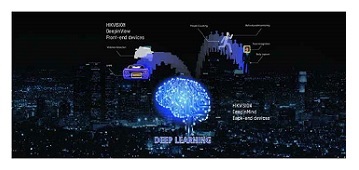
Deep Learning has swept through the IT industry, bringing benefits and better classifications to a number of applications. Inspired by the way the human brain works, the technology uses a layered learning process to enable the computer to classify, store and access data, which it can then refer to for learning. This means it can use a whole image to recognise, rather than relying on separate elements of that image. This is a cumulative process – the more elements it has to draw on, the better the classification – thus, the better the ‘learning.’ The benefits of this technology for face recognition and image classification make it hugely valuable in the field of security. It touches on every aspect of the security industry – from facial and vehicle detection to behaviour analysis. This, in turn, starts to change the focus of security from being reactive to being able to predict problems before they happen. Hikvision has taken this technology and innovated a family of products to maximise its use. The DeepInview IP camera range and the DeepInmind NVR range work together to provide all the power and benefits of Deep Learning. While the cameras provide the smart ‘eyes’ of the system, the NVR represents the analytic and storage capabilities of the brain. The products help to tackle security on two fronts – recognition, monitoring and counting of people, and recognition and detection of vehicles. This uses Deep Learning technology at its most effective – for its ability to classify and recognise thousands of ‘features.’ Obviously, this multi-layered approach uses a lot of memory and performance, which is one of the reasons why the technology has become much more widespread in the past few years. To put this into perspective, in the first stages of the technology, it took 1,000 devices with 16,000 CPUs to simulate a neural network; now, just a few GPUs are needed. Hikvision is partnering with the largest of the chipset brands – Intel and nVidia – to explore the possibilities of Deep Learning for the surveillance industry. Hikvision’s innovation also facilitates and improves on this. The H.265+ codec radically reduces transmission bandwidth and data storage capacity requirements. This means there’s no loss of quality even though the data being shared and stored is exponentially higher. Applications are numerous. The technology could enable the system to provide a black list/ white list alarm, which could come in very handy in access control scenarios. It could also be used to recognise unusual behaviour – possibly allowing security staff to prevent an issue if people are found loitering nearby, for example. The new premium range of products will further extend the quality and capabilities of security systems. They will also allow security professionals to start planning to avoid issues, rather than reacting to them. This could be the next evolution of the whole industry – using AI to change the world, one Hikvision solution at a time.     By Ashish P. Dhakan – MD & CEO, Prama Hikvision  

Read More