

Sreekumar Narayanan
Chief Growth Officer, BNB Group
Why integrated civilian drones can transform security, safety and operations across India’s large campuses, factories, supply chains and critical infrastructure
The real opportunity is not another camera in the sky. It is a faster, safer and more intelligent way to see, decide and act
The Case for Connected Civilian Drones
A drone can fly farther, carry a better camera and remain in the air longer than before. Those advances are important. Yet they are not, by themselves, what will make civilian drones a game-changer for enterprise security.
The real change begins when the drone stops operating as a separate flying camera and becomes part of the organisation’s existing security and operational system. Its live video must reach the same control room that already receives CCTV feeds, access-control alarms, fire alerts, perimeter-sensor events, vehicle data and emergency calls. Its location must appear on the same map. Its operator must follow the same incident process. Its evidence must enter the same case record. Its mission must support a clear business outcome.
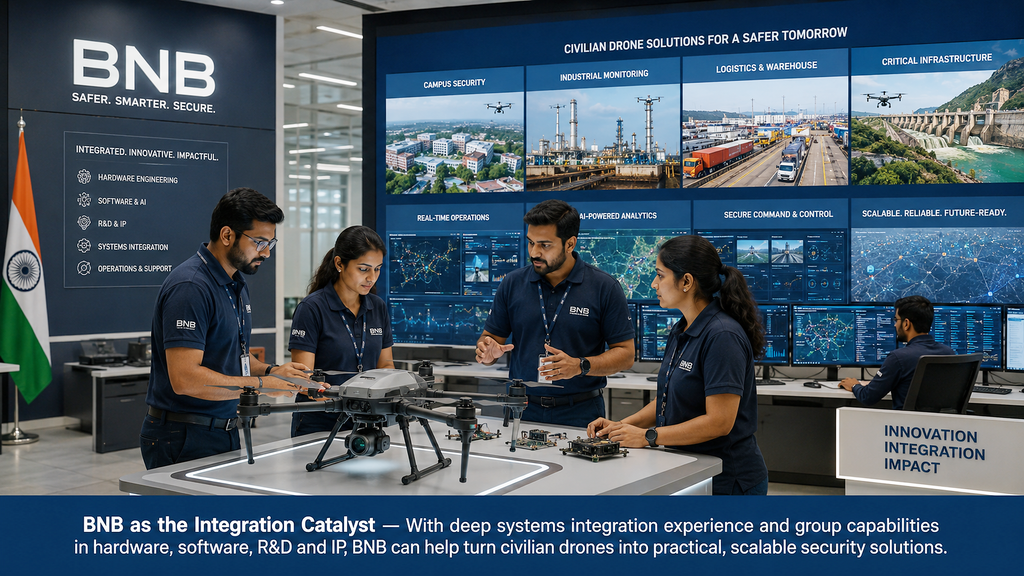
BNB as the integration catalyst: bringing together drone platforms, security systems, software workflows, embedded hardware, research and operational support.
In other words, the value is not simply ‘eyes in the sky.’ The value is a connected chain from detection to verification, decision, response and evidence.
This distinction matters because many early drone discussions begin with the platform – payload, endurance, range, flight controller, battery, communication link and docking station. Buyers compare technical specifications and select an aircraft. Only later do they ask how the new asset will work with the people, processes and systems already on site. That order should be reversed.
A successful civilian drone programme should start with the risk, the operating problem and the response requirement. The platform should then be selected and integrated around that need. This is where an experienced systems integrator becomes as important as the drone manufacturer.
The Wrong Question: ‘Which Drone Should We Buy?’
For a large university, the business question may be – how do we verify a disturbance at a remote hostel boundary within two minutes, without sending a patrol team blindly into the area?
For a manufacturing plant, it may be – how do we investigate a fence alarm, roof intrusion, smoke report or hazardous spill quickly, while protecting employees and preserving production continuity?
For a logistics hub, it may be – how do we locate a stopped trailer, follow an unauthorised vehicle, check a broken seal or document an incident across a yard that covers hundreds of acres?
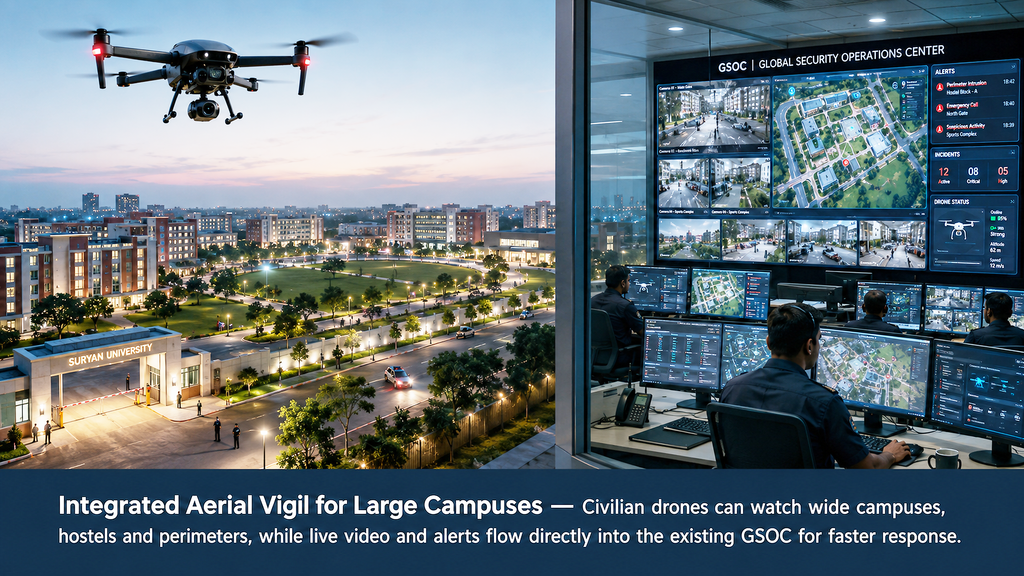
Figure 1. Integrated aerial vigil for large campuses: the drone feed, location and alerts should flow into the existing Global Security Operations Centre so teams can verify events and respond faster.
For a solar park, substation, refinery, port or other critical installation, it may be – how do we inspect a difficult or dangerous area without exposing people, while joining the aerial picture with equipment alarms, weather data and perimeter events?
Once the problem is stated this way, the drone becomes one part of a wider response design. The most suitable aircraft may be a multirotor, a long-endurance fixed-wing platform, a tethered drone, an automated dock-based system or a mixed fleet. The correct payload may be a normal daylight camera, thermal imaging, a high-zoom camera, a loudspeaker, a spotlight or a specialised sensor. But the purchase decision is now connected to an operating outcome, not an isolated specification sheet.
Integration is The Real Force Multiplier
Most large organisations already have several security systems. They may have hundreds or thousands of cameras, electronic access control, intrusion detection, fire alarm, public-address systems, vehicle barriers, automatic number-plate recognition, visitor management and a control room. Many also have building-management, maintenance, fleet, yard or IoT enterprise platforms.
A standalone drone adds one more screen, one more operator and one more stream of video. An integrated drone reduces uncertainty across all the existing systems.
Consider a perimeter alarm at night. A fence sensor detects movement. The command platform identifies the zone and automatically proposes the nearest drone mission. The drone reaches the location, sends live thermal and visible video and confirms whether the cause is an intruder, an animal, loose material or a maintenance issue. The control-room operator sees the fence alarm, nearby fixed cameras, access events and drone feed together. A response team receives the verified location and a safe approach route. The video, operator notes and actions are attached to one incident record.
The same drone that supports security can also help operations. During another shift, it can inspect a roof after heavy rain, check a congested truck yard, verify whether an emergency exit is blocked, assess & fight small fire from a safe distance or survey damage after a storm. This shared use improves the business case and keeps the asset active rather than leaving it idle between security events.
The outcome is not simply more video. It is less uncertainty, faster verification and better decisions
Large Campuses:Covering the Space Between Fixed Cameras
Large manufacturing, corporate, technology and residential & educational campuses present a particular challenge. Buildings, trees, open grounds, hostels, parking areas, service roads and long boundaries create changing blind spots. Fixed cameras are essential, but they cannot be placed everywhere, and their view may be blocked by distance, darkness, weather or new construction.
A civilian drone can become a mobile layer above this fixed network. It can conduct planned perimeter rounds, watch movement during major events, inspect isolated areas, support searches for missing persons, guide first responders and provide a wide view during fire, crowd or weather emergencies.
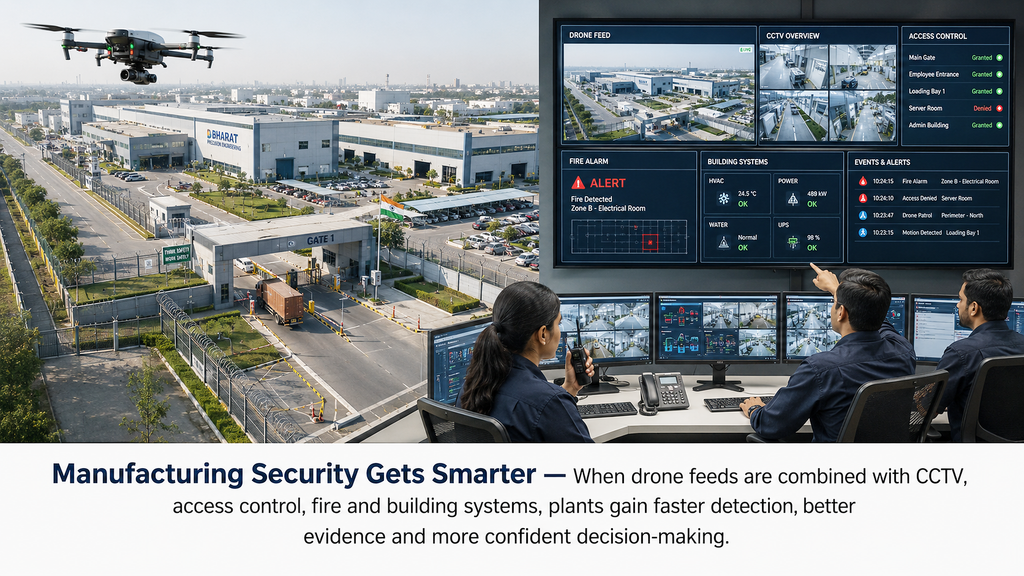
Figure 2. Manufacturing security gets smarter when aerial video is combined with fixed cameras, access
control, fire and building systems, creating one operational picture for security, safety and maintenance teams.
Its greatest value appears when it works with the campus control room. A guard who receives an emergency call should not need to telephone a separate drone team and explain the location. The incident should be marked on the campus map, with the nearest cameras and available drone shown immediately. The drone operator should receive the mission, approved route and safety limits. The security supervisor should see the live feed and direct ground teams. If needed, authorised staff should receive selected video on secure mobile devices.
For universities and residential campuses, responsible use is especially important. Drones should not become tools for casual or intrusive monitoring. Flights should be limited to defined purposes, routes and time windows. Sensitive areas should be excluded. Access to video should be controlled and logged. Retention periods should be clear. Students, employees, residents and visitors should know why the system exists and how privacy is protected.
When governance is designed well, the drone is not a symbol of surveillance. It becomes a visible safety resource – an aerial first responder that helps the institution understand what is happening before sending people into uncertainty.
Manufacturing: Connecting Security, Safety and Continuity
Factories are complex environments. They combine perimeter risk, people movement, vehicle traffic, hazardous processes, valuable materials, roofs, utilities, warehouses and restricted zones. A security event can quickly become a safety, production or business-continuity event.
Imagine that a fixed thermal camera reports abnormal heat near an electrical room. At the same time, the building system shows a power irregularity. A drone with a thermal payload is sent to inspect the roof and external cable route. The fire team sees the same live picture. The maintenance team receives the exact location. Security controls the approach route and access to the area. Management receives one verified incident update rather than several unconnected messages.
Or consider an intrusion alarm near a distant loading bay. The drone checks the outside area while fixed cameras review the inside. Access-control records show who entered the zone. Automatic number-plate recognition identifies the nearby vehicle. The incident platform brings these facts together, helping the supervisor decide whether the event is theft, a process error or an authorised activity.
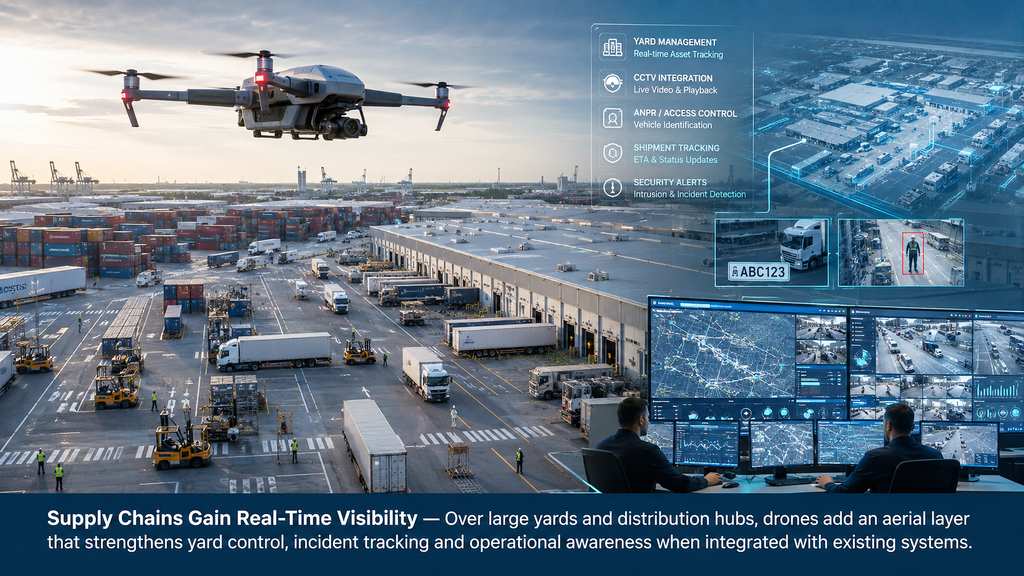
Figure 3. Supply chains gain real-time visibility when drone observations are linked with yard management, gate records, vehicle identification, shipment data and incident workflows.
This is why the drone should connect not only with video surveillance but also, where appropriate, with access control, fire and life-safety systems, building-management systems, maintenance workflows and emergency communication.
The benefits can extend beyond emergencies. Planned aerial inspection can help identify damaged fencing, water accumulation, roof defects, blocked routes, unsafe storage and housekeeping issues. Regular images can show change over time. Maintenance tickets can be raised with a location, image and priority. The same system can therefore support loss prevention, safety, maintenance and resilience.
Supply Chains: Real-Time Visibility Across Large Yards
Distribution centres, ports, freight terminals and industrial logistics parks operate over vast areas. Trucks, trailers, containers, forklifts, contractors and workers move continuously. Conditions change faster than a fixed camera plan can always capture.
A drone adds a flexible overview. It can locate congestion, check whether a bay is occupied, follow the movement of an accident. Again, integration determines whether this becomes useful intelligence or just attractive video.
When the aerial feed is linked with yard management, shipment information, gate records, vehicle identification and security alerts, the control room can understand not only what is visible but what it means. A truck seen in the wrong zone can be matched with its entry record. A trailer that has not moved can be linked to its scheduled departure. A suspicious stop near the boundary can be checked against authorised routes. A broken seal can become a documented exception with time, location, images and action history.
This also improves investigation quality. Instead of searching many systems after a loss, investigators can retrieve a joined timeline: when the vehicle entered, where it moved, which gate or bay it used, what the fixed cameras recorded, what the drone observed and how the team responded.
For supply chains, the strongest business case often combines security and operations. Reduced search time, better yard flow, quicker incident clearance and stronger evidence can produce value every day, not only when a major loss occurs.
Critical Infrastructure: Safer Access to Difficult Places
Power, renewable energy, oil and gas, water, telecommunications, ports and other critical infrastructure often stretch across remote, hazardous or difficult terrain. Fixed sensors provide essential information, but they may not explain the cause of an alarm. Sending a technician or security team can take time and may expose people to unnecessary risk.
An integrated drone can become the first means of verification. It can inspect a line corridor, substation, solar array, tank farm, pipeline section, boundary or flood-affected area. Thermal and zoom cameras can help identify hot spots, damage or unauthorised activity. The control room can compare the aerial view with asset alarms, weather conditions, maintenance history and nearby fixed cameras.
The principle is simple – use the drone to understand the situation before committing people and resources.
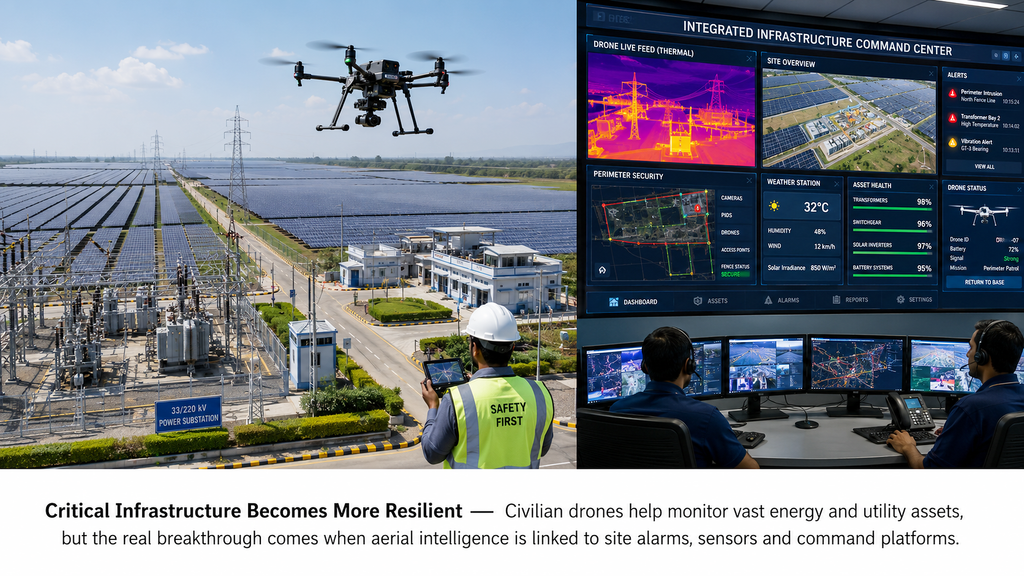
This can strengthen resilience during storms, fires, floods and major equipment failures. A pre-approved mission plan can be launched from a safe location. Live video can be shared with incident command. Damage can be mapped. Access routes can be checked. Recovery priorities can be supported by current evidence rather than assumptions.
For critical infrastructure, cybersecurity and communication resilience are also essential. Drone control, video and data links should be protected. Access should be role-based. Logs should be retained. Network design should separate critical operational systems from less trusted connections. Backup communication and safe return procedures should be tested. A drone that is physically reliable but digitally exposed is not an acceptable enterprise solution.
From Alert to Action: The Operating Model
The Operating Loop: Detect, Verify, Decide, Respond, Record
A practical integrated drone programme can be understood through five simple steps.
First, detect. An event may come from a camera, fence sensor, access-control alarm, fire panel, equipment alert, emergency call, operator observation or planned patrol.
Second, verify. The drone provides a fast aerial view, often combining normal and thermal images. Fixed cameras and system records add context.
Figure 5. BNB’s catalyst role combines systems integration, software workflows, embedded hardware, research and development, intellectual property and specialist civilian drone partnerships around the customer’s mission.
Third, decide. The control room applies an approved procedure. The operator identifies what is known, what remains uncertain, and which action is authorised.
Fourth, respond. Guards, emergency teams, maintenance staff or managers receive a verified location, current image and clear instruction.
Fifth, record. Video, images, timestamps, operator decisions and response actions are stored in one incident or work record.
This closed loop is the real product. Aircraft and payload are components within it
What A Complete Solution Must Include
A reliable programme needs more than aircraft procurement. It requires a concept of operations – who may request a flight, who approves it, where the drone may fly, what happens when communication is lost, how weather limits are applied, and how incidents are escalated.
It requires site design: launch and recovery locations, safe routes, no-fly areas, charging or docking, network coverage, lighting, physical protection and maintenance access.
It requires integration design: how video enters the existing video-management system, how alarms trigger missions, how maps and coordinates are shared, how mobile users receive authorised information, and how evidence is stored.
It requires governance: regulatory compliance, airspace checks, permissions where applicable, trained and authorised pilots, privacy controls, cybersecurity, insurance, maintenance, audit logs and periodic review. India’s official Directorate General of Civil Aviation and Digital Sky resources remain the current reference points for Drone Rules, registration, certification, pilot requirements and airspace information; every deployment must verify the latest requirements before operation.
It also requires measurement. Useful indicators include alarm-to-launch time, time to reach the scene, percentage of events verified remotely, reduction in unnecessary guard dispatches, response time, mission availability, battery or dock readiness, evidence completeness, maintenance findings and safety exceptions. Flight hours alone are not a business outcome.
The real change begins when the drone stops operating as a separate flying camera and becomes part of the organisation’s existing security and operational system. Its live video must reach the same control room that already receives CCTV feeds, access-control alarms, fire alerts, perimeter-sensor events, vehicle data and emergency calls. Its location must appear on the same map. Its operator must follow the same incident process. Its evidence must enter the same case record. Its mission must support a clear business outcome
Why The Systems Integrator Matters
The drone manufacturer knows the aircraft. The payload specialist knows the camera or sensor. The software provider knows its application. The site owner knows the business. The systems integrator must make all of them work together in the real environment.
That role includes understanding existing systems, designing interfaces, protecting networks, coordinating original equipment manufacturers, planning coverage, writing operating procedures, training users, testing failures, managing regulatory dependencies and supporting the solution after go-live.
The systems integrator also protects the customer from a common problem: a technically impressive pilot that cannot scale. A demonstration may succeed with a specialist team standing beside the aircraft. A full programme must work across shifts, weather conditions, operator changes, maintenance cycles, cyber rules, incident pressure and management reporting. It must be supportable for years.
The right integrator therefore begins with the customer’s current control room, networks, systems, people and risks. The drone is added as another trusted sensor and response resource, not as an island.
Why Bnb Is Strongly Positioned as The Catalyst
BNB’s advantage is the combination of systems-integration experience and in-group technology capability.
BNB Security & Automation Solutions has worked across enterprise surveillance, access control, command centres, fire and life safety, building systems and security operations. This provides the practical foundation required to connect drone missions with the systems and teams already protecting a site.
BNB Cognira adds the software and workflow layer: dashboards, incident handling, integration, reporting and the ability to join information from multiple systems into one operational view. The aim is not to replace every customer platform, but to connect the right information and actions around the event.
BNB Innovation Lab contributes hardware, embedded electronics, sensors, controllers, gateways, edge processing, research and development, and intellectual property creation. This matters when an off-the-shelf interface is not enough, when a site needs a specialised trigger or field device, or when data must be handled closer to the source.
Other BNB Group capabilities can add environmental, facility, communication, regional delivery and lifecycle-support knowledge. Specialist civilian drone partners, including Vaanvili Garudan, can contribute the appropriate aircraft, payload and flight expertise. BNB’s role is to bring these capabilities together around the customer’s mission.
This combination allows BNB to operate at three levels. At the field level, it can connect aircraft, sensors, networks and site infrastructure. At the control-room level, it can integrate video, alarms, maps, workflows and communication. At the management level, it can turn activity into evidence, performance indicators, audit trails and investment decisions.
That is the catalyst role: not claiming that one company must manufacture every component, but taking responsibility for the complete operational outcome.
SCALING RESPONSIBLY
From pilot to scale
Organisations should avoid beginning with a large fleet. A better path is a controlled pilot built around one or two important use cases.
The first phase should define the risk, site, users, regulatory position, success measures and integration points. The second should test the drone and payload under realistic day, night, weather, communication and failure conditions. The third should connect the feed and alerts to the control room, train operators and conduct live drills. The fourth should measure results, correct gaps and prepare the scale design.
A strong pilot does not only prove that the drone can fly. It proves that the organisation can detect an event, launch or task the drone, reach the scene, obtain usable information, make a decision, coordinate a response, preserve evidence and return safely to normal operations.
Only after that should the customer decide on fleet size, docks, staffing, service model and wider rollout. Some organisations may prefer capital purchase. Others may use Drone-as-a-Service, where trained operations, maintenance and availability are delivered under a service agreement. Hybrid models are also possible.
A drone can provide the view. Integration creates the outcome
Responsible innovation will build trust
Civilian drones will become more visible around workplaces and public-facing environments. Trust will depend on restraint, transparency and professional discipline. The expansion of Drone use will also increase employment opportunities, pool of trained pilots & multiply civilian & commercial use cases, thereby growing the industry.
Organisations should state the purpose of the programme, avoid unnecessary collection, protect sensitive data, define who can view and export footage, and review whether each mission remains justified. They should train staff not only to fly but to make sound decisions. They should test emergency and fail-safe procedures. They should learn from incidents and near misses.
Used carelessly, a drone can create privacy, safety, cyber and reputational risk. Used responsibly and as part of a well-designed system, it can reduce risk to people, shorten response time and improve accountability.
The next era is not about drones alone
Civilian drones are moving from novelty to useful enterprise infrastructure. But the winners will not be the organisations with the most aircraft or the longest specification sheet. They will be the organisations that connect aerial intelligence to the systems, people and decisions that already run their security and operations.
For a campus, this means faster understanding across open spaces and blind spots. For a factory, it means joining security, safety and continuity. For a supply chain, it means visibility across moving assets and large yards. For critical infrastructure, it means safer and quicker access to difficult places.
Across every sector, the central idea is the same: the drone must become part of the response system.
BNB is well placed to help make that transition. Its systems-integration base, software capability, hardware and research strengths, field delivery experience and specialist partnerships can turn an aircraft into a complete operating solution. The opportunity is not merely to put another camera in the sky. It is to create a faster, safer and more intelligent way for organisations to see, decide and act.