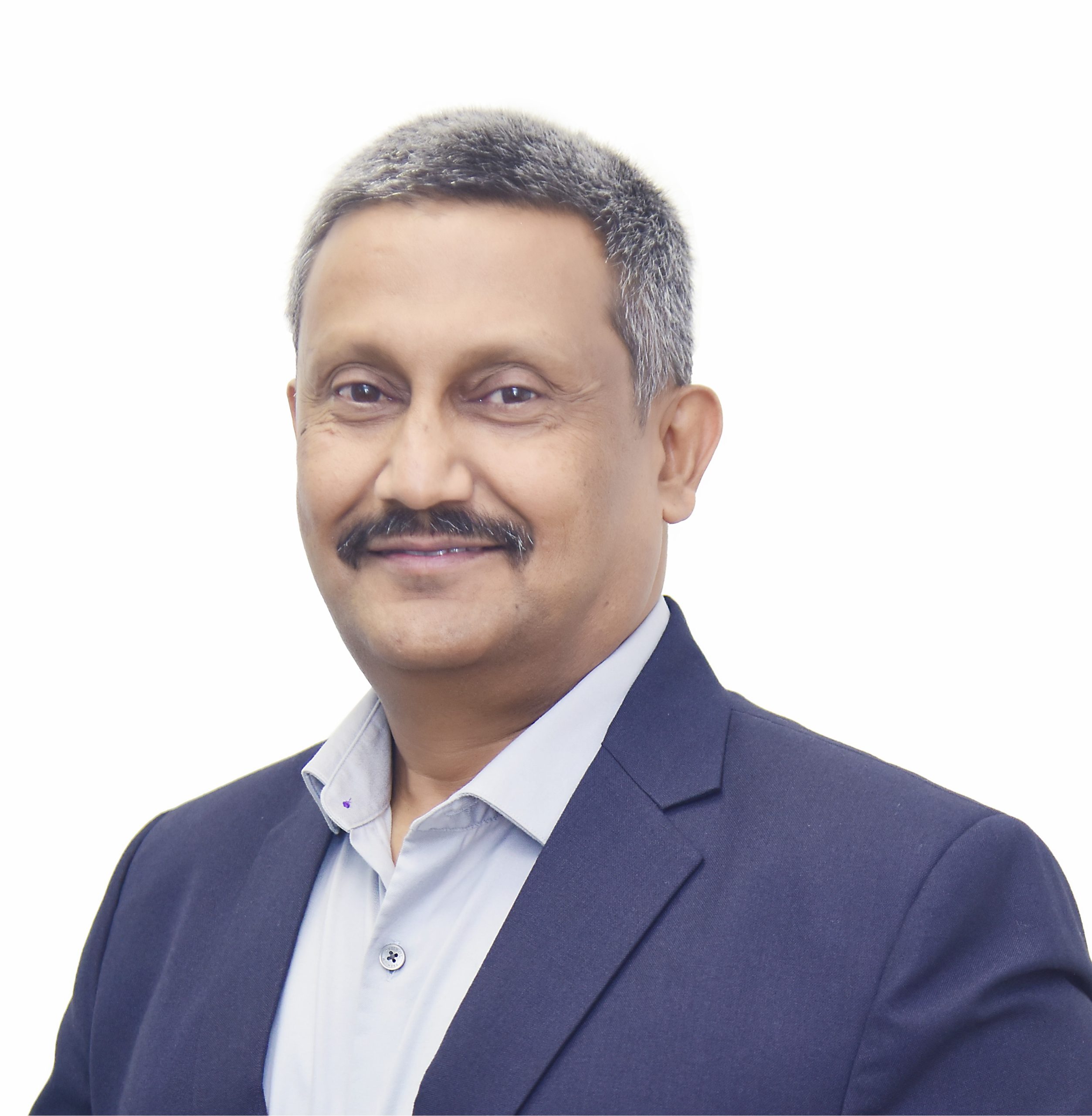


Dr. Pavan Duggal
Senior Advocate, Supreme Court of India
Global Chair, International AI Accountability Forum
When the rules of the internet were written, the Global South was informed. When the rules of data protection were written, the Global South was consulted. When the rules of artificial intelligence are being written today, the Global South is once again in danger of being simply notified. The difference is that this time, the stakes are not commercial. They are existential.
There is no denying the fact that artificial intelligence is growing at a phenomenal pace, and that the pace is set by a very small number of companies in a very small number of countries. Frontier models, agentic AI systems, and the emerging pathways to Artificial General Intelligence and Superintelligence are being built almost entirely outside the Global South. The rest of the world is a consumer of these systems. It is not a co-author of them.
Countries in the Global South are currently clueless about how to deal with AI regulation, and this is not for want of intelligence or intent. It is because they have not seen any advancement or development in frontier AI within their own borders. They are being asked to regulate a technology whose weights they cannot inspect, whose training data they cannot audit, and whose developers they cannot summon. They are, in effect, being asked to write traffic rules for vehicles they have never been allowed to open.
The fact remains that the AI laws which do exist, in the European Union, in China, in South Korea, in Japan, and in a handful of other jurisdictions, were written for the circumstances of those jurisdictions. They presuppose regulators with deep technical capacity, courts with experience in complex technology litigation, and domestic industries that can be compelled to comply. Transplanting those laws into the Global South, clause by clause, produces the appearance of regulation without the substance of it.
I have been advocating for many years that the Global South needs its own legal architecture for AI, not because its values are different, but because its position is different. A country that builds frontier AI regulates it as an industry. A country that only receives frontier AI must regulate it as an incoming force, one that impacts its sovereignty, its security, its data, its economy, and the daily lives of its citizens, from a source it does not control.
That is why the Second Global South Artificial Intelligence Law and Governance Dialogue, 2026 approved and endorsed the Global South Legal Architecture for AI Governance and Accountability. It is a scaffolding of foundational legal principles and building blocks that governments in the Global South can use to make AI accountable and liable within their own jurisdictions, without waiting for a template to arrive from elsewhere. It is anchored in the AI Accountability Framework 2026 and the Global Agentic AI Liability Framework, and it is designed for portability, so that a country in Africa, in South Asia, in Latin America or in the Pacific can adopt it and adapt it without having to build the theory from scratch.
Sovereignty in the age of AI is not merely the power to make laws. It is the power to make laws that actually bite on the systems operating within one’s territory. A frontier model deployed from a server on another continent, making decisions about credit, employment, health and policing inside a Global South nation, is an exercise of power within that nation’s borders. If that nation cannot compel transparency, cannot impose liability, and cannot secure redress for its citizens, then its sovereignty over the digital lives of its own people has already been diluted.
The Universal Declaration of AI Accountability Rights, adopted at the International AI Accountability Forum in New Delhi on 14 May 2026, is the first instrument of its kind to be authored from the Global South and addressed to the whole world. It recognises that human beings everywhere hold rights against AI systems and against those who deploy them, regardless of where the system was built. The New Delhi Compact on AI Accountability then gives countries the concrete mechanisms to implement those rights. Together, they represent the Global South not merely asking for a seat at the table, but bringing its own table.
However, national architecture, however sound, cannot by itself address the largest risk of all. Artificial General Intelligence and Superintelligence, if and when they arrive, will not respect any border. A country that has no frontier AI capability of its own will be the most exposed and the least able to respond. The existential threat that these systems pose to humanity as a race falls, in the first instance, on those with the least power to influence how they are built.
This is why the Global South has the greatest stake of anyone in an International Convention on Agentic AI, AGI, and Superintelligence. Such a convention would establish common minimum standards for the development and deployment of frontier models. It would give every nation, regardless of its technological capacity, a legally recognised interest in how these systems are built, tested, and released. And it would ensure that the sovereignty, security and integrity of countries are not treated as collateral considerations in a race run by a handful of corporations.
Global processes, unfortunately, are moving very slowly. The United Nations has convened a scientific panel and is conducting a global dialogue on AI governance. But the slow pace at which the UN system is dealing with AI shows that it is completely out of sync with the speed at which these systems are advancing. By the time a consensus emerges through the usual multilateral channels, the frontier will have moved twice over.
The Global South cannot afford to wait for that consensus to be handed down. It must generate the demand for a convention itself. Regional groupings, national governments, bar councils, academic institutions and civil society across Asia, Africa and Latin America have both the standing and the numbers to place an International Convention on Agentic AI, AGI, and Superintelligence on the international agenda, and to insist that it be negotiated with the Global South as co-architect rather than as audience.
The way things are currently unfolding, all of humanity is in one single boat. But some of us are seated at the oars and others are seated at the stern, being told where the boat is going. The Global South has now shown, through the Global South Legal Architecture for AI Governance and Accountability, the Universal Declaration of AI Accountability Rights and the New Delhi Compact on AI Accountability, that it can draft the charts as well as anyone.
The time has come to insist that the charts be used. Work in this regard needs to begin in right earnest, and it needs to begin in the capitals of the Global South, not merely in the capitals where frontier AI is built.
Let us wait and watch how things evolve in this regard in the coming times.
About the Author
Dr. Pavan Duggal, Senior Advocate, Supreme Court of India and Founder and Global Chair, International AI Accountability Forum, is an internationally renowned expert on artificial intelligence law and agentic AI regulation and accountability. With 37 years of legal practice and having done pioneering work on Cyberlaw, Cybersecurity Law, AI law and emerging tech law, Dr. Pavan Duggal’s current work focuses on the legal regulation of agentic AI and the development of international AI accountability frameworks, including the New Delhi Compact on AI Accountability and the Universal Declaration of AI Accountability Rights. He can be contacted at pavan@pavanduggal.com.