


Category: National
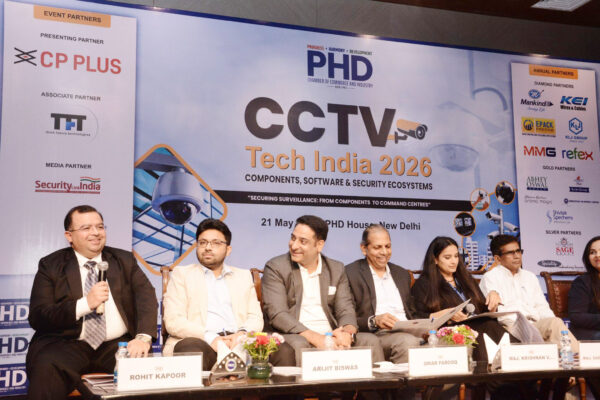
CP PLUS Strengthens Its Leadership in Intelligent Surveillance at InnoMetro 2026 and CCTV TECH INDIA 2026
As India advances toward a future shaped by intelligent infrastructure, digital transformation, and AI-driven security ecosystems, CP PLUS continues to reinforce its position at the forefront of the nation’s taechnological evolution. Demonstrating its steadfast commitment to innovation-led nation building, the company marked a powerful presence at two of the industry’s most influential platforms this May – InnoMetro 2026 and CCTV TECH INDIA 2026. These prestigious gatherings brought together policymakers, infrastructure leaders, security experts, system integrators, technology pioneers, and digital transformation visionaries to collectively shape the future of India’s mobility and surveillance landscape. At both events, CP PLUS emerged not merely as a participant but as a thought leader driving conversations around intelligent surveillance, cyber-secure ecosystems, smart command centers, and future-ready infrastructure. At InnoMetro 2026, CP PLUS showcased its vision for a safer and smarter mobility ecosystem powered by Made-inBharat innovations. As India rapidly modernizes its railway and metro infrastructure under the broader vision of sustainable urban mobility, intelligent surveillance is becoming a cornerstone of operational resilience, passenger safety, and infrastructure efficiency. Aligning with this transformative momentum, CP PLUS highlighted its advanced portfolio of AI-enabled surveillance technologies engineered specifically for the evolving needs of rail and metro environments. Adding depth to the industry dialogue, M.A. Johar, President – Project Business at CP PLUS, joined an important conference session titled ‘Leveraging Digital Technologies in Railways: Opportunities, Risks, and Readiness.’ During the discussion, he shared valuable insights into how emerging technologies such as AI-powered analytics, centralized monitoring systems, intelligent video management, and integrated command centers are reshaping railway security and operational readiness across the nation. Speaking on the occasion, Mr. Johar emphasized that the future of rail infrastructure lies not only in connectivity and speed, but also in the ability to create intelligent, responsive, and secure ecosystems capable of adapting to evolving risks and passenger expectations. He further highlighted CP PLUS’s continued focus on building scalable, indigenous surveillance technologies tailored to India’s rapidly expanding infrastructure landscape. Further strengthening its industry leadership this month, CP PLUS also made a significant impact at CCTV TECH INDIA 2026, a premier platform dedicated to the future of surveillance technology and integrated security systems. Centered around the compelling vision of ‘Securing Surveillance: From Components to Command Centers,’ the event served as a dynamic forum for discussing the next generation of intelligent surveillance ecosystems, cybersecurity integration, AI-driven monitoring, and operational intelligence. CP PLUS leveraged the platform to showcase how the convergence of surveillance hardware, intelligent software, analytics, and cyber resilience is shaping a more connected and secure India. Representing the brand during the inaugural session titled ‘Building Secure & Intelligent Surveillance Ecosystems for India,’ Sanjay Arora and Ms. Swati Samaddar shared expert perspectives on the growing importance of intelligent surveillance infrastructure in safeguarding modern enterprises, public spaces, critical infrastructure, and smart city ecosystems. Their participation underscored how surveillance today has evolved far beyond passive monitoring, emerging instead as a strategic layer of intelligence capable of enabling proactive threat detection, operational optimization, predictive insights, and enhanced situational awareness. Adding further momentum to these conversations, Omar Farooq participated in the insightful session ‘From Data to Decisions: VMS, SOC & Cybersecurity in CCTV Systems.’ During the discussion, he highlighted the increasing significance of integrated Video Management Systems (VMS), Security Operations Centers (SOC), and cyber-secure surveillance architectures in ensuring operational continuity and intelligent decision-making across large-scale deployments. His insights reflected the growing reality that surveillance ecosystems today must not only capture information but also transform data into actionable intelligence while remaining resilient against evolving cyber threats. CP PLUS’ impactful participation across both events reflects the company’s larger vision of enabling India’s digital transformation journey through indigenous innovation, intelligent surveillance technologies, and future-ready security ecosystems. With a robust portfolio spanning AI-powered cameras, integrated command and control centers, advanced video analytics, intelligent VMS platforms, cybersecurity-focused solutions, and smart monitoring technologies, the company continues to play a defining role in building safer cities, smarter mobility systems, and resilient infrastructure networks for the nation. As India accelerates toward a digitally empowered future, CP PLUS remains steadfast in its mission to engineer technologies that not only secure environments, but also strengthen trust, intelligence, and preparedness across every layer of modern infrastructure.

Hikvision Introduces Video & Audio Convergence Solution Featuring Real-time Deterrent
Hikvision, the world’s leading provider of innovative security products and solutions, has introduced its Video & Audio Convergence Solution to the market, featuring an innovative real-time intrusion deterrent feature. With Hikvision’s new Video & Audio Convergence Solution, IP speakers now can be linked with cameras, access control systems, and alarm devices. When the CCTV system automatically detects an intrusion or if the alarm system is activated, IP speakers can immediately play programmed audio warnings to drive away would-be intruders. The audio message acts as a deterrent to possible intrusion actions as they happen. Loss and damage can be prevented, and footage of the event gets recorded for investigation and evidence collection. Along with imported audio warnings, operators can also speak via the IP speakers to give live warnings when notified of an intrusion. Efficient security operations and digital transformation are further supported by alarm video which can pop up automatically. Scheduled audio messaging and public information broadcasting are two more practical functions made possible by Hikvision’s Video & Audio Convergence Solution. IP speakers can play recorded audio recordings according to a schedule, and operators can use the audio system to broadcast public information as needed to audiences as well. Frank Zhang, General Manager of the International Product Marketing Department at Hikvision said, “We are excited to introduce our innovative Video & Audio Convergence Solution to the market. With the linkage between video and audio, our solution will empower security systems with cautionary and immediate processing abilities. We believe convergence will be a new trend in the near-future for the security industry.” With its valuable functionality, Hikvision Video & Audio Convergence can be applied across a wide range of scenarios and applications – including perimeter security, petrol stations, metro and railway stations, office buildings, and much more. Continue reading for more details on various applications. Perimeter Security In luxury homes equipped with outdoor CCTV cameras, trespassers will be recorded by security cameras and NVRs, but no immediate deterrent actions can be taken. Now with the Hikvision Video & Audio Convergence Solution, audio warnings can be automatically triggered to deter intruders, helping to prevent loss of property or more serious incidents. Petrol Stations Petrol stations are vulnerable to intrusions during non-business hours and damage to petrol storage facilities can cause disasters. Currently, with CCTV systems alone, no immediate action can be taken when an intrusion occurs. But the Hikvision Video & Audio Convergence Solution now provides an intelligent detection function, alarm triggering, and audio warnings. At petrol stations with self-payment systems but no outside service staff, the Hikvision Video & Audio Convergence Solution enables operators to speak to customers remotely via the IP speakers. They can help customers and prevent security incidents without putting themselves in danger. And in emergency situations, the audio system can be used to broadcast critical information to staff and customers. We are excited to introduce our innovative Video & Audio Convergence Solution to the market. With the linkage between video and audio, our solution will empower security systems with cautionary and immediate processing abilities. We believe convergence will be a new trend in the near-future for the security industry Frank Zhang, General Manager, International Product Marketing Department, Hikvision Metro and Railway Stations Platforms are dangerous during peak hours when passengers cross warning lines and move too close to the edge. The Hikvision Video & Audio Convergence Solution helps monitor people flow and can identify when passengers cross warning lines. Staff can use the solution to broadcast live audio warnings and train schedule information whenever it’s needed. Office Buildings CCTV and access control systems are commonly used in office buildings. However, when an intrusion or security anomaly has been detected, operators rely on sending on-site guards to check the situation. Efficiency is low and guards often arrive too late to prevent an incident. In such a case, Hikvision‘s Video & Audio Convergence Solution can send an immediate audio warning to deter an intrusion, as well as build video and audio linkage for operators to check remotely via live view. Similarly, during emergency situations, security operators can use the audio system to broadcast information to people inside a building.

Cloudflare LaunchesDesign Partner Designation to Accelerate Secure AI and Seamless SASE Adoption
Introduces the Cloudflare One Stack – a robust library of AI skills – tostreamline SASE deployment alongside select global partners including Arctiq, Consortium, CMT, Presidio, Softcell, The Missing Link, and others Cloudflare, Inc., the leading connectivity cloud company, recently announced the launch of its Cloudflare One Design Partner Designation. The new initiative will help customers safely adopt AI, simplify their networking, and defend against an expanding attack surface. As a high-priority tier within Cloudflare’s PowerUP Partner Program, this designation focuses on the Cloudflare One suite with a select group of partners including Arctiq, Consortium, CMT, Presidio, Softcell, The Missing Link, among others worldwide. The program will equip these partners with the deep technical expertise required to secure against today’s threats and accelerate innovation efforts. Migrating away from legacy security architectures is traditionally slow and risky. When companies rely on a patchwork of siloed tools, they face severe friction. Auditing existing environments, mapping out new architectures, and avoiding configuration errors during vendor transitions can create dangerous vulnerabilities. This fragmentation doesn’t just create security gaps – it completely stalls innovation, which is particularly dangerous as AI adoption accelerates. Cloudflare One has evolved into a partner-led engine and our new Design Partner Designation is built to propel long-term growth. This new framework represents our deepest channel co-investment yet. We are equipping our elite partners with the financial runway and technical mastery they want to scale the Cloudflare One platform. By blending our unified SASE architecture with partner expertise, we are turning complex network migrations into high-margin, high-value consulting opportunities for the AI era Tom EvansChief Partner Officer at Cloudflare “Cloudflare One has evolved into a partner-led engine and our new Design Partner Designation is built to propel long-term growth,” said Tom Evans, Chief Partner Officer at Cloudflare, “This new framework represents our deepest channel co-investment yet. We are equipping our elite partners with the financial runway and technical mastery they want to scale the Cloudflare One platform. By blending our unified SASE architecture with partner expertise, we are turning complex network migrations into high-margin, high-value consulting opportunities for the AI era.” To support the launch, Cloudflare is introducing the Cloudflare One Stack. This framework provides a robust library of authoritative AI skills that security teams can use with any agent to evaluate, deploy, and manage Cloudflare One. Built directly on top of Cloudflare One, these skills provide structured knowledge, decision trees, and tool definitions that AI agents can automatically use. By giving partners access to a central repository of blueprint configurations and automated workflows, Cloudflare eliminates tedious manual provisioning. Instead, partners can focus on delivering high-margin managed services tailored for the AI era. Cloudflare One design partner testimonials

Recognition, Resilience and Responsibility: Why Platforms Like Surakshit NCR 2026 Matter to India’s Security Ecosystem
For decades, the security profession has operated largely outside the public spotlight. Whether in law enforcement, fire and emergency services, disaster response, corporate security, cyber defence, or critical infrastructure protection, the work of security professionals has traditionally been measured not by visibility but by absence. When security functions effectively, incidents are prevented, risks are mitigated, and crises are contained before they become headlines. Yet, as India’s urban centres continue to expand, digital transformation accelerates, and threats become increasingly interconnected, there is a growing recognition that the people and institutions responsible for safety deserve greater acknowledgement. Across sectors, organisations are beginning to understand that recognition is not merely ceremonial. It serves as an important mechanism for professional validation, knowledge sharing, and the promotion of best practices. Against this backdrop, the upcoming Surakshit NCR Awards 2026 arrives at a particularly relevant moment for the security industry. Conceptualised by PSP and presented by SymX, with CAPSI and Pinkerton serving as Knowledge Partner, and supported by FSAI, GACS, WEC and Cyber Buddha, the platform brings together industry leaders, practitioners and institutions committed to advancing safety, security and resilience across sectors. Scheduled as the next chapter in a series of city-focused safety and security recognitions, the NCR edition seeks to acknowledge individuals, teams, organisations, and government agencies contributing to the safety and resilience of the National Capital Region. More importantly, it reflects a broader shift within the profession itself. Security is increasingly being viewed not as a support function but as a strategic pillar of organisational and societal resilience. The expanding definition of security The traditional boundaries of security have undergone significant transformation over the past decade. Physical security, once centred largely around access control, guarding, surveillance, and asset protection, now operates within a far more complex environment. Security leaders today are expected to manage risks associated with cyber threats, insider vulnerabilities, business continuity, supply chain disruptions, misinformation, and geopolitical uncertainties. This evolution has elevated the role of security professionals across both public and private sectors. In cities such as Delhi, Gurugram, Noida, Faridabad, and Ghaziabad, security management increasingly requires collaboration among law enforcement agencies, emergency responders, cyber security specialists, infrastructure operators, corporate security teams, and technology providers. For decades, the security profession has operated largely outside the public spotlight. Whether in law enforcement, fire and emergency services, disaster response, corporate security, cyber defence, or critical infrastructure protection, the work of security professionals has traditionally been measured not by visibility but by absence. When security functions effectively, incidents are prevented, risks are mitigated, and crises are contained before they become headlines The National Capital Region presents a particularly unique security environment. It hosts central government institutions, diplomatic missions, multinational corporations, transportation networks, educational institutions, healthcare facilities, industrial clusters, and critical infrastructure. Managing safety across such a diverse ecosystem requires coordinated effort from thousands of professionals whose contributions often remain largely unseen. Recognition platforms that focus on these contributions therefore serve an important purpose. They highlight the practical work being undertaken across the security value chain and provide visibility to initiatives that may otherwise remain confined within organisational boundaries. Learning from the momentum of previous editions One of the most interesting aspects of the Surakshit initiative has been its progression across different cities. The Mumbai edition in 2025 demonstrated that there is considerable appetite within the security community for platforms that celebrate service, professionalism, and dedication. What distinguished the Mumbai event was its emphasis on frontline contributions. The programme brought together senior police officials, fire service leaders, disaster response personnel, security practitioners, and industry stakeholders under a common theme of appreciation for those who contribute to public safety. The event also highlighted an important reality often overlooked in discussions about security technology and infrastructure. Behind every system, protocol, and response framework are individuals who make critical decisions under pressure and often work without public recognition. The participation of senior leaders from law enforcement, emergency services, and industry reflected a growing understanding that security outcomes depend on collaboration rather than isolated effort. The Hyderabad edition later expanded this conversation by placing greater emphasis on the convergence of physical and cyber security. This was particularly relevant given Hyderabad’s position as one of India’s leading technology hubs. Discussions during the event highlighted the increasing need for integrated approaches to risk management, where cyber resilience and physical security are viewed as complementary disciplines rather than separate functions. That perspective resonates strongly across the broader industry. Physical security, once centred largely around access control, guarding, surveillance, and asset protection, now operates within a far more complex environment. Security leaders today are expected to manage risks associated with cyber threats, insider vulnerabilities, business continuity, supply chain disruptions, misinformation, and geopolitical uncertainties Today, a disruption to operations may originate from a cyber incident, a physical breach, a supply chain interruption, or a natural disaster. Effective security leadership requires the ability to understand and respond across multiple domains simultaneously. The progression from Pune to Mumbai and Hyderabad suggests that the Surakshit platform has gradually evolved from a regional recognition initiative into a broader industry conversation around resilience, leadership, and professional excellence. Why NCR represents a significant milestone The National Capital Region offers a particularly compelling setting for such a platform. Unlike many metropolitan regions, NCR combines the complexity of governance, commerce, diplomacy, infrastructure, and urban development within a single interconnected geography. The region is home to major public institutions, transportation corridors, financial centres, industrial facilities, technology parks, educational campuses, healthcare networks, and residential communities. Each of these environments presents unique security requirements and operational challenges. Professionals responsible for protecting these environments often operate under conditions that demand continuous vigilance and adaptation. The Surakshit NCR Awards 2026 recognises this diversity through a broad range of categories that encompass government officials, security professionals, cyber security teams, service providers, consulting projects, fraud prevention initiatives, and safe premises across sectors including hospitality, banking, healthcare, manufacturing, education, and residential communities. Such an approach reflects the reality that safety is not the responsibility of any single stakeholder. A secure…
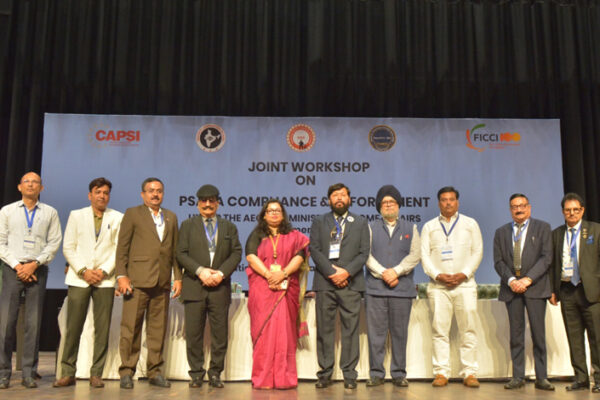
MHA Reaffirms Commitment to ‘Ease of Doing Business’ for Private Security Industry at National Workshop on PSARA Compliance & Enforcement
The Joint Workshop on PSARA Compliance & Enforcement, organized under the aegis of the Ministry of Home Affairs (MHA), Government of India, concluded successfully at the Constitution Club of India, New Delhi, with strong participation from government authorities, regulatory bodies, and representatives of the private security industry. The workshop brought together senior officials from the Ministry of Home Affairs, State Controlling Authorities, Directors General of Police (DGPs), Additional Directors General of Police (ADGPs), and more than 400 representatives from private security agencies, industry associations, and stakeholders from across the country to deliberate on strengthening the implementation of the Private Security Agencies (Regulation) Act, 2005 (PSARA). The event served as an important platform for constructive engagement between policymakers, regulators, and industry leaders with a shared objective of strengthening compliance mechanisms, improving regulatory effectiveness, promoting professionalism, and enhancing Ease of Doing Business for India’s rapidly growing private security sector. The programme commenced with a welcome address by Kunwar Vikram Singh, Chairman, Central Association of Private Security Industry (CAPSI), who highlighted the critical contribution of the private security industry in supporting national security, public safety, and employment generation. He emphasized the need for stronger collaboration between regulatory authorities and industry stakeholders to ensure effective and uniform implementation of PSARA across all states. Ms. Kriti Garg, IAS, Deputy Secretary (Police Modernization), Ministry of Home Affairs, delivered an insightful presentation outlining the Ministry’s perspective on PSARA compliance, emerging regulatory priorities, and ongoing initiatives aimed at strengthening the private security ecosystem through improved governance and accountability. The workshop witnessed active and meaningful discussions during a high-level panel session involving representatives from leading industry bodies including FICCI, SAI, KSSA, BSRU and other stakeholders. Participants shared practical experiences from the field and discussed key challenges in areas such as licensing procedures, compliance requirements, training standards, manpower development, and the need for greater regulatory harmonization across states. A dedicated session featuring State Controlling Authorities facilitated direct dialogue between regulators and industry participants. The discussions focused on identifying practical measures to simplify procedures, improve implementation consistency, and address operational concerns while maintaining the highest standards of compliance and public safety. The keynote address was delivered by R. Prasana, IAS, Joint Secretary (Police Modernization), Ministry of Home Affairs, who reiterated the Government’s vision of strengthening the private security sector as a vital partner within India’s overall security architecture. He emphasized the importance of a robust, compliant, and professionally driven private security ecosystem that can effectively support national security objectives while contributing significantly to employment and economic growth. The interactive open-house session that followed witnessed enthusiastic participation from attendees and provided an opportunity for direct engagement with policymakers and regulatory authorities. Participants raised sector-specific concerns and exchanged views on practical solutions aimed at improving compliance processes and operational efficiency. The workshop concluded with a strong consensus on the need for continued collaboration between government authorities and industry stakeholders. Key recommendations emerging from the deliberations included enhancing regulatory coordination, promoting standardized best practices, strengthening training and skill development frameworks, improving compliance systems, and introducing measures that further support Ease of Doing Business for the private security sector. The successful conduct of the workshop marks another important step towards building a stronger, more transparent, and future-ready private security ecosystem in India. About CAPSI The Central Association of Private Security Industry (CAPSI) is the apex industry body representing the private security sector in India. CAPSI works closely with government agencies, industry stakeholders, and training institutions to promote professionalism, skill development, policy advocacy, and excellence within the private security industry.

The Fortinet 2026 Global Threat Landscape Report Reveals a Surge in AI-Enabled Cybercrime, Contributing to a 389% Increase in Ransomware Victims Year-over-Year
Fortinet leverages threat intelligence to disrupt global cybercrime, transforming awareness into actionable insights Fortinet®, the global cybersecurity company driving the convergence of networking and security, recently released the 2026 Global Threat Landscape Report from FortiGuard Labs. Derived exclusively from FortiGuard Labs telemetry, the latest annual report is a snapshot of the active threat landscape and trends from 2025, including a comprehensive analysis across all tactics used in cyberattacks, as outlined in the MITRE ATT&CK framework. The data reveals that cybercrime no longer functions as a series of isolated campaigns – it operates as a system, with malicious hackers operating across an end-to-end life cycle and compressing the attack life cycle with shadow agents. “Cybercrime is one of the world’s most pervasive and costly threats, and our latest Global Threat Landscape Report reveals how malicious actors are beginning to leverage agentic AI to execute more sophisticated attacks. As cybercriminals increasingly use AI to bolster their tactics, cyber defenders must evolve cybersecurity operations into an industrialized defense and adopt AI-enabled tools that respond at the same velocity as modern threats,” said Derek Manky, Chief Security Strategist and Global VP of Threat Intelligence, Fortinet FortiGuard Labs. Attack techniques and targeted sectors in today’s threat landscape Modern cybercrime crosses borders and sectors, and even traditional definitions of crime itself. As attacks grow more sophisticated and interconnected, key findings from the latest FortiGuard Labs Global Threat Landscape Report reveal: Inside the habits of modern, AI-enabled cybercriminals As FortiGuard Labs Cyberthreat Predictions for 2026 projected, the most capable threat groups function as semi-autonomous enterprises, supported by shadow agents, access brokers, and botnet operators who provide services on demand. Key findings from the 2026 Global Threat Landscape Report show: Putting awareness into action: Disrupting cybercriminal ecosystems Fortinet is committed to disrupting cybercrime by collecting and sharing threat intel and actively working to combat cyberthreats on a global scale. A recent collaborative effort spearheaded by INTERPOL and supported by Fortinet through the World Economic Forum Cybercrime Atlas resulted in the takedown of a cybercriminal network. Operation Red Card 2.0 took down infrastructure and operators behind online scams, mobile money fraud, and fraudulent loan applications in Africa. Fortinet is a founding member of the Cybercrime Atlas, a global public-private collaboration effort hosted by the World Economic Forum that uses open-source intelligence to map cybercriminal networks, identify infrastructure vulnerabilities, and support joint disruption operations with law enforcement such as the recent Operation Red Card 2.0 and Operation Serengeti 2.0. The 2026 Global Threat Landscape Report reveals that incentivizing the disruption of cybercrime has never been more important. To empower defenders to stay ahead of cybercriminals, Fortinet and Crime Stoppers International launched the Cybercrime Bounty program to provide a secure, anonymous channel for citizens and ethical hackers to submit information about cyberthreats.
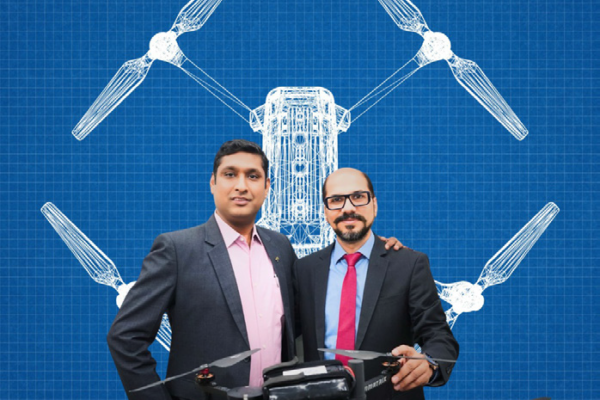
Matrix Geo to Deploy Digital Twin Technology for New Broad Gauge Rail Corridor Project
Matrix Geo Solutions Limited, a geospatial technology and engineering consultancy, has been awarded a project to deploy Digital Twin technology for a new Broad Gauge railway corridor in collaboration with the Ajmer Division of Indian Railways. The mandate covers the proposed rail corridor connecting Taranga Hill and Abu Road via Ambaji. The project will use geospatial data and 3D modelling to support planning and design of the alignment. Under this project, Matrix Geo will carry out drone-based LiDAR aerial surveys along the proposed route. The surveys will capture detailed ground data to generate topographic maps, elevation models and orthophoto mosaics. These datasets will form the base layer for design and analysis. The company will also build a 3D Digital Twin of the existing terrain and surrounding environment. The model will include features such as buildings, roads, vegetation, water bodies and utility infrastructure, creating a detailed representation of the project area. A separate 3D model of the proposed railway corridor will be developed to Level of Development 200 standards. This will include elements such as formation width, toe lines, bridges, tunnels and station structures. “This project brings together high accuracy data and 3D modelling to support better planning for railway infrastructure. Digital Twin technology allows teams to test and refine designs before execution. Our focus is to create a reliable digital base that supports planning, coordination and long term use,” said Amit Sharma, Whole Time Director, Matrix Geo Solutions Limited. The project will also include aerial simulation and flythrough visualisations of the proposed corridor. These outputs will support stakeholder reviews and project communication, while also helping improve route planning, reduce rework during construction and strengthen coordination across teams. The same models can later support operations and maintenance. Through this initiative, Matrix Geo continues to expand its experience in delivering large scale geospatial and digital engineering projects across infrastructure sectors. It also adds to the company’s work in supporting more connected and data-driven transportation networks in India. Matrix Geo Solutions is primarily engaged in providing comprehensive geospatial and consulting services, with a strong focus on Drone-as-a-Service (DaaS) and Geospatial & Remote Sensing solutions. Through DaaS, the company offers high-resolution drone-based aerial surveys for a wide range of applications including mapping, surveillance, infrastructure inspection, and other critical data-driven decision-making requirements.

CP PLUS Launches ‘CP PLUS MATE’A Smart WhatsApp Chatbot Redefining Customer Assistance
In a decisive step towards making customer engagement more seamless, responsive, and intelligent, CP PLUS has announced the launch of CP PLUS MATE, an advanced chatbot assistance service integrated with WhatsApp. Designed to deliver instant support at users’ fingertips, this innovation marks a significant leap in how customers interact with security technology providers in today’s fast-paced digital landscape. At a time when immediacy defines user expectations, CP PLUS MATE emerges as a powerful, always-on assistant – bridging the gap between customers and comprehensive support services with remarkable ease. By simply sending a ‘Hi’ on WhatsApp, users unlock a dynamic ecosystem of assistance that is intuitive, accessible, and available anytime, anywhere. A smarter way to connect CP PLUS MATE has been thoughtfully engineered to cater to a wide spectrum of user needs. Whether it’s troubleshooting technical concerns, exploring product features, or accessing essential resources, the chatbot delivers quick, accurate, and structured responses – eliminating delays and enhancing user satisfaction. The platform offers – This holistic approach ensures that every user interaction is not only efficient but also enriching. Innovation meets accessibility The integration with WhatsApp, one of the most widely used communication platforms, ensures that users don’t need to adapt to new systems or interfaces. Instead, CP PLUS brings its entire support infrastructure into a familiar environment, simplifying the experience while amplifying convenience. Additionally, the inclusion of a QR-based ‘Scan to Talk’ feature further streamlines access, allowing users to connect instantly without manual input, making the journey from query to solution almost effortless. Driving the future of customer experience With CP PLUS MATE, the brand reinforces its commitment to innovation that goes beyond products and extends into service excellence. This launch is not just about introducing a chatbot; it is about redefining how customers engage with security solutions, making interactions faster, smarter, and more human-centric. As digital transformation continues to reshape industries, CP PLUS remains at the forefront – leveraging intelligent technologies to build stronger, more responsive relationships with its customers. In a world where every second counts, CP PLUS MATE ensures that help is never more than a message away.

Hikvision India Introduces Latest DFMD and HHMD Security Inspection Products to Enhance Efficiency
Hikvision has recently introduced the latest DFMD and HHMD security inspection products to enhance efficiency in various application scenarios. In a world where threats evolve faster than ever, perimeter security begins before a person or vehicle enters a facility. Hikvision’s Security Inspection Portfolio is engineered to detect concealed threats at entry points – weapons, explosives, contraband, and unauthorized items – without compromising throughput or user experience. These products offer the first line of defence to detect, deter and defend the threats from causing any kind of disruptions. Moving beyond its leadership in video surveillance, Hikvision India delivers a unified, AI-enhanced security inspection ecosystem that integrates seamlessly with cameras, access control, and command centers. Backed by Hikvision India’s Make-in-India manufacturing and pan-India service centers, the portfolio is purpose-built for India’s airports, metros, government buildings, critical infrastructure, and enterprises. These products reduce false alarms, accelerate queues, and give security teams real-time, actionable intelligence – all on one platform. Metal Detectors are broadly used for added security in the security check operations. Hikvision’s Walkthrough Metal Detector uses highly accurate thermal technology to perform safe, contactless temperature measurement for employees, staff and visitors while scanning for prohibited items. Hikvision has recently introduced the latest DFMD and HHMD security inspection products to enhance efficiency in various application scenarios. In a world where threats evolve faster than ever, perimeter security begins before a person or vehicle enters a facility. Hikvision’s Security Inspection Portfolio is engineered to detect concealed threats at entry points – weapons, explosives, contraband, and unauthorized items – without compromising throughput or user experience. These products offer the first line of defence to detect, deter and defend the threats from causing any kind of disruptions Door Frame Metal Detector (DFMD) and Hand-Held Metal Detector (HHMD) Series, engineered for airports, metros, government buildings, stadiums, hotels, and critical infrastructure. The new portfolio combines high-sensitivity detection with AI-powered analytics to reduce false alarms, accelerate screening, and enhance operator efficiency. The ISD-SMG924L-H is a 24-zone walk-through metal detector is a specially developed product for security inspection requirements. It is designed for high-security environments like airports, government buildings, and industrial facilities to detect metallic threats while maintaining a high flow of people. Key technical specifications: Practical features: Hand-held Metal Detectors (HHMD) Hikvision India offers Hand Held Metal detectors (NP-SMH003 Handheld Metal Detector) for various application scenarios of physical security management functions across verticals. The NP-SMH003 handheld metal detector is lightweight and agile, and can be used to detect metals on individuals. It is suitable for places with large crowds that require security checks, such as public security and transportation government offices, hubs, business parks, office buildings, schools, hospitals, cultural and scenic areas, and large security events. Key features:
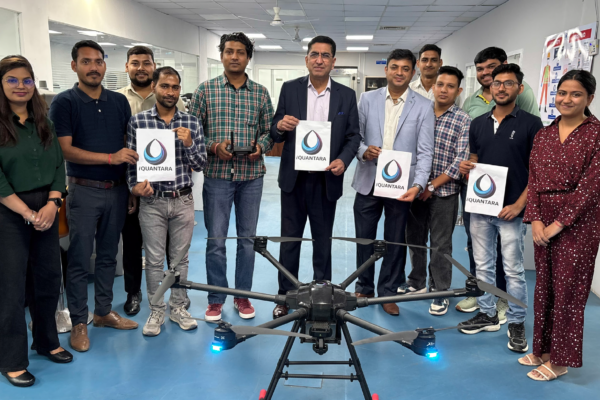
SPH Aviation Pvt Ltd. Launches iQuantara to Drive Indigenous Defence Drone Innovation in India
Gurugram-based SPH Aviation Pvt Ltd., recently announced the launch of iQuantara, its dedicated defence-focused brand aimed at advancing indigenous drone technologies for India’s evolving security and surveillance needs. With this strategic move, SPH marks its expansion into the defence and aerospace domain, aligning with the national vision of self-reliance in critical defence technologies. iQuantara evolves from SPH’s defence-focused initiatives, delivering earlier under the SPH Aviation name. The transition to iQuantara reflects a renewed strategic focus, a sharper brand identity and an expanded vision to scale indigenous drone technologies for defence applications in India. iQuantara will focus on the design, development, and deployment of next-generation integrated unmanned aerial systems (UAS) tailored for Indian defence applications, including but not limited to Surveillance and Intelligence Collection, TACC3I Systems, Swarm based Operational Missions, Border Monitoring, GIS based Mapping, Logistics Support, Emergency Management and Autonomous UAVs. The new brand builds on AVPL’s existing capabilities in drone innovation, manufacturing, and training, leveraging its ecosystem-driven approach to scale high-impact solutions for national priorities. iQuantara also plans to manufacturing 500 plus drones in the coming year and scale production capacity to 1000 units annually. iQUANTARA will also expand R&D capabilities to improve telemetry, remote controls, data exchange, auto piloting in line with India’s push for indigenous defence production. As India continues to strengthen its domestic defence manufacturing ecosystem, iQuantara aims to contribute by developing reliable, scalable, and indigenously built drone platforms. The initiative reflects AITMC Venture’s long-term vision to evolve from a sector-specific drone solutions provider into a multi-domain technology player supporting both civilian and strategic applications. The company is collaborating with defence R&D agencies and Premier IITs to accelerate innovation and deployment. iQuantara evolves from SPH’s defence-focused initiatives, delivering earlier under the SPH Aviation name. The transition to iQuantara reflects a renewed strategic focus, a sharper brand identity and an expanded vision to scale indigenous drone technologies for defence applications in India Lt. Gen (Dr) RK Anand, Chief Executive Officer, said, “iQuantara has been envisioned as a forward-looking platform to develop indigenous drone technologies that can address the dynamic needs of modern defence operations. Our focus is on building reliable, integrated mission-ready systems that are designed, developed, and manufactured in India. With our experience of defence services, I see strong potential for indigenous drone systems in transforming defence preparedness.” Dr. Preet Sandhu, Founder & Managing Director, AVPL International & Promoter, iQuantara, added, “The launch of iQuantara marks a significant step at AITMC Venture’s journey as we expand from agricultural drone applications into the defence sector. With our strong foundation in drone technology and skilling, we see this as a natural progression towards supporting India’s self-reliance in deep-tech areas while building a future-ready innovation ecosystem. Over the next 5 years, we aim to invest ₹75 crores and expand our reach to 15% of defence markets.” About iQuantara iQuantara is a defence-focused drone technology brand committed to building indigenous unmanned aerial systems for strategic and security applications. With a focus on innovation, reliability, and scalability, iQuantara aims to develop advanced drone solutions that support surveillance, mapping, and tactical operations. Backed by AVPL International’s expertise in drone technology and ecosystem development, iQuantara is positioned to contribute to India’s growing defence and aerospace capabilities. About AITMC Ventures Ltd. AITMC Ventures Ltd. (AVPL International) is a Gurugram-based leader in skill development, future-skills training, and indigenous drone technology. Since its inception in 2016, the company has partnered with national and state agencies to train over 1,00,000 youth across India under flagship government programs. Expanding its capabilities beyond training, AVPL manufactures DGCA-certified agricultural drones under its in-house R&D vertical and supports widespread field adoption through drone-as-a-service models. The company also develops skill and incubation hubs in collaboration with AICTE, state ITIs, polytechnics, and universities, promoting hands-on learning in drones, robotics, AI, agritech, and advanced technologies. Across its training, manufacturing, incubation, and service initiatives, AVPL International works closely with government bodies, educational institutions, and industry partners to strengthen India’s future workforce and advance the nation’s Make in India and Atmanirbhar Bharat goals.