securitylinkindia

Large-area Surveillance with 90% Fewer Cameras

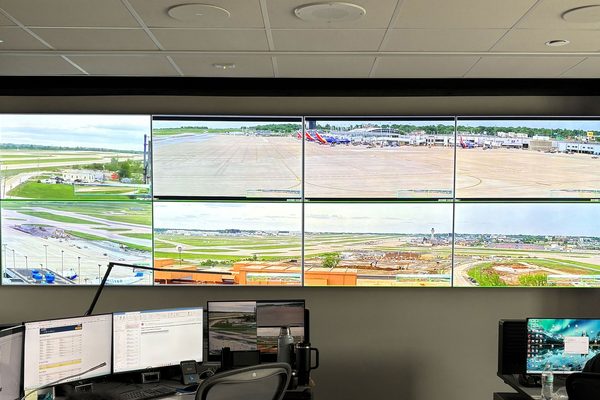
As Missouri’s largest and busiest aviation facility, St. Louis Lambert International Airport (STL) welcomed more than 15 million passengers in 2025. To implement a digital 360-degree surveillance system and secure over 70 million square feet of airport infrastructure, STL required a solution capable of covering vast spatial areas while significantly reducing infrastructure costs and complexity. At the same time, the airport aims to implement AI-applications to optimize its operations. With Dallmeier’s Panomera® multifocal sensor technology, STL achieved comprehensive high-resolution coverage with approximately 90% fewer cameras and 75% less infrastructure compared to the original surveillance design. Securing large airport areas with maximum efficiency Due to the continuous growth in passenger numbers, the STL Operations and Security Teams decided to modernize the existing video security system in June of 2018 in two areas – Firstly, in surface parking areas to increase customer safety and eliminate criminal activity such as vandalism and theft. The second solution targeted the airport’s four runways, the taxiways, and all terminal buildings to monitor the activities of aircraft, ground vehicles, and airport personnel. Traditional camera concepts reached their limits STL Airport Operations Team contacted their security integrator, Tech Electronics, to design and deploy an updated camera solution. The initial design used a combination of PTZ and single sensor IP cameras and would have required more than 130 cameras in total. From an infrastructure perspective, this would have required the installation of more than 42 new camera poles and the corresponding infrastructure (cable, network, power etc.). The airside solution required significantly more technology to achieve the desired surveillance coverage. So, STL and Tech Electronics decided to look for another, more economical solution. Panomera® – the surveillance technology that changed everything During their technology search, STL discovered the Dallmeier Panomera® multifocal sensor technology, which was developed specifically for surveillance of large spatial areas using the fewest number of cameras to achieve the required surveillance coverage. David Kulinsky, Deputy Director of Operations & Maintenance at STL, recalls, “When we discovered Panomera® and saw that one Panomera® camera can capture large areas at high resolution and replace several single-sensor cameras, including the costly infrastructure, it became clear that Panomera® provided STL a more economical solution with higher quality images at a lower overall cost.” Talking TCO: 90% fewer cameras, 75% less infrastructure The test installation at the airport proved the image quality of the Panomera®. Kevin Hubble, Services Manager for STL with Tech Electronics, comments, “I was surprised at how few Panomera® cameras were needed to replace several PTZs and single sensor cameras and display the images in a much more user-friendly format. The SeMSy® Compact VMS software enables the user to view a single high-resolution image of the entire scene with simple digital PTZ controls to ‘zoom’ into any part of the image in greater detail.  The result is an intuitive user experience resulting in greater operational efficiency – not to mention the superior high resolution video coverage.” To date, STL has installed more than 27 Panomera® cameras. Multiple IPS 10000 recording appliances and 5 user workstations with the SeMSy® Compact VMS client software complete the video system. Compared to the original planning, this resulted in approximately 90% reduction in the number of cameras and approximately 75% reduction in infrastructure required for the installation. Digital 360° surveillance with only 10 cameras A particular highlight of the deployment is STL’s digital 360-degree surveillance concept. Using only ten Panomera® cameras, the airport achieves comprehensive situational awareness across large airside areas including runways, taxiways and apron operations. Unlike conventional camera concepts that require numerous PTZ and single-sensor cameras, Panomera® delivers a complete high-resolution overview in a single seamless image. This enables operators to monitor critical airport activities more efficiently across large spatial areas, while significantly reducing infrastructure complexity, maintenance effort and overall operating costs. AI-supported operational efficiency and passenger flow optimization Beyond security applications, STL is also evaluating Panomera® technology for operational process optimization inside the terminals. As part of a planned deployment in the ticketing area, a Panomera® V8 system will support AI-based video analysis functions such as passenger flow and waiting time analysis. The objective is to improve operational efficiency, optimize check-in processes and enhance the passenger experience – while leveraging the same high-resolution surveillance infrastructure already deployed throughout the airport. An efficient and future-proof solution David Kulinsky with STL summarises, “Any technology project at an airport must deliver a solution that is operationally efficient, resilient, and built for long-term performance. Our decision to deploy Panomera® cameras significantly enhanced overall surveillance coverage across the airport while reducing the technology and infrastructure footprint required to support it. “The system also provides the ability to zoom into specific areas without sacrificing full-scene situational awareness or recording capabilities – an operational advantage over traditional PTZ cameras, which only record the field of view being actively monitored and can limit broader operational visibility.” Read Also:- Gallagher Security Invests in Leadership and Technical Expertise to Drive Growth in India

Read More
cp plus

CP PLUS Leads the Way at ELCINA’s SES 2026 and National Conference on Perimeter Security

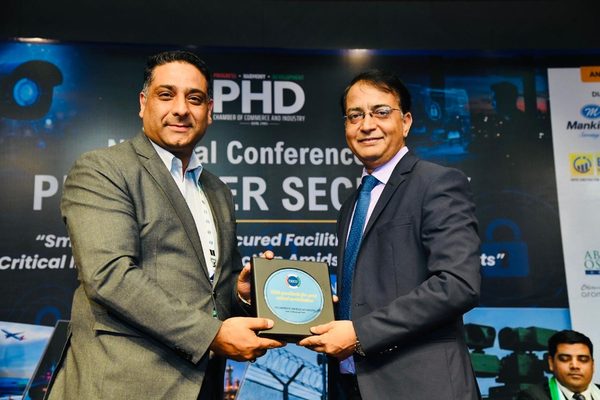
CP PLUS, one of India’s leading security and surveillance brands, continues to strengthen its leadership in advanced security technologies with a prominent presence at two important industry platforms – ELCINA’s Security & Electronics Summit (SES) and the National Conference on Perimeter Security. Across both forums, CP PLUS brought its technology leadership, industry expertise, and future-ready security portfolio to the forefront, contributing to conversations around trusted surveillance, intelligent perimeter protection, and the evolving security needs of critical infrastructure. A Strong Showcase at ELCINA’s SES At ELCINA’s SES, CP PLUS made a significant impact with one of the event’s most prominent technology showcases, drawing strong participation and engagement from industry stakeholders on Day 1. At the centre of the showcase was CP PLUS’ extensive range of STQC-certified products, underlining the company’s continued focus on delivering trusted, compliant and high-performance security solutions for India’s rapidly evolving surveillance requirements. The display brought together next-generation technologies designed for a wide spectrum of applications, reflecting CP PLUS’ ability to address the needs of government, enterprise, institutional and critical infrastructure environments. Through its participation, CP PLUS reinforced the importance of combining innovation with reliability and compliance – particularly as organisations increasingly look for surveillance technologies that are secure, scalable and built for demanding operational environments. Advancing the Conversation on Perimeter Security CP PLUS also took an active role at the National Conference on Perimeter Security, contributing to important discussions around the future of protecting borders, facilities and critical infrastructure against increasingly complex threats. As security challenges evolve, perimeter protection is moving beyond conventional monitoring towards systems built on intelligence, precision and proactive response. CP PLUS highlighted the growing role of advanced surveillance technologies and intelligent security solutions in enabling organisations to detect threats earlier, improve situational awareness and strengthen response capabilities across sensitive and high-risk environments. From large-scale facilities and industrial sites to strategic infrastructure and secured zones, the need for integrated and intelligent perimeter security has become more critical than ever. CP PLUS continues to address this shift through solutions designed to deliver greater visibility, faster intelligence and stronger operational control. Driving a More Intelligent Security Ecosystem Together, the two events reflect CP PLUS’ broader commitment to shaping the future of India’s security ecosystem. “CP PLUS, one of India’s leading security and surveillance brands, continues to strengthen its leadership in advanced security technologies with a prominent presence at two important industry platforms – ELCINA’s Security & Electronics Summit (SES) and the National Conference on Perimeter Security” By bringing advanced, certified surveillance solutions to leading industry platforms and contributing to strategic conversations around emerging security challenges, CP PLUS continues to play an active role in advancing technology-led protection across the country. With a strong focus on innovation, trust and future-ready security, CP PLUS remains committed to building solutions that help organisations stay ahead of evolving threats and move towards a safer and more secure future. As the security landscape becomes increasingly intelligent and interconnected, CP PLUS continues to lead the way –  combining technology, scale and expertise to protect what matters most. Read Also:- CP PLUS Celebrates a Month of Milestones with Major Wins Across Brand, Technology and Government Excellence

Read More

Videonetics has been honoured as AI Company of the Year – AI Powered Video Intelligence 2026

Artificial intelligence is transforming video surveillance from a passive recording system into an intelligent platform for real-time decision-making. Powered by deep learning, computer vision, and edge computing, AI-driven video intelligence enables organisations to move beyond post-incident investigation toward proactive security, operational efficiency, and predictive insights. As governments, enterprises, and critical infrastructure expand surveillance networks, the focus is shifting from deploying more cameras to extracting actionable intelligence from vast volumes of video data. This evolution demands scalable, interoperable, and privacy-conscious solutions capable of delivering real-time analytics that enhance safety, streamline operations, and support smarter, faster decision-making across diverse environments – not controlled demos. No Indian company has answered that call more decisively than Videonetics. Ranked India’s #1 Video Management Software provider by Omdia and recognised among the top players in Asia-Pacific, Videonetics has spent over 17 years engineering AI-powered video intelligence from the ground up – not adapting foreign technology, but building it indigenously, for the conditions the real world actually presents. Today, its solutions power 150+ cities, 80+ airports, critical infrastructure, manufacturing facilities, financial institutions, and enterprise campuses across India, Southeast Asia, and the Middle East. By combining advanced AI research with open architecture and customer-centric deployment strategies, Videonetics has positioned itself at the forefront of the industry’s transition toward intelligent video computing. From India’s First Indigenous VMS to a Global AI Platform Founded in 2008 by Dr. Tinku Acharya – an IEEE Fellow, holder of over 180 patents, and former Intel scientist – Videonetics began with a conviction that has never wavered: that video is one of the richest, most data-dense IoT sensors available, and that unlocking its potential requires purpose-engineered AI, not retrofitted analytics. That conviction produced India’s first indigenous Video Management Software. It has since produced a comprehensive AI-powered video intelligence platform serving smart cities, airports, critical infrastructure, manufacturing facilities, financial institutions, and enterprise campuses across 150+ cities in India, Southeast Asia, and the Middle East. According to Bhardwaj Naik, Senior Vice President and Chief Revenue Officer, the company’s founding insight was rooted in a clear market failure. “Organisations were deploying thousands of cameras, yet the intelligence extractable from footages remained practically zero. Surveillance was fundamentally reactive; a forensic tool used only after a failure occurred. Videonetics was built to change that equation. True AI, Engineered for the Real World At the heart of the platform is ‘Deeper Look’ – Videonetics’ proprietary deep learning engine, and the technology that separates the company from the field. Rather than limiting AI capabilities to conventional facial recognition or license plate identification, the platform analyses behavioural patterns, crowd dynamics, unusual activities, and structural anomalies, enabling organisations to detect risks before they escalate into incidents. One of the platform’s defining strengths is its fog computing architecture, which enables AI inference directly at the edge. Processing data closer to the source significantly reduces latency, allowing critical decisions be made almost instantly while remaining integrated with centralised command-and-control systems. This architecture becomes particularly valuable across airports, transportation networks, industrial facilities, and urban environments where rapid response is essential. Equally important is what Videonetics deliberately refuses to do. The platform is ONVIF compliant and hardware and OS agnostic – meaning it integrates across diverse camera ecosystems without locking customers into proprietary hardware. As Naik puts it plainly – “We refuse to lock our customers into proprietary hardware traps.” “At Videonetics, we are not building cameras smarter; we are building cities, industries, and institutions more intelligent. That is the standard we are setting, and we intend to own it globally.” Addressing the Industry’s Most Persistent Challenges Adoption of AI-based video intelligence faces three persistent industry challenges, and Videonetics has structured its technology strategy specifically around overcoming each one. The first is what Naik calls the ‘Garbage In, Garbage Out’ trap, AI models that perform flawlessly in pristine demo environments but collapse under poor lighting, extreme weather, or chaotic real-world scenes. “DeeperLook” is hardened on massive, complex datasets drawn from some of the most demanding environments in India and globally. It is built to perform precisely where standard AI systems fail.  The second is infrastructure debt. Most enterprises are constrained by legacy surveillance hardware that cannot easily accommodate next-generation analytics. Videonetics’ open, hardware and OS agnostic platform layers advanced AI capabilities directly over existing infrastructure – eliminating the need for costly, disruptive rip-and-replace programmes. The third is trust and compliance. As AI surveillance scales, privacy must be foundational – not an afterthought. Videonetics embeds privacy-by-design principles at the code level, ensuring advanced analytics and data anonymisation operate in strict alignment with global governance and data protection frameworks. Deployments that Demonstrate Leadership at Scale Videonetics’ technology is already delivering measurable impact across numerous sectors, with one of its most notable deployments being the Andhra Pradesh RTGS CCTV360 project. Integrating approximately 15,000 cameras into a unified AI-powered command-and-control framework, the initiative represents one of the world’s largest intelligent surveillance deployments, supporting public safety, rapid law enforcement response, and large-scale situational awareness. Beyond public infrastructure, the company’s solutions are deployed across airports, banking, manufacturing, energy, retail, and smart city ecosystems, where AI-powered video intelligence contributes to faster threat detection, improved operational efficiency, regulatory compliance, and enhanced workplace safety. The Vision: Global Leadership in True AI Video Computing  In the near future, Naik envisions video intelligence fully maturing from a security tool into an autonomous business intelligence layer spanning urban mobility, industrial safety, and critical infrastructure management. The category is expanding; the question is who defines it. For Videonetics, the answer is unambiguous. The company’s long-term vision is absolute global leadership in True AI-powered video computing – delivering technology powerful enough for the world’s most demanding environments, and deployable enough for the world’s fastest-growing cities and industries. The goal: to enable organisations to operate with greater visibility, faster decision-making, and enhanced resilience in an increasingly connected world. After 17 years of indigenous innovation, a #1 ranking in India, and deployments that set global benchmarks, Videonetics is not chasing that standard. It is setting it. ”

Read More

As Student Safety Becomes a Growing Concern, Technology Driven LPU Campus Are Setting New Standards

As thousands of students leave their homes each year to pursue higher education, safety and security have become one of the biggest concerns for both students and parents. Rising incidents of unauthorised campus access, ragging, substance abuse, and security breaches across educational institutions have made it essential for universities to adopt advanced, technology-driven systems that ensure a safe learning environment rather than relying solely on conventional security measures. Responding to these evolving challenges, Lovely Professional University (LPU) has built one of India’s most comprehensive campus security ecosystems, where technology, trained personnel, and strict institutional policies work together to provide a secure environment for more than 35,000 students. The university has implemented a 360-degree security framework supported by over 7,200+ CCTV cameras, 200+ professionally trained security personnel, advanced surveillance systems, and dedicated security control rooms that monitor the campus round the clock. Entry into the campus is further strengthened through AI-enabled face recognition technology, allowing only registered and authorised individuals to access the premises, along with turnstile gates and boom barriers that track every movement. The university maintains an uncompromising zero-tolerance stance against harassment, ensuring the rigorous application of UGC anti-ragging regulations. Dedicated anti-ragging committees and squads, awareness programmes, orientation sessions, complaint mechanisms, and continuous monitoring ensure that every student can begin campus life in a respectful and harassment-free environment. Any violation attracts immediate disciplinary and legal action. To promote student well-being beyond physical security, the campus also maintains a drug-free, alcohol-free, and smoke-free environment. Security teams remain on duty 24×7 to prevent the entry of narcotics or prohibited substances, while regular surveillance and strict enforcement help maintain a healthy and disciplined campus culture. Further strengthening emergency preparedness, the university operates its own fully functional fire station equipped with a fire truck, trained firefighters, and modern firefighting infrastructure. Combined with A++ rated high-tech security gadgets, professionally trained ex-servicemen, dedicated women security personnel for girls’ hostels, and continuous campus patrolling, the institution has established multiple layers of protection designed to respond swiftly to any emergency. Complementing this ecosystem is LPU’s EduRevolution, which integrates entrepreneurship, technology and experiential learning into academics. Its ‘Earn Your Fee Back’ model further empowers students to generate income through internships, live projects, startups and entrepreneurial ventures while studying, making higher education more outcome-orientated and financially rewarding. As higher education institutions continue to welcome students from across India and around the world, campus safety is becoming a defining factor in the overall educational experience. By integrating advanced technology with robust policies and professional security management, LPU is creating an environment where students can focus on learning, innovation, and personal growth with confidence and peace of mind. 

Read More