ISONAS Secures Transportation Impact
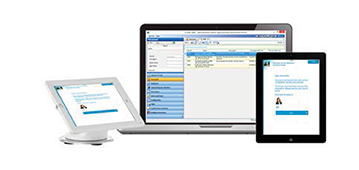
Since 2008, Transportation Impact, a privately held 5-time Inc. 5000 company, has been providing maximum supply chain cost reduction for clients in multiple vertical markets. The company which is based in Emerald Isle, NC has made a huge impact on the bottom line for clients by reducing shipping costs through small package and freight negotiation along with their state-of-the-art transportation management system. The challenge With 70 employees working out of two office buildings in Emerald Isle, NC; they needed an access control solution to safeguard employees and their infrastructure. The company’s corporate headquarters reside in a building that consists of 4 floors with two floors containing executive offices and conference rooms and the top two floors housing a restaurant and bar which is open to the public. The biggest challenge Transportation Impact found with a shared building is the common occurrence for the public to walk in on private meetings taking place in the conference rooms and inquire about the location of the restaurant. Having the public enter Transportation Impact’s office at will was not only a disruption, but a security risk for employees and private company information and systems. It was imperative that the conference room and executive areas were safeguarded from unauthorized access. The solution Transportation Impact needed a special delivery, the right access control solution from their trusted security integrator, Electronic Solutions. Electronic Solutions has been working with Transportation Impact over the last few years and understood their need for a simple and convenient access control solution. Ron Snyder, President at Electronic Solutions and an ISONAS certified partner, delivered the ISONAS Pure IP™ access control solution in the fall of 2016 starting with a pilot program for ISONAS’s new RC-04 reader-controller, all managed from the ISONAS software, Pure Access cloud. “ISONAS is a great team to work with as they are 07/17 all about supporting their certified dealers and offering top notch customer service to help make the implementation process seamless,” states Ron Snyder, President at Electronic Solutions, “The ISONAS solution is a great product and so much easier than the past access control systems that required running several cables to install it. ISONAS offers a simple solution, which only requires an ISONAS reader-controller and a CAT 5 cable for power and data; making it an easy deployment for customers.” ISONAS makes a special mobile delivery One key challenge that drove Transportation Impact and Electronic Solutions of Greenville to choose ISONAS was the need for convenient access for their users. Upon the initial installation, Transportation Impact utilized key fobs to provide access to their users. Unfortunately, a number of the key fobs were lost which resulted in employees propping open doors; circumventing the security and effectiveness of the access control solution. With the number of lost key fobs, Transportation Impact needed to find a way to incorporate access control into their employees’ normal, everyday practices. The ISONAS Pure Mobile credential allowed them to take the convenience of their mobile phone to the next level. The Bluetooth® Low Energy feature of the Pure IP™ hardware family (RC-04) eliminated the need for a physical card or key fob and allowed a mobile device to act as an access card. With the simplicity of Pure Mobile in combination with Pure Access, there was no need to install additional software, purchase additional licenses to enroll mobile credentials, or acquire a massive bank of credentials. The RC-04 hardware and Pure Access software are ready to use with the ISONAS Pure Mobile credentials right out of the box. An employee at Transportation Impact can simply download the Pure Mobile application to their phone, present it to a reader-controller, and the facility administrator associates that mobile phone to the user’s profile. “We were looking for an easy-to-use access control solution that allowed access with the touch of a button and we found it,” says Norm Pollock, VP of Information Technology at Transportation Impact, “In addition to having mobile access, we really liked having the ability to automate on a schedule and set the doors to lock and unlock during certain times of the day all from the Pure Access Cloud software.” The cloud delivers security and flexibility With a successful pilot program under their belt, Transportation Impact currently has 11 ISONAS RC-04 reader-controllers installed across two office buildings all administered from the Pure Access Cloud software, giving them access from anywhere at any time. Pure Access cloud eliminated the need for any additional onsite network infrastructure and provided full administrative and management power of their access control system from any device.