

Category: Latest
State of Security Training in India
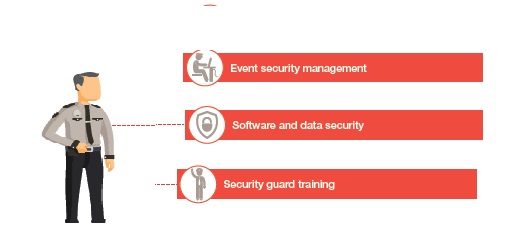
The Private Security Sector (PSS), which employs the second largest manpower in India after the agriculture sector, is a moderately motivated sector of the country. The sector engages approximately seven million people today and is growing at an annual rate of 25 per cent. But unfortunately, majority of job-seekers and already employed members of the sector are found unwilling to adopt security profession and resort to it as their last option. The employment normally comprises youth who lack in education and training, and hail from the weaker sections of the society. They are either school dropouts, or are unable to afford the huge cost of education and training which can enable them to meet their inherent desire of living a respectable life. The unwillingness is attributed to the presumed less respect to the role, as well as the miserable salary drawn which is fixed at bare minimum wage for unskilled/ semi-skilled labor. Education and training not only elevate respect and livelihood, but also enhance the efficiency of the sector. Self-respecting and confident personnel are highly focused and more competent, and with their world class executions they could be able to get recognitions all around the globe. This also opens the global scope for employment. The current government has also taken upskilling of the security persons seriously and designed several pertinent policies and institutions including Skill India, NSDN, SSSDC, PMKVY and so on. Employee problems appear in various shapes and sizes such as complaints of sexual harassment, money missing from employee lockers, workplace accidents, employee sabotage, and so on. Workplace disputes often have personal importance to the employees involved, as well as they also impact their livelihood adversely. This makes the employees sometimes tending to tell lies and hide facts. From these differing accounts employers must arrange to thoroughly investigate the issue and determine what really has happened. Any workplace investigation requires judgmental calls about what issues to investigate, who to include in the internal investigation, and ultimately who to believe on. The goal should be to conduct the investigation in the fairest way possible. But do the employers have an efficiently educated and trained team to successfully resolve such issues; or they need to arrange training? There is surely a gap. Security education and training is a serious concern and need of the time, with a wide scope, of course. Proactive call by Lancers Network Limited Lancers Network Limited, under the leadership of Kunwar Vikram Singh, a security veteran, has proactively taken up the challenge and been engaged in facilitating security trainings for several years. Lancers Network Limited is South Asia’s leading Risk Consulting firm, operating in the high-on-risk countries of the region. Established in 1980, the firm continues to pursue its founding principles of integrity, confidentiality and value addition, and thus has created a strong client base across the globe. Equipped with a highly experienced operational team of over 120 professionals drawn from the financial sector, armed forces, police, security services and industry professionals; the company has developed a reputation for providing quality driven, customer focused, and highly successful actionable intelligence and security solutions. They have achieved unmatched client retention levels across Automotive, Chemicals, FMCG, Banking, Insurance, and IT Industries. Lancers impart security training in partnership with the following international organizations: ARC Training International Academy for Security Management Arc Training is the UK based leading international providers of security management training courses. They work with security professionals from all over the world, providing fully-accredited qualifications in subjects that are current, interesting and internationally relevant. Tavcom Training Part of the renowned Linx International Group, Tavcom Training is also the UK based world’s leading provider of accredited security systems training courses. They provide award winning BTEC certificated courses to installers, operators, managers, and designers of CCTV, Network IP, Intruder alarm, Access control, Fire alarm and all other types of electronic security systems. Perpetuity Academy Another UK based Perpetuity Academy is specialized in the fields of security, crime and risk management worldwide, offering accredited training courses designed for managers, supervisors, and practitioners. Strongly supported by universities and professional bodies, their courses provide the latest thinking and best practices, combined with academic knowledge that is required for today’s security professional. Courses Lancers, in collaboration with their partners, offer various levels of courses to cater to different categories of on-job as well as off-job aspirants. They provide both BTEC (Business and Technology Education Council) level, as well IQ level courses. Some of their offerings are as follows: Corporate Intelligence Management (3 Day Programme) The effective analysis and communication of commercial intelligence is a rapidly developing area of responsibility for security managers. This course provides a critical introduction to the key ideas, techniques and issues that make up the effective use of intelligence within a corporate environment. The course is of immediate benefit to security managers, security supervisors or multi-tasked managers, and those who are seeking to make a career in security management. Risk, Crisis & Disaster Management (BTEC Level 4: 3 Day Programme) Acting confidently in a crisis is vital in protecting the business. This short course prepares staff at all levels in how to effectively manage a crisis, and to help prevent unexpected incidents. It aims to equip security professionals with a broad spectrum of knowledge relating to risk, crisis and disaster management within their organizations. It also deals with all aspects of crisis and disaster management including the composition and operation of the crisis management team. The course immediately benefits those who are working as security managers, or those seeking to make a career in security management with an inclination to crisis management. Managing Security Surveying (BTEC Level 4: 3 Day Programme) Conducting a security survey is an essential skill for security managers. This course provides a step-by-step guide to the process of conducting an effective survey, and supplies a template for conducting one’s own security surveys. The course shows how to identify the particular threats to the business, premises and staff, and how one can protect against them. The course…
Paradigm Shift in the Security Threat Landscape
With the evolution of Internet of Things (IoT) the security challenges for industrial security are increasing exponentially. The 25 billion globally connected devices in 2015 are expected to double by 2020. On an average, each individual is expected to be connected to six things online in terms of sensors, smart objects and device clustered systems. Under this scenario, and given the fact that the weakest link will continue to define the robustness of any organizations security architecture, security vulnerabilities are poised to increase manifold, in terms of the scale, intensity and complexity of the attacks. The effects of these attacks, however, will not be restricted to the cyber domain alone. They will also impact the physical security of the people and infrastructure, in spite of having the best ‘physical security’ controls in terms of people, processes and technology to mitigate these threats. Holistic approach to address the security threat landscape This calls for a multidimensional integrated security concept, holistically encompassing physical security, cyber security, information security, business continuity, risk management, compliance and privacy protection, and emergency & crisis management. The convergence between logical and traditional physical security will entail a cascading effect on these seemingly different dimensions, with the impact multiplying at every stage. For instance a cyber-breach can impact safety, which in turn would impact compliance, as also may cause physical damage by aggregating the compound effect impacting business continuity, thereby directly impinging on the bottom-line. A combination attack using multiple threat vectors can adversely impact the market sentiments in no time. This will lead to long term brand erosion, as well as economic loss to the business, which in turn will have an adverse impact on the industry and the nation at large, especially if critical infrastructure is targeted. This has necessitated that we create synergy across the threat landscape to deal with a combination of physical and cyber-based threat vectors. In order to achieve this objective it is important to act in a concerted manner. As a result, chief security officers need to take care of the physical as well as the digital aspects of security and simultaneously address the increasingly complex area of compliance. Convergence not only helps in providing enhanced level of security but also results in cost saving by integrating disparate systems and optimizing resources; both in terms of personnel, processes and technology platforms. Case studies Hackers targeted Sony Pictures and wiped out half of their global network. They erased everything stored on 3,262 of the company’s 6,797 personal computers and 837 of its 1,555 servers. At the same time, they ensured that nothing could be recovered by using a special deleting algorithm that overwrote the data seven different ways. Subsequently the code targeted each computer’s start up software and rendered the machines brain-dead. A group of cybercriminals successfully targeted 100 banks in 30 countries globally including US, Russia, Ukraine and China after phishing its targets with infected email attachments. The criminals used their computer exploits to dispense cash from ATMs or transfer cash digitally to accounts they controlled. The USD 1 billion haul was unprecedented in its scope, which Kaspersky reported as under investigation. LinkedIn confirmed in 2016 that the impact of a 2012 breach in which 6.5 million users’ passwords were compromised, is now likely to be closer to 167 million users, 117 million of whom had both their e-mails and passwords exposed. The 1768 km long Azerbaijan – Georgia – Turkey (Baku-Tbilisi-Ceyhan) crude oil pipeline connecting the oilfields in the Caspian Sea to the Mediterranean Sea was blown up by hackers. They exploited the vulnerabilities of the IP cameras communication software, to gain entry and move deep into the internal network, to blow the pipeline by over pressurizing it. This resulted in a loss of USD 1 billion in export revenue for Azerbaijan and the pipeline was out of action for 20 days. The stuxnet virus that was used for spinning several centrifuges out of control at an Iranian nuclear facility was believed to have been transmitted using a thumb drive that was physically inserted into a computer within the facility. Critical infrastructure is the most vulnerable with high impact Thus, in future, critical infrastructure in particular is likely to be targeted by both terrorists and state sponsored actors, as it provides an easy option to them. Future wars will be asymmetric in nature. Economically weaker nations will inflict heavy economic loss on their adversaries to include both life and property, by using meagre resources, as compared to achieving the same using conventional means at a huge monetary cost and loss of lives. All it takes to target critical infrastructure is a bunch of highly trained cyber hackers who require hardware, software and a high-speed internet connection, and all of this cost not more than a few hundred thousand dollars, and will to execute. The best part is that it can be done sitting anywhere in the world and one need not be physically present at the target location. The victim organization/ country cannot be very sure of the identity of the perpetrator group/ individual/ country and retaliate immediately, thereby they can virtually go scot free in terms of facing any consequences, and enjoying virtual immunity against any adverse action due to lack of stringent laws dealing with sharing of data and lack of collaboration at the global level. Need for public private partnership and restructuring of the traditional security organization There is a need for public private partnership to effectively deal with such scenarios, wherein we pool in the resources of the government and the private sector to address these security challenges to our critical infrastructure and the industry at large. At the same time, there is a requirement to create a CXO level appointment within the organization who should be responsible for addressing the security challenges to include both physical security as well as cyber security. The CXO should also be integrated with the Government agencies both at the national and international level, for exchange of relevant information,…
Designing Intelligent Retail Store
In-Store Video Analytics & Video Management Software Video surveillance has become an integral part of every retail store and its daily activities. Though it was mainly incorporated to maintain the security inside the store, the advent of video analytics and video management software helped businesses to leverage insights to improve business processes. These insights allow a store to stand out from rest of the competition and to provide top notch services to their customers on a consistent basis. Apart from the competition, retail stores also face problems such as pilferage and other fraudulent activities. To stay ahead of the competition, they needs not only to counter such activities but also to determine the needs of the customers to cater to them when they visit the store. The software gives needful insights in to the customer’s buying behaviour and an array of the methods to improve their shopping experience. VMS also helps retailers to understand the effectiveness of their marketing activities, product placements, and optimizing their inventory to satisfactorily cater to their customers. For any business, insights generated from different departments are very important to improve business processes. VMS also provides necessary inputs into the business that render improvement of shopping experience and understanding their buying behaviour. This white paper discusses how you can have a seamlessly connected retail store with the help of video analytics and using the derived insights from different aspects of your store to build a successful business. It also gives an in-depth view of how video analytics work. It’s a probable solution for any retail store to be successful in the long run. Current trends in retail The retail industry has undergone tremendous transformation in the last few years with evolving markets and technologies. Kasey Lobaugh, Deloitte’s Chief Retail Innovation Officer said, “The full extent of retail disruption is emerging due to a number of factors such as the rise of the digitally influenced shopping experience, the changing nature of retail competition, and the tidal wave of exponential technologies on the horizon.” Growth in the retail industry requires continuous expansion. This expansion is not only from a physical stand point but it also requires expansion from cost and revenue perspectives. Though there is a need to keep up with the sales and profit figures, there is also a need to keep a tab on store metrics. These metrics can be divided into two sections: Revenue and Cost side. Video analytics addresses in-store metrics like footfalls, conversions, average basket size from the revenue side; and employee management, inventory management and POS solutions from the cost side. One of the methods to improve footfalls in retail stores is incorporating video analytics. It helps in getting insights on managing your stores. At the other end, video analytics primarily helps in maintaining safety and security by minimizing incidents of thefts and fraud. This helps in proactively increasing profit margins that were being lost due to such incidents. The advent of online shopping has forced most retail store chains to identify e-commerce as a highly visible revenue stream which means traditional retailers have embraced the online medium with gusto. Due to stiff competition and the need to stand out, most stores focus on creating a unique shopping experience for all their customers. A customer could go to a retail store and browse through the shelves for products they like to buy. They could then go online and compare the prices to see if there are better price options or variants. This is where video analytics can play a very crucial role. Though the primary function of a video management software is security and surveillance, video analytics is simultaneously being used to extract various customer-centric information to improve footfalls and eliminate or minimize the challenges faced in day-to-day operations. The need for comprehensive in-store analytics In a survey conducted by the National Retail Federation in the year 2015, which included participation of 100 retail stores spread over 20 retail market categories, shoplifting alone accounted for 38 percent of the reported shrink. On the other hand, internal thefts also contributed to about 35 percent of shrinkage due to which retail stores faced heavy losses. Daily in-store operations have to overcome pilferage by implementing proper security and surveillance measures. Such incidents hurt the performance of the business. Though most stores are actively involved in maintaining security, the need to analyze this data has also become eminent. Video analytics enhances the in-store security systems which not only helps in loss prevention but opens up ways to improve customer service. The main focus, however, still remains in converting potential prospects into buyers. Product placements, promotions, customer assistance etc., influence the decision of the buyer. With the help of video analytics, stores can understand the effectiveness of their marketing strategies and product placements and can make necessary changes to make them more effective. In-store analytics can help in this direction giving insights into the metrics, which will help convert prospects into buyers. However, many businesses use video surveillance and video analytics for various purposes. According to the Seagate Video Surveillance Trends Report of 2016, the key use cases for video surveillance include the following. Video analytics – the game changer Video analytics has really become popular in the last few years for various reasons. It allows managing the video streams with ease allowing the team to focus on specific incidents rather than scanning through long streams of videos, which helps them to save time and manpower. Smart security systems with analytics record videos when any motion is detected that reduces the network load, and at the same time, helps save storage space. Further insights can be gained in to the performance of the employees enabling to make accurate assessments. Video analytics does not require exorbitant infrastructure, which makes it affordable for the small retail stores to have a state-of- the-art video management system. Analytics can be chosen as per the needs of the business, thus, ensuring a fool-proof customized solution that will be exclusive to the…
INDIA RISK SURVEY 2017
“The sixth edition of the India Risk Survey is based on a comprehensive survey spanning across several sectors of the economy and geographical regions of India. This survey is an endeavor to examine and evaluate the ‘potentially destructive’ risks to business undertakings in India. The survey encompasses 12 key risks that pose a number of threats to the entire economic ecosystem of the country. It is an attempt to sensitize the Government and the corporate world about emerging risks and possible dangers these risks could pose to business establishments. I am confident that this report will be of considerable value and will provide a referral to understand the complexity of these risks across the spectrum of stakeholders i.e., policymakers, corporate and individuals of the civil society.” – Dr. A. Didar Singh, Secretary General, FICCI Emerging as one of the fastest growing economies in the world, India is expected to outperform most other major economies in 2017, according to international rating agencies. India is estimated to grow at more than 7 per cent in GDP growth in 2017. Pro-investor policies have been implemented by the government to improve ease of doing business. Through flagship programmes such as ‘Make in India,’ ‘Digital India,’ and ‘Skill India,’ and effectively addressing FDI prospects across sectors, the government is striving to promote manufacturing activity locally, boost job creation and skilled workforce, local and foreign investment, and ITpowered infrastructure capable of supporting logistically-robust and multimodal networks. As per the latest IMF projection, India’s growth rate is expected to be 7.2 per cent in the 2017-18 fiscal year and 7.7 per cent in 2018-19 owing to critical structural reforms, favorable terms of trade, and lower external vulnerabilities. It is encouraging to note that the acceleration of structural reforms is bringing a new growth impetus. The Goods and Services Tax (GST), having implemented from July 2017, should help make India more of a single market and thus spur productivity, competitiveness, job creation and incomes and investment in the country. Risks to business establishments are detrimental to growth and development of any country. The nature of risks globally have changed enormously; and with their occurrences becoming more unexpected and their effects becoming more profound, risks need to be taken more seriously. Further, due to rapid digital transformation of businesses, underlying infrastructure is becoming more complex. In these changing times it is critical to understand emerging risks. Knowledge about impending risks can benefit investors, so that they could take well-informed business decisions. Given that India is increasingly attracting the international business community with its extensive regulatory, legal, and diplomatic manoeuvres, companies cannot underestimate the multitude of challenges in business operations in India; particularly with reference to the vastly divergent risk landscape the country offers. A lack of preparation against risk mitigation could leave the entire financial as well as operational functions vulnerable to attacks with disastrous consequences for a long time. A holistic risk-management strategy would help businesses to both anticipate and preempt existing and evolving risks, and also deal with them effectively. The evolving nature of risks is such that they pose a requirement of being regularly assessed and understood. The inter-linkages between the various risks that exist and demand a holistic approach to safeguard the safety and security of people, assets, and information. India is undergoing drastic changes in terms of development in areas of infrastructure, Information Technology (IT), and so on. As we are blooming into a key business destination, a robust system of protection is crucial. The India Risk Survey (IRS) Report is designed to offer industries and organisations the insight necessary to compete in this increasingly complex operation environment. The India Risk Survey 2017, attempts to highlight the perception of risks from leading businesses, drawing from public voices, as well as professionals from different sectors across the country with a focus on operational safety and strategic risks. The report provides an elaborate telling of the current scenario in terms of global risks and threats. By attempting to cover all the levels of management, from top to bottom, the survey has tapped on various industries including IT, manufacturing, retail, infrastructure, transportation, and finance, amongst others. The survey stretched out to all corners of the country and beyond, including APAC, Americas, and the EMEA region. “The purpose of India Risk Survey 2017 remains to provide a handy guide, calling attention to potential risks, and providing a base for planning the necessary preventive strategies to protect one’s organization from the negative impact of these risks. With every year, the survey aims to engage with the industry, and inform and sensitize all stakeholders about the emerging risks for developing economies like India so that well planned and strategic policy decisions can be made.” – Rohit Karnatak, MD – India, APAC & EMEA, Global Screening, Pinkerton The survey consists of 12 risks that pose the most significant threats to business perception and operations in the country. The threats are inter connected and overlap across domains, sectors and geographies. New risks have been identified on the basis of this year’s survey, which are Risk of Non-compliance, Business Investment Risk, and Legal Regulatory Risk. Information & Cyber Insecurity India Risk Survey ranks ‘Information & Cyber Insecurity’ as the biggest risk in 2017. In the recent past, there has been an increase in incidences of cyber-attacks and potential espionage on cyber-security. Given the security problems, there should be increased emphasis on, and investment in, the security of cyber infrastructure, and also raising awareness for safe usage of cyberspace while on the job and doing personal work. There is an immediate need for more attention to counter future cyber-attacks or attempts thereof via rigorous employee training sessions and stronger cooperation between business and the Government on related cyber-security threats. In India, ‘Information & Cyber Insecurity’ has become more pronounced due to the shift that the nation is undergoing towards digitisation of various assets and services being delivered via internet and mobile platforms; and the ever-present loopholes that hackers breach upon. The WannaCry malware incident has been, by far, the worst incident this year in which several systems were attacked,…
LTO Technology & Video Surveillance
Benefits and Best Practices The video surveillance industry has evolved dramatically over the last 50 years. From the days of whirring VCRs, where individuals were literally, ‘caught on (VHS) tape,’ to the introduction of digital video recorders and spinning hard disks – and now, an era of network-based video surveillance and associated IT infrastructure. During this transition, the hard disk drive displaced VHS tape as the typical media for storing video surveillance footage. However, with the number of higher megapixel cameras on the rise and longer retention requirements, end-users are struggling to deal with the data and cost requirements associated with storing this amount of footage. In systems with long-term data retention, end-users can now use file-based tape storage such as LTO (Linear Tape Open) technology in combination with disk, to effectively meet their requirements in a cost effective manner without compromising on the quality of the video stored or the length of time the video footage is retained. Influential factors driving demand for cameras Legislation The level of pertinent legislation and regulation varies both nationally and internationally. Typically in North America and Western Europe there is little legislation relating directly to the general installation or use of video surveillance equipment, however, specific industries such as critical national infrastructure or casinos and gaming may be subject to specific regulations. Compliance with privacy and data protection laws tend to have a large influence on video surveillance installations and their data retention policies. In May 2017, the German government responded to an increase in security threats and the lack of video evidence available in public places including stations and city centers, by introducing new legislation altering current privacy laws to allow greater installation of video surveillance cameras. Legislation and regulations are particularly influential in the Middle East. These can dictate which organizations must install video surveillance equipment, the level of coverage and include equipment specifications such as minimum camera resolutions, frame rates, and footage retention times. For example, in Qatar, hotels and shopping malls must store footage for a minimum of 120 days. Multiple use Today, video surveillance equipment has multiple uses beyond that of traditional security or loss-prevention applications such as: Monitoring, control and recording of business operations. Health and safety – crowd monitoring and control. The collection of consumer marketing information, especially in retail sector. Anti-litigation purposes for collecting potential video evidence in case of lawsuits. Traffic monitoring and enforcement systems. The multiple uses of video surveillance systems has assisted in the propagation of the network surveillance camera as another Internet of Things (IoT) sensor which can be integrated into more complex and larger systems. Decline in camera prices Decrease in average selling prices of equipment is enabling end-users to obtain a larger return on investment. IHS Markit data shows that since 2012 the average price of a network surveillance camera in the American market has more than halved. Over the last five years, the composition of the competitive environment has changed significantly through the growth of many Chinese video surveillance vendors who typically sell cameras and recording devices at prices below their western competitors. Higher specification of cameras IHS Markit has measured uplift in the specification of cameras across several different parameters. Currently the most common network camera shipping is 1080p resolution but there will be continued growth in higher resolution cameras. Four megapixel cameras are increasing in popularity and 4K and even higher resolution cameras are expected to gain market share. Various compression technologies have been developed to mitigate some of the effects of an increase in camera image quality and the associated demands on network transmission, compute and storage. The typical compression used in the surveillance industry in 2017 is based on the H.264 AVC (MPEG-4 Part 10) standard. Many vendors have released innovative proprietary updates in the last 18 months often marketed as some form of ‘H.264+’ and ‘smart bandwidth management.’ The next generation H.265 (HEVC) compression is still some way off mass market adoption in the video surveillance industry. Despite advances in compression technologies demand for storage continues to increase. Increased value of data & longer retention times The vast majority of recorded video surveillance footage is never reviewed. As much detail as possible should be retained until it can be determined which parts are relevant or valuable. For security purposes the value usually relates to the recording of a security incident. However, the uncertainty of which parts of recorded video are going to be useful often means trade-offs between the quality at which video is stored and the length of time it is stored. Typically, extending the retention time for video surveillance data is justified by the perceived increase in the value of video surveillance data. As end-users are realizing the full value of this data, they wish to retain it for longer periods. This may be due to a new application for video surveillance data, or a perceived security threat has increased. Sometimes, retention does not increase uniformly across a system. Strategically important or mission critical cameras may have a different policy to other cameras. In general, retaining footage for longer increases the size of the available potential usable dataset for analysis. Requirements specific to storing video surveillance footage A different approach to traditional IT data storage Video surveillance storage has some specific requirements and differs from traditional IT data storage in the following ways: Video surveillance storage workloads should be configured heavily towards writing data to storage media. Most stored footage is never accessed and is deleted without it being reviewed. Therefore, generally, the requirements to read data are much lower than the requirements to write. This is different to traditional IT workloads which are typically more mixed. Video surveillance workloads can be typified as requiring high bandwidth due to the need for multiple concurrent data streams to be recorded at any one time. The throughput should be designed to cope with these requirements particularly during periods of high activity which may cause spikes in bandwidth required. It is critical in events…
Critical Infrastructure Security and Smart Cities
Recently there have been several policies, simulations, active designing and implementation of smart city concepts in several locations around the world including India. Today, the world is talking about connecting everything to the internet. The fourth industrial revolution (Industry 4.0), a term used to draw together cyber-physical systems, the Internet Services and Internet of Things (IoT), has started to revolutionize projects such as smart grids and smart cities. There is no universally accepted definition of a smart city, with different schools of thoughts describing this concept in terms of annotations depending on their geographical scope, location and socio economic settings. Faced with rapid urbanization, city planners are turning to technology to solve a wide range of problems associated with modern cities. To provide for the aspirations and needs of the citizens, urban planners ideally aim at developing the entire urban eco-system, which is represented by the four pillars of comprehensive development – institutional, physical, social and economic infrastructure. This can be a long-term goal and cities can work towards developing such comprehensive infrastructure incrementally, adding on layers of ‘smartness.’ Ideally the planning of a smart city originates from the end user. The needs of the end user are assimilated in a systematic manner and are then distributed into several smart layers such as transportation, energy, utilities, finance, social, and logistics, amongst others. A true smart city is networked in such a manner that there is a balance between sustainable socio economic growth and urbanization. There are several examples of successful smart cities in the world such as San Diego in southern California and Glasgow in Scotland. The above illustrations show a few aspects of steps required to convert a city into a smart city. There are also several aspects of smart cities that are directly related to critical information systems and critical infrastructure. These components directly connect an end user to the service provider in terms of information display and service availability. For example, an end user can directly monitor the usage of piped gas from a mobile application; at the same time sensors in a house detect motion and usage, and the service can be cut off in case no one occupies the premise. This close networked platform is usually achieved through machine to machine communication (M2M) or an IoT platform. So how do we define these critical infrastructure platforms? Critical infrastructures are usually divided into physical and socio-economic infrastructure systems. Physical critical infrastructure encompasses all basic services such as electricity and water supply, waste (water) management, transport or information and telecommunication technologies. Socio-economic infrastructures instead include facilities such as banks, hospitals and schools but also public administration. Critical infrastructure is also a term used by governments to describe assets that are essential to the functioning of the society and economy. Future cities will challenge existing safety and security engineering models e.g., the United States electricity blackout in 2003 showed that in interdependent networks a very small failure in one network might lead to catastrophic consequences. New and complex cascading failure modes will arise out of unforeseen or emergent system characteristics as they are developed in an incremental and ad hoc fashion, especially where more sophisticated technologies are added to an already ageing physical infrastructure. A common concept between smart cities and critical infrastructure is cyber physical systems with city as the platform or (CPS). There are a number of definitions of CPS. Common features effectively describe control systems, networked and/ or distributed, incorporating a degree of intelligence (adaptive or predictive), and work in real time to influence outcomes in the real world. These definitions point to the diverse nature of CPS found in transportation, utilities, buildings, infrastructure, manufacturing, and health care. Although CPS have similarities with traditional data processing systems e.g., their networked or distributed nature and a degree of automation, the real-time nature of their interactions with the physical world is a significant difference. Interactions are sensors detecting and measuring physical parameters with actuators to control physical processes. Feedback loops allow data about the environment and the physical processes to be collected and computed. Actuation may be automatic or by an alert to a human operator. Critical infrastructure systems are CPS, whose failure would have economic or social impact. Society expects systems will operate in a safe, secure and consistent manner. In response to environmental, demographic and societal pressures, cities may no longer conduct business as usual. Traditional city models are no longer appropriate, as transport and utility infrastructures become unsustainable and require significant investment. Some cities have embraced the concept of the ‘city as a platform,’ a hyperconnected urban environment that harnesses the network effects, openness, and agility of the real-time web. The focus has been on access to data, leading to development of smartphone apps and portals allowing citizens to ‘connect’ with city services and institutions. To address cyber security requirements, we need to understand the proliferation of functions in this hyper-connected world. Where functions in individual CPS interact, they will create new functions that will proliferate over time. To protect these complex systems, we need to understand their network of functions, relationships and interdependencies. A study of critical infrastructure interdependencies led to the identification of six dimensions, which can be used to examine CPS and supporting infrastructures: Type of interdependency e.g., cyber, physical, logical or geographic. Environment e.g., business, economic, public policy, legal, regulatory, security, technical, health/ safety, or social/ political. Coupling and response behavior e.g., adaptive, inflexible, loose/tight or linear/ complex. Infrastructure characteristics e.g., spatial, operational, organizational or temporal. Type of failure e.g., common cause, escalating or cascading. State of operation e.g., normal, stressed/ disrupted, restoration or repair. Identifying critical city infrastructure in every smart city project is of prime importance. Whilst there are a number of definitions for critical national infrastructure, from a city perspective the concept of critical infrastructure is not well defined. The UK’s definition of critical national infrastructure (CNI) is: “Those facilities, systems, sites and networks necessary for the functioning of the country and the delivery of…
CAPSI Launches Rakshak Awas Yojna (RAY)
Private Security Sector employs over 70 lakh individuals who are the source of livelihood, support and security for over 2 crores 80 lakhs dependents. Almost all security guards belong to economically weaker section (EWS) of the society and often live in slums and destitute due to their very low wages. The security guards who are ever ready to safeguard all, are themselves constrained to live in the most insecure environment. They are deprived of even their bare fundamentals of life including the basic civic infrastructure, social amenities and decent shelters; albeit they deserve them the most. The recent up gradation of the status of the security guard from an ‘unskilled person’ to a ‘skilled worker’ has brought tremendous motivation, and pride in the profession of guarding in terms of remuneration and standing. The skill ecosystem and policy interventions by the Government have made a holistic impact on the security workforce by empowering them to break through the poverty trap successfully. Central Association of Private Security Industry (CAPSI) launches affordable housing for these security guards under ‘Rakshak Awas Yojana (RAY)’ – offering home for every security personnel under Pradhan Mantri Awas Yojana. CAPSI through its State Chapters has announced to form co-operative societies in multiple metros/ cities by availing the benefits under Pradhan Mantri Awas Yojna for constructing houses through public-private partnership (PPP). In the endeavor to provide shelter to every security person, an MOU has been signed with Golden Gate Projects, a Bangalore-based company, and CNTC India Company Limited for multiple housing projects – first one to start with the construction of 5000 dwelling units at Mysore, which would also act as a pilot project to assess the demand for these ventures. “We are hopeful of getting the good response from prospective buyers since the houses will be priced competitively compared to private ventures. Moreover, our guards can avail government subsidy under Pradhan Mantri Awas Yojana with an easy pay back scheme through monthly installments,” said Mahesh Sharma, General Secretary, CAPSI. V.V. Katti, President of CAPSI expressed his happiness for the pilot project being initiated at Mysore in Karnataka State. He intimated that the delegation of Karnataka chapter of CAPSI will meet Mr. Siddaramaiah, Chief Minister of Karnataka, and request him to launch similar housing projects near Bengaluru and other towns in the state so that security guards may able to get affordable houses to live. “Being first responders, a concentration of security guards in a single location of living will ensure their instant availability to deal with any national disaster situations and other unforeseen internal security emergencies. Moreover, this project will have a far reaching socio-economic impact on our national agenda of sustainable growth and poverty alleviation.” – Kunwar Vikram Singh Chairman, CAPSI