


Category: National
IIRIS Launches IntelliTracker to Strengthen Police Case Monitoring& RBI Reporting for Banks
IIRIS Consulting Pvt Ltd recently announced the official launch of IntelliTracker, a purpose-built monitoring platform designed to help banks and financial institutions manage fraud-related and law enforcement case lifecycles with structured visibility and RBI FMR 1-4-aligned reporting readiness. The product was recently showcased at the India AI Impact Expo 2026, drawing strong interest from industry stakeholders. Commenting on the launch, Dr. Vikram Singh, Advisory Leader at IIRIS, Former DGP of Uttar Pradesh, and a National Security Expert, said, “Fraud cases often move through complex, multi-layered law enforcement processes that require disciplined tracking and coordination. Institutions need structured visibility into these movements to ensure accountability and regulatory confidence. IntelliTracker brings much-needed digitisation and monitoring discipline to this interface between banks and enforcement agencies.” IntelliTracker envisions addressing the structural visibility gap by digitising case monitoring across the full lifecycle, from complaint registration to investigation tracking, court proceedings, and case closure. The platform aims to provide structured categorisation, continuous status tracking, and RBI-aligned documentation to support informed decision-making and regulatory compliance. Garry Singh, President, IIRIS, stated, “IntelliTracker is a masterpiece that will not only act as a great tool for monitoring and analysis, but also will aid higher efficacy in compliance and closure of cases; thus making business more robust.” Banks today manage thousands of fraud complaints registered across multiple jurisdictions. Case updates are often fragmented across portals, departments, and physical follow-ups. Monitoring tends to be periodic rather than continuous, while regulatory reporting remains manual and reactive. The absence of a unified, current view increases operational strain and compliance exposure. IntelliTracker addresses this gap through: IntelliTracker does not replace legal authority or enforcement processes. Instead, it enables structured monitoring, data-backed visibility, and reporting readiness, ensuring that final review remains fully under the bank’s control. The platform is now available for institutional deployment. The platform is designed to provide banks with a unified, real-time view of police-registered fraud cases while maintaining full institutional control over decision-making and enforcement actions. IIRIS Consulting Pvt Ltd is a global risk, intelligence, and advisory firm founded in India with a mission to build safer, more resilient institutions. With operations across 150+ global partner locations and offices throughout India, IIRIS delivers integrated solutions spanning forensic investigations, risk advisory, compliance, digital innovation, and law enforcement support. For over a decade, IIRIS has partnered with governments, financial institutions, and corporations to transform risk into structured, intelligence-led action, enabling stronger governance, operational resilience, and informed decision-making in complex environments. Read More

CP PLUS Accelerates India’s Secure Digital Future with Landmark Presence at the Nation’s Most Influential Technology Forums
Reinforcing its position as India’s foremost pioneer in advanced surveillance and security technologies, CP PLUS marked a remarkable month of strategic engagement and technological showcase throughout February 2026. Participating in some of the nation’s most prestigious industry forums, including Municipalika 2026, ELCINA’s 15th Source India – Electronics Supply Chain 2026, ACMA Delhi, and the IT & Security Expo 2026 – CP PLUS demonstrated its steadfast commitment to advancing India’s technological sovereignty, strengthening critical infrastructure, and enabling safer, smarter, and more resilient ecosystems across the country. From government-approved STQC-certified surveillance solutions to indigenous electronics manufacturing and next-generation automotive security technologies, CP PLUS stood at the forefront of India’s evolving security landscape, presenting innovations designed to address the complex and dynamic needs of modern urbanization, mobility, and national infrastructure. Powering India’s Smart City Vision at Municipalika 2026 At Municipalika 2026, India’s premier platform dedicated to urban transformation and smart city innovation, CP PLUS showcased the country’s largest portfolio of STQC-certified advanced security solutions – engineered specifically to support the vision of safe, intelligent, and resilient cities. With rapid urbanization reshaping India’s socio-economic fabric, cities are increasingly dependent on intelligent surveillance ecosystems capable of ensuring public safety, optimizing urban operations, and enabling proactive governance. CP PLUS responded to this imperative by presenting a comprehensive range of indigenized surveillance technologies, including AI-powered cameras, advanced video management systems, integrated command and control platforms, and secure storage solutions – each designed to meet stringent government standards and compliance frameworks. A defining highlight of CP PLUS’s participation was the distinguished visit of Manohar Lal Khattar, Hon’ble Minister of Power and Housing & Urban Affairs, to the CP PLUS Pavilion. His presence underscored the critical importance of indigenous, government-approved surveillance technologies in building secure, future-ready urban ecosystems. The Minister’s visit reflected the growing alignment between India’s national infrastructure priorities and CP PLUS’s technological vision. As cities embrace digital transformation, the need for secure, reliable, and sovereign surveillance solutions has become fundamental. CP PLUS’s STQC-certified portfolio stands as a testament to its leadership in delivering trusted, compliant, and scalable security technologies designed specifically for India’s urban future. Through its participation, CP PLUS reaffirmed its role as a trusted partner to governments, municipalities, and infrastructure authorities, empowering them with the technological backbone necessary to enable smarter governance and safer public spaces. Advancing India’s Electronics Manufacturing Ecosystem at ELCINA Source India 2026, Chennai CP PLUS continued its momentum at ELCINA’s 15th Source India – Electronics Supply Chain 2026 in Chennai, one of India’s most influential platforms dedicated to strengthening the nation’s electronics supply chain and manufacturing ecosystem. As India accelerates its journey toward becoming a global electronics manufacturing powerhouse, CP PLUS showcased its robust indigenous R&D capabilities, advanced manufacturing infrastructure, and commitment to developing certified, secure, and future-ready electronic technologies within the country. The company’s participation reflected its strategic alignment with national initiatives such as Make in India and Atmanirbhar Bharat, emphasizing localized innovation, domestic production, and supply chain resilience. By leveraging advanced semiconductor integration, intelligent video analytics, and secure hardware architectures, CP PLUS continues to contribute significantly to India’s electronics self-reliance. Its solutions – designed, engineered, and manufactured with a focus on performance, compliance, and reliability – are already powering critical infrastructure across sectors including banking, transportation, law enforcement, public safety, and urban administration. At ELCINA Source India 2026, CP PLUS highlighted how indigenous manufacturing not only strengthens national security but also enhances economic resilience, fosters innovation, and positions India as a global leader in electronics and security technologies. Driving the Future of Intelligent Mobility at ACMA Delhi with CP PLUS CarKam Recognizing the rapid transformation of India’s mobility landscape, CP PLUS showcased its advanced automotive security solutions at ACMA Delhi through its dedicated automotive security brand, CP PLUS CarKam. As modern transportation systems become increasingly complex, the need for intelligent, reliable, and real-time vehicle monitoring has become essential. CP PLUS CarKam presented one of the most comprehensive lineups of advanced dashcams – engineered to deliver precision imaging, intelligent recording, and robust performance in real-world driving conditions. These next-generation dashcams incorporate cutting-edge imaging sensors, wide dynamic range capabilities, intelligent incident detection, and seamless connectivity – ensuring enhanced driver safety, accountability, and operational transparency. Designed for both personal and commercial use, CP PLUS CarKam solutions address the evolving needs of fleet operators, logistics providers, and individual vehicle owners. By integrating intelligent vision into mobility ecosystems, CP PLUS is contributing to safer roads, improved driving behavior, and enhanced transportation security – supporting India’s broader vision of intelligent mobility and connected transportation infrastructure. Showcasing Advanced Security Innovation at IT & Security Expo 2026, Jalgaon Further extending its technological outreach, CP PLUS participated in the IT & Security Expo 2026, organized by the Information Technology Association in Jalgaon. Held from February 13-15, 2026, at Khandesh Central Mall, the event served as a key platform for showcasing next-generation IT and security innovations to industry stakeholders, government representatives, and technology professionals. Under the theme ‘Smarter Tech for a Safer World,’ CP PLUS presented a comprehensive portfolio of advanced surveillance solutions, including AI-enabled cameras, intelligent monitoring systems, and enterprise-grade security platforms. These solutions demonstrated the company’s ability to address diverse security requirements across commercial, institutional, industrial, and public environments. The showcase highlighted CP PLUS’ commitment to delivering future-ready security technologies that combine artificial intelligence, advanced imaging, and secure system architecture – ensuring reliability, scalability, and operational efficiency. The event also provided a valuable opportunity for CP PLUS to engage with partners, system integrators, and customers, fostering collaboration and strengthening its nationwide technology ecosystem. Reinforcing India’s Technological Sovereignty Through Indigenous Innovation Across all four prestigious platforms, CP PLUS delivered a consistent and powerful message – India’s security future must be built on indigenous innovation, trusted technologies, and sovereign manufacturing capabilities. With one of the industry’s most comprehensive portfolios of STQC-certified surveillance solutions, CP PLUS continues to set new benchmarks in compliance, reliability, and performance. Its technologies are already deployed across thousands of critical installations – including government institutions, smart cities, banking networks, law enforcement agencies, transportation systems,…
Convergence India Expo 2026 Concludes, Showcasing Three Days of Technology, Innovation and Global Collaboration
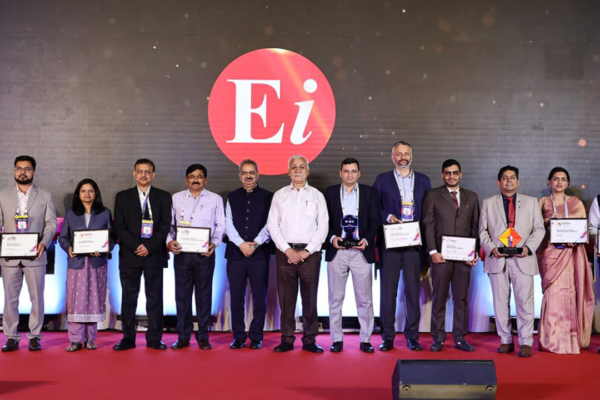
Expo featured around 1,000 participants from 25 countries, drawing more than 50,000 attendees The 33rd Convergence India & 11th Smart Future Cities India Expo 2026 concluded at Bharat Mandapam, New Delhi, after three days of high-impact discussions, product showcases and cross-sector collaborations across telecom, 6G, IoT, fintech, AI, cybersecurity, smart mobility, embedded tech, smart living, and digital governance. Positioned as one of India’s largest technology showcases, under the theme ‘India’s Impact: Tech Today, Transformation Tomorrow,’ the expo welcomed over 50,000 attendees over three days to explore stalls from more than 25 countries and 1,000 participants. Notably, about 200 startups showcased their innovations at the venue this year. More than 50 conference sessions were also held, featuring over 250 speakers. The conference programme covered topics such as AI and digital infrastructure, smart cities, fintech, and next-generation connectivity, with discussions that evolved from emerging technologies to real-world deployment across sectors. Key sessions centred on 6G, AI, quantum technologies, digital trust, data infrastructure, healthcare innovation, smart mobility and future cities. A key highlight was the address by the Chief Guest, Hon’ble Union Minister for Food Processing Industries, Government of India, Chirag Paswan, at the expo. The minister emphasised the role of advanced technologies and AI in modernising agriculture, improving productivity and driving value addition across the food processing value chain. Among the senior government representatives who graced the venue to share inputs was Abhishek Singh, Additional Secretary, Ministry of Electronics & IT and CEO, IndiaAI Mission. During a keynote address, he highlighted India’s potential to emerge as a global hub for AI inferencing, driven by strong talent, startups and industry participation, and the growing application of AI across sectors such as healthcare, mobility and agriculture. The distinguished lineup of policymakers included Anil Kumar Lahoti, Chairman, TRAI; Durga Shanker Mishra, IAS (Retd.), Former Chief Secretary, Government of Uttar Pradesh; A. Dhanalakshmi, Joint Secretary, Department of Science & Technology; Dr J. B. V. Reddy, Head – Quantum Technology Cell, DST; and Suvendu Pati, Chief General Manager – FinTech, Reserve Bank of India. They were joined by global representatives, including Sergey Cheremin, Minister of the Government of Moscow, and H.E. Juan Antonio March Pujol, Ambassador of Spain. The conferences also featured leading industry voices including Atul Lall, Vice Chairman & Managing Director, Dixon Technologies; Puneet Garg, President & Group Wireline CTO, Reliance Jio; Manoj Gurnani, CTO & Head of Strategy, Nokia; and Dr Ajay Singh, Global Head of AI, HCLTech, among others. Speaking at the conclusion of the event, Chandrika Behl, Managing Director, Exhibition India Group, organisers of the Convergence India Expo 2026, stated, “The Expo has once again demonstrated the power of bringing together policy, industry and innovation on a single platform. The depth and diversity of conversations, from AI and digital infrastructure to future cities, financial systems and the creator economy, reflect the scale of transformation underway in India. What stands out is the shared commitment to move from dialogue to deployment, and to build solutions that are inclusive, scalable and future-ready. We look forward to returning next year with even greater momentum, deeper collaboration and a continued focus on shaping India’s technology-driven future.” Meanwhile, the exhibition floor featured dedicated zones such as AI Bharat Expo, Fintech India Expo, Smart Mobility India Expo, IoT Expo, Embedded Tech India Expo, Mobile Expo & Smart Living India Expo, and the Startup Hub, along with international pavilions from New Zealand, Moscow and Taiwan Excellence. The launch of the Taiwan Excellence Pavilion at Convergence India 2026 marks a significant uptick in AI and digital infrastructure cooperation between India and Taiwan. Leading global and domestic technology players including Microsoft, Zoom, Realtek, GTPL, Canara Bank, Godrej, SanDisk, Redington, and Telit Cinterion, among others, exhibited on the expo floor. The Startup Hub remained a major draw, with over 200 startups participating in pitch competitions, investor connects and mentorship sessions, while curated B2B meetings and buyer-seller engagements drove business opportunities across sectors. This year’s winner was Zerowatt Energy, featuring an innovation focused on energy efficiency and AI-powered monitoring. The startup was also awarded the prestigious Prem Behl Award and given an opportunity to participate in the upcoming GITEX Europe and CES Las Vegas events. The expo also featured the Smart Mobility Pitch Session, powered by ARAI-AMTIF, spotlighting startups driving innovation in electric mobility, intelligent transport systems and next-generation automotive technologies. As part of its commitment to nurturing emerging mobility ventures, ARAI–AMTIF recognised Goparkk Technology Private limited with the ‘Emerging Innov8r Award’, along with mentorship, industry exposure and access to curated innovation platforms. About Convergence India Expo The Convergence India has heralded the telecom and digital revolution in India. It is the country’s biggest and longest-running technology expo, providing a platform to showcase ‘Brand India’ by supporting the ‘Make in India’ and ‘Digital India’ campaigns. Convergence India is at the forefront of promoting technological advancements in the fields of AI, telecom, satcom, broadcast, wired & wireless technologies, 5G & 6G networks, IT solutions such as cloud, big data & analytics, smart solutions, M2M, mobile & accessories, IoT, embedded tech, blockchain, fintech, and semiconductors – the entire gamut of digital solutions. About Smart Future Cities India Expo The 11th Smart Future Cities India expo displayed India’s emerging modernisation and development landscape that aims to deliver better citizen-centric services across the country. The expo showcased the integration of transformative technologies with the key pillars of urban development i.e., green buildings, clean environment, urban mobility, and the use of smart ICT solutions for optimising resources that make cities smart and sustainable. Read More
Union Minister, Chirag Paswan Calls for Technological Revolution in Food Processing at the 33rd Convergence India Expo 2026
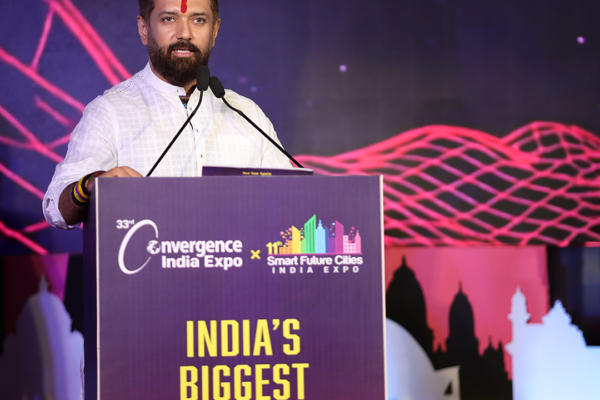
The Minister for Food Processing Industries highlighted the role of startups and young innovators in driving technological advancements within the food processing sector. As the Chief Guest at the 33rd Convergence India & 11th Smart Future Cities India Expo 2026, Chirag Paswan, Hon’ble Union Minister, Ministry of Food Processing Industries, addressed a large gathering of delegates at the Bharat Mandapam, New Delhi. In his address, the Minister underscored the importance of integrating advanced technologies to modernise agriculture, while calling for a shift in focus from volume to value and quality of agricultural outputs. He emphasised the importance of continuous engagement with industry stakeholders, urging participants to actively share their on-ground insights and experiences, and noted that such inputs are critical in helping the government identify key bottlenecks and shape responsive, forward-looking policy reforms aligned with the sector’s evolving needs. Reaffirming the Union Government’s commitment to Viksit Bharat 2047, Mr. Paswan,stated, “We are working towards creating an ecosystem where global markets become accessible for our goods. We’ll achieve this ambition by integrating technology, innovation, and the dynamism of our startups. As we harness advancements in food processing and agriculture, we can accelerate our journey towards building a globally competitive sector and realising the vision of a Viksit Bharat by 2047.” Talking about the expo, Hon’ble Minister observed, “Platforms such as Convergence India open the doors for those involved in the agritech and food processing segments to explore the potential of technology to enhance their capabilities. The expo provides opportunity for exchange of ideas and best practices from India and across the world, and guides how to implement these ideas in localised ecosystems.” Earlier in the day, Abhishek Singh (IAS), Additional Secretary, Ministry of Electronics & IT, & CEO, India AI Mission, Government of India, highlighted India’s potential to emerge as a global hub for AI inferencing, driven by strong talent, startups and industry participation. He also underscored the need to deploy AI responsibly for inclusive and societal impact. Emphasising on the importance of real-world applications of AI, Mr. Singh stated,“With our young, skilled talent pool and a vibrant startup and innovation ecosystem, India is well-positioned to drive significant impact in AI. The technologies showcased at the 33rd Convergence Expo highlight that AI’s potential extends far beyond models, with transformative applications across sectors such as power, mobility, IT, urban planning, and healthcare.” With a series of conference sessions planned alongside the expo during the three days of the event, representatives from various government departments and industry engaged in high value discussions centred around efforts in scaling AI adoption, strengthening digital public infrastructure and building the backbone required for India’s digital economy. The expo further expands into conversations on global collaboration, smart mobility and connected systems, including discussions on connected vehicles, telematics innovation and interoperable transport ecosystems, reflecting the breadth of technologies shaping India’s digital future. Sharing the vision behind the expo, Chandrika Behl, Managing Director, Exhibitions India Group, said, “Convergence India has always been a key platform for enabling dialogue, partnerships and innovation across India’s technology landscape. Through this platform, we initiate conversations around AI, digital infrastructure and sectoral transformation, reflecting how quickly technology is moving from promise to practical impact. From food processing to healthcare to mobility to enterprise systems, the focus is on building scalable, responsible and future-ready solutions that can deliver real outcomes for businesses, communities and the wider economy.” This year, a number of leading technology players are showcasing solutions on the exhibition floor, including Qualcomm, Tesla, Omnicomm, Philips, Realtek, Escort Sensors, Zoon, and Redington. Notably, Redington has brought together OEMs such as Google Cloud, AWS, and Microsoft at its stall, alongside other ecosystem partners driving innovation across digital infrastructure, enterprise technology, and smart solutions. About Convergence India Expo The 33rd edition of Convergence India has heralded the telecom and digital revolution in India. It is the country’s biggest and longest-running technology expo, providing a platform to showcase ‘Brand India’ by supporting the ‘Make in India’ and ‘Digital India’ campaigns. Convergence India is at the forefront of promoting technological advancements in the fields of AI, telecom, satcom, broadcast, wired & wireless technologies, 5G & 6G networks, IT solutions such as cloud, big data & analytics, smart solutions, M2M, mobile & accessories, IoT, embedded tech, blockchain, fintech, and semiconductors – the entire gamut of digital solutions. About Smart Future Cities India Expo The 11th Smart Future Cities India expo displays India’s emerging modernisation and development landscape that aims to deliver better citizen-centric services across the country. The expo showcases the integration of transformative technologies with the key pillars of urban development, i.e., green buildings, clean environment, urban mobility, and the use of smart ICT solutions for optimising resources that make cities smart and sustainable. Read More

Risk Profiler Strengthens Asia-Pacific Expansion with Appointment of Viraat Bindra to Advisory Board
Viraat Bindra RiskProfiler, a global provider of external risk intelligence and cybersecurity solutions, recently announced the appointment of Viraat Bindra to its Advisory Board as the company accelerates growth across Australia and New Zealand (ANZ) and strengthens its broader Asia-Pacific strategy. The appointment comes at a time when enterprises worldwide are increasingly focusing on external cyber risks such as brand impersonation, executive fraud, third-party exposure, and dark web threats – risks that emerge outside traditional security perimeters but have direct business and reputational impact. Viraat brings deep regional expertise and extensive experience in building cybersecurity offerings across enterprise and channel ecosystems. He currently serves in a leadership role at ACPL Systems, a global cybersecurity distributor and solutions provider with a strong presence across APAC and international markets. As part of his advisory role, Viraat will work closely with RiskProfiler’s leadership team to: “Many modern threats materialise long before reaching traditional security controls – through impersonation, exposed credentials, and third-party compromise,” said Viraat Bindra, “RiskProfiler’s outside-in approach and focus on operationalising intelligence for security teams and service providers address a clear and growing need in the ANZ market. I’m excited to support the team as they expand their regional presence.” This announcement reflects a broader industry shift as enterprises and managed security service providers look beyond internal controls to understand what attackers see first – their brands, digital identities, suppliers, and internet-facing assets. “External risk has moved from being a security discussion to a business leadership priority,” said Setu Parimi, Co-founder and CTO of RiskProfiler, “As organisations scale digitally across global markets, the ability to continuously monitor and act on external exposure becomes critical to protecting customer trust and brand integrity. Viraat’s regional expertise and ecosystem experience will play an important role as we expand our partnerships and support organisations across ANZ and Asia-Pacific.” RiskProfiler continues to gain momentum globally as enterprises adopt proactive, outside-in cybersecurity strategies that help reduce exposure before threats escalate into incidents. The appointment reinforces the company’s commitment to helping organisations strengthen digital trust and reduce external risk with clarity and confidence. RiskProfiler is a leading global provider of external threat intelligence, helping organisations stay ahead of cyber threats by identifying risks before they escalate into attacks. The company specialises in brand monitoring, dark web intelligence, third-party risk management, and external risk visibility, delivering AI-driven insights and automated response capabilities. By empowering enterprises to proactively manage brand and digital risks, RiskProfiler helps strengthen cyber resilience, protect customer trust, and support secure digital growth. Read More
CP PLUS CP-Z45Q Crowned Best Home Security Camera of the Year 2025 at the Gadget Bridge Awards
CP PLUS has announced that its advanced smart home security camera, CP-Z45Q, has been honoured with the prestigious Best Home Security Camera of the Year 2025 award at the Gadget Bridge Awards. This recognition stands as a powerful testament to CP PLUS’ commitment to innovation, reliability, and building trust-driven security solutions designed specifically for Indian homes. At CP PLUS, innovation is not an isolated pursuit; it is deeply rooted in understanding real-world needs. The CP-Z45Q reflects this philosophy by seamlessly blending intelligent technology with practical usability, empowering homeowners with security that is not only advanced but also intuitive and dependable. Designed to deliver 4MP Quad HD clarity, the CP-Z45Q ensures that every moment is captured with vivid detail, eliminating blind spots and pixelated footage. Its pan and tilt functionality enables expansive coverage, making it an ideal solution for comprehensive indoor and outdoor home surveillance. Complemented by full-color night vision, the camera ensures round-the-clock vigilance, even in low-light environments, transforming darkness into actionable visibility. What truly sets the CP-Z45Q apart is its intelligent approach to security. With human body detection and smart motion tracking, the camera is engineered to differentiate between relevant human activity and routine background movement. This results in precise alerts only when it truly matters – minimizing false alarms while maximizing peace of mind. The integrated built-in siren further strengthens security by acting as an active deterrent against potential intrusions. Understanding that modern security must also respect personal boundaries, CP PLUS has equipped the CP-Z45Q with a privacy mode, allowing users to temporarily block camera view and recording when needed. Additionally, two-way audio communication enables homeowners to stay connected with loved ones, pets, or visitors from anywhere, reinforcing both safety and convenience. Security today goes beyond hardware and CP PLUS ensures this through secure cloud recording and support for micro SD storage up to 256GB, offering flexible, encrypted options for video retention. With H.265 video compression, users benefit from efficient storage usage without compromising on video quality. Built to withstand Indian conditions, the CP-Z45Q comes with a robust IP65 weatherproof design, reliable Wi-Fi connectivity, and compatibility with Google Home, making it a future-ready addition to smart homes. Backed by globally recognized certifications including BIS, CE, FCC, and ISO standards, the camera reinforces CP PLUS’s promise of quality, compliance, and trust. Winning the Best Home Security Camera of the Year 2025 is not just an accolade; it is a reflection of the confidence that consumers and industry experts place in CP PLUS. It celebrates a journey defined by relentless innovation, indigenous engineering, and a vision to make advanced security accessible to every Indian household.As CP PLUS continues to shape the future of home security, the CP-Z45Q stands as a shining example of what happens when innovation meets trust and excellence follows. Read More

Enterprise DLP Closes Critical GitHub Access Control Gap for Organizations
New capability brings enterprise-grade repository access control to organizations using GitHub Team and Organization plans eScan (MicroWorld Technologies Inc.) announced the successful deployment of GitHub Tenant Control within its Enterprise DLP solution, addressing a critical security gap affecting thousands of organisations that use GitHub Team or Organisation accounts without Enterprise-level access controls. The common thread? Organisations struggle to control how employees access GitHub, particularly when they haven’t invested in expensive Enterprise accounts with built-in authentication controls. When a Mercedes-Benz employee accidentally leaked a GitHub token in June 2024, it granted unrestricted access to the company’s entire GitHub Enterprise server source code. When The New York Times had credentials to their GitHub repositories inadvertently exposed in January 2024, their complete codebase appeared on 4chan months later. And in March 2025, the tj-actions/ changed-files GitHub Action compromise exposed CI/ CD secrets – including AWS keys, GitHub tokens, and private RSA keys – across 23,000 repositories. The GitHub Access Control Problem GitHub’s pricing structure creates a significant security dilemma. While GitHub Enterprise ($21/user/month) includes SAML single sign-on and centralized authentication controls, many organizations use GitHub Team accounts ($4/ user/month) to manage costs – particularly when purchasing seats for dozens or hundreds of developers. Team accounts lack GitHub’s native tenant control features, leaving organizations vulnerable to employees accessing repositories through personal credentials, third-party SSO providers like Google or Microsoft, or Apple ID authentication. “Organizations face an impossible choice,” said Govind Rammurthy, CEO & Managing Director, eScan, “Either spend 5x more for GitHub Enterprise just to get access controls, or accept the risk that employees might access your source code repositories through personal accounts that you can’t monitor or audit. eScan’s GitHub Tenant Control eliminates that dilemma.” How eScan solves it eScan Enterprise DLP’s new GitHub Tenant Control capability works regardless of GitHub account type – Team, Organization, or Enterprise. When an employee attempts to access GitHub using personal credentials or third-party authentication providers (Google, Apple, Microsoft), eScan’s DLP intercepts the authentication attempt and blocks it. Access succeeds only when employees authenticate using their corporate domain credentials, maintaining workflow continuity while ensuring complete visibility and control. “This isn’t about replacing GitHub’s security features for Enterprise customers,” Shweta Thakare, VP of Global Sales, explained, “It’s about extending enterprise-grade access control to organizations using Team or Organization accounts, and providing an additional layer of authentication enforcement even for Enterprise customers who want defense-in-depth.” Why this matters now GitHub reported that 39 million secrets were leaked across its platform in 2024 alone. The recent tj-actions compromise in March 2025 affected over 23,000 repositories, exposing credentials that could enable lateral movement into production environments. With India’s DPDP Act driving unprecedented focus on data sovereignty and access control, source code repositories have become a critical compliance concern. eScan’s GitHub Tenant Control integrates with the company’s broader Workspace Tenant Control feature set, which already manages authentication for Google Workspace, Microsoft 365, Dropbox, Atlassian, Slack, Webex, ChatGPT, and dozens of other platforms. The unified approach enables organizations to enforce consistent authentication policies across their entire cloud application ecosystem from a single DLP platform. Read More
SIS Releases its Unaudited Financial Results for Q3 FY 26
Q3 FY26 Revenue of Rs.4,185 cr., up 24.5% YoY, Q3 FY26 Operating EBITDA of Rs.196 cr., up 25.2% YoY, Q3 FY26 Operating PAT of Rs.101 cr. SIS Ltd. has recently announced its Unaudited Financial Results for the quarter ended December 31st, 2025. Key consolidated financials at a glance: Financial Table Rs. cr. Q3FY26 Q3FY25 Y-o-Y Q2FY26 Q-o-Q Revenue fromOperations 4,185.2 3,362.5 24.5% 3,758.5 11.4% OperatingEBITDA 196.3 156.8 25.2% 168.3 16.6% OperatingEBITDA % 4.7% 4.7% 4.5% OperatingPAT* 100.8 102.1 -1.3% 93.0 8.4% OperatingPAT % 2.4% 3.0% 2.5% The adjustment is on account of the one-off impact from labour code changes (~INR 232 cr.) and related acquisition cost (~INR 7 cr.). Segmental revenues are as follows: Business updates Commenting on the performance, Rituraj Kishore Sinha, Group Managing Director said, “Q3 FY26 has been a milestone quarter with quarterly revenue crossing INR4,000 cr. for the first time and the highest ever Operating EBITDA of INR 196 cr. With robust 9M performance, SIS is well positioned for a REBOUND in FY26.” SIS is a ~US$1.6 Bn, Indian Multinational and Essential services Market Leader in India, with more than 3,00,000 employees. SIS is amongst the Top 10 private sector employers with over 300 offices across 600+ districts. SIS is #1 in Security Solutions, #1 in Facility Management and #2 in Cash Logistics segments in India. It is also the largest Security Solutions company in Australia. Read More
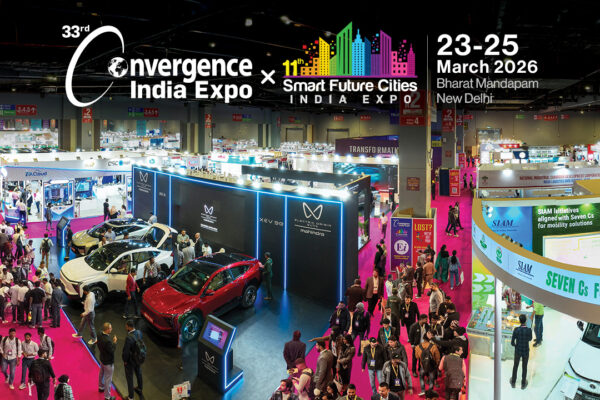
33rd Convergence India & 11th Smart Future Cities India Expo Set to Accelerate AI, 6G, and Next-Generation Urban Innovation
The 33rd Convergence India & 11th Smart Future Cities India Expo 2026, jointly organised by the India Trade Promotion Organisation (ITPO) and Exhibitions India Group (EIG), with support from IndiaAI Mission, Digital India and MeitY, is set to mark a defining milestone in India’s digital and urban transformation journey. Scheduled for March 23-25, 2026, at Bharat Mandapam, New Delhi, this three-day expo will bring together participants from 25 countries, featuring cutting-edge advancements and solutions in telecom, satcom, 6G, AI, big data, IoT, cybersecurity, smart governance, fintech, semiconductors, embedded tech, smart mobility, and more, to an audience exceeding 50,000. The event will feature global technology companies such as Google, AWS, Microsoft, Zoom, Escort Sensors, Telit Cinterion, and more, alongside a distinguished lineup of speakers, including Anil Kumar Lahoti, Chairman, TRAI; Abhishek Singh, Additional Secretary, Ministry of Electronics & IT & CEO, IndiaAI Mission; A. Dhanalakshmi, Joint Secretary, Department of Science & Technology; Dr. J. B. V. Reddy, Head – Quantum Technology Cell, DST; Sergey Cheremin, Minister of the Government of Moscow; H.E. Juan Antonio March Pujol, Ambassador of Spain, amongst 200 leaders from government and industry. Sharing his views about the prestigious event, Jitan Ram Manjhi, Union Minister for MSME said, “Convergence India has long been a champion of India’s digital revolution, and Smart Cities India has played a crucial role in the country’s ongoing modernisation development initiatives. By supporting the Government of India’s vision of ‘Digital India’, ‘Make in India’, and ‘Smart Cities Mission,’ this leading expo provides a kind of international forum to showcase ‘Brand India’ and focus on unlocking new opportunities in India’s economic revolution.” Additionally, Abhishek Singh, Additional Secretary, Ministry of Electronics & IT & CEO,India AI Mission shared his views, “Under the India AI Mission, MeitY is focused on democratising AI capabilities, accelerating AI innovation, enabling responsible and trusted AI adoption, and strengthening domestic capacity in emerging technologies. By bringing together government, industry, academia, startups, and international participants under one roof, the Expo strengthens India’s position as a trusted global technology partner and investment destination.” Over the years, the expo has evolved into the country’s most influential annual gathering for government and industry leaders, centred on building a technologically modern India. Under the theme ‘India’s Impact: Tech Today, Transformation Tomorrow,’ the event will showcase breakthroughs aligned with Government of India initiatives including Digital India, Make in India, and the India AI Mission. The Startup Hub, meanwhile, provides a dedicated platform for early-stage startups to pitch ideas, network with investors, gain industry insights, and benefit from mentoring sessions led by ecosystem pioneers. Former winners of the Startup Pitch competition – Fuselage Innovation, Proxgy and Nimble Vision just to name a few – found that the Startup Hub was a launchpad that not only propelled them to global acclaim, but also contracts from across the world and funding that has enabled them to make a mark on the international stage. This year’s edition marks a significant increase in international collaboration, featuring dedicated Country Pavilions supported by the governments of Moscow, Taiwan (Taiwan Excellence) – with their pavilion christened Taiwan AI Island – and New Zealand. These pavilions will showcase cutting-edge advancements and foster high-level technology exchange. The exhibition floor will also feature over 1,000 brands, including industry giants such as Tesla, Microsoft, Qualcomm, MG Motor, Mahindra, Zoom, Canara Bank, Union Bank, Godrej, CP PLUS, Prama, GTPL, Honeywell, Fortune Marketing, Lexar, SanDisk, WD, MiTAC, NASSCOM Foundation, Redington, Smartping, Omnicomm, Philips, Realtek, MiPhi, Escort Sensors, Queclink, Ruptela, Telit, Airoha, CtrlS, Tenda, Secureye, Innotech and Unix. Among the marquee exhibitors, Tesla will showcase its latest automotive advancements and the Optimus humanoid robot at Hall 1, offering attendees a first-hand glimpse into the future of intelligent mobility. A highlight of this year’s expo is the debut of the SIAM Lab – Smart Integrated Automotive Mobility Lab – a premier pavilion created by the Society of Indian Automobile Manufacturers (SIAM) as part of the co-located Smart Mobility India Expo. Designed as a high-impact ecosystem, the SIAM Lab will bring together automotive OEMs, technology leaders such as Google and Qualcomm, and technology innovators under one roof. The expo will also feature a dedicated Creator’s Session on Day 3 (25th March, 1:15 PM) titled “The Future of Influence: Creators in the Age of AI & Algorithms.” The panel will be moderated by Aayush Ailawadi (@theaayushailawadi), and feature prominent digital creators, including Anuj Chauhan (@Teddy Gaming), Karan Lohia (@karanlohiaa_), Arvind Kharra (@Tech Master), and Yash Sethi (@mrgeekguy). The session will explore how content creators are navigating the evolving landscape of AI-driven platforms and algorithmic discovery. Ms. Chandrika Behl, Managing Director, Exhibitions India Group, observed, “Over the past three decades, Convergence India has not only evolved alongside India’s technology journey but also shaped its direction, from a telecom-focused exhibition in the early 1990s to a platform that now brings together conversations around AI, digital public infrastructure, smart mobility and urban technologies. As India emerges as one of the world’s most dynamic digital economies, the platform continues to enable meaningful dialogue between policymakers, industry leaders and innovators. These interactions often translate into collaborations and ideas that extend far beyond the three days of the expo.” The conference will bring together leading policymakers and technology experts, including Rajat Kumar Saini, IAS, CEO & MD, National Industrial Corridor Development Corporation (NICDC); Graham Rouse, New Zealand Consul-General & Trade Commissioner, India & South Asia; Suvendu Pati, Chief General Manager-FinTech, Reserve Bank of India; Atul Lall, Managing Director and Vice Chairman, Dixon Technologies (India) Limited; Jasbir Singh, Executive Chairman, CEO, and Whole-time Director, Amber Enterprises; Dr. R.K. Upadhyay, CEO, C-DoT; and Dr. J.B.V. Reddy, Head- Quantum Technology Cell, DST, Government of India. Leaders from global and Indian technology companies, such as Google Cloud, Meta, Amazon Web Services (AWS), SAP Labs, Infosys, Zoho, HCLTech, Capgemini, and Tata Communications will also participate. The sessions will explore key themes including AI and digital public infrastructure, India’s transition from 5G to 6G, quantum technologies, fintech innovation, and the future of smart and sustainable cities. About…

PRAMA Showcases Innovative Video Security Products and Bespoke Solutions at SSSA Business Expo 4.0 in Rajkot
PRAMA India showcased the innovative video security products and bespoke solutions at SSSA Business Expo 0.4 -2026. The event was organised by Saurashtra Security and Surveillance Association (SSSA) during 23-24 January at NSIC Ground in Rajkot. The event was inaugurated by ribbon cutting and lighting of the lamp ceremonies in the presence of security industry leaders, dignitaries, and distinguished guests. PRAMA India booth attracted security industry professionals, end-users and discerning visitors at the event. India’s leading indigenous video security brand, PRAMA received an overwhelming response from the security professional community in Rajkot and Saurashtra region. PRAMA management representative said, “The Indian security market is growing rapidly in the Tier-II and Tier-III cities and now Rajkot is the new epicenter of this regional market growth. We find SSSA Business Expo 4.0 expo, a highly valuable exhibition platform to the key stakeholders and ecosystem partners. We showcased the latest products and solutions in this expo. We appreciate SSSA for organizing ‘SSSA Business Expo4.0’ in the Saurashtra region.” He further elaborated, “PRAMA, being India’s premier indigenous security brand, holds great significance. The spectacular growth that India security industry has achieved, PRAMA’s evolution as a leading security brand is the manifestation of Indian spirit and ingenuity. We are taking indigenous manufacturing to the next level. We are here to offer best-in-class products with cutting edge technologies that can deliver solutions as per the vertical market requirements.” The beautifully designed spacious PRAMA booth was center of attraction for the industry specific visitors. PRAMA booth showcased the latest products and vertical solutions, including IPC Basic Ai Solution, Smart Class Room Solution, Home segment – Video door Phone Solution, Safe City Surveillance solution, HD Analog Solution, Transmission Solution, SSD Storage and many more. PRAMA booth displayed the latest video security products, including the IPC Basic Ai Solution. PRAMA’s AiSense technology, powered by advanced AI Algorithms, takes surveillance to the next level. This technology intelligently distinguishes people and vehicles from other moving objects, reducing false alarm caused by animals or environmental factors. With AiSense Technology one can focus on the real threats, optimize resources and build on an intelligent security system. The ‘SSSA Business Expo-2026 was a unique event platform created by the Saurashtra Security and Surveillance Association (SSSA). a professional organization of Distributors, System Integrators, Professionals and Consultants in the Saurashtra Region of Gujarat.The two-day event helped to create awareness about the latest IT and security trends. The event was attended by the security professionals and key stakeholders. The visitor profile comprised of representatives and delegates from Gujarat Government, Gujarat Police, Gems & Jewellery, Diamond, Textiles and Heavy Machinery Industries, IT Professionals, Security Business Community. PRAMA India booth got a good response from the key partners, trade visitors and key stakeholders at the SSSA Business Expo-2026. The event concluded on a high note while creating an enriching experience for all the stakeholders in the Rajkot. Read More