


Category: National

GEO Awards 2026 Spotlight Matrix’s People, Innovation, and Leadership Culture
Ganesh JivaniManaging Director &CEO Matrix Matrix, a leading provider of Security and Telecom solutions, has been honored at the Gujarat Employers Organization (GEO) Awards 2026. The award was presented at the Gaekwad Baroda Golf Club, Vadodara, recognizing Matrix for building a strong culture of excellence – where innovation, people development, and high-performance teams are central to the way the organization works. Sumer Mehra Vice President, Product Engineering, Matrix Comsec (L), Receiving the GEO Leadership Award For professionals 2026 As part of this recognition, Matrix had nominated its Vice President – Product Engineering, Sumer Mehra, for his contribution towards building technology capabilities and scaling teams, strengthening Matrix’s engineering foundation and driving long-term organizational impact. Reflecting on the leadership philosophy showcased through this nomination, Mr. Mehra said, “Great leaders don’t scale themselves. They scale systems, people, and culture.” Matrix received this recognition for its structured approach to engineering and product development – where execution excellence is built through strong systems, clear ownership, and continuous improvement. Over the years, Matrix has strengthened its technology foundation by institutionalizing product lifecycle accountability, embedding quality into delivery, and enabling innovation at scale across its portfolio. Today, Matrix’s engineering scale of 250+ professionals supports a portfolio of 60+ products, trusted by 1 million+ customers globally. Commenting on the recognition, Ganesh Jivani, Managing Director & CEO, Matrix, said, “This recognition by the Gujarat Employers Organization is an honor for Matrix. Innovation has been in our DNA, and we have consistently focused on building a culture where leadership is reflected through strong systems, empowered teams, and a shared commitment to excellence. We will continue strengthening our people and capabilities to create world-class technology solutions and deliver value to customers globally.” Established in 1991, Matrix stands as a leading provider of Security and Telecom solutions tailored to the needs of modern enterprises. Driven by technology and guided by a steadfast commitment to customer satisfaction, our organization remains at the forefront of innovation in the ever-evolving Security and Telecom industries. With nearly 40% of our workforce dedicated to pioneering new products, Matrix has introduced cutting-edge solutions such as Video Surveillance Systems (Video Management Systems, Network Video Recorders, and IP Cameras), Access Control and Time-Attendance Systems, and Telecom Solutions (Unified Communications, IP-PBX, Universal Gateways, VoIP, GSM Gateways, and Communication Endpoints). These solutions are not only feature-rich and reliable but also adhere to stringent international standards. Read More
India & South Asia SSEAs and Cyber OSPAs 2026 Winners Announced
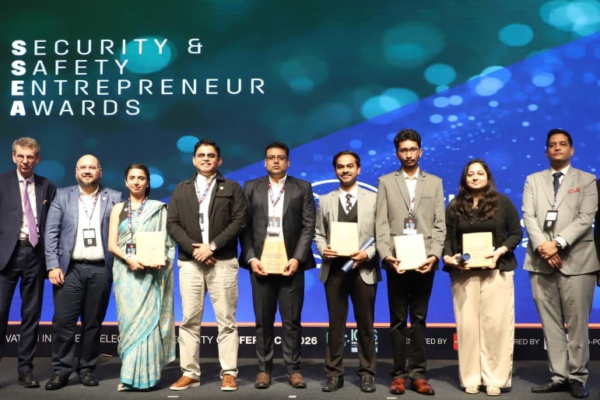
The winners of the 2026 India & South Asia Security & Safety Entrepreneur Awards (SSEAs) and the India & South Asia Cyber Outstanding Security Performance Awards (Cyber OSPAs) were announced at a joint awards ceremony held at the Grand Hyatt Mumbai during day one of the Innovation in Cyber & Electronic Security (ICES) 2026. The ceremony marked a major milestone for both awards programmes, as this was the first time the SSEAs and the Cyber OSPAs have taken place in India. It also represented the first international expansion for both awards outside the UK, with India & South Asia selected as the inaugural region for their global growth. The event brought together senior leaders, entrepreneurs, cybersecurity professionals, policymakers, and innovators from across India and South Asia, celebrating excellence, leadership, and innovation across the physical security, safety, and cybersecurity sectors. Both award programmes followed a rigorous and independent judging process, assessed against clearly defined criteria to ensure transparency, credibility, and regional relevance. 2026 India & South Asia SSEAs – Winners Entrepreneur of the Year Sai Krishna Domala – Security India / Virtual Protect Security Pvt Ltd Intrapreneur of the Year Syed Arshad Ali – Ethic Management Services Pvt Ltd The SSEAs recognise entrepreneurs, intrapreneurs, and organisations that are shaping the future of security and safety across India and South Asia through innovation, leadership, and impact. 2026 India & South Asia Cyber OSPAs – Winners Outstanding Chief Information Security Officer (CISO) Sameep Agarwal – Triune Digital Security Corporate LLP Outstanding Cyber Security Professional Sreenikethana KV – Schaeffler Outstanding Cyber Security Consultant SagePresage Consulting Outstanding Cyber Security Training / Awareness Initiative Cyber Security Initiative – Antara Jha Outstanding Young Cyber Security Professional Shanmukhasrisai Kommuri – HackerPlus Technologies LLP Outstanding New Cyber Security Product CYBX – 63SATS Cybertech Limited Lifetime Achievement Award Dr Lopa Mudraa Basuu The Cyber OSPAs celebrate individuals, teams, initiatives, and products that have made outstanding contributions to strengthening cyber resilience across the region. The 2026 finalists and winners across both programmes represent excellence from India, Bangladesh, Bhutan, Maldives, Nepal, and Sri Lanka, highlighting South Asia’s growing influence in shaping global security and cybersecurity practices. The India & South Asia SSEAs and Cyber OSPAs are organised in partnership with ITP Media Group, with MitKat Advisory supporting both programmes as the Knowledge Partner. Together, the awards serve as a platform to recognise achievement, inspire innovation, and connect leaders across the security and cyber ecosystems. Read More

From Reactive to Predictive: The AI Revolution in Physical Guarding Services
Brig. Mayank Awasthi, MD – North of Peregrine Guarding For decades, physical guarding services have followed a largely reactive approach. Security personnel responded after an incident occurred, relying on manual observation, routine patrols, and basic surveillance systems. While this model has served organisations for years, today’s rapidly evolving risk environment demands a more intelligent and proactive framework. With increasing urbanisation, complex infrastructure, and rising security expectations, traditional guarding methods are no longer sufficient on their own. This is where Artificial Intelligence (AI) is reshaping the future of physical security, transforming it from a response-driven function into a predictive, insight-led system. Moving Beyond Traditional Limitations Conventional guarding depends heavily on human vigilance. Guards monitor CCTV feeds, conduct patrols, and report incidents after they occur. However, long shifts, information overload, and human limitations can affect consistency and response speed. In large facilities such as industrial plants, corporate campuses, logistics hubs, and data centres, even small gaps in monitoring can lead to serious risks. AI addresses these challenges by enabling continuous, real-time analysis of security environments. Instead of relying solely on manual inputs, intelligent systems process large volumes of data, detect subtle patterns, and identify potential threats before they escalate. AI as an Enabler of Predictive Security AI-powered systems use advanced video analytics, machine learning, and sensor integration to create a comprehensive security ecosystem. These technologies analyse movement patterns, access behaviours, and environmental changes to highlight abnormal activities. For example, unusual loitering, unauthorised access attempts, or deviations from routine movement can be detected instantly. Modern surveillance systems equipped with AI can also distinguish between harmless and suspicious activities. This reduces false alarms and ensures that security teams focus on real risks. Centralised monitoring platforms further enhance visibility by consolidating data from multiple sites into a single command interface, allowing faster coordination and response. Over time, AI systems learn from historical data. By studying past incidents, footfall trends, and operational schedules, they develop predictive models that help anticipate potential vulnerabilities. This transforms security from a reactive shield into a preventive mechanism. From Guarding Presence to Risk Prevention One of the most significant shifts driven by AI is the transition from physical presence to proactive prevention. Instead of deploying guards uniformly across locations, organisations can now allocate resources based on real-time threat levels and risk assessments. Patrol routes can be optimised using data insights, high-risk zones can receive greater attention, and response strategies can be refined continuously. As a result, security operations become more efficient, targeted, and cost-effective. Predictive guarding also reduces response time. Early warnings enable teams to intervene before situations escalate, minimising damage, disruption, and safety concerns. The Human–Technology Partnership Despite rapid automation, human expertise remains central to effective security. AI excels at monitoring, analysing, and predicting, while trained personnel bring judgment, adaptability, and on-ground decision-making. The future of physical guarding lies in this collaborative model. AI provides actionable intelligence, command centres evaluate risks, and guards execute precise interventions. This partnership strengthens situational awareness and reduces operational blind spots. Training programs are also evolving to equip guards with digital literacy and system-handling capabilities, ensuring seamless integration between manpower and technology. Business Impact and Strategic Value For enterprises, AI-enabled guarding delivers tangible benefits. It lowers incident rates, improves regulatory compliance, enhances transparency through digital reporting, and supports scalable security operations across locations. Employees, clients, and visitors also gain greater confidence in safer environments. In sectors such as manufacturing, IT, BFSI, and critical infrastructure, predictive security strengthens business continuity and resilience against emerging threats. Looking Ahead As AI continues to advance, its integration with IoT devices, automated workflows, and intelligent analytics will further redefine physical guarding. Security operations will become increasingly data-driven, adaptive, and insight-focused. The shift from reactive to predictive security is no longer a future concept—it is an operational necessity. Organisations that embrace this transformation today are better positioned to manage risks, protect assets, and ensure long-term stability. The AI revolution in physical guarding has begun, and it is setting a new benchmark for intelligent protection.

Engineering the Future of Security : CP PLUS Leads with AI and Made-in-Bharat Innovations
CP PLUS once again reaffirmed its leadership in India’s surveillance and electronic security landscape by emerging as the undisputed highlight across four major industry expos held in January 2026. From western India’s fast-growing industrial hubs to technology-driven urban centers, CP PLUS’ presence stood out as a powerful statement of momentum, innovation, and purpose. Across Rajkot, Pune, Gandhinagar, and Nagpur, one narrative echoed clearly – India’s surveillance ecosystem is evolving rapidly, and CP PLUS is leading that transformation with intelligence, indigenized technology, and scale. SSSA Expo in Rajkot At the SSSA Expo in Rajkot, the CP PLUS display told a compelling story of momentum. Designed to reflect the brand’s journey and future vision, the showcase brought together intelligent systems and scalable innovations developed in India, underlining CP PLUS’ deep-rooted commitment to the nation’s technological self-reliance. Visitors witnessed firsthand how advanced surveillance solutions are no longer confined to monitoring alone, they are evolving into intelligent ecosystems that enhance situational awareness, operational efficiency, and proactive security. Every solution on display reinforced CP PLUS’ resolve to shape a more secure, technology-driven tomorrow – one where innovation is not imported, but engineered indigenously for India’s unique requirements. CMDA Pune The CMDA Pune event further strengthened this narrative by showcasing CP PLUS in action. The exhibition floor became a live demonstration of how intelligent, indigenous technology is redefining the very foundations of modern security. Advanced AI-powered surveillance solutions, designed to analyze, interpret, and respond in real time, drew significant attention from industry professionals and stakeholders. From smart analytics to scalable architectures capable of supporting enterprises, cities, and critical infrastructure alike, CP PLUS highlighted how Indian innovation is now setting global benchmarks. The Pune event underscored the brand’s commitment to protecting what matters most – not just for today, but for the future that is fast unfolding. FITAG National Tech Expo in Gandhinagar At the FITAG National Tech Expo in Gandhinagar, CP PLUS stood firmly at the forefront of India’s broader technology evolution. The showcase reflected a future-forward vision where surveillance is seamlessly integrated with intelligence, resilience, and scale. AI-powered solutions demonstrated how security technology can empower decision-making, enhance public safety, and optimize operations across sectors. Made-in-Bharat innovations took center stage, emphasizing engineering excellence that is built to perform reliably across diverse Indian environments. The Gandhinagar expo reinforced CP PLUS’ role as a catalyst in redefining how technology protects, empowers, and transforms lives – extending far beyond conventional notions of surveillance. Vidyut Expo 2026 in Nagpur Vidyut Expo 2026 in Nagpur added yet another dimension to CP PLUS’ impactful presence. More than a display of technology, the event became a hub of meaningful conversations and strategic exchanges. From engaging discussions with industry leaders and system integrators to insightful dialogues with policymakers and professionals from the traffic and urban safety ecosystem, the expo reflected the rapidly evolving nature of India’s surveillance landscape. CP PLUS’ participation highlighted not only technological leadership but also thought leadership – demonstrating how collaboration, innovation, and policy alignment together shape safer, smarter cities. As urban centers expand and mobility increases, the relevance of intelligent surveillance has never been greater, and CP PLUS proudly showcased solutions that address these emerging challenges head-on. Across all four expos, a common thread tied CP PLUS’ presence together – indigenization with intent. Every solution showcased reflected years of focused investment in research, development, and manufacturing within India. By combining advanced AI capabilities with robust hardware and scalable platforms, CP PLUS continues to enable governments, enterprises, and communities to build security infrastructures that are future-ready. The emphasis on Made-in-Bharat innovation also aligns seamlessly with national priorities, supporting economic growth, technological sovereignty, and long-term sustainability. January 2026 proved to be a defining chapter in CP PLUS’ ongoing journey. The overwhelming response across Rajkot, Pune, Gandhinagar, and Nagpur reaffirmed the trust placed in the brand by industry stakeholders nationwide. As India accelerates toward a smarter, safer, and more connected future, CP PLUS remains steadfast in its mission – to lead with innovation, empower with technology, and secure the nation with solutions that are intelligent, resilient, and proudly Indian. With its commanding presence across these landmark expos, CP PLUS has once again demonstrated that leadership in surveillance is not just about technology – it is about vision, responsibility, and the commitment to shape a safer tomorrow for India. Read More

Hikrobot’s Machine Vision Solutions Enable and Empower Electronics Manufacturing Sector
Hikrobot’s Machine Vision solutions are revolutionizing the electronics manufacturing sector by providing advanced technologies that enhance quality control, efficiency, and productivity. Hikrobot is empowering the electronics manufacturing sector by offering cutting edge technologies and solutions that are adding immense value. Key solutions and benefits Hikrobot’s product offerings By leveraging these solutions, electronics manufacturers can improve efficiency, reduce waste, and enhance overall productivity. The fast growing electronics manufacturing sector in India needs machine vision solutions at every step. It is one of the largest fields of machine vision application. Machine vision application can almost be seen in every link of the electronics manufacturing industry chain, from micro components such as imaging modules and USB connectors, to large mobile phone frame, motherboard of PC and other devices. These include industry applications such as the processing and assembly of electronics components. Positioning Guidance Obtain the position information of the measured object through machine vision technology, and guide the robot to carry out a series of operations. Based on image calibration, target detection, size search and other algorithmic technologies, the main role of robot guidance related applications is to accurately obtain the coordinate position and angle of the object (object to be grasped) and target object (object to be assembled), and convert the image coordinate into the robot coordinate that can be recognized by the robot, and guide the robot to locate and assemble. Code system identification The technology of electronic industry product is complex, in some links of the industry chain, the product identity ID information should be identified. Demand for electronic devices such as smartphones and tablets has surged. With the increasing number of parts and the rapid development of miniaturization of products, manufacturers are also committed to pursuing high-quality traceability management. In view of the miniaturization of electronic parts, in many cases, the traditional contact printing processing method has been changed to the non-contact high-precision laser printing and processing. Therefore, the requirements for trace printing with fineness, high quality and low damage are increasing day by day. Defect detection Detect the scratch, damage, spot, color difference and other defects on the surface of electronic products. In the process of manufacturing products in the electronic industry, defects can’t be avoided, and the requirements of production enterprises for product quality are keeping raise. Therefore, defect detection is a very important application in the industry. Machine vision has the ability of high precision and high speed detection, which can realize the detection of various defects, including scratch, damage, spot, colour difference, etc. CNC Mobile Phone Hole Positioning Processing: positioning guidance, CNC, calibration, machining operation. Realize the high-precision search and positioning of the fixed shape hole of the workpiece to be processed, and then carry out machining operation. The Alignment of FPC and ACF Glue – Alignment fitting, visual positioning, recognition; detection The FPC and ACF glue are automatically identified and aligned according to the alignment mark. Only the alignment adjustment is needed for FPC each time, and the position of ACF glue is fixed. Barcode Recognition of Mobile Phone Module: Mobile phone module, QR code recognition, DM, post Scan and read the code of a variety of mobile phone modules without fixed features. Hikrobot offers bespoke machine vision solutions that are integral to the electronics manufacturing process. Read More
Enhancing Surveillance Intelligence Through LiDAR-Enabled Auto-Tracking
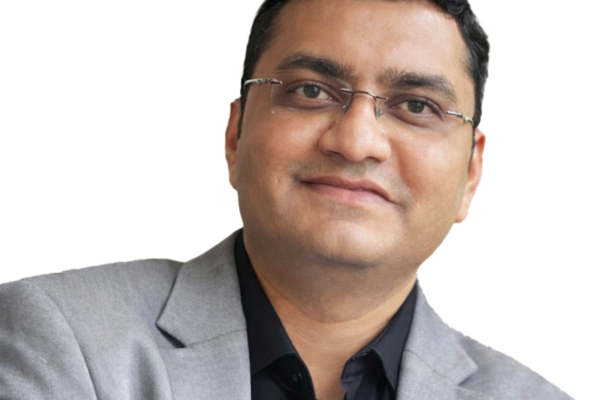
Gaurav TaywadeManaging DirectorIndia, Vicon Auto-tracking has long been one of the most promising features in PTZ surveillance systems. The idea is simple – detect a moving object and automatically follow it without human intervention. In practice, however, traditional auto-tracking has often struggled with reliability – losing targets, reacting late, or behaving unpredictably in complex environments. As surveillance systems evolve toward autonomy, LiDAR is emerging as a key technology that fundamentally changes how auto-tracking works – making it faster, more stable, and far more dependable. Surveillance is moving beyond visual monitoring toward spatial understanding. Technologies like LiDAR allow cameras to perceive distance, depth, and movement with far greater precision, transforming auto-tracking from a reactive feature into a dependable, autonomous capability. This shift is critical as security systems are expected not only to observe environments, but to understand them The limitations of vision-only auto-tracking Conventional PTZ auto-tracking relies primarily on video analytics. The system detects an object in the video frame and instructs the PTZ to follow it based on pixel movement. This approach works well in controlled conditions but faces challenges in real-world environments such as low contrast scenes (night, fog, dust, smoke); objects blending into the background; sudden lighting changes; fast or erratic movement; long-range tracking where depth is unclear; and occlusion by other objects. In these cases, the camera is effectively trying to understand a three-dimensional world using a two-dimensional image. What LiDAR brings to surveillance LiDAR (Light Detection and Ranging) adds a missing dimension to surveillance – depth awareness. Instead of relying on visual contrast alone, LiDAR actively measures distance by emitting laser pulses and calculating how long they take to return after hitting an object. The result is a precise, real-time understanding of distance, depth, relative position, and movement in physical space. This capability allows surveillance systems to understand where an object is, not just how it looks. How LiDAR works At a high level, LiDAR operates through three steps: By repeating this process continuously, the system builds a live depth map of the scene. Unlike video, this depth information is unaffected by color, shadows, or lighting conditions. Why LiDAR makes auto-tracking smarter When LiDAR data is combined with video analytics, PTZ auto-tracking becomes significantly more reliable. From tracking to spatial intelligence LiDAR does more than improving tracking – it enables spatial intelligence. By understanding depth and distance, surveillance systems can track objects in three dimensions, predict movement paths, improve handover between detection and PTZ tracking, and support autonomous camera behavior. This transforms PTZ cameras from reactive devices into proactive, spatially aware sensors. Why this matters for modern surveillance deployments Today’s surveillance environments are complex and demanding such as large perimeters, industrial plants, ports and airports, rail corridors, smart cities, and remote and low-light locations etc. In these scenarios, operators cannot manually control PTZ cameras effectively at scale. Reliable auto-tracking becomes essential – not optional. LiDAR-assisted auto-tracking ensures that surveillance systems respond consistently, reduce operator fatigue, maintain situational awareness, and deliver usable intelligence, not just video. The future: Autonomous, multi-sensor surveillance The future of surveillance lies in sensor fusion – combining visual intelligence, thermal detection, spatial awareness (LiDAR), and edge AI decision-making. Together, these technologies enable surveillance systems that can detect, understand, and respond with minimal human intervention. LiDAR plays a critical role in this evolution by anchoring intelligence in physical reality, allowing cameras to understand space, movement, and distance with precision. Conclusion Auto-tracking has long promised autonomous surveillance, but its effectiveness has been limited by the constraints of vision-only systems. LiDAR changes this equation. By adding depth, distance, and spatial awareness, LiDAR transforms auto-tracking from a feature into a dependable capability – one that works reliably in real-world conditions. As surveillance systems move toward autonomy, LiDAR will become a foundational technology, enabling PTZ cameras to track with confidence, accuracy, and intelligence – regardless of environment. Read More
STAR Rating of Private Security Agencies in India – First of Its Kind Globally
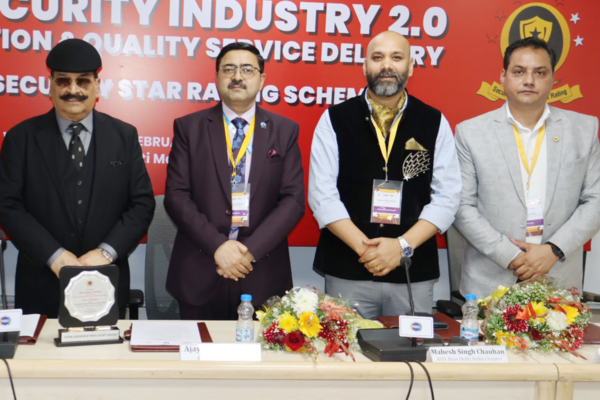
Ushering in a New Era of Standardisationin Security Service Delivery India marks a historic milestone in the evolution of the private security industry with the launch of the Security Agencies STAR Rating Scheme, the first-of-its-kind quality rating framework for private security agencies anywhere in the world. Conceptualised and developed jointly by the Quality Council of India (QCI) and the Central Association of Private Security Industry (CAPSI), the initiative establishes a globally unique benchmark for quality, governance, and service assurance in outsourced security services. The launch of this landmark national scheme was presided over by Kunwar Vikram Singh, Chairman, CAPSI, whose leadership has been instrumental in driving industry-led reforms, professionalisation, and alignment with national quality and governance frameworks. The STAR Rating Scheme represents a decisive shift from fragmented compliance-based oversight toward a structured, transparent, and outcome-driven model of security service excellence. As part of this national initiative, CAPSI, in association with the ASIS New Delhi Chapter, has recently organised an exclusive industry interaction session for corporates and institutional buyers of security services on the theme ‘Standardisation & Service Quality Delivery’ at PHD House, New Delhi. The STAR Rating Scheme has been specifically designed to transform security service delivery for service takers by enabling informed procurement decisions through objective, independently verified ratings. It offers corporates and institutions assured quality, enhanced regulatory compliance, reduced operational and reputational risks, transparent benchmarking of vendors, and stronger alignment with ESG priorities, governance frameworks, and business continuity planning – thereby reinforcing confidence in outsourced security operations across sectors. While statutory mechanisms such as the Private Security Agencies Regulation Act (PSARA) provide the essential foundation for licensing and legal compliance, they do not fully address operational maturity, workforce competence, ethical governance, or sustained performance assurance. Recognising this critical gap, QCI and CAPSI jointly developed the STAR Rating Scheme as a structured, industry-led, and globally unprecedented quality assessment framework. The interaction session featured a distinguished panel of industry leaders and domain experts including Kunwar Vikram Singh, Chairman, CAPSI; Harvindra Singh, Head Security Operations – North, Kyndryl & ARVP, ASIS; Mahesh Singh Chauhan, Chairman, ASIS New Delhi Chapter; Col. Harjinder Singh, Consultant – Strategic Security & Risk Management; Capt. Allroy Collaco, Director Projects, CAPSI; Mahesh Sharma, Secretary General, CAPSI; and Guest of Honour Ajay Kumar Sharma, Joint Director, NABCB. The panel deliberated on governance, service-quality delivery, and the expanding role of private security in India’s internal security ecosystem, beginning the new era of Standardisation of Security Services. The event witnessed participation from over 100 leading corporates and multinational organisations across infrastructure, manufacturing, IT and IT-enabled services, banking and financial services, logistics, retail, hospitality, healthcare, and critical facilities management. Senior security heads, chief risk officers, procurement leaders, compliance professionals, and business continuity planners will engage in focused discussions on evolving threat landscapes, quality-led outsourcing, and the future of professional security services. The QCI-CAPSI STAR Rating Programme represents a strategic transition from fragmented compliance to institutionalised excellence. By establishing a trusted national quality benchmark, it strengthens India’s internal security framework, enhances corporate confidence, and positions the private security industry as a professional, reliable, and nationally aligned partner in risk management and asset protection. The Central Association of Private Security Industry (CAPSI) is India’s premier organisation representing private security professionals and enterprises. CAPSI is committed to advancing professional standards, best practices, and policy advocacy for the private security industry in India. Read More

Tech for a Better Future: Hikvision’s Journey Practicing Responsible AI
Today, AI is transforming the way we live, work, and do business at an unprecedented pace From optimizing complex processes to enhancing task efficiency, AI is reshaping nearly every aspect of our world. Yet, with this revolution comes an equally critical responsibility – to ensure that the innovation unfolds safely, ethically, transparently, and for the benefit of all. In light of this, Hikvision is proud to launch our latest publication, ‘Hikvision’s Journey Practicing Responsible AI.’ This in-depth report explores how industries, governments, and organizations can collaborate to advance AI responsibly, with Hikvision’s practices serving as a key example. A new era for artificial intelligence The rise of AI has unlocked remarkable opportunities – along with growing expectations for accountability. The report opens with a global view of how AI is transforming industries, reshaping the workforce, and influencing society as a whole. As public awareness and regulatory oversight increase, one message is clear – responsible AI is no longer optional. For organizations, this isn’t just an ethical imperative but also a strategic one. It helps build trust, mitigate risk, and fuels long-term innovation. The time to act is now. How the world is shaping AI policy The second chapter provides an overview of the rapidly evolving global AI policy environment. From Europe’s regulatory pioneering to regional initiatives across the rest of the world, we reflect on the challenges and opportunities that will influence the future of AI governance. As the report highlights, international collaboration and cohesive approaches will be essential to harness AI’s potential while promoting global security, prosperity, and human well-being. Hikvision’s commitment to responsible AI At the heart of the publication is Hikvision’s commitment and approach to responsible AI. We outline our guiding principles and governance framework, highlighting our responsible approaches throughout the AI development lifecycle and the frameworks we apply to ensure safety, accountability, and transparency in our products and solutions. Our goal is clear – to embed responsibility at every stage of AI innovation, from research and development to deployment and real-world application. And our continued dedication is further underscored by recognition under global standards such as ISO 42001. A call to build a better future with responsible AI As we stand at this pivotal moment in AI’s evolution, collaboration is key. The future of responsible innovation depends on collective action across sectors and borders. We invite policymakers, industry partners, researchers, and other stakeholders to join us on this journey. Together, we can help shape the next chapter of AI that truly serves humanity. Read More

Hafele Brings Thoughtful Intelligence to Home Security
As homes increasingly embrace intelligent living, access control has evolved into a seamless part of everyday routines. Hafele’s Horizon and Nova Digital Door Locks are designed to support this shift by offering reliable security, intuitive operation and thoughtful functionality suited to contemporary lifestyles. The Hafele Horizon Digital Lock is designed for homeowners seeking advanced access management and enhanced visibility at the entrance. With built in Wi-Fi connectivity, it allows remote operation, real time monitoring and easy management of users through a mobile application. Features such as a digital door viewer and face recognition enable homeowners to see and identify visitors before granting access. Multiple user profiles can be created for family members and guests, while smart password technology helps conceal actual PINs during entry, adding an extra layer of privacy and security. The Hafele Nova Digital Lock offers a more compact and practical solution without compromising on intelligence. Designed for ease of use, it operates on standard alkaline batteries and supports fingerprint access, PIN codes and RFID cards. Bluetooth connectivity enables short range control and user management through a mobile application, making it ideal for everyday residential use. Safety features such as intrusion alarms, door open alerts and panic exit ensure dependable performance in daily scenarios. Together, Horizon and Nova represent Hafele’s approach to smart security that adapts to real life needs. By combining intuitive technology with dependable performance, both locks deliver intelligent access solutions that enhance comfort, control and peace of mind in modern homes. Read More
FSAI–Dubai Civil Defence Alliance Reaches500 Million People in Fire Safety Awareness; India Takes Centre Stage at World Safety Summit 2026
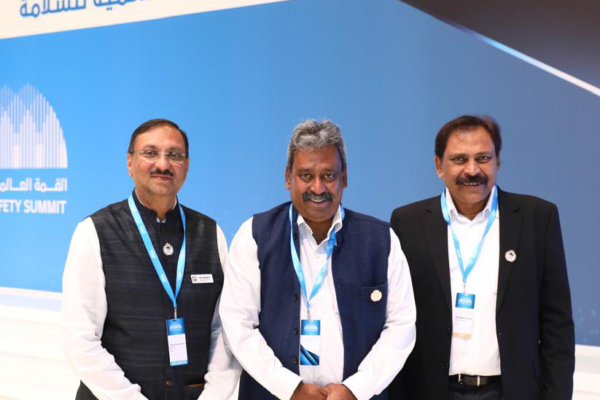
The Fire and Security Association of India (FSAI), as part of its strategic alliance with the Directorate General of Dubai Civil Defence (DCD), has contributed to extending fire and life safety awareness to over 500 million people across 64 countries in less than a year, marking significant progress towards the shared goal of training one billion people worldwide, and it was revealed in the World Safety Summit 2026 where FSAI represented India, held at Expo City Dubai. The summit was organised by the General Command of Dubai Civil Defence, which was attended by His Highness Sheikh Mansoor bin Mohammed bin Rashid Al Maktoum. FSAI’s participation follows a three-year Memorandum of Understanding (MoU) signed in January last year between DCD and FSAI to strengthen cooperation in fire safety, firefighting and civil defence. The MoU provides a structured framework for knowledge exchange, joint research, training programmes, awareness forums and the sharing of best practices, while fully respecting the national laws and institutional independence. FSAI was represented at the summit by Srinivas Valluri, National President, who led the Indian delegation, along with Ajit Raghavan, Presidential Member & International Affairs Chairman, FSAI, and Dipen Mehta, National Secretary, FSAI. FSAI participated in the proceedings of the World Safety Forum, a closed-door platform comprising 34 countries, where heads of delegations presented brief national reports. During the roundtable session, FSAI outlined the benefits of the alliance and highlighted India’s contribution to advancing large-scale, community-focused fire and life safety awareness. Speaking at the summit, Srinivas Valluri said, “Representing India at the World Safety Summit reflects FSAI’s commitment to global collaboration in safety. Contributing to an outreach of over 500 million people in under a year demonstrates the strength of partnerships, structured engagement and shared responsibility in protecting lives.” As part of the official agenda, FSAI leadership participated in multiple high-level engagements including closed meetings with international dignitaries and parallel sessions. Ajit Raghavan represented the association in discussions with the Dubai Youth Council, reinforcing the importance of youth engagement and future-ready capacity building in safety ecosystems. He said, “The summit underlined that sustainable safety outcomes depend on education, innovation and youth participation, areas where FSAI continues to play an active role.” During the summit, Dubai Civil Defence announced a global task force to implement Artificial Intelligence in fire and life safety systems, aimed at strengthening prevention, preparedness and emergency response capabilities. In recognition of FSAI’s contribution to the alliance, Dipen Mehta has been elected as an Executive Member of the AI Task Force, representing India on the global platform. Commenting on the development, Dipen Mehta said, “Being selected as one of only eight global delegates for this task force is both an honour and a responsibility. It reflects the confidence placed in FSAI and India’s growing participation in global safety frameworks. Our focus will be on developing practical, scalable AI-driven solutions that can be adapted across diverse environments.” With its participation at the World Safety Summit 2026 and an expanding role in international initiatives, FSAI continues to strengthen India’s presence in the global fire and life safety ecosystem while advancing its mission of building safer communities through collaboration, awareness and innovation. The Fire & Security Association of India (FSAI) is a premier national body dedicated to promoting fire safety, security, and loss prevention across India. Established in 2002, FSAI brings together a diverse community of fire professionals, security experts, architects, engineers, system integrators, manufacturers, consultants, and government representatives. With its strong presence across 25 chapters in India and 1 International Chapter in UAE. FSAI works to enhance safety standards through training programs, code development, industry collaborations, awareness drives, and technology-driven initiatives. Read More