securitylinkindia

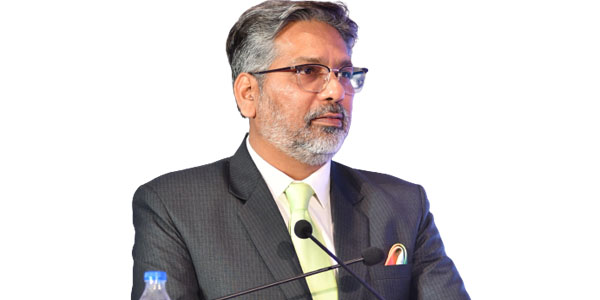
Interface with Dr. Rajiv Mathur Regional Advisor Asia, OSPAs

Dr. Rajiv Mathur What are the challenges you faced in getting OSPAs launched in India? The security industry in India has always been of paramount importance, but in recent times, it has become even more critical due to the increasing focus on the subject. The professionals who work in this industry play a vital role in ensuring the safety and security of people, assets, and information. As a result, there are many awards both in India and globally that recognize and honor the contributions of security professionals and the security organisations. While there are already several prestigious awards in the security industry in India, one award that stands out is the Outstanding Security Performance Awards (OSPAs). These awards are recognized globally and are known for recognizing outstanding performance in the security industry. As someone who has been associated with the security industry for a long time, I first learned about the OSPAs about five years ago from Professor Martin Gill, a renowned expert in the field. I was intrigued by the approach taken by the OSPAs and believed that they could be valuable to the security industry in India. However, bringing the OSPAs to India was not an easy task due to the presence of many other awards in the industry. To address this challenge, I engaged with many industry experts and highlighted the unique value proposi tion that the OSPAs bring to the table. I emphasized how the OSPAs cover all aspects of the security industry, are judged independently, and have relevant and standard criteria that can help raise the bar for the industry in India. After several rounds of discussion and deliberation, we were finally able to bring the OSPAs to India. What do you consider unique about OSPAs? The Outstanding Security Performance Awards (OSPAs) are truly unique in many ways and set a new standard for recognition and excellence in the security industry. Perhaps the most remarkable aspect of OSPAs is that it is the only award that is global, with its reach extending to 18 countries already, and with plans to expand to 29 countries with the upcoming Southeast Asia Awards. This global presence provides a unique opportunity for security professionals and organizations from around the world to compete on a level playing field and be recognized for their outstanding contributions to the industry. One of the most impressive features of OSPAs is its comprehensive coverage of all fields under the security domain. With over 20 categories, OSPAs acknowledge exceptional performances in areas ranging from physical security to logical security, manned guarding, cybersecurity, security training, product development, and much more. It is truly an all-encompassing award that recognizes every aspect of the security industry, making it a coveted and sought-after recognition for professionals across the globe. Prof. Martin Gill Founder, Ospas Next year, 2024 will see a significant development. The design of the OSPAs means that all the categories, and the criteria, and the judging process are exactly the same in every country. So next year the winners of the most of the categories will represent India in the global OSPAs. So an individual or company not only wins the India OSPAs but in so doing will enter the global awards. What an accolade that will be. We do know the very best from India is very good indeed, how good the spotlight on the best in the world will shine on India too. Security technologies are evolving and this offers new opportunities. But we must remember that this is also true of offenders. My own view is that offenders move fast and are quick to spot weaknesses in the latest new security evolution and exploit them ruthlessly. This is why being outstanding is important, offenders are good too (sadly) and they innovate all the time, so just being good at security is nowhere near enough, you have to be outstanding. Moreover, getting things wrong is not trivial. If security is not optimised and is compromised the consequences can be serious, organisations can lose money and reputation for example, in worst case scenarios they have gone out of business. Individuals can be hurt, physically and emotionally, sometimes seriously and sadly fatalities sometimes happen. Having outstanding security is vital and the OSPAs recognise this. Moreover, OSPAs provides a global platform for the security industry, organizations, and professionals to showcase their exceptional performances at the international stage. The OSPAs are truly global awards that will culminate in the World Awards/ International recognition in the year 2024. Winners of each category in every country will compete for the Global Awards, which will be a prestigious event. The best of outstanding security performances of the Indian Security Industry will be discussed, evaluated, recognized, and positively awarded. Who knows, there may even be an OSPAs Global Award coming to India, making it another remarkable achievement for the Indian Security Industry. What is the modus operandi of OSPAs in India? The Outstanding Security Performance Awards (OSPAs) is a unique global award that is conducted in a consistent manner across all the countries where it operates. Currently, OSPAs operates in 18 countries and soon it will be in 29 countries. One of the distinctive features of OSPAs is that it follows the same processes, judging rules, categories, and criteria for nomination and evaluation in every country. It is worth noting that OSPAs prefers to work with a local partner or associate in each country. Once a local partner is identified, OSPAs write to all the security associations in the country to seek their support and nominate their representative as the jury member. The representatives who are finalized are then exposed to the OSPAs code of conduct and judging and evaluation process to ensure consistency across all countries. All the categories, criteria, and evaluation process remain constant in every country, and the nominees are required to fill in their answers. The backend team collates the responses and sends them to all the jury members independently. Each jury member assesses the entries and gives…

Read More

Evolving Landscape of Physical Security – Latest Trends

Anil Puri CMD, APS group A first generation serial entrepreneur, thought leader and an action catalyzer rolled into one – Anil Puri is a rare combination of a visionary, an innovator and a strategic thinker. He has used this combination to innovate and implement on-ground many new business ideas. His rich experience in various businesses has enabled him to nurture & mentor innovative ideas and scale them up Introduction The evolution of physical security industry is constantly getting accelerated due to emergence of new technologies. As we move into the future, it’s important to stay ahead of the exponential curve and be aware of the latest trends. The past three years have been a whirlwind of disruption as we’ve navigated the security and logistical challenges of COVID lockdowns and the resulting return-towork plans. One doesn’t feel like that their organization has gotten back to normal? Let’s be honest – looks like, there won’t ever be a return to normal. Public and private life has permanently changed, and we need to start thinking about security differently. New risks will always present themselves with fresh challenges to security professionals. Resultantly, security professionals need to continue learning, evolving and re-evaluating the physical security strategy of their organizations. Contrarily, there will always be need to assess any emerging technology and procedures that sprout as an outcome of disruption or evolution. Dynamic shifts over the past few years in the way the world does business, forced companies to use technology in new ways, hence evolution continues. Factors shaping the Security landscape Technology continues to shape the evolution of the security sector. The innovations in AI, biometrics and the cloud have changed the face of how security systems are specified, installed and operated. While other industries may be farther along, physical security solutions will quickly catch-up as they will need to support overall IoT solutions by moving to the cloud. Added services is the new normal for security. The move to being remote across vertical markets has accelerated the need for security solutions. As a result, as-a-service adoption has become increasingly prevalent. Smarter devices, products, and services are starting to provide more than the traditional safety, security, and threat identification offerings. New technologies bring the value add of business intelligence and data science. Many technologies such as AI enabled cameras are evolving to offer data capture in addition to traditional security. These security solutions can help users make smarter business decisions, drive additional revenue, and create greater efficiency in addition to providing better safety and security. Beside emergence of new technologies, regional and global Geopolitical situations, COVID enforced WFH, hybrid work culture, rampant cyberattacks by hackers on physical & IT infrastructure and data, labour shortage and fear of economic recession further accentuated by the reported resurgence in the Omicron BF7 strain are some of the salient factors leading the change in security landscape. Salient Emerging Trends Trend 1. Convergence of Physical & Cyber Security Now that the security industry has made nearly every sensor, system, software and server/ recorder and device interconnected and remotely available; the question that clients ask is not just, “How does this help protect my people, assets and information?” but is, “While you promise to improve my security, what cybersecurity risks does your system create for me?” Undisputedly, today cyber security is more than critical to the overall resilience of an organization. Whatever be the size of business, the growing threat from more and more sophisticated hacking techniques is very real in 2023, and can cause major damage to businesses, public sector services, or increasingly, critical national infrastructure. Businesses are looking to invest in cyber security-related tools to improve physical security in 2023. There is now much greater awareness that with so much of the security infrastructure connected to the network, a siloed approach between physical and cyber teams is no longer conducive. Both have to engage with one another, as a ‘zero trust’ approach appears to have emerged, where every connected device is cyber-reviewed with the assumption that they are all potentially vulnerable. Cameras, access control points and connected alarms are by no means excluded from this approach. While a more holistic, automated approach to defending against threats will take precedence, so too will proactive security architecture planning and procurement. In 2023, business continuity requires rigorous product selection & implementation. Same goes for the physical security industry hardware and software updates, high reactivity maintenance, expertise and strong collaboration between customers and all solutions providers on site. The continued push to secure networks by IT professionals and network vendors will create even more cyber security awareness in 2023. While security professionals are highly aware of the geo-political risks posed by untrustworthy state-owned manufacturers, the continued push to secure networks by IT professionals and network vendors will create even more cybersecurity awareness in 2023. We expect companies to follow policies that prevent authorities from installing Chinese state-owned surveillance systems in sensitive sites. One can anticipate continued adoption of zero trust practices which validate every transaction between devices and people. Cybersecurity as a pillar of corporate responsibility will become an emerging trend as businesses seek to safeguard business continuity for their customers. Hence Cyber-Physical Security Convergence is an agenda high on the horizon. Companies are also looking at the quiet quitting, moonlighting on one hand and the proliferation of cloud, 5G and edge computing, IoT, mobility and automotive, digital supply chains as well as reduced dependence on VPNs on the other; hence necessitating a clear focus on ever preparedness and cyber resilience. Cybersecurity leaders will have to keep abreast of all global developments, especially in the AI act, digital services and market acts of Europe, the new regulations across the Middle East, Japan, Thailand and several others. With the trends of globalization continuing, in 2023 and beyond especially for those handling sensitive end customer and employee data. There must be careful consideration of aspects such as customer/ employee/ stakeholder consent and rights, data storage, retention and transmission policies, and clear guidelines in case…

Read More

Predictive Technologies and CounterTerrorism

Colonel B. S. Nagial (Retd.) On 27 March 2023, United Nations Counter-Terrorism Executive Directorate (UNCTED) hosted an insight briefing on the blind spots in technology-driven counter-terrorism decision-making processes and proposed methods to mitigate these blind spots. UNCTED’s meeting focused on using predictive technologies to improve counter-terrorism initiatives, especially border security.1 One of the main takeaways of this briefing was that while predictive and probabilistic algorithms, human and signals intelligence, big data analytics, and facial recognition capabilities offer opportunities for countries’ efforts to address the scourge of terrorism, they also present many challenges.The United Nations Security Council (UNSC)’s guidance given out in its resolution 2396 (2017) on the assistance of biometrics in counter-terrorism and the necessity to enhance standards for using and collecting biometric data in counter-terrorism, the limitations in technology-driven counter-terrorism were outlined, and the suggestions for overcoming them have been elaborated therein. During his opening address, David Scharia, Director and Head of the Technical Expertise and Research Branch of UNCTED, said that the briefing was aimed at assisting countries to identify methods to upgrade technology-assisted decision-making processes in the context of counter-terrorism. This briefing featured a presentation from Professor Krebs, a Professor of Law at Deakin University, Australia, and a UNCTED’s Global Research Network member. The presentation was titled: Fact and Fiction in Technology-Driven Technology. This presentation elaborated on how counter-terrorism efforts in the airport and border security have gradually evolved towards preventative counter-terrorism. The benefit of predictive and probabilistic technologies lies in their ability to provide vast amounts of immediate, relevant information, process it, and identify connections and inconsistencies. However, Professor Krebs noted that attempts to prevent terrorist attacks by identifying suspicious individuals, including from data collected on terrorism watch lists and databases and from law enforcement cooperation, could also create false predictions about people and incorrectly assess the risk they pose. This could, in turn, negatively affect the principles of human rights, equality, and privacy, to name just a few. She further explained how technological limitations, limitations surrounding human use, and cognitive biases could cause decision-making errors in counter-terrorism risk assessments. She ended her presentation with a few suggestions for improving predictive counter-terrorism. Professor Krebs cited the need to develop transparent data practices and decision-assisting technologies, develop strengthened and clarified evidentiary standards, and provide capacity-building training to assist in de-biasing national and international decision-makers. Predictive technologies can be utilised to improve counter-terrorism initiatives in many ways. These technologies leverage such as data analysis, machine learning, and artificial intelligence to process and analyse large volumes of data, identify patterns, and make predictions that can help prevent, detect, and respond to terrorist activities effectively Here are some ways in which predictive technologies can be employed to improve counter-terrorism efforts: Early Warning Systems: Predictive technologies can analyse diverse data sources such as social media, communication networks, financial transactions, and travel patterns to identify potential warning signs of terrorist activities. By analysing these data in real-time, predictive technologies can help to identify suspicious activities or behaviours that may indicate the planning or execution of a terrorist attack. Early warning systems can provide timely alerts to law enforcement agencies, allowing them to take preventive measures and disrupt terrorist activities. Threat Assessment: Predictive technologies can analyse vast amounts of data to assess the threat level of individuals or groups suspected of being involved in terrorism. This can include analysing their social media posts, online activities, travel patterns, financial transactions, and other relevant data. By using machine learning algorithms, predictive technologies can identify patterns and indicators that may suggest the likelihood of an individual or group engaging in terrorist activities, helping law enforcement agencies prioritise their resources and focus on high-risk threats. Risk Prediction: Predictive technologies can use historical data and machine learning algorithms to predict the likelihood of specific locations or events being targeted by terrorists. By analysing patterns of past terrorist attacks, including location, timing, and modus operandi, predictive technologies can identify high-risk areas or events that may be vulnerable to terrorism. This information can help law enforcement agencies take preventive measures such as increased security measures, surveillance, and crowd management strategies to mitigate the risk of terrorist attacks. Social Media Monitoring: Predictive technologies can monitor social media platforms to identify and track individuals or groups promoting or inciting terrorism. By analysing social media posts, comments, and interactions, predictive technologies can detect patterns and keywords that may indicate radicalisation or recruitment activities. Social media monitoring can help law enforcement agencies identify and intervene with individuals vulnerable to radicalisation or engaging in online extremist activities. Border Security: Predictive technologies can be used to analyse data related to travel patterns, passports, visas, and other relevant information at border checkpoints. By leveraging machine learning algorithms and data analytics, predictive technologies can help identify potential terrorists or individuals with suspicious travel patterns, false documents, or other indicators of terrorist activities. This can help improve border security measures and prevent terrorists from entering or exiting a country. Resource Allocation: Predictive technologies can help optimise the allocation of limited resources, such as personnel, budget, and equipment, in counter-terrorism efforts. By analysing data on previous terrorist activities, response times, and resource utilisation, predictive technologies can help law enforcement agencies allocate their resources more effectively and efficiently. This can improve the overall operational readiness and effectiveness of counter-terrorism initiatives. However, it’s important to note that predictive technologies can provide valuable insights and support counter-terrorism efforts. But these technologies are not foolproof and must be used ethically and with appropriate legal safeguards to protect civil liberties, privacy, and human rights. Human oversight, accountability, and transparency should be maintained in using predictive technologies for counter-terrorism to ensure responsible and effective deployment. Challenges Associated With the Use of Predictive Technologies in Counter-terrorism. While predictive technologies in counter-terrorism could be promising, but presents several challenges. These challenges could summarise as under: Ethical concerns: Predictive technologies in counter-terrorism raise ethical concerns, such as bias, discrimination, and privacy. If trained on partial data, predictive technologies may be biased, leading to discriminatory outcomes, especially against certain…

Read More