
securitylinkindia

Echelon

Why AI is Becoming Essential for Modern Network Security Strategies

We are no longer debating whether AI belongs in network security – that conversation is over. The real question facing network and infrastructure leaders today is whether their organizations are moving fast enough to harness it meaningfully. Modern networks have become staggeringly complex – sprawling across hybrid environments, multi-cloud architectures and thousands of connected endpoints, generating torrents of traffic data that no human team can analyze at the speed and scale today’s threats demand. Meanwhile, adversaries are exploiting that very complexity, probing for misconfigured segments, lateral movement opportunities and zero-day vulnerabilities faster than traditional network monitoring tools can flag them. The organizations that will define the next era of network security are not those simply bolting AI onto aging network infrastructure, but those fundamentally rethinking how their networks are monitored, defended, and made resilient with intelligence and automation at the core. This is not just a technology upgrade; it is a strategic rethinking of how networks are protected in a world where the perimeter no longer exists. The growing complexity of modern networks Today’s enterprise network looks nothing like it did a decade ago. The modern network is no longer a contained, manageable perimeter, it is a dynamic, borderless ecosystem, and securing it demands an entirely new way of thinking. Why traditional security approaches are reaching their limits Traditional network security has long relied on rule-based systems and manual monitoring. But as networks grow larger and more interconnected, this model is beginning to show its limits. Security teams today deal with an overwhelming volume of alerts and log data generated by multiple tools across the network. It’s not uncommon for analysts to face thousands of alerts in a single day. The result is alert fatigue where teams spend significant time sorting through notifications, trying to determine which ones actually signal a real threat. At the same time, cyberattacks are moving faster than ever. Threat actors can gain access, escalate privileges, and move laterally within minutes. Security processes that depend heavily on manual investigation often struggle to respond at the same speed. There’s also the challenge of detecting unknown or sophisticated threats. Many traditional tools rely on predefined rules or known signatures, which means they are effective against familiar attack patterns but less capable of identifying new or evolving techniques. As a result, organizations are increasingly finding that conventional security approaches alone are no longer enough. The scale and speed of modern threats require more adaptive capabilities, an area where AI is starting to play a critical role. The threat landscape has fundamentally changed, and so must we. AI is no longer a future investment, it is the operating infrastructure of secure, resilient organizations today. Our commitment is to build security into the architecture of everything we do, not as an afterthought, but as a foundation How AI is reshaping network security Artificial intelligence is reshaping how organizations defend their networks by enabling security systems to analyze massive volumes of data, recognize patterns, and respond to threats far more quickly than traditional approaches allow. Instead of relying purely on static rules, AI introduces a more adaptive and intelligent layer to security operations. Key capabilities include: By combining these capabilities, AI is helping organizations move toward a more proactive and responsive security approach, one that is better equipped to keep up with the scale and sophistication of modern cyber threats. Security is no longer just an IT conversation, it is a brand trust conversation. When we talk to customers and partners, they want to know their data and operations are protected by intelligent, adaptive systems. AI-powered security is not just a technical differentiator; it is a message that resonates at every level of the business From reactive to predictive security For a long time, cybersecurity has largely been reactive. Security teams would detect an alert, investigate the incident, and then respond after a threat had already entered the network. While this approach worked in slower and more predictable threat environments, today’s attack landscape demands a more forward-looking strategy. Artificial intelligence is helping organizations shift from simply reacting to threats to anticipating and preventing them. By continuously analyzing large volumes of network activity and security data, AI systems can uncover patterns that may signal potential risks long before they escalate into full-scale incidents. The strategic value of AI in security operations Beyond improving threat detection, AI is also creating meaningful operational advantages for organizations. As security environments grow more complex, AI helps teams manage workloads more effectively and focus their attention where it matters most. Challenges and considerations in AI adoption While the benefits of AI in network security are significant, adopting these technologies also requires careful consideration. A balanced strategy recognizes both the opportunities and the practical challenges involved. The path forward AI is not a silver bullet but it is fast becoming a non-negotiable foundation for any serious network security strategy. The complexity of modern networks, the speed of evolving threats, and the limitations of traditional approaches have collectively created a reality that human teams and rule-based systems alone cannot address. AI bridges that gap not by replacing the expertise of security professionals, but by amplifying it. The organizations that will lead in network security over the next decade are those that treat AI not as a bolt-on capability, but as a core architectural principle, embedded into how threats are detected, analyzed, and contained. The shift is already underway. The only question that remains is how decisively your organization chooses to move. Read More

Read More

Digital Twin for Public Safety and Smart Policing

Sumiit Katyal, CEO, Asim Navigation India Pvt Ltd. Transforming Security Planning with360° Mapping, AI & Real-Time Intelligence In an era where urban complexity, population density, and security threats are rapidly increasing, traditional methods of surveillance and planning are no longer sufficient. Law enforcement agencies today require proactive, data-driven, and immersive tools that enable them to anticipate risks, plan effectively, and respond with precision. One such transformative technology is the Digital Twin, powered by advanced 360° imaging, AI analytics, and geospatial intelligence. What is a Digital Twin in Security? A Digital Twin is a highly accurate, real-world digital replica of physical environments, enabling authorities to visualize, analyze, and simulate real-world scenarios in a virtual space. Using systems like the Mosaic Meridian 360 Camera, entire urban environments – roads, public spaces, religious sites, and high-density zones – can be captured in high-resolution 360° imagery and converted into an interactive digital platform. When combined with AI-driven analytics platforms like FocusVu.ai, this transforms static mapping into a live, intelligent security ecosystem. Relevance for public safety & crowd management India frequently witnesses large-scale gatherings including – religious processions, political rallies, public demonstrations, cultural events and etc. These events present significant challenges for police and security agencies such as crowd control, route planning, emergency response readiness, identification of vulnerable zones and so on. A Digital Twin platform provides a powerful pre-planning and execution tool, enabling authorities to move from reactive management to proactive preparedness. Pre-planning of events & processions One of the most critical applications of Digital Twin technology is in pre-event planning. Using 360° mapped environments – authorities can virtually walk through the entire route of a procession or rally; identify bottlenecks, choke points, and sensitive areas; plan entry/ exit routes, diversion strategies, and emergency access points; and pre-define barricading zones and access control points. With virtual barricading and access control features enabled through FocusVu.ai, planning committees can digitally mark restricted zones, simulate crowd movement, and allocate personnel effectively This allows even field personnel and patrolling units to clearly understand deployment plans before stepping on ground. Real-time monitoring & AI-based alerts During live events, integration of Digital Twin with real-time video feeds provides – live situational awareness from multiple camera sources; AI-based pre-alerts for unusual activity, overcrowding, or breaches; and faster decision-making at command centers. The system shifts operations from – manual surveillance to Intelligent, automated monitoring. This is particularly crucial in high-risk scenarios, where even minor delays can escalate into serious incidents. High accuracy mapping & asset visualization Modern Digital Twin systems go beyond visual representation and deliver engineering-grade accuracy. Using high-resolution 360° imaging (Mosaic systems), LiDAR-based scanning technologies, and advanced geospatial processing – authorities can achieve less than 5cm positional accuracy, creation of detailed 3D models of environments, and real-time mapping of assets such as barricades, CCTV cameras, entry/ exit gates, emergency facilities etc. This enables precise planning and execution, especially in dense urban environments. Support for field units & patrol teams One of the biggest challenges in large-scale deployments is communication and clarity for field personnel. Digital Twin platforms address this by providing visual references instead of textual instructions, enabling teams to view exact deployment locations, and Helping patrol units understand – routes, restricted zones, and emergency response plans. This significantly reduces confusion, miscommunication, and response time. Pre & post-event inspections Digital Twin technology also plays a critical role in – pre-event inspection such as verification of planned arrangements, identification of last-minute risks, and validation of security layouts – and post-event analysis by incident reconstruction, performance review of deployment, and identification of gaps for future improvement. This creates a continuous improvement cycle for security operations. Towards smart & predictive policing The integration of 360° Digital Twin (Mosaic systems), AI Video Analytics (FocusVu.ai), and LiDAR & high-accuracy geospatial mapping is enabling a shift towards Smart Policing, where – decisions are data-driven, risks are identified in advance, and resources are optimized efficiently. Conclusion As cities grow and public events become larger and more complex, security agencies must adopt advanced technologies to stay ahead of emerging challenges. Digital Twin technology offers a holistic solution – combining visual intelligence, real-time monitoring, and predictive analytics – to enhance public safety, operational efficiency, and strategic planning. By leveraging platforms like the Mosaic Meridian 360 Camera and FocusVu.ai, law enforcement agencies can transform the way they plan, monitor, and secure large-scale events, ensuring safer environments for citizens and more effective operations for security forces. Read More

Read More

Smart Cities Mission in India : Genesis, Implementation & Impact study

Rajeev Sharad, Founder & CEO,Urbaforce Solutions Pvt Ltd (Consultant) A comprehensive review of the 100 Smart Cities Mission (2014-2025) Introduction The Smart Cities Mission, launched in 2014, stands as one of India’s most ambitious urban transformation programmes of present times. Spearheaded by the Ministry of Housing and Urban Affairs – MoHUA (then Ministry of Urban Development – MoUD) in partnership with State Governments, the mission aimed to develop 100 cities across the country into models of matured and self-sustainable bodies with technologically advanced urban living for ease of citizens. With its conclusion in 2025, the mission has become a significant touchstone for policy makers, urban planners, and citizens alike, offering insights into the challenges and opportunities of modern city development in India especially in brownfield areas. Genesis of the mission India’s urbanisation is projected to accelerate significantly over the coming decades. According to various demographic estimates, the urban population is expected to reach nearly 40% by 2030 and 50% of the country’s total population by 2050, compared to around 34% in 2024. This rapid growth underscored the urgent need for robust urban infrastructure planning, as millions migrate to urban centres or turning smaller cities into urban and commercial hubs, seeking better work opportunities and quality of life. The genesis of the Smart Cities Mission is linked to this growing urbanisation in India and the pressing need for cities to become more liveable, resilient, and inclusive. Indian cities have been grappling with rapid population growth, infrastructural bottlenecks, and environmental degradation, not to forget the socio-political alignments with demographic uniqueness. Recognising these challenges, the Government of India initiated the mission as part of a broader vision for planned urban development. The formal launch of the mission in June 2014 marked a shift towards integrating digital solutions and citizen-centric planning, positioning cities as engines of economic growth and innovation. Objectives and vision The Smart Cities Mission was underpinned by a clear vision – to promote cities that, with the use of technology or otherwise, provide core infrastructure, clean and sustainable environments, and a decent quality of life for their citizens. Central objectives include improving urban mobility, expanding affordable housing, ensuring robust water and energy supply, and enhancing safety and governance. Implementation framework MoHUA leads the mission’s implementation management, working in close collaboration with State Governments and urban local bodies through 50% financial assistance on the basis of project approvals. The selection of the 100 smart cities was the result of a competitive process, with cities evaluated on their preparedness, vision, and capacity for transformation. Each selected city developed its own smart city proposal, outlining projects and strategies tailored to local needs and aspirations. This decentralised approach enabled flexibility and innovation, while the Ministry provided guidance, funding, and oversight to ensure consistency and accountability. Coordinated approach between Central and State governments has been instrumental in driving the mission forward. Financial support has been channelled through a combination of central grants, state contributions, and leveraging private sector investment. The formation of Special Purpose Vehicles (SPVs) for each city ensured dedicated focus on project execution, monitoring, and stakeholder engagement, strengthening the mission’s governance framework. Key initiatives and strategies The Smart Cities Mission encompassed a broad range of projects and interventions, targeting area-based development of urban infrastructure, use of digital technology, and augmentation portals for citizen services. Major initiatives include the development of Integrated Command and Control Centres (ICCC) which are the aggregation nerve centres of technology based smart mobility solutions, utilities supply monitoring, real-time traffic management waste management, telecommunication services, energy-efficient street lighting, citizen service kiosks and digital governance platforms. Urban planning strategies under the mission emphasised mixed land use, compact city development, and revitalisation of public spaces. The adoption of area-based development allowed cities to focus on specific neighbourhoods, demonstrating tangible improvements before scaling up. Technological interventions – such as sensors, IoT devices, and GIS mapping – have been crucial in enabling data-driven decision-making and responsive urban management. Efficacy and achievements In 2024, MoHUA engaged the services of an esteemed audit and assessment organisation to study maturity index of the Smart Cities through measurable outcomes of the use cases and several other pillars of evaluation. Cities have been showcasing innovative models of waste management, sustainable transport, traffic control, weather reporting & e-governance platforms. The mission has catalysed the adoption of renewable energy, increased green cover, and promoted inclusive urban development. While progress varies across cities, the mission has driven a culture of innovation and accountability, setting new benchmarks for urban transformation in India. Though, many cities have witnessed a deluge of urban mobility, pollution control, and public safety measures through smart infrastructure projects, the efficacy has not been as planned. The establishment of integrated command centres has enabled real-time monitoring of utilities and emergencies, which expected to improve governance and citizen satisfaction, but the assessments say otherwise. Challenges and lessons Despite its achievements, the Smart Cities Mission has encountered several shortcomings and hurdles. Delays in procurement process, stakeholder bottlenecks, and program management at local levels have impacted progress and efficacy in certain cities. Coordination among multiple stakeholders, government agencies, private partners, and local communities has often posed challenges, requiring robust mechanisms for engagement and conflict resolution. Impact analysis The Smart Cities Mission has had far-reaching socio-economic and environmental impacts. It has stimulated job creation, attracted investment, and improved the quality of urban life for millions. Technological advancements have empowered city administrations, enabling more efficient service delivery and enhanced citizen participation. Environmental benefits include reduced energy consumption, better waste management, and increased resilience to climate change. From a development perspective, the mission has fostered urban innovation, strengthened institutional capacities, and promoted a culture of evidence-based policy making. By setting new standards for urban governance and infrastructure, the mission has inspired other cities and regions to pursue similar transformations, contributing to India’s broader urbanisation agenda. Some of the key concerns that have led to the under-utilised potential of the Smart Cities is the lack of following plans: Redefined roadmap for Smart Cities The Smart Cities Mission…

Read More

Women Security Guards of India : Corporate Protectors and Pillars of the Family

Kunwar Vikram SinghChairman, Central Association of Private Security Industry ( CAPSI) Women security guards in India represent strength, discipline, and dedication. They stand at the front lines of safety in residential complexes, offices, hospitals, malls, schools, and public institutions, quietly ensuring that communities remain secure and orderly. Their presence not only enhances physical security but also creates a sense of comfort and trust, especially for women, children, and the elderly. In recent years, the role of women in the private security sector has grown significantly. These women perform demanding duties such as access control, surveillance monitoring, crowd management, and emergency response. Often working long and irregular hours, they demonstrate professionalism, alertness, and courage. Their work requires not only physical stamina but also patience, emotional intelligence, and the ability to handle challenging situations with calmness and dignity. Beyond their professional responsibilities, women security guards continue to carry out their roles within the family. Many of them return home after a full shift to take care of household responsibilities. They nurture their children, guide them in education and values, and ensure that their families remain united and stable. Their role as mothers is particularly significant, as they often strive to give their children better opportunities through their own hard work and sacrifice. At the same time, they care for elderly parents and in-laws with respect and compassion. In many Indian households, women security guards contribute not only financially but also emotionally, maintaining harmony and stability within the family. They often support their husbands and share the responsibility of running the household, showing that partnership and mutual respect are the foundations of a strong family. What truly distinguishes these women is their moral strength and exemplary character. Despite the pressures of balancing demanding professional duties and family obligations, they uphold integrity, discipline, and cultural values. Their dedication to duty, honesty in work, and commitment to family responsibilities make them role models in their communities. Women security guards are therefore not just employees in the security industry; they are protectors of society and builders of strong families. They embody resilience, responsibility, and moral courage. Recognizing and supporting their contribution is essential for building safer communities and a more inclusive security sector in India. Their story is one of quiet heroism – serving the nation by protecting its people while nurturing the values and relationships that hold society together. Wishing every woman Security Guard & Officer a very happy International Women’s Day. Read More

Read More

Single ER Test, Faster Compliance: Unified Certification Framework for CCTV Security Requirements

An Interface with Suresh Chandra –Member GAC (IT Act), Ex. Sr. Dir/ DDG at STQC (MeitY),Ex. Head of CB of Com. Criteria, CCTV, Biometric, GIGW, EPS, TMS,ab Empanelment-SETL. and also a member of ISO/ UEC committee SC27,BIS LITD17, LITD 31, Chairman LITD 25. As India strengthens its focus on trusted surveillance infrastructure, cybersecurity compliance has become a critical requirement for CCTV manufacturers, system integrators, and procurement agencies. The Essential Requirements (ER) framework and STQC testing play a central role in ensuring that video surveillance products deployed across the country meet stringent security standards.Following the February 2026 clarification regarding the validity of a single ER test report for both CRO and PPP-MII, the industry has seen greater clarity in the certification process. In this interaction, Suresh Chandra, former Sr. Director/ DDG at the STQC Directorate, Meity addresses key questions related to ER compliance, certification timelines, testing capacity,and future plans for expanding the framework to other product categories.Suresh Chandra is a distinguished expert in the field of IT standardization, conformity assessment, cybersecurity, and electronic surveillance technologies, with decades of experience in government certification, testing, and regulatory frameworks. He currently serves as Member, GAC under the Information Technology Act, contributing to policy and compliance matters related toIT security and certification in India.He formerly served as Senior Director/ Deputy Director General at STQC Directorate, Ministry of Electronics & Information Technology (MeitY), Government of India, where he played a key role in developing testing, certification, and quality assurance frameworks for critical technologies.He has also been actively involved in national and international standardization activities and has represented India in several technical committees including – Member, ISO/ IEC JTC 1 SC 27 (IT Security Techniques), Member, BIS LITD-17 (Information Security),Member, BIS LITD-31, and Chairman, BIS LITD-25 Committee.With deep expertise in certification, cybersecurity standards, surveillance systems,and regulatory compliance, Suresh Chandra continues to contribute to strengtheningIndia’s trusted digital and security ecosystem.Here are the excerpts: The February 2026 circular clarifies that a single STQC ER test report will be valid for both CRO and PPP-MII. What prompted this clarification? The technical requirements for PPO and CRO are essentially the same, and the testing and evaluation carried out by STQC are also identical. The only difference is in procurement entities and this is being addressed with the available rules and procurement procedures being followed by different government entities. The February 2026 clarification was issued to remove ambiguity and streamline compliance by aligning certification with the existing procurement rules and procedures. How does this move simplify the compliance process for manufacturers and system integrators? Earlier, manufacturers were required to obtain separate approval under PPO in addition to ER compliance, even though the testing requirements were the same. With the new clarification, a single ER test report leading to CRO registration will be sufficient. This eliminates duplication, reduces cost and effort, and speeds up the overall compliance and procurement process. What is the exact role of STQC under the new unified ER compliance structure? There is no change in the role of STQC as far as testing and evaluation are concerned. The Directorate will continue to carry out testing, evaluation, and certification as per the prescribed Essential Requirements. The recent clarification relates to procurement interpretation and compliance alignment, not to the technical testing process itself. Can you briefly explain the scope of the Essential Requirements (ER) security testing for CCTV systems? The ER framework broadly covers hardware security, software security, firmware integrity, communication interfaces, and supply chain security. The objective is to ensure that CCTV products deployed in the country are secure, reliable, and free from vulnerabilities that could compromise data integrity or national security. What are the key cybersecurity areas covered under the ER framework? The key security areas include Root of Trust implementation, secure firmware update mechanisms, interface security, authentication and access control, cryptographic security, supply chain traceability, and protection against known vulnerabilities. These checks ensure that the product is secure throughout its lifecycle. How does STQC ensure that testing keeps pace with evolving cyber threats? STQC follows national and international standards and continuously updates its testing methodologies in line with emerging cybersecurity risks. Evaluation procedures are revised whenever required to address new threat vectors and technological changes. What is the typical timeline for ER testing and certification? The timeline depends largely on the completeness and correctness of the inputs provided by the manufacturer. In many cases, delays occur due to incomplete documentation, missing technical details, or non-compliant components, leading to multiple iterations. STQC makes every effort to complete the evaluation within the prescribed timelines and often undertakes additional effort without extra cost to the applicant. As India strengthens its focus on trusted surveillance infrastructure, cybersecurity compliance has become a critical requirement for CCTV manufacturers, system integrators, and procurement agencies. The Essential Requirements (ER) framework and STQC testing play a central role in ensuring that video surveillance products deployed across the country meet stringent security standards Are there sufficient STQC-approved labs to handle industry demand? Yes, the available STQC laboratories are adequate for the current demand. In the case of CCTV products, the number of SoC platforms is limited, and their compliance status is now well understood by the labs. This reduces repetition in testing and helps in faster evaluation, thereby improving overall efficiency. How is STQC addressing concerns about testing capacity and project delays? As mentioned earlier, most delays are caused by incomplete submissions from manufacturers. At the STQC level, efforts are being made to avoid duplication of work. For example, if a particular SoC has already been evaluated and found compliant, subsequent evaluations using the same platform can be completed faster, reducing certification time. How prepared is the Indian CCTV industry for full ER compliance? Based on our interaction with industry stakeholders, manufacturers are largely supportive of the Government’s initiative. They recognize the importance of cybersecurity and national security considerations and are cooperating in achieving full compliance. What are the most common gaps observed during testing? Some common issues include the use of obsolete or vulnerable third-party libraries,…

Read More

Vicon Valerus: The Next Generation Security Management Platform

Biplob BhattacharjeeZonal Business Manager-East, North East and SAARC CountriesVicon Security The evolution of Video Management Systems From NVRs to Intelligent Platforms Over the past decade, Internet Protocol (IP) video technology has become the preferred choice for security managers, system integrators, consultants, and architects. In the early stages of this transition, embedded Network Video Recorders (NVRs) gained widespread adoption due to their simplicity and cost-effectiveness. However, as surveillance requirements evolved with the adoption of high-resolution cameras, multi-sensor systems, and advanced analytics – traditional NVRs began to show their limitations. Their architecture was not designed to handle the increasing complexity, scalability, and intelligence required in modern deployments. The Rise of Video Management Systems (VMS) The limitations of NVRs paved the way for Video Management Systems (VMS), which today form the backbone of IP surveillance. A modern VMS ensures consistent video throughput across all channels, scalable architecture for growing deployments, centralised control and monitoring, and seamless integration with analytics and third-party systems. More importantly, a robust VMS transforms surveillance from simple video recording into a comprehensive security management solution. Key considerations when selecting a VMS Selecting the right VMS is critical for long-term system performance and scalability. Key factors include: These parameters define whether a system can scale and adapt to future requirements. The power of Valerus Valerus is an advanced, open-platform video management system designed to address the demands of modern security environments. More than a traditional VMS, Valerus functions as a centralised security management platform, integrating video surveillance, access control, Automatic Number Plate Recognition (ANPR), Vape detection and other specialised systems. All functionalities are unified through a single-pane-of-glass interface, allowing operators to manage complex environments without switching between applications. The platform also supports efficient multi-site management, enabling centralised monitoring and control of geographically distributed locations – an essential requirement for enterprises and infrastructure projects. Flexible and intelligent alarm management One of Valerus’ key strengths lies in its configurable alarm management system. Operators can define real-time alerts, configure automated workflows, and standardise incident response procedures. From simple notifications to automated actions such as partial or full lockdowns, Valerus ensures faster and more structured responses to critical events. Built-in system health monitoring System reliability is critical in any surveillance deployment. Valerus includes an integrated health monitoring dashboard that provides proactive alerts on system performance. This enables administrators to identify potential issues early, prevent system failures, reduce downtime, and maintain continuous operational efficiency. AI-powered investigation and search As surveillance systems generate increasing volumes of data, the ability to quickly extract relevant information becomes essential. Valerus leverages AI-driven analytics to significantly reduce investigation time by filtering out irrelevant footage. Key search capabilities These tools transform investigations from a time-intensive process into a targeted, data-driven workflow. Conclusion: The future of security management The role of video surveillance is evolving from passive monitoring to proactive security management. This shift requires platforms that can integrate multiple technologies, process data intelligently, and provide actionable insights in real time. Valerus is positioned to meet this need – serving as a central security management hub for multi-sensor, multi-application environments. With advanced search capabilities, seamless integration, intelligent alarm handling, and centralised multi-site control, Valerus enables organisations to build a data-driven and future-ready security ecosystem. As AI adoption continues to accelerate, platforms like Valerus will play a critical role in transforming Security Operations Centres into intelligent command centres – capable of responding faster, operating smarter, and scaling efficiently. Read More

Read More

Convergence India Expo 2026 Concludes, Showcasing Three Days of Technology, Innovation and Global Collaboration

Expo featured around 1,000 participants from 25 countries, drawing more than 50,000 attendees The 33rd Convergence India & 11th Smart Future Cities India Expo 2026 concluded at Bharat Mandapam, New Delhi, after three days of high-impact discussions, product showcases and cross-sector collaborations across telecom, 6G, IoT, fintech, AI, cybersecurity, smart mobility, embedded tech, smart living, and digital governance. Positioned as one of India’s largest technology showcases, under the theme ‘India’s Impact: Tech Today, Transformation Tomorrow,’ the expo welcomed over 50,000 attendees over three days to explore stalls from more than 25 countries and 1,000 participants. Notably, about 200 startups showcased their innovations at the venue this year. More than 50 conference sessions were also held, featuring over 250 speakers.  The conference programme covered topics such as AI and digital infrastructure, smart cities, fintech, and next-generation connectivity, with discussions that evolved from emerging technologies to real-world deployment across sectors. Key sessions centred on 6G, AI, quantum technologies, digital trust, data infrastructure, healthcare innovation, smart mobility and future cities. A key highlight was the address by the Chief Guest, Hon’ble Union Minister for Food Processing Industries, Government of India, Chirag Paswan, at the expo. The minister emphasised the role of advanced technologies and AI in modernising agriculture, improving productivity and driving value addition across the food processing value chain. Among the senior government representatives who graced the venue to share inputs was Abhishek Singh, Additional Secretary, Ministry of Electronics & IT and CEO, IndiaAI Mission. During a keynote address, he highlighted India’s potential to emerge as a global hub for AI inferencing, driven by strong talent, startups and industry participation, and the growing application of AI across sectors such as healthcare, mobility and agriculture. The distinguished lineup of policymakers included Anil Kumar Lahoti, Chairman, TRAI; Durga Shanker Mishra, IAS (Retd.), Former Chief Secretary, Government of Uttar Pradesh; A. Dhanalakshmi, Joint Secretary, Department of Science & Technology; Dr J. B. V. Reddy, Head – Quantum Technology Cell, DST; and Suvendu Pati, Chief General Manager – FinTech, Reserve Bank of India. They were joined by global representatives, including Sergey Cheremin, Minister of the Government of Moscow, and H.E. Juan Antonio March Pujol, Ambassador of Spain. The conferences also featured leading industry voices including Atul Lall, Vice Chairman & Managing Director, Dixon Technologies; Puneet Garg, President & Group Wireline CTO, Reliance Jio; Manoj Gurnani, CTO & Head of Strategy, Nokia; and Dr Ajay Singh, Global Head of AI, HCLTech, among others. Speaking at the conclusion of the event, Chandrika Behl, Managing Director, Exhibition India Group, organisers of the Convergence India Expo 2026, stated, “The Expo has once again demonstrated the power of bringing together policy, industry and innovation on a single platform. The depth and diversity of conversations, from AI and digital infrastructure to future cities, financial systems and the creator economy, reflect the scale of transformation underway in India. What stands out is the shared commitment to move from dialogue to deployment, and to build solutions that are inclusive, scalable and future-ready. We look forward to returning next year with even greater momentum, deeper collaboration and a continued focus on shaping India’s technology-driven future.” Meanwhile, the exhibition floor featured dedicated zones such as AI Bharat Expo, Fintech India Expo, Smart Mobility India Expo, IoT Expo, Embedded Tech India Expo, Mobile Expo & Smart Living India Expo, and the Startup Hub, along with international pavilions from New Zealand, Moscow and Taiwan Excellence. The launch of the Taiwan Excellence Pavilion at Convergence India 2026 marks a significant uptick in AI and digital infrastructure cooperation between India and Taiwan. Leading global and domestic technology players including Microsoft, Zoom, Realtek, GTPL, Canara Bank, Godrej, SanDisk, Redington, and Telit Cinterion, among others, exhibited on the expo floor. The Startup Hub remained a major draw, with over 200 startups participating in pitch competitions, investor connects and mentorship sessions, while curated B2B meetings and buyer-seller engagements drove business opportunities across sectors. This year’s winner was Zerowatt Energy, featuring an innovation focused on energy efficiency and AI-powered monitoring. The startup was also awarded the prestigious Prem Behl Award and given an opportunity to participate in the upcoming GITEX Europe and CES Las Vegas events. The expo also featured the Smart Mobility Pitch Session, powered by ARAI-AMTIF, spotlighting startups driving innovation in electric mobility, intelligent transport systems and next-generation automotive technologies. As part of its commitment to nurturing emerging mobility ventures, ARAI–AMTIF recognised Goparkk Technology Private limited with the ‘Emerging Innov8r Award’, along with mentorship, industry exposure and access to curated innovation platforms. About Convergence India Expo The Convergence India has heralded the telecom and digital revolution in India. It is the country’s biggest and longest-running technology expo, providing a platform to showcase ‘Brand India’ by supporting the ‘Make in India’ and ‘Digital India’ campaigns. Convergence India is at the forefront of promoting technological advancements in the fields of AI, telecom, satcom, broadcast, wired & wireless technologies, 5G & 6G networks, IT solutions such as cloud, big data & analytics, smart solutions, M2M, mobile & accessories, IoT, embedded tech, blockchain, fintech, and semiconductors – the entire gamut of digital solutions. About Smart Future Cities India Expo The 11th Smart Future Cities India expo displayed India’s emerging modernisation and development landscape that aims to deliver better citizen-centric services across the country. The expo showcased the integration of transformative technologies with the key pillars of urban development i.e., green buildings, clean environment, urban mobility, and the use of smart ICT solutions for optimising resources that make cities smart and sustainable. Read More

Read More

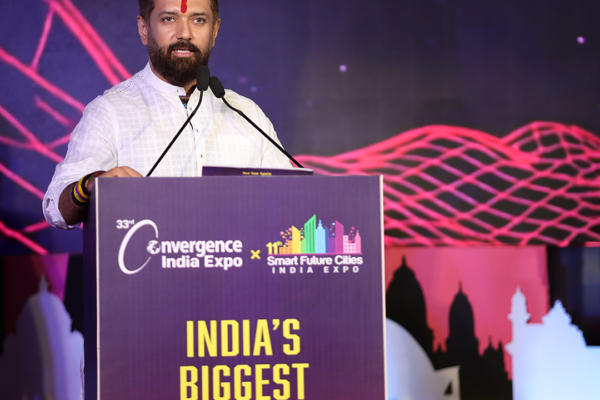
Union Minister, Chirag Paswan Calls for Technological Revolution in Food Processing at the 33rd Convergence India Expo 2026

The Minister for Food Processing Industries highlighted the role of startups and young innovators in driving technological advancements within the food processing sector. As the Chief Guest at the 33rd Convergence India & 11th Smart Future Cities India Expo 2026, Chirag Paswan, Hon’ble Union Minister, Ministry of Food Processing Industries, addressed a large gathering of delegates at the Bharat Mandapam, New Delhi. In his address, the Minister underscored the importance of integrating advanced technologies to modernise agriculture, while calling for a shift in focus from volume to value and quality of agricultural outputs. He emphasised the importance of continuous engagement with industry stakeholders, urging participants to actively share their on-ground insights and experiences, and noted that such inputs are critical in helping the government identify key bottlenecks and shape responsive, forward-looking policy reforms aligned with the sector’s evolving needs. Reaffirming the Union Government’s commitment to Viksit Bharat 2047, Mr. Paswan,stated, “We are working towards creating an ecosystem where global markets become accessible for our goods. We’ll achieve this ambition by integrating technology, innovation, and the dynamism of our startups. As we harness advancements in food processing and agriculture, we can accelerate our journey towards building a globally competitive sector and realising the vision of a Viksit Bharat by 2047.” Talking about the expo, Hon’ble Minister observed, “Platforms such as Convergence India open the doors for those involved in the agritech and food processing segments to explore the potential of technology to enhance their capabilities. The expo provides opportunity for exchange of ideas and best practices from India and across the world, and guides how to implement these ideas in localised ecosystems.” Earlier in the day, Abhishek Singh (IAS), Additional Secretary, Ministry of Electronics & IT, & CEO, India AI Mission, Government of India, highlighted India’s potential to emerge as a global hub for AI inferencing, driven by strong talent, startups and industry participation. He also underscored the need to deploy AI responsibly for inclusive and societal impact. Emphasising on the importance of real-world applications of AI, Mr. Singh stated,“With our young, skilled talent pool and a vibrant startup and innovation ecosystem, India is well-positioned to drive significant impact in AI. The technologies showcased at the 33rd Convergence Expo highlight that AI’s potential extends far beyond models, with transformative applications across sectors such as power, mobility, IT, urban planning, and healthcare.” With a series of conference sessions planned alongside the expo during the three days of the event, representatives from various government departments and industry engaged in high value discussions centred around efforts in scaling AI adoption, strengthening digital public infrastructure and building the backbone required for India’s digital economy. The expo further expands into conversations on global collaboration, smart mobility and connected systems, including discussions on connected vehicles, telematics innovation and interoperable transport ecosystems, reflecting the breadth of technologies shaping India’s digital future. Sharing the vision behind the expo, Chandrika Behl, Managing Director, Exhibitions India Group, said, “Convergence India has always been a key platform for enabling dialogue, partnerships and innovation across India’s technology landscape.  Through this platform, we initiate conversations around AI, digital infrastructure and sectoral transformation, reflecting how quickly technology is moving from promise to practical impact. From food processing to healthcare to mobility to enterprise systems, the focus is on building scalable, responsible and future-ready solutions that can deliver real outcomes for businesses, communities and the wider economy.” This year, a number of leading technology players are showcasing solutions on the exhibition floor, including Qualcomm, Tesla, Omnicomm, Philips, Realtek, Escort Sensors, Zoon, and Redington. Notably, Redington has brought together OEMs such as Google Cloud, AWS, and Microsoft at its stall, alongside other ecosystem partners driving innovation across digital infrastructure, enterprise technology, and smart solutions. About Convergence India Expo The 33rd edition of Convergence India has heralded the telecom and digital revolution in India. It is the country’s biggest and longest-running technology expo, providing a platform to showcase ‘Brand India’ by supporting the ‘Make in India’ and ‘Digital India’ campaigns. Convergence India is at the forefront of promoting technological advancements in the fields of AI, telecom, satcom, broadcast, wired & wireless technologies, 5G & 6G networks, IT solutions such as cloud, big data & analytics, smart solutions, M2M, mobile & accessories, IoT, embedded tech, blockchain, fintech, and semiconductors – the entire gamut of digital solutions. About Smart Future Cities India Expo The 11th Smart Future Cities India expo displays India’s emerging modernisation and development landscape that aims to deliver better citizen-centric services across the country. The expo showcases the integration of transformative technologies with the key pillars of urban development, i.e., green buildings, clean environment, urban mobility, and the use of smart ICT solutions for optimising resources that make cities smart and sustainable. Read More

Read More

LONDON HEATHROW AIRPORT ACHIEVING A UNIFIED VIEW ACROSS LARGE-SCALE AIRPORT OPERATIONS

London Heathrow Airport drives increasedvalue from investment in Genetec solutionsto meet new business requirements With four passenger terminals and one cargo terminal, London Heathrow is the UK’s busiest airport. Every year, nearly 80 million passengers and 14 million tonnes of goods pass through the airport. With so much on the go, operational efficiency is paramount. Over 76,000 employees work around the clock to manage 1,300 daily take-offs and landings, support 89 airlines that fly to 239 destinations across 89 countries, and secure the expansive 1,227-hectare site. “We’re essentially running a small city operation that happens to be called Heathrow,” explained Danny Long, IT Product Owner at Heathrow for Physical Security Products, “Alongside the traditional airport security functions, we’re responsible for the monitoring of roads, retail space, three train stations, a bus terminal, offices, a church, fuel stores, a high voltage electrical network and all the other associated infrastructure that maintains passenger flow.” Having these various locations requires constant and real-time video monitoring. However, Heathrow Airport also needed a flexible solution that could support a wide range of applications and provide reliable visibility across all airport operations. The security team at Heathrow understands that the value of a 360-degree operational view can extend well beyond security. For this reason, they engaged with Genetec™ to design a system that could keep pace with the full scope of their ambitions. Optimising Security Center for various use groups The proposed solution was built on a robust and flexible foundation – Genetec Security Center. This unified security platform ensures that the Heathrow team can manage all cameras, sensors, and other security technologies through a single interface. This leads to significant efficiencies as all users have just one software platform to master and maintain. Since Security Center is highly granular, the Heathrow team is able to customise the platform to meet the needs of various user groups. Now, different teams and users only have access to the systems and applications they require to do their job. This helps them stay focused on their tasks, while also strengthening data privacy and cybersecurity compliance. “We have to cater for about 90 different stakeholder groups working across 110 distinct control rooms, all of whom have very different access rights and requirements of the system,” explained Long, “Beyond those directly employed by Heathrow, we also had to consider the many third parties who require some form of system access. For example, law enforcement, government agencies, airlines, and retailers.” The innate flexibility of Genetec Security Center helped Heathrow achieve these goals. The team can choose from an ecosystem of over 900 compatible security solutions andintegrate other airport systems with Security Center using the Genetec Software Development Kit (SDK). Custom dashboards can also be created for different users and applications. For example, operators monitoring baggage belts can receive automated alerts if a bag falls off the carousel. Operational staff can be informed when security queues are growing too long. IT staff get access to system health monitoring dashboards, alerting them to cameras that fall offline or require a software update. Expanding Security Center to meet new airport needs The collaboration between Heathrow Airport and Genetec began in 2016, with the deployment of 2,000 cameras across the site. Today, the companies continue to work together on scaling and evolving the Security Center platform at Heathrow. Every year since the start, the Heathrow team has added over 500 cameras and upgraded an average of 1,500 cameras. Currently, there are 9,000 cameras deployed with plans to ultimately reach 10,000. Genetec Security Center now provides airport security teams and third parties across its 90 stakeholder groups with unified visibility. This helps streamline passenger flow and enhance the overall traveller experience across the airport. For instance, operators now monitor over 150km of baggage belts to ensure that there are no process disruptions. They also use Security Center AutoVu™, the automated number plate recognition (ANPR) system, to keep track of over 150,000 vehicles entering and exiting Heathrow each day. All video and data comes back into one platform, providing personnel with real-time insights that can enhance decision-making. Having a single unified platform also prevents vendor complexities that can occur when many solutions from different providers are combined. “I’d say our usage of Genetec is 50% for security and 50% for operational efficiency,” said Long, “My job is to translate business requirements and business challenges into workable solutions and Genetec provides me with valuable tools with which to achieve that. Our experience with Genetec has been very positive. We’re only looking to expand in terms of the size and usage of the system.” Growing airport security without limitations The close partnership between Genetec and Heathrow has helped the airport maximise all technology investments. The Heathrow team has been able to combine various business and security systems into one platform, all whilst ensuring various users can benefit from the data and video they’re collecting to achieve different objectives. This has led to increased operational efficiency, stronger security, and a smoother experience for passengers and personnel across the airport. Moving forward, Heathrow plans to keep expanding the Security Center deployment. With the flexibility to choose from an evergrowing list of compatible technologies, the Heathrow team knows they can keep up with continuously evolving requirements. “We’ve got cameras 80 metres in the air on top of our control tower that must withstand extreme weather conditions. We’ve huge numbers of regular cameras operating throughout the terminals and we’ve low-light cameras in baggage areas that are in darkness 99% of the time. Bringing all of these together inside one platform is transformational to our operations,” concluded Long. Infrastructure at a Glance Read More

Read More

Risk Profiler Strengthens Asia-Pacific Expansion with Appointment of Viraat Bindra to Advisory Board

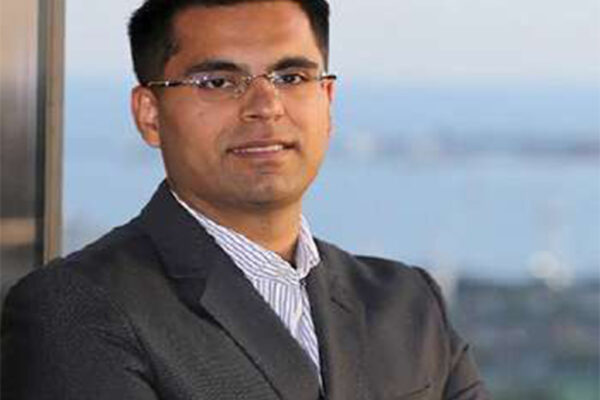
Viraat Bindra RiskProfiler, a global provider of external risk intelligence and cybersecurity solutions, recently announced the appointment of Viraat Bindra to its Advisory Board as the company accelerates growth across Australia and New Zealand (ANZ) and strengthens its broader Asia-Pacific strategy. The appointment comes at a time when enterprises worldwide are increasingly focusing on external cyber risks such as brand impersonation, executive fraud, third-party exposure, and dark web threats – risks that emerge outside traditional security perimeters but have direct business and reputational impact. Viraat brings deep regional expertise and extensive experience in building cybersecurity offerings across enterprise and channel ecosystems. He currently serves in a leadership role at ACPL Systems, a global cybersecurity distributor and solutions provider with a strong presence across APAC and international markets. As part of his advisory role, Viraat will work closely with RiskProfiler’s leadership team to: “Many modern threats materialise long before reaching traditional security controls – through impersonation, exposed credentials, and third-party compromise,” said Viraat Bindra, “RiskProfiler’s outside-in approach and focus on operationalising intelligence for security teams and service providers address a clear and growing need in the ANZ market. I’m excited to support the team as they expand their regional presence.” This announcement reflects a broader industry shift as enterprises and managed security service providers look beyond internal controls to understand what attackers see first – their brands, digital identities, suppliers, and internet-facing assets. “External risk has moved from being a security discussion to a business leadership priority,” said Setu Parimi, Co-founder and CTO of RiskProfiler, “As organisations scale digitally across global markets, the ability to continuously monitor and act on external exposure becomes critical to protecting customer trust and brand integrity. Viraat’s regional expertise and ecosystem experience will play an important role as we expand our partnerships and support organisations across ANZ and Asia-Pacific.” RiskProfiler continues to gain momentum globally as enterprises adopt proactive, outside-in cybersecurity strategies that help reduce exposure before threats escalate into incidents. The appointment reinforces the company’s commitment to helping organisations strengthen digital trust and reduce external risk with clarity and confidence. RiskProfiler is a leading global provider of external threat intelligence, helping organisations stay ahead of cyber threats by identifying risks before they escalate into attacks. The company specialises in brand monitoring, dark web intelligence, third-party risk management, and external risk visibility, delivering AI-driven insights and automated response capabilities. By empowering enterprises to proactively manage brand and digital risks, RiskProfiler helps strengthen cyber resilience, protect customer trust, and support secure digital growth. Read More

Read More