
securitylinkindia

MassMediaLink India LLP SecurityLink India

ICCC 2025 Positioned as Official Pre-Event to India AI Action Summit 2026:  Bridging Global Cybersecurity and AI Governance Dialogue

The International Conference on Cyberlaw, Cybercrime & Cybersecurity (ICCC 2025), took place at SCOPE Convention Centre in New Delhi from 19 to 21 November, 2025. An official pre-summit event to the India-AI Impact Summit 2026, scheduled for February 19-20, 2026, at Bharat Mandapam, New Delhi, this alignment represents a significant convergence of global expertise in cyberlaw, AI governance, and digital security, positioning India as a leading voice in shaping international frameworks for secure and ethical artificial intelligence. Building the Foundation for Global AI Governance ICCC 2025, organized by Cyberlaws.Net and Pavan Duggal Associates, Advocates and curated by internationally renowned cyberlaw expert Dr. Pavan Duggal, serves as a critical precursor to India’s premier AI governance platform. With its theme ‘Artificial Intelligence Ecosystem – Challenges and Opportunities,’ ICCC 2025 convened over 1,500 delegates and 300 distinguished speakers from around the world to address the most pressing challenges at the intersection of AI, cybersecurity, and legal frameworks. “ICCC 2025 provides the essential intellectual groundwork and stakeholder dialogue necessary to advance the India-AI Impact Summit’s ambitious agenda,” said Dr. Pavan Duggal, Conference Director and Advocate at the Supreme Court of India, “By gathering global experts, policymakers, judges, law enforcement, and technology leaders now, we are establishing the strategic foundation for transformative policy outcomes in February 2026.”    Complementary Frameworks for Digital Transforma on The timing and thematic alignment of these two events create a unique opportunity for India to lead global discourse on AI governance. ICCC 2025 focuses on the legal, regulatory, and cybersecurity dimensions of AI deployment, including critical issues such as: The India-AI Impact Summit 2026, hosted by the Ministry of Electronics & Information Technology and guided by the principles of People, Planet, and Progress, will build upon these foundational discussions to showcase AI’s transformative potential across healthcare, agriculture, education, energy, climate change, and inclusive development. Advancing India’s Global Leadership in AI Governance By establishing ICCC 2025 as an official pre-event, India demonstrates its commitment to multi-stakeholder collaboration and evidence-based policymaking. The conference attracted senior government officials, leading academics, corporate innovators, and digital rights advocates from across the Global South and developed nations, precisely the diverse constituencies essential for shaping equitable, implementable AI governance frameworks. This partnership underscores India’s strategic positioning as a thought leader in bridging the global AI divide, ensuring that the benefits of artificial intelligence accrue equitably while safeguarding security, privacy, and human rights in digital ecosystems. Event TimelineIndia-AI Impact Summit 2026Dates: February 19th -20th, 2026Location: Bharat Mandapam, New DelhiOrganizer: Ministry of Electronics & Informa􀆟on TechnologyFocus: AI Impact across sectors with emphasis on inclusion, safety, and social good About ICCC Since its inception in 2014, the International Conference on Cyberlaw, Cybercrime & Cybersecurity has been recognized as the world’s leading authoritative global platform exclusively dedicated to examining the intersection of cyberlaw, cybercrime, and cybersecurity. Over the years, ICCC has convened an extraordinary assembly of jurists, judges, legislators, policymakers, law enforcement leaders, cybersecurity practitioners, corporate leaders, technology innovators, and academics from more than 100 countries to address the most consequential challenges facing digital societies.

Read More

Executive Protection :The Unseen Discipline Behind Visible Safety

Veena GuptaFounder & MD, Seam Risk Consultancy Executive Protection (EP) is often misunderstood by the general public – and even by many practitioners entering the field. Popular imagery portrays a protector as a tall, muscular figure dressed in black, wearing sunglasses, scanning the environment like a hawk. While physical fitness and vigilance matter, they represent only a fraction of what the profession truly requires. In reality, Executive Protection is not a show of strength. It is a strategic discipline, combining intelligence analysis, risk management, human psychology, logistical planning, and discreet operational execution. It is a profession where small details save lives, and invisibility is often the strongest armour. The myth vs. the reality Most people believe that EP is just about a forceful person specifically with military background, physical intimidation, a certain bodyguard look – walking shoulder-to-shoulder with the principal and similar on. But the truth is simpler – and more demanding. Effective EP is built on the ability to think ahead, anticipate risks, and eliminate them before the principal even becomes aware of them. A protector must be a planner, reader of people, strategist, communicator, and problem-solver. Strength may stop a threat; preparation prevents it entirely. The microscopic details that matter In the field, it is often the small, easily ignored details that define the safety of the principal. These details go beyond the traditional security scope and enter the domain of holistic protection. Consider the following examples – rarely visible to an outsider but critical for an EP operator: 1. Vehicles and drivers 2. Aircraft and charter checks 3. Hotels, dining, and hospitality 4. Movement and logistics These details may appear insignificant, but for EP, the difference between safety and vulnerability is often a matter of seconds – and those seconds depend on preparation. The professional scope of executive protection A skilled Executive Protection Officer must master several core areas such as: Executive Protection (EP) is often misunderstood by the general public – and even by many practitioners entering the field. Popular imagery portrays a protector as a tall, muscular figure dressed in black, wearing sunglasses, scanning the environment like a hawk. While physical fitness and vigilance matter, they represent only a fraction of what the profession truly requires The real definition of executive protection Executive Protection is not a physical shield. It is a mental discipline, a strategic art, and a lifestyle of constant vigilance. It is knowing that a tyre with low air pressure can cause a fatal accident; a small crowd can suddenly become uncontrollable; an unreserved hotel table can create exposure; a distracted driver can become a liability; a wrong seat position in a restaurant can compromise safety; and a pigeon nest on a charter aircraft can delay takeoff and disrupt movement security. Most people see the protector walking beside the principal. They never see the hundred invisible tasks that make that walk safe. Conclusion In every sense, Executive Protection is an art that blends intelligence, discipline, anticipation, and humility. The best protector is not the one who looks dangerous – but the one who thinks deeper, plans wider, and moves smarter. EP is not about muscles – it is about mastery. Read More

Read More
IISSM

Securing Tomorrow: The 35th IISSM Annual Global Conclave Charts India’s Path to Resilience

In an era where national borders no longer define the boundaries of threat, where melting glaciers pose as much danger as cyber syndicates, and where climate change has become a security imperative, the 35th Annual Global Conclave of the International Institute of Safety and Security Management (IISSM) convened with a singular mission – to reimagine India’s approach to resilience in an age of converging crises. Held against the backdrop of mounting global uncertainties, the 2025 conclave brought together security professionals, environmentalists, policymakers, and industry leaders to address what speakers uniformly described as a ‘new risk paradigm,’ one that defies traditional compartmentalization and demands integrated, proactive solutions. The Convergence of Security and Survival The inaugural session established a powerful thesis that the threats facing India today are fundamentally interconnected. O.P. Singh, IPS (Retd.), Former DGP, UP, whose opening address set the conclave’s agenda, articulated how modern risks have evolved beyond conventional frameworks. Cybercrime networks now operate alongside drone-based threats, human trafficking syndicates leverage cryptocurrency for anonymity, and digital vulnerabilities increasingly intersect with physical security challenges. This blurring of boundaries, Singh argued, requires nothing less than a complete reimagining of how India approaches preparedness. The nation must transition from reactive crisis management to building systemic resilience, integrating technology, sustainability principles, and community partnerships into the very fabric of its security architecture. Climate Change as a National Security Imperative Perhaps the conclave’s most urgent message came from Padma Bhushan awardee Chandi Prasad Bhatt, whose decades of environmental activism lend weight to his warnings about the Himalayan crisis. The veteran conservationist painted a stark picture of accelerating glacier melt in the mountains that serve as India’s water tower, feeding rivers upon which hundreds of millions depend. Bhatt’s warning transcended environmental rhetoric to frame climate change as an immediate security concern. His projection that India’s great rivers might one day flow only as seasonal streams struck at the heart of national survival, water security, agricultural stability, and the displacement crises that would inevitably follow. The subcontinent’s ecological foundation, he argued, is eroding faster than policy responses can adapt. Prof. Santosh Kumar, CEO, IISSM, extended this analysis to India’s vulnerable coastline, emphasizing that rising sea levels pose catastrophic risks to the 7,600 kilometers of coastal territory. The security implications of climate-driven displacement, infrastructure loss, and resource competition demand that environmental and security communities abandon their traditional silos. The professor’s formulation resonated throughout the conclave, securing the plains requires first securing the mountains. The Multidimensional Security Challenge Digambar Kamat, former Chief Minister of Goa, grounded these broader themes in practical governance realities. Drawing on recent terrorist incidents and cyber breaches, he outlined how modern security encompasses far more than physical protection. Today’s threats span digital infrastructure, disaster preparedness, public health resilience, and community safety, each domain interconnected and mutually reinforcing. The conclave’s sessions on misinformation and cyber threats highlighted new dimensions of vulnerability. India now grapples with a social-media-driven ‘infodemic’ that the World Economic Forum identifies as among the greatest global threats. During the May 2025 India-Pakistan crisis, fact-checkers documented how a month’s worth of misinformation bombarded social media within hours, demonstrating how viral falsehoods can damage reputations, disrupt markets, and erode public trust. Public-Private Partnership : The Critical Force Multiplier A transformative theme emerged throughout the conclave – the recognition that India’s private security sector, comprising approximately 25,000 agencies employing 8.6 million personnel, represents an untapped strategic asset that must be integrated into national security and disaster management frameworks. The numbers tell a compelling story. India’s armed forces work alongside roughly 18,000 NDRF personnel and 30,000 SDRF officials, while the state police-to-public ratio stands at 1:10,000. Against this backdrop, the private security workforce represents a force multiplier of extraordinary potential, if properly trained, regulated, and integrated into coordinated response systems. The Ayodhya temple inauguration provided a successful proof of concept. Civil authorities demonstrated unprecedented trust by sharing National Crime Bureau data with private security firms to design and implement comprehensive security measures for suspicious and criminal activities. This collaboration showcased what becomes possible when public and private sectors operate as genuine partners rather than separate silos. The conclave emphasized that India’s critical infrastructure, power grids, telecommunications networks, financial systems, is largely owned or operated by private companies. Any disruption carries national security consequences, yet these same firms possess advanced capabilities in AI, cloud platforms, and fintech that could greatly strengthen national resilience if strategically leveraged. The Armed Forces’ new cyber operations doctrine explicitly calls for structured engagement with private enterprises, research bodies, and academic institutions to co-design resilient systems. Critical Recommendations : Transforming India’s Security Architecture The conclave produced concrete, actionable recommendations spanning multiple dimensions of national resilience: Professionalizing the Private Security Sector Standard Operating Procedures: The development and implementation of uniform SOPs across the security sector emerged as a foundational priority. Inconsistent practices and variable quality create vulnerabilities that sophisticated threat actors readily exploit. Establishing protocols for access control, incident response, crisis management, and intelligence sharing would enhance effectiveness while elevating professional standards. Systematic Upgradation: Security companies must evolve beyond traditional guard services toward comprehensive risk management. This requires mandated training programs covering cybersecurity awareness, emergency response capabilities, disaster management, and threat intelligence functions. Technology integration, from AI-powered surveillance to predictive analytics platforms, must become standard rather than exceptional. Regulatory Reform: Strengthening licensing requirements, establishing continuing education mandates, and creating career advancement pathways would transform security work from low-skilled employment into a respected profession attracting talented individuals. Enhanced accountability mechanisms and quality certification frameworks would ensure that expanded responsibilities come with commensurate oversight. Technology and Innovation Frameworks Secu-Safe Technology Development: The conclave emphasized India’s need for technology sovereignty through indigenous development of AI, blockchain, and drone capabilities aligned with national security priorities. This requires establishing a National Secu-Safe Technology Mission encompassing technology parks, innovation councils, centers of excellence, and procurement cells. Startup Ecosystem Creation: Defense-tech and secure technology startups need targeted incentives, access to testing facilities, streamlined procurement policies, and public-private partnerships that provide market opportunities. Academic-industry collaboration, skill development programs, and indigenous IP…

Read More

White Collar Terror : Why Universities and Doctors Have Become the New Frontier

Prof. (Dr.) Rajiv MathurPartner, MIGS Global Consulting On 10 November 2025, a car exploded near the Red Fort in New Delhi, killing more than a dozen people and injuring many others. The nature of the attack shocked the nation. This was not a crude roadside bombing by fringe actors, but a meticulously planned terror act. What may be even more disturbing is the emerging picture – the people behind it were doctors, highly educated professionals employed by Al-Falah University in Faridabad. As investigations deepen, a pattern is emerging – one that points to a chilling evolution in terrorist recruitment. Terror groups are no longer content with uneducated foot soldiers alone; they are now trying to radicalise white-collar professionals, especially in places we think of as safe – universities, hospitals, academic labs etc. Why a University, Why Doctors? Radicalisation at the Right Age, in the Right Place Radicalisers pick their targets when they are vulnerable – in a ‘tough time’ in life. For medical students or early-career doctors, this is very true. Medical education is grueling – long hours, high stress, emotional trauma, financial pressures, and a strong desire to ‘do better.’ Those pressures can make young professionals susceptible to ideological promises that offer meaning, belonging, and even a kind of ‘jannat’ (paradise) reward. In the Red Fort case, key people involved were doctors from Al-Falah University. Among them were: These are not random, peripheral actors. These are people with education, professional standing, and access to infrastructure (labs, storage, networks). Why might they be appealing recruits? Because: Symbolic Value of Targeting a University A university is not just a physical space; it carries symbolic weight – it is a place of learning, progress, enlightenment. That is what makes it attractive to radical ideology: In the Red Fort case, investigators believe that one of the rooms in the Al-Falah campus (building no. 17, room no. 13) was used as a secret meeting place for the conspirators. According to reports, this room was very close to their lab – underlining how academic infrastructure was allegedly exploited. Security Blind Spots: Why Universities, Hospitals, and Management Institutes Are Vulnerable These are places with minimal security awareness, or where security is not part of the academic curriculum. That is a serious systemic weakness. Lack of Institutional Security Culture Traditionally, universities (especially in India) focus on education, research, and administration. Security is often treated as an operational afterthought – limited to campus guards, typical access control, and maybe CCTV. But deeper security (counter-terror, radicalisation prevention) is rarely part of university planning. Gap in Management Education Even management schools (especially those teaching healthcare management, operations, or supply chain) do not include security modules. This is a serious blind spot. This absence in curriculum means that when radical elements try to infiltrate, they face little institutional resistance or scrutiny. The New Terrorist Playbook: White-Collar Radicalisation The Red Fort incident seems to reflect a dangerous evolution in how terror modules operate. White-Collar Jihadis Many analysts now call this ‘white-collar jihad’ – where terrorists are not uneducated foot-soldiers, but skilled professionals such as doctors, engineers, faculty, researchers. This has several strategic advantages for them: In the case of the Delhi blast, investigators reportedly believe that university labs might have been used to produce or store components for bombs (e.g., RDX synthesis). That’s a terrifying escalation. Also, encrypted communication, digital funding, and cross-border ideological influence seem to be part of the module’s operational design. Recruitment via Academic Networks Recruiters are increasingly using academic and religious networks: This shows a deliberate strategy – using respected professionals as radical agents, embedded in academic institutions, with both ideological indoctrination and operational capacity. Institutional Accountability and Recruitment Failures Point of poor recruitment processes is very concerning, and facts emerging in the case support serious lapses. Questionable Hiring Practices According to reports, one of the detained persons, Mohammad Jamil, was responsible for recruitment at Al-Falah University. Investigators say he forwarded files for doctors’ appointments, raising the possibility of infiltration. There are concerns whether the University did proper background checks. These revelations raise crucial questions about institutional due diligence – what are the checks and balances when hiring critical faculty? Who authorises these appointments, and how rigorous is the vetting? Financial Irregularities and Oversight There are also deeper institutional concerns beyond just hiring: When higher education institutions have weak governance, poor transparency, and limited oversight, it becomes easier for extremist networks to infiltrate and operate under the cover of a ‘charitable’ or ‘educational’ mission. Psychological and Ideological Drivers Let us explore more deeply why radicalisation might work so effectively in such a context. Identity, Belonging, and Purpose Young professionals, especially from marginalized or conflict regions (e.g., Kashmir), may feel alienated. Despite achieving academic success, they may still struggle with: Moral Justification and Religious Framing Terror groups often frame their message in religious-laden moral terms – ‘jihad’, ‘sacrifice’, ‘paradise.’ For educated recruits, this is combined with a narrative of struggle: The contrast between a ‘tough life’ (long study hours, pressure, low recognition) and the promise of spiritual reward (jannat) becomes highly attractive. When radical ideology is wrapped in religious duty, it gives recruits a moral justification for violence – especially if they believe their professional status doesn’t exempt them from ‘sacred struggle.’ Broader Threat Implications What emerged from the Red Fort investigation is deeply worrying – not just for this incident, but for India’s broader national security and academic landscape. What Can Be Done: Prevention, Awareness, Reform Given this emerging threat, what should society, institutions, and government do? Here are some concrete suggestions, informed by your insight and my analysis. Curriculum and Awareness Building Institutional Governance and Oversight Policy and National-Level Response Conclusion The Red Fort blast and the link to Al-Falah University are a wake-up call. Terrorism is changing. Radicalisation is becoming more professional, more white-collar, and more insidious. Traditional security paradigms – focused on uneducated militants – must evolve to meet this new threat. Universities, hospitals, management schools are not just innocuous institutions. They are now…

Read More

Redefining System Integration for Airport Security Operations

Milind BorkarStrategic Growth Advisor, Vicon This section is focused on best practices and considerations for integrating elements of airport physical security systems. Systems integration is the coupling of various discrete hardware and software systems into a unified system. The objective of assembling individual pieces into a whole functioning unit often requires detailed planning that clearly defines the operational requirements of the integrated system, the functional requirements of the integrated components, and the internal interfaces between all components as well as all external (input and output) interfaces. Well-conceived and tested, integration can provide the airport operator with several benefits: Integration can also introduce complexities into security system design which are best mitigated by the careful determination of operational requirements (the ConOps process) technical specifications that address component compatibility details, and proof-of-integration testing. The complexity of the process usually necessitates an iterative approach where small pieces are integrated together in steps with each step resulting in a larger functional unit until the whole system is successfully integrated together, so that the end result meets the user’s requirements. Integrated systems can provide a range of decision-making resources and tools for operators. Those tools can automate some response processes (e.g., alert notifications) or guide response actions. Integrated tools also provide platforms through which response activities can be coordinated and directed though a range of tools including radio, data and telephony. Integration Process Figure 1 diagrams the major process for integrating physical security systems. a) Detection/ Perception Airport decision makers can draw upon a variety of system inputs including – Fire Alarms, Pressure Sensors, Motion Sensors, Audio Sensors, Physical Access Control Systems (PACS) including credentialing systems, Perimeter Intrusion Detection Systems (PIDS), Video Surveillance Systems, including both visible CCTV and infrared sensors, Computer-Aided Dispatch (CAD) systems, Geographical Information Systems (GIS), Building Automation Systems (BAS), CBRNE sensors, Global Positioning System (GPS) data, Network Communications including network monitoring systems, and Human assets equipped with voice or data communications devices-radios cellphones, data terminals. Sensor data may come directly into a common platform, or it may be filtered or prioritized by management software such as VMS, PIDS, BAS or CAD systems. In addition to sensory data there are a range of other information sources that help to develop a picture of an incident or occurrence, i.e., situational awareness. These inputs can include – Event Management Systems (Web EOC, eTeam, Esponder), Work Order and Maintenance Management Systems, GIS Data, FIDS Data, Personnel Data (Biometrics/ Credentialing), Key Control Management Programs, Gate Management Systems, Airfield Management Systems, and Safety Management Systems. b) Assess/ Analyze This phase of the integration process should begin with a ConOps, this being the best means of determining operational requirements from which technical specifications and decision rules can be derived. Some tools like CAD, PIDS, CMMS and VMS programs can help in bringing meaning to differing pieces of data and relating that to action programs. PSIM software generally provide richer integration linking more data fields and supporting security functions across the full operational spectrum. c) Direction/ Response Integration is most effective when it supports the actions of responders. The focus of system integration is to facilitate the operator’s access to and ability to exploit, in real time, information converged from diverse sensors and other inputs. Integration at the system level enables intelligent decision-making to be applied for response functions. This occurs through subsystems designed for task execution including radio/ telephone/ data communication systems; automated command to remote access points or barrier or access control systems; mass notification systems; and alarm/ audio and public address systems. The extent to which these inputs and functions should be integrated will vary for each airport operator. Defining operational requirements by a thorough ConOps is the first step in this process. The criteria for making these decisions should be: The outputs of system engineering will include documentation of the system design, trade-off studies of system and component alternatives, system and component specifications, estimates of probable cost, management plans and schedules, contractual documents etc. Model specifications are available from several sources, but two sections of the Construction Standards Several industry groups have standardized protocols for digital video systems and for their integration with other elements of physical security systems. Their common goal is improved hardware and software compatibility, but each group has its own focus, and their standards differ in important respects including their span of coverage and how they specify and test for compatibility compliance. All of these groups have published specifications and/ or standards, which continue to be developed and refined, and all continue to expand their memberships. Stating that an item of equipment such as a video camera, ‘complies’ with a published industry standard does not assure that it will interoperate with ‘compliant’ products of other manufacturers. Even within a given camera product line, there can be models which comply with a given standards while other models do not comply. Equipment specifications, however detailed, are not sufficient to reveal to an airport operator the full level of operational performance or the compliance of a specific device to a standard. Always check equipment model details against the standards to which they have been tested, and whenever possible physically test the products under local operational and environmental conditions of use. A major issue is often the ability to upgrade or replace an item of hardware or software independently of a manufacturer’s proprietary design data and protocols. Airport design and procurement packages should: Choosing a Platform Before the widespread adoption of networked digital systems, most security systems were integrated around access control devices. Access control systems were the first line of defense, alerting security staff to unauthorized intrusions and providing basic video coverage of these events. Not all incidents are triggered by a physical security breach, nor do all incidents carry a physical security risk. Such incidents are geared more towards airport operations, but nevertheless they are issues that arise and must be addressed. As security systems became more complex, as users increased the quantities of video cameras, and as all of these devices…

Read More

Security Summit – Bengaluru Edition Concludes Successfully Setting New Benchmarks for Integrated Safety & Security Excellence

The Security Summit – Bengaluru Edition, organised by Blue and Gray, concluded with exceptional participation from security experts, industry leaders, technology innovators, and decision-makers, reinforcing Bengaluru’s role as a key hub for safety and security innovation in India. The Bengaluru Edition initiated by ASIS, powered by iiris, and supported by NFE, FOCUS, and CFLS, with Duranc as the Knowledge Partner served as a powerful cross-industry platform covering cybersecurity, physical security, fire & life safety, compliance, and smart building technologies. Robust Knowledge Exchange & High-Impact Sessions Delegates engaged in an extensive lineup of expert-led keynotes, panel discussions, and technical sessions featuring: Across sessions, leaders emphasised the need for technology-driven risk mitigation, enhanced compliance frameworks, and stronger industry collaboration to elevate India’s overall security posture. Spotlight on Breakthrough Technologies The technology showcase featured an impressive range of next-generation solutions, including: Participants appreciated the Summit’s blend of actionable insights, demonstrations, and networking opportunities, marking the Bengaluru Edition as one of the year’s most impactful gatherings for security professionals. Looking Ahead: Mumbai Edition Announced Following the success of the Bengaluru Edition, the next chapter – the Security Summit – Mumbai Edition is officially scheduled for 6th March 2026. This upcoming edition will expand the focus toward Western India’s rapidly growing industrial, commercial, and infrastructure sectors, continuing the mission of strengthening integrated security practices nationwide. About the Security Summit The Security Summit is a national platform dedicated to advancing integrated safety and security across India. Organised by Blue and Gray and supported by key associations and industry partners, the Summit aims to accelerate the adoption of next-generation technologies, compliance frameworks, and best practices across the country’s fast-evolving security landscape. Read More

Read More

ASIS New Delhi India Conducts Q4 Chapter Meet

ASIS NEW DELHI INDIA CHAPTER successfully conducted its Q4 chapter meet at Stellar 1423, Noida, Sector 142. The chapter meeting was a resounding success, conducted in strategic association with the Global Association of Corporate Services – GACS. This collaboration significantly broadened our potential pool of expert speakers and spectrum of topics, an objective that was robustly and meaningfully achieved. Opening Remarks Keynote Address: Finance Management The keynote address was expertly delivered by Ankur Handa from UTI asset management. His insightful and wonderful session on Finance Management captivated the audience, leaving attendees notably more informed and ‘wiser’ on the subject. A highly intriguing and thought-provoking panel discussion on ‘Insider Threat in a Polarized Workforce’ followed. The dialogue was deftly moderated by our esteemed ASIS New Delhi, India Chairman – Mahesh Singh Chauhan. The session was enriched by the diverse perspectives of our esteemed panelists: The panelists collectively shared their extensive and varied expertise, enlightening the audience on effective strategies to tackle insider threats, integrating time-tested traditional methodologies with crucial future technological evolutions. Additionally, another impactful panel discussion, focused on ‘Evolving Trends in the Workspace,’ was led by Col Ashok Prabhakar from GACS. Various industry leaders from the Facilities Management (FM) domain shared their expert views on how current trends are reshaping the modern workplace and the most effective ways to navigate the challenges arising from these rapid evolutions. The entire event was a monumental success, drawing an impressive attendance of approximately 150 security and diverse portfolio professionals, including the GACS team and their invitees – a testament to its compelling agenda, even on a Saturday. Announcement: ASIS New Delhi India announced its AGM for 19th December 2025. Read More

Read More

Chennai Hosts 20th CAPSI Security Leadership Summit : Charting the Future of India’s Private Security Industry

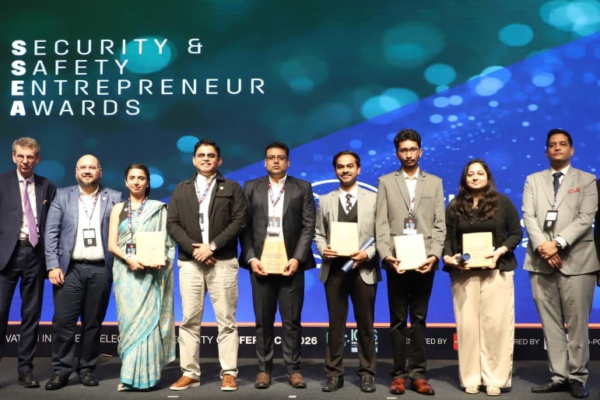
The Central Association of Private Security Industry (CAPSI) hosted the 20th Security Leadership Summit in Chennai, bringing together national and international leaders, policymakers, and experts to deliberate on the theme ‘Indian Security Industry 2.0 – Guards to Guardians.’ Distinguished Dignitaries and Leaders The two-day Summit was presided over by Kunwar Vikram Singh, Chairman, CAPSI & APDI, and graced by an eminent gathering of dignitaries and thought leaders, including: Event Highlights The summit featured several key launches and ceremonies: Key Session: Regional Volatility – Impact on Citizen’s Security A special session titled ‘Regional Volatility: Impact on Citizen’s Security’ was chaired by Lt. Gen. Shokin Chauhan, PVSM, AVSM, YSM, SM, VSM, PhD (Retd), Former DG, Assam Rifles & Former Chairman, CFMG, Nagaland, with Maj. Gen. Binoj Basnyat (Retd), Order of Suprabal Jana Seva Shree, Nepali Army & Strategic Analyst, as Co-Session Chair. This session examined the complex regional dynamics shaping internal and cross-border security, highlighting their implications for citizen safety and private security operations in South Asia. Strategic Deliberations on Day Two Day two featured high-level discussions on regional and corporate security, the Security and the integration of emerging technologies such as drones, forensics, and AI in strengthening national safety frameworks. Eminent experts including Lt. Gen. Shokin Chauhan (Retd), Dr. Keshav Kumar, IPS (Retd), and Peter Coleman led the dialogue. The Summit also conferred Golden Guard Awards and Certificates of Excellence to outstanding performers in India’s private security sector. “The 20th Security Leadership Summit marks a defining moment in our industry’s journey. We are witnessing the transformation of private security from a manpower-driven service into a technology-enabled profession that plays a vital role in national security and public safety. The Summit not only celebrated excellence but also charted the vision for the decade ahead.” With over 500 delegates, the event promised to be a landmark platform for shaping the next phase of India’s private security industry, reinforcing CAPSI’s mission to elevate professional standards and strengthen national resilience. Read More

Read More

Raising the Bar for Cybersecure Surveillance : Vicon’s STQC-Certified Cameras Lead the Way

In the rapidly evolving world of electronic surveillance, technology leadership alone is no longer enough. The true measure of a brand lies in how well it aligns with a nation’s security vision – its standards, compliance frameworks, and the expectations of both public and private enterprises. For Vicon, a global pioneer in integrated video surveillance solutions, India represents more than just a growing market. It represents a long-term commitment – one built on trust, technology, and local presence. This commitment is now exemplified by Vicon’s achievement of STQC certification from the Ministry of Electronics and Information Technology (MeitY), affirming that its cameras and Valerus VMS meet the stringent cybersecurity and performance standards mandated for use in India’s critical infrastructure. STQC Certification: A Benchmark for Cyber-Trusted Surveillance The Standardization Testing and Quality Certification (STQC) directorate plays a crucial role in ensuring that technologies deployed in India are secure, reliable, and compliant with national cybersecurity guidelines. With increasing integration of surveillance into digital governance, the need for certified systems that protect against unauthorized access and data compromise has become paramount. Vicon’s STQC-certified product line reflects the company’s proactive approach to regulatory alignment. The certification validates: By achieving this certification, Vicon becomes one of the few global surveillance brands offering solutions that are fully validated under India’s cybersecurity framework, giving its partners and customers an added layer of assurance in every deployment. NDAA Compliance: A Commitment to Transparency and Integrity Cybersecurity isn’t just about encryption and firewalls – it begins with the supply chain. Vicon’s products are fully NDAA-compliant, ensuring that every component, from sensors to processors, originates from trusted and approved sources. This level of transparency is essential for both government and enterprise clients, many of whom are now instituting strict vendor qualification processes to eliminate potential risks from non-compliant or restricted-origin hardware. By combining STQC certification and NDAA compliance, Vicon stands out as a brand that not only delivers technological excellence but also upholds the highest standards of: These values align seamlessly with India’s vision for secure digital infrastructure. Local Support, Global Standards One of the most significant aspects of Vicon’s India strategy is its localized presence and support infrastructure. With an experience center in Pune and an expanding technical and presales team, Vicon ensures that customers across India receive: This local commitment extends beyond sales and service. Vicon’s technical team actively collaborates with system integrators, consultants, and enterprise customers to design solutions tailored to Indian operational environments – from smart cities to industrial plants, from airports to corporate campuses. The result is a global product with local adaptability, engineered for India’s unique regulatory and operational landscape. Beyond Government: Building Trust Across Enterprises While compliance with MeitY’s STQC framework has made Vicon a natural choice for government and PSU projects, the company’s focus extends much further. Enterprises across various sectors are recognizing that cybersecurity is a core business risk – not just an IT issue. These sectors include: Video surveillance systems today connect to corporate networks and cloud platforms, making them potential entry points for cyber threats if not properly secured. Vicon’s STQC and NDAA-compliant cameras address these concerns by ensuring: This helps enterprises mitigate risk, meet compliance mandates, and protect digital assets. In an era where corporate accountability is tied to data protection, deploying certified surveillance infrastructure is not just a best practice – it’s a necessity. Vicon’s Vision for India: Compliance, Confidence, and Continuity Vicon’s vision for India goes well beyond product certification. The company aims to play an active role in shaping the next generation of secure surveillance ecosystems – blending regulatory compliance, open-platform interoperability, and robust local engagement. This includes continued collaboration with government authorities, enterprise partners, and technology integrators to ensure that security solutions evolve alongside India’s digital transformation goals. As Vicon strengthens its footprint in India through its local support center, regional expertise, and globally certified solutions, it reinforces a simple but powerful message: “Security is not just about watching – it’s about protecting, complying, and trusting.” Conclusion: Setting a New Benchmark for India’s Secure Future With its STQC-certified systems, NDAA-compliant manufacturing, and dedicated local support infrastructure, Vicon has set a new benchmark for secure, compliant, and future-ready surveillance in India. Whether it’s a government facility or a private enterprise, customers now seek partners who understand the balance between performance and compliance – between innovation and integrity. Vicon stands at that intersection, committed to delivering technologies that don’t just meet expectations, but define them. Read More

Read More

Fortifying India’s Digital Backbone: Comprehensive Perimeter Security for Data Centers

India’s rapid digital transformation has made it one of the world’s fastest-growing data center markets. With a projected capacity exceeding 1,500 MW by 2026, the nation is becoming a global hub for cloud services, AI computation, and critical data storage. But as this infrastructure grows in scale and strategic importance, so does its vulnerability. The Rising Threat Landscape Data centers have evolved into the beating heart of India’s digital economy – supporting everything from fintech platforms and e-governance to global enterprises operating in real time. However, this immense responsibility comes with risk. While much of the industry’s attention has traditionally focused on cybersecurity, physical security remains the first and most critical layer of defense. Perimeter intrusions, vehicle-borne threats, sabotage, and coordinated physical-cyber attacks are emerging concerns across the subcontinent. India’s dense urban zones, infrastructure bottlenecks, and high-value data storage clusters make many data centers particularly exposed. Unauthorized access attempts, vandalism, and drone-based surveillance are increasingly being reported near hyperscale facilities. Moreover, the downtime cost of a single breach can exceed ₹6 crore ($740,000) – a financial and reputational impact no operator can afford. Challenges in Existing Perimeter Security Despite heavy investment in infrastructure, many data centers still rely on legacy fencing and limited surveillance coverage. These conventional setups often fail to meet the growing sophistication of modern intruders. Common challenges include: India’s rapid digital transformation has made it one of the world’s fastest-growing data center markets. With a projected capacity exceeding 1,500 MW by 2026, the nation is becoming a global hub for cloud services, AI computation, and critical data storage. But as this infrastructure grows in scale and strategic importance, so does its vulnerability For mission-critical data infrastructure, the margin of error has vanished. What’s needed now is a comprehensive, multi-layered perimeter security strategy that integrates technology, engineering, and intelligence. A-1 Fence: Setting the Benchmark for Data Center Perimeter Security With over two decades of experience in securing critical infrastructure worldwide, A-1 Fence has become synonymous with trusted, engineered protection. In India, A-1 has successfully executed more than 10 high-security data center projects across the country, partnering with major cloud providers, colocation operators, and enterprise data facilities. From Mumbai and Hyderabad to Noida and Chennai, these installations form the outer defense layer of the nation’s digital economy. Why A-1 Fence leads the frontier An Integrated, Layered Approach A-1’s comprehensive perimeter security framework addresses the complete threat spectrum through four integrated solution pillars: 1. Perimeter Security Systems High-security fences such as the A-1 KAVACH® (SR1 Rated) and A-1 KAWACH 35B3 (SR2 Rated) provide tested resistance to climbing, cutting, and intrusion tools. Palisade and AKAT NG-30 models add layered delay and visibility control. 2. Hostile Vehicle Mitigation Crash-rated solutions like the A-1 Alcazar Anti-Vehicle Rope Barrier and Hydraulic Roadblocker are certified to ASTM F2656 standards, stopping 6.8-ton vehicles at speed – a critical safeguard for entry and approach zones. 3. Intrusion Detection Systems (PIDS) Intelligent systems such as Liminal-K™ vibration sensors, Liminal-F™ fiber optic cables, FenSense™, and radar-based surveillance integrate with physical barriers, offering early threat alerts and real-time analytics. 4. Entrance Control & Internal Demarcation A-1’s delay-rated and SR2 gates, along with Unico and Chainlink internal partitions, provide controlled access and secure compartmentalization inside the facility. Together, these layers form a holistic ‘Detect-Deter-Delay-Respond’ ecosystem, ensuring no single point of failure across the perimeter. From Design to Execution – A-1’s In-House Capability A-1 Fence doesn’t just manufacture products – it engineers protection. Each solution begins with collaborative design support, simulation, and site-specific risk mapping. The company’s in-house R&D team ensures that every fence, gate, and sensor aligns with operational and architectural requirements before reaching the site. Advanced manufacturing facilities across India, the Middle East, and Africa allow for large-scale, high-precision production and timely delivery – a critical advantage in the data center construction timeline. Shaping the Future of Data Center Security As India moves toward becoming a $1 trillion digital economy, the resilience of its data infrastructure will define its progress. For data center operators, investors, and architects, perimeter protection is no longer just a compliance checklist – it’s a strategic imperative. A-1 Fence continues to lead this transformation through integrated innovation, global certifications, and unwavering reliability. With over 10 successful high-security data center projects already protecting India’s digital frontier, A-1 is not just responding to the future of data center security – it’s defining it. Read More

Read More