
securitylinkindia

eSentire Warns Businesses: Hackers are After Your Employee’s Account Credentials, as Account Compromise Threats Surge 389% in 2025

Global cybersecurity solutions provider eSentire recently released its 2025 Year in Review, 2026 Threat Landscape Outlook Report titled – ‘The Industrialization of Cybercrime: Identities are Under Attack.” One of the most alarming attack trends tracked by eSentire in 2025 was a 389% increase year over year in account compromise identity-based threats. In the past year, the attempted theft of corporate account credentials, especially Microsoft 365 accounts, made up 50% of the attacks analyzed by eSentire’s security research and elite threat hunting team, the Threat Response Unit (TRU). Based on threat and incident data from eSentire’s 2,000+ global customers, the findings highlight the dramatic rise of Phishing-as-a-Service (PhaaS) offerings as a primary attack vector. Email-initiated account compromises rose from 37% to 55% of total security incidents, with PhaaS-related threats accounting for 63% of all accounts compromised. “These PhaaS kits are not made up of simple templates; they are comprehensive, continuously updated offerings, designed to bypass modern security controls such as Multi-Factor Authentication,” said Spence Hutchinson, Senior Manager of TRU and lead investigator for the report, “It is the widespread availability and continuous evolution of these PhaaS kits that are fueling the account takeover epidemic that is impacting businesses.” A profitable end game for account takeovers – Business email compromise The report reveals that threat actors are using PhaaS operations like Tycoon2FA, FlowerStorm and EvilProxy to carry out Business Email Compromise (BEC) attacks. The hackers can initiate BEC actions such as creating inbox forwarding rules in as little as 14 minutes, after they have captured a target’s corporate login credentials and session token and successfully entered the target’s IT network. TRU found that companies in the real estate, finance, retail, and construction sectors regularly conduct large financial transactions and are perfect targets for BEC campaigns, where attackers intercept and divert legitimate fund transfers to fraudulent accounts. BEC attacks continue to be a top threat for companies, as evident by the billions of dollars businesses are losing annually to this threat. The FBI’s Internet Crime Complaint Center reported $2.8 billion in losses from BEC attacks in 2024 alone. However, there is progress being made in defending against these attacks. In 2025, eSentire was able to reduce BEC threats for its customers by 21%. This was not luck; this was pure determination by eSentire’s security defenders to meet the BEC threat head on. eSentire dedicated substantial resources to tracing the BEC attacks back to their root cause and created detections for the different precursors leading to BEC attacks. As such, TRU has been able to successfully detect and shut down many BEC campaigns before the threat actors can even get a foothold into a customer’s network, resulting in a 21% decrease in BEC threats. These PhaaS kits are not made up of simple templates; they are comprehensive, continuously updated offerings, designed to bypass modern security controls such as Multi-Factor Authentication. It is the widespread availability and continuous evolution of these PhaaS kits that are fueling the account takeover epidemic that is impacting businesses Key 2025 Report findings “Unfortunately, TRU does not see any of the top threats detailed in this report declining in 2026,” said Hutchinson, “Highly skilled hackers have made it far too easy for inexperienced threat actors to compromise employees’ corporate accounts and ultimately their organizations, via sophisticated, turn-key criminal operations such as PhaaS, Malware-as-a-Service, Ransomware-as-a-Service, etc. “Add these very accessible and easy-to-use services to the capabilities AI technologies can give a threat actor, especially in the areas of malware development, phishing campaigns and deep fakes, and the barrier to entry into the cybercrime business is frighteningly low.” 2026 Threat Landscape Outlook eSentire, Inc., the Authority in Managed Detection and Response (MDR), protects the critical data and applications of 2000+ organizations in 80+ countries across 35 industries from known and unknown cyber threats by providing Continuous Threat Exposure Management, Managed Detection and Response and Incident Response services designed to build an organization’s cyber resilience & prevent business disruption. Founded in 2001, eSentire protects the world’s most targeted organizations, with 65% of its global base recognized as critical infrastructure, vital to economic health and stability. By combining AI-powered, open XDR platform technology, 24/7 threat hunting, and proven security operations leadership, eSentire’s award-winning MDR services and team of experts help organizations anticipate, withstand and recover from cyberattacks. Read More

Read More

Hikvision Among theFirst Companies Worldwide to Earn NISTCSF 2.0 Certification

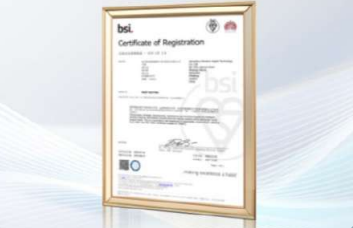
Hikvision has successfully achieved certification under the NIST Cybersecurity Framework (CSF) 2.0, following a rigorous independent audit conducted by the British Standards Institution (BSI). With this milestone, Hikvision becomes one of the first companies worldwide to achieve this certification, demonstrating its commitment to aligning its cybersecurity governance, risk management, and compliance practices with internationally recognized standards. What is NIST CSF 2.0? The NIST Cybersecurity Framework (CSF) is a set of voluntary guidelines developed by the National Institute of Standards and Technology (NIST) to help organizations of all sizes manage and reduce cybersecurity risks. The framework consists of three main components – the Core, Organizational Profiles, and Tiers. The CSF Core defines six key functions – Govern (GV), Identify (ID), Protect (PR), Detect (DE), Respond (RS), and Recover (RC) – providing organizations with a strategic lifecycle for managing cybersecurity risks. Compared with version 1.1, which laid the foundation for lifecycle-based risk management, NIST CSF 2.0 introduces important enhancements, including: Building a robust cybersecurity and governance System Hikvision has established a robust, end-to-end cybersecurity system aligned with all six core functions. The company embeds security into its corporate strategy, risk management, compliance programs, and supply chain operations, ensuring that security practices are integrated across all business processes. Achieving NIST CSF 2.0 certification confirms that Hikvision’s cybersecurity governance aligns with international best practices. With comprehensive, layered security capabilities, Hikvision supports partners and clients worldwide in achieving safe, compliant, and reliable operations – reinforcing its commitment as a trusted global technology partner. Our ongoing commitment to cybersecurity Hikvision is committed to advancing cybersecurity and privacy protection across all aspects of its operations. The company adheres strictly to internationally recognized standards and regulatory requirements, conducting regular capability assessments and continuous improvement programs to enhance its security posture. Over the years, the company has achieved a broad portfolio of globally recognized certifications including ISO/IEC 27001:2022, ISO/ IEC 27701:2019, ISO/ IEC 27017, ISO/ IEC 29151, and ISO 38505-1:2017, in addition to the newly awarded NIST CSF 2.0 certification. Cybersecurity is at the core of trust. To date, Hikvision has earned more than 25 authoritative security and compliance certifications worldwide, reflecting its ongoing commitment to safeguarding data and building digital trust. Looking ahead, the company will continue to advance its cybersecurity programs and share best practices across the industry.

Read More

The Tangible Advantages of Flir Nexus

While many security professionals are becoming increasingly aware of Flir Nexus, some remain unclear on the tangible advantages this advanced innovation can offer. So, who better to provide a few key insights than Flir Security Software Architect and all-round Nexus Guru, Ignacio Vilches Rojo? Flir Nexus: What is it and what tangible gains does it provide in thermography and perimeter security applications? A good way to understand Flir Nexus is to first grasp the central challenges facing security managers today. According to Ignacio, the primary one here is the need for greater situational awareness. “This includes understanding a given circumstance, collecting and analysing relevant information, and making informed decisions to address any potential risks,” he explained. In thinking about a conventional design for perimeter security, many would expect the system to include a variety of detection and data handling/ processing technologies. Flir typically works with customers to create a virtual barrier that comprises a combination of thermal and visible cameras, and radar-which are then coupled with detection analytics. These cameras work together, using Nexus as the communication protocol, and provide accurate information to track people, animals or vehicles. It’s the action that follows a perimeter breach that determines how a security team should respond. Unfortunately, this is where we see gaps in security system designs which ultimately mean the operator does not have total situational awareness But there is one key point to consider here: “It’s the action that follows a perimeter breach that determines how a security team should respond. Unfortunately, this is where we see gaps in security system designs which ultimately mean the operator does not have total situational awareness.” Reading the Situation: How Flir Nexus Enhances Situational Awareness Flir Nexus is a software and proprietary communication protocol for thermal imaging systems that helps bridge the gap between devices and systems, ensuring a more complete understanding of the environment outside and inside a security perimeter. To execute a high level of situational awareness, a customer typically requires some form of advanced software that collects the geodata presented by different sensors before co-ordinating proper hand-offs as the target moves. Flir Nexus meets this ambition in a different way. It allows edge devices to communicate in a server/client format without the need for any software or a server in the middle, reducing the cost of ownership. Right now, Nexus is the only protocol that permits access to all the different features and settings required to achieve a high level of integration with Flir sensors, providing you with the best image. Notably, the camera becomes a server by definition because it provides functionality that can be connected to and used. It also becomes a client of other cameras using the Nexus protocol. I see this as a further differentiator that allows us to really ‘explode’ Nexus features for use by the cameras themselves, providing access to a whole new world of possibilities Flir Nexus devices facilitate straightforward installation since all edge devices communicate in real-time, only requiring simple configuration. “When combined with our camera analytics for detection, Nexus can identify, locate and track targets at the edge,” continued Ignacio, “As a potential threat moves through the scene, Nexus-enabled devices communicate the geodata to other Nexus devices and provide seamless hand-offs for continuous tracking. This capability ensures you have complete situational awareness to make informed decisions.” Another advantage is that Nexus allows customers to extend their coverage over large areas using fewer devices, making the provision of total situational awareness far more affordable. The Flir Nexus Difference: Futureproof, Modular, and Intelligent Nexus’s modular architecture is a major market differentiator. Its strategic building block approach forms a robust, multi-layered, and fully integrated security solution. Always employing the same base structure to help create the optimal solution ensures backwards compatibility, simplifying the task of making future additions or changes, even if they take place many years down the line. This level of futureproofing ensures Nexus retains its considerable capability advantages. “By combining thermal, visible and ground-based radar imaging with Flir’s classification analytics, the multi-layered Nexus helps detect, identify, track and act over a long range and in any weather conditions,” added Ignacio, “Notably, you can detect threats in real time, which is important for rapid response and the ability to adapt continuously in the face of security breaches.” While many other communication protocols exist, some of which are open, most were developed and defined before the widespread adoption of thermography processes in the security arena. At that time, developers were instead focusing on visible spectrum cameras. “Right now, Nexus is the only protocol that permits access to all the different features and settings required to achieve a high level of integration with Flir sensors, providing you with the best image. Notably, the camera becomes a server by definition because it provides functionality that can be connected to and used. It also becomes a client of other cameras using the Nexus protocol. I see this as a further differentiator that allows us to really ‘explode’ Nexus features for use by the cameras themselves, providing access to a whole new world of possibilities.”   A Sense of Space: How Flir Nexus Integrates Radar and Geodata A good example involves the integration of radar. By providing detection from radars as points in space (latitude and longitude), it becomes possible to show them on a map, point to them with cameras, or simply provide alarms – a major advantage in security. “Why not create a ‘window’ from a video and make objects appear in the real world through latitude and longitude co-ordinates,” explained Ignacio, “It required advanced mathematics, and you need good calibration to ensure accuracy, but using Nexus ultimately means a target in the video now becomes a target in the real world, where things happen and make sense. Seeing an object on a map means you really see it moving towards you. It has more meaning.” He added, “Nexus is the software… is the protocol… is a way of working. It’s far more than a translator,…

Read More

New Report Reveals Brazilians Face 252 Scam Encounters Annually Despite High Confidence in Spotting Fraud

State of Scam Brazil Report Shows R$99 billion Lost;Cross-Sector Webinar to Address Growing Crisis The Global Anti-Scam Alliance (GASA) has released its State of Scam Brazil Report 2025 revealing an alarming disconnect between confidence and vulnerability – while 75% of Brazilians believe they can recognize scams, 70% have fallen victim to at least one within the past year. The report estimates total losses at R$99 billion, underscoring the urgent need for coordinated action across sectors. Part of a landmark global study covering 42 markets and interviewing 46,000 people worldwide, the Brazilian findings from 1,000 adults paint a troubling picture of daily vulnerability. Brazilians encounter scams on average once every day and a half – totaling 252 encounters per person annually. These encounters occur most frequently through phone calls (65%), text messages (55%), and email (55%), with shopping scams emerging as the most common type of fraud. “Scams have become part of everyday life in Brazil. The fact that most people feel confident spotting scams, yet continue to fall for them, shows how sophisticated and convincing these schemes have become,” said Renata Salvini, GASA Chapter Director Brazil, “Education, prevention, collaboration, and accountability must go hand in hand if we want to stop this cycle.” The human cost beyond financial loss The report reveals that 86% of scam victims felt very or somewhat stressed by their experience, while 59% reported significant or moderate impacts on their mental wellbeing. On average, each victim has been scammed 1.9 times in the past year, demonstrating how repeat victimization compounds both financial and psychological harm.Despite the prevalence of scams, reporting remains disappointingly low. While just over two-thirds of those exposed have reported an incident, 60% of those who did report said either no action was taken (44%) or they were unsure of the outcome (16%). Among those who never reported, 44% cited the belief that reporting wouldn’t make a difference – reflecting a troubling perception that the problem is unmanageable. Read More

Read More

Genetec Continues to Expand its Share of The Global Access Control Software Market, According to Latest Omdia Report

Company records strong organic market share gain worldwide, reflecting 20 years of access control innovation and rapid adoption of ACaaS solutions According to the newly released 2025 Access Control Report from global research firm Omdia, Genetec Inc. (Genetec), the global company in enterprise physical security software, continues to expand its share of the global access control software market, maintaining its #2 position worldwide*. In an industry shaped by mergers and acquisitions, the report shows that Genetec achieved the highest organic global market share gain in on-premises access control software. For customers, partnering with a company focused on product innovation and stable growth rather than portfolio consolidation means they can plan long-term with confidence. According to the Omdia report, Genetec also ranked as one of the fastest organically growing vendors in the Access Control as a service (ACaaS) segment in the Americas region, which represents more than 70% of the global market. This growth was propelled by the rapid adoption of Security Center SaaS, the company’s open, unified physical security cloud-based platform. Genetec has delivered ACaaS solutions since 2017, demonstrating its long-standing experience in helping organizations adopt cloud-based access control at their own pace. Genetec retained its #2 position in the Americas for access control software market share, gained ground in EMEA, and remained among the top 10 providers in Asia Pacific*, where it once again recorded the region’s highest rate of organic growth. The access control software market has been the fastest growing global driver of access control equipment sales over the past decade as the industry has become more software centric. Cloud-based solutions have emerged as a significant growth driver due to their scalability and their enhanced data processing capabilities. The strong organic growth achieved by Genetec demonstrates the appeal of its flexible deployment options, broad interoperability with third-party hardware, and unified security systems platform Genetec access control solutions scale seamlessly from a single site to global deployments and give organizations the flexibility to run fully on-premises, in the cloud, or to deploy with a mix of both. Built on an open architecture, Genetec eliminates vendor lock-in and lets customers choose the hardware and third-party integrations that best meet their needs. Access control in Genetec Security Center and Security Center SaaS can also be unified with video, intrusion, communications, and other systems in a single interface, delivering stronger situational awareness and more efficient operations. In addition to its 2025 access control report, Omdia recently released its 2025 Video Surveillance & Analytics Report, which showed that Genetec retained its #1 position worldwide in video surveillance software, and is also ranked #1 globally in the broader category that combines video surveillance software and Video Surveillance as a Service (VSaaS). “For more than 25 years, our development strategy has focused on anticipating customer needs and delivering practical innovations. The consistent year-over-year growth noted by analysts in the access control and VMS markets is a testament to our long-standing commitment to open, unified systems, robust cybersecurity, and privacy by design,” said Christian Morin, Vice President of Product Engineering and Chief Security Officer at Genetec Inc. Read More

Read More

Ajax Systems Opens a Factory in Vietnam

Ajax Systems, an international tech company and manufacturer of professional security systems, has opened a new production facility in Hanoi, Vietnam. This move expands and diversifies the company’s production capacity and strengthens its global position. The 8,300m² factory will produce the full range of Ajax devices and is expected to create more than 1,000 jobs within a year. “The new Ajax Systems’ factory in Vietnam is a strategic step towards global scaling, capacity expansion, and diversification of production facilities. We deliberately chose Vietnam because the country has favorable conditions for manufacturing, qualified specialists, developed industrial parks, and a wide network of suppliers. We like making Ajax multinational. The world is big, and we have a lot to learn. We want to produce better, faster, and more efficiently. We are confident that our Vietnamese team will help us achieve this,” said Aleksandr Konotopskyi, Chairman of the Supervisory Board of Ajax Systems. Ajax Systems continues to develop its existing production facilities in Ukraine and Turkey. Product development takes place at three R&D centers in Kyiv, Lviv and Vinnytsia. The company is also strengthening local teams to expand the brand’s global presence. Today, Ajax devices are used in over 180 countries worldwide. Ajax Systems is an international tech company and the leading manufacturer of security systems in Europe, with over 4 million end users and 290K PRO users worldwide. The company offers end-to-end solutions for protecting homes and businesses of any scale. To date, Ajax product portfolio includes 180 devices for: Read More

Read More

Milestone Systems to Launch Generative AI Plugin for XProtect, Streamlining Video Review and Response

Milestone Systems, a world leading company in data-driven video technology, recently announced a forthcoming generative AI-powered video analytics plug-in for its XProtect® video management software, developed in collaboration with NVIDIA. Designed to help operators contextualize alarms and focus on what truly matters, the new tool automates video review, filters out false alarms, and based on initial findings could reduce up to 30% of operator alarm fatigue. Making Sense of More Video, Faster Today’s video systems capture vast amounts of data, yet reviewing footage remains time consuming and largely manual. Milestone Systems’ new XProtect plug-in addresses this challenge by leveraging generative AI to automatically summarize, contextualize, and validate video content in real time, helping teams respond faster, manage video more efficiently, and effectively reduce operator alarm fatigue. Key capabilities include: The plug-in integrates directly with the XProtect rule engine and is deployable on-premises or in the cloud to support compliance and deployment flexibility. Built on Ethical AI, Powered by Real-World Data This new solution is built on Milestone’s Hafnia Vision Language Model (VLM) trained on 75,000 hours of ethically sourced, real-world video data from either Europe or the US, using NVIDIA Cosmos Curator for data preparation and running either on cloud infrastructure or regional data centers powered by NVIDIA. It leverages the NVIDIA Cosmos Reason VLM, making it one of the most advanced and compliant video AI platforms in the industry. Thomas Jensen, CEO of Milestone Systems, said: “With this new XProtect plug-in, we are making advanced video intelligence accessible to cities, organizations, and operators everywhere who manage traffic systems – helping them unlock new levels of efficiency, safety, and insight. XProtect users will get access to state-of-the-art generative AI capabilities, and our partners will be able to build value on top of those new capabilities now available within XProtect. It truly marks a pivotal step in our mission to transform how the world manages and learns from visual data, responsibly and at scale.” XProtect customers like the cities of Genoa, Italy, and Dubuque, Iowa, are excited to try these new capabilities, leading the way in adopting advanced video intelligence solutions to enhance traffic management. Enabling Ecosystem Innovation with VLM-as-a-Service The plug-in is just the beginning. Milestone is also introducing a VLM as a Service via APIs, allowing developers, integrators, and partners to build their own generative AI solutions regardless of the video management platform in use. Read More

Read More

INTERPOL Conference Boosts Asian Regional Security

Law enforcement leaders from across Asia, the South Pacific and the Middle East have wrapped up the INTERPOL Asian Regional Conference with a strong commitment to bolstering regional security through smarter collaboration, cutting-edge intelligence sharing and joint operations1. Held over two days (18-19 September), the conference focused on strengthening the collective response to some of the most pressing threats facing the region – drug trafficking, cybercrime, terrorism and environmental crime2. Driving action against organized crime Delegates endorsed a series of targeted measures to take the fight to transnational criminal networks3: With cybercrime rapidly evolving, delegates called for full utilization of INTERPOL’s cyber capabilities to confront8: Law enforcement leaders from across Asia, the South Pacific and the Middle East have wrapped up the INTERPOL Asian Regional Conference with a strong commitment to bolstering regional security through smarter collaboration, cutting-edge intelligence sharing and joint operations12 Ali Mohammed Al-Ali, INTERPOL’s Executive Committee Delegate for Asia and Chair of the conference said, “This conference has again powerfully demonstrated Asia’s leadership in not only securing the region but also driving global security forward. Together, we are forging a future where international police cooperation remains the bedrock of stability and peace13.” Stronger partnerships, safer region Delegates also emphasized the need to deepen strategic ties with key regional and international partners, including the Association of Southeast Asian Nations Chiefs of Police, the Gulf Cooperation Council Police and the Pacific Islands Chiefs of Police14. INTERPOL is the world’s largest international police organization, with 196 member countries working together to make the world a safer place15. Read More

Read More

Tenable Unites Top CISOs to Forge Exposure Management Framework for Proactive Risk Management

Tenable®, the exposure management company, recently announced the formation of the Exposure Management Leadership Council, a new working group dedicated to developing and advancing principles, best practices, policies and frameworks for exposure management. Composed of Chief Information Security Officers (CISOs) and cybersecurity leaders from leading global organizations across a range of industries, including insurance, technology, transportation, legal and consumer packaged foods, the Council’s mission is to mature exposure management into a widespread proactive security discipline that demonstrably reduces organizations’ cyber exposure. The council released a new report, ‘Board meetings and the dreaded cyber risk update: a use case for exposure management,’ which captures highlights, anecdotes and insights from the inaugural meeting. The report analyzes the critical communication gap between security leaders and their boards of directors and offers a new path forward. The report finds a persistent disconnect in the boardroom that impairs organizations’ ability to effectively manage and mitigate cyber risk at a time of heightened exposure and regulatory scrutiny. The disconnect stems from the security operations metrics that CISOs have historically shared during quarterly board meetings-metrics that fail to accurately capture and communicate an organization’s true cyber exposure in large part because they’re sourced from disparate, siloed security tools. “Exposure management is a strategic driver of organizational success,” said Bob Huber, Chief Security Officer at Tenable and Chair of the Exposure Management Leadership Council, “Our goal is to shift the conversation from endless technical metrics to a strategic discussion focused on risk reduction. A standardized exposure management framework would help CISOs pinpoint their organization’s most pressing exposures and articulate their potential business impact.” “Exposure management can help CISOs bridge the boardroom communication gap,” said Joanna Burkey, a corporate director, former CISO at HP and Siemens Americas and member of the Exposure Management Leadership Council, “While the fundamental objectives of exposure management are proactive breach prevention and risk mitigation, an added benefit is its potential to transform the quarterly cyber update into a strategic discussion that drives action and outcomes.” Tenable® is the exposure management company, exposing and closing the cybersecurity gaps that erode business value, reputation and trust. The company’s AI-powered exposure management platform radically unifies security visibility, insight and action across the attack surface, equipping modern organizations to protect against attacks from IT infrastructure to cloud environments to critical infrastructure and everywhere in between. By protecting enterprises from security exposure, Tenable reduces business risk for approximately 44,000 customers around the globe. Read More

Read More

New General Secretary for Optical Technologies Body as it Expands Global Role

The International Optical Technologies Association has appointed Chander Jeena as its new General Secretary as it gears up for growth and expansion. The International Optical Technologies Association (IOTA), formerly the International Hologram Manu­facturers Association, has appointed Chander Jeena as its new General Secretary as it gears up for growth and expansion. IOTA membership embraces developers and suppliers of security features based on technologies that in addition to holography, feature micro-lens arrays, micro-mirrors, plasmonics, nano-gratings, colour change, caustics, polari­sation, photonic crystals, special print-generated effects, or a combination of all of these. The move aligns with the organisation’s ongoing transfor­mation as it broadens its operational scope, shapes its identity, and strengthens its position in the international optical security technologies (OST) sector. Responding to rapid developments in the field, IOTA has recently expanded its membership criteria, updated its articles of association, and rebranded the Hologram Image Register as the Security Image Register (SIR), reinforcing its role as a hub for OST innovation. Chander Jeena has extensive experience in anti-coun­terfeiting, backed by degrees in industrial relations, public relations, and communication. From 2006 to 2023, he led the India-based Secretariat of the Authentication Solution Providers’ Association (ASPA), where he contributed to expanding its focus from a holog­raphy association to a broader association of providers of authentication and traceability technologies. In addition to overseeing the development of ongoing op­erations, he will also focus on expanding global membership, enhancing member engagement, and strengthening partner­ships with organisations such as Intergraf, the Counterfeit Intelligence Bureau, and the Secure Identification Union in China, while leading efforts to drive the next phase of growth for IOTA. Dr Mark Deakes, Chair of IOTA, said, “Chander will be an asset to our organisation. His industry knowledge, experi­ence, strategic insight, and good relationship-building skills make him well-suited to support IOTA into its next phase. “With a proven track record in building connections and relations with industry associations, he will help IOTA achieve its mission to promote a more inclusive and innova­tive ecosystem for optical security technologies, solutions, and systems.” Chander Jeena said, ‘I am honoured to join IOTA at this exciting time. The association is evolving with a vision for the future, grounded in a strong legacy. I thank my prede­cessor, Micaal Sidorov, for his contributions, and the IOTA board for their trust in me. Together with the team, members, and partners, we will work to enhance the optical security technologies ecosystem for the benefit of the industry and society at large.” Read More

Read More