By Umesh Sirohi
Former Sessions Judge; Founder, Jurists for Justice Foundation,
New Delhi; Practising Advocate, Supreme Court of India
Can synchronising India’s electoral calendar also strengthen the country’s capacity to govern, protect and respond?
India’s democracy draws its strength from the ballot. Elections provide citizens with the constitutional mechanism to choose their representatives and hold governments accountable. Yet India’s electoral calendar has also become increasingly fragmented, with elections to the Lok Sabha, State Legislative Assemblies and by-elections occurring at different times.
The proposal for One Nation, One Election, presently part of an ongoing constitutional and parliamentary debate, therefore raises a question that goes beyond electoral convenience – “Can a more synchronised electoral calendar allow the country to devote greater institutional capacity to governance, public safety, security and long-term national priorities?
The Constitution (One Hundred and Twenty-Ninth Amendment) Bill, 2024 was introduced in the Lok Sabha in December 2024, proposing a framework for simultaneous elections to the House of the People and State Legislative Assemblies. The proposal has been examined through the parliamentary process and remains a matter of constitutional and political debate.
For a country of India’s scale, the answer cannot be considered only in terms of the number of elections conducted. It must also consider what happens to the machinery of the State when a substantial part of its administrative, police, security and logistical resources is repeatedly diverted towards election management.
Elections are essential; governance must continue between them
There is no contradiction between frequent democratic accountability and effective governance. The central issue is whether repeated electoral mobilisation creates institutional pressures that deserve consideration.
Major elections require personnel, transport, communications, polling infrastructure, administrative coordination and security arrangements. Police and other security personnel may be deployed for the protection of polling stations, candidates, election material, counting centres and public gatherings.
Teachers, civil servants and other government employees can also be assigned election-related responsibilities. These are necessary functions of a democracy. But every deployment has an opportunity cost. A police officer assigned to election duty is temporarily unavailable for ordinary policing. A security unit deployed to protect a sensitive electoral location cannot simultaneously perform another assignment elsewhere. Administrative officers engaged in election management have less time for routine governance.
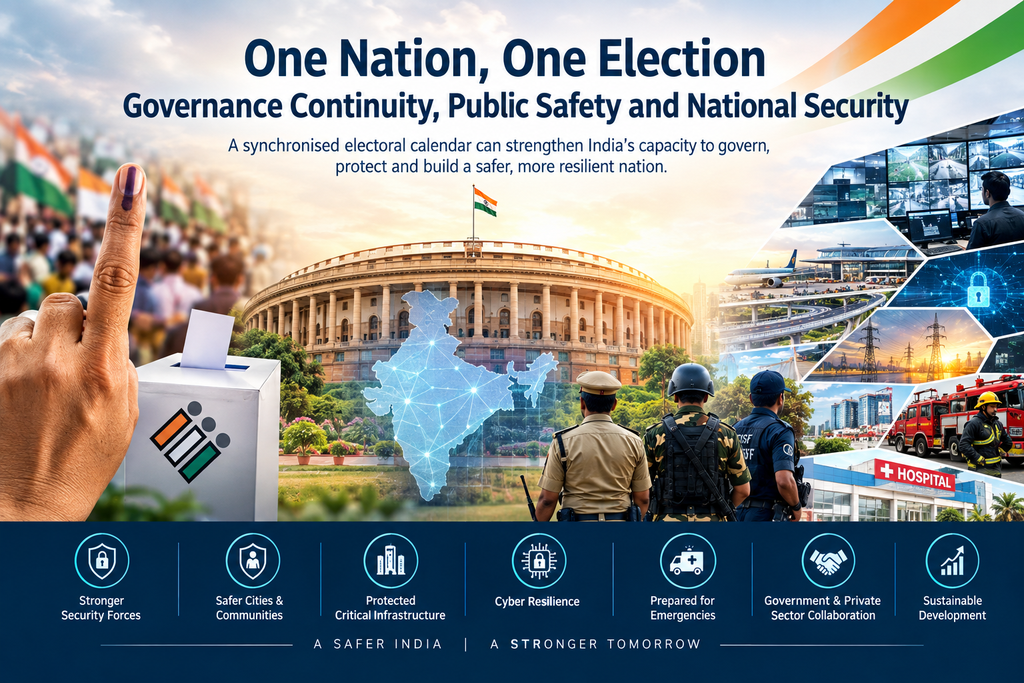
The security question: Who protects the rest of the country?
India’s security environment is complex. Police forces are responsible not only for maintaining law and order but also for crime prevention, emergency response, traffic management, protection of critical infrastructure, disaster response and support during major public events.
Central Armed Police Forces and other security organisations may simultaneously have responsibilities relating to border security, internal security, critical installations, VIP protection, counter-terrorism preparedness and other specialised duties.
During major elections, additional security arrangements are required because polling involves large public gatherings, movement of sensitive electoral material, protection of polling personnel and management of potentially vulnerable locations.
The question, therefore, is not whether election security is important. It unquestionably is. The question is whether repeated election deployment across different parts of the country creates a cumulative demand on an already finite security workforce.
For the security community, this deserves a more systematic assessment. If elections were substantially synchronised, the country could potentially concentrate security planning, manpower, logistics, surveillance and emergency preparedness around a defined electoral period rather than repeatedly mobilising resources throughout the calendar.
That does not automatically mean that the total security requirement would be lower. A simultaneous election could itself create a very large and complex security operation. But it could change the pattern of deployment.
That distinction is important.
From election security to national resilience
Modern national security is no longer confined to conventional threats. India’s security architecture increasingly has to consider:
- Cyberattacks and disruption of digital infrastructure;
- Threats to critical information systems;
- Protection of airports, ports, railways and energy installations;
- Communications resilience;
- Misinformation and information manipulation;
- Crowd safety at large public gatherings;
- Emergency medical response;
- Fire and life safety;
- Disaster management;
- Protection of financial and banking infrastructure; and
- Continuity of essential public services.
A country cannot build resilience simply by responding to individual emergencies. It requires sustained institutional attention. This is where the electoral-cycle question acquires a broader significance.
If senior administrators, police leadership and security agencies are repeatedly drawn into election-related responsibilities, there may be less institutional bandwidth available for long-term preparedness programmes.
Conversely, periods of relative administrative continuity can provide greater opportunity to conduct security audits, strengthen emergency response systems, train personnel, test contingency plans and improve coordination between government agencies and private-sector security providers.
Public safety is also a governance responsibility
Security is often associated with policing, surveillance and protection against deliberate threats. Safety is broader.
A functioning State must also be prepared for fires, industrial accidents, transport disasters, building failures, crowd crushes, epidemics, floods, earthquakes and other emergencies. India’s rapid urbanisation makes this increasingly important.
Large cities contain densely populated residential areas, commercial centres, hospitals, schools, hotels, transportation hubs, industrial facilities and critical infrastructure operating in close proximity. Their safety depends on continuous preparedness rather than occasional intervention.
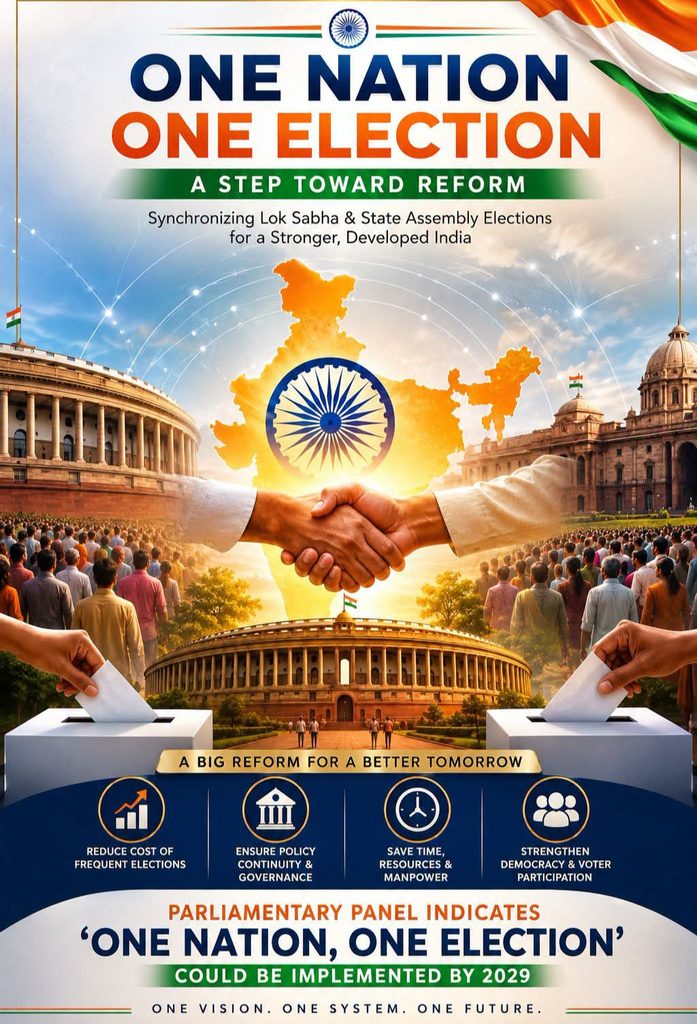
Fire departments, police, hospitals, municipal authorities, disaster-management agencies and private security organisations must work together before an emergency occurs. That requires planning, training and institutional continuity.
A governance system that has sufficient administrative bandwidth between elections can devote greater attention to these less visible but highly consequential responsibilities.
Critical infrastructure needs uninterrupted attention
The country’s economic growth is increasingly dependent upon infrastructure that must operate continuously. Power networks, telecommunications, data centres, airports, ports, metro systems, financial institutions, oil and gas installations, hospitals and large industrial facilities cannot operate according to an electoral timetable. Their protection requires continuous risk assessment. Cybersecurity is a particularly important example.
A cyberattack does not wait for an election cycle. Neither does a ransomware incident, power-grid disruption or compromise of a critical database. Similarly, physical security threats to airports, railways, ports, energy installations and other strategic assets require year-round preparedness.
The debate over simultaneous elections therefore provides an opportunity to ask a larger question – “Can India’s governance architecture create sufficient continuity for security and safety institutions to prepare for risks before they become emergencies?
The private security industry has a role too
India’s security ecosystem is not limited to government agencies. The private security industry protects commercial establishments, residential communities, hospitals, hotels, industrial facilities, warehouses, educational institutions, financial organisations and increasingly sophisticated critical assets.
Private security personnel often become the first visible layer of response when an incident occurs.
During large national events and periods of heightened public activity, coordination between government agencies and private security organisations becomes particularly important.
A more predictable administrative calendar could provide opportunities for – Standardised training → joint exercises → emergency planning → technology deployment → security audits → coordinated response.
The objective should not be to replace government responsibility with private security. Rather, it should be to create a whole-of-society security ecosystem in which government, law enforcement, emergency services, professional security organisations, technology providers and infrastructure operators understand their respective responsibilities.
One electoral calendar does not necessarily mean one political choice
An important part of the constitutional debate concerns India’s federal structure. Synchronising the timing of elections does not, by itself, require voters to make identical choices at the national and State levels. A voter can distinguish between national and State issues and choose different political parties at different levels.
The constitutional debate must therefore distinguish between synchronisation of electoral timing and uniformity of political choice. The same principle applies to security and public policy.
National security, State policing, municipal safety, disaster management and local infrastructure involve different responsibilities even when elections occur simultaneously. The institutional architecture must preserve those distinctions.
The difficult question of an early government collapse
Any serious examination of simultaneous elections must also address what happens if a government loses its majority before the end of its normal term. A democratic system cannot preserve an electoral timetable at the cost of the people’s right to change a government that has lost legislative support.
Any constitutional framework must therefore provide a credible mechanism for dealing with premature dissolution while protecting democratic accountability. This is not merely a legal technicality. It is central to the credibility of the entire system.
The reform debate must therefore consider both objectives – Continuity of governance and the Right to change government.Neither should be sacrificed to the other.
What could change for India’s security architecture?
If simultaneous elections were ultimately adopted, several areas would deserve detailed advance planning.
1. Security-force planning
A national electoral cycle could require a large, coordinated security deployment. Manpower planning would therefore have to begin well in advance.
2. Critical infrastructure protection
Airports, railway stations, ports, power installations, communication networks, hospitals and other critical facilities would need protection plans that remain effective even when security personnel are heavily committed to election duties.
3. Crowd and event safety
Large political gatherings could occur simultaneously across the country. Crowd modelling, surveillance, emergency exits, medical response, fire safety and traffic management would become essential components of election security.
4. Cybersecurity
A synchronised election would create an enormous digital ecosystem involving communications, political campaigning, media, voter information and election infrastructure. Cyber resilience would consequently be a central security requirement.
5. Private security coordination
Security agencies, private security companies, facility managers and emergency-response organisations would need clearly defined protocols for cooperation during periods of heightened national activity.
6. Business continuity
Banks, hospitals, airports, transportation networks, technology companies and other essential service providers would require contingency plans to maintain operations even when government resources are heavily committed to election duties.
The larger issue: Continuity of the State
The most useful way to approach One Nation, One Election may therefore be to move beyond the narrow question of whether elections should be held together. The larger question is – How can India maintain democratic accountability while ensuring that the machinery of governance remains continuously prepared to protect its citizens, infrastructure and economy?” – Elections are an indispensable part of that system. But elections are not the entirety of governance.
Between one election and the next, citizens still need safe hospitals, functioning roads, secure transportation, reliable electricity, protected digital infrastructure, effective policing, emergency services and disaster preparedness. Businesses need predictable administration. Security professionals need coordinated policies. Critical infrastructure needs uninterrupted protection. And citizens need confidence that the State can respond when something goes wrong.
A security-sector perspective
For India’s security and safety community, the One Nation, One Election debate should therefore be viewed neither simply as an electoral reform nor merely as an administrative exercise. It raises a broader question of national resilience. If electoral activity can be planned within a more concentrated and predictable window, there may be opportunities to strengthen continuity of policing, emergency preparedness, infrastructure protection and long-term security planning.
At the same time, the concentration of elections could create its own security challenges and would require substantial planning, manpower, technology and inter-agency coordination.
The outcome would therefore depend not simply on changing the election calendar, but on how effectively the country redesigns its administrative, security and emergency-response architecture around it.
The constitutional debate should consequently examine not only – “How often do we conduct elections?” But also – “How continuously can the State govern, protect and respond?”
That is a question of democracy. It is also a question of national security. And, ultimately, it is a question of public safety.
The views expressed in this article are those of the author. The constitutional and policy implications of simultaneous elections remain subject to parliamentary consideration, judicial interpretation and wider public debate.