

securitylinkindia

interpol

INTERPOL Reports Boys & Very Young Children at Greater Risk

A study of photos and videos in INTERPOL’s International Child Sexual Exploitation (ICSE) database has found the younger the victim, the more severe the abuse was likely to be. A report published today by INTERPOL and ECPAT International also highlights the urgent need for better understanding of online exploitation and for more resources to be allocated towards victim identification. Information on more than one million media files of child sexual exploitation and abuse material from around the world and stored in the ICSE database was analyzed as part of the ground-breaking research. A detailed examination was conducted of a random selection of 800 series of videos and images. Of these, 84 per cent contained explicit sexual activity, assault, gross assault, sadism or other ‘problematic paraphilias’ such as bestiality, humiliation or necrophilia. Infant victims More than 60 per cent of unidentified victims were prepubescent, including infants and toddlers. They were also more likely to be subjected to abuse and exploitation featuring an additional paraphilic theme. A link between gender and level of abuse was also identified, with severe abuse images more likely to feature boys. “Unfortunately most people do not realize that when we talk about child abuse, we are also speaking about very young children, babies who are just months old, being the victims of extreme sexual assault,” said Bjorn Sellstrom, INTERPOL’s Crimes Against Children (CAC) unit coordinator, “Victim identification is at the core of INTERPOL’s work in connecting global investigations into online child sexual abuse. “This report underlines the need for more countries to connect to the ICSE database and become part of this important network of investigators dedicated to rescuing child abuse victims,” added Mr Sellstrom, “This study will help raise awareness of the challenges facing law enforcement and encourage stronger support in developing victim identification efforts globally,” Identifying offenders Experts agree that the vast majority of online child sexual abuse material is made by those in the victim’s circle of trust. Identifying the victim is a priority, as well as providing an opportunity to remove the child from harm. It is often the first step in identifying the offender. “While millions of videos and images of children being sexually abused or exploited are uploaded every day, the vast majority of both victims and offenders remain unidentified,” said Dorothy Rozga, Executive Director of ECPAT International. “This study addresses a pressing need to address the lack of research and indicators on unidentified children depicted in this kind of material, as well as the quality of the response by law enforcement around the world.   Other messages from the study Law enforcement officials face multiple challenges in identifying victims and offenders, even with powerful tools such as the ICSE database. A significant proportion (61%) of analyzed series contained images and videos which were both abusive and exploitative. In the vast majority of the analyzed series from child modelling sites, both abusive and exploitative material was visible. Accurate determination of core characteristics of victims such as their age is a challenge, particularly across ethnic groups. Even though most offenders were men, women were also involved in the abuse and exploitation of children where it is clear their role is complicated. The phenomenon of ‘youth-produced sexual imagery’ appears to present a challenge to international law enforcement. This is both in terms of the detection and integration of these type of images into databases, and the identification and classification of its victims. “What is needed now is a coordinated global action. Almost all countries in the world have committed to ending the sexual exploitation of children but you can’t end what you can’t measure,” said Ms Rozga. To date more than 12,000 victims of child sexual abuse around the world have been identified via the ICSE database. Towards a global indicator on unidentified victims in child sexual exploitation material represents unique cooperation between INTERPOL and ECPAT International. It is a key component of a larger programme called the ICSE Database Connectivity and Awareness Raising Enhancements (ICARE) Project, co-funded by the Internal Security Fund of the European Union and carried out between 2016 and 2018.

Read More
Dahua Industrial Camera iF Design Award 2018

Dahua Technology Industrial Camera Wins iF Design Award 2018

Dahua Technology has been honored once again as the recipient of iF Design Award, this time for its industrial camera – ‘Eye in the Sky Robot.’ iF Design Award is among the most prestigious and largest design competitions in the world. Since 1953, designers, manufacturers and users have looked to iF as a sign of good design. With 6,402 entries from 54 countries, iF Design Award has seen a record number of submissions this year. Never before have so many products and designs been entered into the competition. The members of the jury faced a difficult task. After 3-day long examination and deliberation by a panel of 63 international jurors who are experts in design, industry and architecture, Dahua ‘Eye in the Sky Robot’ industrial camera, stood out as the winner. What distinguished Dahua industrial camera is the advantage in innovation and product design, resulting from graphic processing technologies as well as designing experience accumulated from more than a decade time. This product demonstrated the core competency of Dahua R&D center and institutes of advanced technologies in ISP software, algorithm, hardware, structure, ALT testing etc. For Dahua, it is not the first time being recognized by internationally renowned design award. In 2014, Dahua HD Sync Auto Focus Camera also won an iF Product Design Award. The same year also saw Dahua full HD TV Box recognized by iF Product Design Award as well as Red Dot Award. Dahua NKB5000 ultra-high definition (UHD) decoding network keyboard won both iF Design Award 2017 and Red Dot Award 2017, the latter of which was also given to Dahua full coverage positioning PTZ camera.

Read More
axis_in-store_audio

Axis Enhancing the Impact of in-Store Music

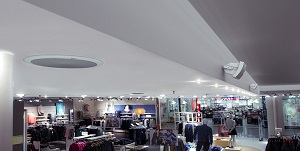
While in-store audio is wellestablished, the potential for music and audio in enhancing the retail customer experience and driving sales is still largely untapped. In announcing a number of strategic partnerships, Axis network audio technologies now integrate with several subscription-based music services to enable tailored background music for business in primarily retail establishments. By partnering with these music services, Axis can now offer a complete solution for retailers who wish to easily manage all aspects of their in-store audio. By partnering with leading music services, Axis can now offer a complete solution for customers who wish to easily manage all aspects of their in-store audio. Background music for business has a significant impact on the behavior of customers in-store. A study by one of the new Axis partners, Sound-track Your Brand, found that in a restaurant environment, playing background music that reflects your brand’s identity can boost sales by an average of 9.1% compared to music which doesn’t. The existing Axis network audio technology provides a host of use cases, including targeted public address functionality and integration with video analytics. By partnering with providers of customizable background music, Axis can now offer a complete suite of easilymanaged, in-store audio solutions. Axis announces partnerships with Sound-track Your Brand, Royal Streaming, MUSIC2BIZ and Pinesker Media Company. “Traditionally, in-store audio has been used for functional staff and customer announcements, or generic background music,” commented Håkan Hansson, Global Product Manager Audio, Axis Communications, “However, research shows that tailored music, combined with strategic announcements, can actively help move customers towards a sale. When combined with Axis network audio devices, the partnerships we have announced today will allow retailers to deliver tailored audio consistently across their store network, supporting core brand values and enhancing the customer experience, with the high reliability associated with a 100% digital system.” These music services for business can be fully integrated with existing Axis network speaker systems without any additional hardware or software, allowing for the seamless integration of scheduled and ad hoc announcements with tailored music. They can also work with non-Axis audio systems through AXIS C8033 network audio bridge, enabling the connection of both analog and digital audio systems.

Read More
d-tect-2-ip

GJD IP Detection Solution Protects AAA Coaches from Intrusion

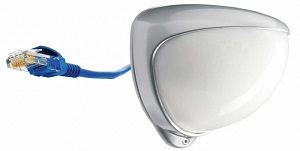
As part of a security upgrade from analogue to IP technology, AAA Coaches, a luxury coach and bus hire company based in Edinburgh, required a reliable IP security detection solution to protect their large open site perimeter. iFire UK, a family run business who are one of the leading installers of intruder alarms, fire alarms, CCTV and access control systems in Scotland, partnered with GJD and its local ADI Edinburgh branch, to provide a high quality IP system for AAA Coaches. Challenge AAA Coaches required external IP motion detectors to protect the perimeter and integrate with Hikvision cameras. The site included a variety of perimeters including fences and walls, as well as pedestrians and vehicles entering freely. The security solution had to be suitable for harsh weather conditions, while being extremely reliable, with no false alarms. The new system also had to be of low maintenance and cost efficient. Solution i Fire UK took all of AAA Coaches requirements into consideration and found the perfect solution with GJD’s D-TECT40 IP motion detectors. The D-TECT IP range seamlessly integrates over the network with Hikvision I series and K2 series NVRs. On this particular project, the I series was used to configure the IP detectors, so that when triggered by movement, the detectors automatically send a signal to alert the monitoring station. In addition to integrating with Hikvision, the D-TECT40 IP provided the site with a precise detection pattern and strong immunity to false activations. The IP detector settings can be changed remotely via the interface. Adjustable settings include the ability to alter the LUX level trigger, detection sensitivity and detection range. By using GJD’s IP based detectors, iFire created a future-proof site. The detectors enable the installer to create new actions and adjust settings over the network. Accessing the interface is quick and easy, with no requirements for additional installation or software, as the user simply logs in through a web address. The D-TECT40 IP has a programmable detection range up to 40m, making it really easy to adjust the coverage if required. On the AAA Coaches site, iFire made the best out of the programmable detection feature, by setting the range at a variety of distances including 20m, 30m and 40m. As well as while creating IP event actions, an extra feature is the two volt free relay contacts, which allows the installer to connect devices that are not on the network. The D-TECT IP also utilises a single cabling point, which reduces the number of fittings and makes the install look neater. David Boyle, Director at iFire commented, “A number of D-TECT40 IP detectors have successfully been installed. Our customer, AAA Coaches is really impressed with their performance. This has resulted in additional GJD IP detectors due to be added on to the network.”’ David continued, “The installation was straightforward and it was really convenient to adjust the settings over the network. The ability to make changes over the network reduced physical site visits for our engineer, this resulted in significant cost savings to our company.” Karen Chapman, Assistant Branch Manager at ADI Edinburgh said, “We are delighted that we could help iFire UK provide a high quality IP solution for AAA Coaches.” Conclusion The use of GJD IP detectors with Hikvision’s NVR and cameras have provided AAA Coaches with a seamless IP perimeter protection system.

Read More
Jang Su Jang Restaurant

VIVOTEK Enhances Security at Jang Su Jang Restaurant, US

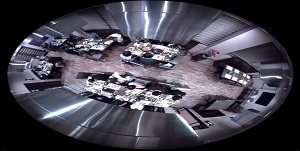
Located in Milpitas, California, Jang Su Jang restaurant offers high quality, authentic Korean cuisine offering an extensive menu to satisfy even the pickiest taste buds. Their main goal is to provide delicious meals served with great service in a clean, modern and upscale environment. Management acknowledges that security plays a crucial role influencing sustainability of operations. The primary objective of a security overhaul including maintenance with camera additions and upgrades will allow management to monitor staff, provide overall coverage of dining areas as well as entrances and exits. Challenge VIVOTEK’s camera deployment was crucial to assist management in the day-to-day operations of the restaurant. Remotely monitoring employees, customer disputes, damage to customer property and car break-ins are all concerns upper management must address. Also, being able to monitor the main dining areas, assist hosts with seating and table occupancy and camera in stallations always provide security during non-business hours. Solution Since 2015, management at Jang Su Jang restaurant have always wanted, at a security level, no blind spots left uncovered in the kitchen and dining areas. At the same time, it is critical to maintain the restaurant’s upscale design, making sure cameras are discrete but fully functional. The new video surveillance system features twelve VIVOTEK network cameras including a 16-channel network video recorder, ND8401. FD816BA-HT 2 megapixel fixed dome network camera is equipped with a full HD sensor enabling a viewing resolution of 1920×1080 at 30fps. Featuring WDR Pro and supreme night visibility technology, this camera can capture high quality and high visibility video in high contrast or low light environments. As a professional day/ night camera, the FD816BA-HT features a removable IR-cut filter as well as IR illuminators effective up to 30 meters for superior image quality around the clock making this camera a perfect fit for overall coverage of the main dining area. Following with the FE9191 H.265 fisheye network camera was used to cover the large banquet area. Covering 360° surrounding view, restaurant staff has no blind spots and can easily run the floor without having to constantly walk the area. The 12 megapixel camera guarantees superb image quality utilizing the latest in panomorph lens technology for 180°panoramic view (wall mount) or 360° surround view (ceiling/ wall/ floor mount). Armed with a removable IR-cut filter and WDR Enhancement technology, the camera can maintain optimal image quality around the clock for unparalleled visibility under high-contrast lighting environments. Jang Su Jang’s kitchen area was outfitted with FE8174V, VIVOTEK fisheye network camera featuring 5 megapixels. Fianlly, the FD8134 fixed dome network camera completed the deployment and was installed at various exits and entrances, hallways and the cash register area. Specifically designed for indoor applications with its compact and stylish exterior, FD8134 allows discrete surveillance by capturing high quality, high resolution video. In addition to completely outfitting the property in VIVOTEK cameras, the restaurant uses VAST as the central management software designed to manage all surveillance products. VAST allows owners to operate their business efficiently on premises or remotely. Customer feedback “ When we originally started improving our security system, we chose VIVOTEK cameras and were continually impressed with the quality and reliability, we continued to do upgrades as new VIVOTEK equipment was released. Delicious, quality food is not our only priority, safety is also fundamental to our business. Our staff and customers well-being is of immense importance and helps our business operations run smoothly,” said Brian Chung, Manager of Jang Su Jang restaurant.  

Read More
access_control

Matrix Access Control Data Centre Solution

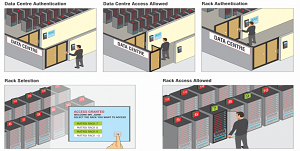
Data centers is a challenging domain where the success depends on the security of client data. Most data centers store data for more than one organization. It is very crucial for them to prevent any unauthorized access of data. Matrix offers a solution whereby data racks are secured biometrically, with records of every access along with its duration. Only authorized person can access specific racks for the stipulated time using biometric verification. The solution is available in two forms, the process of which is listed below: Solution 1: Time based rack access with single biometric device Data centre authentication: User shows biometric credentials to access the data centre. Data centre access allowed: Once user is allowed Access, he/ she will move towards rack access authentication. Rack authentication: User will click on the screen and authenticate his/ her identity through a biometric device placed alongside the screen. Rack selection: Once user completes the authentication process for gaining access to respective racks, he will be able to select the racks to be accessed from a list of accessible racks. Rack access allowed: Finally, the user will perform his assigned task within the defined time period. Solution description The features mentioned below enhance security of data centers: Centralized biometric authentication: Biometrics provides high-end security over RFID, and hence integrating biometrics with access control solution fetches complete security for data centers. Usually, an employee is required to punch twice in order to access the data rack of his/ her organization. First punch: A biometric device will be installed at the entrance of the data centre. A user will punch on the device and accordingly he/ she will be granted/ denied access. This authentication ensures that an authorized user is trying to access the data center. Second punch: Once user is granted access, he/ she will punch again at the device installed near the screen in order to access the respective racks. Once user punches, the screen will display the list of racks that he/ she is allowed to access. For example, when ‘X’ employee of ‘ABC organization’ punches second time, the screen will display a list of ABC Organization racks that are allotted to him. The user then needs to select the racks that he wants to access and accordingly he/ she will be granted access. Pre-defined rack access: Every company has designated racks allotted to them. Admin can define the racks company-wise, which means whenever a user makes his second punch, a list with racks allotted to his/ her respective company will be displayed on the screen. This feature acts as a USP for data centers as they can ensure that a rack of company ‘X’ will not be accessible to or misused by an employee of company ‘Y.’ Rack accessible for a defined time period: Every rack that is allocated to a company can only be accessed for a definite period of time. Admin can set the duration and accordingly users can access their respective racks for the stipulated time period. Solution 2: User based rack access with multiple biometric device Data centre authentication: User shows biometric credentials to access the data centre. Data centre access allowed: Once user is allowed access, he/ she will move towards rack access authentication. Rack authentication: User will show biometric credentials to access the rack. Solution description The features mentioned below enhance security of data centers: Centralized biometric authentication: Biometrics provides high-end security over RFID, and hence integrating biometrics with access control solution fetches complete security for data cent ers. Usually, an employee needs to punch twice in order to access the data rack of his/ her organization. First punch with two level authentication: A biometric device will be installed at the entrance of data center. User will show card or enter the pin code and then biometric credential on the device and accordingly he/ she will be granted/ denied access. This authentication ensures that an authorized user is trying to access the data center. Two level authentication improves the security level. Second punch: User will move to the rack and show his/ her biometric credential on the device installed at the rack. If the user is authenticated he/ she will be allowed to work in the rack for a predefined period of time and once finished, the device will close the door automatically. Predefined rack access: Every company has designated racks allotted to them. Admin can define the racks company-wise, which means whenever a user makes his second punch – a list of ABC Organization racks that are allotted to him will be displayed on the screen. This feature acts as USP for data centers as they can ensure that a rack of company ‘X’ will not be accessible to or misused by employee of company ‘Y.’ Integration with video surveillance: Matrix access control solution for data centers can be integrated with the video surveillance solution. hence, when a user tries to access the data centre through the biometric device, an image gets captured. In case of unauthorized access, having an image can prove helpful for data centers. Rack accessible for a defined time period: Every rack that is allocated to a company can only be accessed for a definite period of time. Admin can set the duration and accordingly the rack will be accessible for the pre-defined time period. Application ‘Data Rack’ management: Data centers have data of more than one organization stored in a single location. Managing the data racks is a cumbersome process for data centers. Through this solution, data centers can manage each and every company’s rack virtually along with enhancing the security. Reports The solution provides reports in the form of: ‘Which’ rack is accessed by ‘whom,’ ‘when’ and for ‘what’ time-duration. Records related to rack accessibility, time duration etc. Alarm for a rack held open for too long, access denied events etc. Benefits From data centre point of view: Easy maintenance of diverse data. Accurate record of access allowed/ denied in the software. No manual security required. Easy…

Read More
safe cities pwc

Safe Cities: Collaborative Monitoring

Cities across the world are constantly changing and evolving faster than at any point in their history. They have become more congested, and criminal activities have soared leading to the destruction of public assets. Compounding the problems, terrorism has become a major concern that presents communities and neighbourhoods with new security problems. Faced with a wealth of challenges, which are often elusive, cities are expected to manage and control the change to allow their communities to have a standard of living that meets modern day expectations. The terror attacks around the world reveal that most attacks are highly precise and well-coordinated, and targeted at high footfall areas to create a psychological impact along with monetary losses. Most of the citizens today are well aware of the risks and are in a state of constant anxiety about their safety and security. Hence, public safety has emerged as an important function for governments across the world. Accordingly, the federal and state government departments responsible for internal affairs and homeland security continuously assess and monitor the internal security situation, issue appropriate advisories, share intelligence inputs, extend manpower support, and offer guidance and expertise to the state governments for the maintenance of security. This also helps in establishing infrastructure for safe cities by capitalising on features from the following distinct categories of surveillance systems: Citywide police surveillance using Internet protocol (IP) based cameras, and Citywide community surveillance including private and institutional surveillance for collaborative monitoring. While the first system is becoming a standard solution for implementation to achieve the safe city vision, the latter is also gaining momentum to involve citizens and private and public institutions in collaborative monitoring. The following sections elaborate on the concept of collaborative monitoring.   “Today, cities face a wide range of threats, ranging from terrorism and civil unrest to kidnapping and murder. To reduce the impact of these threats, it is critical for the authorities to capture real-time information on what is happening in and around the city. Therefore, there is a growing requirement for utilising the new and emerging technologies to make our cities safer. Given this background, one of the most user-friendly technologies that can play a crucial role is the extensive use of closed-circuit television (CCTV) cameras, which play a vital part in ensuring day-to-day surveillance, crime prevention and monitoring of illegal or suspicious activities. In addition to close supervision, CCTV cameras allow post-incident analysis and collection of indisputable legal evidence. While the government and legal authorities are also encouraging both public entities/ groups and individuals to adopt such progressive technologies, mapping each and every nook and corner of a city without seeking the help of its people is impossible. This formed the basis of a unique community policing initiative called ‘collaborative monitoring.’ As the very phrase suggests, collaborative monitoring is a unique tool, wherein the security and law enforcement agency takes advantage of the extensive network of surveillance cameras deployed by communities across the city as well as the cameras of other private and government establishments on a need basis. It is an extremely prudent enabler for the police department, as while they strengthen their bond with the communities, they can use any information or footage gathered from these security cameras to support investigation and the prosecution of criminals. The advantage provided by leveraging the extensive network of external cameras ensures enhanced crime monitoring through a cost-effective, widespread and scalabe model” – Neel Ratan  India Government Leader and Regional Managing Partner, North PwC India   What is collaborative monitoring? A key enabler for a safe city is the aspect of collaborative monitoring. In cities, where every government and private establishment has realised the necessity to secure its infrastructure and establish surveillance, monitoring and incident response systems, it is important that the data gathered by these agencies is shared among them. In such cities, CCTV-based surveillance systems are being deployed by federal as well as state government agencies at places like bus stands, metros, railway stations, airports, and other critical infrastructure spots and public places. These collaborative monitoring systems can conveniently share their data in real time with security agencies of the city. Similarly, live feeds from CCTV systems deployed by private establishments such as malls, hospitals, business parks and entertainment houses can be provided to the security and law enforcement agencies, which can make effective use of the information. Leveraging the extensive network of external cameras ensures additional eyes are monitoring crime. In addition, the higher penetration of cameras helps in lowering costs. Why collaborative monitoring? In her famous work ‘Participation and Democratic Theory,’ Carole Pateman, the renowned political theorist, advocated a greater role for common people in democratic selfrule and argued that development projects are more effective when beneficiaries have a role in the way projects are chosen, planned, implemented and evaluated. Giving citizens a role in initiatives designed for their benefit is considered to be an ideal way to ensure the sustainability and success of any project. Many cities across the world have surveillance systems deployed by multiple public and private establishments. These cities are using the collaborative framework to receive video feeds from these systems to ensure real-time responses and as an invaluable source of crime detection and evidence for the law enforcement departments. For an instance, the British Security Industry Authority (BSIA) estimated that there are up to 4.9 million CCTV cameras in the UK including 7,50,000 in ‘sensitive locations’ such as schools, hospitals and care homes. This translates to one camera for every 14 people in the UK. The collaborative framework shall help to meet the following objectives: Safety and security. Improved responsiveness. Effective policing Improved management Ensuring safety and security in fragile settings remains the key objective of law enforcement agencies, in addition to crisis management during serious incidents. The strategic objectives include the following in the given table: PwC’s framework for collaborative monitoring The entire ecosystem of cameras available to law enforcement agencies becomes significant when in addition to the law enforcement cameras, these agencies also…

Read More
securityLink India

Advanced Threat Landscape Report 2018 by CyberArk

CyberArk survey shows organizations are failing to secure privileged accounts and credentials in the cloud, on endpoints and across IT environments. According to the CyberArk Global Advanced Threat Landscape Report 2018, nearly half (46 percent) of IT security professionals rarely change their security strategy substantially – even after experiencing a cyber-attack. This level of cyber security inertia and failure to learn from past incidents puts sensitive data, infrastructure and assets at risk. Security starts with protecting privileged accounts An overwhelming number of IT security professionals believe securing an environment starts with protecting privileged accounts – 89 percent stated that IT infrastructure and critical data are not fully protected unless privileged accounts, credentials and secrets are secured. Respondents named the greatest cyber security threats they currently face, including: Targeted phishing attacks (56 percent), insider threats (51 percent), Ransomware or malware (48 percent), unsecured privileged accounts (42 percent), unsecured data stored in the cloud (41 percent).  IT security respondents also indicated that the proportion of users who have local administrative privileges on their endpoint devices increased from 62 percent in 2016 survey to 87 percent in 2018 – a 25 percent jump and perhaps indicative of employee demands for flexibility trumping security best practices. The Inertia that could lead to data compromise The survey findings suggest that security inertia has infiltrated many organizations, with an inability to repel or contain cyber threats – and the risks that this might result in – supported by other findings: 46 percent say their organization can’t prevent attackers from breaking into internal networks each time it is attempted; 36 percent report that administrative credentials were stored in Word or Excel documents on company PCs; Half (50 percent) admit that their customers’ privacy or PII (personally identifiable information) could be at risk because their data is not secured beyond the legally-required basics. Inertia and a ‘Hands-Off’ approach to securing credentials and data in the cloud create cyber risk The automated processes inherent in cloud and DevOps mean privileged accounts, credentials and secrets are being created at a prolific rate. If compromised, these can give attackers a crucial jumping-off point to achieve lateral access to sensitive data across networks, data and applications, or to use cloud infrastructure for illicit crypto mining activities. Organizations increasingly recognize this security risk, but still have a relaxed approach toward cloud security. The survey found that: Nearly half (49 percent) of organizations have no privileged account security strategy for the cloud; More than two-thirds (68 percent) defer on cloud security to their vendor, relying on built-in security capabilities; and 38 percent stated their cloud provider doesn’t deliver adequate protection. Changing the security culture Overcoming cyber security inertia necessitates it to become central to organizational strategy and behavior, not something that is dictated by competing commercial needs. According to the survey: 86 percent of IT security professionals feel security should be a regular board-level discussion topic; 44 percent said they recognize or reward employees who help prevent an IT security breach, increasing to nearly three quarters (74 percent) in the U.S.; and Just 8 percent of companies continuously perform Red Team exercises to uncover critical vulnerabilities and identify effective responses. “Attackers continue to evolve their tactics, but organizations are faced with cyber security inertia that is tipping the scales in favor of the attacker,” said Adam Bosnian, Executive Vice President, Global Business Development, CyberArk, “There needs to be a greater urgency in building cyber security resilience to today’s attacks. This starts by understanding the expanding privileged account security attack surface and how it puts an organization at risk. Successfully battling inertia requires strong leadership, accountability, clearly defined and communicated security strategies, and the ability to adopt a ‘think like an attacker’ mindset.”

Read More
hochki

Role of Women in the Fire Safety Industry

The economic development of the nation is dependent on the participation of all sections of the society, more particularly women, who constitute fifty per cent of the population. There are massive employment potentialities that can be utilized by women folk. India is the world’s fastest growing economy, but has one of the lowest rates of female employment. This is the most true especially in the firefighting industry which has seen a major dearth of women in professional roles. Women are both the victims as well as strong enablers when it comes to the fire safety industry. In India, 17,700 Indians died due to fire incidents in 2015. About 48 people die of fire accidents every day out of which 62% are women. While the numbers continue to rise, the awareness on fire safety has hardly gained much recognition. Strikingly, in this whole conversation on fire safety, the female voice is missing. Unlike in the West, where a job in the fire safety industry is revered and a matter of great pride, India still has a long way to go. The instances of women working in the firefighting industry in India are far and few. In 2003, the Tamil Nadu Fire and Rescue Services appointed Priya RaviRole of Women in the Fire Safety Industry chandran as a Divisional Fire Officer, making her one of the first female fire officers in the country, and the first one to win Anna Medal for Bravery in Tamil Nadu. In 2013, the department inducted its second batch of women firefighters. In 2012, the Mumbai Fire Brigade inducted five women firefighters, making them the first in the history of the organisation. One of the biggest reasons for the low participation is the absence of a female role model. Over the last several decades, it has become an accepted understanding that improving the status of women is one of the most critical levers of international development. When women are educated and can be employed, a volley of good results follow. According to a recent study by McKinsey, if women played an identical role in labour markets to that of men, as much as US$28 trillion could be added to the global annual GDP by 2025. We require more and more women in the industry as they have the right ability to prove their mettle in various fields including defense services. One such example can be the appointment of Shrimati Nirmala Sitharaman as the Defence Minister of India. Recently Avani Chaturvedi, has also been appointed as the first Indian woman fighter pilot to fly solo. The fighter stream was opened for women in 2015 and Avani Chaturvedi, along with two other women, Mohana Singh and Bhawana Kanth were inducted into the Indian Air Force fighter squadron in 2016 where they have undergone strenuous training programme to fly fighter jets. Fire safety should also be considered as an industry to support and encourage women diversity and empowerment. The policy of fire and safety industry to recruit only male officers might be reinforcing gender stereotypes and should keep pace with international trends. While even in the West, the number of women staff is very low, but in India its much below the international statistics. One has to remember that the practice of hiring only men could be construed as demeaning to the female gender. We, in the industry, know their real purpose is to provide the safety of everyone in case of emergencies. While women have made significant gains in the past decade in terms of their noteworthy roles in different spheres of life including education, health, technology, economic participation, and political leadership, we as a nation still have a long way to go when it comes to attaining gender equality. By – Rohit Harjani Country Manager, Indian Sub-continent, Hochiki    

Read More
videonetics

Videonetics Bags FIST Award

Videonetics’ path-breaking technology ‘No Helmet Detection System’ (NHDS) has been recognized with the prestigious FIST ‘Make in India – Best Innovation award of the year’ at Fire & Safety India Expo 2018, organized by FSAI. Highly acclaimed in the industry, FIST Award recognizes extraordinary contribution of organization and individuals in the field of security, safety, firefighting and emergency response. The gala award night was attended by eminent figures from the industry fraternity. By overcoming rigorous stages of evaluation with flying colors and competing to cutting-edge products presented by other companies, the judging panel and industry experts highly voted for No Helmet Detection System which is designed and developed on ‘Indian Deep Learning’ Framework. NHDS aims to bring down road accidents and enforce traffic discipline amongst people by penalizing two-wheeler riders who do not wear helmet while driving and eventually put their lives to risk. Commenting on the achievement, Dr. Tinku Acharya, MD & Founder, Videonetics said, “We are thankful to FSAI for acknowledging and honoring our R&D efforts with the FIST award. We are committed to promote culture of innovation in India and to introduce such advanced and smart technologies that can address challenging environment for highly populated countries like India. No Helmet Detection System (NHDS) is the pioneering solution which will certainly inculcate traffic discipline amongst people, build traffic management more robust, increase road safety, eventually to make India smarter and safe.”

Read More