
securitylinkindia

Confronting the New-Age Cybercriminal

Over the last few years, cybercrimes have become more intense, sophisticated, and potentially debilitating for individuals, organizations and nations. Law enforcement agencies are finding it difficult to check and prevent the crimes in the cyber space because the perpetrators are faceless and incur very low cost to execute a cybercrime whereas the cost of prevention is extremely high. Targets have increased exponentially due to the increasing reliance of people on the internet. Cybercrimes which were restricted to computer hacking till some time ago, have diversified into data theft, ransomware, child pornography, attacks on critical information infrastructure (CII) and so on. “Cyber related risks are a global threat of bloodless war. India can work towards giving the world a shield from the threat of cyber warfare” Narendra Modi Prime Minister of India India is becoming increasingly vulnerable to this menace because of rapid digitization and proliferation of mobile data without matching pace of cyber security and cyber hygiene. At present, India is ranked at 3% in terms of cybercrime incidents as per data shared by a leading security vendor, which compiled data of bot-infected systems controlled by cyber criminals in different countries. As per CERT-In, one cybercrime was reported every 10 minutes in India during 2017. These statistics are quite alarming and therefore, merit focused and collective attention from law enforcement agencies (LEAs).   Expansion of cyber ecosystem and its impact The increase in technology convergence has created an extremely complex ICT ecosystem of interdependencies within and among critical sectors. This leads to an increased number of stakeholders and a larger attack surface which can be easily exploited by cyber criminals. There is no silver bullet technology which can identify or predict which element of the system (people, process or technology) is more susceptible to cybercrime, though empirically it is observed that the people are the weakest component of the cyber ecosystem. Inherent anonymity and closed nature of the dark web has turned it into a safe haven for cyber criminals and their wares. The dark web hosts a wide range of illegal online markets of cyber exploit kits, drugs, counterfeit documents, stolen credit cards, bank account credentials, human trafficking, illegal immigration etc. It has thousands of forums which operate in a tightly controlled environment. Crypto-currencies are used for transactions so that these transactions cannot be traced to individuals or organizations. Ransomware continues to be a major threat the world over. In 2017, WannaCry, Petya, NotPetya etc., caused major disruptions in the connected cyber ecosystem of the world. India was also affected. CERT-In confirmed 37 incidents of WannaCry and Petya attacks in India between May and June last year. Petya caused extensive disruption of services in India. One terminal of JNPT (Jawaharlal Nehru Port), Mumbai had to switch over to manual operations due to this attack. India was the worst affected country in Asia and seventh overall, due to Petya attack. Apart from ransomware, another area of significant concern is theft of personal identifiable information (PII) and financial credentials of individuals. In another incident of cybercrime, criminals stole personal data of over 2.74 lakh Indian users of the Ashley Madison website. Hackers, who stole 300GB of personal information of the users, put it up on sale over the dark web. Also, Cryptojacking is another lucrative method adopted by attackers to deploy a malware forcefully and unknowingly into a victim’s computer to use their hardware for generating crypto-currency. It is becoming yet another tool of choice for cyber criminals because it cannot be classically categorized as a crime. Figure 2: Top cybercrimes in 2017 “The advent of Digital India and Smart City initiatives has brought about a paradigm shift in terms of connectivity, services and threats for both urban and rural eco-systems. While greater connectivity promises wider deliverables, it also paves the way for the emergence of new vulnerabilities. Leading companies in energy, telecommunications, finance, transportation and other sectors are targeted by new-age cyber criminals. The ‘Make in India’ initiative has identified 25 core sectors as part of its effort to give a special thrust. While cyber security is not one of the sectors, it could be embedded in certain sectors like defence manufacturing, electronic systems, and IT & BPM. It is crucial for ‘Make-in-India’ to focus on cyber security as well as promote development of indigenous solutions to combat cyber-crime.” – Dilip Chenoy Secretary General, FICCI Figure 3: Rise in cyber crime Cybercrimes in the connected world One reason why cybercrimes are becoming more sophisticated, better orchestrated and increasingly ambitious is because many of the perpetrators operate outside the jurisdiction of the victim’s country. As per industry estimates, 32% of the threat vectors originate from Eastern Europe and Russia, and social engineering is the preferred mode of launch for most perpetrators. A report indicates that there are four distinct groups of cyber-criminals – traditional gangs, state-sponsored attackers, ideological hackers and hackers-for-hire. The report also states that the entrance of new participants has transformed cybercrime from isolated and individualized acts into pervasive, savage practices run by distinct groups of individuals. Outsourcing is also possible for execution of these crimes on the dark web where cybercrime is offered as a service. “Cybercrime is the biggest challenge these days with development and access to technology across the globe. Cyber space is increasingly being used to radicalize young minds” Rajnath Singh Union Home Minister of India Cybercrime-as-a-service not only allows malicious actors to leverage other cybercriminals’ resources to conduct attacks but also provides a cheap and easy option to others who are willing to enter the world of cybercrime at a very low entry cost. Netizens have increasingly become more active in leveraging these services, which is driving a surge in activities like illicit drug sale, trafficking of human beings, terrorism, child pornography and other crimes. Illustrative rates of some of the services offered are given next page. Cybercrime-as-a-service model has led to the emergence of a complex and multi-layered cybercrime economy where overt acts of crime have been replaced by a covert criminal…

Read More

Dahua Enriching ePoE IP System

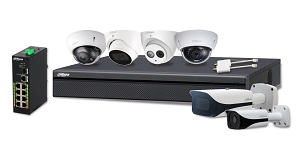
Dahua Technology has extended ePoE technology to more products including full range of network cameras with wide selection of form factors, 16/32/64 channel network recorders and 4/8/16/24 port network switches. The newly enriched ePoE IP system enables Dahua customers and partners to reduce costs and embrace more business opportunities. Dahua successfully introduced its ePoE (extended Power over Ethernet) IP system in July 2017. Product features Dahua ePoE IP system delivers up to 800 meters transmission between ePoE camera and ePoE network switch or ePoE NVR at 10Mbps and 13W, or 300m @ 100Mbps and 25.5W. It overcomes the limitation of traditional Ethernet and PoE (both restrict cable distances to 100 meters between network ports) and eliminates the need for Ethernet extension devices or additional network switches. Moreover, according to testing results, ePoE IP system won’t increase the transmission delay or package loss rate compared to the traditional IP system. Application scenarios For surveillance of large spaces such as big warehouse, parks and outdoor parking, cameras are usually over 100 meters away from the control center. Conventional approaches such as adding repeater devices and fiber optic increase equipment and installation cost and also form too complicated a system. Dahua ePoE IP system, with 300-meter transmission at 100Mbit/s via network cable, and where only one cable is required to connect front-ends and back-ends, offers a simple, cost-effective and reliable solution. A proper solution to migrate analog surveillance system to IP needs to adapt the IP video signal and RJ45 connection to coaxial cable, and support the length of coaxial cable and transmit power over coaxial cable. Dahua ePoE IP system uses PoC Extender LR1002 to connect Ethernet port of IP camera or network switch on the one end and BNC connector of coaxial cable on the other, and supports up to 1,000-meter transmission over coaxial cable at 10Mbit/s, delivering PoE power to IP cameras. This is a simple and effective solution that significantly reduces the cost of analog to IP migration.

Read More

AVIGILON Video Analytics Reduce Neighborhood Crime

Avigilon Corporation has been selected by the Long Beach Housing Authority (LBHA) to improve safety for its residents in Long Beach, New York, USA. Committed to providing high-quality housing assistance to its residents, the Long Beach Housing Authority is a government-managed public housing project that owns and manages over 370 affordable rental units. To enhance resident safety, the LBHA installed a complete Avigilon surveillance solution that includes Avigilon HD Pro, HD dome and HD multisensor cameras, as well as Avigilon Control Center (ACC) video management software and Avigilon network video recorders. The LBHA system features Avigilon cameras with patented Avigilon self-learning video analytics including the award-winning 4K HD Pro camera. Providing high image quality and accurate detection of people and vehicles in critical areas, these cameras notify security staff and allow them to zoom in and quickly identify and respond to potential security events. Avigilon HD multisensor cameras were also chosen for their flexible design, which can capture multiple angles of street and property areas up to 360 degrees, enabling maximum scene coverage while minimizing blind spots. Using advanced search capabilities in ACC, LBHA’s operators can quickly search for and identify people and vehicles of interest, saving time and effort during critical investigations. “We’ve seen a dramatic 70 percent reduction of crime in our housing development since installing Avigilon’s surveillance system,” said Mike Cruz, Executive Director for the Long Beach Housing Authority, “With Avigilon’s self-learning video analytics and clear video footage, we’re able to quickly and effectively find the critical evidence we need to assist police in investigations, helping make our neighborhood a safer place.” “The demand for video analytics is increasing globally, and we believe that all video surveillance systems will eventually feature video analytics,” said Dr. Mahesh Saptharishi, Avigilon’s Chief Technology Officer, “The solution deployed by the Long Beach Housing Authority is a great example of how Avigilon self-learning video analytics are increasing the effectiveness of a security system.”

Read More

Matrix Elevator Based Access Control Solution Secured AWHO Premises

Army Welfare Housing Organization (AWHO) embarked on a historic journey to construct houses for serving/ retired army personnel and their widows in selected stations throughout the country. Today, AWHO’s presence is visible across the length and breadth of India. During the last 38 years, the organization has constructed approx. 29,000 dwelling units in 93 projects at various stations and is in the process of constructing more than 6,000 dwelling units at 14 stations, while 6,076 dwelling units are under planning at eight stations. Challenges One of the AWHO townships located at Indore faced difficulties in monitoring visitors and keeping watch over the movement of maids and drivers in their multistoried building. Protection of the residents and their valuables from intruders was one of the concerns for them. AWHO also wanted a combined solution of elevator based access control to restrict user/ floor wise access in the buildings. Solution In order to overcome the challenges, Matrix offered its elevator based access control solution which allows access and entry in the elevator using biometric or RFID card credential, only to authorized residents. As soon as user shows his/ her enrolled credentials to the reader installed inside the elevator, floor buttons which are accessible will be enabled. Thus, monitoring and controlling user access was made easy with Matrix solution. Results Easy living with fully automated elevator based access control solution. Controlled and monitored access of users for enhanced security of residents.

Read More