
securitylinkindia

ISO 9001:2015 Certification for Avigilon

Avigilon Corporation has been awarded ISO 9001:2015 certification for its quality management system (QMS). ISO 9001:2015 is a globally recognized quality standard that defines QMS requirements and performance. The standard assists companies to align quality with their wider business strategy, helping to improve communications, efficiency, and implementation of continuous improvement. As part of the ISO 9001:2015 certification process, Avigilon engaged in a rigorous audit of its business processes and manufacturing facilities, and has successfully demonstrated its ability to consistently provide high quality service and products to its customers. “Achieving this level of certification again demonstrates our commitment to delivering the highest levels of quality and efficiency,” said Manny Gill, Avigilon’s Vice President, Global Manufacturing & Supply Chain, “Thanks to the hard work of our manufacturing team at our state-of-the-art facilities in North America, we continue to ensure quality control and create efficiencies in our production to best meet the needs of our customers.”

Read More

March Need Buy-in from IT on the Next Security Install

With increasing concerns about cybersecurity, it’s no surprise that many organizations are expanding the role of their IT departments. Cyberattacks are now rated one of the top risks to global business, alongside natural disasters. Because no business wants to be the victim of a data breach, organizations are working hard to bolster their cyber defenses, and those responsibilities fall squarely on the shoulders of IT. As a security integrator or installer of network video recorders and IP cameras, one must be able to answer questions from IT on how the system he is installing could impact network security, as well as day-to-day network operations. In the past, it may have been dealt solely with the customer’s security department but in many organizations the physical security and IT departments are becoming more tightly integrated, so speaking the language of IT can go a long way toward satisfying the customers’ overall requirements. Having IT’s blessing could also help free up budget for the installation. In some organizations, IT has decision-making power because they are tasked with improving businesses processes and driving revenue through new technology. If one partners with a video surveillance manufacturer that delivers business intelligence (BI), he will have a more compelling case for the value of video, and how investing in the right solution can help that organization’s operations and marketing departments, in addition to security. Looking at all of this through the lens of IT, here are three important points to remember about March Networks products: March Networks takes a proactive approach to cybersecurity March Networks has a 3-step process for dealing with cyber threats. Once they become aware of a potential critical vulnerability (through a U.S.-CERT notification or other source) we are committed to: Immediately assessing the vulnerability to determine if it affects their products; Addressing the vulnerability via a patch or software release, if required; and Communicating with their partners. The March Networks security updates and advisories program helps facilitate this process in a transparent way, as notifications are posted directly on their corporate website. Both partners and end user customers can sign up to receive alerts each time the webpage is updated with a new advisory. In addition to this program, March Networks equips the certified partners with innovative tools like their GURU Smartphone App, which can help with cybersecurity. GURU’s Security Audit feature automatically analyzes and rates how secure the configuration of installed March Networks recorders are, based on the firmware the recorder is currently running. It then provides advice for hardening the installation such as changing a password or closing ports that don’t need to be open, or upgrading to a new firmware release. Helping minimize the impact of video on network performance Video can eat up a lot of bandwidth, especially when IP cameras are involved. Although the exact amount of bandwidth consumed by a video surveillance system is determined by many factors including camera type, resolution, bit rate etc., March Networks’ products have features that can minimize video’s impact on the customer’s network. For example, their recorders accommodate secondary networks so one can keep IP camera traffic on a separate local area network (LAN). March Networks’ recorders also support secondary stream recording, so the customer can record both a high resolution video stream for evidentiary purposes, and a low resolution stream for remote viewing using less bandwidth. Another handy resource is their system design tool, which can help as the installers calculate the bandwidth and storage resources required when using their IP cameras. These simple calculations can help one find the best resolution possible with the network resources available. He can also take advantage of features like the low bit rate setting on our ME4 series IP cameras, which automatically manages the bit rate, and can reduce data consumption by as much as 50%. The enterprise management fea- tures simplify device management For large, multisite customers, device maintenance can be a headache without the right kind of video management software. Just imagine manually applying software or firmware patches to hundreds or even thousands of cameras and recorders. That could take weeks, or even months, and result in considerable expense. March Networks Command Enterprise video management software makes it easy to update multiple March Networks recorders and cameras simultaneously from one central location by allowing one to push mass updates and configurations with a few clicks of a mouse. Command also allows system administrators to schedule these updates in the evening or weekend, so as not to disrupt network operations. With features like these, the IT department can delegate device maintenance to the security system administrator, and relax knowing that the latest updates are being applied. Making IT’s job easier is really what it’s all about. Offering a solution that’s easy to use and maintain, and that demonstrates a commitment to high cybersecurity standards, will go a long way toward satisfying IT’s concerns. Remember these three points in the conversations with customers, and know that March Networks is always happy to answer the questions.  

Read More

Vehant Technology KritiScan™ 6040R

Vehant Technology has recently launched a new 3D Xray baggage scanner – KritiScan™ 6040R. KritiScan™ 6040R is a dual-energy X-ray baggage scanner to create virtual 3D images which provides an operator with isometric view of the scanned baggage by generating three dimensional image of the object. KritiScan 6040R provides extremely detailed images for enhanced detection capabilities. It is a compact X-ray baggage scanning system ideal for checkpoints and small baggage scanning at high security premises and other baggage scanning applications. making the world a safer place. Through our vast range of integrated security, surveillance and monitoring products and solutions we offer our clients and customers the most contemporary security solutions” said Ritika Kaul, Marketing Manager, Vehant Technologies. Features: Dual energy based virtual 3D imaging. Radiation safe as per AERB India. High density alert feature. Distortion correction through software. Self-diagnosis feature. Central supervisor console (Optional). Threat image projection feature (Optional). Energy saving device (Optional)

Read More
titelbild_vectron

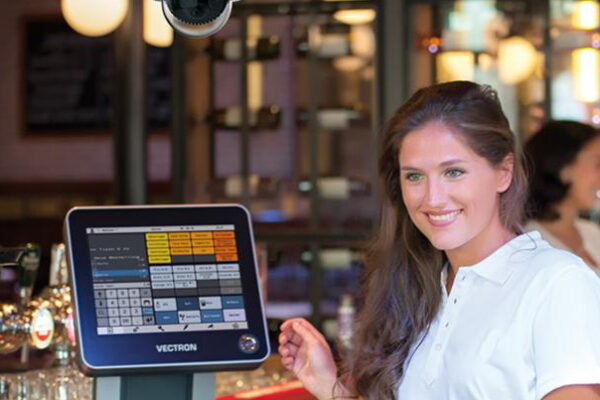
Vectron and MOBOTIX Heightened Security and Improved Prevention

Vectron, a leading provider of point of sale systems for bakeries and restaurants, and MOBOTIX, a leading provider of digital, high-resolution and network-based video security systems, are offering a joint video solution for retail establishments, restaurants and bakeries. This involves linking the transaction data from the Vectron point of sale system for each sales process with video data from the MOBOTIX IP camera and storing it. This allows POS discrepancies to be quickly resolved, increases on-site security at retail locations, bakeries and restaurants, and boosts sales by enabling optimized shop planning based on integrated MOBOTIX video analysis tools. Joining forces to resolve inventory variances Nearly €4 billion is lost yearly as a consequence of annual inventory differences in the retail sector in Germany alone, according to the EHI Retail Institute. In light of this, using the latest video security technology is a better option than ever. Moreover, when combined with classic protection measures, it opens up entirely new opportunities. This is where the joint solution from Vectron and MOBOTIX comes in. Transaction data from a point of sale is continually sent to a MOBOTIX camera in the form of POS events and linked with the camera footage in an intelligent way. The MOBOTIX Management Center (MxMC) 1.7 can be used to conveniently search through the saved POS data based on individual criteria, and the respective corroborating image can be shown for each event. Users can evaluate video images saved in encrypted form from their office as well as from any additional MxMC workplace around the world – such as one at company headquarters – through a secure Internet connection. POS processes can be analyzed based on item, price or employee, among other criteria. MxMC displays the relevant camera footage for the respective transaction and includes practical search functions. This enables users to securely document and review disputed cash transactions. In addition to using the features provided by MxMC, users can also directly view the latest transaction in the browser of the Vectron POS system. As such, the joint solution from Vectron and MOBOTIX helps users quickly resolve POS differences, and also has a loss preventative effect. Optimizing sales and security I f a company is using a hemispheric MOBOTIX camera with MxAnalytics (such as the Q26), objects as well as people can also be counted, and their movements can be depicted in a heat map. This provides retailers with additional customer-specific information such as the duration of stay, movements in the opposite direction, turns, very fast movements or entry into defined areas. This information provides retailers with key added value. Based on the optimal overview they receive, as well as the movement heat map and the transaction data, companies can optimize personnel deployment and shop design. All in all, companies benefit from this solution: It increases on-site security, minimizes costs and helps boost sales by enabling optimized shop planning based on video analysis data. The solution was also specially developed to accommodate the requirements of the new European General Data Protection Regulation (GDPR). As such, it enables companies to carry out POS analysis compliant with this new data protection legislation. Technical specifications The solution can be used with MxManagement Center 1.7 or later and is compatible with all current Vectron POS systems and MOBOTIX Mx6 cameras (firmware version MX-V5.0.2.14 or later). The MxAnalytics video analysis tools are part of the complete solution and do not require any additional costs or infrastructure.

Read More

Honeywell New Connected Building Software

Honeywell has recently introduced Honeywell Vector Space Sense, a software solution that shows where, when and how building spaces are used at any given point in time. As a result, the building operations team can make better-informed real estate and space usage decisions that provide opportunities to optimize costs and promote better building experiences for occupants. “From higher levels of employee productivity to healthier environments that help drive cost savings, Connected Buildings have real benefits for owners, operators and occupants,” said Vimal Kapur, President and Chief Executive Officer, Honeywell Building Technologies, “Honeywell Vector Space Sense is the latest example of how Honeywell is using cutting-edge technology to enable smarter, data-driven buildings that work for their organizations.” Recent studies indicate most offices around the world are underutilized by as much as half of their actual capacity due to factors such as shifting work schedules, mobile technology usage and changing business needs. However, many facility managers lack the comprehensive insights required to take action to address these usage issues. This can lead to overpaying for unused space, wasted energy usage, offtemperature spaces and other inefficiencies that negatively impact an organization’s bottom line. Honeywell Vector Space Sense helps address this issue by gathering and analyzing data from multiple sources throughout a building to deliver actionable insights that help personnel better utilize, optimize and prioritize building spaces. The facility team can view these insights through detailed, information-rich dashboards and reports incorporating visualization methods like maps, usage profiles, overall trends and other metrics to show where, when and how space is used, along with opportunities to optimize usage and help reduce costs. For example, organizations can gain the necessary insights to repurpose unused spaces for more productive uses, make better-informed decisions about future space investments or divestments, and better align building equipment schedules with actual usage patterns. Honeywell Vector Space Sense is in use at London Health Sciences Centre, a London, Ontario-based hospital network with 15,000 employees that covers 1.9 million square feet and served more than 1 million patients in 2017. The hospital network chose to implement the technology to better understand the use of its clinical and office spaces, following complaints of overcrowding and office expansion requests. With Honeywell Vector Space Sense, the network discovered that overcrowding in certain areas only happened at specific times, while other spaces often went unused for long periods of time. This information helped inform better space reallocation and scheduling. Backed by a cloud-based infrastructure, Honeywell Vector Space Sense follows a three-step process that starts with gathering space utilization data from multiple sources such as smart lights, bluetooth beacons, mobile apps, and other sensor-connected devices and equipment. The solution then applies analytics to the collected data, using customized algorithms and space utilization models to deliver actionable insights – the third and final step. “Expenses associated with unused building spaces often go unnoticed, simply because it’s so difficult to get an accurate, moment-by-moment view into how building spaces are used, or if they’re being used at all,” said John Rajchert, President, Building Solutions, Honeywell Building Technologies, “Honeywell Vector Space Sense takes the mystery out of space usage through real-time, IoT-enabled insights that give organizations the real picture of where and how people are using spaces, so they can get the most out of their buildings.”

Read More

CP Plus Secures Kidzania

KidZania is an infotainment concept designed for children aged 1-14 years. It showcases an interactive city that combines inspiration, fun and learning through realistic role-play. Spread over 7,000 square meters, kids can independently explore more than a 100 exciting careers, the inner-workings of a city and the concept of managing money. Each activity and experience is designed to empower and hone kids and give them the confidence to be their best selves, and inspire them to be great global citizens. The KidZania concept is already present in 24 cities across 19 countries, complete with paved roads, buildings, battery operated cars, and a fully functioning economy with its own currency. KidZania management put two main concerns to CP PLUS – firstly to consider the expanse of the theme park, where it was challenging to watch and control activities of kids playing around; and secondly, video feed of the children’s activity was to be provided to parents sitting in the lounge area. While the premise did have manned security, manually monitoring all corners of expansive area was rendered ineffective. Solution After analyzing the requirements, the CP PLUS team conducted a detailed survey of the area with the system integrator for the project, Honeywell, to draw out a comprehensive plan for the campus. A combination of state-of-the-art IP cameras and NVRs were chosen to address the unique needs of specific areas. To monitor the kid’s activity areas, a combination of CP PLUS 1.3MP dome and 1.3MP varifocal dome cameras were used that offer high resolution imagery with wide coverage and a visibility range of 30 meters. The footage from these cameras would be displayed on the lounge screens for guardians of children to see. The lanes and aisles were secured using the CP PLUS 1MP vandal dome cameras which support variable focal length thereby making them ideal for corridors and lanes. Additionally, these cameras are also vandal and tamper proof. The entry and exit points and the outdoor are covered by CP PLUS 1.3MP bullet cameras, which offer high resolution imagery, WDR that automatically adjusts to varying light conditions, and come with an IP66 rating making them ideal for outdoor environments. For the monitoring station/ control room setup, an embedded VMS solution has been provided with a capacity to cater to 500 IP cameras with 700Mbps incoming bandwidth and 700Mbps transmission bandwidth. The control room solution has been designed considering future needs such as scalability wherein ‘n’ number of devices can be added on to the existing server/ client architecture, and a ‘failover system’ which allows switching over to an alternate system in case of a system failure, and more. It also provides an option to integrate multiple solutions and analytical features such as people counting, face recognition any many more, access control, fire alarm system etc. Additionally, as per the project’s requirement of 30 days of recording, a NAS solution has been provided which easily configures with the DSS server and can be upgraded to increase the days of recording required by simply cascading more NAS servers to act as one NAS recorder. Considering the nature of the setup CP PLUS has provided a solution that is scalable and can be easily upgraded whenever required. It can also be integrated with other allied systems to make security more efficient. Impact The solution provided the administration with a ready access to the all sections of the expansive area at a click of the mouse. It enhanced the overall safety and operational efficiency of the setup, while enabling guardians to keep an eye on their children. Implemented over 4 weeks, the solution was commended by the KidZania management, especially by Yazdi Khambata, Facility Director – India, KidZania. With the successful implementation of this project, KidZania is considering up-scaling of their existing security infrastructure with CP PLUS in other branches as well.

Read More

Reducing Downtime for the Surveillance System

It seems that everywhere you look, there is a surveillance camera looking back at you. Video surveillance has become an absolute necessity for every type of organization – whether it be retail, hospitality, gaming, education, infrastructure or government – or any other type of business. When a crime is committed or a tragedy occurs, there is now an expectation that it will have been recorded on video, and this usually proves to be true. As a society, we have come to depend on this video to provide us with the documentation we need in many different types of situations. However, our video surveillance systems are under constant attack. Every day, thousands of video cameras are knocked out of service, not by criminals with evil intent, but by something much more lethal and simple i.e., power surges. In fact, between normal fluctuations of power, lightning strikes and other power disruptions, virtually every video surveillance camera is at risk of going out of service either temporarily or permanently. When your surveillance system experiences a power surge, there are three possible negative outcomes: damage, destruction and downtime. A damaged or destroyed system requires repair or replacement, which can be extremely costly and time-consuming. But the downtime caused by this damage or destruction is by far the worst consequence of power surges. When a video surveillance system is no longer functional, it has much wider consequences for the organization that put it into place. When surveillance systems stop functioning, it becomes more difficult for security teams to do their jobs effectively. If there is a theft or other crime committed while video cameras are down, it will be much more difficult to identify the criminal without video of the incident. Hazardous situations like an ice patch on an outside walkway could go unnoticed while numerous individuals lose their footing on the spot, until someone falls, breaks an arm and sues the company. Liability will rise accordingly without video to confirm whether a claim is false. Facilities must be evacuated when the fire alarm systems stop functioning. When security systems are out of service, parking lots, doors, and secure areas may need to be patrolled by temporary guards at an additional cost. There is also a loss of productivity if staff is delayed by congestion and manual processes at entrances, or if their work equipment and/ or work data is damaged or lost. Downtime can also cause a potential loss of customer confidence and business volume. If a customer uses social media to complain about a website being down for a few hours, the resulting negative impact can be detrimental to a business for an extended time. To help avoid this type of situation, there are steps security professionals can take, both during the installation process and after systems are in place. Installing surge protection to keep systems up and running in the event of a power surge is simple, and as these examples show, the ROI is immense. As surveillance systems are the eyes and ears of a business, it’s crucial to keep downtime as minimal as possible. Downtime and its impact on specific verticals Billions of dollars are lost each year by businesses and other organizations due to theft, false injury claims, vandalism and more, highlighting the importance of maintaining fully operational video surveillance systems. Beyond the shared concerns of identifying criminals, providing evidence etc., downtime presents a number of different specific threats to various vertical markets. Safe cities In the past few years municipalities have become enormously dependent on surveillance video to help with in vestigations. Often this video provides the only evidence to identify individuals and prove criminal action. As more and more cities deploy video surveillance, the number of incidents where it is proven to be irreplaceable as a security resource will only continue to grow. And because so much of the infrastructure for municipal surveillance is installed outdoors in exposed locations, it is more vulnerable to the risk of downtime due to lightning strikes and other unprotected surge sources. Casinos and gaming For casinos and other gaming establishments, compliance regulations require video surveillance to be up and running 100% of the time. If video is interrupted at any time, business operations must be shut down completely, causing total loss of business revenue until the system can be repaired or replaced. No casino could survive a complete business stoppage for long – making downtime a virtually fatal situation. Higher education and K-12 The number of risk factors present on school campuses is immense – from abduction of students to vandalism or theft, and much more. For every one of these adverse events, video surveillance is of vital importance for apprehending thieves, kidnappers and other criminals; and with so many different life safety and other electronic/ electrical systems in place, the possibility rises for a power strike or surge that would cause devastating downtime. Retail Stores, malls and all types of retail establishments absolutely require their video surveillance systems to be up and running in order to protect them against losses from shoplifting, sweet-hearting, vandalism and more. Without a working surveillance system many of these crimes would simply go undetected, though their negative effect on the bottom line would be unmistakable. Retailers literally cannot afford downtime. A simple step to protect devices To avoid the possibility of downtime for the video surveillance system, it is imperative to include surge protection devices in your planning right from the start, and anytime you expand, improve or install a surveillance system. Surge protection is quite easy and reasonable in cost to add, and it is an insurance policy for your organization, providing protection from every type of power event. For video surveillance systems, it is recommended that surge protection be installed at every external camera, including outdoor PoE or PoE+ IP cameras. Surges can travel through cabling from a remote device, damage or destroy a network switch, and possibly cause further issues with other switch-connected devices such as servers running VMS software. If…

Read More

Matrix Impact Kolkata

Matrix exhibited latest telecom and security solutions at its maiden event Matrix Impact held in Kolkata at the Hotel Radisson. The event was conducted in association with their regional partner Chalissery. Matrix presented its latest PBX, PRASAR UCS – pure IP solution for modern enterprises that supports up to 2,100 IP users from a single box at the event. The product finds its applications in hospitality, multi-location, retail, healthcare and other industry verticals where mobility is the key for productivity. The SIMADO range of GSM Gateways was the limelight for apparent benefits of wireless connectivity and pocket friendly telephony costs. Matrix displayed its hospitality PBX that supports calling activities in hotels from 40 to 3,000 rooms. The PBX offers integration with well-known property management software (PMS) without any middle ware, helping hotelier manage routine operations and create enhanced guest experience. They also exhibited their scalable Gateways which can be deployed in standalone mode and offer easy switch between PRI, GSM, IP and Analog networks from a single chassis. Matrix SPARSH VP710 – Smart Video IP Phone also remained in the spotlight at the event. They further displayed new Extreme series of network video recorder (NVRX) at the event. These high storage NVRs are equipped with 4K decoding capacity and H.265 compression, along with characteristics like cascading (up to 20 NVRs), camera-wise recording retention and database level integration. It also has plenty of other distinct features like high resolution recording, playback, and simultaneous local and remote monitoring along with storage retention for higher number of days. Moreover, these latest NVRs are also backed with intelligent video analytics that helps detect threats and send instant notifications for real-time security. All in all, they provide a proficient, persistent and preventive security solution, suitable for enterprises and multilocation offices. Additionally, they also exhibited their wide range of IP cameras and video management software – SATATYA SAMAS. At the event, Matrix also unfolded its latest range of biometric timeattendance and access control solution. Mobile being the next generation technology in terms of security, Matrix displayed its ‘Your Mobile is Your Identity’ solution. In mobile based access control, user either scans the QR code through his/ her mobile or just twists the mobile to get access using Bluetooth. Using mobile application, a user can mark attendance automatically using GPS or Wi-Fi. To cut down the server cost, Matrix presented its standalone access control solution where one can connect with 255 devices and 25,000 users. Additionally, to enhance the security, Matrix biometric solutions can be integrated with any video surveillance solution. It captures real-time images when any pre-defined event occurs. Furthermore, Matrix showcased access control for data centers – a centralized biometric authentication to datacenters and data racks. “The event was successful to meet its objective. The engagement of system integrators in different applications was highly appreciated. We look forward to have mutual growth while working with these system integrators,” said Ruchir Talati, National Sales Manager, Matrix.

Read More

The Influence of Lens Selection

Image resolution versus field of view One important, but often neglected consideration in video surveillance systems design is the trade-off between image resolution and field of view. With any given combination of camera and lens the native resolution from the camera is spread over the entire field of view of the lens, determining pixel density and image resolution. The wider the resolution is spread, the lower the pixel density, the lower the image resolution or image detail. The images below, taken with the same camera from the same distance away, illustrate this trade-off. The widest field of view allows you to cover the widest area but does not allow you to see high detail, while the narrowest field of view permits capture of high detail at the expense of wide area coverage. The next series of images, each taken with the same high resolution camera from the same distance away similarly illustrates the trade-off of high detail and ability to identify a person when using a wide angle of view lens and the ability to cover a wide area. Other ways to improve image detail So now you see the trade-off. You would like to cover the whole area, but unfortunately you are not able to read the license plate. What to do? At this point, there are a few other variables that you may be able to change in your system design to improve image detail. First is the distance from the camera to the subject. If possible, the installer could improve the image detail by moving the camera closer to the subject. This may be feasible in a new installation, but in an existing system this may be limited by the physical constraints of the location and the system, as well as costs associated with re-cabling. Moving closer improves the image detail, but field of view is reduced. The second variable that may be changed is the camera resolution. By selecting a higher resolution camera with a higher starting number of pixels and spreading them over the same field of view as before, the pixel density will be higher and the resulting image detail will be better. Of course, this assumes you can make that change in your system and you can support the likely higher priced hardware and data storage needs required with higher resolution systems. The higher resolution, data intensive cameras will also lower the frame rate of the system which must also be kept in mind especially with industry specific standards and requirements. Use available tools There are many useful tools available to help support systems design and correct equipment selection. One of those is Theia’s own image resolution and lens calculator. The calculator allows you to input some important details of your application and potential equipment, then quickly calculates image resolution with those assumptions. You input the camera resolution and sensor size you intend to use, the lens field of view you believe you need, then input your key project variables – either how much resolution you think you need in terms of pixel density, how much coverage you need in distance (feet or meters), or how far away the camera is from the subject. The tool then calculates the other variables for you. For example, you indicate you plan to use a 5 megapixel 1/2.5” sensor camera, a 3mm lens and you will be 50 feet away from your subject. The tool will calculate your pixel density – in this case 27 pixels/ foot, and coverage width – here 97 feet wide. The tool then provides an image that represents the level of image resolution you would get for your selected variables allowing you to quickly see if you have enough resolution to meet the needs of your application. The newest iPhone and iPad versions of Theia’s calculator App include enhancements that allow users to input the camera height and/ or camera angle so that one can tell if a person’s head, for example, will be covered in the image given different distances from the camera. The latest version also allows the user to introduce a level of jpeg noise so that the resulting image more accurately reflects real world conditions. The importance of lens selection If you decide to increase your image resolution by increasing the camera resolution, you must also consider lens selection. The lens needed for an IP/ megapixel camera is much different than the lens needed for a traditional analog camera. These higher resolution cameras demand higher performance lenses in order to take full advantage of the increased resolution. For instance, in a megapixel camera, the focal plane spot size of the lens must be comparable or smaller than the pixel size on the sensor (Figures A and B below), otherwise the light falls off the pixel resulting in a fuzzy image.Using a standard resolution lens with a 5 megapixel camera will produce a blurry image. Most often if you want to take advantage of all the pixels a multi megapixel camera provides, a high quality lens with matching resolution is needed otherwise the money spent on a high resolution camera is wasted. One would assume, then, that all someone specifying a megapixel camera needs to do is specify a megapixel lens. However, it’s not that simple and in many cases it can be quite difficult to ensure that the lens needed is the lens being offered. Traditionally, just about any decent lens would do the job for traditional analog cameras so specifying the lens wasn’t a problem. As a result, too many designers and integrators are still unaware that for megapixel cameras not all lenses are created equally. In megapixel cameras the pixel size and the required lens spot size varies depending on the size of sensor and quantity of pixels it contains. You can have 2 different cameras, both 1.3 megapixel, but if the sensor size is not the same the pixel size will be different. The figures below illustrate this. In selecting a lens it…

Read More

Drone Forensics Gets a Boost with New Data on NIST Website

Aerial drones might someday deliver online purchases to homes. But in some prisons, drone delivery is already a thing. Drones have been spotted flying drugs, cell phones and other contraband over prison walls, and in several cases, drug traffickers have used drones to ferry narcotics across the border. If those drones are captured, investigators will try to extract data from them that might point to a suspect. But there are many types of drones, each with its own quirks, and that can make data extraction tricky. It would help if investigators could instantly conjure another drone of the same type to practice on first, and while that may not be possible, they can now do the next best thing – download a ‘forensic image’ of that type of drone. A forensic image is a complete data extraction from a digital device, and NIST maintains a repository of images made from personal computers, mobile phones, tablets, hard drives and other storage media. The images in NIST’s computer forensic reference datasets, or CFReDS, contain simulated digital evidence and are available to download for free. Recently, NIST opened a new section of CFReDS dedicated to drones, where forensic experts can find images of 14 popular makes and models, a number that is expected to grow to 30 by December 2018. “The drone images will allow investigators to do a dry run before working on high-profile cases,” said Barbara Guttman, Manager of Digital Forensic Research at NIST, “You don’t want to practice on evidence.” The drone images were created by VTO Labs, a Colorado-based digital forensics and cybersecurity firm. NIST added the images to CFReDS because that website is well-known within the digital forensics community. “Listing the drone images there is the fastest way to get them out to experts in the field,” Guttman said. Work on the drone images began in May of last year when VTO Labs received a contract from the Department of Homeland Security’s (DHS) Science and Technology Directorate. “When we proposed this project, there was little existing research in this space,” said Steve Watson, Chief Technology Officer at VTO. The drone research was needed not only to combat drug smuggling, but also to allow officials to respond more quickly should a drone ever be used as a weapon inside the United States. For each make and model of drone he studied for this DHS-funded project, Watson purchased three and flew them until they accumulated a baseline of data. He then extracted data from one while leaving it intact. He disassembled a second and extracted data from its circuit board and onboard cameras. With the third, he removed all the chips and extracted data from them directly. He also disassembled and extracted data from the pilot controls and other remotely connected devices. “The forensic images contain all the 1s and 0s we recovered from each model,” Watson said. The images were created using industry standard data formats so that investigators can connect to them using forensic software tools and inspect their contents. The images for each model also come with step-by-step, photo-illustrated teardown instructions. Watson was able to retrieve serial numbers, flight paths, launch and landing locations, photos and videos. On one model, he found a database that stores a user’s credit card information. Investigators can use the images to practice recovering data including deleted files. Universities and forensic labs can use them for training, proficiency testing and research, and application developers can use the images to test their software. “If you’re writing tools for drone forensics, you need a lot of drones to test them on,” Guttman said.

Read More