
securitylinkindia

SIS Group Migrates to IceWarp for its E2E Encrypted Email Communication Solution

Security management is a challenging task of protecting sensitive information. The SIS Group, renowned for its security services both in India and Australia with diverse solutions across the security spectrum has tied up with IceWarp for its email collaboration solution. With more than 2,40,000 employees, and a huge database of customers; its backend processes and operations are both complex and huge. For a security services management company like SIS Group, it becomes a challenge to protect its sensitive information for its operations. The association with IceWarp would aid the organization to function more efficiently and effectively without security concerns. Today, data is the most vital aspect of any business, loss of a fraction of data can jeopardize day-to-day business operations. It is extremely important to ensure that all data is secured during software migration, or can be restored whenever necessary. Prior to its collaboration with IceWarp, SIS was facing major spamming issues, phishing attacks, cyber-security threats with no administrative centralized control over incoming and outgoing mails. Attempting to manage outgoing traffic of such a large magnitude from the organization’s single server was a major problem. In addition to frequent crashes, the system lacked any kind of resilience. It represented a single point of failure and was extremely difficult to pinpoint problems, and monitor delivery performance. Thus, IceWarp backed by Cisco came with an email security solution that was most trusted and highly recommended. It revamped the operations and created a fool-proof technology for an error-free and secured management of the system. With IceWarp 99.9% of transactional emails to team members and guests are now being delivered securely without any risk of breaches, ensuring the delivery of important and sensitive information reliably. Furthermore, the management information dashboard provides on-going performance monitoring and eliminating the single point of failure. IceWarp has offered the strategy and solution that is effective and acts as a barrier against phishing, business email compromise, and ransomware. It offers threat intelligence while providing updates every three to five minutes through the most up-to-date protection. Speaking on the deployment, Pramod Sharda – CEO, IceWarp India & Middle East quoted, “We are delighted to expand our engagement with SIS. The cumulative growth of our clientele acts as a constant reminder of us moving closer to our vision. A secure solution for every communication process is the need of the hour. We at IceWarp offer our customers ease of use, security, and efficiency through our complete solution for all their office works in a single window, without the requirement of a third-party application.” With IceWarp, SIS gets an undeterred protection against stealthy malware in attachments and industry-leading URL intelligence that helps combat malicious links. Moreover, email security enhances Office 365 email security. It has robust data loss prevention and content-encryption capabilities to safeguard sensitive information which has helped SIS to comply with government and industry regulations. “Today when data hacks are increasing by every passing day, one needs to be more careful while migrating to new collaborative software. Similarly, we had been searching for an efficient email collaboration solution for our company which is easy to use as well as secure. Our search ended with IceWarp, the company’s solutions are completely safe and provide seamless collaboration in real time. With IceWarp, our team and processes would continuously be in an optimal condition, ensuring greater productivity at a faster pace,” stated Hemant Singh, Manager IT, SIS India Ltd.  

Read More

iValue and EfficientIP Team Up to Stimulate Business Continuity

iValue InfoSolutions, India’s premium technology enabler, recently announced their relationship with EfficientIP, a network automation and security company, to promote business continuity in India by making organizations’ IP infrastructure foundations more reliable, agile and secure. EfficientIP’s mission is to enable secure and dynamic IP communication between users, applications and services for more than a decade. iValue has been aiding organizations in their business continuity plan by helping them with automation and network security solutions. With more than 145 professionals around the world, EfficientIP serves over 1,000 clients in all verticals, from telecommunication companies and internet service providers to the retail, finance, government and higher education sectors. Their solutions help simplify lifecycle management of DDI resources via smart automation, cross-platform visibility and policy control from a single pane of glass. Patented technology secures DNS services to safeguard data and ensure intelligent application traffic routing to improve user experience and service continuity. EfficientIP helps organizations enable key IT initiatives such as cloud applications, virtualization, mobility, and SDN. They recently announced a growth of +38% in billings for the first half of 2020. “Today’s Digital enterprises have inducted technologies like Virtualization, IOT, Cloud, BYOD and Mobility in their IT estates, enabling them to serve their customers better and build competitive advantage. The evolved IP networks are far more complex, and way beyond the operational capability of traditional fragmented and manual solutions. iValue brings yet again a much needed and compelling partnership with EfficientIP, a leader in the DDI (DNS, DHCP and IP Address Management) space, to enable secured, simplified, automated, agile, and integrated management of core IP infrastructure to ensure business continuity,” said Harsh Marwah, Chief Growth Officer at iValue InfoSolutions. iValue has always aimed at optimizing, protecting and transforming digital assets of organizations. To bring in modernization, iValue helps organizations craft and develop infrastructure solutions spanning the entire gamut of enterprise IT infrastructure needs. With iValue’s help, many organizations have re-imaged their IT infrastructure smartly, efficiently and effectively. They help in managing, monitoring and analysing performance in data recovery and business continuity management. Now more than ever, organizations need assistance and guidance in getting upgraded securely for the operations to continue. Nick Itta, VP Sales APAC at EfficientIP added, “DDI is the core network foundation for digital transformation. It is great to see that it is becoming top of mind, especially in these challenging times, for optimizing costs, increasing network operational efficiency and accelerating deployment of new apps and services. We are looking forward to expanding our reach in India with iValue and creating new opportunities to help companies improve control and security of their networks.” Nagendra Bhaskar, Business Manager at iValue InfoSolutions added, “Continuing its effort to bring the best of breed solutions for customers and partners iValue’ s partnership with EfficientIP brings forth an integrated solution for DDI, enabling network administrators to get visibility and control of their network from a single pane of glass.” EfficientIP’s products include DNS, DHCP & IPAM, DNS security and application traffic management with the world’s first edge DNS GSLB. Open APIs offer easy integration to ecosystem players for enabling end-to-end network and security management. Organizations deploying EfficientIP DDI can save up to 80% of their time by being able to automate maintenance tasks, and gain better visibility of IP resources across the network while improving network security.  

Read More

Peregrine Guarding India Awarded Badge of Honour by CAPSI

Peregrine Guarding India (A part of the Tenon Group) has been honoured with the prestigious ‘Badge of Honour’ by the Central Association of Private Security Industry (CAPSI) as the Commanders of the front-line warriors during the pandemic. CAPSI is a federal body which represents the interest of the Private Security Industry (PSI) of India. During the lockdown, Peregrine Guarding India had deployed 80,000 security guards and officers to safeguard and ensure smooth operations for various private and public facilities under most hostile conditions. They worked day and night as real ‘front-line warriors’ protecting the customers and communities against threats such as robbery and theft, while also taking on the added responsibility of acting as the first level ‘Shield’ against COVID-19.’ All the guardsmen and women bravely faced threat to their lives but they stood undauntedly to conduct their jobs with utmost commitment. Maj. Manjit Rajain, Global Chairman, Tenon Group of companies said that it was a proud moment for Tenon Group and its company, Peregrine as four other leaders of the same organization are also conferred with this eminent title by CAPSI. Awardees included Maj. Manjit Rajain, Global Chairman, and Brig. Rajan Oberoi, Global CEO, Tenon Group of Companies, Rakesh Tripathie, Managing Director, Peregrine (South & west) and Siddharth Dahiya, Managing Director, Peregrine (North & East). The Badge of Honor will be presented to the Management in the month of November by CAPSI. Tenon Group of Companies is a conglomerate of three market leaders having a strong foothold in global space – Tenon FM, Peregrine Guarding, and Soteria. With a wealth of 400 years+ cumulative experience of their senior management team and diverse team of 88,000+ seasoned professionals, Tenon has consolidated its position as a leader in security services, facility management solutions, and remote monitoring and surveillance over 25 stellar years. Present in India, Singapore, and the UK, Tenon offers integrated security services through its child company, Peregrine Guarding, facility management services through Tenon FM India and Tenon FM UK, and remote monitoring and surveillance services through Soteria Command Centre. Peregrine Guarding was incorporated in 1995 and is one of the leading security solution providers in India. Today Peregrine is operational in all 29 states of India with 71 offices covering tier 1, 2 and 3 cities. It provides integrated security solutions in physical security, electronic security, risk assessment consultancy, executive protection, event security, remote command center.  

Read More

How AI-Powered Hard-Hat Detection is Keeping Workers Safe

In 1919, the E.D. Bullard Company patented the ‘Hard Boiled® hat,’ based on the steel helmets used by soldiers in World War One. These hats were made of steamed canvas and glue, and were designed as daily protective headgear for miners. Over the course of the 20th century, the hard hat evolved to become the brightly colored, impact-resistant headgear of choice for those working in hazardous environments. And today, many countries have legislated to ensure hard hats are worn at all times in such places – with good reason. Failing to wear a hard hat in a hazardous workplace can be fatal. In the US in 2012, more than 1,000 people died from head injuries while working. What’s more, data from the US National Safety Council suggests that such fatalities are increasing, with construction, transportation/ warehousing and agriculture reporting the highest number of preventable deaths in 2016 and 2017. Importantly, not wearing safety headgear not only costs lives, it can also cost companies money in lawsuits, compensation and life insurance payouts, and lost labor. Enforcing safety in a busy environment In spite of the risks, enforcing hard hat use can be challenging, as people can forget or decide not to put them on. This means site managers must keep a constant lookout, but that’s not always easy in a distracting, noisy environment with vehicles, materials and people always moving around, often over multiple levels. That’s why many organizations are turning to AI-powered solutions that intelligently help identify if people are complying with hard-hat safety rules. AI cameras watching out for workers In real life, artificial intelligence technology is being used around the world every single day to make workplaces operate more efficiently, more productively, and of course more safely. The latest hard-hat detection video cameras use embedded AI algorithms to ‘learn’ what a person wearing a hard hat should look like. They then apply this algorithm while scanning a site, rapidly identifying if anyone is working without a hard hat, and alerting management teams so they can take action. Of note, when a violation is detected, management teams can also send an auditory warning through the on-site speaker to remind people of the rules. AI-powered Hard Hat Detection from Prama Hikvision Prama Hikvision’s AI-powered Hard Hat Detection cameras are equipped to intelligently detect if workers are or are not wearing safety headgear. The high definition cameras constantly scan the site, rapidly sounding an alert if someone is identified as breaching defined rules. Cameras can also be linked with access control systems, to ensure that members of staff are wearing hard hats from the moment they enter a hazardous location. Accelerate business with AI To find out more about the application of Hard Hat Detection Technology and Prama Hikvision’s industrial park solution, get in touch with Prama Hikvision team.  

Read More

Crisis Management: From the Lens of a Corporate Leader

A thought leader and an action catalyzer rolled into one – Anil Puri is a rare combination of a visionary, and one who has mastered the art of strategic and tactical thinking to the core. He has been using this combination to seed new ideas and to lead them to their implementation on-ground. This has been a consistent feature of his career. He has rich experience of approximately 35 years in corporate in diverse domains from functional managerial level to apex level as chairman of a corporate group. His astute business acumen for handling crisis management has prompted him to share his exclusive and niche experiences which will be prominently visible in most simplistic way in this article. Introduction A business crisis is an event that has the potential to threaten the success and health of a company by tarnishing its reputation, damaging its business operations, negatively impacting its finances, and/ or harming its employees. A business crisis can be caused by something internally or externally. Due to the severity of a business crisis, it’s important to be prepared to manage one of these events with a plan you (and the corporate team) create prior to one actually occurring. Crisis Management Crisis management can best be defined as the process of preparing for and managing any disruptive or unexpected emergency situations that affect your business, stakeholders, employees, customers, and revenue. Crisis management is an important component of public relations. Crisis Management Process The crisis management process involves much more than managing the crisis itself — although that’s arguably the most important part. The primary steps in the crisis management process to prepare the corporate team and crisis leaders can be best prepared in the following three steps: (a) Pre-crisis This involves creating a crisis management plan, hiring and training your crisis management team, drafting any crisis communication messages you may have to relay in times of crisis and conduct practice exercises for implementing your plan. (b) Crisis management and response It is the process of dealing with and responding to the different stages of crisis when the crisis management plan is put into action. Initial crisis management messages are released, employees and stakeholders are contacted, and public and company safety is prioritized (more than normal). (c) Post-crisis When a crisis passes or subsides, It’s imperative that you remain in contact with your employees, customers and stakeholders, and remain available to answer questions. It’s also the best practice to send proactive updates to these parties. Finally, work with your crisis management team to review and analyze your crisis management plan how it played out during a real emergency situation. How did your crisis communications perform? Did your audiences have any lingering questions or concerns that you neglected to answer? Integrate any lessons you learn into your crisis management process for future planning. Now, let’s dive into the crisis management plan and how to create one for your business. What is Crisis Management Plan A crisis management plan is an established process a business follows when dealing with a disruptive or unexpected emergency situation. Your crisis management plan should be completed prior to crisis to ensure your business is prepared to use it to combat and rectify any unexpected events. Why Create a Crisis Management Plan I f your business faces a crisis of any kind and isn’t equipped with a crisis management plan detailing how you’ll handle the situation, it’s likely you’ll experience serious and long-lasting consequences. These consequences might be related to various legal, operational, and public relations issues. Depending on the extent of the damage, a crisis situation could even put you out of business. Simply put, all businesses should have a crisis management plan in place to be prepared for any unplanned event and prevent long-term damage from happening as a result. Crisis management plans help you maintain your great reputation with customers, competitors, and industry leaders during and after a crisis. Improve the safety, health, and well-being of everyone who works for and does business with your company. By having peace of mind as an employer and company – you’ll be ready for any situation that comes your way. Increase productivity during and after a crisis. Everyone will know their role and function throughout a crisis so there’s less downtime, more action, and quicker resolution. The Mechanics of Scripting a Crisis Management Plan Taking cues from my personal experiences, I feel that the following seven steps can be big winners in creating a crisis management plan:  Identify all possible types of crises.  Determine the impact of each type of crisis on your business.  Consider the actions you’d need to take to resolve each type of crisis.  Decide who will be involved in the actions you need to take in each scenario.  Develop resolution plans for each type of crisis.  Train everyone who needs to be familiar with your plans.  Revisit and update your plans regularly and when necessary. Stages of a Crisis Along with the creation of your crisis management plan, it’s important to understand and be aware of the different stages of a crisis. These stages occur during a crisis and can help you determine how you should respond to the situation at different points in time. The crisis management plans must be in place prior to working through the following stages of a crisis in a real situation: Warning. Risk Assessment. Response. Management. Resolution. Recovery. Crisis Management Teams Crisis management teams are created to protect the business from the adverse effects of any crisis situation or event. They also help keep our business and employees prepared for any threats that could potentially come your way. Some of the main job functions of a crisis management team include; Detecting warning signs that signal a crisis is coming.  Working with employees to prepare for and handle the implementation of a crisis management plan. Ensuring the reputation of your company remains positive throughout (and after) any crisis event. There are three types of crisis management teams a…

Read More

H4 Thermal Elevated Temperature Detection (ETD) Solution

With edge-based analytics, the solution is designed to screen for indications of elevated body temperature, helping to keep employees and customers safe throughout COVID-19 Motorola Solutions recently announced the availability of the newest addition to its video security and analytics portfolio, the H4 Thermal Elevated Temperature Detection (ETD) Solution. The Avigilon H4 Thermal ETD solution is a pre-screening solution that can be used to detect indications of an elevated body temperature in a person. “By screening for indicators of an elevated body temperature at an entry point, we are helping businesses protect their teams’ health and well-being,” said John Kedzierski, Senior Vice President, Video Security & Analytics at Motorola Solutions, “During these times of uncertainty, our technology can provide insights that help our customers better manage their operations and deliver on business outcomes more safely.”     The H4 Thermal ETD solution is composed of an infrared-spectrum thermal camera and features edge-based analytics to provide a contactless alternative to traditional screening methods. The introduction of the H4 EDT solution is a part of Motorola Solutions’ suite of analytics designed to support organizations as they explore options to return safely back into offices or facilities. These offerings focus on the key elements of safety and security around COVID-19, including prevention, protection and response, and embrace Motorola Solutions’ commitment to the responsible use of analytics, as well as individual privacy rights. The Avigilon H4 ETD solution is now available in the United States, United Kingdom, Philippines, European Union, Middle East, Brazil, Bermuda and South Africa.  

Read More

Si124 Ultrasonic Imaging Camera Now Available Globally

Acoustic imaging, or the ability to see ultrasonic sound, has emerged as an effective method for manufacturing and utility organizations to locate compressed air leaks or the existence of partial discharge (PD). It enables professionals to conduct more frequent predictive maintenance routines, helping provide a crucial first warning of impending electrical/ mechanical failure that could lead to energy loss and even worse, downtime of critical systems. To help customers take advantage of the benefits of ultrasonic imaging, FLIR recently made its Si124 industrial acoustic imaging camera available for purchase globally. The FLIR Si124 industrial acoustic imaging camera senses, displays and records sound waves producing a precise acoustic image. The acoustic image is overlaid, in real time, onto a digital camera image all with an easy-to-use, ergonomic, one-handed camera solution weighing a little more than 2 pounds (980 grams). The blended visual and sound image can be viewed live on screen to help users’ pinpoint issues from the sound source, helping staff identify issues up to 10 times faster than traditional inspection methods for common mechanical, electrical, vacuum and compressor systems. Built with 124 microphones and a high definition visible-light camera, the battery-powered Si124 can detect potential issues up to 100 meters away, even in loud industrial environments, for up to seven hours of continuous use. Pressurized air leaks & partial discharge (PD) Two primary use cases for the Si124 include detecting compressed air leaks and partial discharge (PD) such as corona, arcing, and tracking. Compressed air is often the single most expensive energy source in factories, but air is often lost due to undetected leaks or equipment inefficiencies. That leaked air can be difficult to detect by the human ear or touch, particularly in loud manufacturing environments where workers are required to wear hearing protection. The Si124 can solve this issue by visually pinpointing the exact source of a leak instantaneously, especially in hard to reach places that might otherwise go unnoticed. For high-voltage electrical systems, PD can preface a catastrophic failure, creating an unsafe environment and potential unplanned downtime. The Si124 provides the ability to perform quick non-contact inspections from a safe distance. The system then immediately provides the PD type, allowing users to prioritize repairs. Take action with Wi-Fi and onboard analytics What sets the Si124 further apart from other cameras is the FLIR Acoustic Camera Viewer cloud service. Image captures are quickly uploaded over Wi-Fi to the cloud service then immediately analyzed, providing the user in-depth information such as the size and energy cost of a compressed air leak or the PD classification and pattern of an electric fault. This information is accessible on the Si124 and through the online cloud portal. In addition, users get 8 GBs of storage and wireless data transfer capabilities, making sharing photos and data simple and efficient.  

Read More

iSTAR Edge G2

IP edge access controller offers a local database of up to one million cardholders. Streamlines installation and reduces costs by controlling and powering all access control devices at the door. Provides advanced hardware-based cybersecurity protection. i STAR Edge G2 offers an optional Power-over-Ethernet (PoE) module that provides ample power for two doors, while also allowing the controller to leverage existing network infrastructure to reduce installation costs. Additionally, iSTAR Edge G2’s firmware provides users an advanced access control feature set, including OSDP and peer-to-peer clustering and allowing a local database of up to one million cardholders. Overall system reliability is increased with iSTAR Edge G2 by providing localized decision-making at each door. The controller offers a robust local cardholder database of more than one million personnel records and local alarm and event buffering in the event communication to the host is interrupted. iSTAR Edge G2 provides advanced hardware-based cybersecurity protection by utilizing trusted execution environment (TEE), a secure, isolated environment within its CPU that runs in parallel to the main Linux OS. This guarantees confidentiality and integrity of the code and data loaded within the device. TEE provides reliable storage of keys and other cryptographic materials, and manages a secure boot process to guarantee authenticated sources for hardware and software. Designed to drastically reduce installation and startup costs, iSTAR Edge G2 can directly replace its predecessor, iSTAR Edge, as hardware configurations and connection points remain the same. Coupled with a built-in database conversion tool within C•CURE 9000, this offers existing iSTAR Edge users a seamless transition to the latest technology. By controlling and powering all access control devices at the door, installation costs are minimized. A rechargeable coin cell battery for the real-time-clock (RTC) and the use of super-caps to provide power for graceful shutdowns when power is lost help to minimize service needs, further reducing costs. Additionally, iSTAR Edge G2 features a more secure web interface for remote diagnostics, increasing its user-friendly remote servicing options. Users will be able to remotely manage and fix performance issues anywhere in their facility from any location.  

Read More

AX PRO for Comprehensive Wireless Alarm Solutions

  Prama Hikvision, India’s leading video security solution provider, has introduced a new generation of wireless alarm systems – the AX PRO – delivering comprehensive alarm solutions for both residential and commercial applications. Comprehensive and integrated alarm solutions The newly launched AX PRO product family includes a compact panel hub for a wide range of detectors and peripherals, covering intrusion detection, video verification, smoke detection, flood detection, and home automation. Developed with both the installer and user in mind, the system can be configured according to a variety of needs. Installation complexity is minimal so the end user can easily manage the system with its intuitive user interface. AX PRO panel hub with dual RF chip design The AX PRO hub itself supports several protocols for wireless integration, welcoming the connection of up to 210 peripherals. The panel has been designed with dual RF (radio frequency) chips, featuring Tri-X and CAM-X wireless technologies, to block interference across channels and enable high speed and reliable transmission of alarm messages simultaneously. Extensive range of detectors and peripherals options Alongside the panel, Prama Hikvision has developed an extensive range of detectors and sensors to tailor the system to different installation needs such as combined PIRGlass Break detector, safety detectors, door contacts, smoke sensor, water-leak detector etc. Also available is a wireless passive infrared PIRCAM detector, which detects infrared signals over a 12-meter range and collect snapshots of any moving object. With the PIRCAM, users can view those snapshots of detected activity to verify alarm notifications, receiving alerts even before intruders realize that they have been recorded on video. The PIRCAM is also equipped with LED illumination for high-quality imaging in the dark. Built with practicality in mind, Prama Hikvision has created a wide range of peripherals to maximize user safety and assist their day-to-day activities. Such devices include static and portable panic button options to keep occupants safe, while the wireless LED keypad or ergonomic key-chain fob provides multiple control options to suit the user’s preferences. Intruder Verification as a Service I f customers choose, the AX PRO hub panel can be linked to their IP cameras over the cloud or a sub-stream to initiate Intruder Verification as a Service (IVaaS). This service provides live video verification or 7 seconds of video recording for users to quickly and efficiently confirm alarm events on the system. App compatibility Users will take charge and stay connected using the AX PRO since it is fully compatible with Prama Hikvision’s proprietary Hik-Connect app. The app provides voice and video clip notifications for users, and allows them to remotely control and monitor their alarm systems. The AX PRO also supports the Hik-Pro Connect app, which can provide full configuration assistance for installers and enable them to offer cloud-based security solutions and services with customer’s authorization.  

Read More

Long-Distance Surveillance Fiber-optic communication in network video

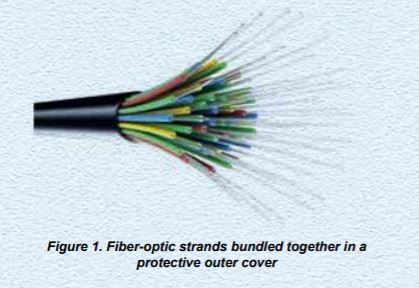
In network video, copper cables (twisted-pair) have traditionally been used to connect the camera with the control center or the recording unit. In long-range surveillance installations, however, fiber-optic cabling can be a more cost-efficient alternative. Even though it is more expensive per meter, the superior transmission characteristics of a fiber-optic cable reduces the need for expensive signal amplifiers along the way, and makes it possible to transmit more data at a time. This white paper explains what fiber-optic communication is and how it can be used in network video. It also outlines how the Axis product line is designed to support fiber-optic communication. What is fiber-optic communication? In fiber-optic communication, light signals are transmitted through glass fibers. Light reflections within a strand of glass The fibers inside a fiber-optic cable are flexible, transparent strands of very pure glass or plastic. The core of a fiber is radially enclosed by another transparent material with slightly different characteristics, the cladding. This structure makes the fiber function as a ‘light pipe,’ so that light that enters the core at one end can emerge from the other end, even when the fiber is bent or twisted. For stability and protection, the core and cladding are normally enclosed by several protective coatings, as seen in Figure 1. Whenever the light inside the fiber hits the boundary between the core and the cladding, the light will bounce in a controlled manner and essentially continue forward, bouncing back and forth between the ‘walls’ (see Figure 2). It is as if the cladding was lined with mirrors. Hardly any light is absorbed by the cladding, which is why the fiber can carry the light across great distances with nearly preserved intensity. Single-mode and multi-mode fibers Fibers come in two types, suitable for different light sources and different transmission distances. Single-mode fibers have thin cores, about 8μm in diameter, and transmit infrared laser light (wavelength = 1,300 to 1,550nm). They are usually made of glass. Single-mode fibers support only one propagation path, or mode, and are used for communication links longer than 1km. They are typically used in10-/100Mbit/s network connections spread out over extended areas. Multi-mode fibers have a larger core diameter, typically 50-100μm, and transmit infrared LED (light emitting diode) light (wavelength = 850 to 1,300nm). They are usually made of plastic-clad silica or plastic. Multi-mode fibers support many propagation paths, or modes. They are used for short-distance communication links (up to 5km), and for applications where high power must be transmitted. Duplex and simplex transmission You can transmit either two signals (full duplex) or just one signal (simplex) through one fiber-optic strand. With duplex transmission, the transmitted signal and the received signal travel through the same strand. This means that in each fiber-optic strand there are two rays of light, traveling in opposite directions at the same time (see top part of Figure 4). In simplex transmission, there is only one ray of light traveling through each fiber strand. The received signal must then travel through a second strand (see lower part of Figure 4). Duplex transmission requires only half the number of fiber strands to transmit the same amount of data compared with simplex transmission.   Why use fiber-optic communication? The most common purposes of using fiber-optic connections are illumination, communication, and medical or industrial endoscopy where many fibers are bundled together to transmit an image. For telecommunications such as network video, the light traveling through the fiber is, of course, not just random light, but rather data streams encoded as light signals. Fiber-optic connections have been used for data transmission since the 1970s, but the techniques for both transmitting of the data and for manufacturing of the fiber-optic equipment have advanced drastically over the years. Long-range installations at low cost As we have seen, a fiber-optic cable can carry a signal across great distances with only very low attenuation. For a twisted-pair copper cable to be able to carry a signal across the same distance, the signal would have to be amplified at several instances along the way. This could be done using so-called repeaters, but these are rather costly. This is why fiber-optic cables can be a cost-efficient solution at long distances, even though they are more expensive per meter than copper cables. The maximum length of a fiber-optic cable ranges from 10km to 70km, depending on the type of fiber. The maximum length of a twisted-pair copper cable is 100m. Depending on the type of fiber-optic cables used, data rates can range up to 10,000Mbit/s. The cost-efficiency of fiber-optic installations is also due to the slenderness of the fibers. This means that more fibers can be bundled into a given-diameter cable. This allows more data to go over the same cable, and makes fiber-optic cables ideal for carrying digital information. No electrical interference Transmission through twisted-pair copper cables is susceptible to electromagnetic interference (EMI). This is when external electromagnetic fields affect the current in the cable, and may cause substantial problems with data loss. Fiber-optic cables, however, are immune to such interference. Also, the signal in one fiber does not interfere with those in other fibers in the same cable. Because the signal in a fiber-optic cable does not give rise to any electromagnetic field outside of the fiber, there is no signal leakage. This means that the transmission cannot be tapped, or accessed by unauthorized people. Fiber-optic communication in network video Axis offers a range of network video products that support fiber-optic communication. The key component in connecting a surveillance system with a fiber-optic cable is the SFP (small form factor pluggable) module. Other components are media converters and network cameras with integrated SFP slots. Overview of fiber-based network video system Figure 5 shows an example of a video surveillance system where a fiber-optic cable connects the sending side with the receiving side. Sending side   On the sending side of the system is a network camera (in this case AXIS Q3615-VE network camera) which provides video data to be transmitted. The…

Read More