

securitylinkindia

Hanwha Vision Releases Its 2025 Sustainability Report

Hanwha Vision, a global vision solution provider led by CEO Kichul Kim, released its 2025 Sustainability Report in late June. The report is based on a double materiality assessment, evaluating ESG issues through both financial and broader social and environmen­tal perspectives. This methodology enables the company to identify and prioritize issues critical to long-term business value and social impact. For 2025, Hanwha Vision named climate change response, occupational health and safety, and ethics and compliance as its top ESG priorities. The report addresses ten material topics, providing transparent insight into the company’s related initiatives, key outcomes, and forward-looking plans. Following the release of its inaugural sustainability report in 2023, Hanwha Vision has steadily broadened the scope of its ESG efforts. In 2024, the company hosted three sessions of its Partner Collaboration Council, strengthening strategic partnerships and fostering mutual growth within its business ecosystem. In a milestone achievement, Han­wha Vision became the first company in Korea’s video surveillance industry to earn ISO 37301 certification, an international standard for compliance management systems. This certification reflects the strength and integrity of the company’s governance practices. A Hanwha Vision representative said, “As a global leader in video surveillance solutions, Hanwha Vision is committed to developing responsible technologies that support social progress. We will continue building the foundation for long-term, sustainable growth, together with our partners and the communities we serve.” Read More

Read More

Moxa Acquires EN 18031 EU RED Cybersecurity Certificates for Wireless Product Portfolio

Moxa Inc., a player in industrial communications and networking, is excited to announce that the company has become one of the first companies to achieve the EU type-examination certification under Radio Equipment Directive Delegated Act (RED-DA) for industrial networking devices, including Moxa OnCell G4300-LTE4 Series cellular routers , AIG-302 Series ad­vanced IIoT gateways, and AWK Wi-Fi 6 Serie APs/bridge/ clients. The certification marks a significant milestone for Moxa’s expertise and capacities in industrial cyber risk management. The EN 18031 series (RED-DA), incorporated into the harmonized standard of the RED, will come into force on August 1, 2025, to enhance cybersecurity, personal data protection, and privacy for all the wireless devices and products entering the European Union (EU) market. The certification testing and the audit were performed by TÜV Rheinland, a leading testing and certification company and an EU Notified Body for 2014/53/EU RED. The standard is considered one of the latest cybersecurity standards for IoT products globally and the first pointer to the eagerly awaited harmonized standards for the Cyber Resilience Act (CRA). “Achieving EN 18031 certification is more than just a compliance milestone for Moxa – it is a recognition of the company’s product quality and technical excellence. In an increasingly security-conscious market, proactive com­pliance not only enhances competitiveness but also builds trust with customers, helping to secure a stronger position in procurement decisions,” said Jason Chang, Managing Director of TÜV Rheinland Taiwan. The EN 18031 standards categorize assessment content into four types of assets: security assets, network assets, privacy assets, and financial assets. Security assets are man­dated in all three standards, while the other three asset types are distributed across EN 18031-1, -2, and -3, each focusing on different aspects according to the asset type. Additional­ly, the European Commission has adopted a Delegated Act under the Radio Equipment Directive (RED) that activates Articles 3.3(d), (e), and (f) for specific categories of radio equipment. This measure aims to enhance cybersecurity, personal data protection, and privacy. Therefore, Moxa’s wireless products* must comply with RED Article 3.3 to enter the EU market. “The certification represents a remarkable milestone to Moxa’s long-term commitment to providing secure solu­tions with network integrity, security, and proper use of network resources to optimize operational performance,” said John Chang, Director of R&D Management and Prod­uct Security Center at Moxa Inc., “Partnering with TÜV Rheinland for the certification is a way of verifying Moxa’s comprehensive capacity in risk management and building response measures for network security. This positions Moxa to gain a ‘first-mover’ advantage in addressing the increasingly sophisticated security compliance requirements in the global market.” Moxa’s dedication to security-by-design principles en­ables its certified wireless products to excel across various core security mechanisms in the exhaustive evaluations that cover everything from technical documentation require­ments to functionality and integrity testing. This demon­strates Moxa’s constructive approaches to building security and resilience in industrial networks. Moxa Wireless Products Set to Comply with the EN 18031 EU Cybersecurity Standards Security is integral to Moxa’s product and solution designs, uniting networking and industrial cybersecu­rity to provide defense-in-depth protection for industrial applications. Moxa is dedicated to ensuring the safety and security of all its wireless products* to comply with the EU RED 2014/53/EU Article 3.3 by the end of July 2025. Achieving EN 18031 certi­fication is more than just a compliance milestone for Moxa – it is a recognition of the company’s product quality and technical excellence. In an increasingly security-con­scious market, proactive compliance not only enhanc­es competitiveness but also builds trust with customers, helping to secure a stronger position in procurement deci­sions Jason ChangManaging Director,TÜV Rheinland Taiwan Guided by an IEC 62443-4-1 certified secure develop­ment life-cycle and referencing the IEC 62443-4-2, Moxa has developed a broad portfolio of wireless products* for various industries to embrace digital transformation by addressing the significant wiring challenges posed by the exponential increase in connected devices, particularly within legacy facilities. The proliferation of wireless applications in the indus­trial landscape has urged customers’ need for cybersecurity, which has become fundamental and crucial to ensuring the safety and reliability of wireless connectivity in complex and demanding applications across a wide range of indus­tries. Moxa wireless products that comply with the RED DA cybersecurity requirements can assure safe, secure, and reliable operations for industrial applications. Moxa is a leader in edge connectivity, industrial com­puting, and network infrastructure solutions for enabling connectivity for the Industrial Internet of Things. With over 35 years of industry experience, Moxa has connected more than 111 million devices worldwide and has a distribution and service network to serve customers in more than 91 countries. Read more

Read More

Cloud-Based Access Control The Right Move For Business

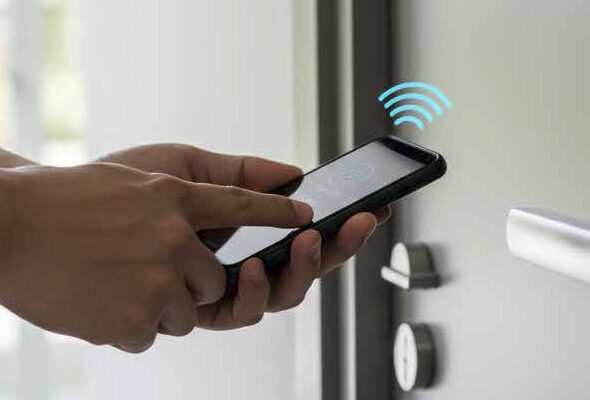
Introduction Cloud-based access control is revolutionizing the way businesses manage security. Traditional on-premises solutions often involve complex infrastructure and high operational costs. Cloud-based systems, however, provide a modern alternative that enhances scalability, flexibility, and efficiency. This paper highlights why cloudbased access control is the ideal choice for businesses looking to optimize security while reducing costs and administrative overhead. Benefits Scalability: Cloud solutions allow businesses to easily scale their security systems to match growth. Whether you need to add new access points or integrate multiple locations, cloud-based systems can grow with your needs without the need for expensive hardware upgrades. Remote Management: With cloud-based access control, security systems can be managed from anywhere, offering flexibility for businesses with remote or distributed teams. This allows for real-time updates, quick changes to access permissions, and on-demand monitoring from any device with internet connectivity. Cost-effectiveness: Cloud-based systems have lower upfront costs as there is no need for expensive on-site servers or IT infrastructure. The subscription-based model allows businesses to pay only for what they use, reducing the total cost of ownership. Data Security: Cloud providers implement advanced security protocols, including data encryption and multi-factor authentication, to protect sensitive information. This ensures that access credentials and user data are kept safe from cyber threats. Concerns Internet Dependency: Cloud-based systems require a stable internet connection for optimal performance. If the connection is interrupted, access control may be temporarily impacted, potentially leading to security risks. Data Privacy: Although cloud providers implement strict security measures, some businesses may have concerns about storing sensitive data off-site. It is crucial to choose a provider that complies with privacy regulations such as GDPR to mitigate these concerns. Integration with Legacy Systems: Some business­es may have existing on-premises systems that need to be integrated with new cloud solutions. This can sometimes be complex and may require additional customization or third-party software. Real World Applications Cloud-based access control is ideal for businesses with multiple locations, growing teams, or those looking to reduce IT infrastructure costs. Retail chains, educational institutions, and multi-building organizations have benefited from the flexibility and scalability of cloud-based systems. For instance, a global company with offices in various countries can easily manage and monitor all their facilities through a centralized cloud system, making real-time changes to access permissions across all locations without needing to deploy physical infrastructure at each site. Conclusion Cloud-based access control offers an efficient, scalable, and cost-effective solution for businesses seeking to modernize their security infrastructure. By eliminating the need for on-premises hardware and enabling remote manage­ment, cloud solutions empower businesses to manage access control systems with greater ease and flexibility. With proper security protocols in place, the benefits of cloud-based access control far outweigh the concerns, making it the right move for businesses looking to streamline operations and fu­ture-proof their security systems. Read more

Read More

The Unseen Struggles of Private Security Guards: A Call for Change

In a world where safety and security have become paramount concerns, the role of private security guards has grown tremendously. With approximately 10 million individuals dedicated to ensur­ing the safety of others, these guards form an integral yet often overlooked backbone of our society. However, beneath their uniforms lies a narrative of hardship, exploitation, and systemic neglect. The Daily Reality: Underpaid and Overworked Private security guards are frequently subjected to egregiously low wages, often falling below the legal minimums. Many are not entitled to essential benefits such as Employee State Insurance (ESI), Provident Fund, or other welfare schemes designed to protect workers. Instead, they are forced to scrape by on meager salaries that do not reflect the importance of their work or the risks they face daily. Their plight is compounded by a lack of job security and precarious employment conditions, with many guards receiving no housing assistance, sick leave, or gratuity benefits. This is most prevalent in Housing Colonies where RWAs hire untrained security workers from unli­censed security agencies due to financial challenges being faced by them. Resi­dents are reluctant to contribute towards the Security Services. A Culture of Disrespect The unfortunate reality is that these guardians of our safety are often met with contempt by the very people they are trying to protect. Reports of guards being insulted, shouted at, or even phys­ically assaulted are not uncommon. In residential colonies, it is a common prac­tice for security guards to be tasked with collecting monthly contributions from residents for security services, a respon­sibility that exposes them to potential conflicts and hostility. For many, the act of performing their duty to ensure public safety is met with aggression rather than gratitude. The Psychological Toll The undue stress and lack of respect faced by private security guards take a significant toll on their mental health and overall wellbeing. The constant cycle of criticism and abuse, combined with job instability, fosters an environment of insecurity and despair. These individuals, who dedicate their lives to safeguarding the community, often find themselves in the most insecure positions, both profes­sionally and personally. The Need for Change The plight of private security guards necessitates an urgent call to action. It is crucial to set up a dedicated com­mission to study the living and working conditions of these workers comprehen­sively. Such a study could highlight the systemic issues they face and pave the way for effective reforms. Additionally, corporate entities that rely on the service of private security must take responsibility for uplifting the living conditions of those who protect their assets and employees. By advo­cating for fair wages, providing essen­tial benefits, and fostering a culture of respect, businesses can contribute to a significant change in the lives of security guards. The life of a private security guard is a testament to the resilience of the human spirit in the face of adversity. However, as a society, we must do better. Acknowl­edging the struggles of these individuals and advocating for their rights is not merely an act of charity; it is a moral imperative. By addressing their challeng­es, we can ensure that those who protect us are afforded the dignity, respect, and support they rightfully deserve. It is time for action – not just for the sake of the guards, but for the integrity of our socie­ty as a whole. Read More

Read More

CP PLUS CTC Technology: Pioneering a New Standard for Cyber-Secure Surveillance in Bharat

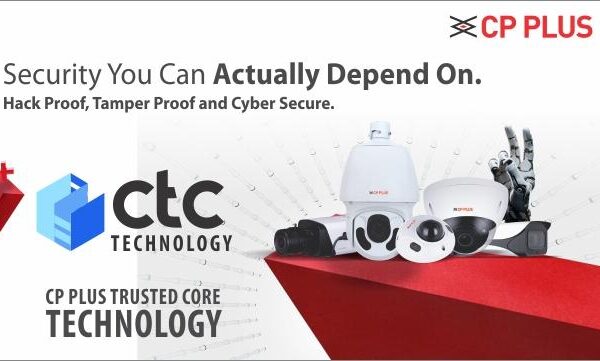
In a digital age defined by smart cities, intelligent homes, and hyper-connected enterprises, the demand for secure surveillance has never been more criti­cal. Leading this transformative journey is CP PLUS, India’s premier security and surveillance brand, with its cutting-edge CTC Technology – CP PLUS Trusted Core Technology. More than just an innovation, CTC represents a strategic response to the growing global concerns around cybersecurity, data privacy, and digital trust. As cyber threats evolve in sophistication, CP PLUS has engineered a foundational security architecture that ensures surveillance systems are not only smart but also inherently secure. At the heart of CTC lies a simple yet powerful philos­ophy – true surveillance is not just about seeing, it’s about securing. Designed from the ground up, CTC fortifies surveil­lance infrastructure across six critical layers: Each layer is meticulously built to close loopholes that cybercriminals often exploit, turning CTC into a compre­hensive digital fortress for surveillance systems, whether used in homes, industries, institutions, or citywide deploy­ments. Building Surveillance from the Core Up CTC Technology isn’t a patchwork of protections – it’s a root-level redesign of surveillance thinking. It features: In a time when surveillance networks are being inte­grated into critical infrastructure, from traffic control rooms to smart campuses, CTC empowers stakeholders to deploy with confidence. A Technological Commitment to Bharat’s Security Future CTC is not just secure; it is also Made-in-Bharat and STQC Certified, reflecting compliance with India’s rigorous cybersecurity and quality standards. This stamp of validation confirms not just its technical excellence but also its commitment to national priorities such as data sover­eignty, digital Atmanirbharta, and trusted technological infrastructure. What sets CTC apart is not just the technology but the intent behind it, a deliberate move toward responsible in­novation. While many systems focus solely on surveillance performance, CP PLUS takes it a step further by embedding privacy, integrity, and cybersecurity into the very DNA of its solutions. Whether securing financial institutions, safeguarding data centers, or ensuring that your home CCTV is impen­etrable to remote intrusions, CTC Technology empowers users with peace of mind and assurance. From Surveillance to Assurance In today’s high-stakes digital environment, where a single breach can have cascading consequences, CP PLUS CTC Technology stands as a beacon of trust. It transforms conventional surveillance into a resilient, intelligent, and cyber-aware ecosystem. With CTC, every camera stream is protected, every byte of footage is encrypted, and every endpoint, from firmware to network, is secured by design. CP PLUS continues to lead the way not only in innova­tion but in technological responsibility. With CTC, surveil­lance is no longer just about watching; it’s about watching over. Because the future of security isn’t just about what you see, but how safely you see it. CTC by CP PLUS – Trust at the Core. Protection by Design. Read More

Read More

Xtract One Selected by Meridian Public Schools to Strengthen Safety Across the District

SmartGateway Deployment Designed to Streamline Built-In Protection and Easy Entrance for Students, Faculty, and Visitors Xtract One Technologies recently announced its SmartGateway has been selected by Meridian Public School District (MPSD) in Meridian, Mississippi to amplify school safety throughout its campuses. The comprehensive, customizable entry screening solution is designed to unobtrusively scan students and visitors with the ability to detect concealed threats before they are brought onto campus, maintaining a secure, yet welcoming, school environment. Understanding the importance of fostering a safe learning environment, Meridian Public Schools is set to deploy Xtract One’s SmartGateway initially for the High School, and with plans to eventually deploy across all ten campuses, prioritizing the safety of over 4,500 students and 1,000 employees. After evaluating several safety solutions, Meridian Public Schools selected SmartGateway due to its proven ability to deliver advanced detection capabilities with minimal disruptions. “Proactive threat detection is crucial for preventing disturbance in educational institutions. The right system com­bined with a strategic, holistic, and people-first plan makes for an even more effective safety protocol,” said Peter Evans, CEO of Xtract One, “We’re excited to expand our school footprint working with Meridian Public Schools, as our presence helps ensure that students and faculty can prioritize a focus on education without personal safety concerns.” “At Meridian Public Schools, maintaining the safety of our students, staff, and visitors is our highest priority and our partnership with Xtract One is an example of that,” said Chief Cornelius Parks, Chief of Police at Meridian Public School District, “We’re passionate about cultivating safer spaces for the community that allow individuals to enter our buildings, and experience a positive learning environment.” The implementation of SmartGateway demonstrates the shared commitment between MPSD and Xtract One in proactively detecting and addressing security challenges and creating safer environments for the community that allow individuals to enjoy campus life, experience an optimal learning environment, and have peace of mind. SmartGateway replaces intimidating metal detectors with fast, reliable, and accurate weapons screening at security checkpoints. Powered by AI sensors, SmartGateway detects threats discreetly, without invading the sense of privacy of those passing through the system. SmartGateway unobtru­sively scans individuals for guns, knives, and other prohib­ited items as they enter the building. The system allows for seamless passage through checkpoints, enabling uninterrupt­ed flow of movement that lets individuals enter the building significantly reducing the need to divest of low volume personal items. Read More

Read More

CDW Transforms Global Security Operations with Genetec Security Center

Unified platform improves safety, efficiency, and incident response across 50 sites and three distribution centers Genetec Inc. , the global player in enterprise physical security software, recently announced that CDW Corporation, a leading multi-brand provider of IT solutions in the U.S., U.K., and Canada, has deployed the Genetec™ Security Center platform to standardize and unify its physical security operations across over 50 global sites and distribution centers. Faced with a fragmented security infrastructure inherited through years of growth and acquisitions, CDW’s Global Security team sought a platform that could streamline access control, video surveillance, and identity management. After an extensive evaluation, CDW selected Genetec Security Center for its open architecture, robust data reporting capabil­ities, and operational flexibility. “We had a wide range of systems that we were attempt­ing to bring together, with different data sets and cardholders. It wasn’t efficient or scalable,” said Adam Smith, Global Se­curity Manager at CDW, “When the systems aren’t evolving with you, it can become a real problem.” Real-time data, automation, and analytics improve efficiency The unified platform has helped CDW dramatically streamline tasks, increase automation, and reduce inci­dent response time. Tasks that once took hours or even days – like pulling video evidence or responding to intercom alerts – can now be handled in minutes or seconds. Beyond improving security, CDW is using advanced analytics and automation to optimize broader business op­erations. Using people-counting analytics, the security team can verify that all staff have exited distribution centers before closing, ensure appropriate staffing levels during busy peri­ods, and adjust guard coverage based on real-time occupancy data. Smarter access control and collaboration Access management has also been overhauled. With Ge­netec ClearID™, CDW moved from a manually intensive process to a decentralized, rules-based model. Access rights are now granted or revoked automatically based on roles, schedules, or local management approval. “An operator at our security operations center wouldn’t necessarily know who is allowed access to each space,” said Smith, “Now, access can be assigned by local managers, or the process is automated based on credentials. We have rules-based provisioning for access control. We rarely have to set anyone’s access level anymore. It’s been both a dramatic time-saver and an enhanced experience.” Coordinated workflows with Genetec Operations Center To further streamline task management and incident co­ordination, CDW also implemented Genetec Operations Center, a work management solution that supports standard­ized procedures, task tracking, and team communication. By embedding standard operating procedures into the system and automating key notifications, Operations Center ensures CDW’s global teams can respond quickly and consistently, reducing delays, miscommunication, and risk. Read More

Read More

Easing Congestion with a 360° View: VIVOTEK Solution Streamlines Taxi Operations at a Major Japanese Travel Hub

Background The Chiba Taxi Association manages over 5,000 taxi vehicles across its eight branches in Chiba Prefecture. Among them, the Keiyo Branch and the Keiyo District Taxi Operations Council have led efforts to install network cameras at key terminal stations for the past 18 years. These systems have supported the monitoring of taxi stand conges­tion, crime prevention, and emergency response, including the identification of stranded commuters during disasters. In response to taxi deregulation by the national govern­ment in 2002, large numbers of taxis began flocking to sta­tion stands, creating serious congestion. To address this, the association introduced its first ‘Taxi Satellite System,’ which temporarily redirects waiting taxis to offsite parking areas and calls them back via radio when space becomes available at the station. Initially, this operation was manually handled by on-site traffic supervisors, but over time, it transitioned to camera-based monitoring using network camera systems. At the time, deploying network cameras to support such a system was a groundbreaking move in Japan – considered both advanced and innovative. This camera-based approach helped reduce congestion and wait times while also contrib­uting to public safety and convenience. Building on this long-standing commitment to safer and more efficient taxi operations, the association has now introduced a new monitoring system powered by VIVOTEK cameras at JR Maihama Station – a station widely known as the gateway to Tokyo Disney Resort. The goal is to visualize and manage congestion caused by overtourism in the area. Challenge Overcrowding Around a Major Tourist Hub JR Maihama Station serves tens of thousands of passengers daily, many of whom visit Tokyo Disney Resort, located just a five-minute walk away. Adding to the strain, inbound tourism surged in Japan after COVID-19, making evening hours – especially after 8 PM – particularly congested. In some cases, buses and taxis were unable to access the station due to heavy traffic caused by private vehicles. Staff Shortages from an Aging Workforce In the past, supervisors were stationed at major terminals to monitor congestion, maintain order at the rotary, and prevent unauthorized taxi operations – particularly by Tokyo-based taxis operating outside their jurisdiction. However, in recent years, the association has faced increasing challenges due to an aging workforce and a declining pool of available personnel. Solution Full-Surround Coverage with Fewer Cameras VIVOTEK’s fisheye cameras provide seamless 360° cov­erage, eliminating blind spots and enabling comprehensive monitoring of the taxi stand area with fewer units. This not only enhances situational awareness but also proves valuable during investigations and when sharing footage with law en­forcement. The wide field of view from a single camera helps reduce both installation and maintenance costs. Additionally, the camera’s built-in IR illuminator ensures clear video even low-light conditions – an essential feature for round-the-clock taxi operations. Remote Monitoring for Smarter Dispatching Live footage from the cameras is streamed directly to taxi and bus company dispatch centers, enabling remote monitor­ing of congestion at taxi stands without the need for on-site staff. This has streamlined the dispatching process and helped alleviate overcrowding. By gradually shifting from manual patrols to camera-based monitoring, the association has also mitigated labor shortages while achieving significant im­provements in both cost saving and operational efficiency. Benefits Camera footage is also shared with local law enforce­ment. Under a crime prevention agreement with the Urayasu Police Station of the Chiba Prefectural Police, the footage has been utilized for both investigation and deter­rence. The association continues to leverage both new and existing camera systems – not only to ease congestion at taxi and bus stands but also to help maintain a peaceful environ­ment and support the creation of a safer society. Read More

Read More

National Bank of Costa Rica Strengthens its Electronic Security with Integrated Solutions by Johnson Controls

The National Bank of Costa Rica, founded in 1877, is the oldest financial institution in the country. It plays a crucial role in the national economy, pro­viding accessible financial services and supporting Costa Rica’s economic and social development. Its mission ranges from providing financial services accessible to all sectors of the population to actively supporting key initiatives for national growth. Challenges National Bank faced multiple challenges in terms of its electronic security, characterized by multiple iso­lated systems that made it difficult to manage and update. Faced with this situation, and with advances in technolog­ical developments, it was necessary to implement a new integrated, dynamic, robust, scalable solution that would allow updates, covering access control, video surveillance, intrusion alarms and fire detection, to guarantee reliability and adequate support to the institution. During the implementation of the solutions, the team faced considerable challenges. The pandemic and a four-year cumulative demand altered supply and logistics schemes, requiring new protocols from import to installa­tion. A crisis of shortages of key components also impacted the process. Despite these obstacles, the work schedule was maintained. Solution Johnson Controls was selected after a rigorous study that evaluated aspects of the important to the networked sys­tem, such as bandwidth consumption, software efficiency, user interface, and overall system performance. This solu­tion not only proved to be compatible with the institutional needs of National Bank, but also offered the necessary integration between the different security subsystems. National Bank implemented a full range of Johnson Controls products to strengthen its electronic security infra­structure. Among the products used are the complete line of DSC Neo and Pro intrusion systems, the Exacq Enterprise version video servers for advanced video surveillance man­agement, the C•CURE access control system for compre­hensive access management and physical security and the 4100ES series Simplex fire detection panels to ensure early detection and effective response to emergencies. These solutions were selected for their proven ability to integrate and perform, perfectly adapting to the bank’s spe­cific needs in terms of reliability and support. In addition, all security subsystems are integrated under a single man­agement interface, allowing users and security managers to better manage and control each other. The constant review of the process, facing restrictions and crises, and even thus complying with the installation schemes, only reflect the interest of all the parties in carrying out the project. Having a strategic partner such as Johnson Controls has allowed us to develop this migration process Oscar Cascante DelgadoElectronic Security Specialist Engineer, Construction andStandardization Unit of the National Bank of Costa Rica Outcomes The new security scheme has marked a notable improve­ment in the National Bank. Thanks to open communi­cation with customers, the desired results were achieved. “Openness in communicating with customers has been crucial; we make sure their needs are heard and addressed. We are committed to providing technology solutions that continuously improve banking processes in the short, medium and long term,” said Virginia Baez, Regional Sales Manager at Johnson Controls. As an initial aspect, the reuse of existing analogue systems was considered, facilitating their migration to the new platform. In addition, a more advanced system was implemented in this project that includes better video quality and greater video availability. Alarm systems have been optimized, which has significantly reduced the number of false alarms and increased their reliability. Excellent video quality makes it easy to resolve incidents in daily operations without setbacks. In general, the bank’s security scheme has been fully strengthened. Today, the system operates smoothly in terms of video, intrusion and fire alarms. As for aspects related to cybersecurity, the bank has its own policies, led by the IT department. Johnson Controls took on the challenge of complying with these policies, committing itself from prod­uct development to offer a highly reliable and cyber-secure solution for all subsystems. In the future, the National Bank aims to maintain a gradual obsolescence scheme to minimize the impact of future implementations. In addition, it is planned to start the integration of platforms such as C•CURE and strengthen the implementation of fire detection systems to standardize them in all regional offices. It is also sought to bring the access control system to all the venues. Johnson Controls wide range of products and ongoing technical advice have been instrumental in developing specific projects that meet customer requirements. “Johnson Controls automation capability and technological advance­ment have made it possible to offer optimal and customized solutions,making a significant difference in their implemen­tations,” said Fabián Malcmann, General Manager of I.S.S. Integral Security Systems S.A. Thanks to the solutions implemented, the performance of the system has improved considerably today. The plat­form has managed to stabilize itself in terms of failures, with high equipment availability ensuring that information is always accessible for well-informed decision-making. Read More

Read More

IXM Peru Strengthens High-value Mineral Storage Security with Scalable Milestone Video Technology

IXM Peru, part of the global CMOC Group, operates a high-security mineral storage hub in Callao, Peru, a vital transit point where valuable exports are stored for days or weeks before international shipment. As the site scaled operations to serve major mining clients, it needed video technology that could keep up with the pace and pressure of continuous oversight. As operations expanded, IXM Peru quickly outgrew its existing video infra­structure. The company sought a mod­ern solution that could scale with its camera network, ensure uninterrupted recording, and unify multiple devices into a single, dependable system. Most importantly, it had to guarantee 24/7 uptime to track mineral movements from arrival to export, upholding the strict security standards expected by international partners. Challenge: Overcoming system limitations IXM Peru’s existing video monitoring system struggled with increasing demands as the facility expanded its camera network. Recording gaps of up to 90 minutes left blind spots in security coverage, which is an unacceptable risk when dealing with high-value mineral exports. Storage limitations led to lost recordings, with some cameras requir­ing nine months of archival footage. When clients requested video verifica­tion of vehicle movements or mineral handling, the team often couldn’t provide evidence, potentially damaging business relationships and transparency. Solution: Open platform VMS brings stability and scalability IXM Peru upgraded to Mile­stone XProtect Professional Plus running on dedicated Husky NVR servers, bringing together their mix of cameras, including 60 Axis Com­munications cameras into a unified system. FORTREX SAC, a certified Milestone partner, configured the system with tailored storage durations and established a backup infrastructure at IXM’s San Isidro, Peru office. The solution leveraged Milestone’s open platform architecture to ensure seamless integration of all components while providing capacity for future expansion. At IXM Peru, the upgraded video system does far more than capture video data, it delivers actionable oper­ational intelligence. A 24/7 monitoring center in Argentina, operated by securi­ty partner Crome, oversees the facility remotely, generating daily reports on everything from mineral volume levels and access control violations to person­al protective equipment (PPE) compli­ance and safety protocol adherence. Results: Seamless operations enhance security via uninterrupted video Since deploying the Milestone solution in late 2024, IXM Peru has eliminated recording failures and system crashes completely. The facility now maintains continuous monitoring of critical areas, providing full tracea­bility of vehicle movements and miner­al handling operations. The streamlined migration took just 30 minutes without disrupting operations, a stark contrast to the hours previously lost to system out­ages. Staff can now focus on security tasks rather than troubleshooting techni­cal issues, while clients receive prompt video verification when requested. At IXM Peru, the upgraded video system does far more than capture video data, it delivers actionable oper­ational intelligence. A 24/7 monitoring center in Argentina, operated by securi­ty partner Crome, oversees the facility remotely, generating daily reports on everything from mineral volume levels and access control violations to person­al protective equipment (PPE) compli­ance and safety protocol adherence. The platform enhances not only asset protection but also the efficiency of our operations. It helps us track logistics flows, verify proper vehicle entry and unloading, and ensure every step of the process is carried out as expected. Fast, flexible migration sets the stage for future innovation One of the most impressive aspects of the project was the speed and simplicity of the system migration. Unlike typical upgrades, where cam­era-by-camera reconfigurations can cause hours of downtime, IXM Peru’s transition to the Milestone platform was completed in just 30 minutes. Thanks to Milestone’s flexible architecture, critical areas such as laboratories and management offices maintained unin­terrupted video access throughout the process. The main challenge was migrating the entire system and transferring data from 60 cameras without affecting the client’s operations, and we did it in just half an hour. Milestone’s open platform is robust and flexible, allowing for the seamless integration of high-end camer­as such as Axis, ensuring compatibility and efficiency. The upgraded system now supports continuous recording in high-priority zones and motion-triggered capture in less active areas, optimizing both security and storage. Full HD cameras ensure clear, detailed footage, while Milestone’s open platform allowed IXM Peru to preserve their existing camera investments while modernizing their core infrastructure. Read More

Read More