securitylinkindia

Consistent Showcases Innovation at COMPASS Conclave 25 in Kolkata

Strengthens industry engagement and highlightsinnovation in surveillance technology Consistent Infosystems, one of India’s fastest-growing providers of IT hardware and surveillance products, successfully participated in COMPASS Conclave’25, held during September 12-13 at ITC Royal Bengal, Kolkata. The event witnessed wide participation from technology leaders, channel partners, and industry professionals across Eastern India. Consistent’s showcase was led by Yogesh Aggarwal, CMD and Co-Founder; Chandan Kumar, Vice President of Sales; and Ritesh Das, Marketing Manager, who personally interacted with visitors, walked them through the company’s advanced surveillance solutions, and discussed how Consistent is working to make technology more accessible and reliable. The booth also showcased Consistent’s diverse product portfolio, which included IT peripherals, print consumables, gaming components, and surveillance & networking solutions. One of the biggest attractions at the stall was the live camera demo, where visitors experienced first-hand advanced features, seamless performance, and user-friendly design of Consistent’s surveillance solutions. This handson engagement not only highlighted the reliability of the products but also reinforced the brand’s commitment to delivering innovation that customers can directly experience and trust. Speaking at the conclave, Yogesh Aggarwal said, “Our participation in COMPASS Conclave’25 reflects our vision to deliver future-ready surveillance and IT solutions that combine innovation, performance, and affordability. The overwhelming response from our partners and customers further strengthens our resolve to continue expanding our product portfolio while ensuring robust service and support.’’ Ritesh Das added, “Events like COMPASS give us an excellent opportunity to listen to our partners and understand their needs. Their feedback plays a key role in shaping our roadmap. Along with introducing innovative products, our focus is on building strong support systems, training programs, and engagement initiatives that empower our partners to succeed.’’ Events like COMPASS give us an excellent opportunity to listen to our partners and understand their needs. Their feedback plays a key role in shaping our roadmap. Along with introducing innovative products, our focus is on building strong support systems, training programs, and engagement initiatives that empower our partners to succeed Ritesh DasMarketing Manager,Consistent Consistent’s surveillance solutions are designed to deliver superior performance, simplified installation, and long-term reliability, making them an ideal choice for enterprises, system integrators, and end users. Built with a focus on innovation and usability, these products address the growing demand for secure, efficient, and future-ready surveillance across diverse environments. Through industry forums like COMPASS Conclave, Consistent Infosystems continues to reinforce its commitment to partner engagement, training initiatives, and AI-powered service support, ensuring its growing ecosystem of customers and partners benefits from cutting-edge solutions backed by seamless assistance. Consistent Infosystems is a leading provider of IT hardware products, Security & Surveillance products, Print consumables products, and Electronics & Home entertainment products in India. It started its glorious journey back in the year 2011 from the Capital city of India, New Delhi. Since the venture started, CONSISTENT Infosystems has become one of the fastest-growing Indian IT organizations in the era of technology and has already put its remarkable footprints in the Information Technology, Electronics & Home Entertainment industries. Recently, CONSISTENT has been recognized as the ‘Highest selling Motherboard Brand 2024 & Best Indian IP Camera Brand 2024’ by NCN and ‘Fastest Growing Gaming Brand 2024 and Best Brand in Solar Camera Category 2024’ by IT Voice . Read More
Read More

Synology Releases Major AI Updates to Office Suite, Enhancing Private Cloud Productivity and Security

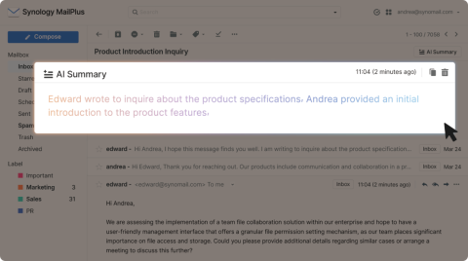
Synology announced a significant update to its Synology Office Suite, featuring advanced AI capabilities in MailPlus, Office, and the new Synology AI Console. Designed to help organizations embrace AI transformation more securely and efficiently, this update streamlines daily workflows while ensuring full control over data privacy and AI usage. “Generative AI is rapidly transforming business workflow, but data privacy and compliance remain key concerns for adoption,” said Rex Huang, Director of Enterprise Application Group at Synology, “Synology’s AI-powered productivity solutions are engineered to help organizations confidently boost productivity and employee efficiency while giving IT teams the flexibility to deploy authorized models, control usage and costs, and prevent shadow AI, ensuring full data ownership.” Supercharge Email Productivity with Synology MailPlus AI Synology MailPlus leverages generative AI to help users efficiently handle and respond to large volumes of emails. MailPlus AI can summarize lengthy email threads and suggest actionable follow-ups, accelerating email triage. It also enables context-aware, one-click smart replies and can reference previous emails or templates to help users craft precise and professional responses. Work Smarter with AI Powered Synology Office Synology Office AI helps users quickly draft, polish, and proofread text, as well as find spreadsheet formulas using natural language interactions. Users can translate entire documents and slides with a single click to facilitate cross-language collaboration. Additionally, the AI Assistant can reference files stored in Synology Drive, providing responses and suggestions that align with the organization’s specific context and needs, greatly enhancing accuracy. Centrally Manage AI Model Integration, Permission, and Privacy Policies with Synology AI Console Synology AI Console offers a centralized platform that integrates with major AI providers, empowering enterprises to select the most suitable models without incurring additional integration costs. The platform provides granular resource management through token limits and role based access controls, preventing unauthorized AI use. Moreover, the built-in de-identification capabilities automatically redact sensitive information based on company policies before any data is transmitted to third-party AI services. All AI usage activities are fully recorded with transaction and admin logs for auditing purposes. By combining Synology’s private cloud infrastructure with customizable AI deployment and usage governance, organizations can confidently embrace generative AI, retain full data ownership, and mitigate the risks of shadow AI. Read More

Read More

IIRIS Appoints Prashant Nayak as Chief Executive Officer – APAC

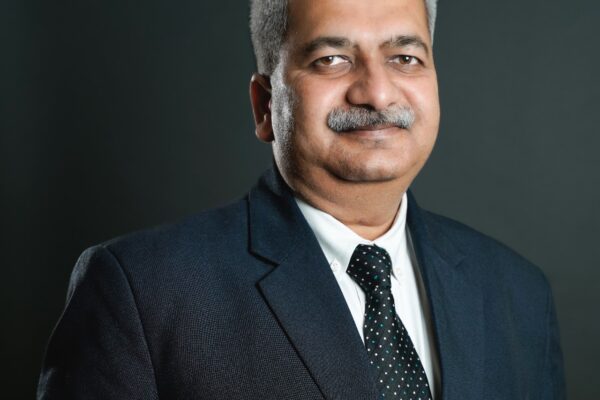
IIRIS, a leading global risk advisory and intelligence firm, is pleased to announce the appointment of Prashant Nayak as Chief Executive Officer – APAC. In this role, Prashant will spearhead IIRIS’s growth strategy and reinforce the company’s presence across pan-Asian markets beyond India. With a distinguished career spanning more than 30 years in global security leadership, Prashant brings unmatched expertise in risk intelligence, crisis management, and corporate security across a wide range of industries. His leadership has consistently focused on building resilient organizations and delivering innovative, security-by-design solutions for complex business environments With a distinguished career spanning more than 30 years in global security leadership, Prashant brings unmatched expertise in risk intelligence, crisis management, and corporate security across a wide range of industries. His leadership has consistently focused on building resilient organizations and delivering innovative, security-by-design solutions for complex business environments. During his illustrious career, Prashant served 16 years with The Walt Disney Company as Vice President – Global Security, overseeing security operations across Asia Pacific and MENA, covering more than 50 countries. He has also held senior security leadership roles with HSBC, Brinks Inc., and the Taj Group of Hotels, equipping him with deep experience in navigating sector-specific challenges in banking, secure logistics, and hospitality. Prashant has played an active role in shaping the global security ecosystem. He has contributed to renowned professional communities such as the Overseas Security Advisory Council (OSAC), where he served as Co-Chair in Mumbai and Singapore, the Asia Crisis Security Group (ACSG), and the Asia Pacific Association of Threat Assessment Professionals (APATAP), where he was President. Currently, he also serves as Co-Anchor of the DSCI Singapore Chapter. His contributions have earned him notable recognition, including the Singapore Civil Defence Force’s Community First Responder Award for life-saving action, as well as commendations from the Ministry of Home Affairs (2016 and 2022) for his enduring partnership with the Home Team Academy. With Prashant’s appointment, IIRIS marks the beginning of an ambitious new chapter aimed at expanding its regional footprint and setting new benchmarks in security, intelligence, and resilience consulting. Read More

Read More

CP PLUS Unveils its Latest CP PLUS Galaxy Store in Nagpur, Inaugurated by Hon’ble Minister Nitin Gadkari

CP PLUS, a global player in advanced security and surveillance solutions, continues to push the boundaries of innovation and accessibility with the grand opening of its newest Galaxy Store in the heart of Nagpur City. Designed as an immersive experience centre, this pioneering space aims to bring the future of smart security closer to the public – offering a hands-on showcase of the most cutting-edge technologies in surveillance, automation, and intelligent monitoring. The store was inaugurated by the Hon’ble Minister of Road Transport & Highways, Nitin Gadkari, in a special event hosted at Adison Ecological Solution, Nagpur. The launch marks a landmark moment not only in CP PLUS’ journey but also in the broader evolution of India’s security ecosystem, where innovation meets public empowerment. A galaxy of innovation, right in the heart of Nagpur The newly inaugurated CP PLUS Galaxy Store is a dynamic hub that enables individuals, homeowners, business owners, policymakers, and technology enthusiasts alike to explore, experience, and engage with world-class security technologies. From advanced AI-powered surveillance cameras to integrated command-and-control systems, the store offers an interactive platform to learn about the real-life applications of these solutions. In an era where security is not a luxury but a necessity, the CP PLUS Galaxy initiative is aimed at demystifying surveillance technologies and making them accessible to the common citizen. Whether it is understanding how facial recognition works, experiencing the power of video analytics, or discovering how to monitor an entire home from a smartphone, the Galaxy Store is designed as a bridge between the complex world of security tech and everyday users. A vision to educate, empower, and elevate Beyond product displays, CP PLUS has envisioned the Galaxy Store as an educational touchpoint. The brand has long believed that awareness is the first line of defense in any security strategy. With this ethos, the Nagpur store will regularly host live demonstrations, workshops, and training sessions to empower people with practical knowhow. According to the leadership at CP PLUS, this initiative is part of a broader public outreach program designed to enhance understanding of surveillance technologies among citizens. “We are not just creating touchpoints for buying products; we are building an ecosystem of informed, empowered users,” said Aditya Khemka, Managing Director, CP PLUS, “Security should never be out of reach. With the Galaxy Store, we’re making sure it never is.” Reimagining the retail experience in security With its signature Galaxy Store format, CP PLUS is redefining how security technology is retailed in India. These stores are not mere retail outlets; they are knowledge- sharing centers, designed to cater to the unique needs of every consumer. Whether you’re a tech-savvy individual looking for a home automation upgrade or a business owner seeking centralized monitoring, the Galaxy Store delivers personalized solutions with expert guidance. The Nagpur store reflects the growing demand for intelligent surveillance, particularly in Tier-II cities, where awareness is rapidly catching up with the pace of urbanization. A Commitment to a Safer, Smarter Bharat This latest milestone strengthens CP PLUS’s mission to safeguard what matters most – people, property, and peace of mind. As India continues to move towards digitization and smart infrastructure, the role of intelligent surveillance systems becomes ever more vital. “Every Galaxy Store we open is a step towards realizing a vision of a safer, more seamlessly connected Bharat,” said the CP PLUS team, “And what better city than Nagpur – India’s geographic centre and a hub of development – to take this leap forward.” The Galaxy initiative is part of CP PLUS’s ongoing investment in nation-building through innovation, skill development, and technological empowerment. It aligns with key national missions such as Smart Cities, Digital India, and Atmanirbhar Bharat, by promoting indigenous innovation and fostering public understanding of future-ready security. Read More

Read More

Hikrobot India Showcases Latest Machine Vision and Mobile Robot Solutions at Automation Expo

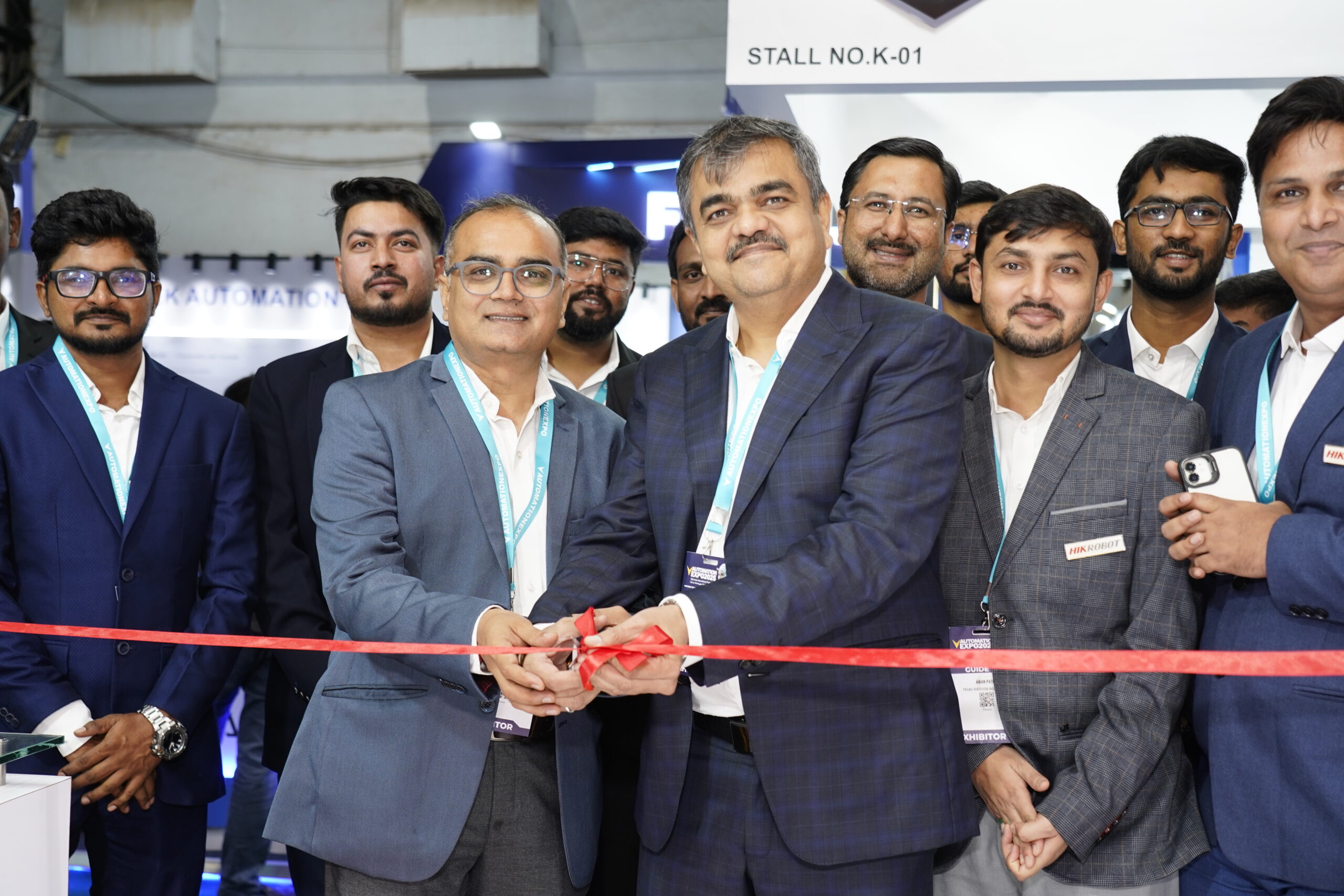
Hikrobot India recently participated in the Automation Expo to showcase its comprehensive range of Machine Vision and Mobile Robot solutions. The Automation Expo, Asia’s largest automation technology event for the warehousing, logistics, material handling, automation, and supply chain sectors, was organised from August 11 to 14, 2025, at BEC, Goregaon, Mumbai. Hikrobot India’s ornately designed booth was the epicentre of attraction at the Automation Expo. Hikrobot India introduced the 3D Laser Profile Sensor and Smart Code Reader with Liquid Lens at the Automation Expo. Based on laser triangulation measurement, a 3D laser profile sensor can output high-frame point clouds, depth images and intensity images at the micrometre level in real-time. It is widely applicable to non-contact high-precision online 3D measurement scenes in consumer electronics, lithium battery, and PCB industries. The Hikrobot ID3000 series is a Smart Code Reader designed for industrial applications, featuring advanced code reading capabilities and robust performance. The Hikrobot ID3000 series is a smart code reader that features the following capabilities: Built-in Deep Learning Algorithm, High-Speed Code Reading, Modular Design, IP67 Protection Rating, and Multiple Communication Protocols. Based on laser triangulation measurement, a 3D laser profile sensor can output high-frame point clouds, depth images and intensity images at the micrometre level in real-time. It is widely applicable to non-contact high-precision online 3D measurement scenes in consumer electronics, lithium battery, and PCB industries The application scenario includes Industrial Automation, which is suitable for various industries, such as consumer electronics, the manufacturing of lithium batteries, tobacco, medicine, photovoltaics, automobiles, and PCBs. It has wide applications for Logistics and Warehouse Management. It is ideal for tracking and managing inventory with high-speed code reading capabilities. Hikrobot introduced 3D Cameras, Area scan Cameras, Smart Cameras, Smart Code readers and Handheld readers, along with other key vision components. The Hikrobot booth showcased Machine Vision’s innovative product, the Smart Camera – SC1000, loaded with six essential tools, including Pattern Match, Colour Detection, H-Counts, Logic Tools, Measurement Tools, and rudimentary OCR Support. The key highlights of Mobile Robots Zone were the QF series AMR (ideal for pallet handling) and the Tugger AMR (auto–tugging trolleys for internal logistics). The Automation Expo got the key players and leading brands for India’s Warehousing and Logistics professionals. The newly introduced SC1000 series vision sensor includes the richness of vision detection systems and the simplicity of sensors. They are equipped with high-precision and efficient vision algorithms and AI modules embedded inside, efficiently solving various types of presence, absence, classification, and detection applications. The Machine Vision solutions showcased at the Automation Expo by Hikrobot India included both Static DWS and Dynamic DWS. HIKROBOT’s newly introduced QF Series AMR and Tugger AMR, along with freshly launched Smart Cameras, sensors and accessories, were the key attractions. Commenting on the Automation Expo experience, Mr. Ashish P. Dhakan, MD & CEO, Prama Hikvision India, said, “The latest Industrial automation trends are helping the cause of sustainability and net zero goals. We have launched the 3D Laser Profile Sensor and Smart Code Reader with Liquid Lens with great fanfare. Automation Expo is one of the leading platforms for showcasing our Machine Vision and Mobile Robot solutions across various verticals. It showcases the latest in smart manufacturing, digital transformation, and sustainable industrial growth.” The event featured an exciting lineup of live product demos, innovative technologies on display, and several knowledge-sharing and insightful networking sessions. The India Warehousing Show featured exhibitors from the warehousing, logistics, automation, material handling, and supply chain sectors. The show attracted visitors from across India. The Hikrobot booth displayed machine vision and mobile robot products. Focusing on IIoT, smart logistics, and smart manufacturing, Hikrobot provides services to industry and logistics customers, committing to continually promoting intelligentization and leading the intelligent manufacturing process. The Automation Expo concluded on a successful note, with an overwhelming response from visitors. The event provided all its participants with an enriching business platform and a wide range of networking opportunities. The Automation Expo offered a unique opportunity to stay up-to-date with the latest trends and insights. The event turned out to be a convergence point for the entire ecosystem of the Automation industry. Read More

Read More

ICISSM Gets Award for Security Training and Awareness Initiative

In recently concluded Security Summit 2025 organised by IRIS Consulting and Times of India, International Council for Industrial Security Safety and Management got the recognition for the best security training and awareness initiative. ICISSM is a platform for professionals in the field of industrial security and safety management and provides opportunities for networking besides offering peer support and hand holding. Spear headed by globally renowned security and safety professionals, the Council has representation in many Indian states as well as in many countries of the world. The Council has started certification programs set at global benchmarks and in accordance with the national occupational standards. Truly, it delivers global level of certificates with focus on local compliances and working conditions. The impact of our initiatives on Security Training & Professional Upgradation is as follows: ● Total 8000 plus global membership. ● Representation Through Country Councillors in 11 countries. ● Representation Through 16 State Councillors in India. ● Total 35 Governing Councillors of global reputation. ● More than 88 Chapters as reading material for Online Certification Programs. ● More than 135 presentations available for our members as peer-support. ● More than 250 Security Awareness Posters created for our members’ organisations. ● More than 78 Security Leadership Discussion podcasts with 69000 viewership. ● More than 378 security professionals certified as Certified Security Professional (CSP), Certified Security Manager (CSM), Qualified Security Auditor (QSA) and Master in Security Management (MSM). Soon another certification program is being launched called Executive Protection Professional (EPP). ● Book authored by its Chief Councillor Prof. (Capt.) SB Tyagi is used as reference book in Rashtriya Raksha University. Read More

Read More

Sparsh CCTV Appoints Esteemed Industry Veteran Dinesh Kumar Batra to its Board

Sparsh CCTV, a player in India’s homegrown surveillance technology sector has recently announced that Dinesh Kumar Batra has joined its board. The former Chairman and Managing Director of Bharat Electronics Ltd. (BEL), Mr. Batra brings a wealth of strategic and operational expertise that will be pivotal in guiding Sparsh’s continued growth and innovation. This appointment underscores Sparsh’s commitment to strengthening India’s technological self-reliance. A career of national service and strategic acumen Mr. Batra’s distinguished career is highlighted by his tenure at BEL, where he played a crucial role in enhancing India’s defense and aerospace capabilities. As Chairman & Managing Director, he was a key figure in driving technological self-sufficiency. His earlier role as Director (Finance) at BEL showcased his ability to manage financial health while simultaneously steering strategic growth initiatives, helping BEL maintain its global leadership. His multi-disciplinary background in engineering, management, and international marketing provides a unique and valuable perspective. Elevating Sparsh’s strategic vision Sparsh CCTV is a pioneer in the Indian market, dedicated to the Aatmanirbhar Bharat mission. Their products are proudly designed, developed, and built in India, serving a wide range of critical sectors, including government, smart cities, retail, and residential spaces. With Mr. Batra’s extensive experience in leading national institutions, his presence on the board will be instrumental in advancing Sparsh’s mission to deliver cyber-secured, innovation-led, and globally competitive surveillance solutions. His guidance will be vital as Sparsh scales its technological capabilities and expands its role in securing India’s critical infrastructure. A shared commitment to security and integrity Sparsh CCTV India s First STQC-certified CCTV camera brand proudly embodies the 100 Percent Made in India vision.With a product footprint in over 10 countries a presence in more than 120 Indian cities a channel network of 2000+ partners and an annual production capacity of over half a million security devices Sparsh continues to play a pivotal role in strengthening India s surveillance and security ecosystem. In 2007, Sparsh transformed the Indian security industry by becoming the first Indian company to manufacture CCTV cameras locally, with products that are 100 Percent designed and manufactured in India At Sparsh CCTV, it is believed that security is about more than just technology – it’s about building trust and national pride. Mr. Batra’s addition to the board reinforces their commitment to excellence, integrity, and growth. His insights will inspire their teams, refine strategic direction, and strengthen promise to every citizen and partner that Sparsh stands for innovation with integrity. Sparsh remains dedicated to its guiding principle – “सुरक्षा सरहद से घर तक” Read More

Read More

The Dream Auditor: Exploring Beyond Numbers

Lt Col Vivek Gupta (Retd.)PCI, CFE, IIM-K Alumni, Associate Director (Forensic Investigations), Netrika Consulting Ravi Balaraju had long stopped expecting peace in his dreams. When the world slipped into slumber, he stepped into a twisted theatre of the subconscious. Dreams didn’t come to him gently. They tore through him. Each night was a descent into a different kind of darkness. He’d seen himself crushed beneath concrete, burning inside a car, floating face-down in a black river. Some dreams were soaked in blood, others shrouded in silence, but all of them left behind something – a symbol, a deep desire to decipher their meaning, a scent of truth. Fire and Flames Fire and flames were rushing towards him in the long, dark corridor, and he had nowhere to escape. From the edge of the flames, Ravi saw one man screaming and running towards him, trying to escape the flames. A figure in dark clothes extended his hand for help to that man, but after holding his hand slipped the gold ring from his finger and walked away, chanting something, leaving both of them to flames. Ravi woke up panting – not unusual for him. Ravi saw that stack of files on his table, kept next to his bed, for the last few days. The bunch contained the financials and other related documents of the case that were handed over to him to dig into the truth. In those files lie the immaculately maintained books of accounts of the drug manufacturing company of Hyderabad, whose owner had recently died of a heart attack, leaving behind a shutdown of operations and an unemployed workforce. Although everything seemed ‘normal,’ for some investors, something wasn’t adding up, and so Ravi was hired. By profession, Ravi was a forensic auditor; less of a kind who flipped dusty files and corrected decimal errors and more of a kind who ventures out into the unknown, leaving no stone unturned to get to the bottom of a case. He chased ghosts in numbers – embezzlements, corporate frauds, whistleblower allegations, and the dirty money exchanging hands through shell companies. He had once been part of an elite financial crime unit. Now, he works alone. A shadow in the system unburdened by process red tape and untouched by influence. He never hushed away his nightmares but instead used them as inspirations for a creative solution to real-world problems, which many scientists, writers, and inventors credit with breakthroughs. They called him the Dream Auditor – half mockingly, half in awe. Ravi reached out for the stack of files on his table, switching on the dim light of the table lamp in the corner at 3 AM after jolting out of his slumber. He flipped through it and stopped at the photo of the owner of the drug company, Mr Vijay, who resembled the man running towards him, trying to escape the flames, but who was the man in the dark clothes? Ravi now knows – he had to look beyond the numbers in the books to find the truth. After the daybreak, he set out for the factory in Hyderabad that had lain abandoned since the death of its owner, Vijay. No signs of fire anywhere, was it all wrong? But then the old guard spoke about the hawan that was done at the factory two days before the death of Vijay. Who all attended? He searched the CCTV footage and realised it was the entire workforce, including the CEO Anil Agarwal, COO Kunal Awasthi, Head of HR, Admin & Security Col Krishnan, and CFO Anand Reddy at the hawan two days before Diwali. He could not identify a shabbily dressed, probably ill-mannered guy sitting close to Vijay and the CFO during the ritual. The kind of guy that a charismatic and dynamic founder-owner, Vijay, might never tolerate. Strangely, the guy was identified as Ashok by the old guard, a distant cousin of Vijay’s wife who had complete and undisputed access to all the locations and matters of the company. He had unrestricted access to Vijay’s office and held no official designation. More perplexing was the fact that the CFO, Anand, had left the company the same day after the ceremony with no paper formalities – the FNF, but with a mere unapproved email of resignation. The Burial Ravi saw himself buried alive, forced down by invisible hands while others pouring in papers – loads of it – over him. There are files and papers and books of accounts being slammed over him, suffocating him, punishing him. In desperation, he is trying to get out of this, but running out of time. He unsuccessfully tries to remove the papers over his face – some soaked in blood; he grabs a few – one of them reads – Noble Enterprise, another – a blood-soaked boarding pass and then his screams disappear under the load of papers. Ravi wakes up gasping for air. This was a pretty straightforward nightmare, which didn’t require much interpretation. He has buried himself under the information overload, overlooking something – probably. Ravi opened the files on his bedside table once again and flipped through them. ‘Noble Enterprise’ flashed through his eyes in one book entry as a vendor providing raw materials. Next day, he went to its office location in the Hyderabad suburb only to find it was something non-existent at the given address. He did the same with some more and found some more such companies. Non-existent importers supplying raw material to Vijay’s company for converting them into prescription drugs – how come? Is it the CFO? Or something more sinister? The other guy – distant cousin of Vijay’s wife – it’s time to check on him. Ravi went on to meet some ex-employees of the company, most of whom had only superficial praises for Vijay and other top management guys like the COO, Kunal Awasthi and CEO Anil Agarwal. One ex-employee from the accounts department dropped a bomb, which Ravi was not expecting. The CFO, Mr…

Read More

AI Use in Predictive Intelligence

Ashvani SinghHead of Security India, ASEAN & South Asiafor Standard Chartered Bank Introduction Artificial Intelligence (AI) has emerged as a central component in reshaping how organizations perceive, assess, and respond to risk. Within predictive intelligence, AI plays a pivotal role by enabling institutions to anticipate threats, disruptions and opportunities, through systematic, large-scale data analysis. Predictive intelligence involves the collection and interpretation of signals from diverse sources – including real-time news, social media, financial transactions, geospatial feeds, and operational data. Through machine learning, natural language processing and pattern recognition, AI-driven systems assist organizations in shifting from reactive crisis management toward proactive, forward-looking resilience. The growing reliance on predictive intelligence platforms reflects the evolution of modern risk management practices. For banks with extensive and distributed operations such platforms serve as centralized systems that consolidate alerts, monitor multiple risk categories, and contextualize events affecting people, assets, and operations. By integrating live incident monitoring, risk analytics, forecast modelling, and historical data, AI-enabled platforms transform risk management from a fragmented, manual exercise into a continuous, near real-time process. Supported by AI, these systems deliver actionable insights that not only provide advance warning of immediate threats but also highlight long-term vulnerabilities, thereby safeguarding continuity in uncertain environments. Advantages of AI in Predictive Intelligence Speed and capability A key advantage of AI in predictive intelligence is its ability to process data at speeds and scales that exceed human capability. Traditional monitoring depends on static reports or periodic updates, whereas AI systems are capable of scanning millions of signals from multiple geographies in real time, filtering irrelevant information to surface only the most pertinent developments. This capability enables anomaly detection, early warning, and anticipation of emerging disruptions. For banks operating in high-stakes environments, this results in enhanced situational awareness, faster decision-making, and reduced exposure to operational and reputational risks. Forecast capability Another significant benefit is the transition from descriptive awareness to predictive foresight. AI systems are designed not only to identify current developments but also to forecast potential outcomes based on recurring trends, planned events, or correlated triggers. Platforms that combine live monitoring with predictive calendars and historical archives allow institutions to prepare for a broad spectrum of risks, including geopolitical risks, travel risks, critical infrastructure risks, civil disturbances, political instability, regulatory changes, health-related emergencies, environmental hazards, natural disasters, crime, external threats, and extremism. Anticipating such risks provides decision-makers with the necessary context and lead time to allocate resources effectively, develop contingency measures, and minimize operational disruptions. Operational efficiency Operational efficiency further underscores the value of AI in predictive intelligence. Automating monitoring and alerting reduces the manual workload of banking security and risk teams, enabling a greater focus on strategic planning. Proximity alerts, concentration risk indicators, and customizable watchlists allow banks to prioritize the risks most relevant to their facilities, branches and assets. Analytical modules such as risk heat maps and comparative vulnerability assessments strengthen understanding of exposure across both regional and institutional levels. Collectively, these tools optimize limited resources, ensuring that critical risks are addressed promptly while also preventing fatigue from irrelevant or low-priority alerts. Artificial Intelligence (AI) has emerged as a central component in reshaping how organizations perceive, assess, and respond to risk. Within predictive intelligence, AI plays a pivotal role by enabling institutions to anticipate threats, disruptions and opportunities, through systematic, large-scale data analysis. Predictive intelligence involves the collection and interpretation of signals from diverse sources – including real-time news, social media, financial transactions, geospatial feeds, and operational data Key challenges and limitations Data quality Nonetheless, challenges persist – chief among these is the issue of data quality. AI models are only as reliable as the inputs they process; and poor, biased, or incomplete data can generate false positives or lead to critical threats being overlooked. Within banking environments, particularly those under strict regulatory oversight, inaccurate predictions can result in significant financial or reputational damage. Explainability A related concern is explainability. Predictive models frequently operate as opaque ‘black boxes,’ which makes it difficult for analysts and executives to understand how outputs are derived. This lack of transparency can impede adoption, especially in industries such as banking where accountability is fundamental. Integration with legacy systems Integration with legacy systems presents another layer of complexity. Many banks continue to rely on fragmented IT infrastructures, rendering the deployment of advanced predictive intelligence platforms – both costly and technically challenging. Building and maintaining such systems necessitates expertise in data science, threat intelligence, and financial risk management – skills that remain limited in the wider market. Ethical and regulatory considerations Beyond these technical barriers, ethical and regulatory considerations are increasingly critical. Data privacy requirements, cross-border data flow restrictions, and concerns surrounding surveillance or algorithmic bias necessitate the establishment of robust governance frameworks to ensure the responsible use of AI. Traditional monitoring depends on static reports or periodic updates, whereas AI systems are capable of scanning millions of signals from multiple geographies in real time, filtering irrelevant information to surface only the most pertinent developments. This capability enables anomaly detection, early warning, and anticipation of emerging disruptions Applications in the banking sector The banking sector illustrates both the potential advantages and the challenges associated with AI-driven predictive intelligence. Banks operate across multiple jurisdictions, process vast volumes of transactions, and face constant exposure to fraud, cybercrime, geopolitical instability, and physical security threats. Predictive intelligence platforms support the mitigation of these risks in several ways. Real-time monitoring of global events enables banks to anticipate disruptions affecting branch operations, financial markets, or customer confidence. Proximity alerts highlight incidents such as protests, violence, or natural disasters near critical facilities, thereby facilitating timely protective actions. Fraud detection remains a particularly relevant application. AI-driven systems can analyze transaction data to identify anomalies before they escalate into significant financial losses. Predictive models further strengthen credit risk management by evaluating borrower behavior more accurately than conventional credit scoring methods, thereby reducing default rates while broadening access to credit. Beyond financial risks, predictive intelligence enhances compliance by highlighting emerging issues that could potentially breach regulatory thresholds. Customer services also…

Read More

From SOC to IOC: Redefining Security in the Age of AI

Col Kanwal Kishore (Retd.)Head FM at L&T Realty forPan India Projects Introduction The security challenges facing organizations today are unlike anything seen before. Digital and physical environments have become inseparably linked, meaning a disruption in one often cascades into the other. Attacks that once targeted only IT systems can now cripple supply chains, stall manufacturing, or compromise employee safety. At the same time, regulatory expectations, customer trust, and brand reputation hinge on how quickly and effectively an organization can respond. The Integrated Operations Centre (IOC) has emerged as the next stage of enterprise resilience. Building upon the traditional Security Operations Centre (SOC), which primarily focused on cybersecurity, the IOC brings together multiple domains such as cybersecurity, physical security, safety, environment, facilities, medical response, and even customer- facing operations under a single umbrella. The result is not merely a control room but a nerve centre of organizational continuity. A recent Gartner study predicts that by 2026, nearly 60 percent of large enterprises will consolidate their security and resilience functions into integrated command centres. This shift signals a clear trend – ‘the IOC is not just an innovation but a necessity.’ What is an IOC? An Integrated Operations Centre can be thought of as the central command hub of an enterprise. It continuously monitors risks, correlates events across multiple functions, and orchestrates responses in real time. While SOCs traditionally looked at IT and cyber incidents, the IOC expands this scope to ensure that disruptions in one domain do not spill over unchecked into others. Consider the example of a data centre under attack. A SOC might detect malicious network traffic, but an IOC goes further – it also correlates building management alerts on cooling failures, physical access anomalies at server rooms, and even employee safety protocols. This integrated lens enables an organization to respond not piecemeal but holistically. The evolution of security centres a. First stage (1970s-1990s) Security centres began modestly largely focused on detecting basic computer viruses or unauthorized logins. Their role was limited, reactive, and operational only during business hours. b. Expansion phase (2000s) The explosion of digital commerce and rising cybercrime pushed large organizations, particularly banks and telecom firms, to build round-the-clock SOCs. Compliance requirements added pressure, as regulators demanded evidence of security monitoring. c. Transformation phase (2010s) Persistent and sophisticated cyberattacks changed the stakes. SOCs adopted Security Information and Event Management (SIEM) platforms, threat intelligence feeds, and automation tools. They became more capable of handling thousands of alerts and mounting advanced investigations. d. Integration era (2014 to Present) The interdependence of digital and physical risks gave rise to the IOC. Cyber breaches could disrupt operational technology, while physical intrusions could expose data. Organizations began consolidating diverse command functions – security, safety, IT, and crisis response – into integrated centres. Why organizations need IOCs a. Complex threats Modern threats rarely remain confined to one channel. A ransomware attack, for example, can paralyze IT systems, lock down physical access controls, and stall production lines. An IOC provides integrated visibility and coordinates across functions, preventing isolated teams from missing the bigger picture. This was evident in a global financial services firm where analysts noticed unusual employee login attempts at the same time access control logs flagged suspicious badge activity. Because the IOC correlated cyber and physical data, it escalated the issue within minutes. The ransomware attack was contained before encryption spread, saving the company millions in downtime and penalties. b. Regulatory demands Industries such as healthcare, finance, and energy are tightly regulated. Regulations like GDPR in Europe or the Digital Personal Data Protection (DPDP) Act in India demand evidence of comprehensive monitoring and governance. An IOC, with its centralized reporting and audit trails, enables organizations to demonstrate compliance with confidence. c. Business continuity Every minute of downtime has a financial and reputational cost. According to IBM’s 2024 Cost of a Data Breach Report, the average cost of an outage now exceeds USD4.5 million. IOCs minimize such risks by orchestrating recovery across IT, safety, and operations, ensuring business continuity. A case in point comes from an energy major that runs one of Asia’s largest oil refineries. Sensors flagged unusual pressure in a critical pipeline. The IOC correlated this with historical maintenance records and environmental monitoring data, identifying a potential fault before it escalated. The refinery rerouted production and carried out predictive maintenance, avoiding a shutdown worth tens of millions in losses while ensuring worker safety. d. Resource efficiency Running separate control centres for IT, security, and facilities is inefficient. An IOC consolidates these silos, streamlining manpower, tools, and processes. This results in both cost savings and improved effectiveness. Core building blocks of an IOC a. People An IOC thrives on skilled personnel. Analysts handle everything from triaging basic alerts to conducting advanced forensics. Specialists cover IT, health, safety, and continuity, while risk analysts monitor geopolitical developments. Leadership roles ensure accountability, and training officers instil a culture of readiness through drills and awareness programs. b. Process Well-defined processes provide structure. Incident response playbooks outline how alerts are escalated and resolved. Governance frameworks ensure compliance with regulations, while post-incident reviews and tabletop exercises feed into a cycle of continuous improvement. c. Technology Technology is the backbone. Cyber tools such as SIEM and SOAR integrate with IoT-enabled fire and safety systems, medical response platforms, and geospatial intelligence mapping. APIs and middleware unify disparate systems, while AI analytics detect anomalies and predict risks. Resilience features like backup power and redundant connectivity keep the IOC operational during crises. Designing and setting up an IOC a. Operations floor The main monitoring zone operates around the clock, with analysts working on dashboards, large video walls, and integrated consoles. Ergonomic design and redundant workstations ensure efficiency and resilience. b. Support area Technical staff, based here maintains and troubleshoot systems, ensuring smooth operations without disrupting the analysts on the main floor. c. Situation room Reserved for crises and high-severity events, the situation room hosts leadership briefings with secure communications and collaboration tools. d. Forensics lab This controlled environment allows safe…

Read More