securitylinkindia

RecFaces Hosts Expert Panel on Facial Biometrics for Asian Railway & Metro

RecFaces, a global provider of ready-made biometric software solutions, announced the online expert panel ‘All Aboard Securely: Facial Biometrics for Asian Railway & Metro,’ which takes place on September, 19 at 2 PM (GMT+7). The event brings together leading voices from the transport, security, and advanced tech industries to explore how facial biometric technologies support the rapid development of railway and metro systems across Southeast and South Asia. With Asia’s high-speed rail network expected to grow by over 28,000 kilometers in the next decade, the opportunity to embed biometric solutions from the very scratch is unprecedented. This is the moment to ensure safety and efficiency evolve alongside infrastructure From 2020 to 2030, Asia’s highspeed rail network is expected to expand by 28,000 kilometers to reach 70,000 kilometers in total, while metro projects are set to add about 158,000 kilometers across the region, with passenger volumes rising as well. As networks become more complex, operators face growing demands for security and operational efficiency. In this context, facial biometrics emerge as a powerful technology to support the sector’s growth by strengthening safety, ensuring operational resilience, and enabling seamless passenger identification. At Keenfinity (Bosch), we recognize that transport operators such as Metros and Railways across Southeast Asia are navigating the twin pressures of rapid expansion and rising passenger expectations. Our focus is on delivering integrated surveillance, security, and safety solutions that drive efficiency, reliability, and trust. Through collaboration between Bosch’s high-performance surveillance cameras and RecFaces’ advanced facial recognition software, we empower rail networks to achieve higher accuracy in analytics, faster incident response, and more resilient safety ecosystems – ultimately creating smarter and safer transport systems The panel features Oleg Kurochkin, Business Development Director for the APAC region at RecFaces, Dr. Ajay Talwar, Head of Business Verticals for India & SAARC at Bosch Security and Safety Systems, as well as representatives of the rail transit industry. Together, they discuss regional trends and challenges, showcase how cooperation between Keenfinity (Bosch) and RecFaces helps create secure and efficient processes for metros and railroads, and maintain the balance between data privacy compliance and passenger convenience. The session is designed for metro and railway operators, security technology providers, and urban development specialists seeking innovative solutions to future-proof Asia’s fast-growing rail systems. Read More

Read More

Tenon Group Celebrates Security Excellence at Times Secure India Summit 2025

Tenon Group, a global player in integrated security and facility management services, made a significant mark at the Times Secure India Summit 2025. The summit commenced with ceremonial lamp lighting by Hon’ble Shri Ram Nath Kovind, Former President of India, alongside Major Manjit Rajain, Global Chairman, Tenon Group. As part of the event, Major Rajain participated in a high-powered panel discussion on ‘India’s Security Reality Check: Cutting through Noise & Narratives,’ where he shared his perspective on the evolving role of private security in supporting the national mission and strengthening India’s internal security framework. Speaking at the summit, Major Rajain said, “India’s security landscape stands at a critical juncture. Private security today must not only support the national mission but also strengthen resilience through advanced technology, rigorous training, and proactive vigilance. At Tenon, we are committed to this pivotal role, safeguarding communities, empowering businesses, and setting new benchmarks for the industry.” In addition to thought leadership sessions, the summit also honoured acts of extraordinary courage within the security sector. The Peregrine Bravest Security Guard Award was conferred to a deserving guard, who was presented with a cash prize of ₹5 lakh for demonstrating exceptional bravery in the line of duty. India’s security landscape stands at a critical juncture. Private security today must not only support the national mission but also strengthen resilience through advanced technology, rigorous training, and proactive vigilance. At Tenon, we are committed to this pivotal role, safeguarding communities, empowering businesses, and setting new benchmarks for the industry Founded in 1995, Tenon Group is one of India’s most trusted providers of integrated security, facility management, and remote monitoring solutions, with operations across India, the UK, Singapore, and Germany. Built on the ethos of ‘Serving with Dignity,’ the Group combines technology- driven services, people-first values, and operational excellence to protect what matters most. With a strong focus on innovation, ethical business practices, and social responsibility, Tenon Group continues to make a lasting impact on businesses and communities alike Read More

Read More

Times Secure India Summit 2025: Shaping a Safer, Resilient Future for a Viksit and Surakshit Bharat

The Times Secure India Summit (TSIS) 2025, conceptualised and curated by IIRIS in partnership with The Times of India Group, was recently held at Bharat Mandapam, New Delhi. The event marked a milestone in India’s security landscape by uniting the country’s most influential voices across government, defence, corporate, and technology sectors to deliberate on building a stronger and more resilient nation. A defining inaugural The summit was inaugurated by Shri Ram Nath Kovind, the 14th President of India, who emphasised the indivisible link between prosperity and protection. He declared, “Prosperity without protection is fragile. Security is the bedrock upon which India’s future must rise.” He further expanded the definition of security to encompass India’s vast civilian ecosystem – including security guards, firefighters, and cyber professionals, describing them as the ‘front-line defenders of daily life.’ Core conversations The summit featured four curated panel discussions, each addressing urgent national priorities: ● National Security Reality Check – Moderated by Capt Gurpawan Singh (Retd.), this session saw Dr. Vikram Singh (Former DGP, UP) warning that “the enemy has entered inside,” while Maj Gen G.D. Bakshi (Retd.) called for pre-emptive measures in the volatile South Asian landscape. ● AI, Cybersecurity & Privacy – Led by Lt Gen Rajesh Pant (Retd.), with experts like Rama Vedashree, Arun Seth, and Abhishek Kumar (CEO, Dievas). The dialogue identified cybercrime as India’s greatest risk, while positioning digital trust and data sovereignty as the nation’s greatest opportunity. ● Fire, Life Safety & Electric Mobility – Moderated by Dr. D.K. Shami – the session highlighted the urgent need for EV-specific fire strategies and evidence-based codes, with insights from Dr. Prabhat Rahangdale, Ananiya Prabhu (Ather Energy), Prashant Nayak (IIRIS), and Sandeep Goel (Proion). ● Reinventing Security Technology – Moderated by Kunal Bhogal (COO, IIRIS), with speakers including Maj Gen Jagatbir Singh, Col Gurdeep Bains (Accenture), Maj Paul Devassy (IIRIS Knowledge), and D.P. Sreenivas (Duranc). The debate underscored self-reliance, indigenous innovation, and sovereign data centres as critical imperatives for India’s security ecosystem. Recognising excellence and bravery The evening also witnessed the Secure India Awards 2025, celebrating achievements across Safe & Secure Excellence, Fire Safety Excellence, and Cyber & InfoSec Excellence. The most moving highlight of the evening was the Bravery Awards. The Peregrine Bravest Security Guard of the Year and Bravest Firefighter of the Year each received INR5 lakhs, with all finalists assured of family health insurance and educational sponsorships for their children. These honours celebrated not just courage in the line of duty, but also long-term support for India’s protectors and their families. A national benchmark By bringing together policymakers, industry leaders, innovators, and frontline defenders, TSIS 2025 set a national benchmark within the security, safety and resilience landscape of the nation. IIRIS reaffirmed its vision as India’s architect of security transformation. As India strides towards a Surakshit Bharat and Viksit Bharat, the summit underscored the need for deeper research, advanced technologies, and stronger civilian security ecosystems. The dates for the next edition of TSIS will be announced shortly Read More

Read More

Dashcams are Experiencing Robust Growth in India due to Rise in Safety and Security Awareness

The automotive Dashcam market has indeed witnessed significant growth, driven by increasing concerns about road safety and vehicular security. While specific data on Dashcam sales in India is limited, the global trend provides valuable insights. The key drivers of growth are factors related to a significant rise in vehicle ownership, advancements in technology, AI-enabled features, and growing concerns about road safety. Growing vehicle ownership, particularly in developing economies, contributes to increased demand for Dashcams. Furthermore, Improved video quality, GPS, and advanced driver-assistance systems (ADAS) enhance the functionality and appeal of Dashcams. Incidents of road rage, accidents, and violence are likely contributing to the demand for Dashcams as drivers seek to protect themselves and their vehicles. The government is promoting road safety and smart mobility infrastructure, which is helping the adoption of Dashcams. Dashcam Customer Segments The recent Advancements in AI, IoT, and telematics are enhancing Dashcam capabilities, making Dashcams more precise tools. The main customers buying Dashcams today are a diverse group; the only common factor among them is an increasing sense of awareness about vehicle and road safety. Private Car Owners are one of the primary customers for Dashcams, using them for personal vehicle safety and security. Fleet Operators and Commercial Vehicle Owners are one of the key customers. Companies with fleets of vehicles, such as trucking companies, taxi operators, and delivery services, are increasingly adopting Dashcams to monitor driver behaviour, improve safety, and reduce liability. The commercial vehicle segment is growing at a significant rate, driven by the need for vehicle fleet monitoring and management. Fleet operators are adopting Dashcams to improve driver safety, reduce accidents, and lower insurance costs. The passenger cars currently hold the largest market share for Dashcams, with personal vehicle owners using them for safety and security purposes. ● Increasing Adoption in Emerging Markets: Countries like India are experiencing growing demand for Dashcams due to rising concerns about road safety and increasing vehicle ownership. ● Technological Advancements: Advancements in AI, IoT, and telematics are enhancing Dashcam capabilities, making them more attractive to fleet operators and individual vehicle owners. ● Insurance Discounts: Some insurance companies offer discounts to vehicle owners who install Dashcams, further driving adoption Evolution of DASHCAM in AI Age Dashcams have evolved to offer a range of features beyond basic recording. Here’s what people are looking for: Advanced AI Features: AI-powered event detection, driver behaviour analysis, and automated incident reporting are increasingly popular. GPS and Cloud Connectivity: Many Dashcams come with built-in GPS and cloud storage, enabling easy access and sharing of recorded footage. High-Quality Video: 4K resolution and high-definition video recording are standard features in many modern Dashcams. Night Vision and Low-Light Recording: Improved image quality and night vision capabilities ensure clear footage even in low-light conditions. Wi-Fi and Smartphone Integration: Dashcams equipped with Wi-Fi connectivity and smartphone apps offer convenient access to recorded footage, enabling easy adjustment of camera settings. Hikvision Dashcams boast high-quality video resolution, integrated Wi-Fi, ADAS technology, Forward Collision Warning (FCW), Lane Departure Warning (LDW), Headway Monitoring Warning (HMW), Pedestrian Collision Warning (PCW), and automatic recording saving upon collision detection with a Gyro Sensor (G-Sensor) Feature. Its large aperture ensures clear night recordings. Hikvision India offers a range of dash cams with advanced features for enhanced road safety and vehicular security. The automotive Dashcam market has indeed witnessed significant growth, driven by increasing concerns about road safety and vehicular security. While specific data on Dashcam sales in India is limited, the global trend provides valuable insights. The key drivers of growth are factors related to a significant rise in vehicle ownership, advancements in technology, AI-enabled features, and growing concerns about road safety Advantages Dashcams can significantly enhance vehicle and driver safety in several ways: Accident Evidence: Dashcams provide video evidence in the event of an accident, helping to determine fault and resolve insurance claims more effectively. Driver Behaviour Monitoring: Dash cams can monitor driver behaviour, such as speeding, tailgating, distracted driving, smoking while driving, driver off-seat, Driver Fatigue, and driver on phone call, allowing for improved driver training and coaching. Theft Prevention: Installing visible dash cams can deter potential thieves or vandals, and the footage can aid in identifying perpetrators. Parking Monitoring: Hikvision Car Dash cam offers 24/7 Parking Monitor Surveillance features. Additional Benefits Improved Driver Awareness: Dashcams can enhance driver awareness of their surroundings, promoting safer driving habits. Incident Investigation: Dash cams can provide valuable insights into incidents, such as hit-and-runs or road rage. Parental Monitoring: Parents can use dash cams to monitor their young drivers as they learn to drive, checking their behaviour and providing constructive feedback. Fleet Management: Dashcams can be utilised in fleet management to monitor driver behaviour, enhance safety, optimise fleet routes, and mitigate liability. By providing evidence-class video, monitoring driver behaviour, and offering advanced safety features, dash cams can significantly enhance vehicle and driver safety. Hikvision Car Dash cameras are widely used in Cars (Public and Private), buses, school buses, trucks, patrolling vehicles and taxis to enhance safety, monitor driver behaviour, and provide valuable evidence in case of accidents or disputes. These dash cameras are crucial tools for improving operational efficiency and ensuring the safety of both drivers and passengers. Private Car Owners are one of the primary customers for Dashcams, using them for personal vehicle safety and security. Fleet Operators and Commercial Vehicle Owners are one of the key customers. Companies with fleets of vehicles, such as trucking companies, taxi operators, and delivery services, are increasingly adopting Dashcams to monitor driver behaviour, improve safety, and reduce liability Future of DASHCAM in India Dashcams are likely to become increasingly common in India, driven by growing concerns over road safety, rising vehicle ownership, and government initiatives promoting safer driving practices. While there is a forecast that dashcams will become as ubiquitous in India as they are in the US or South Korea, several factors will influence their adoption and widespread proliferation. Upcoming regulations, such as the 2026 ADAS requirement in India, are expected to boost dashcam adoption in commercial vehicles. In…

Read More

Why the Future of Guarding is Human + AI, Not Human vs. AI

Siddharth Dahiya, CEO, Peregrine Guarding The conversation around technology and the workforce often falls into a familiar narrative – machines replacing humans. In the security industry, this debate is most visible when discussing artificial intelligence (AI) and the future of guarding. Will AI-driven surveillance, analytics, and autonomous systems make the human guard obsolete? The reality is quite the opposite. The future of guarding is not human versus AI but human plus AI. Security is, at its heart, a people-centric service. Guards represent not only the physical presence of protection but also trust, intuition, and judgment – qualities that machines cannot replicate. At the same time, AI-powered tools are rapidly enhancing the detection, analysis, and response to threats. The combination of these strengths offers a more effective, adaptive, and resilient model of security for the future. If we imagine a purely human-driven model of guarding, challenges become evident. Guards are limited by their physical stamina, reaction times, and the ability to continuously monitor large or complex environments. A guard cannot, for instance, watch dozens of CCTV feeds simultaneously or analyze large volumes of data to predict risks. On the other hand, a purely AI-driven model also has limitations. Machines may identify anomalies but lack the contextual understanding to interpret them correctly. An unattended bag at an airport could be a threat or simply a misplaced item. Without human judgment, decision-making risks becoming either overly rigid or dangerously lenient. This is why the most effective security strategies do not view humans and AI as substitutes but as complementary partners. AI is transforming the role of guards rather than replacing them. Here are a few ways this partnership is already reshaping the industry: Enhanced surveillance AI-powered cameras can detect unusual behavior patterns, unauthorized access, or crowd surges in real time. Guards receive alerts instantly, enabling faster responses. Predictive insights Machine learning can analyze historical data to predict potential security risks, helping guards focus on proactive prevention rather than reactive response. Reduced fatigue  Automation of repetitive tasks – such as monitoring video feeds – frees guards to focus on higher-value functions like situational assessment and direct engagement. Remote capabilities Integration with command centers allows guards on the ground to be supported by remote teams who have access to AI-enhanced data, improving coordination and efficiency. Rather than rendering guards redundant, AI is giving them sharper tools to be more effective at their jobs. While AI provides speed, scale, and precision, humans bring qualities that remain irreplaceable. Judgment and context Guards can interpret nuances of human behavior, cultural signals, and situational context that machines cannot. Empathy and reassurance In high-stress environments, the presence of a human guard provides comfort, authority, and emotional intelligence – something no machine can replicate. Ethical Decision-Making Decisions around the use of force, intervention, or de-escalation require moral reasoning that AI cannot deliver. Adaptability Humans can think creatively, improvise, and adapt to unforeseen scenarios, whereas AI operates within defined parameters. These strengths highlight why security will always require a human face, even as it becomes increasingly technology-enabled. To fully realize the potential of human-AI collaboration, the industry must rethink how it designs and delivers guarding services. A few guiding principles stand out: This hybrid model ensures that technology amplifies human strengths rather than competing with them. The security industry stands at a pivotal moment. With threats becoming more complex – ranging from sophisticated breaches to evolving physical risks – the demand for smarter, faster, and more adaptive solutions is clear. AI offers the tools to process information at scale and detect anomalies with unmatched precision. Humans bring the intuition, ethics, and adaptability that no machine can replicate. The real breakthrough lies in combining these strengths. Guards empowered by AI are not diminished by technology; they are elevated. Together, they can deliver security outcomes that are more reliable, proactive, and resilient than ever before. The future of guarding, therefore, is not about choosing between people or technology. It is about creating a partnership where each enhances the other. In a world of increasing uncertainty, the strongest line of defense will be built not by humans or AI alone, but by their collaboration.

Read More

CP PLUS Sets the Stage for India’s Security Future: From Railways to Homeland Resilience

The month of August 2025 marked yet another chapter of leadership for CP PLUS, India’s most trusted brand in security and surveillance. Staying true to its mission of securing Bharat with indigenized innovation, CP PLUS stood tall at three prestigious events – the 19th Annual Conference on Railways in India, the 14th Strategic Electronics Summit (SES 2025), and the 10th International Police Expo & 9th India Homeland Security Summit 2025. Across these stages, CP PLUS not only showcased its groundbreaking technologies but also reaffirmed its role as a frontrunner in shaping India’s security ecosystem. CP PLUS at the 19th Annual Conference on Railways in India: Safeguarding the lifeline of the Nation Railways form the lifeline of India, carrying millions of passengers daily and enabling the seamless movement of goods across the country. At the 19th Annual Conference on Railways in India, CP PLUS once again demonstrated why it is at the forefront of rail safety and surveillance innovation. With the largest portfolio of STQC-Certified, Made-in- Bharat security solutions, CP PLUS highlighted technologies that directly address the challenges of securing sprawling railway networks – stations, tracks, yards, and rolling stock. Its advanced PTZ cameras, AI-enabled analytics, and command-and-control integration platforms attracted significant attention for their ability to detect anomalies in real time, monitor large crowd flows, and ensure passenger safety at scale. More importantly, CP PLUS emphasized the relevance of indigenous surveillance solutions that align with India’s Atmanirbhar Bharat vision. As cyber risks, vandalism, and passenger safety threats loom large, CP PLUS reaffirmed its commitment to building resilient, compliant, and future-ready systems. The event spotlighted the company’s role as a trusted technology partner in the transformation of Indian Railways into a smarter, safer, and more efficient ecosystem. CP PLUS at SES 2025: Redefining India’s Security Landscape The 14th Strategic Electronics Summit (SES 2025) was yet another moment of pride, where CP PLUS stood at the center of India’s evolving dialogue on security, sovereignty, and technology. Unlike a mere exhibitor, CP PLUS played the role of thought leader and innovation driver, strengthening its identity as a partner of national importance. At the CP PLUS pavilion, visitors engaged with the widest range of STQC-certified surveillance systems in the country – ranging from mission-critical cameras engineered for defense and homeland applications to sophisticated command-and-control platforms capable of handling massive real-time data streams. The clear message was that indigenous, compliant, and robust technologies are not optional but essential to safeguard India’s national security. Adding depth to the company’s presence, M.A. Johar, President – Strategic Business, CP PLUS, led a crucial panel discussion on ‘The Importance of Strategic Electronics in Internal Security and the Role of Industry.’ His address highlighted how public-private collaboration, strategic investments in R&D, and self-reliant ecosystems are indispensable to building India’s security resilience. Mr. Johar’s remarks also reinforced CP PLUS’ stance – ‘Technology sovereignty is national sovereignty.’ By championing indigenized innovations, CP PLUS underscored the necessity of reducing dependency on external players and advancing India’s homegrown security landscape with pride and precision. The summit ended with CP PLUS being recognized by peers and policymakers alike as a company that is not just delivering products but shaping the future of India’s internal security architecture. CP PLUS at the 10th International Police Expo & 9th India Homeland Security Summit 2025: Leading the Future of Policing The month concluded on a high note with CP PLUS’ outstanding showcase at the 10th International Police Expo and the 9th India Homeland Security Summit 2025 – events that brought together global and Indian stakeholders in policing, defense, and national security. Here, CP PLUS was truly the spotlight of the exhibition floor, with its dynamic portfolio of AI-powered surveillance innovations, smart analytics, and next-generation command solutions. From facial recognition systems to behavioral analytics and AI-Instastream bandwidth optimization technologies, CP PLUS demonstrated how tomorrow’s policing challenges – be it crime detection, crowd control, cyber resilience, or rapid response – are being solved with precision-engineered, Made-in-Bharat systems. Delegates, police officials, and homeland security leaders engaged deeply with CP PLUS’ Integrated Command & Control Centers (ICCCs), which combine video analytics, big data solutions, and smart alerts to empower decision-making in real time. These solutions are already being deployed across multiple Indian states and metro projects, offering proof of the company’s vision for smarter, data-driven policing. The event also provided CP PLUS with an opportunity to showcase its dedication to India’s national security frameworks. By integrating indigenous chipsets, AI-driven platforms, and compliance-ready technologies, CP PLUS is setting a new benchmark for secure, scalable, and future- ready policing solutions. A Unified Message: Trusted, Tested, and Made in Bharat Across these three landmark events in August 2025, CP PLUS sent a clear, unified message – the future of India’s safety lies in indigenized, STQC-certified, and innovation-driven surveillance systems. Whether it is protecting millions of daily railway passengers, empowering the strategic electronics sector, or redefining homeland policing, CP PLUS’ technologies are not just reactive tools but proactive enablers of safety, efficiency, and national resilience. The company’s strong emphasis on AI integration, compliance with Indian regulations, and future-proof designs reflects its vision of creating solutions that are globally competitive yet deeply rooted in Bharat’s needs. Looking Ahead As India accelerates its journey toward becoming a global leader in security and surveillance technologies, CP PLUS remains unwavering in its commitment to being the torchbearer of trust, quality, and innovation. The successful participation in these events underscores not just the company’s market leadership but also its strategic role in nation-building. From railway modernization to strategic defense dialogues and homeland policing transformation, CP PLUS continues to stand as a partner of choice for governments, institutions, and communities alike. August 2025 was not just a month of events – it was a reaffirmation of CP PLUS’ leadership in securing Bharat, today and tomorrow. Read More

Read More

FSIE 2025: A Defining Chapter in India’s Fire & Security Evolution

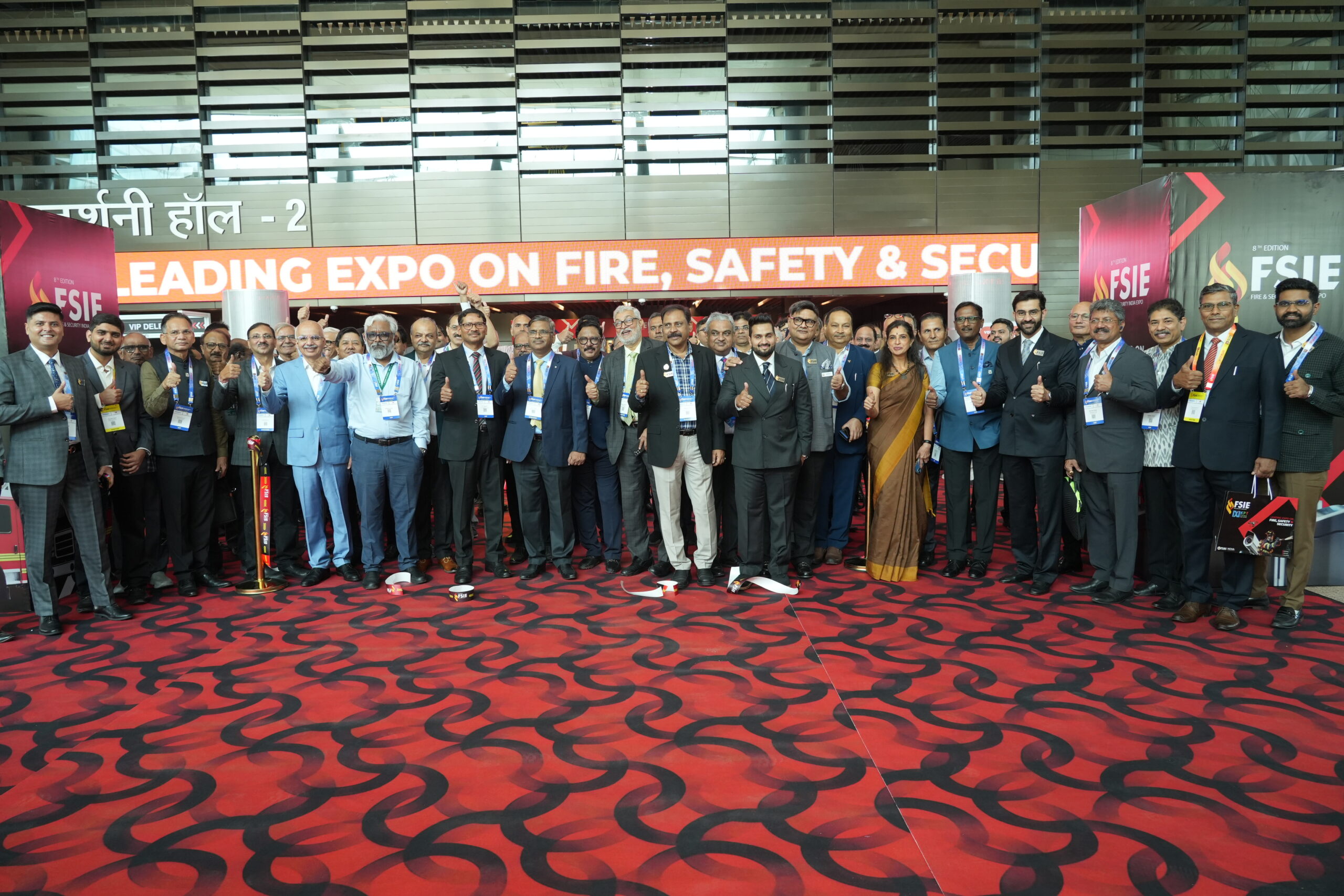
FSIE 2025 concluded with resounding success, marking a pivotal moment for the fire and security industry in India. Held from 11 to 13 September at the Yashobhoomi Convention Centre in Dwarka, New Delhi, the event brought together over 160 leading brands and more than 10,000 professionals, consultants, and decision- makers from across the country. Over three dynamic days, FSIE 2025 delivered a powerful blend of innovation, insight, and industry-wide collaboration – setting a new benchmark for smart safety and infrastructure resilience. Day one of FSIE 2025 began with a ceremonial opening at Yashobhoomi Convention Centre, New Delhi, featuring keynote addresses that set a purposeful tone, emphasizing collaboration, innovation, and regulatory advancement. The day’s first technical session, ‘The High-Rise Challenge’ brought together experts from government and industry to explore fire and life safety in vertical infrastructure. In the afternoon, ‘Design to Approval’ addressed the disconnect between architects, consultants, and fire authorities, offering practical solutions for smoother compliance and communication. The final session, ‘Global Security Operations Centre’ featured leading voices in security discussing crisis management, intelligence-led operations, and enterprise risk frameworks. From policy to practice, Day one delivered a powerful mix of leadership, technical depth, and cross-sector engagement – setting a high bar for the rest of the event. Day two of FSIE 2025 continued the momentum with a dynamic blend of technical depth and vibrant exhibition activity. While the conference halls hosted high-impact sessions such as ‘Let’s Talk Smoke’,’Drones & Anti-Drone Technologies’, ‘Process Safety Incidents in High-Hazard Industry,’ and ‘Fire Safety in Hospitals’ – the exhibition floor remained a hub of discovery and dialogue. Visitors explored advanced solutions in fire detection, surveillance, emergency response, and smart infrastructure, engaging directly with more than 160 leading brands. Delegates from architecture, engineering, facility management, and government sectors moved seamlessly between sessions and showcases, exchanging insights and forging new partnerships. The energy was palpable, with live demos, product unveilings, and interactive displays drawing consistent footfall throughout the day. Day two reinforced FSIE’s role not only as a knowledge platform but also as a marketplace of innovation – where learning, networking, and business converged to shape the future of fire and security. The final day of FSIE 2025 was a celebration of leadership and legacy, honoring individuals and organizations that have set new benchmarks in fire and security while recognizing excellence in innovation, sustainability, and industry impact. The day began with a thought-provoking discussion on the future of security, highlighting evolving needs and challenges. This was followed by an engaging panel on strategies and innovations for achieving safer workplaces and environments. In the afternoon, an impactful discussion explored collaborative strategies for integrating fire and security infrastructure in smart urban developments. Later, a focused session on ‘Building Confidence Through Code – NBC and the Future of Fire Safety’ highlighted the importance of codes and compliance in shaping the future of safety. The day drew strong participation from architects, engineers, safety professionals, and policymakers, reinforcing FSIE’s role as a collaborative hub for knowledge exchange and industry growth. Throughout the three days, FSIE 2025 stood out not only for its scale but also for its spirit. The energy in the halls was electric, driven by a community united in purpose. From first-time visitors to long-standing partners, every interaction contributed to the success of the event. The presence of over 10,000 professionals underscored the growing importance of fire and security in India’s infrastructure narrative – and FSIE once again proved to be the platform where that narrative is shaped. With FSIE 2025 now behind us, the excitement for FSIE 2026 is already building. Scheduled for 3rd, 4th, and 5th September at the Jio World Convention Centre in Mumbai, the next edition promises to be even bigger, bolder, and more impactful. Space bookings are now open, and the journey toward smarter, safer infrastructure continues. Read More

Read More

Protection Against Harm to National Security: The Silent Battlefield of Cyber, Economic, and Biological Threats

Dr Banusri VelpandianSenior Law Specialist Salil Kumar TripathyCo–author, Legal Consultant Introduction: A New Era of Threats National security has evolved in recent times due to significant transformations in the concepts of state sovereignty, power dynamics, and economic development. New threats extend beyond traditional notions of national security, which were primarily focused on territorial integrity and military aggression. Today, national security encompasses a broader range of issues, including cybersecurity, economic security, food security, energy security, and environmental security. In response to these challenges, several European nations including Germany, France, Poland, Italy, and the UK, are increasing their defense spending.2 This investment aims to enhance comprehensive and collaborative projects that bolster military readiness to counter both visible and less imminent but equally dangerous threats that could jeopardize national security. There must be a diverse array of mitigation strategies adopted to address modern-day risks, which can include cyber and digital threats, information and psychological threats, economic threats, and biological threats. This article will address the present and probable future of India’s legal framework in the given domain along with selected global best practices. The Invisible Frontline: Defending Against Digital Warfare Cyber threats have become increasingly prominent with the rise of technology. Cyber criminals can operate from remote locations while targeting critical infrastructure that holds sensitive information. These attacks can pose significant concerns, especially when they have agendas aimed at disrupting peace and causing societal upheaval. Cyber-crimes can also involve extortion for financial gain through ransomware attacks3. These malicious programs are designed to completely block access to a system and encrypt sensitive data, which can be detrimental to state operations and the functioning of various agencies. India ranks as one of the leading countries affected by ransomware, currently holding the 9th position globally. A notable incident involved Fullerton India Credit Ltd., a non-banking financial company, which was attacked by LockBit 3.0, resulting in the breach of 600GB of sensitive data.4 The situation becomes even more serious when these cyber-attacks are used as a weapon by enemy countries. They can disrupt critical systems and damage essential infrastructure, resulting in significant material losses and potentially causing loss of life for the nation as a whole. Hence, this can be referred as cyberwarfare5. Cyber warfare can serve as a tool for espionage, enabling the unethical monitoring and theft of data from other countries. This often involves phishing attacks to infiltrate systems and gain access to sensitive information.6 If cybersecurity measures and safeguards are inadequate, breaches of classified information can jeopardize government schemes and initiatives, potentially harming the country by manipulating vital data. Such sabotage can disrupt essential services like electricity supply, as cybercriminals may target power grids, disabling critical systems and interfering with infrastructure and communication services. With the rise of AI systems, cyber attackers now manipulate public opinion on a large scale. The risk is particularly pronounced in defense, as AI is increasingly used in autonomous drones and missiles where attacks executed without human intervention can lead to extensive damage to infrastructure and disrupt machinery in undetectable ways without thorough investigation7. Advanced nations formulate strategies that emphasize the importance of safeguarding emerging technologies, addressing not only cyber security issues but also regulating them while promoting democracy and freedom. Accordingly, in India, where risk mitigation is centralized, there ought to be specialized mechanisms for cyber security and prioritizing national interests. The ongoing institutional exercises may enhance cyber preparedness and evaluating appropriate responses in the event of a cyber incident but substantial high-end infra requirements are to be met to meet the ends of effective countering of all threats with robust strategies. Furthermore, the mix of strategies should also include stakeholder engagement, to proactively identify and neutralize any cyber threats that could damage national infrastructure and critical networks. The comparative legal frameworks in the domain are placed below for ready reference; Country Legal Framework Key Provisions Relevance to Cyber Warfare India Information Technology Act 2000 (Amended 2008) Sec 66F: Cyber terrorism (life imprisonment); Sec 70: Protected systems; Sec 69: Interception powers Cyber terrorism, critical infrastructure National Cyber Security Strategy 2020 21 focus areas including CII protection, supply chain security, advanced tech integration National cyber strategy coordination United States Cybersecurity Information Sharing Act (CISA) 2015 6 USC S.1502-1505: Threat info sharing, monitoring authorization, liability protections Public-private threat intelligence sharing Federal Information Security Modernization Act (FISMA) 2014 44 USC S.3551: Federal cybersecurity programs, incident reporting, DHS oversight Federal agency cybersecurity compliance Computer Fraud and Abuse Act (CFAA) 1986 18 USC S.1030: Unauthorized access, damage to protected computers (up to 20 years) Computer crime prosecution National Defense Authorization Act (NDAA) – Annual Annual cyber provisions: AI security centers, spyware protection, supply chain security Military cyber operations, defense United Kingdom Computer Misuse Act 1990 (Amended 2015) Sec 3ZA: Serious damage offenses (life imprisonment); Sec 1-3: Unauthorized access/modification Computer misuse, infrastructure attacks Investigatory Powers Act 2016 Parts 1-9: Interception warrants, equipment interference, bulk data collection Intelligence surveillance powers National Cyber Security Strategy 2022 3 pillars: Strengthen ecosystem, deter actors, develop capabilities; National Cyber Force National cyber force, offensive ops Australia Cybercrime Act 2001 Div 477: Serious computer offenses (life imprisonment); Div 478: Other computer offenses Commonwealth computer crimes Security of Critical Infrastructure Act (SOCI) 2018 Parts 2-6A: 11 critical sectors, risk management, government intervention powers Critical infrastructure protection Cyber Security Act 2024 Ransomware reporting, IoT security standards, National Cyber Security Coordinator Ransomware response, IoT security Privacy Act 1988 – Data Breach Notification Mandatory breach notification for eligible data breaches Data breach incident response To maintain national security and mitigate threats, India has developed significant defense systems, enhanced supply chain security and infrastructure, and invested in research and development to improve data management systems and is establishing robust defense mechanisms. To bolster resilience against advanced cyber threats, India can adopt best practices from countries like the U.S., U.K., and Australia for establishing formal public-private threat intelligence sharing, sector-specific regulatory approach for Critical Information Infrastructure (CII), mandatory incident reporting for ransomware and IoT security standards. The Weaponizaxtion of Words: Countering Disinformation and Radicalization The…

Read More

Videonetics Appoints Harsh Mehta as Vice President – Enterprise Sales

Harsh Mehta Videonetics, the leading AI-powered Video Computing Platform company, has announced the appointment of Harsh Mehta as Vice President – Enterprise Sales. Harsh will spearhead the company’s enterprise sales strategy across India and global markets, driving growth, customer success, and deepening strategic CXO-level engagements. Harsh brings over 22 years of rich experience across enterprise, cloud, government, and service provider domains. Prior to joining Videonetics, he played a pivotal role at Arista Networks, where he served as Regional Sales Head – West and Technical Sales Lead for India and SAARC. He successfully built and led cross-functional teams, generating multi-million-dollar revenues across sectors like BFSI, AI start-ups, and large public infrastructure projects. Harsh is recognized for his ability to establish and scale new verticals. His leadership contributed to multi-million dollars in enterprise revenue in just three years and played a vital role in pitching Arista’s AI Solutions to Enterprise, Government and SP verticals, building deep partnerships with India’s largest enterprises and contributing to the India AI Mission. Speaking on the appointment, Bhardwaj Naik, Chief Revenue Officer and Senior Vice President of Videonetics, said, “We are thrilled to welcome Harsh to our leadership team. His track record in scaling enterprise business, creating CXO-level partnerships, and building high-performing sales organizations aligns perfectly with Videonetics’ growth vision. His expertise will be instrumental in expanding our reach into strategic enterprise markets and delivering value-driven solutions to our customers.” Commenting on his new role, Harsh Mehta said, “Joining Videonetics is an exciting new chapter in my journey. I am inspired by the company’s commitment to innovation in AI and video analytics, and I look forward to building strategic partnerships that enable enterprises to leverage cutting-edge solutions for security, operations, and business intelligence. Together with the dynamic team at Videonetics, I am confident we will unlock new opportunities and deliver measurable impact for our customers.” Harsh holds an MBA in Information Technology from SIMSR and is currently pursuing a Postgraduate Diploma in Artificial Intelligence and Data Science from IIT Bombay. With this appointment, Videonetics further strengthens its leadership bench to accelerate digital transformation across smart & safe cities, enterprises, transportation, and critical infrastructure segments globally. Videonetics’ Unified Video Management Platform, powered by an indigenously developed True AI and deep learning engine, offers a comprehensive, modular, yet integrated solution. This platform includes cutting-edge applications such as Video Management System (VMS), Video Analytics (VA), Traffic Management System (TMS), and Face Recognition System (FRS). Additionally, Videonetics’ Video Surveillance as a Service (VSaaS) Platform provides a cutting-edge, AI-powered, cloud-agnostic video management solution tailored for data centre companies, telecom providers, and managed IT service providers, for enabling organizations to achieve robust, scalable, and accessible cloud-based video surveillance. Trained on extensive data sets, our solutions are robust, intelligent, and adaptable across various industries and sectors. Our products are cloud-ready, cloud-agnostic, ONVIF compliant, and OS & hardware agnostic, ensuring they are scalable and interoperable. Read More

Read More

Hikvision India Introduces Brand-New Wonderhub, Simplifying Teaching with Intuitive Ease and Empowering Intelligence

Hikvision India has introduced the brand-new WonderHub interactive display, featuring highperformance technology and groundbreaking WonderOS 4.0 for smart teaching. WonderHub prioritizes simplicity and creativity to help educators overcome classroom challenges that persistently affect both teachers and IT teams. High-performance technology for real classroom needs As the flagship product debuted at this launch event, the WonderHub Select Series features powerful hardware designed specifically with classroom needs in mind. The Select Series is not only equipped with an industry-leading AI chip, but also carries an 8-core CPU, plus 8GB RAM and 128GB storage. With this robust configuration, teachers can do presentations and write on the board at the same time, even running multiple teaching apps, all with zero lag. No more frozen screens during key explanations or app crashes during critical student activities, so teachers will be able to focus on what matters most. Beyond its impressive hardware, this next-gen product runs the latest Android system with Google apps, providing teachers with instant access to familiar tools. The intuitive interface allows them to start teaching effectively right away, with no extra training needed. WonderOS 4.0: Set to redefine teaching and transform classrooms with AI features WonderOS 4.0, specifically designed for classrooms, is set to make teaching simpler and smarter, while positioning WonderHub at the forefront of educational innovation. This upcoming operating system will redefine various teaching scenarios. In typical classroom settings, WonderOS 4.0 is expected to bring intuitive improvements to every stage of the teaching process. Teachers will be able to access their accounts and teaching materials with a simple card swipe or password, instantly connecting to their personal resources. The Android-based interface will dramatically reduce the learning curve, while enhanced wireless screen sharing will make content projection effortless. When boardwork is needed, advanced pen-palm separation will allow natural writing experiences, complemented by built-in templates and over 20 tools that enable better student engagement. Hikvision India has introduced the brand-new WonderHub interactive display, featuring high-performance technology and groundbreaking WonderOS 4.0 for smart teaching. WonderHub prioritizes simplicity and creativity to help educators overcome classroom challenges that persistently affect both teachers and IT teams Even more exciting, WonderOS 4.0 will introduce freshly developed, groundbreaking AI features to transform classrooms. ‘AI Identify’ enhances classroom engagement by allowing teachers to highlight on-screen content for instant explanations or to generate interactive questions. ‘AI Q&A’ delivers quick answers to student inquiries, keeping the learning momentum going. Thanks to ‘AI Meeting,’ teachers can use real-time captions and AI-generated summaries to significantly reduce their workload. WonderOS 4.0 will support teachers throughout the entire teaching process, from lesson preparation to classroom delivery and post-lesson evaluation, creating an intelligent teaching experience across various devices and scenarios. Innovation-driven and trusted by educators worldwide Today, WonderHub continues to gain impressive recognition and global trust, with over 500,000 units delivered to more than 10,000 schools in 140 countries and regions. Educators increasingly acknowledge WonderHub’s positive impact in their classrooms. There is an overwhelming response from the end-users. Hikvision shows a deep understanding of the needs of modern education. WonderHub’s upgraded features and integration can encourage better interactive learning and provide a seamless teaching experience. This success rests on Hikvision’s ongoing investment in innovation – with more than 1,000 professionals and hundreds of ed-tech patents continuously refining everything from login speed to AI-assisted tools. By closely listening to teachers’ needs, WonderHub strives to make everyday teaching simpler, smoother, and smarter. With WonderHub, the future of education is within easy reach. Read More

Read More