securitylinkindia

Empowering India’s Frontline with Real-Time Visual Intelligence

LiveU’s LU-REQON1 in Action atInternational Police Expo 2025 At the International Police Expo 2025 in Pragati Maidan, New Delhi, ARK Infosolutions, LiveU’s National Distributor in India, demonstrated how real-time visual intelligence can transform public safety operations. Over two days at Booth D1, the compact and rugged LiveU LU-REQON1 drew the attention of NSG operators, senior police officials, special operations teams, and public safety agencies from across the country. From Booth to Field: What Made LUREQON1 Stand Out The LU-REQON1 is a bonded-IP video encoder built for mission-critical operations. It can combine up to six network connections – 5G/4G LTE, Wi-Fi, Ethernet, and satellite – to deliver low-latency, high-definition video even in challenging environments. Weighing just 955g and with a MOLLE-compatible, weather-resistant design, it is ideal for operators on the move. HDMI and IP (RTSP) inputs make it compatible with drones, dashcams, tower cams, and bodyworn devices. From the demo floor: Visitors watched a simulated urban search-and-rescue operation. A drone equipped with a high-definition camera streamed a live feed via the LU-REQON1 to a central command dashboard. As the drone navigated an obstructed area, the video feed remained stable despite network interference, showing how bonded connectivity can maintain situational awareness under real-world stress. Live Demonstrations That Mattered Day 1 focused on live, hands-on demonstrations. Attendees explored the LU-REQON1’s integration with drone and bodycam video feeds, seeing how multiple perspectives could be combined into a single Common Operating Picture (COP) for faster decision-making. Day 2 shifted to operational workflows relevant to Indian agencies: ● Aerial surveillance during large-scale events. ● Crowd control with live feeds to mobile command vehicles. ● Disaster response from low-connectivity zones. Open API compatibility was also highlighted, showing how the LU-REQON1 can integrate with common Video Management Systems (VMS) and UAV control platforms without expensive retrofitting. Event Impact and Validation The two-day presence at Police Expo 2025 was a high-engagement opportunity for ARK and LiveU, resulting in: ● Over 3000 visitors to Booth D1. ● Notable attendees including senior NSG officers, city police commissioners, and disaster response leads. ● Various live demo sessions conducted, each covering multiple integration scenarios. A Trusted Partner for India’s Elite Forces As LiveU’s National Distributor, ARK Infosolutions delivers more than technology. The team provides integration consultations, operator training, and ongoing technical support, ensuring that the LU-REQON1 is ready for deployment in the field from day one. A Step Towards a Safer, Smarter Future The International Police Expo 2025 underscored the growing importance of bonded video technology in public safety. The LU-REQON1’s combination of resilience, portability, and ecosystem compatibility positions it as a force multiplier for India’s law enforcement and emergency services. Read More

Read More

10th International Police Expo 2025 Marks a Decade of Excellence in Policing & Homeland Security

31 July & 01 August 2025 | Bharat Mandapam, New Delhi, India 10th International Police Expo 2025 concluded on a high note at Bharat Mandapam, New Delhi, marking a decade of excellence in the fields of Policing, Homeland Security, Forensics, Surveillance Technologies, Drone & Anti-Drone Systems. Co-located with 9th India Homeland Security Expo, this milestone edition brought together a record-breaking lineup of international exhibitors, government officials, and security experts – reinforcing its position as Asia’s leading platform for defence and public safety innovation. The event was inaugurated with a ceremonial lamp-lighting by Hon’ble Union Minister of Coal & Mines, G. Kishan Reddy, alongside senior police officials, defence leaders, and key dignitaries. The opening set the stage for an immersive two-day experience showcasing the convergence of technology, policy, and tactical innovation. Unprecedented participation & global footprint ● 300+ Exhibitors from across the globe demonstrated cutting-edge technologies in smart policing, digital forensics, drone operations, border control, and cyber defence. ● 20 participating countries including the USA, Israel, Ukraine, Italy, Czech Republic, Germany, Australia, Austria, Russia, France, Japan, UAE, Taiwan, Hongkong, Sweden and South Korea underscored the expo’s international relevance. ● 20+ expert sessions featured thought leaders addressing key themes such as AI in law enforcement, counter-UAS systems, dark web intelligence, and cyber resilience. ● 200+ senior delegates & experts shared strategies, policy insights, and operational best practices. ● 10,000+ visitors from national and state police forces, armed forces, CAPFs, defence attaches, and security consultancies. Showcasing the future of security technology From next-generation weapon systems to AI-powered forensic tools, the expo served as a launchpad for several transformative technologies. Electronics Corporation of India Limited (ECIL), a Public Sector Undertaking under the Dept. Of Atomic Energy, Govt. of India ● Vehicle-Mounted ECM Jammer (ECMJ): Designed to neutralize remote-controlled IEDs across the 20-6000MHz range; mounted on Mahindra Scorpio vehicles for agile field deployment. ● Cell Phone Jammer (EC-SJJE-200M1): Secures sensitive zones with a 75-meter range of mobile signal suppression. SSS Defence – Empowering Atmanirbhar Bharat India’s premier OEM for small and medium caliber weapons, SSS Defence presented its latest advanced ammunition and hard-kill Counter-UAS systems, proudly designed and manufactured in India. PaladinAi – The Brain Behind Digital Policing With platforms like DeepGaze, Intelliview, and Phonetic AI, PaladinAi offered revolutionary solutions for deepfake detection, big data analytics, and real-time audio-video forensics, aiding investigations at every stage. MSAB – Global Mobile Forensics Leader Since 2003, MSAB has enabled smarter and faster investigations through advanced mobile data extraction and digital evidence management tools, trusted by law enforcement agencies worldwide. Other Noteworthy Innovations ● Passive surveillance tech capable of detecting foreign SIM cards within a 50-meter radius. ● Compact forensic kits for on-site crime scene and postblast investigations. ● AI-powered tools for dark web tracking and digital footprint mapping. ● Deepfake detection systems to combat misinformation and online fraud. ● Armoured mine-resistant vehicles and night-vision combat gear. Organizers Reflect on a Decade of Impact Speaking about the event’s evolution, Nexgen Exhibitions Pvt. Ltd., the organizing body, shared, “The 10th edition was more than a trade show – it’s a celebration of ten years of innovation, resilience, and international cooperation. The overwhelming response from participants this year reflects the growing urgency for modern security solutions and reinforces our role as a bridge between technology creators and frontline protectors.” Looking Ahead: The Next Decade of Security Evolution As the International Police Expo steps into its second decade, it pledges to expand its global partnerships, accelerate innovation, and remain a central platform for driving policy, strategy, and technology in the domains of national and public security.

Read More

A Month of GLORY CP PLUS Shines Bright with a String of Prestigious Awards in July 2025

In an industry where innovation, resilience, and trust are the ultimate currencies, CP PLUS has once again reaffirmed its place as India’s most admired name in security and surveillance. The month of July 2025 proved to be a spectacular milestone in the brand’s journey as it swept multiple prestigious honors across platforms, not just recognizing its excellence in product innovation, but also saluting its transformational leadership, branding strategy, and commitment to a self-reliant Bharat. From the revered OSPAs India & South Asia stage in Bangalore to the India Brand Summit 2025 and VARIndia’s IT Forum, CP PLUS emerged as a clear winner – earning accolades that reflect not only its technological prowess but also its long-standing relationship of trust with customers, partners, and the nation at large. Outstanding Security Product of the Year: OSPAs 2025 At the Outstanding Security Performance Awards (OSPAs) 2025, CP PLUS took home the prestigious award for Outstanding New Security Product – India & South Asia. Recognized amidst a highly competitive field, this award celebrated the ingenuity behind CP PLUS’s indigenously designed surveillance systems – built with cutting- edge technology, superior data encryption, and adaptive analytics that serve the evolving needs of urban and critical infrastructure. This win is particularly significant as the OSPAs are known for their rigorous and impartial judging process, honoring the best performers across the global security industry. For CP PLUS, this honor stands as a testament to its deep-rooted commitment to designing Made-in-Bharat products that meet international benchmarks while being tailored to Indian conditions. The awarded product – part of CP PLUS’ next-gen range of intelligent surveillance cameras – leverages advanced video analytics, AI-driven compression technology, and robust IP67-rated designs. It is built not just to watch but to interpret, adapt, and act – meeting the demands of smart cities, transportation systems, critical infrastructure, and modern policing initiatives. Double Glory at India Brand Summit 2025 Recognition came in doubles at the India Brand Summit 2025, where CP PLUS bagged two of the evening’s most coveted titles: ● Brand of the Year Award for the powerful and expansive CP PLUS Galaxy Store Campaign. ● Best Transformational Growth Award for the brand’s visionary Made-in-Bharat Initiative. The CP PLUS Galaxy Store Campaign, launched earlier this year, reimagined the customer experience by creating experiential touchpoints in the form of immersive retail outlets across the country. These stores not only showcase CP PLUS products but serve as educational hubs – helping customers make informed decisions while building trust in surveillance as an essential service. On the other hand, the Best Transformational Growth Award for the Made-in-Bharat Initiative celebrated a much deeper shift – the brand’s strategic redirection towards indigenous manufacturing and R&D. In an era when global supply chains have been volatile, CP PLUS chose to invest in India. From its STQC-certified manufacturing facilities to its in-house designed IP SoCs and codecs like Instastream, the brand has championed the spirit of Atmanirbhar Bharat, proving that global quality can be ‘Made in India.’ This dual recognition reflects how CP PLUS excels not only in creating transformative products but also in narrating a compelling brand story rooted in purpose and progress. VARIndia IT Forum 2025: 5th-Time Winner as the Most Admired Brand & Marketing Leadership Recognition Rounding off the month on yet another high note, CP PLUS was honored with the Most Admired Brand Award at the 23rd VARIndia IT Forum 2025 – for the fifth year in a row. This recognition underscores the consistent brand equity CP PLUS has built in the B2B and B2C security markets. With a distribution network that touches every corner of India and a product ecosystem that spans residential, commercial, industrial, and institutional verticals, CP PLUS has become synonymous with trust and reliability. Adding a personal feather to the brand’s cap, CP PLUS’ Chief Marketing Officer was awarded the Most Influential CMO 2025 at the same event. This award recognized the strategic, creative, and data-driven marketing efforts that have helped CP PLUS break new ground – especially in driving mass awareness, retail engagement, and policy dialogue in the security domain. Through campaigns like Shaurya Bharat Drive, partnerships with law enforcement, and its active role in events like the Police Expo, the brand’s marketing has never just been about promotion –it’s about positioning security as a fundamental right for every Indian citizen. Towards the Future: A Brand That Builds for Bharat In a world increasingly driven by algorithms, data, and visual intelligence, CP PLUS stands grounded in a singular mission: to make safety accessible, intelligent, and Made-in- Bharat. The accolades of July 2025 are not the culmination but a continuation – a reaffirmation that the road ahead is not just about creating better products but about building safer communities, empowering law enforcement, supporting digital infrastructure, and giving every citizen the peace of mind they deserve. As the surveillance landscape grows more complex, CP PLUS will continue to lead with clarity, capability, and conscience – translating recognition into responsibility, and success into service. Because at CP PLUS, we don’t just secure spaces – we secure possibilities. Read More

Read More
kunwar

Petty Contractor Syndrome in the Private Security Industry in India

The private security industry in India has witnessed substantial growth over the past few decades, primarily driven by rising security concerns and an expanding economy. However, one pressing issue undermining its profitability, growth, and quality of service delivery is the ‘Petty Contractor Syndrome.’ This phenomenon manifests through fragmented operations, low-quality standards, and a lack of professional management, ultimately impacting the industry’s overall effectiveness and reputation. Characteristics of Petty Contractor Syndrome: 1. Fragmentation of Services The industry is often characterized by a multitude of small and medium but fragmented security agencies. These petty contractors typically lack the resources and infrastructure required to operate on a larger scale, leading to inconsistencies in service delivery. Even owners/ directors of medium and large agencies risen to their present level, still suffer for the Syndrome as they love to count their smaller coins and top line. 2. Cost-Cutting Measures In a bid to remain competitive, many contractors engage in aggressive cost-cutting, often at the expense of quality. This includes underpaying security personnel, inadequate training, and minimizing operational expenditures, which directly affects the reliability and effectiveness of security services. Unfortunately some of the big agencies have resorted to lowering service charges not to the percentage but few hundred rupees per guard. This is a strange development which is damaging the reputation of these agencies and loosing respect among smaller players and security professionals. 3. Regulatory Challenges The absence of stringent MHA regulatory frameworks and oversight facilitates the proliferation of Unlicensed players in the market. This creates an environment where quality assurance is difficult to achieve and maintain. Impacts on Profitability and Growth 1. Reduced Profit Margins As competition intensifies, the focus on reducing costs instead of enhancing value leads to narrower profit margins for all players in the industry. This creates a vicious cycle wherein service quality continues to decline along with profitability. 2. Negative Reputation The prevalence of petty contractors has resulted in a tarnished image of the private security industry. Clients often associate poor service with the entire sector, dissuading potential clients from investing in security solutions. 3. Inhibited Expansion The inability to uphold quality standards limits the scalability of security firms. Many businesses may find it challenging to grow or expand their operations due to the lack of trust and credibility instilled in the market. 4. Stagnation in Innovation With a primary focus on cost reduction, there is little incentive for these companies to invest in innovative technologies or practices that could enhance service delivery, leaving the industry stagnation. The ‘Petty Contractor Syndrome’ poses significant challenges to the private security industry in India, hindering its potential for profitability, growth, and quality standards delivery. Addressing this issue requires comprehensive industry reforms, including the establishment of stricter regulatory frameworks, better training programs, and the promotion of professionalism within the sector. By fostering an environment that encourages quality over cost-cutting, the industry can enhance its credibility and ensure sustainable growth in the years to come. Large and middle level companies have a much significant role to play in bringing sustainable growth in the sector. They must shun the Petty Contractor Syndrome as they are the leaders of the PSI. Numbers must not be the business model for them. CAPSI is seriously working on following plan to pull members out of the sinking sand. To address the issues related to low service charges and the resulting ‘Petty Contractor Syndrome’ in the security industry requires a multi-faceted approach as an association. Here are some strategies the CAPSI has decided to develop with set timelines; 1. Establish Fair Pricing Guidelines Develop a set of industry-standard pricing guidelines based on the actual costs of delivering quality security services. Ensure these guidelines are widely shared and promoted among all member agencies. 2. Advocacy for Ethical Practices Encourage your members to adopt CAPSI Code of Ethics that emphasizes integrity, transparency, and fairness in pricing. Promote the importance of resisting the pressure to lower rates unsustainably. 3. Educational Programs Organize workshops and training sessions to educate members about the long-term benefits of sustainable pricing models. Highlight how competitive yet fair pricing can lead to better service quality, client satisfaction, and long-term contracts. 4. Resource Sharing Create platforms for member agencies to share resources, such as training materials and best practices. This collaboration can help smaller agencies improve their service offerings without undercutting their pricing. 5. Promote Value Over Cost Encourage members to focus on the value they deliver rather than simply competing on price. This can involve showcasing case studies or testimonials that highlight the positive outcomes from using quality security services. 6. Engagement with Procurement Managers Work to establish a dialogue with procurement professionals and industry clients to educate them on the risks associated with selecting security services based solely on cost. Emphasize the value of quality and reliability over the lowest bid. 7. Certification and Accreditation Launch STAR RATING Scheme Developed by QCI & CAPSI , a certification program that recognizes agencies meeting high standards of service, ethical practices, and fair pricing. This can help consumers identify reputable agencies while encouraging members to adhere to better practices. 8. Establish a Reporting Mechanism Create a safe and anonymous reporting system for unethical practices within the industry, allowing members to report instances of malpractice or corruption. 9. Incentivize Good Practices Consider implementing rewards or recognition programs for members who maintain high standards and resist the temptation to compromise on pricing and quality. 10. Collaboration with Regulatory Bodies artner with relevant regulatory or industry bodies to advocate for policies that discourage unethical bidding practices and promote fair competition in the security industry. By taking these steps, our association shall help elevate the entire industry, reduce the prevalence of the Petty Contractor Syndrome, and foster a more sustainable and professional competitive environment. Time for Leaders of the industry to seriously evaluate their preferences and attitudes towards structured business growth and practices. This is the time to stand firm and shine and not to bend down to pick up thrown pennies Read more

Read More

SAP Partners with Invixium for Its First Fully Automated Retail Store at Global Headquarters

Invixium’s IXM TITAN Selected for a Secure, Touchless Access Control Invixium, a global company in biometric access control, workforce, and visitor management, along with RTLS-connected worker solutions, has joined forces with SAP to deliver a cutting-edge, touchless access control experience for The S.Mart Store – SAP’s first fully automated, 24/7 self-service retail outlet, located at its Global Headquarters in Walldorf, Germany. The S.Mart Store represents SAP’s bold leap into intelligent retail innovation: a sustainable concept that redefines convenience by offering a frictionless, secure, and completely unattended shopping experience. At the heart of its access control system is IXM TITAN, Invixium’s flagship solution built for seamless and touchless user interactions. We are proud to be a part of SAP’s journey into the future of retail. This collaboration reflects Invixium’s ethos – to deeply understand real-world needs, build transformative technology, and deliver with precision, speed, and reliability Shiraz KapadiaCEO & President, Invixium “Our vision for the S.Mart Store demanded a technology partner who could keep pace with our timeline and match our emphasis on convenience, security, and exceptional user experience,” said Andre Bechtold, President of SAP Industries & Experiences, “Invixium’s quick turnaround, readiness to customize, and consistent support throughout the deployment played a valuable role in helping bring this innovative concept to life.” The fully functional S.Mart store was ready in just four months from concept to completion. The grand reveal took place on April 1, 2025, featuring keynote addresses from Christian Klein, CEO at SAP, Andre Bechtold, President of SAP Industries & Experiences, and Carl M. Mittelman, COO at Aramark. The grand opening included an interactive Partner Marketplace, immersive store tours, and a panel discussion. As part of SAP’s pilot program, IXM TITAN devices were selected to provide a touchless entry experience for visitors. After placing an order on the S.Mart app, shoppers will receive a unique QR code that can be scanned at the TITAN device at the S.Mart store entrance for instant access. Shoppers then simply grab their products, check out, and exit the store, making the experience fast, simple, and effortless. Invixium’s solution stood out for its speed of implementation, customizability, and seamless integration with SAP’s ecosystem. For this first-of-its-kind retail project, TITAN offered a perfect balance of security, speed, and convenience, proving to be the right fit. Read More

Read More
Arena

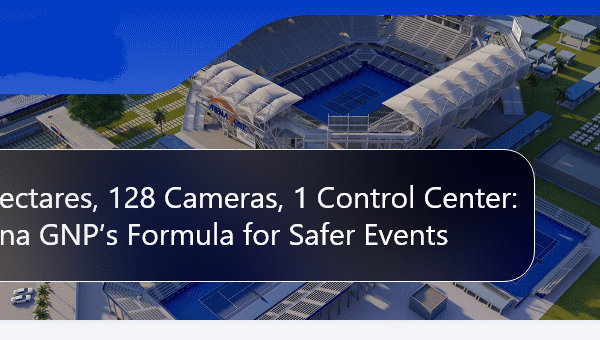
Arena GNP – Scaling Venue Security with Intelligent Stadium Camera Surveillance

Arena GNP, Mexico’s premier venue for international sports and cultural events, partnered with AxxonSoft to deploy an intelligent, future-ready video surveillance solution across its 9-hectare facility. With 128 cameras and centralized control, the system delivers real-time situational awareness, rapid incident response, and scalable infrastructure to support major live broadcasts and high-profile guests. Redefining Safety and Situational Awareness in High-Profile Venues As live events grow larger and more connected, venues have to focus on delivering great experiences while making sure venue security is never compromised. Arena GNP, located in Riviera Diamante Acapulco, is Mexico’s most modern sports and cultural event destination. As the official home of the ATP 500 Mexican Tennis Open, and a venue for international concerts and live shows, Arena GNP required a stadium security infrastructure capable of safeguarding thousands of attendees, managing dynamic event environments, and enabling instant incident response. AxxonSoft was selected to deliver a comprehensive, scalable, and future-ready video surveillance system to meet these mission-critical demands. The Venue Security Mandate: Visibility, Responsiveness, and Control From day one, the client emphasized the need for a stadium camera solution that could scale with operational risk. With live broadcasts, international guests, and constant movement across a 9-hectare facility, traditional CCTV systems were not sufficient. Arena GNP required a security platform that would: ● Enable real-time situational awareness across all access points, perimeters, and crowd zones. ● Support proactive threat detection and rapid incident resolution. ● Provide forensic search and evidence extraction within seconds. ● Maintain high system availability during live events with zero tolerance for failure. ● Allow security personnel and event operators to easily navigate, monitor, and respond to evolving conditions. Competitive Evaluation: Beyond Traditional CCTV Stadium Security. Although the client had experience with a previous video management system at their corporate office, the Arena GNP project demanded a more flexible stadium camera solution – one that would offer broader device compatibility, easier deployment, and simpler user experience. Axxon One VMS platform stood out from traditional CCTV architectures by offering: ● Open compatibility with third-party systems integration. ● Real-time access to high-definition video across multiple zones. ● Centralized control with advanced role-based access. ● A unified, intuitive user interface for both technical and non-technical teams. ● Low infrastructure footprint with strong reliability. Other solutions were evaluated but did not offer the optimal balance of speed, simplicity, and long-term scalability required for this deployment. Read More

Read More
Xtract

Xtract One Chosen by Volusia County Schools to Advance School Safety

Xtract One Gateway Deployment to Improve School Security Screenings with Non-intrusive Technology for the 2025-2026 School Year Xtract One Technologies recently announced its Xtract One Gateway (Gateway) system has been chosen by Volusia County Schools in Volusia County, Florida, to increase protective measures for the district’s school security screening process. In partnership with systems integrator CK2 Technologies, phase one of deployment will begin at the county’s high schools in 2025 and the second phase in 2026. With the adoption of 48 Xtract One Gateways, Volusia County Schools is ensuring a protected and inclusive atmosphere for all students, faculty, and visitors for the upcoming school year. aaAs the new school year swiftly approaches, school districts across the country are taking proactive measures to prioritize school safety by identifying and investing in modern, efficient, and advanced security technologies to aid in their screening procedures. Upon thorough investigation and sideby- side testing of available security screening solutions on the market, many of which require disassembly and the use of separate X-ray machines that need frequent inspection by state-certified personnel, Volusia County Schools recognized the value of Xtract One Gateway’s capabilities to efficiently scan individuals and their belongings without requiring backpacks or bags to be removed. “Safe school environments are a prerequisite for student success and a foundational standard for the broader communities that support them,” said Peter Evans, CEO of Xtract One, “Volusia County Schools’ decision to deploy advanced security screening technology is a testament to the increasing demand for heightened security solutions for high-throughput learning environments. Xtract One Gateway is designed to revolutionize the modern-day security experience, and these phases of deployment at Volusia County Schools for the year ahead reflect our solution’s growth and credibility to redefine global safety standards.” “At Volusia County Schools, ensuring the safety of our students and staff is our top priority every day, and working with Xtract One reflects that commitment,” said Dr. Carmen Balgobin, Superintendent for Volusia County Schools, “With this innovative solution, we can screen for prohibited items quickly without delaying student entry times or pulling students aside. Through this collaboration, our district is creating a safer and welcoming environment where students can prioritize learning, and the community can feel at ease.” “When we discover new technology that can help us keep our schools safe, we owe it to students, parents, and staff to pursue it,” said Volusia Sheriff Mike Chitwood, “This is one more tool we can use to protect lives and give our kids the safe learning environment they deserve.” Xtract One Gateway is purpose-built for weapons detection in atmospheres with a medium volume of throughput and personal belongings. The system redefines the security experience by balancing powerful threat detection and classification with exceptional flow for individuals walking through the system. Xtract One Gateway uses advanced bi-directional configurable screening and proprietary sensors designed for precise weapons detection and identification to uniquely distinguish everyday items and potential threats, resulting in an industry-leading security process that respects patron privacy. By unobtrusively scanning individuals, their pockets, and bags, Gateway minimizes the need for secondary screenings and bag checks, thanks to its capability to distinguish non-threatening objects such as laptops, 3-ring binders, and spiral notebooks from mass casualty weapons at entrance checkpoints. Read More

Read More

How to Empower Security Management Operations in Large Corporate Business Parks

Corporate parks are indeed a growing trend in India, particularly in metro cities like Mumbai, Chennai, Hyderabad, Bangalore and Kolkata where they’ve transformed the corporate landscape by offering premium office spaces, advanced technology infrastructure, and employee- focused amenities. These parks prioritize sustainability, flexibility, and technological advancements. The Security Management in Corporate Parks is a perpetual challenge. It requires best practices to be implemented for Corporate Security requirements. Locations with the region’s top business parks can provide a strategic advantage for businesses if it is backed by smart security management. In the prevailing VUCA (Volatility, Uncertainty, Complexity and Ambiguity) environment, multiple challenges are lurking on the corporate security front. Securing video security management functions is crucial for swift operations in a corporate environment. The stakes are always high because corporate parks are a highly sensitive zone due to various factors. The corporate parks are mission-critical establishments; they are open 24/7, 365 days a year. They face various security management challenges that can impact the safety of employees, assets, and overall business operations. Some of the key operational challenges include: Inadequate Access Control: Outdated key card systems or physical locks can be easily compromised, allowing unauthorised access to restricted areas. Implementing modern access control systems like biometric scanners, RFID cards, or smart locks can enhance security. Insufficient Employee Training: Employees should be aware of security protocols, incident response, and recognising suspicious behaviour. Regular training ensures employees are aware of security procedures and can respond effectively in emergencies. Cybersecurity Threats: Integrating physical security measures with cybersecurity protocols is crucial to prevent hacking and data breaches. The cyber security attack targets include video security systems, access control, and network infrastructure. Outdated Security Technologies: Using outdated surveillance systems, alarm systems, or other security technologies can leave corporate parks vulnerable to security breaches. Upgrading to modern systems with AI-powered analytics and real-time monitoring can improve security. Perimeter Security: Establishing a secure perimeter with physical barriers like fences, gates, and access control points can prevent unauthorised access. Emergency Preparedness: Developing and practicing emergency response plans helps corporate parks respond effectively to security incidents, natural disasters, or other emergencies. To overcome these challenges, corporate parks can implement the following best practices: Regular Security Audits: Conducting regular security audits helps identify vulnerabilities and weaknesses in security systems. Multi-Factor Authentication: Implementing multi-factor authentication enhances access control and protects sensitive information. Collaboration and Communication: Fostering cooperation between stakeholders, including property managers, tenants, law enforcement, and security service providers, enhances the overall security posture. Incident Response Planning: Developing incident response plans and conducting regular training ensures an effective response to security incidents. Continuous Improvement: Regularly reviewing and updating security policies, procedures, and technologies helps stay ahead of emerging security threats. Here are some critical measures to consider in large commercial establishments and corporate parks. Access Control: It is a strategic solution to implement role-based access control to restrict access to authorised personnel. It is a must to use strong passwords, multi-factor authentication, and secure login protocols. Data Encryption: Encrypt video feeds and recordings to prevent unauthorised access. It is advisable to use secure protocols for data transmission and storage. Network Security: It is a good idea to implement a secure network architecture, including firewalls and intrusion detection systems. The end-users must use virtual private networks (VPNs) for remote access. System Monitoring: It is a herculean task to monitor the video security system for potential security breaches continuously. The security managers need to implement incident response plans to respond to security incidents quickly. Software Updates: Regularly update video security software to ensure you have the latest security patches. Use reputable software vendors that prioritise security. Physical Security: Ensure physical security of video security equipment, such as cameras and recording devices. Use tamper- evident and tamper-resistant equipment. Compliance: Ensure compliance with relevant local regulations. Implement data retention and disposal policies that meet regulatory requirements. Training: Provide regular training to personnel on video security best practices and incident response. Ensure personnel understand the importance of security and their roles in maintaining it. Securing video security management functions requires a multi-faceted approach and adherence to best practices suggested by Hikvision. In large corporate parks any security breach or incident may have multiple implications on reputation and business continuity, while implementing these measures, one can help secure corporate business park’s video security management functions and ensure swift operations to serve the security management goals. Read More

Read More
Surveillance

The Silent Heist: Why the 16 Billion Password Leak Is India’s Digital Wake-Up Call

Major Sadhna SinghConsultant When the lock is no longer yours Picture this: you wake up one morning, log into your email, and find that your credentials no longer belong to you. Not because you forgot them, but because they’re now circulating on the dark web ready for anyone with malicious intent to exploit. For millions worldwide, this is no longer a hypothetical. The recent exposure of over 16 billion stolen login credentials is not just another cyber incident; it is the largest breach of its kind in the history of the internet. What makes this leak particularly dangerous is its composition, freshly stolen data from active devices, harvested quietly over years through infostealer malware. Unlike headline-grabbing hacks that crash systems or trigger instant shutdowns, this breach unfolded silently, siphoning credentials without detection. The anatomy of a breach Infostealer malware doesn’t announce itself with ransom demands or a dramatic system lockout. It operates in the background, harvesting usernames, passwords, session cookies, authentication tokens, and stored files from infected devices. Investigators report that the leaked database is an amalgamation of at least 30 different sources. While some of it is recycled from older leaks, a large portion is recent, well-structured, and tied to identifiable individuals. Compromised services span global tech giants like Apple, Google, and Facebook, developer tools like GitHub, secure communication platforms like Telegram, VPN services, and even government portals. This isn’t simply about stolen passwords, it’s about the systems, data, and critical infrastructure those passwords unlock. And for a nation with India’s scale of digital adoption, the implications are severe. Why India should be worried Given India’s rapid digital adoption, large user base, and reliance on Digital Public Infrastructure (DPI), the impact of this breach could be disproportionately severe if unaddressed. Economic Security Risks Governance Vulnerabilities National Security Concerns Social Impact & Public Trust The cybercrime economy connection A breach of this scale is a goldmine for the dark web economy. Stolen credentials, sometimes bundled with device fingerprints, are traded for as little as $5–$10 per set, depending on the platform compromised. These are then used for: Every credential set is a potential stepping stone to a much larger compromise. India’s response gap While the Digital Personal Data Protection Act (DPDPA) 2023 introduces some protections, its enforcement mechanisms and breach notification timelines are still maturing. Many organisations in India lack: In short, our laws exist, but our readiness to operationalise them in real time remains weak. What needs to happen now This breach is a wake-up call for every citizen, policymaker, and business leader. The response must be both urgent and systemic. Immediate Actions Mid- to Long-Term Measures Implementation Roadmap Timeline Action Lead Agency Supporting Agencies 0–3 Months National breach monitoring cell operational CERT-In NCIIPC, RBI, MeitY 0–3 Months MFA mandate across key sectors RBI, MeitY TRAI, NIC 0–3 Months Credential hygiene drive MeitY State IT Depts, Industry bodies 3–12 Months Cyber Hygiene Code notified MeitY BIS, CII, NASSCOM 3–12 Months DPI resilience audits MeitY NIC, Private audit firms 12–36 Months Legal amendments enacted MeitY, MoL&J Parliamentary committees 12–36 Months Digital Trust Campaign rollout MeitY, MIB Industry partners The Bigger Picture The 16 billion credential leak is not a one-off incident, it is a stress test for India’s digital resilience. If addressed decisively, it can serve as the trigger for a national shift towards proactive cybersecurity, integrating policy, technology, and citizen behaviour. If ignored, it risks undermining economic stability, national security, and public trust in the digital state. If you haven’t changed your passwords yet, do it today. If you lead an organisation, ask yourself if your systems could survive being part of the next 16 billion. Because in cyberspace, it’s not if, it’s when. 📌 Major Sadhna Singh, Consultant Read More

Read More

Protection Against Harm To Life, Limb and Liberty

Dr Banusri VelpandianSenior Law Specialist J E Jaya DeviLegal Consultant Co-author In Indian criminal jurisprudence, offences against life, limb and liberty form the cornerstone. It embodies the State’s fundamental duty to safeguard life, bodily integrity, physical autonomy, and personal liberty. These offences spanning across spectrum of the gravest to heinous nature strike at the very heart of human dignity and social order, demanding a robust legal framework to ensure justice, deterrence, and rehabilitation. The total FIRs (First Information Reports) registered in the year 2022 was 58,24,946 for crimes under Indian Penal Code (IPC) and Special & Local Laws (SLL); and among them 32.5% are for offences affecting the human body as per the report of National Crimes Records Bureau (NCRB). Urban areas continue to have higher crime rates when compared to rural areas. The constitutional foundation for protection of life, limb and liberty lies in Article 21 of the Constitution of India, which guarantees the right to life and personal liberty – a right, judicially expanded to include dignity, bodily security, and freedom from physical harm. Articles 14, 15, and 20 further complement this protection by ensuring equality before law, non-discrimination, and safeguards against arbitrary punishment. Criminal law operationalises these guarantees through substantive, procedural, and evidentiary provisions that criminalise acts infringing life, limb, and liberty. The legal response to such crimes has undergone a profound transformation from the fragmented pre-colonial justice systems to the codified Indian Penal Code (IPC), 1860, and now to the transformative Bhartiya Nyaya Sanhita (BNS), 2023. “The soul of our criminal justice system must reflect the spirit of our Republic, not the shadows of colonial governance” – Extract from the Parliamentary Debate in 2023 on amending the Indian Penal Code. This article presents a structured commentary on the transition from the IPC to the BNS and relevant legal principles. STATUTORY FRAMEWORK For over 160 years, the IPC’s Chapter XVI, ‘Offences Affecting the Human Body,’ defined how the State would respond when life, limb, and liberty were violated or harmed. Since 2023, Bhartiya Nyaya Sanhita, (BNS, 2023) ushers a modernised statutory framework that preserves the substantive core of the IPC while refining its drafting, structure, and penalties based on contemporary realities. It adopts a graded punishment structure based on severity and culpability, thereby upholding public order, human dignity and evidentiary rules remain responsive to evolving forms of violence, advances in technology, and the expectations of victims. Historical background and evolution of the IPC Historically, India’s criminal justice system was a fragmented amalgamation of religious, customary, and colonial laws and marked by inconsistency and bias. This includes justice delivery in terms of Manusmriti, Yajnavalkya Smriti, Arthashastra or Sharia. Among tribal communities, justice was administered through unwritten customs, community mediation, and compensation in the form of livestock, land, or goods. The arrival of the British East India Company in the seventeenth century introduced partial codification, most notably through the Cornwallis Code of 1793 in Bengal, which sought uniformity but retained the elements of religious law for personal matters. Punishments for similar offences varied drastically between regions, undermining fairness and public trust. This patchwork system created inconsistency and administrative inefficiency. The consolidation of British rule promoted the need for a uniform penal law to ensure consistency, fairness, and effective governance drawing from English common law, the Napoleonic Code, and utilitarian principles. In 1834, the First Law Commission under Lord Thomas Babington Macaulay drafted the IPC, which was passed on 6 October 1860 and came into force on 1 January 1862. Comprising 511 sections in 23 chapters, IPC became the comprehensive criminal law framework for British India. Since then, IPC has undergone numerous amendments and few cardinal ones are as given hereunder; Year & Amendment Key Changes Purpose / Context 1870 Amendment Clarified provisions for abetment (Sections 107–120); clarified joint liability (Sections 34, 149) Strengthened accountability for group crimes such as gang-related murders or assaults. 1983 & 1986 Amendments Introduced Section 304B (dowry death) Addressed dowry-related violence and rising incidents of bride-burning, influenced by feminist activism and public outrage. 2013 Amendment (Post-Nirbhaya) Added Sections 326A & 326B (acid attacks); expanded definitions of sexual offences Response to 2012 Delhi gang-rape; aimed at stronger protection for women and deterrence against sexual violence. 2018 Amendment Strengthened laws on sexual offences against minors; alignment with POCSO Act, 2012 Tackled child abuse and exploitation; enhanced penalties and protections. There are several landmark decisions that also shaped up the evolution of IPC. Four such case laws are picturised below; Transition from IPC to BNS, 2023 The Indian Penal Code (IPC), drafted under colonial era in archaic language had significant gaps in addressing modern crimes including cyber offences, victim protection etc. Its punitive focus overlooked rehabilitation, and limited victim rights clashed with contemporary justice principles. The focus was also to deliver justice rather than to penalise i.e., from ‘dand’ to ‘nyay.’ In 2023, the Bharatiya Nyaya Sanhita (BNS), 20231 , was enacted as part of a legal reform trio alongside the Bharatiya Nagarik Suraksha Sanhita, 20232 and the Bharatiya Sakshya Adhiniyam,20233 replacing the IPC, CrPC, and Evidence Act respectively. Effective from 1 July 2024, the BNS reduces 511 sections of the erstwhile IPC to 358, uses plain and culturally resonant language, and incorporates gender-neutral and victim-centric provisions. It introduces community service for minor offences, clearer definitions, and new categories such as mob lynching (Section – 103(2)), organized crime (Section – 111), petty organized crime (Section – 112), and enhanced penalties for acid attacks (Section – 124). By modernising certain terminology, recognising emerging crimes, and embedding restorative justice, the BNS seeks to decolonise India’s criminal law and align it with constitutional ideals and global human rights standards. Significant Legal Principles and Maxims ● Cognizable and non-cognizable: ‘cognizable offence’ means an offence for which, and ‘cognizable case’ means a case in which, a police officer may, in accordance with the First Schedule or under any other law for the time being in force, arrest without warrant (BNSS section 2 (1) d). ● ‘Non-cognizable offence’ means an offence for which,…

Read More