securitylinkindia

BNB Security and Automation Solutions : What We have Built, What We have Learned and Where We are Going (2026-2029)

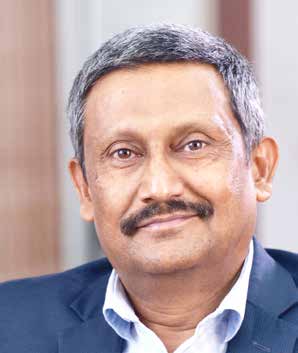
Sreekumar NarayananChief Growth Officer, BNB Security &Automation solutions In an industry that often gets measured only on what went wrong, BNB Security and Automation Solutions has spent the last few years quietly reshaping a different story – what goes right when protection, safety, comfort and operations are treated as one connected promise to the customer This is not a technology story. It’s a workplace story. It’s about the guard at the gate who needs clarity, not complexity. It’s about the facility head who wants fewer surprises, not more dashboards. It’s about the security leader who is asked every month – to ‘do more with less’ without compromising safety. And it’s about organizations that are finally recognizing a truth they lived through in the last decade – a workplace is not just a building. It is a living system. When it is healthy, business runs smoother. When it is ignored, business bleeds quietly – through downtime, fatigue, hidden losses and preventable incidents. BNB’s work sits in that real-world space between risk and routine – where a small failure becomes a big disruption and where a simple improvement can compound into meaningful savings. Over time, this has shaped a core approach – ‘make workplaces safer, smoother and more accountable – without adding burden to the people who run them.’ Where BNB started the shift: From ‘Security Projects’ to ‘Workplace Outcomes’ A few years ago, the market largely treated physical security as a project category – equipment, installation, handover, warranty and goodbye! But customers were changing. They weren’t just asking for ‘systems,’ they were asking for outcomes such as: BNB’s shift began when it started listening differently – not only to the procurement checklist, but to the lived reality of operations teams: security, administration, facility management, EHS, IT and leadership. From these conversations came a simple thesis: A workplace becomes truly secure only when safety, comfort, access, visibility, discipline and accountability move together. That thesis is what later evolved into BNB’s broader ‘Total Workplace Solution’ mindset – an approach that doesn’t treat security as a standalone island, but as part of a wider ecosystem that includes day-to-day operations, maintenance, compliance, energy awareness and employee well-being. What BNB achieved: The work that actually changed the game BNB’s progress can be understood through five achievements – each grounded in practical realities. 1. Turning ‘Systems’ into Everyday Reliability Many organizations already have equipment in place. The real pain is that it doesn’t behave like a dependable system. It behaves like a set of disconnected parts. BNB’s project teams learned to focus on what customers care about most: This translated into a stronger delivery style – tighter handover discipline, clearer documentation, better commissioning rituals and service readiness that begins before the site is ‘completed.’ It also changed the language BNB used with customers. Instead of selling components, BNB started selling operational confidence. 2. Making security and operations measurable – without making them complicated The workplace produces signals every day – entry and exit patterns, peak movement, exceptions, repeated alarms, delays, congestion points and compliance gaps. BNB’s learning was that these signals become valuable only when they are turned into simple questions: It’s about the guard at the gate who needs clarity, not complexity. It’s about the facility head who wants fewer surprises, not more dashboards. It’s about the security leader who is asked every month – to ‘do more with less’ without compromising safety. And it’s about organizations that are finally recognizing a truth they lived through in the last decade – a workplace is not just a building. It is a living system This thinking gave rise to BNB Cognira as a business layer – not as a ‘fancy product,’ but as a way to bring order and meaning to what already exists. In many places, the biggest breakthrough wasn’t adding something new. It was simply making the existing environment legible. A practical example: repeated alarms in the same zone. In many sites, alarms become background noise. People stop trusting them. BNB’s approach helped customers separate alarms that are actionable, frequent but harmless, genuine risk indicators, and that are maintenance problems disguised as ‘security alerts.’ That distinction matters because it changes behavior. It also changes cost. 3. Expanding the definition of ‘protection’ to include well-being and comfort Security leaders increasingly sit in meetings where the business asks about employee well-being, workplace readiness, comfort complaints, absenteeism patterns, productivity drops linked to environment, and ESG expectations and reporting pressures. This is where ThermoG and the broader BNB Workplace thinking became relevant – not as a separate business line, but as a reinforcement of the same idea – a safe workplace is a well-run workplace. It’s about the guard at the gate who needs clarity, not complexity. It’s about the facility head who wants fewer surprises, not more dashboards. It’s about the security leader who is asked every month – to ‘do more with less’ without compromising safety. And it’s about organizations that are finally recognizing a truth they lived through in the last decade – a workplace is not just a building. It is a living system If a meeting room is always uncomfortable, people stop using it. If ventilation is uneven, complaints rise and trust falls. If basic environmental conditions are poorly managed, the building becomes a daily friction point. BNB’s contribution here has been to treat environment not as ‘facility’s problem’ and not as ‘just HVAC,’ but as a measurable part of workplace experience – something that can be tracked, improved and linked to operational discipline. When comfort improves, complaints reduce. When complaints reduce, response workload reduces. When workload reduces, teams can focus on higher-risk issues. This is how small improvements compound. 4. Building an innovation practice that stays close to field reality Innovation can become a trap when it’s detached from operations. BNB Innovation Lab has been shaped with a different discipline – build only what improves outcomes in the field. That means: simplifying what operators see and do; strengthening how exceptions are handled;…
Read More

Indigenous Surveillance at Scale: CP Plus’ Post-IPO Roadmap

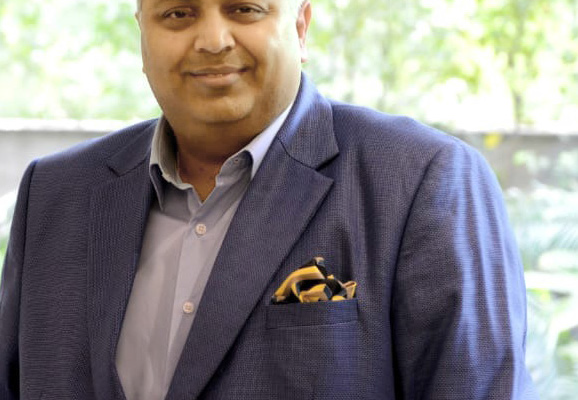
Aditya KhemkaManaging Director, CP PLUS The Indian security and surveillance industry is witnessing a decisive shift – from being largely consumption-driven to becoming design-led, manufacturing-focused, and technology-intensive. In this evolving landscape, the public listing of CP PLUS marks more than a corporate milestone; it signals growing maturity, accountability, and global ambition within India’s electronic security ecosystem. As one of the country’s most influential surveillance brands, CP PLUS has played a defining role in expanding the adoption of video surveillance across critical infrastructure, smart cities, enterprises, and urban policing. The CP PLUS IPO – launched by its parent company Aditya Infotech Ltd – was open for subscription from 29 July 2025 to 31 July 2025, with shares subsequently listed on the stock exchanges on 5 August 2025. Its transition into a publicly listed company places it at the intersection of market discipline, national security priorities, and rapid technological transformation driven by artificial intelligence, analytics, and software-defined security. In this exclusive cover story interaction, Aditya Khemka, Managing Director, CP PLUS, shares his perspective on the post-IPO roadmap – covering indigenous manufacturing, AI-led innovation, cybersecurity, system integrator enablement, and the responsibility that comes with scale. He also reflects on how Indian surveillance manufacturers can build global trust while aligning with regulatory, ethical, and data-sovereignty frameworks. As India positions itself as a credible global hub for security technology, this conversation offers valuable insights into the future direction of the surveillance industry and the leadership mindset required to shape it. SecurityLinkIndia: Adityaji – Heartiest congratulations on CP PLUS’ IPO. How do you personally reflect on this milestone for the company? Aditya Khemka: Thank you! Personally, I see the IPO not as a destination, but as a natural milestone in a long, disciplined journey. CP PLUS was never built for quick wins, it was built to create an ecosystem. Listing the company is a moment of gratitude as much as pride – gratitude towards our teams, our partners across Bharat, and the millions of customers who trusted an Indian brand to secure what matters most to them. For me, the IPO is a validation of our hard work, it reflects how patient, purpose-driven nation-building can also create strong shareholder value. What were the key factors behind the timing of the IPO, and how did market feedback influence your final decision? The timing was driven more by internal readiness than external sentiment. We had reached a stage where our manufacturing scale, governance maturity, R&D depth, and technology roadmap were robust enough to withstand public scrutiny. Market feedback helped fine-tune the structure, but the conviction came from knowing that CP PLUS had already institutionalised processes, compliance, and transparency long before listing. The IPO simply formalised what we had been practising for years. How has investor response aligned with your expectations, and what surprised you the most post-listing? The investor response has been both reassuring and energising. While we expected interest based on CP PLUS’ scale and market leadership, what stood out was the quality of engagement rather than just the volume of demand. Investors were deeply inquisitive about our long-term vision – particularly around indigenous manufacturing, STQC-certified portfolios, AI-led video analytics, and our roadmap towards greater control over hardware and semiconductor design. What genuinely surprised me was how strongly the narrative of nation-building resonated with the investment community. Many conversations went beyond near-term financial metrics to discuss trust, data sovereignty, cybersecurity, and India’s strategic need for domestic security technology champions. There was a clear appreciation that CP PLUS is not merely riding industry growth, but actively shaping it. Post-listing, the feedback has also reinforced the importance of transparency and consistency. Being publicly listed brings heightened expectations and rightly so, but it also creates a powerful alignment between our internal values and external accountability. The market’s response has reaffirmed our belief that disciplined execution, ethical governance, and long-term thinking can coexist with strong commercial performance. The investor response has been both reassuring and energising. While we expected interest based on CP PLUS’ scale and market leadership, what stood out was the quality of engagement rather than just the volume of demand. Investors were deeply inquisitive about our long-term vision – particularly around indigenous manufacturing, STQC-certified portfolios, AI-led video analytics, and our roadmap towards greater control over hardware and semiconductor design From a security industry standpoint, what does CP PLUS’ IPO signify for the Indian surveillance and electronic security sector? It signals a structural shift. For decades, surveillance in India was seen largely as an imported necessity. CP PLUS’ IPO demonstrates that indigenous design, manufacturing, and software-led innovation can anchor a globally competitive security brand. It gives confidence to policymakers, system integrators, startups, and OEMs that India can lead – not just consume – critical security technologies. How will the IPO proceeds be allocated across manufacturing, R&D, technology upgrades, and market expansion? The allocation is strategically balanced. A significant portion is being channelled into expanding and upgrading manufacturing – deepening backward integration, automation, and quality control. R&D and core technologies like AI video analytics, SoC optimisation, cybersecurity, and cloud-edge architectures are another major focus. We are also strengthening global market access, certifications, and service infrastructure to support sustained international growth. As a listed entity, how is CP PLUS strengthening corporate governance and compliance frameworks? Governance has always been foundational for us, but post-listing, we have elevated it further. Independent oversight, stronger audit and risk frameworks, enhanced disclosures, and digital compliance systems are now deeply embedded. More importantly, governance at CP PLUS is not just a boardroom exercise, it flows into procurement ethics, data handling, partner conduct, and product responsibility. How does the IPO accelerate CP PLUS’ commitment to Make in India and indigenous manufacturing? The IPO acts as a force multiplier for everything we have been building under the Make in India vision for over a decade. CP PLUS has always believed that true self-reliance goes far beyond assembly – it requires ownership of design, firmware, testing, and manufacturing processes at scale. Becoming a listed entity gives us not…

Read More