securitylinkindia

CP PLUS Achieves a Landmark Milestone with the 100th Mission Tech L-1 Program, Empowering the Future of India’s Security Workforce

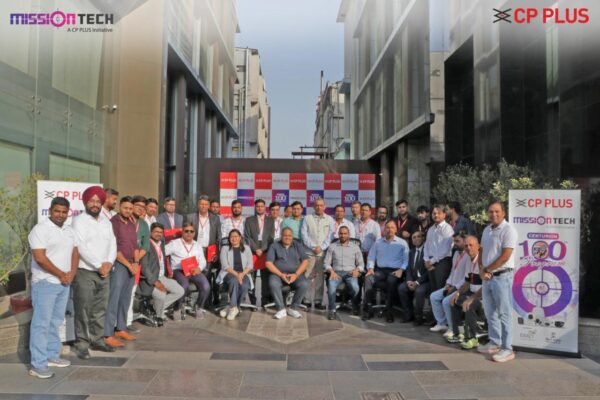
One hundred programs. Thousands of professionals. One shared vision for a safer Bharat. Marking a defining milestone in its commitment to industry development and skill enhancement, CP PLUS proudly celebrated the successful completion of the 100th Mission Tech L-1 Program – Centurion Edition at the CP PLUS Corporate Training Centre, Noida. The landmark achievement reflects the company’s unwavering dedication to nurturing talent, strengthening technical capabilities, and building a highly skilled workforce that will drive the future of India’s rapidly evolving security and surveillance industry. Since its inception, the Mission Tech initiative has stood as a cornerstone of CP PLUS’ vision to bridge the industry’s skill gap through structured, hands-on technical education. Designed to equip System Integrators and Installers with the practical knowledge required to deploy and manage modern security technologies, the program has become one of the industry’s most impactful learning platforms. With the successful completion of its Centurion Edition, the NSDC-certified Mission Tech Level 1 Training Program has now empowered more than 2,100 System Integrators and Installers, equipping them with the expertise needed to confidently install, configure, troubleshoot, and maintain today’s increasingly intelligent surveillance ecosystems. From AI-powered cameras and advanced video analytics to networking fundamentals and integrated security solutions, participants receive comprehensive training aligned with the latest technological advancements and evolving industry requirements. Beyond technical knowledge, the initiative represents CP PLUS’ broader commitment to creating a future-ready security ecosystem where innovation is supported by skilled professionals capable of delivering excellence in every deployment. As surveillance technologies continue to become more intelligent, interconnected, and AI-driven, the importance of continuous learning and professional development has never been greater. Through Mission Tech, CP PLUS is ensuring that its channel partners remain equipped to meet these changing demands while delivering superior value to customers across diverse sectors. The milestone also reinforces CP PLUS’ long-standing collaboration with the National Skill Development Corporation (NSDC), reflecting the company’s contribution toward strengthening India’s skill development ecosystem. By combining globally relevant technical education with practical industry exposure, the program supports the nation’s vision of developing a highly capable workforce ready to power India’s digital and infrastructure transformation. Reaching the 100th Mission Tech L-1 Program is not merely a numerical achievement, it is a celebration of the thousands of professionals who have chosen to learn, grow, and advance alongside CP PLUS. Each trained installer and system integrator represents another step toward creating safer cities, smarter enterprises, and more resilient public infrastructure through the effective deployment of advanced security technologies. As the security landscape continues to evolve, CP PLUS remains committed to investing not only in cutting-edge innovation but also in the people who bring these technologies to life. Through initiatives like Mission Tech, the company continues to empower the industry’s workforce with the knowledge, confidence, and expertise required to build a stronger, smarter, and more secure Bharat. With a century of successful training programs now complete, CP PLUS looks ahead to the next chapter of learning, innovation, and industry empowerment, continuing its mission of transforming knowledge into capability and capability into lasting impact.

Read More

How Thermal Cameras Help in Resolving the Critical Building Maintenance Issues

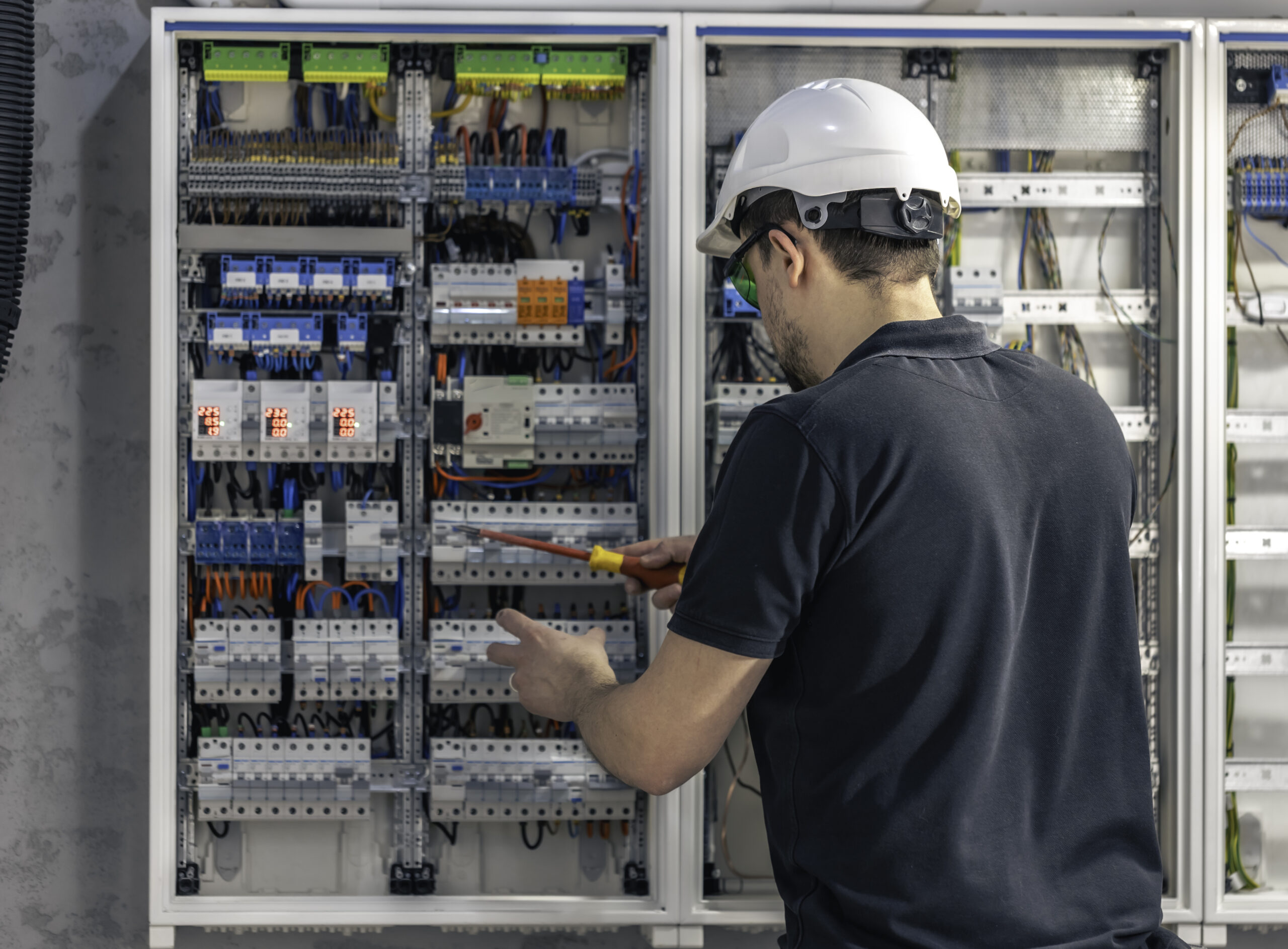
Hikmicro Thermal Cameras help identify critical issues in buildings for residential and commercial purposes. Thermal cameras don’t see walls. They see problems hiding inside them. In India’s climate and construction conditions, it is a special power that can be harnessed to identify and address the critical issues faced by building maintenance staff. Here’s where Hikmicro Thermal Cameras add value to building maintenance through its Thermal technology, products, and solutions. India specific challenges The India-specific problems are unique to Indian states and regions; they are markedly different from those in the US, the UK, and other European regions in terms of building maintenance. Let’s understand why thermal cameras matter in India-specific conditions and what kinds of building risks they detect. India has different climate scenarios in the North, East, West and South regions. There are places where extreme heat exceeds 45°C. There are wet regions where monsoon and humidity rule. There is a consistent challenge of electrical overload, AC strain, water ingress and mould. The other building maintenance challenges include mixed construction quality, poor insulation, hidden leakage, and uneven load distribution. The constant power fluctuations and old wiring create new issues related to Hotspots, fire risk, and energy waste. All these issues add up, leading to high energy costs. The AC leakage through windows and walls causes a 30% increase in the electricity bill. Most issues are invisible until the bill spikes, the wall peels, or the fire starts. Thermal makes them visible in seconds. Using Hikmicro thermal cameras, facility managers can instantly pinpoint unseen building faults – such as electrical hotspots, roof leaks, and more. These non-invasive, predictive cameras measure surface temperature differences to identify underlying defects long before they cause costly downtime or structural damage. The most critical building maintenance issues easily identified by these thermal devices include: Electrical Faults & Safety Hazards Excessive heat is the primary early warning sign for electrical issues. Cameras immediately detect unbalanced loads, loose connections, and overloaded circuits. Catching hot breaker switches at an elevated 65°C, rather than the normal 35°C, prevents full power outages and serious fire risks. Damaged wires, electrical components, and connections would cause a variety of problems. Faulty wiring or components ageing may result in electronic damage due to overload. Electric sparks can cause large-scale fires, leading to property damage and even injuries to civilians. By diagnosing the issue early, technicians can make repairs before a total failure occurs. Moisture Intrusion & Hidden Water Leaks: Water has a higher thermal capacity than surrounding materials. Leaks from roofs, pipes, or stucco show up as distinct temperature anomalies. Wet insulation, framing, and drywall appear as colder spots, helping you address mould before it spreads. Air Infiltration & HVAC Leaks: Thermal cameras map airflow patterns, allowing technicians to spot unsealed windows, faulty door seals, and HVAC duct leaks. This visual data helps operators optimise HVAC systems, reduce energy costs, and improve indoor air quality. Mechanical Overheating: Thermal imaging detects heat signatures from mechanical equipment (e.g., pumps, belts, and motors). Finding bearings or motors running 10°C above normal operating temperatures helps prevent unexpected equipment failures and expensive component replacements. Residential Buildings Electrical Safety – Stop Fires Before They Start In India, 70% of residential fires are caused by electrical faults and short circuits. Thermal scan during society audits prevents them.  Hikmicro Thermal Cameras can detect overloaded MCBs, loose connections, overheating geysers, ACs and inverter faults. It can be done by scanning the DB box, switchboards, and junction boxes. If anything in the electrical meter room is >60°C or 15°C hotter than similar components, then it is considered a red flag. Energy Loss & AC Efficiency: Hikmicro Thermal Cameras can find heat ingress from windows, doors, roof, AC duct leaks and missing insulation. Commercial Buildings Predictive Maintenance Hikmicro Thermal Cameras can detect hot breakers in LT panels, overheating motors, HVAC chiller faults, and UPS overheating. They can also help data centre racks, malls, IT parks, and factories avoid downtime risks. Building Envelope & Solar Audit Hikmicro Thermal Cameras can detect glass-façade leaks, roof-insulation gaps, and solar-panel hotspots and dirty cells.  Sunrise/ sunset scans show heat gain/ loss. In India, LEED/ GRIHA compliance helps reduce HVAC load 20%+. This solution can validate solar RoI. Fire Safety Compliance Hikmicro Thermal Cameras can find overheating cable trays, diesel generator exhaust leaks, and kitchen duct grease hotspots. Hikmicro Thermal Cameras Help Myriad End-users These Hikmicro Thermal Cameras can be highly useful tools for Housing Societies, Residential Welfare Associations (RWAs), Facility Managers and MEP Contractors, Energy Auditors, and Green Consultants. This way, Hikmicro Thermal Cameras can help with the maintenance and upkeep of residential and commercial buildings by timely detection of electrical faults and other issues.

Read More

Beyond Visible Light: How Bi-Spectral Thermal Cameras Are Redefining Perimeter Security

Combining thermal intelligence and visible imaging for faster, more reliable threat detection For decades, video surveillance has relied primarily on visible-light cameras to secure critical assets. While advances in resolution, artificial intelligence, and video analytics have significantly improved security, conventional cameras still depend on one essential element – light. Whether it is complete darkness, dense fog, smoke, heavy rain, or glare from the rising sun, challenging environmental conditions continue to affect the performance of traditional surveillance systems. As security threats become more sophisticated and critical infrastructure demands uninterrupted situational awareness, the industry is increasingly adopting bi-spectral thermal cameras – a technology that combines visible imaging with thermal sensing to deliver continuous surveillance regardless of environmental conditions. Why Conventional Cameras Have Limitations Modern visible-light cameras produce exceptional image quality under favourable conditions. However, they still face challenges when environmental visibility deteriorates. Typical challenges include: In these situations, security operators may lose valuable seconds trying to verify whether an event is a genuine threat or simply environmental interference. Understanding Thermal Imaging Unlike conventional cameras that capture reflected visible light, thermal cameras detect infrared radiation (heat energy) emitted naturally by every object. Every person, vehicle, machine, or animal has a unique thermal signature. Instead of seeing colours or reflected light, thermal imaging visualises temperature differences, allowing operators to detect objects that would otherwise remain invisible. This enables surveillance systems to operate effectively: Thermal cameras therefore become an excellent early-warning sensor. What Makes Bi-Spectral Technology Different?  While thermal cameras are exceptional at detecting heat signatures, they generally provide limited visual detail. Visible cameras, on the other hand, provide colour, facial details, licence plates, and scene context. A bi-spectral camera integrates both technologies into a single intelligent platform, enabling operators to use each imaging modality where it performs best. The thermal sensor detects the presence of an object, while the visible camera immediately provides visual confirmation and supporting evidence. This dramatically improves both detection speed and incident verification. Instead of asking, “Did something happen?” operators immediately know: “What happened, where it happened, and who or what is involved.” The Power of Sensor Fusion Modern surveillance is increasingly moving toward sensor fusion. Rather than depending on a single sensor, intelligent platforms combine multiple sensing technologies to create a far more accurate understanding of the environment. Bi-spectral cameras merge: Together, these technologies reduce nuisance alarms while significantly improving operator confidence. Advantages of Bi-Spectral Surveillance 24×7 Situational Awareness Thermal imaging remains effective regardless of daylight conditions, ensuring uninterrupted surveillance around the clock. Earlier Threat Detection Heat signatures can often be detected before objects become visually distinguishable, providing valuable additional response time. Reduced False Alarms Combining thermal detection with AI-powered visible analytics enables more reliable event verification. Faster Incident Response Operators no longer need to switch between multiple systems or manually verify alarms, reducing response times during critical events. Longer Detection Distances Thermal sensors can identify heat signatures over extended distances, making them particularly valuable for perimeter protection and large open areas. Where Bi-Spectral Cameras Deliver Maximum Value The technology is particularly well suited for: In these environments, uninterrupted situational awareness is often more important than image resolution alone. Artificial Intelligence Complements Thermal Imaging The next evolution in surveillance combines thermal sensing with edge-based artificial intelligence. Rather than simply detecting heat, modern platforms can classify: AI enables the system to distinguish between genuine threats and environmental activity, significantly reducing unnecessary operator intervention. The Industry Direction The surveillance industry is steadily moving from isolated imaging devices toward intelligent sensing platforms. This evolution combines artificial intelligence, thermal imaging, visible imaging, cybersecurity, and advanced video management into unified solutions capable of supporting mission-critical operations. Reflecting this direction, Vicon’s Roughneck® Pro Bi-Spectral Thermal PTZ platform combines a 5 MP visible camera with 40× optical zoom and a high-sensitivity LWIR thermal sensor in a single rugged platform. Together with edge AI, intelligent auto-tracking, HDR imaging, electronic image stabilisation, and ONVIF interoperability, it is designed to support airports, ports, utilities, oil & gas, transportation, and other critical infrastructure applications. Conclusion As surveillance requirements continue to evolve, organisations are demanding more than high-resolution video. They require systems capable of delivering reliable detection, rapid verification, and continuous situational awareness under every environmental condition. Bi-spectral thermal cameras meet this requirement by combining two complementary imaging technologies into one intelligent surveillance platform. The future of perimeter protection will not rely solely on seeing more – it will depend on seeing what matters most, regardless of darkness, weather, or distance.

Read More

Celebrating Excellence: India & South Asia OSPAs 2026 Honour Security Industry Leaders

More than 300 security professionals from across India and South Asia gathered at the JW Marriott, Aerocity, New Delhi, on 2 July 2026 for the India & South Asia Outstanding Security Performance Awards (OSPAs) 2026, held alongside the ASIS South Asia Conference. The prestigious awards recognised outstanding achievements, innovation and leadership across the security profession, highlighting organisations and individuals setting new benchmarks in resilience, technology, operational excellence and people development. The evening celebrated the growing maturity of the security industry, with winners representing diverse sectors including corporate security, critical infrastructure, cybersecurity, consulting, manufacturing and technology. 2026 India & South Asia OSPA Winners Outstanding In-House Security Manager/ DirectorWinner: Samir Ghaghda – Diageo India Outstanding Security TeamWinner: Physical Security Technical Team – Infosys Outstanding Contract Security Company (Guarding)Winner: Peregrine Guarding Outstanding Security ConsultantWinner: PricewaterhouseCoopers (PwC) India Outstanding Security Training InitiativeWinner: COM-SUR Video Surveillance and Imaging AITechnologies Outstanding Security Installer/ IntegratorWinner: Soteria Command Center – Tenon Group Outstanding New Security ProductWinner: DHEERAJ – Deepfake Handling Engine forExpert Recognition and Authentication of Judgements Outstanding Security PartnershipWinner: DigiCert, Digio & JNR Management Resources Outstanding Security OfficerWinner: Ankit Jaswal – Tata Power Outstanding Female Security ProfessionalWinner: Niharika Karamchandani – InQuest Advisories Outstanding Young Security ProfessionalWinner: Praveen Raj – WoRisGo Outstanding Equality, Diversity & Inclusion InitiativeWinner: Vedanta Limited Outstanding Security Sustainability AwardWinner: Vedanta Aluminium & Power Lifetime Achievement AwardRecipient: Milind M. Borkar Recognising Outstanding Achievement Samir Ghaghda – Diageo India Winner of the Outstanding In-House Security Manager/ Director award, Samir Ghaghda has elevated Corporate Security and Business Continuity into a strategic, intelligence-led business function. His leadership during critical incidents, including Operation Sindoor and the RCB stadium stampede, demonstrated exceptional crisis management, while his focus on innovation and resilience has positioned security as a key business enabler. Infosys Infosys’ award-winning Physical Security Technical Team has transformed enterprise security through an innovative in-house programme that significantly improved threat detection, accelerated response times and reduced false alarms. Their engineering-led approach has also delivered measurable operational efficiencies and cost savings. Peregrine Guarding Recognised as the Outstanding Contract Security Company, Peregrine Guarding continues to strengthen its reputation through technology-enabled guarding services, a centralised command centre and a highly trained workforce operating across India and Singapore. Its expertise in securing critical infrastructure and major airports reflects its commitment to operational excellence. PwC India PwC India received the Outstanding Security Consultant award for delivering integrated physical, cyber and operational security solutions across critical infrastructure, smart cities and command centre programmes. Its use of responsible AI and strategic consulting continues to help organisations build resilient, future-ready security frameworks. COM-SUR Video Surveillance and Imaging AI Technologies COM-SUR was recognised for revolutionising CCTV evidence management through AI-powered surveillance analysis. The platform has dramatically reduced video review times and earned national recognition through the Government of India’s introduction of a dedicated CCTV Video Footage Auditor skill, supporting the development of security capability across multiple sectors. Soteria Command Center – Tenon Group Soteria’s intelligent command centre platform earned recognition for redefining security integration through advanced monitoring, automation and operational efficiency. The solution has delivered faster incident response, reduced downtime and improved compliance while generating substantial savings for clients. DHEERAJ – Deepfake Handling Engine As deepfake threats continue to evolve, DHEERAJ has emerged as an innovative defence solution capable of preventing fraud, accelerating authentication and strengthening digital investigations. Its growing adoption demonstrates the increasing importance of AI-driven security technologies. DigiCert, Digio & JNR Management Resources The Outstanding Security Partnership award recognised this collaboration for advancing digital trust through cybersecurity, public key infrastructure (PKI), compliance automation and certificate lifecycle management, helping organisations improve resilience and reduce cyber risk. Ankit Jaswal – Tata Power Awarded Outstanding Security Officer, Ankit Jaswal has demonstrated exceptional operational leadership by introducing initiatives such as drone surveillance, workforce optimisation and stakeholder collaboration, delivering stronger security operations without disrupting business continuity. Niharika Karamchandani – InQuest Advisories Winner of the Outstanding Female Security Professional award, Niharika Karamchandani has built an impressive international career spanning investigations, behavioural risk, due diligence and crisis management. Her work in consultancy, research and professional development continues to raise standards across the security industry. Praveen Raj – WoRisGo Recognised as Outstanding Young Security Professional, Praveen Raj has quickly established himself as an emerging leader in supply chain security, geopolitical intelligence and critical infrastructure protection. His contributions to industry and national education initiatives highlight the next generation of security leadership. Vedanta Limited Vedanta Limited received the Equality, Diversity & Inclusion award for creating a more inclusive workplace through diverse recruitment, accessibility and equal opportunity initiatives. Its people-first approach demonstrates how inclusion can strengthen organisational culture and business performance. Vedanta Aluminium & Power The Security Sustainability Award recognised Vedanta Aluminium & Power for integrating sustainability into security operations through clean mobility, water conservation, waste management and environmental initiatives that benefit both business and surrounding communities. Milind M. Borkar The Lifetime Achievement Award honoured Milind M. Borkar for his exceptional contribution to India’s electronic security and video surveillance industry. Over several decades, his visionary leadership has helped shape the evolution of surveillance technologies across smart cities, transportation, manufacturing and public infrastructure. Widely respected as a mentor and industry pioneer, his influence continues to inspire future generations of security professionals. Looking Ahead All category winners, with the exception of the Lifetime Achievement Award recipient, automatically qualify for the Global OSPAs, where they will represent India and South Asia alongside winners from around the world. Milind M. Borkar has also been inducted into the Security Hall of Fame in recognition of his outstanding contribution to the global security profession. The organisers extended their appreciation to ASIS India, Knowledge Partner MitKat Advisory, category sponsors Godrej, Security India and MitKat Advisory, as well as the independent judging panel and supporting associations whose continued commitment ensures the credibility and prestige of the OSPAs. The 2026 India & South Asia OSPAs once again showcased the innovation, professionalism and dedication driving the security profession forward, reinforcing its vital role in protecting people, organisations and communities across the region.

Read More

Your Smartphone is the Key: A Comprehensive Guide to Mobile Access Control Solutions

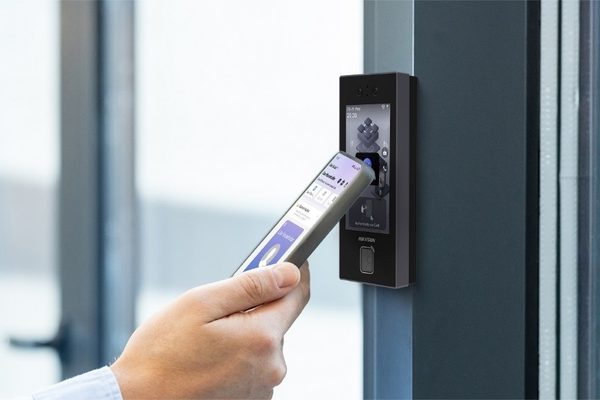
Digital transformation is changing how we secure buildings and spaces. Mobile access control is leading this change, combining convenience with strong security. People already trust their smartphones for mobile payments – especially younger generations who grew up with apps. Now, that same trust extends to building access. This guide explores mobile access control from every angle. We’ll explain the core technologies, key benefits, and future trends. We’ll also show how leading providers like Hikvision create solutions that deliver convenience, enhance security, boost efficiency, and support sustainability goals. Whether you’re a security manager evaluating new systems, a facility director looking to modernize your infrastructure, or simply curious about the latest security technology, this guide will provide the insights you need to understand mobile access control’s transformative potential. What are mobile access control and mobile credentials The global access control market is growing fast, with mobile access control solutions driving innovation. According to Market sand Markets, the overall access control market is forecast to grow from USD12.8 billion in 2025 to over USD28.41 billion by 2035, at a CAGR of 8.3%. The mobile credential segment is expanding even more rapidly, with Dataintelo projecting it to reach over $750 million by 2028, growing at an impressive CAGR of about 17%. This rapid adoption is driven by several factors – the universal presence of smartphones, increased demand for touchless solutions, and the superior security and convenience that mobile credentials offer compared to traditional access methods. “Digital transformation is changing how we secure buildings and spaces. Mobile access control is leading this change, combining convenience with strong security. People already trust their smartphones for mobile payments – especially younger generations who grew up with apps. Now, that same trust extends to building access” What are mobile access control and mobile credentials? A mobile access control solution transforms a smartphone or wearable IoT device into a secure digital key. This technology streamlines access to buildings, rooms, and other secured areas by eliminating the need for traditional physical keys, fobs, or cards. It integrates with existing security systems, offering a more flexible and powerful way to manage access permissions. At its core, a mobile access control system consists of three main components: Mobile credentials are digital access keys stored in a mobile app or a device’s native wallet. Unlike physical cards that can be easily lost, stolen, or duplicated, mobile credentials leverage advanced smartphone security features and wireless technologies like Bluetooth Low Energy (BLE) and Near Field Communication (NFC) to provide superior protection. Why are mobile credentials superior over traditional access methods? Mobile credentials deliver superior security and convenience over traditional physical counterparts. By leveraging smartphone technology like advanced encryption, they vastly reduce risks associated with loss, theft, or duplication, while offering users seamless access experience with a device they carry every day. This technology also allows administrators to manage access remotely and in real-time, instantly granting or revoking permissions as needed. This digital system provides significant cost savings and environmental benefits by eliminating the expenses and waste associated with producing, managing, and replacing physical cards. Introduce Hikvision’s mobile access control solution As a global leader in AIoT solutions, Hikvision is pioneering mobile access innovation. Our mobile access control solution meets modern security challenges headon. It supports multiple credential technologies – Bluetooth, NFC, and QR codes – ensuring flexibility across different devices and environments. Our solution is powered by two robust platforms – the Hik-Connect 6 cloud platform and the HikCentral Professional on-premise platform. These enable dynamic permission management, real-time access monitoring, instant credential revocation, and analytics for smarter security decisions.

Read More

Beyond Cybersecurity: Why Hardware Security is the Missing Pillar of Digital Trust

A holistic approach to securing modern IT infrastructure from silicon to software Suresh Chandra –Member GAC (IT Act), Ex. Sr. Dir/ DDG at STQC (MeitY),Ex. Head of CB of Com. Criteria, CCTV, Biometric, GIGW, EPS, TMS,AB Empanelment-SETL. and also a member of ISO/ UEC committee SC27,BIS LITD17, LITD 31, Chairman LITD 25. For years, cybersecurity has primarily focused on protecting software, networks, applications, and data. Organizations invest heavily in firewalls, antivirus solutions, endpoint protection, encryption, identity management, and Security Operations Centres (SOCs). While these investments remain essential, they address only part of today’s security challenge. Modern cyber threats have evolved beyond software vulnerabilities. Increasingly, attackers are targeting the very foundation on which digital systems are built – the hardware itself. A perfectly secured application can still be compromised if the firmware, processor, or underlying semiconductor contains hidden vulnerabilities or malicious modifications. As digital transformation accelerates across governments, enterprises, financial institutions, critical infrastructure, healthcare, defence, and smart cities, securing hardware has become as important as securing software. Cybersecurity must therefore evolve into a truly holistic discipline that encompasses the complete technology stack – from silicon to cloud. Understanding Information Technology (IT) Security Information Technology (IT) security, also known as cybersecurity, is the practice of protecting digital assets – including computer systems, networks, applications, cloud infrastructure, and data – from unauthorized access, cyberattacks, data breaches, and service disruptions. IT security encompasses multiple domains such as network security, endpoint security, application security, cloud security, identity and access management, and incident response. The primary objective is to ensure the confidentiality, integrity, and availability of information and critical services. The Core Pillars: The CIA Triad The foundation of IT security is the CIA Triad, a widely accepted framework that guides the design and implementation of information security policies and controls. Common Cyber Threats Understanding the evolving threat landscape is essential for implementing effective security controls. Security Assurance Before Deployment and Production All components of an organization’s IT infrastructure – including application software, network devices, servers, endpoint devices, and communication channels – must undergo comprehensive security assessment and hardening before deployment into production. Implementing security controls early in the lifecycle helps identify vulnerabilities, reduce cyber risks, and ensure compliance with recognized security standards and best practices. Application Software Network Devices Servers Endpoint Devices Communication Channels Security Objective Before any system enters production, organizations should ensure that: Can We Assume an IT System is Secure After Security Testing? Even when all software components, network devices, servers, endpoints, and communication channels have been thoroughly assessed and hardened in accordance with recognized standards and guidelines, it does not necessarily guarantee that the overall IT system is secure. Traditional cybersecurity assessments primarily focus on software vulnerabilities, configuration weaknesses, and network security. However, these assessments may not detect inherited hardware vulnerabilities, compromised firmware, malicious implants, or supply-chain backdoors embedded within the underlying computing platform. A system may therefore remain vulnerable despite successfully passing all conventional security tests. The Hidden Risks Modern IT devices are built using a complex global supply chain involving multiple vendors respon sible for chip design, fabrication, firmware development, operating systems, drivers, and applications. A compromise at any layer of this technology stack can undermine the security of the entire system. Potential hidden threats include: These threats often operate below the operating system, making them extremely difficult to detect using traditional vulnerability assessment and penetration testing methodologies. Layered Architecture of an IT Device An IT device comprises multiple hardware and software layers that collectively process data and execute instructions. Security must be established across every layer, as compromising a lower layer can undermine all higher layers. System-on-Chip (SoC) The System-on-Chip (SoC) is the physical foundation of the device. It integrates multiple computing components – including the Central Processing Unit (CPU), Graphics Processing Unit (GPU), memory controllers, cryptographic accelerators, communication interfaces, and input/output (I/O) controllers – onto a single semiconductor chip. “For years, cybersecurity has primarily focused on protecting software, networks, applications, and data. Organizations invest heavily in firewalls, antivirus solutions, endpoint protection, encryption, identity management, and Security Operations Centres (SOCs). While these investments remain essential, they address only part of today’s security challenge” The SoC establishes the hardware Root of Trust. Any compromise at this level such as a hardware Trojan or malicious circuit modification, can bypass security controls implemented in software. Firmware Firmware is low-level software permanently stored in non-volatile memory (e.g., BIOS, UEFI, or embedded firmware). It initializes hardware during system startup, configures critical components, and provides the interface between hardware and the operating system. Because firmware executes before the operating system, compromised firmware can gain complete control over the device while remaining invisible to conventional security tools. Operating System (OS) The operating system (e.g., Linux, Windows, Android, iOS, or embedded RTOS) manages hardware resources, memory, processes, storage, networking, and user access while providing the execution environment for applications. Although operating systems receive regular security updates, they inherently trust the underlying firmware and hardware. Consequently, a compromised lower layer can circumvent OS-level security mechanisms. Device Drivers Device drivers enable communication between the operating system and hardware peripherals such as storage devices, graphics processors, network adapters, printers, and sensors. Poorly designed or malicious drivers can provide attackers with kernel-level privileges, enabling privilege escalation, unauthorized access, or system compromise. Applications Applications constitute the top layer of the software stack and provide user-facing functionality, including web browsers, office suites, databases, enterprise software, and mobile applications. While applications are routinely tested for vulnerabilities using standards such as OWASP, their security ultimately depends on the integrity and trustworthiness of all underlying layers. Security Implication The security of an IT system is only as strong as its lowest trusted layer. If the System-on-Chip, firmware, or boot process is compromised, even perfectly secured applications, operating systems, and networks may be unable to prevent unauthorized access or data exfiltration. Therefore, modern cybersecurity must extend beyond traditional software and network testing to include: A defence-in-depth strategy that spans the entire hardware-to-application stack is essential for building trustworthy and resilient IT systems. As organizations increasingly…

Read More