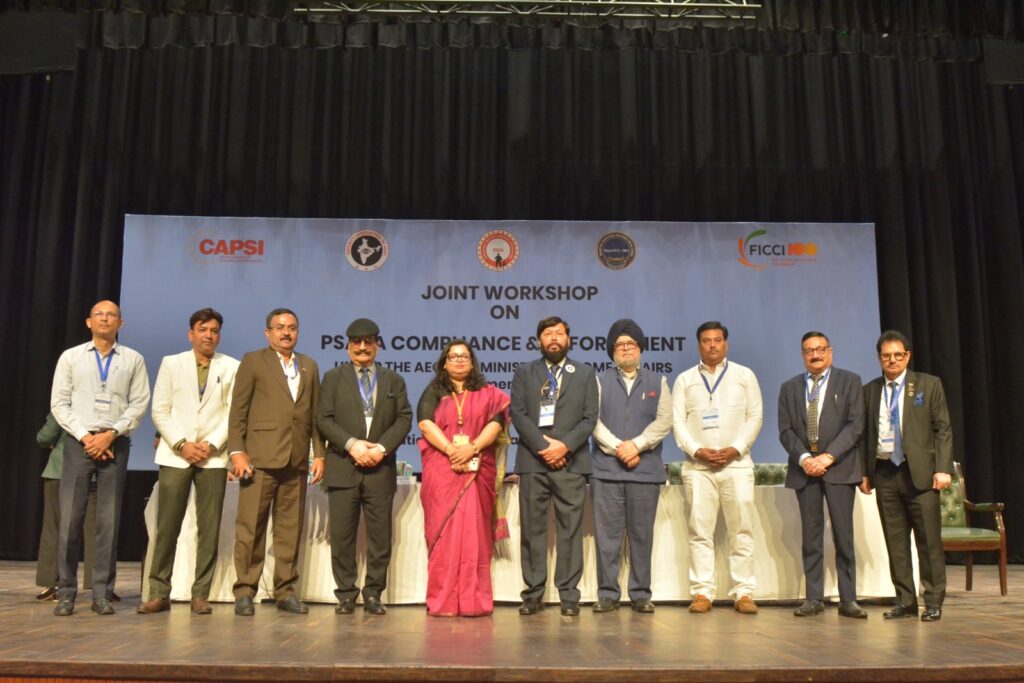
The Joint Workshop on PSARA Compliance & Enforcement, organized under the aegis of the Ministry of Home Affairs (MHA), Government of India, concluded successfully at the Constitution Club of India, New Delhi, with strong participation from government authorities, regulatory bodies, and representatives of the private security industry.
The workshop brought together senior officials from the Ministry of Home Affairs, State Controlling Authorities, Directors General of Police (DGPs), Additional Directors General of Police (ADGPs), and more than 400 representatives from private security agencies, industry associations, and stakeholders from across the country to deliberate on strengthening the implementation of the Private Security Agencies (Regulation) Act, 2005 (PSARA).
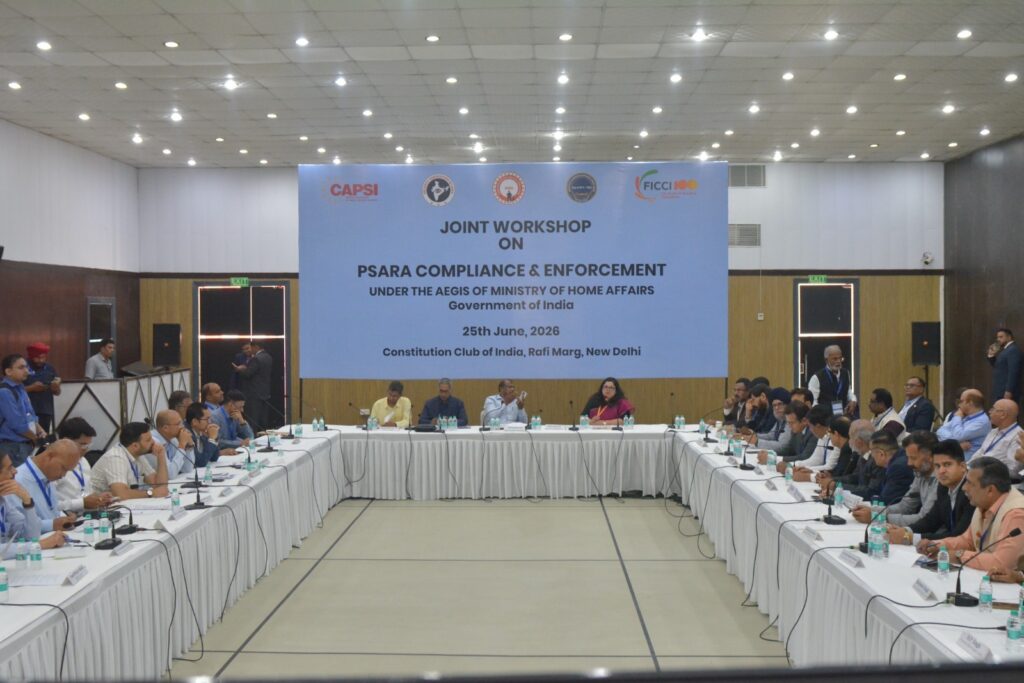
The event served as an important platform for constructive engagement between policymakers, regulators, and industry leaders with a shared objective of strengthening compliance mechanisms, improving regulatory effectiveness, promoting professionalism, and enhancing Ease of Doing Business for India’s rapidly growing private security sector.
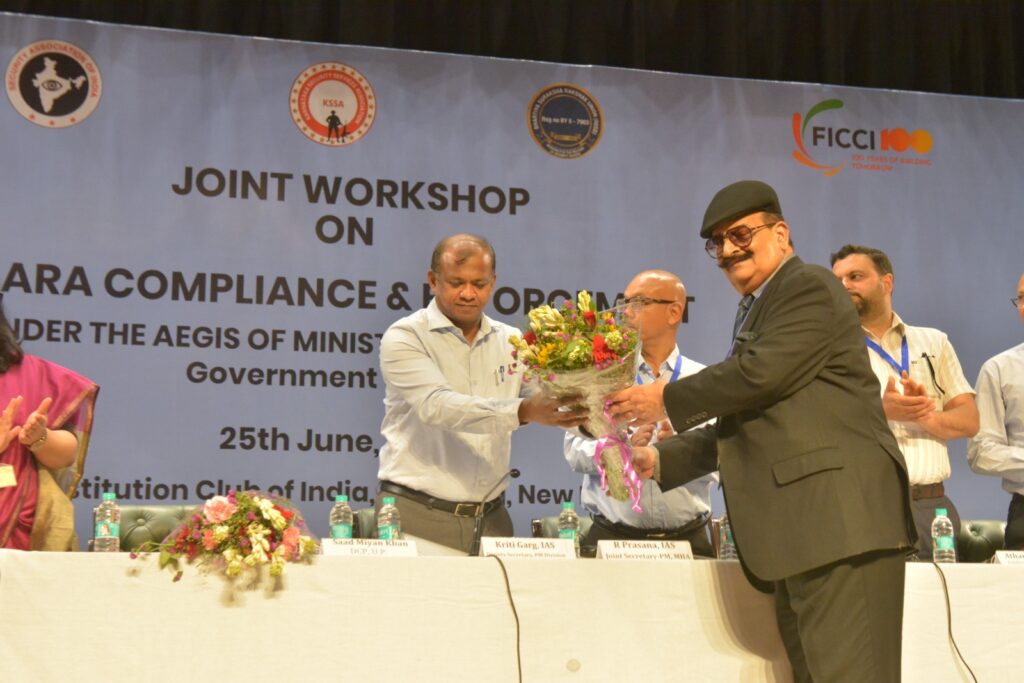
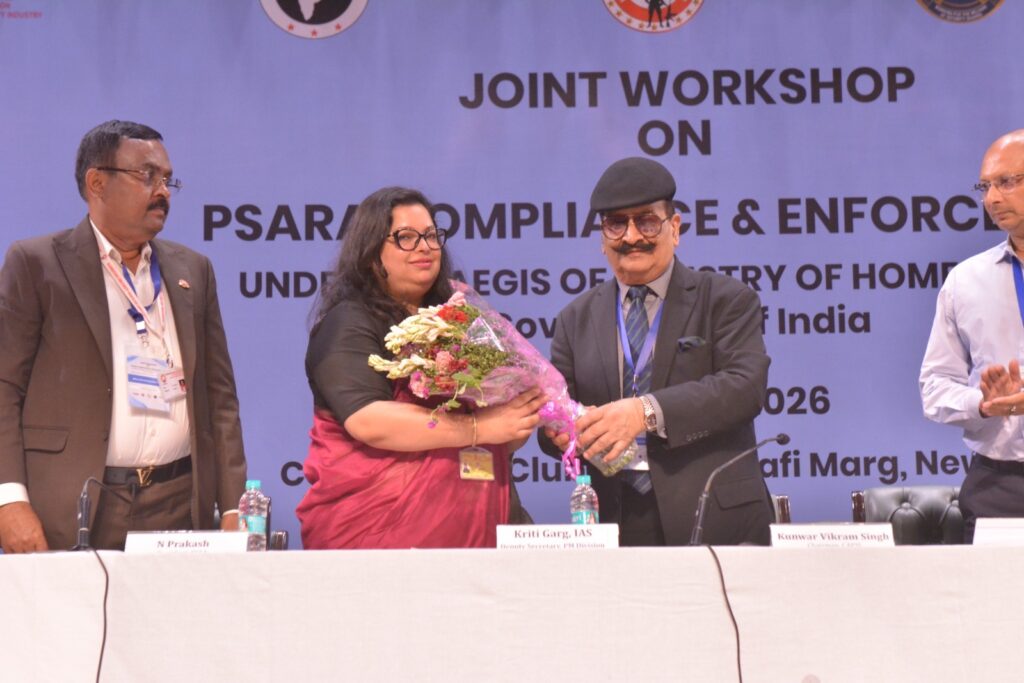
The programme commenced with a welcome address by Kunwar Vikram Singh, Chairman, Central Association of Private Security Industry (CAPSI), who highlighted the critical contribution of the private security industry in supporting national security, public safety, and employment generation. He emphasized the need for stronger collaboration between regulatory authorities and industry stakeholders to ensure effective and uniform implementation of PSARA across all states.
Ms. Kriti Garg, IAS, Deputy Secretary (Police Modernization), Ministry of Home Affairs, delivered an insightful presentation outlining the Ministry’s perspective on PSARA compliance, emerging regulatory priorities, and ongoing initiatives aimed at strengthening the private security ecosystem through improved governance and accountability.
The workshop witnessed active and meaningful discussions during a high-level panel session involving representatives from leading industry bodies including FICCI, SAI, KSSA, BSRU and other stakeholders. Participants shared practical experiences from the field and discussed key challenges in areas such as licensing procedures, compliance requirements, training standards, manpower development, and the need for greater regulatory harmonization across states.
A dedicated session featuring State Controlling Authorities facilitated direct dialogue between regulators and industry participants. The discussions focused on identifying practical measures to simplify procedures, improve implementation consistency, and address operational concerns while maintaining the highest standards of compliance and public safety.
The keynote address was delivered by R. Prasana, IAS, Joint Secretary (Police Modernization), Ministry of Home Affairs, who reiterated the Government’s vision of strengthening the private security sector as a vital partner within India’s overall security architecture. He emphasized the importance of a robust, compliant, and professionally driven private security ecosystem that can effectively support national security objectives while contributing significantly to employment and economic growth.
The interactive open-house session that followed witnessed enthusiastic participation from attendees and provided an opportunity for direct engagement with policymakers and regulatory authorities. Participants raised sector-specific concerns and exchanged views on practical solutions aimed at improving compliance processes and operational efficiency.
The workshop concluded with a strong consensus on the need for continued collaboration between government authorities and industry stakeholders. Key recommendations emerging from the deliberations included enhancing regulatory coordination, promoting standardized best practices, strengthening training and skill development frameworks, improving compliance systems, and introducing measures that further support Ease of Doing Business for the private security sector.
The successful conduct of the workshop marks another important step towards building a stronger, more transparent, and future-ready private security ecosystem in India.
About CAPSI
The Central Association of Private Security Industry (CAPSI) is the apex industry body representing the private security sector in India. CAPSI works closely with government agencies, industry stakeholders, and training institutions to promote professionalism, skill development, policy advocacy, and excellence within the private security industry.