securitylinkindia

MassMediaLink India LLP SecurityLink India

Hikvision New Turbo HD 5.0 Security Solutions

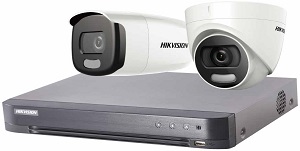
To bring HD clarity to analogue surveillance systems, Hikvision launched its first-generation Turbo HD DVRs and cameras in 2013. Since then, subsequent generations of Turbo HD products have delivered a wealth of innovations including ultra-low-light video recording and super-efficient bandwidth and storage usage – helping Hikvision customers enhance their security and perimeter protection. Building on these revolutionary security advances, Hikvision has now announced the Turbo HD 5.0 family of surveillance products, which includes AcuSense Turbo HD Building on these revolutionary security advances, Hikvision has now announced the Turbo HD 5.0 family of surveillance products, which includes AcuSense Turbo HD DVRs and ColorVu Turbo HD cameras. These technologies make it even easier for organizations and individuals to identify and react to security breaches, while also minimizing manual interventions and security costs. AcuSense Turbo HD DVR Incorporating eleven different DVR models, the AcuSense family uses the latest deep learning technologies to enhance object detection. Specifically, AcuSense Turbo HD DVR detects vehicles or humans, filters out false alarms triggered by animals, leaves and other insignificant objects, and minimizes costly, time-consuming manual checks. As an additional benefit, the AcuSense Quick Target Search feature identifies and extracts footage of humans and vehicles from vast video datasets automatically, saving staff from searching through massive datasets. ColorVu Turbo HD camera ColorVu Turbo HD cameras provide bright color video images 24/7, even in the lowest light conditions. The camera’s round-the-clock color boosting capabilities are powered by a large iris and ED optical glass, an anti-glare diffusion lens, large sensing pixels, warm supplemental lighting, and a range of other innovative video technologies. With brighter and more colourful video images, Hikvision customers are protected against security breaches, even when they happen at night. Turbo HD 5.0: Heightened security at a reduced cost Hikvision’s latest Turbo HD 5.0 takes the capabilities of traditional analogue and CCTV systems to new heights, helping organizations to maximize their security and lower surveillance costs. Hikvision’s latest Turbo HD 5.0 takes the capabilities of traditional analogue and CCTV systems to new heights, helping organizations to maximize their security and lower surveillance costs.  

Read More

Video Walls at the Heart of GIFT City

Delta, a leading provider of video wall solutions, in collaboration with their channel partner Alpha Digital, has set up state-of-the-art video walls at the control and command centre of GIFT City (Gujarat International Finance Tec-City). With this addition, operators would be able to monitor real-time data and improve the availability, safety and efficiency of services in GIFT City. Being one of India’s first smart cities that has been constructed from scratch, GIFT has been included in the Smart City Mission Statement with its futuristic infrastructure. It’s an underconstruction central business district, located between Ahmedabad and Gandhinagar in the Indian state of Gujarat. GIFT is also home to BSE’s & NSE’s International Exchange which has earned for India a place in global capital markets. The city control and command centre (C-4) of this smart city is the first of a kind ICT platform, allowing effective utility infrastructure monitoring/ management as well as city surveillance from a single location.   “The City Control and Command Centre (C-4) is a mix of software and hardware platform that acts as a single central command and control location for managing traffic and utilities remotely. Delta video walls at the center will not only monitor utilities but will also provide real-time monitoring of security and surveillance. Operators can manage the city’s growing population and infrastructure with this solution – with minimum effort and maximum efficiency,” commented Nilesh Purey, Vice President IT at GIFT City. Being a leader in DLP® technology, Delta has always been active in providing reliable video wall solutions known for their high brightness and sharp image quality. With its indepth knowledge and rich experience in the smart cities sector, Delta has installed two sets of 100 square feet of DLP video wall made up of 72” WUXGADLP cubes with redundant power supply at the city control and command centre. The sharp image quality of Delta’s video walls ensures to offer operators’ a high level of attention to every kind of detail, from intricate graphics to minute text. The command and control system is responsible for coordination and integration among various service providers, disaster management, and emergency services, ensuring efficient services to users, safety and security, and record keeping/ documentation. India, Narendra Modi, GIFT also hosts India’s only International Financial Services Centre (IFSC), which will certainly aid in the economic growth of the entire nation. India, Narendra Modi, GIFT also hosts India’s only International Financial Services Centre (IFSC), which will certainly aid in the economic growth of the entire nation. GIFT City is also home to multiple financial institutes including insurance, reinsurance companies, banks and stock exchanges along with many reputed IT & ITeS companies. Currently there are more than 10,000 people working in various sectors in GIFT City. Delta Displays, a division of Delta, is a pioneer in developing professional displays for control rooms in surveillance, security, traffic, command & control, utilities, process control, telecom and broadcast applications. Delta offers a wide array of display technologies including rear projection 4K and full HD laser DLP® video walls, LED-DLP® video walls, Xtra thin-bezel LCD video walls, and high-resolution indoor/ outdoor LED displays with a powerful and highly flexible wall management software suite.  

Read More
Face_recognisation

How Facial Recognition can Prevent Crime and Improve Security

Why facial recognition? Public security threats and demand for new security solutions from end-users continuously push security manufacturers to innovate and upgrade technologies. International news and media reports on terror incidents of violence often shock public consciousness. They act as a grim reminder of present danger to public security. These security concerns need to be addressed with innovative solutions. For everything from safe city projects to home protection, developments are underway all over the world, with their respective challenges. Safeguarding family members, homes, property, and vehicles are the most common applications using these emerging technologies. But the number of video surveillance cameras used in well in very specific environments, and subtle changes in lighting, environment, etc., sacrifice accuracy. The second step is ‘Classification Learning,’ which uses shallow learning and analysis. Far from ideal, the results here directly restrict the breadth and depth of intelligent applications. Deep-learning benefits for intelligent video surveillance Deep learning is intrinsically different from other algorithms. The way it solves the insufficiencies of traditional algorithms is encompassed in a few concepts. From ‘Shallow’ to ‘Deep’ The algorithmic model for deep learning has a much deeper structure than that of traditional algorithms. Sometimes, the number of layers can reach over a hundred, enabling it to process large amounts of data in complex classifications. Deep learning is very similar to the human learning process, and has a layer-by-layer featureabstraction process. Each layer will have different ‘weighting,’ and this weighting reflects on what was learned about the images’ ‘components.’ The higher the layer level, the more specific the components. Simulating the human brain, an original signal in deep learning passes through layers of processing; further it takes a partial understanding (shallow) to an overall abstraction (deep) where we can perceive the object. From ‘Artificial Features’ to ‘Feature Learning’ Deep learning does not require manual intervention but relies on a computer to extract features by itself. This way it is able to extract as many features from the target as possible, including abstract features that are difficult or impossible to describe. More the features, more accurate the recognition and classification will be. Some of the most direct benefits that deep learning algorithms can bring include achieving comparable or even better-than-human pattern recognition accuracy, strong anti-interference capabilities, and the ability to classify and recognize thousands of features. With deep learning technology, the average accuracy of facial recognition increases significantly. Hikvision has demonstrated its ability to advance ahead of the competition. Its advantages in artificial intelligence in security have come about by having its own excellent algorithm development team and using the most powerful GPUs in our computer platforms. The results include winning in multiple international deep learning algorithm competitions such as ImageNet, PASCAL VOC, the MOT Challenge, and more. Achieving the best results come from a combination of having the right hardware and developing algorithms that can perform the computational requirements. Hikvision has the industry’s first data computing platform with bestin-class hardware, and completely independent algorithm team. Hikvision’s facial recognition solution Hikvision’s facial recognition solution pushes the limits of what is possible with today’s advancements in recognition abilities. This solution detects human faces and recognizes attributes creating pre- and post-event face contrasting. With immense capabilities for data storage behind this solution, Hikvision’s Face Library can generate blacklists and whitelists to trigger alarms and automate entry and exit authorizations in a range of applications. Hikvision embeds its algorithms within the cameras and recorders, so no PC server is needed. This means less delay in transmission, decreasing the burden on back-end devices. More than just efficiency, Hikvision holds high success rates – the facecapture rate can reach to 95% accuracy, with face-comparison accuracy rate up to 98% (Based on controlled tests, the facial recognition engine requires face images with minimum 40 pixels between the subject’s eyes (‘inter-pupillary’ distance), preferably 60 to 300; the maximum pan and tilt angles are 25 degrees and 15 degrees respectively for facial image capture). Multiple models and types are available with a wide variety of front-end or back-end combinations to meet multitudes of scenarios and environments, and with world wide support, all human faces are supported. (At the time of writing this article, faces fitting characteristics of Asian ethnicities have the highest degree of accuracy.) Systems integrators will see a wide range of applications becoming possible with this facial recognition solution. It can be applied in banks, luxury shops and hotels to recognize VIP customers and initiate specialized services. Hikvision’s solution can also be applied in security scenarios like police stations, customs, international airports, government installations, and much more, to improve security and investigation efficiency.   By Ashish P Dhakan – MD & CEO, Prama Hikvision India Pvt. Ltd.  

Read More
CAPSI Demands

Security Guards to get Free Bus Rides in Delhi : Assures Kejriwal

The Chairman apprised the CM that there are over four lakh security guards working in Delhi at present which can act as a force multiplier in ensuring safety and security to the habitants and infrastructure of the state. This work force is currently approximately 30% deficient and with an estimated annual growth rate of 22%, the private security industry is one of the major job facilitators in the state. In this preview, CAPSI is keen to work in conjunction with the Delhi Government in areas of mutual interest in order to achieve the desired level of safety for populace. CAPSI offered that a security guard in uniform on the way to his duty and back home travelling in the public transport can act as a deterrent to the criminals’ planning and their unlawful activities, and he mere can force them to refrain from such acts. In other words, a security guard by his sheer presence in the bus or in any other public transportation system can be able to provide incidental security to passengers. The private security guards are duly authorised and verified by the police and so their services can be used to boost safety of bus passengers in lieu of free ride given to them. They will act as ‘eyes and ears’ to ensure safety of women and children travelling in buses. “The Chief Minister agreed to consider this demand. The association offered services of security guards to keep watch in buses and boost safety of women and children,” Somnath Bharti said. CAPSI in a statement also confirmed that Mr. Kejriwal has agreed to consider the demand of the association to allow private security personnel to travel free in public buses in the city. The proposed ‘concession’ will be given to the security guards in uniform commuting to and from the places of their duty only. “Each security guard shall be given a special badge so that public may recognise him/ her as protector of citizens. The Chief Minister appreciated the social responsibility character of CAPSI and wanted us to organise security training to students of the 12th class in all schools. The Delhi Government will sign a MoU to commence these programmes at the earliest. It will also launch the publicity campaign to popularise its partnership with CAPSI for ‘Yatri Suraksha’,” said Kunwar Vikram Singh.

Read More
FICCI _Cyber_Crime_Management

FICCI Homeland Security 2018 : Cyber Crime Management

FICCI has recently organized a two-day conference on Homeland Security 2018 on the theme of ‘Cyber Crime Management’ in association with Vivekananda International Foundation. The Conference was inaugurated by S. S. Ahluwalia, the Union Minister of State for Electronics and IT who cautioned against indiscreet use of internet as it is fraught with grave threats of cyberattacks, thereby depriving the user of precious data and loss of privacy. On the occasion, the Minister also released the FICCI-EY report on ‘Confronting the New-Age Cybercriminal: Disrupting the Web of Crime.’ National Cyber Security Coordinator at National Security Council Secretariat, Gulsan Rai called upon industry professionals to put their heads together to design a framework and system to test whether the processes in place were resulting in doing the job efficiently. He underlined the need for government, industry and other stakeholders to come together to evolve standards and guidelines on the use of systems to ward off cyber-attacks and create internal security systems to suit the country’s needs. Dr. Arvind Gupta, Director, Vivekananda International Foundation & former Deputy National Security Adviser suggested that India would do well to protect itself from the growing menace of cyber-crime through a series of measures, which include review of criminal justice system, greater investment in cybercrime management, creation of indigenous security products, laying down extensive testing infrastructure, greater contribution in setting security standards at international fora, legally empowering the national coordinator to deal with security issues, and high spending by industry on R&D. FICCI President, Rashesh Shah, while lauding the work being done by the government to create digital infrastructure in the country, stressed the need for a robust mechanism to tackle the menace of cyber-crime. He suggested proactive cyber patrolling and monitoring of everything digital. Rahul Rishi, Partner, Advisory Services, EY, said that to confront the new age cyber criminals, a well thought and effective cybercrime management strategy needs to be devised. If the law enforcement agencies have to win this battle, there is a need for a paradigm shift in the approach to policing. The focus needs to shift from conventional to contemporary methods with the right blend of upskilling, and upgrading the three pillars – people, processes and technology. Predictive policing is needed to disrupt the expanding web of crime. “Self-regulation and exercise of utmost care in uploading and downloading information from the Net is a must as any indiscretion would lead to involuntarily aiding to the cyber criminals in their malicious intent. Training people and creating professionals trained in ethical hacking will play a major role in countering the designs of the cyber criminals” – S. S. Ahluwalia Union Minister of State for Electronics and IT, Govt. of India  

Read More
FLIR_Saros

FLIR Systems “ Saros “

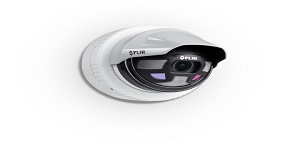
FLIR Systems has recently announced the Saros™ line of security cameras, its next-generation outdoor security product line that combines multiple traditional perimeter protection technologies into a unified solution. This approach is designed to deliver accurate, actionable alerts and verified alarm data. The FLIR Saros camera line enables commercial businesses to implement stateof-the-art outdoor intrusion detection in a cost-effective manner. Traditional perimeter security systems can require substantial investment, both in infrastructure and in ongoing expenses stemming from false alarms. FLIR Saros not only greatly reduces the cost of initial deployment by minimizing the amount of equipment required, but also reduces false positives with built-in advanced analytics, expanding the outdoor perimeter protection market for security alarm monitoring companies. A single FLIR Saros unit combines numerous security technologies, including: Multiple FLIR Lepton® thermal sensors: Provides the ability to deliver wide-area monitoring regardless of unfavorable lighting or weather conditions. High-definition optical cameras: Option of 1080p or 4K resolution to realize accurate visual identification of intruders. IR and visible LED illuminators: Ability to deter intruders with white light illumination. Advanced onboard analytics: Accurate target detection and classification, to help reduce false alarms. ● 2-way audio and digital input/outputs: Enables realtime audio response. The FLIR Saros platform was designed and engineered with today’s cybersecurity risks in mind, with end-to-end encryption for setup, web, and video streams, and configuration lockdown after initial setup for increased tamper prevention. FLIR Saros also eliminates the need for port-forwarding, so devices are less exposed to remote security attacks. “FLIR Saros, equipped with multiple FLIR Leptons, represents a new security paradigm for wide-area commercial locations that face the threat of loss,” said James Cannon, President and CEO of FLIR, “FLIR Saros products open new business opportunities for both central monitoring stations and security integrators looking to distinguish themselves in the industry. The Saros family is an important addition to FLIR’s security portfolio and supports our goal of innovating technologies that increase perception and awareness to support professionals in decision-making that saves lives and livelihoods.”

Read More
IFSEC

IFSEC International Converged Security Centre Powered by Vidsys

IFSEC International 2018 will play host to a dedicated learning and demonstration area, where visitors will benefit from a real-time immersive experience of integrated physical and cyber security. Networked systems and applied technologies are presenting security management professionals with rising levels of information outputs and data, which are rapidly becoming core aspects of their business strategies. The business intelligence available from this deepening level of integration is now a core competency, providing commercial, industrial and government users with unparalleled levels of insight. However, these systems also represent major security vulnerabilities; the nature of their networked capabilities means there is a strengthening need for higher levels of understanding and vigilance in combating threats to information security. It’s a simple equation – greater complexity of technologies will lead to greater threats. This is where IFSEC, Vidsys and their partners can provide the solutions. In this new world of converged security networks and information software, IFSEC announces the introduction of the Converged Security Centre at this year’s show, taking place at London’s ExCeL during 19-21 June 2018. IFSEC has worked closely with key thought leaders in this space, including James Willison, Founder, Unified Security Ltd, and SarbSembhi CISO, Virtually Informed Ltd. Together they have long advocated the use of converged technological solutions managed by cross-functional security teams to identify and mitigate security risks to organisations. In the development of the centre, IFSEC and Unified Security recognised the capabilities of Vidsys’ CSIM solution and their partners. The Converged Security Centre will be powered by the experts at Vidsys, the pioneering architects of Converged Security and Information Management (CSIM), to offer visitors a real-time immersive experience of an integrated cyber physical SOC, demonstrating ways to enable multi-disciplinary security teams to respond to the whole range of security risks across an enterprise. The Converged Security Centre will be a combined learning and demonstration area hosted by Vidsys, Unified Security Ltd and their partners’ representatives, delivering a series of panel discussions with leading Information and Physical security professionals on the exceptional capabilities of a fully integrated CSIM platform. Visitors will learn how, with a fully converged security system, users can correlate multiple events into one situation, track major assets, execute efficient building management operations, monitor social networks, and most importantly enable high level information security resilience for true situation management. The presentations will show the simulated outputs of CSIM across a range of applications including transport, utilities and infrastructure and discuss how these benefit all areas of security management. The Converged Security Centre will also display capabilities from a selected range of Vidsys partners. These include IFSEC premier partner Axis Communications, whose expertise in IP networked surveillance is acknowledged worldwide; Unisys, which provides expertise and guidance on cyber and information security; and Micro Focus International, who will be demonstrating how IDOL, an AI powered analytics platform for video, image, text and audio data, can automate real-time 3600 intelligence for security operators. James I. Chong, CEO, Vidsys says, “We’re excited to be part of the Converged Security Centre at IFSEC this year and to be working with our global partners to showcase what a truly converged security solution can provide to organizations worldwide. We believe there is an immediate need for a converged security solution that unifies monitoring of both physical and cyber security under one, unified platform. By leveraging disparate sources of data, organizations can effectively manage a situation in real-time without having to go to multiple subsystems, including analytics and cybersecurity, to get the job done.” Gerry Dunphy, Brand Director, IFSEC says, “IFSEC is delighted to welcome Vidsys to this year’s show as the major driver behind the Converged Security Centre. Our recent research revealed there is an absolute need for our customers to gain greater understanding of the capabilities of CSIM as well as a deeper awareness of the growing threats of cyber penetration into their networks so this project is an ideal solution. We’re thankful also to our good friends James Willison and Sarb Sembhi from Unified Security who have helped us co-ordinate this exciting new project at IFSEC 2018.”

Read More
nist

NIST Validation Tests for Security Automation

The Security Content Automation Protocol (SCAP) consists of open standards that are widely used by organizations to measure and continuously monitor the security settings and controls of computer systems and applications in order to find software flaws and security-related configuration issues. Also, SCAP standardizes the nomenclature and formats used to manage and measure the vulnerability of computer systems to threats and their compliance to policies, especially Federal Information Security Management Act (FISMA). NIST has published NIST Internal Report (NISTIR) 7511 Revision 5, Security Content Automation Protocol (SCAP) Version 1.3 Validation Program Test Requirements, the latest in a series of documents on SCAP, that describes the test requirements for SCAP version 1.3. SCAP 1.3 consists of a suite of specifications for standardizing the format and nomenclature by which security software communicates information about software flaws and security configurations. The SCAP validation program offers vendors an opportunity to provide independent verification that security software correctly processes SCAP-expressed security information and provides standardized output. Industry and government end users benefit from the SCAP validation program by having assurance that SCAP-validated products have undergone independent testing and have met all necessary requirements defined in NISTIR 7511. Under the SCAP Validation Program, independent laboratories are accredited by the NIST National Voluntary Laboratory Accreditation Program (NVLAP). Independent laboratories conduct the tests defined in this document on products at the request of vendors and deliver the results to NIST. Based on the independent laboratory test report, the SCAP Validation Program then validates the product under test, and the validation certificates awarded to vendor products are publicly posted on the NIST SCAP Validated Products web page. This publication is intended for NVLAP-accredited laboratories conducting SCAP product and module testing for the program, vendors interested in receiving SCAP validation for their products or modules, and organizations deploying SCAP products in their environments.

Read More
interpol

Stay Ahead of Criminals through Modern Policing

The crucial role of National Central Bureaus (NCBs) in enhancing security by taking INTERPOL into a new era of policing and innovation was high on the agenda of the 14th recently held annual Heads of NCBs Conference. Meeting under the theme of ‘NCBs: the Gateways to Modern Policing – The Future is Now,’ 295 senior police officials from 145 countries focused on the importance of NCBs in turning technological and strategic innovation to the advantage of law enforcement worldwide. Addressing a new era with stronger NCBs Calling for a future-oriented global policing strategy structured around proactive NCBs, the President of INTERPOL, Meng Hongwei, opened the conference describing a future of global law enforcement where officers would work hand-in-hand with governments, international partners and private sectors in all areas of policing. TERPOL, we cannot content ourselves with keeping pace, but must work tirelessly to stay ahead of criminals. In order to do so, our NCBs must be seen as both our sensors, and our first line of impact on the ground,” said the INTERPOL President. Preparing tomorrow’s NCB As part of the INTERPOL 2020 reform agenda, Heads of NCB are being briefed on planned changes in policing capabilities, and best practice on how INTERPOL and its member countries use new technology and capabilities for state-of-the-art police work. Over the period of three days (10 – 12 April), delegates reviewed new INTERPOL projects aimed at preparing the world’s police for the crime challenges of tomorrow, including: The use of artificial intelligence in modern policing tools. Digital witness programmes. Facial recognition and biometric identification capabilities. Collection of biometrics for inmates convicted for terrorism related offences. Online training platforms and translating tools. An evolving police organization “At INTERPOL, there will never be a one-size-fits-all approach to the way we serve our member countries, which is why we tailor our capabilities to meet NCB imperatives,” said Jürgen Stock, Secretary General, INTERPOL In this respect, INTERPOL has redesigned its operational framework to include three global programmes against terrorism, organized crime and cybercrime, with characteristics and solutions tailored to each region. “We are moving into a new era – one in which INTERPOL is the strategic bridge between law enforcement and other domains, where INTERPOL is the hub for regional security actors, and in which access to INTERPOL’s global network is propagated to frontline officers in our member countries.” “In this evolution of how INTERPOL delivers its policing capabilities, our NCBs remain absolutely central in guiding our efforts and deploying our capabilities throughout the membership,” added the Head of INTERPOL. Making police data move faster than criminals Testimony to the importance of innovation and constant modernization in policing are INTERPOL’s network projects currently boosting NCB capability across the globe: I-ONE: Modernizing African NCBs so they can share and receive police information and give frontline police at border crossings the capacity to better detect criminals or criminal activity. Twinning: A resourceful way of capitalizing on existing resources, abilities and skillsets, INTERPOL has launched a programme permitting NCBs to draw on each other’s assets and operate at top capacity regardless of geography, financial capacity or degree of development. With INTERPOL database queried 180 times every second over its secure global police communications system I-24/7, INTERPOL’s global database and network are amongst the most advanced capabilities the organization provides member countries to prevent and investigate crime. Illustrating how fast INTERPOL is growing to face ever-accelerating change, delegates heard that the number of searches from INTERPOL’s wanted persons database has increased from 450 thousand a year in 2005 to 3.9 million a day in 2017. They also heard that INTERPOL’s stolen and lost travel documents database has expanded from 8 million in 2005 to more than 74 million today. INTERPOL memorial During the three days of the meeting, participants had the opportunity to pay tribute to fallen police officers worldwide at a memorial which INTERPOL recently unveiled at its General Secretariat headquarters in Lyon as well as the INTERPOL Global Complex for Innovation in Singapore.

Read More
indigo_vision

IndigoVision Latest Solution Released

IndigoVision, the leading developer of complete end-to-end video security solutions, has recently released a solutions that allows users to maximize their security systems potential. This release includes the latest version of their security management solution Control Center, a new cyber-security innovation CyberVigilant® in camera, the Integra™ all in one device, and three additional products which strengthen their existing security offering. IndigoVision’s Control Center has long been regarded in the industry as the best, from its bulletproof nature to search and review forensic features. The software is intuitive and easy to use. The release of v15.2 is no exception with the introduction of dynamic profile switching and improved support for analytics, both of which enable Control Center to grow with any business. CyberVigilant® in camera takes cyber-security technology within the industry to the next level. This unique and innovative cyber-security offering is a fantastic addition to IndigoVision’s cyber range. Users receive notifications direct to their Control Center user interface in the event that a cyber-attack takes place. IndigoVision’s Integra™ provides users with a control room in a box by combining Control Center, an NVR and the license server into a single device. It is perfect for small to medium sites such as retail, education, banking and hospitality. IndigoVision’s existing security offering has also been further strengthened by the introduction of their new 200 Channel NVR-AS 4000, BX HD PTZ dome camera and a BX 4MP microdome camera which is available in two variants. Each of these products uses the latest technology in the industry to provide users with the best options for their security systems. Pedro Simoes, IndigoVision’s CEO, said, “The six products we are releasing are greatly enriching IndigoVision’s security solutions offering. Each product enables our customers to address different market segments, always maintaining a focus on quality and important considerations such as cyber-security, to ensure potential issues are being addressed.”

Read More