securitylinkindia

MassMediaLink India LLP SecurityLink India

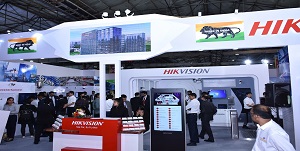
Hikvision's Grand Booth at Secutech India

Hikvision’s New Launches at Secutech India

Hikvision has successfully launched and showcased their latest technology and signature products during Secutech India. The latest SECONA Shield Award wins in three categories reinforce Hikvision’s excellence in innovation and their value proposition to offer vertical solutions for hotels, hospitals and banks. SECONA also recognized three organizations with the Shield Awards under three exclusive categories – ‘Security Project Design of the Year’ for Indian Hotels Company Limited – Security System for JLT, Dubai, ‘Safe Hospital of the Year’ for Yashoda Healthcare Services Private Limited, and ‘Safe Bank of the Year’ for Mannapuram Finance Limited; which is a huge recognition for Hikvision’s vertical solutions team who executed these projects. Ashish P. Dhakan commented, “The SECONA Shield Awards is a prestigious acknowledgement of our success story in the security and safety market. The three award wins for our efficacious work in the field of hotel, hospital and banking are a testimony to our commitment to deliver best-inclass solutions and innovative nextgen technologies to our customers.” With the recently launched products including the Turbo HD 5.0 and DarkFighterX series cameras with many innovative and unique features, Hikvision reaffirms its customers’ trust as a global leader in implementing cutting-edge technology solutions. Continuing their approach to bring the international innovations and technological advances to Indian market, Hikvision realized the importance of AI as the future of surveillance and set a new benchmark in the field of security and surveillance by using artificial intelligence. At the event, Hikvision showcased a series of latest and most advanced technological innovations with AI Technologies, the signature DeepinView series IP cameras and DeepinMind series NVRs. The live demos of AI based face recognition, people tracking and perimeter protection applications evoked good response from the visitors. At Secutech India Safety and Security Conclave (SISSC) panel discussion on Artificial Intelligence in Security, Gagan Lamba, Assistant Vice President, Projects, Prama Hikvision India, emphasized using highly efficient AI enabled technology applications for even more secure and intelligent surveillance solutions to effectively meet the challenges of complex security threats and dynamic technology space. About newly launched products DarkFighterX series cameras DarkFighterX series cameras come with two distinct sensors for capturing and combining brightness and colour. They expand upon the human sense of sight by first mimicking the human eyes and then extending that ability in extremely low-light environments. The technology results in colourful, bright and accurate imaging, making night time surveillance video appear nearly as clear as daytime video. Turbo HD 5.0 series Turbo HD 5.0 series exemplifies the highest standards of security and surveillance technology. As Hikvision’s leading series of analog products, Turbo HD 5.0 includes the front-end series cameras and back-end series DVRs. Furthermore, Turbo HD 5.0 front-end cameras are equipped with an F1.0 iris, high-sensitivity image sensor, and anti-glare supplemental lighting, resulting in colourful, bright, and accurate imaging even in low illumination. The Hikvision booth at the event displayed the live demos of some of the latest technologies including Cloud Computing, Big Data, Deep Learning and Artificial Intelligence (AI). Hikvision partners Milestone and Seagate showcased their innovative solutions for various advanced applications at the booth. The live training programs during the show got good response from the security community. Hikvision’s exposition at Secutech India was a resounding success, with recordbreaking attendance and value added business networking with security professional community. “Being a leader in innovations and solving real-world challenges ever since its inception, Hikvision is committed to bring best-in-class technology and innovations, and to offer solutions for different verticals like smart cities, education, industrial automation, automotive electronics industries etc. Towards creating a more secure environment, we are proud to unveil the latest products and innovative technologies including Artificial Intelligence, AI Cloud, Big Data and IoT. At this year’s Secutech India, we have launched DarkFighterX and Turbo HD 5.0 product series along with latest offerings in access control, video door phone, intrusion alarm, storage, EZVIZ cameras and vertical solutions. We are confident that all the latest products and cuttingedge AI technology applications will enhance our customers’ experience and will further shape up the future of security and surveillance industry”  – Ashish P Dhakan  MD & CEO, Prama Hikvision India Pvt. Ltd.  

Read More
Newsletter CAPSI 27-4-18.cdr

CAPSI Governing Council Meeting

Central Association of Private Security Industry (CAPSI) and Association of Private Detectives and Investigators (APDI) recently held their Governing Council Meeting, which brought together national office bearers and members of CAPSI from across the country, and provided them a valuable networking opportunity to discuss, explore and set the stage for further cooperation a large number of issues pertaining to the private security industry. The conference began with the opening remarks of Kunwar Vikram Singh, Chairman, CAPSI & APDI, and continued with interactive panel discussions, presentations, and briefings on various topics of interest like GST, Code of Conduct, matters related to principle employers etc. The Meeting was graced by the presence of Vivek Bharadwaj, IAS, Joint Secretary (PM), MHA who actively indulged in a meaningful discussion with the industry representatives and invited their comments on current issues being faced by the industry. The Chairman welcomed Mr. Bhardwaj and apprised him of the current issues which the industry faces such as renewal of licenses, license of gunman, immunity to PSA owner against cognizable offences committed by guards, formation of an internal committee to tweak some rules in order to ensure better growth of the industry, requirement of upgrading skills of guards to match with international standards, uniform standard of training across the country, nonPSARA compliant PSAs to be dealt with a heavy hand, and so on. The industry representatives raised following issues to the Joint Secretary: Grant of license to an agency needs to be simplified, registration of Aadhar Card of the owner be linked with KYC forms and get antecedents verified. Provision for permission to operate in multiple states. PSARA be enforceable across the country, and provisions for licenses for all India be formulated. Documentary evidence of being born at a particular place, especially for the older person as the registration of birth at that time was not mandatory. Delhi police firing range to be made available to the licensed armed security guards for practice through the security agencies. DGR model to determine the minimum service charges to be included in the tendering process by the PSAs. Delhi PSARA mandates a training centre to possess minimum one acre of ground for physical activities. This can be offset by conducting physical training in government schools which have playground of one acre or more. The training activities can be carried out after school hours. Validity of PSARA license be enhanced from the present three years to five years. In case it is applied for renewal in stipulated time frame before the expiry date, and renewal not received, the agency’s license may be considered renewed. It was informed that the Govt of Bihar has started the process of auto renewal of licenses, and submission of documents is done on line. Considering the fast turnover of security guards in the industry, present verification procedure followed by the police is very time consuming. It was recommended that e-portals like that of NCRB be developed and used to identify the criminal records of the applicants, if any. If there are no adverse entries, it may be deemed clear. That police stations located in remote areas of the country can be asked to work in collaboration and share information of any agency operating from that area, which otherwise is a difficult and timeconsuming task for CAPSI. That in Maharashtra it is compulsory for agencies to register with Maharashtra Security Guard Board and employ only those who are cleared by them. It was recommended that Maharashtra Guard Board be brought under PSARA. That if an agency submits the application in accordance with the check list of the State Controlling Authority, then the new license should be given within 60 days and renewals within 30 days. Though the validity of the license in one of the states i.e., Jharkhand is for five years, but the Controlling Authority demands a yearly renewal charge of INR 25,000/- which needs to be stopped forthwith. That in AP/ Telengana, the Controlling Authorities are officers who perform the task in addition to their various other assigned tasks, thereby they get little time to resolve issues pertaining to the industry. Controlling Authority in one of the states has enforced training of MDs in the state as part of the condition to renew license. If other states also do that, MD will require to be attending the same course in all states where his agency is functional. It was informed that Government of J&K has passed an Act wherein only those individuals who are the domicile of the state and have 51% share of the company will be able to run a security agency in the State. This debars Indians not belonging to the State of J&K from conducting business in the State. Based on the discussions held, it is envisaged that MHA may issue certain recommendations to State Controlling Authorities which will eventually pave the way towards ease of doing business by the security agencies. Professionalism and compliance of PSARA will bring credibility Mr. Bharadwaj stated that he has been very keen to interact with CAPSI members as they were the true representatives of the security industry. He expressed his satisfaction on the way the deliberations took place and made a note of a few valid points that have been brought to his notice and assured all present that he will certainly follow up on these issues. He took note to examine the current procedure of grant of new license & renewal of existing licenses, utilization of police firing range for practice, and whether J&K Govt can enact the model rules in the manner that they have. He stated that there is a need to understand the Constitution of India. PSARA is a model Act and rules formulated by states are within the broad contours of the Act. So far as checking of criminal records/ antecedents of prospective guards are concerned, these could be obtained from the CCTNS portal which connects all operational police stations in the country except 80. Citizen service portal is another…

Read More
JK Tyre

JK Tyre Selects Matrix T & A Solution

JK Tyre & Industries Ltd. is an automotive tyre, tubes and flaps manufacturing company based in Delhi, India. The company is the only tyre manufacturer offering the entire range of four-wheeler radials for trucks, buses and cars. JK Tyre has a worldwide customer base in over 80+ countries. With production facilities in nine plants, total production capacity is almost 20 million tyres per annum. Challenges J K Tyres has its biggest manufacturing setup in Mysore. The premise comprises a manufacturing unit as well as the administrative department. Since the plant runs 24×7 and there are numerous shifts of workers, they found it difficult to manage multiple shifts manually. Managing visitors was also a problem for thecompany. So, they required a software that would help them keep a record of visitors on time-to-time basis. Creating a visitor’s identity in the form of visitor pass and generating reports of visitors on a monthly basis was a tire some process. JK Tyres was looking for a vendor who could offer them a complete solution related to time-attendance and visitor management. Offered solution Matrix offered a time-attendance solution which centrally handles multiple shifts of workers and employees. Numerous shifts were created to manage the time-attendance of over 500+ workers. Moreover, they provided employee self service, which helped the employees view day-to-day attendance, apply for leave/ tour etc. JK Tyres further required a record of visitors so Matrix delivered visitor management software, which would help them create a visitor pass, fetch visitor records and generate reports of the same. Results Reduction in cumbersome HR tasks. Automatic maintenance of visitor records on day-to-day basis. 40% increase in productivity of employees and workers.  

Read More

The Proxim Advantage Video Security via Wireless

Over the years there have been two distinct trends that have combined to boost the video surveillance or monitoring market evermore into the forefront of discussions. The first has been the rise in terrorism, vandalism, refugee populations crossing borders and additional global turmoil. The second trend has been the advancement in video camera technology – from analog NTSC or PAL standard definition video formats to IP based cameras supporting full frame rate (30fps) 1080p HD video. The technology behind video security has progressed significantly in the last 10 years. With these new resolutions has come advanced technology, functions that were not possible before or were only available off a server in the central monitoring station are now done routinely, often in the cameras themselves. This refers to features such as facial recognition, automatic license plate readers, automatic red light cameras and more. What all these new smart, HD video cameras need is connectivity. Most of these applications require outdoor cameras While all these applications may seem to be unique, there are a few things all of them have in common. First, these deployments and features require good to excellent video definition quality. Standard definition is no longer acceptable, and running at 10 frames per second vs. a full rate of 30fps, is not acceptable. Second, almost universally these applications will have a high percentage of cameras being deployed outdoors, where the environment is harsh, units are unguarded and connectivity is seldom available. For video security the camera needs to be placed where it can perform it’s desired function, and not where there is a convenient fiber or Ethernet cable handy. Having a fiber strand within 10 feet of the desired location of a camera is not much better than being a mile away. It still requires permits, right of way negotiations and some level of digging. Market With all of these factors combined, the wireless video surveillance market is forecasted to reach $1 Billion in 2019. These numbers do not address the latest shifts in the video security market being driven by orthogonal applications. For example, cities deploying intelligent traffic systems use wireless to connect signaling lights in intersections. In many cases the decision is made to add a camera to the deployment, using the wireless network to support both the signaling traffics as well as the video traffic. When carriers or municipalities decide to deploy public Wi-Fi or hot spots, increasingly the request is bundled with a desire for adding a video camera to the hot spots deployment. 1 || 2 || 3 || 4 || NEXT-> || ALL

Read More

The Proxim Advantage Video Security via Wireless

High capacity With a typical security camera consuming up to 8 Mbps, to be effective the wireless network will likely be supporting more than one camera per network. Proxim offers a variety of Tsunami® products that support 10Mbps, 25Mbps, 50Mbps, 100Mbps, 240Mbps up to 633Mbps of useable bandwidth. Reliable video communications There are three main factors to reliable video communications: The network must have high availability (as much as 99.999%) The Tsunami® product line of outdoor wireless networking systems offer a full two year warranty. Proxim has customers who have deployed radios from ten years ago, have never been touched, and are operating today. With an field determined MTBF of well over 1 million hours for some product lines, up to over 2 million hours of MTBF for others, this equates to 1.5 to 3 seconds outage per year. The network must ensure the quality of the video stream in the face of radio frequency impairments or other traffic being carried on that wireless link In this application poor image quality is absolutely not allowed. It is no exaggeration to state that in many deployments lives are at stake, and the video system and in particular the network must be top quality. From a radio frequency performance perspective, Proxim builds into every unit it’s suite of interference mitigation technologies known as Proxim ClearConnect™ ensuring reliable wireless connectivity. While basic connectivity is a must, it is not enough to ensure ‘Reliable Video Communications.’ To meet this standard the wireless technology beyond the radio frequency layer must deliver high quality video images. This relates to the MAC layer used, and Proxim has spent the last 15 years developing, improving and delivering to the market the premier outdoor QoS MAC protocol – WORP®. With WORP® users of a Proxim Tsunami® network have the ability to set jitter and latency service level agreement for the traffic. Minimum data rates for video traffic can be reserved, and all of this is implemented in a network that can be supporting more than just the video, Voice over IP and sensor data can also be supported on the same wireless network with WORP® running. Video is unique in another way from typical data traffic, and in that it is almost all upstream. Meaning the vast majority of the traffic is coming from the camera and being uploaded to the network. Many systems are designed to be asymmetric, supplying more data capacity in the downstream, in the reverse. With Proxim the system is dynamic in it’s upstream/ downstream ratios and can easily move to 80% upstream lending support for this application. A large amount of video traffic is now transmitted as multicast, which most wireless vendors transmit as multiple unicast with massive increases in required bandwidth. Proxim supports multicast and IGMP snooping to ensure multicast streams are properly and efficiently transported over the wireless connections. The network must be secure – Video security traffic is mission critical and as such has work and it has to be secure. Proxim delivers on this requirement in multiple ways Over the air format – Unlike many wireless video systems that are based on and use standard Wi-Fi protocols, WORP® on Tsunami® networks is a Proxim owned, developed and secured protocol. It is impossible for example to use a Wi-Fi sniffer on Tsunami® traffic, unlike mesh systems which use common WiFi frames. The enclosures used in the Tsunami® product line are die cast aluminum, not plastic, and come with tamper proof seals. Encryption – every packet sent over a Tsunami® link is encrypted with AES 128 encryption.   Mobility Security is not required just on the street corner, or in a stadium, it must also operate on trains, trams, buses and even ferries. When looking at backhauling video traffic off of any of these platforms, the bandwidth demand from even one camera can reach gigabits per day. Assuming a 720p camera from the previous table is used, multiplying that by four or even more cameras per train car, per bus yields an instantaneous data rate requirement of 8Mbps and 700Gb per day. The options for transporting this traffic off of a mobile platform are typically restricted to Mesh Wi-Fi, Advanced cellular (LTE) or Proxim. Mesh: In the first case, as noted mesh is not secure and has a very difficult time supporting the necessary QoS required for quality video imaging. In addition handoffs between nodes in a Mesh network can be problematic, especially when confronted with hidden node issues. LTE: While the network can support this traffic, it is cost prohibitive. If a 720p camera is used, this equates to 700 Gb per day, and at a typical $10/Gb its cost can equate to $7,000 per day, per camera. With 2Mbps for standard def video @86k minutes/ day =175Gb of data per camera per day. Outdoor deployments With a significant percentage of the video security deployments taking place outdoors, the equipment has to be able to pass stringent specifications including a rating of IP66 or more. Proxim Tsunami® products are all IP67 rated, meaning they can be submerged in 1 meter of water for 30 mins with no water ingress. 1 || 2 || 3 || 4 || NEXT-> || ALL

Read More
puneet_bhasin

Role of Data Protection Officer (DPO) under General Data Protection Regulation (GDPR)

After four years of preparation and debate the General Data Protection Regulation (GDPR) was finally approved by the EU Parliament on 14 April 2016. The Regulation was adopted and published on 27 April 2016 and will be enforceable on and from 25 May 2018. The General Data Protection Regulation (GDPR) (Regulation (EU) 2016/679) is a regulation by which the European Parliament, the Council of the European Union and the European Commission intend to strengthen and unify data protection for all individuals within the European Union (EU) whilst addressing the export of personal data outside the EU. It regulates the EU citizen data in every part of the world and in every organization processing or storing an EU Citizen’s data. The EU GDPR replaces the Data Protection Directive 95/46/EC and was designed to harmonize data privacy laws across Europe, to protect and empower all EU citizens data privacy and to reshape the way organizations across the region approach data privacy. This new law will have a profound impact on the operational and control environment of the organisations, not only within EU but also within the organisations based outside the EU including India. It extends the scope of EU data protection law to all foreign companies processing data of EU residents. It provides for a harmonization of the data protection regulations throughout the EU, thereby making it easier for non-European companies to comply with these regulations. However, in some areas, the precise interpretation of the GDPR remains unclear, and businesses therefore face uncertainty in terms of their compliance obligations. To address this issue, the GDPR is supplemented by guidance issued by the Article 29 Working Party (WP29), an advisory body made up of representatives of the national Data Protection Authorities of each EU Member State. Provision for Data Protection Officer (DPO) The GDPR has a mandatory provision for the appointment of Data Protection Officer by pertinent organisations. The role of Data Protection Officer (DPO) is an important GDPR innovation and a cornerstone of the GDPR’s accountability-based compliance framework. In addition to supporting an organisation’s compliance with the GDPR, DPOs will have an essential role in acting as intermediaries between relevant stakeholders e.g., supervisory authorities, data subjects and business units within an organisation. All organisations who will be required by the GDPR to appoint a DPO should do this as soon as possible and well in advance of May 2018. With the authority to carry out their critical function, the Data Protection Officer will be of pivotal importance to an organisation’s preparations for the GDPR and meeting the accountability obligations. A DPO may be a member of staff at the appropriate level with the appropriate training, however, GDPR also provides for an option of an external DPO who will be shared by a group of organisations. It is important to note that DPOs are not personally responsible where an organisation does not comply with the provisions of GDPR. The GDPR makes it clear that it is the Controller or the Processor of the organisation who is required to ensure and to be able to demonstrate that the processing is in accordance with the GDPR. Data protection compliance is ultimately the responsibility of the Controller or the Processor. Who needs a DPO For the first time Data Controllers as well as Data Processors are required to appoint a Data Protection Officer in three situations as per Article 37(1) of the GDPR. Where the processing is carried out by a public authority or body Any organisation that is a public authority or a public body must appoint a DPO. However, the GDPR does not define the expression ‘public authority or body.” Rather, the GDPR leaves it to each EU Member State to determine which organisations are public authorities and public bodies. Where a private business performs outsourced public functions on behalf of a public authority or a public body, the WP29 recommends that such business should appoint a DPO, not merely in relation to those outsourced public functions, but also in relation to all of the other data processing activities of that business, including processing activities that are unrelated to the outsourced public functions. Where the core activities of the Controller or the Processor comprise processing operations, which require regular and systematic monitoring of data subjects on a large scale Under this provision companies whose primary activities involve processing personal data on a large scale for the purposes of behavioural advertising, online tracking, fraud prevention, detection of money laundering, administering loyalty programs, running CCTV systems, monitoring smart meters etc., will be caught by the DPO requirement. Core activities can be defined as the key operations necessary to achieve an organisation’s (Controller or Processor’s) goals. For example, a private security company which carries out surveillance of private shopping centres and/ or public spaces using CCTV would be required to appoint a DPO as surveillance is a core activity of the company. On the other hand, it would not be mandatory to appoint a DPO where an organisation undertakes activities such as payroll and IT support, as while these involve the processing of personal data, they are considered ancillary rather than core activities. Where the core activities of the Controller or the Processor consist of processing on a large scale of special categories of data or personal data relating to criminal convictions and offences Article 37(1)(b) and (c) requires that the processing of personal data be carried out on a large scale in order for the designation of a DPO to be triggered. Article 37(1)(c) addresses the processing of special categories of data pursuant to Article 9, and personal data relating to criminal convictions and offences set out in in Article 10. Qualifications Article 37(5) of the GDPR provides that a Data Protection Officer shall be designated on the basis of professional qualities, and in particular, expert knowledge of data protection law and practices, and the ability to fulfil the tasks referred to in Article 39. “It is important to note that DPOs are not personally…

Read More

The Proxim Advantage Video Security via Wireless

Video security requirements With the need and growth for video surveillance, and in particular wireless video surveillance established, what are the specific requirements for this application? What requirements must a viable video security solution provide? These requirements can be broken down into those that apply to the cameras themselves, and those that apply to the wireless network component providing the connectivity. Video security requirements for wireless networks With the need and growth for video surveillance, and in particular wireless video surveillance established, what are the specific requirements for this application? What requirements must a viable video security solution provide? These requirements can be broken down into those that apply to the cameras themselves, and those that apply to the wireless network component providing the connectivity. Video security requirements for wireless networks  High capacity – up to 25 Mbps per cameras.  Reliable video communications – the network must have high availability (as much as 99.999%) and be secure.  Mobility. Water- and dust-proof (IP67-rated).  Wide operating temperature range -40° to 55°C. Video security requirements for the cameras Complex and constantly changing lighting. Complex picture composition, backlighting. Large area overview. High level of detail needed. Vibration. Clear images of rapidly moving objects and persons. When it comes to throughput or capacity requirements, these can vary a great deal based on resolution, frame rate and even the device being used to view the video streams. In this case the device is typically a large monitor in a central location. Table below gives some idea of capacity per camera requirements. From the table it can be seen that to provide an HD video stream at 720p, a common resolution, the network must support at least 2Mbps and ideally 8Mbps. When this is multiplied out it can be seen that a good security camera will require on the order 700Gb per day. Wireless video security and Proxim When looking at each of the wireless network requirements, it is clear that the Proxim Wireless Tsunami® product line delivers on all of these, and does so with features and functionality that meet and exceed the needs described here. 1 || 2 || 3 || 4 || NEXT-> || ALL

Read More

The Proxim Advantage Video Security via Wireless

Over the years there have been two distinct trends that have combined to boost the video surveillance or monitoring market evermore into the forefront of discussions. The first has been the rise in terrorism, vandalism, refugee populations crossing borders and additional global turmoil. The second trend has been the advancement in video camera technology – from analog NTSC or PAL standard definition video formats to IP based cameras supporting full frame rate (30fps) 1080p HD video. The technology behind video security has progressed significantly in the last 10 years. With these new resolutions has come advanced technology, functions that were not possible before or were only available off a server in the central monitoring station are now done routinely, often in the cameras themselves. This refers to features such as facial recognition, automatic license plate readers, automatic red light cameras and more. What all these new smart, HD video cameras need is connectivity. Most of these applications require outdoor cameras While all these applications may seem to be unique, there are a few things all of them have in common. First, these deployments and features require good to excellent video definition quality. Standard definition is no longer acceptable, and running at 10 frames per second vs. a full rate of 30fps, is not acceptable. Second, almost universally these applications will have a high percentage of cameras being deployed outdoors, where the environment is harsh, units are unguarded and connectivity is seldom available. For video security the camera needs to be placed where it can perform it’s desired function, and not where there is a convenient fiber or Ethernet cable handy. Having a fiber strand within 10 feet of the desired location of a camera is not much better than being a mile away. It still requires permits, right of way negotiations and some level of digging. Market With all of these factors combined, the wireless video surveillance market is forecasted to reach $1 Billion in 2019. These numbers do not address the latest shifts in the video security market being driven by orthogonal applications. For example, cities deploying intelligent traffic systems use wireless to connect signaling lights in intersections. In many cases the decision is made to add a camera to the deployment, using the wireless network to support both the signaling traffics as well as the video traffic. When carriers or municipalities decide to deploy public Wi-Fi or hot spots, increasingly the request is bundled with a desire for adding a video camera to the hot spots deployment.   Video security requirements With the need and growth for video surveillance, and in particular wireless video surveillance established, what are the specific requirements for this application? What requirements must a viable video security solution provide? These requirements can be broken down into those that apply to the cameras themselves, and those that apply to the wireless network component providing the connectivity. Video security requirements for wireless networks With the need and growth for video surveillance, and in particular wireless video surveillance established, what are the specific requirements for this application? What requirements must a viable video security solution provide? These requirements can be broken down into those that apply to the cameras themselves, and those that apply to the wireless network component providing the connectivity. Video security requirements for wireless networks  High capacity – up to 25 Mbps per cameras.  Reliable video communications – the network must have high availability (as much as 99.999%) and be secure.  Mobility. Water- and dust-proof (IP67-rated).  Wide operating temperature range -40° to 55°C. Video security requirements for the cameras Complex and constantly changing lighting. Complex picture composition, backlighting. Large area overview. High level of detail needed. Vibration. Clear images of rapidly moving objects and persons. When it comes to throughput or capacity requirements, these can vary a great deal based on resolution, frame rate and even the device being used to view the video streams. In this case the device is typically a large monitor in a central location. Table below gives some idea of capacity per camera requirements. From the table it can be seen that to provide an HD video stream at 720p, a common resolution, the network must support at least 2Mbps and ideally 8Mbps. When this is multiplied out it can be seen that a good security camera will require on the order 700Gb per day. Wireless video security and Proxim When looking at each of the wireless network requirements, it is clear that the Proxim Wireless Tsunami® product line delivers on all of these, and does so with features and functionality that meet and exceed the needs described here. High capacity With a typical security camera consuming up to 8 Mbps, to be effective the wireless network will likely be supporting more than one camera per network. Proxim offers a variety of Tsunami® products that support 10Mbps, 25Mbps, 50Mbps, 100Mbps, 240Mbps up to 633Mbps of useable bandwidth. Reliable video communications There are three main factors to reliable video communications: The network must have high availability (as much as 99.999%) The Tsunami® product line of outdoor wireless networking systems offer a full two year warranty. Proxim has customers who have deployed radios from ten years ago, have never been touched, and are operating today. With an field determined MTBF of well over 1 million hours for some product lines, up to over 2 million hours of MTBF for others, this equates to 1.5 to 3 seconds outage per year. The network must ensure the quality of the video stream in the face of radio frequency impairments or other traffic being carried on that wireless link In this application poor image quality is absolutely not allowed. It is no exaggeration to state that in many deployments lives are at stake, and the video system and in particular the network must be top quality. From a radio frequency performance perspective, Proxim builds into every unit it’s suite of interference mitigation technologies known as Proxim ClearConnect™ ensuring reliable wireless connectivity. While basic…

Read More

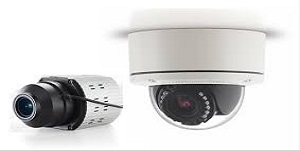
Arecont Vision® UltraHD Dome and Box Cameras with Tri-Mode Capability

Arecont Vision® has recently released the newest members of the feature-rich MegaDome® and MegaVideo® mega camera family. “Arecont Vision already offers our popular 4K MegaVideo® box and MegaDome indoor-outdoor dome cameras in our extensive Mega camera family. The UltraHD brings a new dimension with Tri-Mode technology,” explained Brad Donaldson, Vice President of Product Development, Arecont Vision, “The MegaDome and MegaVideo UltraHD cameras offer the user their choice of 12MP at 20fps (frames per second) for maximum resolution and image clarity, 4K at 30fps with 8MP high definition image quality for high speed requirements, or 1080p at 60fps for maximum frame rate with great image quality.” The true day/ night indoor/ outdoor MegaDome UltraHD dome camera includes a motorized remote focus/ zoom 4.4- 10mm P-Iris lens mounted in a 3-axis gimbal for rapid installation and setup. The MegaVideo UltraHD box camera includes a remote focus/ zoom connector with a range of available Arecont Vision lenses to choose from. The installer-friendly, IP66 environmental-rated and IK-10 impact-resistant housing of the MegaDome UltraHD encloses integrated IR LEDs with adjustable beam angle and LED intensity. Both the MegaDome and MegaVideo UltraHD cameras feature SDHC onboard storage card slot and mechanical IR cut filter. Wide dynamic range (WDR), NightView™ low light technology, SNAPstream™ (Smart Noise Adaptation and Processing) technology for reduced bandwidth without impacting image quality, and dual encoder H.264/MJPEG capabilities are built in as with other members of the MegaDome and MegaVideo series. Other features include privacy mask, motion detection, flexible cropping, bit rate control, multi-streaming, multicasting, forensic viewing, and non-integer scaling. The MegaDome and MegaVideo UltraHD cameras also offer full support for network protocols for enhanced security and management including SNMP, HTTPS, 802.1x, IPv4, and DHCP. Power requirements are met entirely via PoE (Power over Ethernet) or optionally via 12-24V DC. At the heart of all Arecont Vision Mega family cameras is the in-house developed Massively Parallel Image Processing (MPIP) architecture, leveraging a built-in FPGA (Field Programmable Gate Array) integrated circuit. The architecture enables Arecont Vision Mega cameras to be field upgraded with new advanced features and capabilities as they become available, while providing unmatched cybersecurity capabilities. All Arecont Vision Mega family cameras are integrated and tested with the industry’s leading VMS, video analytics, networking, storage, and other software and hardware through the company’s Technology Partner Program™ and subsidiary MegaLab™ technology center.

Read More
IMG_0437

Milind Borkar Honored with Life Time Achievement Award

Milind Borkar, Vice President – India, Middle East & Africa – Infinova Group, has recently been honoured with the ‘Life Time Achievement Award’ at Secona Sheild Awards during Secutech India 2018 at Mumbai for his excellence in surveillance and security sector in India, Middle East and Africa across multiple industries with his prowess and efficiency. Under his esteemed 16-year leadership at Infinova Group, he has set benchmarks by building up a successful team right from the grassroot level. With his fortitude and hard work, he has enriched customer profile as well as credential base of Infinova across regions. Infinova is honored with excellence and credence while successfully dealing in several major critical infrastructure projects such as city surveillance, airports, seaports, defence, metros and railway stations. One of his biggest achievement has been to close the deal for World’s 1st face recognition project at Dubai Airport, worth an order value of USD 1.2 Million, way back during 1992 with a US based FR technology company Viisage Technology, Inc. This was spun out of MIT labs in Boston. So far, the largest project of a single value handled by Mr. Borkar is USD 20 Million. Today Infinova is leading globally by scaling heights of innovation and creating integrated surveillance solutions under the honorable leadership of Mr. Borkar. At the same time, it is truly commendable that someone from Indian Nationality, like Mr. Borkar, has achieved such a great recognition in the Security Industry internationally.  

Read More