securitylinkindia

MassMediaLink India LLP SecurityLink India

Gallagher Keeps an Eye on Secure Access

Having created an integration between their products Gallagher Command Centre and SeeTec Cayuga, Gallagher Security, leading manufacturer of intruder alarm and command center solutions, and SeeTec, pioneer in video management software, announce a technology partnership. The connection of both software products enables customers to evaluate situations based on a synopsis of event and video data, allowing a faster and more targeted response to critical incidents. Thus, SeeTec Cayuga can receive and display events from Gallagher Systems, for instance, ‘access granted’ or ‘door opened.’ In return, live and archive videos from cameras operated with SeeTec Cayuga can be displayed in Gallagher Command Centre, including the possibility to control PTZ cameras. Since there is a clear trend of applications in security ecosystems growing together more and more, the technology partnership is a further important step towards providing integrated security solutions. Kaj Svenningson, VP Business Development at SeeTec, is happy about this new level of cooperation, stating, “Especially in Middle East and Asia we see rapidly growing project sizes. Installations with thousands of cameras have become the new standard, and especially those projects require an overall view, which combines information from various subsystems.” Rob Hughes, Product Manager, Custom Solutions at Gallagher adds, “The integration of SeeTec increases operational efficiency by ensuring Command Centre operators have the critical information they require for incident management readily available within the one system.”  

Read More

Intersec 2018 Concludes at High Note

The latest trends in artificial intelligence and robotics in policing societies, along with major projects fuelling growth in the Middle East commercial security landscape, were among many talking points, as Intersec concluded its 20th edition in Dubai on 23 January. The world’s leading trade fair for security, safety, and fire protection featured 1,337 exhibitors from 59 countries, while 29,532 visitors from 129 countries stopped by the Dubai International Convention and Exhibition Centre. Sharing centre-stage were dozens of product launches, while live demonstrations of fire protection equipment and drones used across a wide range of applications kept thousands of buyers and industry professionals entertained and informed. The Dubai Police is one of Intersec’s long-standing Government Partners, along with the Dubai Civil Defence, Dubai Police Academy, the Security Industry Regulatory Agency (SIRA), and for the first time in 2018, the Dubai Municipality. This year from its exhibition stand, the Dubai Police had a strong focus on artificial intelligence (AI) and smarter technologies to keep residents, visitors, and communities safe.  It also showcased Robocop prototypes and newsmart services that are already in place in its fully automated smart police station, which recently opened in September 2017. Brig. Khalid Nasser Al Razooqi, Dubai Police’s Director General of Artificial Intelligence, gave an overview of the Government body’s vision toward using AI and robots in policing and protection. “We plan to use AI to help us not only reduce crimes, but increase our ability to predict potential crimes before they happen, along with reducing traffic accidents.  We’ve introduced a crime prediction system as well as accident prediction system that can study the behaviours of drivers,” he said, “There have been rumours that due to AI and robotics at Dubai Police, there will be less police officers but this is not true. We’re going to create more advanced positions, where they can provide a better service to keep our residents and visitors happy and safe.” Organised by Messe Frankfurt Middle East, Intersec spans seven show sections of commercial security, fire & rescue, safety & health, homeland security & policing, information & cyber security, smart home & building automation, and physical & perimeter security. With 483 exhibitors in 2018, Commercial Security represents the largest show section, and features two-thirds of the world’s top 50 providers of video surveillance, access control, intrusion detection, analytics, and video management software. Intersec has proved over the years to be a fruitful business platform for global leaders and industry start-ups alike. Ahmed Pauwels, CEO of Messe Frankfurt Middle East said, “Intersec 2018 has further cemented its position as the world’s premier trade platform of its kind for the security, safety, and fire protection industries. “We intend to continue to build on our success and look forward to far greater developments and achievements in the future while working together with the authorities and the active support of the government.” Enterprise Grade Security Solutions The Matrix access control and time-attendance domain showcased its newly launched face recognition technology for authentication through mobile. This technology enables contactless authentication with precise and accurate authentication. Matrix also displayed its high-end cloud based time-attendance and access control solution. With smart-phones set to be next generation technology, Matrix showcased its mobile based access control solution, whereby a user can either scan the QR Code or just twist his/ her phone for authentication. Other products showcased were some extraordinary biometric door controllers useful for applications in time-attendance, access control, visitor management, cafeteria management and more. Matrix video surveillance wing exhibited its video management solution SATATYA SAMAS which approaches threats in a logical, sequential manner through its unique features like CREAM (Cognitive Responsive Engine with Automated Monitoring). CREAM terminates false alerts by going through multi-stage verification, in which one analytic triggers another and the event is analyzed by a string of analytics. Being aware of the need of automation in medium, large and multi-location enterprises, they demonstrated how SATATYA SAMAS can seamlessly automate the parallel working of various systems integrated in an organization. Alongside, they presented the recently launched new range of network video recorders that are equipped with characteristics like Cascading, Camera-wise Recording Retention, Database Level Integration and plenty of other distinct features. The new range of IP cameras that are equipped with SONY STARVIS series sensors with EXMOR technology. This gives the cameras an edge over others in terms of exceptional low light performance, consistent image in varying light conditions (True WDR), better bandwidth optimization, etc. ______________________________________________________________________________________________________________________ Cutting-edge Technologies and Products Uniview released the following latest products and technologies at Intersec 2018. 5MP StarView series 5MP StarView series is a new generation of the series which redefined Starlight technology with outstanding image at super low illumination during the night for both static and moving scene. Uniview used 1/2.7” backside illumination technology sensor, applied F1.2 lens to raise the light physically. It is easy to set and more cost effective for users. Hybrid NVR Hybrid NVR is not only a single product, but also a five in one solution which supports IP/ CVBS/ AHD/ TVI/ CVI. It supports analog camera with up to 5MP resolution and IP camera up to 4MP resolution. Hybrid NVR indicates that Uniview is expanding to more completed solutions, and is able to help customers acquire larger market. VMS – Unicorn UNV VMS Unicorn is one of the most powerful VMS servers which can support up to 1000 channels per server and 14 HDMI outputs with decode cards for video wall. With hot standby server, central backup and RAID, Unicorn guaranteed the video surveillance system’s reliability. With such abundant and powerful functions, it would be very reliable for medium to large scale solutions such as building, campus, industry park and so on. Pioneered cloud upgrade & 0 configuration All UNV NVRs are featured with UNV’s pioneered cloud upgrade. With just one click on NVR or app, users can keep system updated with latest firmware. It’s extremely easy to maintain. With newly designed UI, the latest EZView version showed at Intersec can support searching devices in LAN…

Read More

A Guide to Connected Lighting for IP Video Surveillance

Connectivity is the heartbeat of smart technology. Connectivity between devices improves the quality of decision making from each device, the level of service that each device can provide, and magnifies the value of the overall system. A truly smart device can make relevant decisions, whether that decision is a recommendation on Netflix or Spotify, automatic windscreen wipers that operate when rain is detected or smart heating that turns on 30 minutes before we arrive home from work. To be smart a device has to be connected to other sensors, whether in-built or external, and make connection to them quick and easy. Consider a modern car, it is packed with internal sensors that monitor speed, tyre pressure, temperature, rainfall, lane departure, parking distances, seat-belt sensors, and also integrates with external devices such as GPS and modern smart phones that allow hands free calling, email and SMS message reading. But how does this trend for connectivity affect the professional security systems and surveillance lighting, and what new trends are being seen. Whenever smarter devices are demanded, they are expected to be able to communicate with one another, with easy central management in one place. What does connectivity mean for surveillance lighting Most modern surveillance systems are now IP based. It’s not only been a definite trend in the security industry for a number of years, but it’s become an expectation that our surveillance systems will connect one to the site at any given time, and allow to respond quickly to alarms or events. This need for connectivity within video surveillance systems, and the need for good night-time pictures have fuelled the development of IP lighting and the latest Network Illuminators such as Raytec’s VARIO2 IP that allows security professionals to provide lighting on-demand, delivering the appropriate lighting response to any event. With full IP addressability security professionals are always connected to their network illuminators, and with a simple click can instantly provide real-time responses to security events, even before personnel can be alerted or arrive on site. Within larger systems and unmanned sites automated network lighting provides a dynamic response to on-site activity. Smart and programmable, IP lighting can be configured to meet the exact needs of any security system. It can be fully integrated with and triggered via your VMS/ BMS systems, IP cameras, detection systems, and all other network devices via simple HTTP commands, API or even externally via telemetry input. Network lighting can also trigger and control other devices on the network, for example switching the camera into night mode when darkness is detected. The possibilities for configuring IP lighting are endless. IP lighting not only allows one to stay completely connected to our illuminators, but also enables a deeper integration with other devices, connects him to all activity on site, and increases safety and security all round. Easy set-up and commissioning Installation, setup and commissioning are made significantly easier for security professionals through the use of IP addressable network lighting. Gone are the days illuminator settings were adjusted in situ, often up a ladder or lift. With network lighting, installers now have quick access to configure all lighting settings via an integrated web interface from any remote network location. Adjusting the illumination had often been a time consuming part of any security installation and often involved a 2 person trip to site at night to achieve the best results. But with network lighting, set-up becomes a 1 person job done safely from ground level anywhere on the network. One can remotely adjust the lighting levels and fine-tune the CCTV images in real time, side by side with the camera viewer. This significantly reduces visits to site and minimises labour time and costs. One can also setup illuminators individually or in groups for quick and easy operation of large sites. Network lighting raises the bar for night time performance. We no longer have to settle for images that could be improved, or wait for an engineer to go to site to make operational changes. For example one can remotely alter the photocell sensitivity to change the time that the lighting turns on and off. He can also change the grouping of illuminators at any time, alter the way in which the lighting is triggered, and use timer settings to configure the duration that lighting may be activated on alarm – all done remotely via the illuminator’s web interface. In the rare occasion that an issue occurs with an illuminator, remote diagnostics can be proactively carried out over the network to instantly troubleshoot the problem – again significantly reducing time on site. The development of Network Lighting completely changes the way one thinks about lighting and how he plans the installations. It gives him the platform to achieve a much higher performing system with improved images, and increased security and safety 24/7. Take live control All cameras need light to see during the hours of darkness. But with IP based security systems on the rise, it’s Network Lighting which not only helps generate good night time images, but which works with the entire IP system to help stay connected to the site at all times. Being IP addressable, Network Lighting is designed to deliver the right amount of lighting exactly when and where needed. Whether controlling it via its web interface, the VMS/ BMS, or other platform integration, one has the ability to take control over the lighting at any time to respond to live events there and then. For example, the detection system may identify movement out of hours and raise an alarm. Before taking action, such as deploying a guard or even a police response, it is critical to investigate who or what is there. This is where high quality, dynamic lighting is essential. Knowing the camera location, one can take control over the adjacent Infra-Red lighting to review the situation. He can increase lighting levels to generate more detailed picture information and support cameras zooming into the scene, or decrease the lighting levels to avoid overexposure…

Read More

Building a Future-Proof Data Processing Solution with Intelligent IoT Gateways

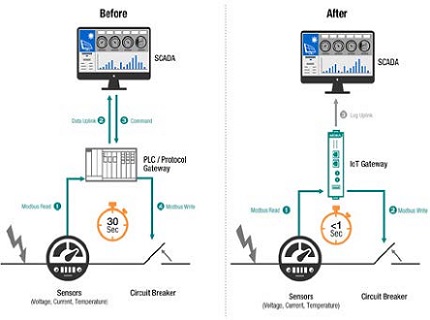
To date, most discussions about the Industrial Internet of Things (IoT) have been about connecting new devices and rapidly bringing them online. In this white paper we look at the implications of bringing such a large number of devices online, namely, the need for efficient methods to collect information from these devices, and discuss how to handle the large amount of data collected from these devices. Industrial IoT solutions are judged on their ability to adapt to various data acquisition needs and how they can transform the data collected from devices into useful business insights that can help decision makers. What makes an Industrial IoT solution truly stand out is the flexible data handling possibilities that it can provide. However, providing efficient, reliable and maintainable data handling as part of an Industrial IoT solution presents significant challenges because of the very nature of data-management solutions that exist today, which are designed mainly for information technology (IT) applications. System integrators looking to deploy IT solutions in the Industrial IoT world are faced with complicated requirement specifications and have to spend a lot of time and money customizing these applications to suit specific industrial automation (IA) requirements. Key challenges In the following sections we discuss some of the key challenges of converging IT solutions with the Industrial IoT. Customizing applications for the Industrial IoT Most solution integrators are not familiar with the various fieldbus protocols used by field devices in industrial automation. They typically end up deploying standard data management solutions that can cater well to IT applications but cannot support the data-acquisition, storage, processing, transmission, and data-analytic needs of industrial automation solutions. Furthermore, the solution integrators might not have the necessary skills to customize these data management solutions for the needs of the Industrial IoT. A customized solution that can fill the gap between the IT and IA applications is required. IT experts, who are oriented more towards the needs of business applications, need to be trained on the critical requirements of industrial applications so that they can build data solutions that are a good fit for Industrial IoT solutions. Customized Industrial IoT solutions It is common knowledge that any customization of controllers, data loggers, and routers requires huge investments of time and money. Embedded computers are highly customizable, but you have to build what you need from scratch. An intermediate solution that combines the capabilities of a controller, data logger, router, and customized software will significantly shorten the time-to-market. Such a ready-made solution will allow you to focus on your core competencies rather than build a customized solution. Easy-to-Use GUI for data acquisition A configurable easy-to-use GUI (graphical user interface) for data acquisition, which allows an IT expert to handle the popular Modbus protocols in industrial automation applications without the need for any additional programming will take the pressure off the field engineers who can focus on the tasks that they are good at. Achieving seamless integration of data Edge devices are deployed and used every day to fill the information gap in the field. These devices operate based on different Modbus protocols or may sometimes use proprietary protocols. The deployment of these edge devices is widening the boundaries of a traditional enterprise into spaces that were never before imagined. Centralized data management systems must be able to integrate disparate data types from these devices and add the relevant contextual dimension to the data to create a unified view of the operations for effective system management. The volume of data that is generated by the edge devices is growing exponentially. Industrial IoT solutions must include a strategy to handle such large volumes of data. Industrial IoT applications should have the built-in ability to respond locally to a field alert and take corrective action at the device end to enable faster response time instead of transmitting data to a centralized data management system. The process of transmitting data to a centralized system for processing could take up to a few minutes, which could be too late if it involves data relating to critical industrial processes. Local intelligence and edge-computing One strategy to achieve faster response time is to deploy Big Data solutions, which are expensive and require skilled personnel. Alternatively, you can process data locally either in the IoT gateway or at the device-end and make decisions locally, which is much faster. Then, only critical data needs to be sent to the central system after data is processed locally. Solutions that support such local intelligence will also help in reducing the data load on an industrial network. On-demand communication An Industrial IoT Gateway is a critical component of an effective Industrial IoT solution. The gateway is used to mass-deploy devices at the field site, acquire data from these devices, and route this data on demand to the central system, to other devices, or to a remote site. However, the complexity of routing heterogeneous data in a network and the stability of the network link might hinder the progress of your solution deployment, and create bottlenecks for remote data transmission. An IoT solution that can simplify data acquisition from devices that use the most popular Modbus protocols and route this data using built-in 4G LTE communication capability will enable efficient, on-demand transmission of data, and faster response times. Developing a future-proof solution Keeping in mind how rapidly the Industrial IoT field is changing, a scalable solution that can adopt and implement a new technology will give you good returns on your investment. For example, if your service provider decides to upgrade to a newer technology like 4G LTE, substantial changes in your network infrastructure might be required to maintain basic connectivity. Older communication standards such as 3G may no longer be supported and you will have to upgrade to the new technology. As more and more service providers jump on the 4G LTE bandwagon, the sooner you adopt this new technology the better off your business will be. Rather than wait for the change to swing into action, a better solution…

Read More

Videonetics Appoints General Manager

Videonetics has appointed Sarang Suhas Deshpande as General Manager – Strategic Alliances and Pre-sales. He will be playing an instrumental role in defining and implementing strategies for expanding business along with fostering deeper engagement with key influencers comprising consultants, system integrators, and end-users, to name a few. Additionally, as a strategic focus, Sarang will continue to further strengthen the company’s business in smart & safe city vertical along with large enterprise market. Sarang brings nearly 20 years of experience in Security Engineering, Security Audits, ERP, e-Governance and Networking. He has a proven track record of consistently working on security projects ranging from city surveillance, campus surveillance, access control project, industrial and residential security projects and so on. Prior to joining Videonetics, he was spearheading MIPL, and was responsible for security audits, systems planning, designing security networks, guide the organizations on information systems and e-Governance applications. Commenting on the appointment, Avinash Trivedi, VP-Business Development at Videonetics said, “We are excited to have Sarang joining Videonetics as part of the leadership team to further develop market for Videonetics across the country. His deep experience in the IT & Security market will add greater depth which will be vital for our ambitious growth plans.” On his appointment Sarang Suhas Deshpande expressed, “I am excited to join Videonetics, an Indian company that is doing pioneering work in visual computing and surveillance space globally. I am eagerly looking forward to this exciting challenge to further strengthen Videonetics market leadership position and create newer markets.  

Read More

NSF Certifies Oncam 360-Degree Evolution Camera

Oncam broke new ground as its award-winning Evolution Stainless Steel camera earned the coveted Standard 169 accreditation from NSF International. The innovative and robust 360-degree camera from Oncam is the first and only surveillance camera of its kind to receive the NSF mark in the ‘Special Purpose Food Equipment and Devices’ category. Oncam’s Evolution Stainless Steel camera series has gained recognition for its ability to cater to more extreme environments that require exceptional resistance to corrosion. The camera boasts an IP69K rating, the highest protection rating available against weather, water, and dust, as well as an IK10 rating against vandalism. It can be washed with high-pressure jets of more than 1,000psi at up to 80 degrees celsius, enabling it to withstand demanding environments. The system is ideal for surveillance applications in diverse arenas like food processing facilities, industrial and chemical plants, vehicle wash stations, and ports and marine applications, amongst others. In addition to resilience, its premium material and stylish design make the Oncam Evolution Stainless Steel camera a complementary addition to any architecture. The latest accreditation, as well as the multiple other awards and commendations the product has received, highlight how its premium material and build quality make it ideal for security applications in challenging and harsh environments. “The NSF mark is a testament to the design of the Evolution Stainless Steel camera series, and underlines Oncam’s commitment to quality, compliance and safety. Its robust build brings unrivalled possibilities to environments with stringent sanitation requirements and adds diversity to our existing line of 5MP and 12MP cameras,” said Abhishek Kumar, Regional Director, South Asia, Oncam, “The Evolution Stainless Steel cameras are designed to be visually appealing and to provide exceptional protection from the elements, while offering the same quality and technological innovation which Oncam is famous for to its customers.”

Read More

ULIS’ Thermal Activity Sensor for Smart Buildings Projects

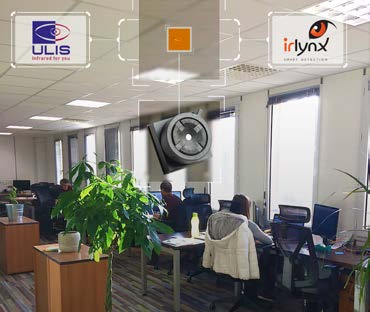
ULIS Thermal Activity Sensor (TAS) for detecting true presence and people counting has been selected by Irlynx for integration in its advanced smart building device, People Sense™. Irlynx will field test ULIS’ thermal sensor in several pilot studies it is undertaking with GE Digital, NEXITY and SNCF, among other smart occupancy and people counting projects linked to optimizing open space areas and reducing building footprint. The global market for IR sensors in smart homes and buildings is expected to grow from $694 million in 2016 to $1068 million in 2022. Both ULIS and Irlynx manufacture thermal vision products to meet emerging needs in workspace management, energy management, security and safety. ULIS is the only manufacturer to produce, in mass volume, advanced occupancy sensors that give system integrators the flexibility to modify key parameters within the thermal sensor to match system requirements. “ULIS is pleased to enable deployment and testing of a people counting solution using its newly designed Thermal Activity Sensor,” said Hien Pham Gia, Sales and Marketing Director at ULIS, “Irlynx has provided ULIS with additional opportunities to obtain valuable end-user feedback based on real-life experiences. This will allow us to confirm the key benefits of our sensor, as well as further strengthen its value proposition for facility managers.” Irlynx developed the electronics as well as the algorithm for the TAS to perform thermal video data analysis and to activate the people counting function. Irlynx’s task was made easier since in using ULIS’ sensors the algorithm could access raw data directly from the sensor. This eliminated the need for Irlynx to carry out complex calibrations. “Irlynx was looking for a partner with great technology and a good understanding of our markets, where cost is key. ULIS demonstrated that it could adapt to its offer and address this challenge. Its technology allows us to deliver an unmatched value proposition to the smart building market, with a greater performance/ price ratio than any existing people counting solution,” said Guillaume Crozet, VP Sales and Marketing at Irlynx, “We also deliver advanced human activity data such as people’s position and trajectories, and desk occupancy, increasingly of great interest among our customers.” Advantages of ULIS’ space occupancy sensor One key advantage a thermal sensor offers facility managers is that it comes without facial recognition, an important feature to preserve the anonymity and privacy of subjects, for example, when monitoring a building. Furthermore, compared to other thermal technologies, ULIS’ TAS offers a wider field of view up to 120°, meaning that fewer devices are required to cover large surface areas. Customers have several options available for tuning ULIS’ TAS for specific application requirements. One option is to work directly on raw video data (true 14 bits parallel bus), which is easily interoperable with standard microcontrollers and low-cost FPGA. System integrators can also optimize the sensor’s power consumption and use it with a standard battery lasting three or more years.  

Read More

FICO PREDICTS AI and Blockchain to Meet in 2018

The growing use of blockchain technology in financial services will include a healthy dose of artificial intelligence, as new, automated analytic techniques look for patterns in the ‘relationship data’ about people, contracts and transactions. That merger of two hot tech trends is one of the predictions made by Dr. Scott Zoldi, Chief Analytics Officer at Silicon Valley analytic software firm FICO, and a recognized expert in the field of artificial intelligence. “Beyond its association with crypto-currencies, blockchain technology will soon record ‘time chains of events,’ as applied to contracts, interactions and occurrences,” Dr. Zoldi wrote on the FICO Blog, “Think about renting a car. In the future, you will be able walk up to a car to lease it, but you’ll do so with a micro-loan for which you are approved to lease the car for, say, an afternoon. This micro-loan will have insurance contracts attached to the blockchain, and a codified history of the car’s history of drivers, events, and maintenance. As you drive through the city and interact with toll roads and parking spaces, all of this information will be automatically recorded and monitored on the blockchain. When you leave the car and lock it, the lease is complete and auditable on the chain. These kinds of data event chains will create new opportunities for graph analytics and novel new AI algorithms to consume relationship data at scale.” Zoldi, who leads the team that builds FICO’s AI analytics for solutions such as fraud management and cybersecurity, also sees a rise in what he calls “defensive AI.” “Attackers use malicious AI and ML to circumvent the protective systems companies have in place,” he wrote, “This arms race, in which criminals arm themselves with adversarial machine learning, tops McAfee’s 2018 security forecast. In 2018 we will see new systems that will seed their outputs with ‘faint signatures’ to mislead, confuse or identify the attackers learning the AI system’s response.” As chatbots get smarter and use more AI, they will not only understand us better, they will also be better at manipulating us, Dr. Zoldi predicts. “By quickly understanding the tone, content and predicted highest-value conversational paths to meet various objectives, chatbots using AI can also learn the magic words to sway our attitude, actions and possibly elicit en masse reactions,” he wrote. Dr. Zoldi’s other predictions for AI in 2018 are: AI will have to explain itself. “The need for Explainable AI (XAI) is catalyzed by regulations like the European Union’s General Data Protection Regulation (GDPR), which requires explanations for decisions based on scores, including those produced by AI and ML systems.” AI will augment us. “Whether it’s drawing the information together for us to be superhuman at investigation, data recall, or improving how we learn new topics, AI will augment our ability to process new information. The question will be as to whether our human brains will atrophy, improve or simply evolve to the rate and frequency of data.” AI will get operationalized. “In 2018, companies will focus on operationalizing AI, particularly in the cloud, to more easily build, refine, deploy and enhance machine learning environments.”

Read More

Genetec Security Center 5.7

Genetec Inc. has recently introduced a new version of Security Center, an open-architecture platform that unifies video surveillance, access control, automatic license plate recognition (ALPR), communications, and analytics. Security Center 5.7 allows users to make insight-driven decisions based on security and analytics data. This latest version also adds privacy protection for individuals, efficiently distributes HID mobile access control credentials, and ensures business continuity with native access control fail-over. Protecting data, the network, and the organization Cyber resilience is about securing communications, authenticating users, and protecting businesses from employees unwittingly allowing vulnerable network-connected devices to threaten the business. To improve overall cybersecurity, Security Center now automatically identifies whether connected edge devices are running the most recent and secure device firmware. Once notified of known vulnerabilities and given firmware recommendations, administrators can take immediate action and eliminate known security gaps. ‘GDPR-ready’ privacy and video analytics More than a trend, protecting individual privacy is fast-becoming a necessity of security management. In some regions like Europe, it is already becoming codified in law. By embedding the KiwiVision™ Privacy Protector ™ module, Genetec enables organizations to automatically blur and mask sensitive video, and anonymize people to protect their privacy. Privacy protector was recently re-certified for its fourth consecutive term with the European Privacy Seal (EuroPriSe), and remains the only video solution to hold this certification.Privacy protector is also rated as ‘GDPR-ready,’ meeting the stringent compliance criteria of the General Data Protection Regulation (GDPR), which will go into effect May 25th, 2018 in the European Union. The KiwiVision Intrusion Detector™  module is also unified with SecurityCenter 5.7 to generate real-time alarms that automatically notify security staff when individuals or vehicles enter sensitive areas, secured perimeters, or restricted zones. Through an accompanying analytics-based intrusion report, operators can now engage in deeper investigations. Additionally, to assist users in scanning through hours of footage, a new Quick Search forensics tool identifies changes in recorded scenes in seconds, ignoring irrelevant footage to narrow down searches. Enterprise access control with native failover and HID mobile credential support The Security Center Synergis™ access control system now comes with built-in failover, so customers can take advantage of continuous monitoring of devices and events. This safeguards critical information and ensures business continuity, even when servers fail. The new HID Mobile Access Portal API integration allows organizations to efficiently deploy mobile credentials to their employees, contractors, and visitors. These credential holders receive an email to download the HID Mobile Access Portal application on their devices, which enables access via Bluetooth® or NFC wireless technology. Employees and visitors will now be able to use their smartphone, wearables, and tablets to gain approved access credentials to securely open doors and defined areas of the premises. Insight-driven reporting and decision support The new advanced Security Center reporting feature intuitively displays data in dynamic charts and graphs, helping organizations gain a deeper understanding of their data, identify trends, and spot undetected patterns. Visualization of physical security data can be employed to quickly isolate security gaps and suspicious activity, identify maintenance issues, find valuable opportunities to improve operations, and ultimately make smarter decisions.    

Read More

Top Four Smart Cities Predictions for 2018

Global smart city market growth will accelerate in 2018 according to a new report from business information provider IHS Markit. The report reveals that options are quickly expanding in the market, thanks to narrow band- Internet of Things (NB-IoT) and long term evolution category-M1 (LTE Cat-M1) deployments. In its Market Insight report, IHS Markit divides the IoT market into the following categories – connect, collect, compute and create. The following describes the top four trends within these categories, which will shape the smart city market in 2018 and beyond. Funding on the rise Lack of funding has been one of the main issues within the smart city market, however, new public and private initiatives are tackling this problem – fostering market growth for 2018 and beyond. Few initiatives were launched in 2017, but more are expected to come in the following years. Australia and other governments recently launched national challenges and funding in order to speed the growth of their smart city sectors. The industry is also providing funding. For example, in November 2017, Cisco announced a $1 billion financing program to help cities develop smart city solutions. Smart city platforms “The smart city platform is the brain enabling the creation of a smart city, shattering siloes and unlocking its real data-driven potential,” said Pablo Toma-si, Senior Analyst, Smart Cities and IoT, IHS Markit, “They are a key element for the long-term smart city vision, and companies of all types are focusing on them. Multiple competitors have found opportunity in the platform space, including network vendors, telecom operators, software vendors and application providers. Along with market expansion in 2018, competition among platform developers is ramping up.” Technologies on top of IoT New technologies are also expanding on top of the IoT. “Machine learning and artificial intelligence, edge computing, drones and blockchain are now part of smart cities,” Tomasi continued, “Their importance will grow in 2018 and they will doubtless play a defining role in the future.” Artificial intelligence (AI) and machine learning (ML) include video analytics and chatbots, like those deployed in Los Angeles this year to provide citizens with information and answers about city services. There is also increasing industry attention on edge computing, as Microsoft, Huawei and Dell focus on these types of solutions. Drones, used for maintenance and security, and blockchain, used to improve government services, will also accelerate in smart cities. Line between smart homes and smart regions Smart cities are now entering the smart home through mobile apps and digital assistants. To communicate with their citizens, Los Angeles and Las Vegas both launched Alexa skills in the last two years, and Las Vegas even created its own channel, bringing city content to owners of Apple TV and Roku. “These types of developments are not the end of the road, rather the starting point,” Tomasi concluded.  

Read More