securitylinkindia

MassMediaLink India LLP SecurityLink India

Caution in Courtroom Evidence Presentation

Use of ‘Likelihood Ratio’ not consistently supported by scientific reasoning approach ( -: Contributed by NIST :- ) Two experts at the National Institute of Standards and Technology (NIST) are calling into question a method of presenting evidence in courtrooms, arguing that it risks allowing personal preference to creep into expert testimony and potentially distorts evidence for a jury. The method involves the use of Likelihood Ratio (LR), a statistical tool that gives experts a shorthand way to communicate their assessment of how strongly forensic evidence such as a fingerprint or DNA sample, can be tied to a suspect. In essence, LR allows a forensics expert to boil down a potentially complicated set of circumstances into a number – providing a pathway for experts to concisely express their conclusions based on a logical and coherent framework. LR’s proponents say it is appropriate for courtroom use; some even argue that it is the only appropriate method by which an expert should explain evidence to jurors or attorneys. However, in a new paper published in the Journal of Research of the National Institute of Standards and Technology, statisticians Steve Lund and Hari Iyer caution that the justification for using LR in courtrooms is flawed. The justification is founded on a reasoning approach called Bayesian decision theory, which has long been used by the scientific community to create logic-based statements of probability. But Lund and Iyer argue that while Bayesian reasoning works well in personal decision making, it breaks down in situations where information must be conveyed from one person to another such as in courtroom testimony. These findings could contribute to the discussion among forensic scientists regarding LR, which is increasingly used in criminal courts in the U.S. and Europe. While the NIST authors stop short of stating that LR ought not to be employed whatsoever, they caution that using it as a one-size-fits-all method for describing the weight of evidence risks conclusions being driven more by unsubstantiated assumptions than by actual data. They recommend using LR only in cases where a probability-based model is warranted. Last year’s report from the President’s Council of Advisors on Science and Technology (PCAST) mentions some of these situations, such as the evaluation of high-quality samples of DNA from a single source. “We are not suggesting that LR should never be used in court, but its envisioned role as the default or exclusive way to transfer information is unjustified,” Lund said, “Bayesian theory does not support using an expert’s opinion, even when expressed numerically, as a universal weight of evidence. Among different ways of presenting information, it has not been shown that LR is most appropriate.” Bayesian reasoning is a structured way of evaluating and re-evaluating a situation as new evidence comes up. If a child who rarely eats sweets says he did not eat the last piece of blueberry pie, his older sister might initially think it unlikely that he did, but if she spies a bit of blue stain on his shirt, she might adjust that likelihood upward. Applying a rigorous version of this approach to complex forensic evidence allows an expert to come up with a logic-based numerical LR that makes sense to the expert as an individual. The trouble arises when other people – such as jurors – are instructed to incorporate the expert’s LR into their own decision-making. An expert’s judgment often involves complicated statistical techniques that can give different LRs depending on which expert is making the judgment. As a result, one expert’s specific LR number can differ substantially from another’s. “Two people can employ Bayesian reasoning correctly and come up with two substantially different answers,” Lund said, “Which answer should you believe, if you’re a juror?” In the blueberry pie example, imagine a jury had to rely on expert testimony to determine the probability that the stain came from a specific pie. Two different experts could be completely consistent with Bayesian theory, but one could testify to, say, an LR of 50 and another to an LR of 500 – the difference stemming from their own statistical approaches and knowledge bases. But if jurors were to hear 50 rather than 500, it could lead them to make a different ultimate decision. Viewpoints differ on the appropriateness of using LR in court. Some of these differences stem from the view that jurors primarily need a tool to help them to determine reasonable doubt, not particular degrees of certainty. To Christophe Champod, a professor of forensic science at the University of Lausanne, Switzerland, an argument over LR’s statistical purity overlooks what is most important to a jury. “We’re a bit presumptuous as expert witnesses that our testimony matters that much,” Champod said, “LR could perhaps be more statistically pure in the grand scheme, but it’s not the most significant factor, transparency is. What matters is telling the jury what the basis of our testimony is, where our data comes from, and why we judge it the way we do.” The NIST authors, however, maintain that for a technique to be broadly applicable, it needs to be based on measurements that can be replicated. In this regard, LR often falls short, according to the authors. “Our success in forensic science depends on our ability to measure well. The anticipated use of LR in the courtroom treats it like it’s a universally observable quantity, no matter who measures it,” Lund said, “But it’s not a standardized measurement. By its own definition, there is no true LR that can be shared, and the differences between any two individual LRs may be substantial.” The NIST authors do not state that LR is always problematic; it may be suitable in situations where LR assessments from any two people would differ inconsequentially. Their paper offers a framework for making such assessments, including examples for applying them. Ultimately, the authors contend it is important for experts to be open to other, more suitable science-based approaches rather than using LR indiscriminately. Because these other methods are still under…

Read More

Protecting IP Surveillance Cameras

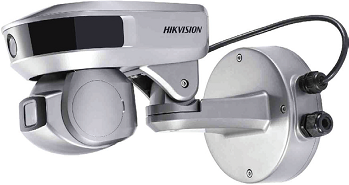
(DITEK Surge Protection) As intelligent, networked IP cameras become the industry standard, protecting them from damage and downtime has become a crucial part of any security system. IP cameras can deliver constant analytic information such as the routes customers take through a store, in addition to providing the round-the-clock surveillance necessary for protecting your business. Should an electrical surge event occur, unprotected cameras can easily become damaged and require maintenance or replacement, which is costly both in price and in downtime of critical systems. It is more necessary than ever to safeguard the consistent functionality of your IP cameras by installing surge protection. Analog cameras require separate functionality – a standalone system often managed outside of an established business network. IP cameras can communicate over your primary data network, and can easily integrate with other systems. This provides faster, simpler connectivity and higher performance, but also comes with higher risk. A surge event at one of your IP cameras – often outside and exposed to weather – can be introduced into your entire network, damaging or even destroying other systems and devices. Surge protection for your cameras has become essential risk prevention for your security system. Downtime on your system is a huge security risk. With IP cameras more able to cover large areas and process data, fewer cameras are required on a modern surveillance system to achieve good coverage. Downtime on any individual camera could therefore leave larger areas without coverage and present more of a threat to your system’s functionality. A surge event that causes even a single IP camera to go down could present incalculable loss and possible risk to your business. It is more important than ever to ensure protection from surge events on every individual device on your network, and prevent a catastrophic event, like a lightning strike, from damaging additional parts of your system. IP cameras provide a wide range of functions beyond video surveillance to protect your business and provide higher return on investment (ROI). Today’s best-in-breed devices can track customer behaviors, perform facial recognition, and allow managers to watch sales and provide customer service in real time. With more functionality on individual cameras, losses are costlier if they are damaged in a surge event. Should a camera go down, your business is losing more than video data – you are losing the real-time ability to optimize and grow. To prevent loss of important functionality, always have surge protection on your cameras and switches. IP cameras are often the most exposed part of your surveillance system because many are installed outdoors and exposed to weather. Though lightning strikes are not the most common instigator of surge events as imagined by most people, outdoor IP cameras are often equipped with metal housings and are in much more danger of conducting a surge to your network than other devices. Surge protectors should consider required protection when installing an outdoor IP camera. Surge protectors are designed to be cost-effective ways to protect your IP cameras. Self-restoring devices keep the surge protectors functional after a surge event, and most are designed to survive several power surges. Should a surge protector be destroyed in a surge event, it is simpler and far less costly to replace than an expensive IP camera. Most surges are not caused by lightning strikes – more often, surges are created from nearby or even from within the facility such as when a large HVAC system kicks on. Surge protection should be considered a simple preventative measure, necessary to protect your cameras – and as such, your entire business – from these surge events. As a business incurs risk, liability, and costly downtime should its surveillance system go down, it is crucial to protect these devices from damaging surge events. Modern IP cameras that are networked to your system present a high risk should they not have proper surge protection. When installing IP cameras onto your security system, the addition of surge protectors should be considered an essential feature to protect your business.

Read More

Honeywell Cyber Security & IP Video Surveillance 2017

Analog video solutions rely on outdated technology. These systems have made way for more secure, IP-based video surveillance systems to provide reliable and cost-efficient solutions in today’s information-rich, digital world. Modern IP technology can enable effective and manageable video surveillance to protect people, their information and their properties, and help ensure continuous operation. It can also create the potential for enhanced safety and security benefits for our society to prevent costly security incidents. However, the cyber security of IP technology has been challenged by the pace of technology transition and development, creating potential safety and economic risks. Cyber-attacks at the local and global scale are on the rise, and according to a 2016 report published by Grant Thornton, the total estimated global financial loss associated with cyber security attacks is estimated to be U.S. $315 billion each year. One example of a major cyber-attack occurred in the U.S. in October of 2016 where Internet access was denied to many major websites including Twitter, The Guardian, and CNN. This attack, which was the largest of its kind at that time, was conducted by a botnet virus called ‘Mirai’ from infected Internet Protocol (IP) video devices on the internet. Threat and vulnerability The importance of cyber security in the IP environment is widely recognized. It requires protecting devices, networks, programs, and data from being copied, changed, or destroyed by unintended or unauthorized access. Since video surveillance products such as IP cameras, network video recorders (NVRs), and video management software (VMS) are IP-enabled, they can be accessed from a remote location using internet connectivity, which means they have the same vulnerabilities as other devices and systems in the open IP world. The U.S. National Strategy to Secure Cyberspace is a report that outlines a five-level threat and vulnerability model, including home/ small business, large enterprise, sector/ infrastructure, national, and global categories. In the report, the U.S. government expresses concerns about: The network devices used to attack critical infrastructures; Large-scale enterprises being increasingly targeted by malicious cyber actors, both for the data and the power they possess; and The fact that cyber vulnerabilities could directly affect the operations of a whole sector or infrastructure. Not only has cybercrime caused significant interruptions for businesses and negatively impacted infrastructure in recent years, but it has also led to large-scale data breaches. According to PwC’s Global Economic Crime Survey 2016, the risk of cybercrime was the second most reported type of economic crime affecting 32% of organizations in 2016. Furthermore, the average cost of a data breach to organizations is $4 million, up from $3.8 million in 2015. Many countries and international organizations have been working on data-protection legislation, national standards, and regulations in most sectors. These regulatory initiatives will help reduce vulnerabilities and clarify questions of liability. Business interruption Business interruption is a type of cybercrime that is usually launched by inserting malicious code on a company or infrastructure network, which limits the network’s ability to provide service and inhibits a company’s ability to conduct business. Malicious code, or ‘malware,’ comprised of viruses, worms, botnets etc., which can be injected into IP devices with weak points, propagate itself to seek more victims on the network and steal sensitive information for the purpose of economic benefit. A botnet, short for ‘robot network,’ is an aggregation of computers compromised by bots (automated machines or robots). These bots are controlled by malicious cyber actors by launching Denial of Service (DoS) or Distributed Denial of Service (DDoS) attacks to targeted critical infrastructures or enterprises. DoS and DDoS pose a serious threat to business service. In June 2015, hackers grounded ten planes belonging to a Polish airline and blocked flight plans sent to planes by launching a DoS attack. The Mirai attack mentioned earlier is also an example of a DDoS attack. Data breach The video system is the core of a security system and contains critical information including system data, deployment, event and alarm information. When this data is compromised it’s called a data breach and this crime can cause significant security and safety risks Video surveillance in private and public applications may capture and record video images of people not relevant to security and safety incidents. Many countries are working toward privacy-protection legislation to prevent privacy breaches by intruders and inside employees. For example, in the U.S., 47 states have breach-notification laws in effect and in Ireland, it is illegal to post video surveillance footage on the internet. Compliance and liability With cyber legislation, national standards and sector regulations in place, regulatory compliance becomes a rigid entrance requirement for IP systems including video surveillance. It impacts the framework for product design, sales, industry entrance, system integration, and user operation. Meanwhile, there is also a market trend of increased cyber insurance sales spurred by the awareness of broader cyber risks. A vulnerable system will be forced to upgrade or be replaced for regulatory compliance, or the customer will have to pay a much higher premium to cover the liability every year. This is why Honeywell is committed to providing a forward-looking, cyber-secure video solution for its partners and customers. Honeywell cyber security solution any businesses haven’t conducted a cyber-threat analysis and don’t know how vulnerable they are to cyber threats. Honeywell can help by analyzing customers’ problems, then implementing best practices to execute optimal product and system design. Honeywell has also developed cyber-security management processes and released vulnerability reporting policies to help its customers face a growing cyber-security challenge. Rigorous system hardening At the product and system design and development phases, Honeywell uses in-house and third-party testing tools to evaluate product vulnerabilities and fix issues to harden the system. To mitigate the risks associated with malicious code, data privacy breaches and system mis-configuration, Honeywell employs the Information Communication Technology (ICT) industry’s security guidelines, which addresses specific video surveillance requirements.   Since IP video surveillance can be installed in both private and public networks the exposed cyber threat can vary accordingly. It is necessary to target system hardening according to…

Read More

Global Port Security Spend Boosted by Port Upgrades and New Terminal Developments

(Frost & Sullivan) With 90 per cent of global trade being carried out by the shipping industry, port security is of paramount importance. As vessel traffic continues to increase, the infrastructure will need to be developed. While a number of ports are in the process of digitising their operations to drive efficiencies and expand capacity, new ports, port upgrades, and new terminal developments will be the major drivers of security spending. Frost & Sullivan’s research, Global Port Security Market, Forecast to 2023, analyses market trends, drivers, restraints and key technologies globally. Regional trends, including key projects and investments, are also discussed. The study focuses on the land-side security of ports including surveillance, perimeter security, command and control, cybersecurity, screening and detection. “Persisting threats concerning the illegal movement of individuals, weapons, drugs, and other illicit materials are driving ongoing efforts to enhance port security technology deployments,” said Frost & Sullivan Security Analyst Rakesh Vishwanath, “New technologies and solutions, including unmanned aerial vehicles, are gaining traction with ongoing pilots and use cases.” Strategic imperatives for success in the evolving port security market include: The development of innovative cyber-resilient technologies that proactively counter constantly evolving cyber threats; Developing strategic partnerships with niche cyber-security suppliers; Positioning cybersecurity at the core of an offering to address growing challenges in an increased threat landscape; and Developing solutions that are easy to understand with actionable intelligence and seamless integration with existing architecture. “The ‘digital port’ will be a critical issue by 2023. Demand for cyber solutions that better protect networks will grow,” noted Vishwanath, “Software requirements for screening equipment and integration of this into the overall port security environment will increase across regions as well.”  

Read More

ONVIF Hosts Annual 2017 Member Webinar

ONVIF, the leading global standardization initiative for IP-based physical security products has recently hosted its annual membership meeting providing an update to members on the accomplishments of ONVIF in 2017 and its outlook for the year ahead. Attendees heard presentations on the final release of Profile A in 2017 and the ongoing development of Profile T for advanced video streaming, activities which are enabling the growing prevalence of the nearly 9,000 ONVIF conformant products in bid and specification processes in projects around the world. In the webinar’s opening remarks, ONVIF Steering Committee Chairman PerBjörkdahl highlighted collective achievements of ONVIF since its founding in 2008, including the continued inclusion of ONVIF in international standards from organizations such as the International Electrotechnical Commission (IEC), on its IEC TC 79 standard for video surveillance and physical access control standards. Björkdahl also cited the progress of ONVIF on a system-to-system approach for interoperability between various management systems, work which is happening in tandem with continued development of additional profiles to keep pace with the changes of the industry. Björkdahl also recognized the extensive contributions of three individuals to various ONVIF technical committees. Arsenio Vilallonga, vice president, Networked Systems, FLIR Systems, Inc. and Nicholas Brochu of Genetec, one of the most active participants in the development of Profile T, were recipients of the 2017 ONVIF Award, which recognizes individuals and companies who have made significant contributions to ONVIF. Sriram Prasad Bhetanabottla of Canon Inc., was recognized with the 2017 ONVIF Distinguished Service Award for his role as an active, contributing core member to the Device Testing activities of the Technical Services Working Group’s and Profile T. Hans Busch of Bosch, Chairman of the ONVIF Technical Committee, spoke to members about the specification development roadmap and its alignment to the standardization activities within the IEC TC 79 working groups for video surveillance and physical access control standards. Technical Services Committee (TSC) Chair Andreas Schneider of Sony gave an overview of the committee’s work on profiles, test tools, the conformance process and Developers’ Plugfests, and highlighted the new conformant product database launched earlier this year. ONVIF Communication Committee Chair Jonathan Lewit of Pelco by Schneider Electric followed the TSC with a recap of the internal and external communications of ONVIF in 2017, activities designed to promote the adoption of ONVIF Profiles.

Read More

China Acknowledges Indian PSI Stalwarts

Iqbal Singh Jagdeva, Managing Director, Turbo Consultancy Services Pvt. Ltd. and Anil Dhawan, Managing Director, DB Secure Solution Private Limited, the eminent security professionals of Indian homeland security industry were invited as the special guest of owner for the China Public Security Expo (CPSE 2017) held from 29 October to 1 November 2017 at the Shenzhen Convention and Exhibition Center, China. The forum also saw the 5th Global Security Industry Alliance’s ‘Gold Shield Award’ ceremony that was conducted alongside the Expo. The industry gold standard award recognizes the significant contributions that enrich the global security industry. The Gold Shield Award is presented to individuals, companies, and trade organizations for their dedication and unfaltering support to the responsible growth of the global security community. Nominees are evaluated and reviewed by a committee of global security industry trade association professionals on the basis of their contributions to the global security community over the past 10 years. This year the committee selected 11 nominees, from a slate of 50, and Iqbal Singh Jagdeva presented the 5th GSIA Gold Shield Award to the winners. It was a moment of great national pride watching Mr. Jagdeva giving out Awards in front of a Global Forum with representatives from USA, Russia, UK, Netherland, China, Bangladesh, Nepal, Philippines, Singapore, Thailand, Malaysia and Japan – Anil Dhawan Managing Director, DB Secure Solution Private Limited

Read More

Matrix Secures Hinduja Hospital

Increases everyday efficiency with Matrix video surveillance solution Hinduja hospital is an ultramodern, multi-speciality tertiary care hospital with a Medical Research Centre (MRC) in collaboration with Massachusetts General Hospital (MGH), Boston, USA. The hospital has an inpatient capacity of 342 beds, inclusive of 53 critical care beds in different specialities. It was the first multi-disciplinary tertiary care hospital to have been awarded the prestigious ISO 9002 certification from KEMA of Netherlands for quality management system. Challenges Hinduja was in use of Axis video surveillance systems which they wanted to upgrade to the latest technology surveillance solution without having to replace the existing cameras, to save investments. For centralized monitoring of multiple cameras from different devices, their existing system used a dedicated server which was complex to manage. Hence, they required a solution, which could eliminate the need of this dedicated server. Besides, they required to store camera recordings for three months as an evidential proof for audit and investigation, which the existing system could do at very high storage costs. Matrix offerings In the first instance, Matrix with the help of its intensive R&D team, was able to successfully add all of Hinduja’s existing Axis cameras to Matrix NVRs. Cascading feature of Matrix NVRs helped them connect all NVRs in a master-slave architecture which enabled centrally monitoring all 73 cameras from different NVRs, without any server. In order to address their storage requirement, Matrix provided features like adaptive recording and camera-wise recording retention, which helped in reducing storage requirement by 50% without compromising on video quality. With the help of this, Hinduja hospital stored camera recordings for three months without investing in additional storage drives. Due to the large number of patients and visitors, Hinduja is now keen on installing intelligent video analytics (IVA) like license plate recognition (LPR) and trip wire of Matrix video surveillance to get real-time security and reports.

Read More

OSH India 2017

Enhancing safety and well-being of the Indian workforce UBM India has recently held the 6th edition of the Occupational Safety & Health (OSH) India 2017 at the CIDCO Exhibition Centre, Navi Mumbai. The show brought together internationally renowned exhibitors, consultants, business experts and key government officials on one common platform, to discuss global best practices and seek solutions to some of the most pressing challenges in the field of workplace safety and health. The participation of leading exhibitors from across the industry reaffirmed the need and focus of OSH India as an industry event. The inaugural ceremony took place in the presence of SudhakarPrabhuRathod, Director, Directorate Industrial Safety & Health, the Department of Labour, Government of Maharashtra; Santosh Warrik, CFO & Advisor, MIDC, Government of Maharashtra; Arvind Mandke, Chief Fire Officer, CIDCO, Government of Maharashtra; Pankaj Jain, Group Director, UBM India Pvt. Ltd., and Yogesh Mudras, Managing Director, UBM India, amidst an august industry gathering. Speaking at the inauguration Yogesh Mudras said, “As a big chunk of the population belongs to the working age group, organisations need to look at the safety and health along with emotional well-being of these employees on priority to retain the best of talent and ensure good productivity. Companies in manufacturing and allied sectors such as automobile, oil and gas, construction etc., are becoming aware of occupational hazards and are working towards creating a safer working environment. Governments for their part are through regulations emphasising on developing infrastructure and providing resources centred around workplace safety, coupled with increasing global investments. Despite a greater focus on occupational safety and health, there is still inadequate education at various levels and public awareness is still absent, as managements and workforce don’t always place safety as a top priority. Although, many organisations have taken the initiative to organize training sessions to create awareness, a concentrated and cohesive strategy is clearly not in place. UBM India’s OSH India is geared to filling this vital gap.” “Also, this year we are glad to have a gender sensitive approach to safety and health as one of the topics at the conference seminar. A broad stratagem for the enhancement of women workers’ safety and health has to be built with an increasing number of women at the workplace, enhancing productivity and breaking the glass ceiling,” he further added. The expo was supported by DISH (Directorate of Industrial Safety and Health) – Maharashtra, Gujarat and Tamil Nadu; Gujarat Safety Council; Indian Technical Textile Association; Taloja Industrial Association; Thane Manufacturer Association and Indian Society of Ergonomics. OSH India 2017 also witnessed the ‘OSH India Safety Awards 2017’ on the evening of day 1 which was open to Indian operating businesses, organizations, alliances and individuals in the public or private sector with a workplace health and safety initiative. This year, OSH Awards received a total of 120 nominations from across industry verticals.

Read More

Videx New Vandal Resistant GSM Range

The new vandal resistant systems include many new advanced features making it more flexible then ever. Using mobile technology to communicate and operate doors, automatic gates, car parks and remote site applications makes it a perfect security solution for unmanned sites and communications outside of normal business hours. It is available as a part of the 4000 series modular door entry system in a range of styles including surface and flush panels in 12 gauge 316 grade stainless steel, the VR120 vandal resistant range and custom panel sizes. All vandal resistant panel variations can be engraved with legend or provided with back lit name plate windows. The system also provides optional proximity access control for up to 1,000 users. GSM systems enable calls to be placed from an entrance point to any mobile or land line telephone. Entry can then be granted using the telephone keypad. Two key innovative features of the new vandal resistant GSM system are – it can call up to 24 users with a divert facility of up to three numbers if the others are engaged or unanswered, and up to 1,000 telephone numbers can be stored to take advantage of the ‘dial to open’ feature which enables callers to dial the intercom and release the door/ gate without being charged for the call. Proximity access control is also an option, and a voice annunciation and LCD display can also be connected ‘if required’ which can include scroll buttons to search for users via the screen. GSM systems require minimum installation and setup time, and can be installed in places which would be too difficult or too expensive for hard wire. There is no need of any cabling to telephone points as the system utilises the existing mobile network infrastructure. The installation in a very short time requires only the mounting of the entrance panel, and the connection of a power supply, antenna and gate or door releasing device. The new system also comes with an event log that can record events that can be viewed by PC software. Programming and maintenance of the user’s details, access control codes and fobs can all be controlled via SMS text messages and USB connection. The GSM system’s flexibility allows changes to be made remotely without the need to revisit the site. Dry contact relay output, additional switched 0V output, push to exit button input and auxiliary input are all available.

Read More

See Tec Experience Video Management Solutions First Hand in 5 Themed Areas

SeeTec will present their video management applications for a wide range of areas and industries at next year’s Intersec trade fair in Dubai. They will exhibit on their own booth for the very first time. KajSvenningson, Vice President Business Development, is looking forward to welcoming customers and prospects on the 50 sqmSeeTec booth. He said, “The Middle East has become a major market for SeeTec in the past years. The projects that we realize here are of a scope that have created a visibility for us that reaches far beyond just the gulf region. And Intersec as the leading regional trade fair is mirroring the importance with its own growth towards a show of a really global scope.” The focus of the presentation in the Dubai International Convention and Exhibition Centre will be five hands-on stations that will not only showcase the video management functionalities of SeeTec Cayuga R11 but also demonstrate, how the software becomes an essential part of security and business ecosystems. “The new trend of adding ‘intelligence’ to the video feeds recorded and managed through SeeTec software will be visible in a dedicated area for video analytics as well as our SeeTec Business Video Intelligence (BVI) range of products. Here, we will show how SeeTec can help our customers to link video data to business processes e.g., in logistics, transportation or banking to safeguard their processes and to make better decisions for the future,” Andreas Conrad, Marketing Director at SeeTec, explains, “We are constantly striving to provide added value to our customers with our software solutions. We want to show that modern video management technology can be the basis of much more than just remote observation of assets, restricted areas and public space.”

Read More