
securitylinkindia

MassMediaLink India LLP SecurityLink India

Leadership on Display : CP PLUS Sets New Benchmarks at IFSEC India 2025

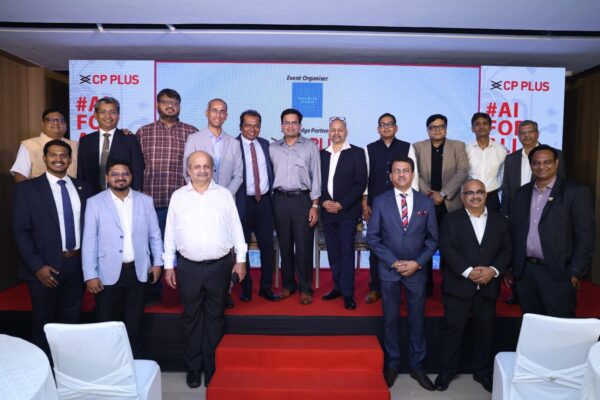
From the moment IFSEC India 2025 opened its doors at Bharat Mandapam in New Delhi, one exhibit stood out as the unmistakable center of gravity for attendees – the CP PLUS Pavilion. Over three dynamic days – December 11-13, – the CP PLUS space transformed into a hub of energy, curiosity, and engagement, drawing industry professionals, government representatives, channel partners, and tech enthusiasts in large numbers. This wasn’t just another exhibition presence; it was a powerful affirmation of CP PLUS’s leadership and its pivotal role in shaping the future of security and surveillance in India and beyond. As one of the most influential events in the security calendar, IFSEC India 2025 saw participation from more than 350 global and domestic brands with over 16,000 industry professionals attending, reinforcing the show’s position as the premier platform to spotlight cutting-edge security technologies and solutions. In this high-energy environment, CP PLUS captured attention not merely through scale but through the depth and sophistication of what it brought to the table. At the heart of CP PLUS’ showcase was one of the largest displays of certified security solutions at the event, a testament to the company’s steadfast commitment to quality, compliance, and innovation. Every corner of the pavilion reflected CP PLUS’ vision – security that is robust, scalable, future-ready, and deeply aligned with the evolving demands of businesses, government entities, and smart-city ecosystems. Crowds moved through packed aisles, stopping at live demos, engaging in meaningful conversations, and immersing themselves in hands-on experiences that brought CP PLUS’ future-ready technologies vibrantly to life. A highlight of the presence was the strategic announcement of a collaboration with Qualcomm Technologies – a partnership poised to accelerate the deployment of next-generation AI-enabled video security solutions tailored for enterprise, industrial, and public infrastructure environments. This alliance promises to combine Qualcomm’s advanced silicon and edge-AI capabilities with CP PLUS’ strong domestic footprint and deep industry expertise. The pavilion itself served as an experiential arena showcasing a broad spectrum of CP PLUS innovations – from AI-driven analytics and real-time situational intelligence to integrated video management systems and remote monitoring solutions that redefine how security is conceptualized and delivered across sectors. Attendees were particularly drawn to demonstrations that highlighted how intelligence at the edge – bringing AI processing closer to where data is generated – can dramatically enhance responsiveness and operational outcomes in real-world deployments. CP PLUS’ showcase at IFSEC India 2025 was not just about technology – it was also a powerful reflection of trust and scale. In a rapidly evolving security landscape where compliance and reliability are non-negotiable, CP PLUS’ emphasis on certified, compliant solutions resonated strongly with visitors. Against the backdrop of new regulatory frameworks in India, including mandatory certifications for surveillance equipment, CP PLUS’ certified portfolio underscored its leadership in both innovation and standards adherence. The energy at the pavilion was palpable. Packed aisles, keen discussions, and sustained footfall throughout all three days bore witness to an engaged audience eager to understand and experience what the next wave of security solutions looks like. For CP PLUS, these interactions went beyond product demos – they were meaningful exchanges that reflected deep interest in the company’s vision for a safer, smarter, and more connected future. Beyond the product spotlight, CP PLUS also used this stage to reaffirm its positioning as a trusted partner for a broad range of stakeholders – from national bodies and enterprise customers to integrators and channel partners. The breadth of solutions on display, coupled with real-time conversations that addressed specific on-ground security challenges, demonstrated CP PLUS’s holistic approach towards building comprehensive and resilient security ecosystems. IFSEC India 2025 was, by every measure, an unforgettable showcase, not only for the scale of CP PLUS’ presence but for the depth of engagement and the clarity of its message. In a market characterized by rapid digital transformation and rising security requirements, CP PLUS stood tall as the symbol of innovation, reliability, and forward-thinking leadership. As the doors closed on this landmark event, one thing was absolutely clear: CP PLUS did not just participate in IFSEC India 2025 – it led the conversation, set new benchmarks, and charted a compelling roadmap for what’s next in the security and surveillance industry. In doing so, it reaffirmed its status as a dominant force – anchored in technological excellence, trusted performance, and unmatched dedication towards securing every corner of India. Read More

Read More

Edge Analytics in Video Surveillance : A Vicon Perspective on the Future of Intelligent Security

Sukesh JadhavHead of Presales and Inside Sales, Vicon In the last decade, video surveillance has evolved from passive recording systems into intelligent, self-learning security platforms. At the heart of this transformation lies Edge Analytics – the integration of AI-powered data processing capabilities directly inside the camera or device, instead of relying solely on servers or cloud infrastructure. As industries push toward real-time situational awareness, zero-latency alerts, and higher system reliability, edge-based intelligence has emerged as the most efficient way to achieve performance at scale. “Edge analytics is not about reducing server load; it’s about enabling real-time security where every camera becomes an intelligent sensor. The faster the system can understand a threat, the faster it can prevent one.” — Sukesh Jadhav, Head of Presales and Inside Sales, Vicon Why Edge Analytics matters today Traditional surveillance systems depend heavily on centralized processing. This architecture struggles with high bandwidth consumption, latency that delays critical alerts, scalability limitations, heavy server dependency and rising TCO, reduced performance in remote or constrained networks, and data-privacy concerns. Edge Analytics solves these challenges at the source. By enabling advanced processing inside the camera – including AI-based detection, tracking, classification, and event correlation – the system becomes smarter, faster, and significantly more resilient. Modern edge-AI cameras are equipped with neural network accelerators, high-performance DSPs, and onboard GPUs that deliver server-class analytics at a fraction of the cost. 1. Ultra-low latency Edge processing eliminates the round trip to the server. 2. High accuracy with real-time decisioning Edge AI models analyze object detection, human & vehicle classification, loitering, line crossing, crowd estimation, behavior analytics, face recognition and auto face enrolment, PPE compliance, temperature anomalies (on thermal devices), and geo-tracking (for multi-sensor/ thermal PTZs). 3. Reduce bandwidth by up to 80% Only metadata and event clips need to be transmitted. Full-resolution streams are used only when needed, drastically reducing network load. 4. Scalability without additional servers A system with 100-500 cameras can run analytics without requiring proportional server expansion. This minimizes CAPEX (server hardware) and OPEX (maintenance, OS updates, cooling, power). 5. Operational continuity Even if the network drops, edge devices continue to detect events, record locally, trigger alarms, and sync data automatically when online. This makes edge AI ideal for oil & gas, metros, smart cities, ports, and industrial plants. Fast & actionable security alerts The biggest strength of edge analytics is context-aware instant alerts. Examples of Real-Time Intelligence: Such instant insights empower operators to react, verify, and respond without delay. How edge analytics enhance business efficiency 1. Decision automation Automated alerts reduce operator workload by up to 60%. 2. Predictive maintenance Edge intelligence can analyze camera performance, environmental changes, thermal anomalies, and pre-empting failures before they cause downtime. 3. Lower TCO 4. Better compliance & reporting Onboard analytics generate Metadata, Heat maps, Behavior logs, and Automated incident reports – supporting audits, safety compliance, and investigation workflows. Privacy & security advantages Edge-based processing keeps most data local, reducing cloud exposure, cyberattack surface, and GDPR/ privacy compliance complexities. Only essential information leaves the device, making deployments safer and more compliant. Where edge analytics create maximum impact Each environment benefits from faster detection, lower cost, and higher operational awareness. The road ahead: Next-generation edge intelligence Edge AI is evolving rapidly. The next wave includes multi-modal analytics (visual + thermal + LiDAR), onboard anomaly detection using self-learning AI, spatial computing for real-time geospatial tracking, federated learning to train models without transferring raw video, ultra-efficient AI chipsets (INT8/ INT4 quantization), and autonomous PTZ with AI-based auto-target recognition. This will push surveillance systems toward total autonomy, with cameras becoming intelligent agents rather than passive sensors. Edge analytics represents the next major leap in surveillance technology. With Vicon’s approach – blending AI-driven performance, industrial-grade reliability, and presales-driven engineering insights – organizations gain a powerful platform that delivers more than security. It delivers real-time, actionable intelligence where it matters most: right at the edge. Read More

Read More

Delay Rated Fences : Redefining Perimeter Security in India

How A-1 Fence is Setting the National Benchmark for Forced-Entry Delay Protection In today’s evolving threat landscape, perimeter security is no longer about simply preventing access; it is about buying time. Time for detection, time for response, and time to neutralise threats before they escalate. This is where delay-rated fencing systems play a critical role, forming the first and most decisive line of defence for critical infrastructure. As India continues to invest in data centres, transport corridors, defence installations, energy assets, and strategic facilities, the demand for certified, performance-tested perimeter solutions has never been higher. At the forefront of this evolution stands A-1 Fence, India’s leading provider of SR1, SR2 and advanced delay-rated fencing systems, engineered and delivered to global security standards. What are delay rated fences and why they matter Unlike conventional perimeter fences, delay-rated fences are tested to withstand forced entry attempts using specific tools for a defined minimum time. The objective is not just deterrence, but measurable resistance, slowing intruders long enough for alarms to trigger and response teams to act. International standards such as LPS 1175 (UK) and ASTM frameworks define how fences are tested, the tools used, and the delay times achieved. For high-risk sites, these certifications are no longer optional; they are now essential. A-1 SR1 Rated Fence: Certified protection for medium-risk perimeter The A-1 SR1 Rated Fence, certified to LPS 1175 SR1, offers a minimum 1-minute forced entry delay against basic hand tools. This makes it ideal for sites where opportunistic intrusion is the primary concern. Key advantages: Typical applications: For organisations seeking certified protection without over-engineering, A-1 SR1 provides the ideal balance of deterrence, delay, and value. A-1 SR2 Rated Fence: High-security protection where every second counts When threats are more deliberate and determined, A-1 SR2 Rated Fence delivers the next level of assurance. Tested and certified to LPS 1175 SR2 (Issue 7)/ B3 (Issue 8), this system provides a proven 3-minute delay against enhanced hand tools. Key advantages: Typical applications: SR2 fencing is designed for environments where response time is mission-critical – and where perimeter failure is not an option. A-1 AKAT® NG 30: Extended Delay Protection for High-Threat Environments For assets where intrusion attempts are likely to be deliberate, equipped, and persistent, A-1 Fence offers its most advanced delay-rated solution – ASTM-certified A-1 AKAT® NG 30. Engineered specifically to counter aggressive cutting and climbing attacks, AKAT NG 30 is designed to deliver extended forced-entry delay beyond conventional SR ratings, making it suitable for the highest-risk perimeters. Through its high-strength welded construction and anti-cut geometry, AKAT NG 30 achieves delay times of up to 30 minutes against medium cutting tools and provides significant resistance of more than 6 minutes even against aggressive power tools, giving response teams a decisive operational advantage. Unlike standard anti-climb fences, AKAT focuses on measured delay performance, not just deterrence. Key advantages: A-1 AKAT® NG 30 is purpose-built for defence installations, border security, data centres, energy facilities, and other strategic assets, where every additional minute of delay directly translates into enhanced threat neutralisation and site security. Engineering That Goes Beyond the Fence What sets A-1 Fence apart is not just certification, but system-level thinking. Every delay-rated fence is engineered as part of a layered security ecosystem, seamlessly integrating with: Equally important is durability. A-1’s hot-dip galvanising and powder coating processes ensure long-term corrosion resistance, a critical factor for India’s diverse climates and harsh environments. Why A-1 Fence Leads the Delay-Rated Segment in India With over 25 years of perimeter security excellence, A-1 Fence has helped redefine how Indian infrastructure thinks about perimeter protection, shifting the conversation from ‘can it be breached?’ to ‘how long can it be held?’ Conclusion: Delay is the New Defence In modern security design, delay equals control. Whether it is SR1, SR2, or advanced AKAT systems, delay-rated fencing gives security teams the most valuable asset of all: time. As India’s infrastructure grows more complex and critical, A-1 Fence continues to lead the way, delivering certified, performance-driven perimeter solutions that stand up to real-world threats. A-1 Fence, Engineering Time. Securing the Nation. Read More

Read More

ASIS New Delhi India Chapter Concludes Highly Impactful Annual General Meeting 2025

The ASIS New Delhi India Chapter hosted a landmark Annual General Meeting and Conference 2025 at a Renowned 5 Star Hotel Brand, in Gurgaon, marking a significant milestone in professional security leadership and collaboration. The conference drew over 250 senior security leaders from India and abroad, representing corporates, government bodies, ex-defence forces, ex-IPS, law enforcement agencies, aviation, banking, critical infrastructure, cyber security, and emerging technology sectors. Designed to reflect ASIS International’s global thought leadership, the conference focused on real, current, and future security challenges, emphasising integrated security models, intelligence-sharing, organisational resilience, geopolitics, and ethical governance. The depth and relevance of the discussions resulted in sustained engagement. “The objective was clear – to bring together defence, government, and corporate leaders to discuss the security issues that truly matter today and will define tomorrow,” said Mahesh Singh Chauhan, Chairman, ASIS New Delhi India Chapter and Executive Director of renowned Risk Consulting- LRC, “The standing ovation from the audience reaffirmed that our focus on real-world relevance, ethics, and collaboration strongly resonated with the community.” The AGM started with the blessings of Lord Ganesha and all Deities by lighting the lamp and singing the National Anthem. Opening address of the Annual General Meeting by the Mahesh Singh Chauhan, Chairman ASIS New Delhi India set the tone of the event, bringing the attendees to a next level of experience, followed by Ms. Jyotsana Bhalla, Chapter Secretary running down the Annual Chapter updates covering all initiatives taken by the chapter throughout the year. Sanjay Kaushik took the attendees through the vision of ASIS APAC board and their future plans. The Event guest relations were well handled by the Chapter Treasurer Ms. Garima Goswamy. The AGM started with two keynote speakers setting the tone for the session: The conference featured three distinguished panel discussions. The first brought together senior leaders from ex-Forces, ex-police, global banking and judiciary to discuss shared intelligence, emergency response, and public–private collaboration. The second explored the geopolitics of artificial intelligence and national security, standing out for its strong representation of senior men & women leaders from Ex-defence, government, and multinational organisations. The third panel examined India’s roadmap toward autonomous security ecosystems by 2030, blending speakers from banking, Private Security firm, Consulting, and expertise with Big Four consulting insights. A defining moment of the event was the gesture of Mahesh Singh Chauhan, the current Chairman inviting and recognizing all past Chapter Chairmans of the ASIS New Delhi India since inception, honouring their contributions to building and strengthening the ASIS community in India. The New Delhi Chapter Executive Committee also honoured Sh. Gurbir Singh, a standing Stalwart for his exemplary 35 years of service to the security community and being associated with ASIS India. Widely acknowledged as one of the most future-oriented ASIS chapter events in recent years, the conference reinforced the credibility, maturity, and global outlook of the ASIS New Delhi India Chapter – part of Asia’s largest network of security professionals. The event would not have been successful without the support of our Sponsors and Partners. The Annual General Meeting concluded with the Vote of Thanks by Sh. Girish Kaushik, Vice Chairman ASIS New Delhi India Chapter followed by Cocktail Dinner. Read More

Read More

Cyberthreat Predictions for 2026

Vivek SrivastavaCountry Manager, India & SAARC at Fortinet Industrialized Cybercrime and the Acceleration of the Attack Life Cycle The 2026 Cyberthreat Predictions Report continues Fortinet’s ongoing analysis of how technology, economics, and behavior intersect to shape global cyber risk. The picture emerging for 2026 is one of acceleration. Adversaries will increasingly operate as industrial systems, using automation, specialization, and AI to scale both attack speed and reach. For CISOs and security leaders, this means re-architecting defenses to operate at the same speed as adversaries. Security programs designed for linear response can no longer keep pace with an ecosystem characterized by parallel automation and rapid exploitation. The coming year will not be defined by a single new technique or malware strain, but by the refinement and industrialization of those that already exist. We expect threat actors to focus less on innovation and more on throughput – the ability to move from reconnaissance to monetization in the shortest possible time. This shift is reshaping the economics of cybercrime and forcing defenders to compress detection and containment cycles across every environment. In practice, this means: Together, these scenarios illustrate a single reality – Velocity now defines risk. As the line between human and machine operations blurs, both attackers and defenders are adapting to an environment where milliseconds can define outcomes. FortiGuard Labs’ 2026 predictions explore this evolution from multiple perspectives – how adversaries are industrializing, how defenders are adapting, and how collaboration across public and private sectors will shape deterrence and resilience in the years ahead. The unifying theme across these predictions is convergence. Offense and defense now evolve through the same forces – AI, automation, and the cloud – each shaping the other’s rate of adaptation. The contest ahead will be decided less by who has the most advanced tools than by who can integrate intelligence, technology, and decision-making into a single, continuous system. Executive summary The global threat environment in 2026 will be defined by speed, automation, and scale. Cybercrime will continue to mature into a structured industry supported by specialized roles, automated toolchains, and AI-driven decision-making. Attack groups will increasingly operate more like enterprises than independent actors, measuring success not by innovation but by throughput such as the rate at which they can turn access into profit. For defenders, this represents a pivotal shift. Security operations can no longer rely on static configurations or periodic assessments. To address today’s rapidly evolving challenges, they must operate as an adaptive system, continuously learning, adjusting, and responding to real-time conditions. Two forces are driving this evolution. The first is the industrialization of cybercrime, as automation and AI integrate into every stage of attack development and deployment. The second is the acceleration of the attack life cycle, in which the time between compromise and consequence continues to collapse. Attackers who once needed days to monetize access can now do so in hours by automating reconnaissance, data analysis, and extortion. These changes are already visible. A compromised cloud workload may trigger an AI-driven privilege escalation script within seconds. A stolen database can be quickly parsed by generative AI (GenAI) to identify high-value records before the victim even realizes the breach has occurred. Pre-infected botnets and access brokers now provide turnkey infrastructure for ransomware affiliates, enabling near real-time campaign launches. For defenders, the implication is clear. Threat intelligence, exposure management, and incident response must operate as one continuous system. Readiness will increasingly be measured by the ability to act at AI-level speeds to translate threat intelligence into containment before disruption occurs. This report examines both sides of that equation. The Adversaries section explores how attackers are industrializing their operations, while the Defenders section focuses on how organizations can operationalize threat intelligence and automation to match that velocity. Together, they point to a single conclusion: The contest between offense and defense has become a race of systems, not individuals. Update on predictions for 2025 Many of the developments forecast in FortiGuard Labs’ 2025 Cyberthreat Predictions Report have materialized faster than expected. What were emerging patterns a year ago – AI-assisted threat operations, Crime-as-a-Service (CaaS) specialization, and geopolitical fragmentation – are now defining characteristics of the global threat landscape. AI in operational use The 2025 report predicted that AI would move from experimentation to full operational deployment. That shift has already occurred. GenAI is routinely used for social engineering, credential harvesting, and automated scripting. The next phase, now emerging, involves autonomous agents capable of managing multiple attack functions without human input. Expansion of CaaS models Integrated underground economies have matured into platform-style marketplaces. Access brokers, data resellers, and malware developers now operate as interconnected suppliers, allowing smaller actors to launch sophisticated attacks with minimal resources. Target diversification Predictions of expanded targeting across operational technology (OT), cloud, and supply chains have proven accurate. Ransomware groups increasingly blend data theft, disruption, and extortion, often striking multiple tiers of vendors simultaneously. Critical infrastructure and healthcare remain disproportionately affected, particularly in areas where modernization has outpaced security. Data as a primary asset Data theft has transitioned from a byproduct of intrusion to a monetized commodity. AI-driven analysis now converts raw data into actionable intelligence, turning information into a currency of extortion and influence. Together, these developments confirm a broader shift from opportunistic attacks to structured operations. Industrialized cybercrime, once a projection, has become the baseline from which new threats emerge. The next phase of attack: 2026 offensive capabilities predictions As 2026 unfolds, cybercrime continues to industrialize. Automation, AI, and specialization will continue to converge, enabling attacks to be produced at scale. FortiGuard Labs anticipates several developments across offensive capabilities. AI-enabled cybercrime agents The defining change of 2026 will be the emergence of purpose-built, autonomous cybercrime agents. These systems will extend far beyond the early FraudGPT, WormGPT, and similar models seen on underground forums in 2025. Designed for specific operational tasks such as credential theft, phishing, or lateral movement, these agents will execute against entire segments of the attack chain without requiring human oversight. This shift will drive an explosion in capacity….

Read More

Merit Medical Strengthens Global Manufacturing Security Through Video Integrated with Access Control

Merit Medical Systems, Inc., a leading manufacturer of proprietary disposable medical devices, has successfully implemented an integrated physical solution combining video management with access control. Founded in 1987 and headquartered in South Jordan, Utah, Merit employs approximately 7,000 people worldwide and operates manufacturing facilities across multiple continents, producing interventional, diagnostic, and therapeutic devices for hospitals and healthcare facilities. To enhance their operations, Merit Medical has created a unified platform by integrating their access control system into their video management software (VMS). This strategic integration allows their personnel to manage both video surveillance and access control through a single, map-based interface. Working with longtime integration partner Stone Security, a BearCom Company, Merit has developed a comprehensive solution that transforms how they verify identity, track movements, and respond to events across their global operations. Challenge: Managing disparate systems Managing separate video and access control systems created operational inefficiencies for Merit’s team. With operators constantly switching between platforms, incident response times were slower than desired. Visual verification of access credentials required manual coordination between systems, while investigating historical activity meant navigating two separate databases. Additionally, training staff on multiple systems increased onboarding time, and all of this created the need for a more unified, efficient approach. Solution: Seamless platform integration Merit Medical implemented an integrated solution combining Milestone XProtect video management software (VMS) with their existing S2 NetBox access control system. Working with Milestone Premier Partner Stone Security, Merit leveraged the ORBNET Systems connector to unite these platforms, standardizing on network video cameras from Axis Communications throughout their facilities. The solution incorporates door controllers, credential verification, and visual recognition into Merit’s existing VMS-based mapping system. This integration provides a single interface for operations, allowing staff to verify identity, control access, and review events seamlessly. Results: Greater efficiency through combined solution The integrated platform has significantly enhanced Merit’s operational effectiveness and security posture. Staff can now verify credential use against live video, eliminating the need to switch between systems. Investigation times have decreased dramatically, with operators able to quickly retrieve access events and corresponding video data. Visual verification has strengthened perimeter protection and access protocols, while the streamlined system has reduced training requirements for new personnel and improved overall response. “We started experiencing some attention-to-detail issues when instead of momentarily unlocking a door in S2, users were unlocking it and leaving it open, so we’d unknowingly have that access open for hours. By switching over to the Milestone platform and bringing S2 into it, we solved that problem pretty quickly,” said Craig Meyer, Director of Global Security at Merit Medical. At-a-glance verification allows officers to quickly confirm that the credential user matches the authorized individual. For facilities with 24/7 operations, this significantly improves their ability to monitor multiple entry points simultaneously. Fast investigations and compliance Investigating incidents now takes Merit’s team minutes instead of hours. When investigating an event, staff can start with either door access records or video data, then seamlessly connect the two. If they see unusual access to a restricted area, they can immediately pull up video of who entered. Similarly, if suspicious activity appears on camera, they can instantly check which badges were used nearby. This eliminates the frustrating back-and-forth between separate systems, allowing the team to resolve incidents much faster. “This capability has been a game-changer for Merit’s team, saving hours of investigation time while providing indisputable evidence of who accessed which areas and when,” commented Andy Schreyer, Vice President, Security Technology & Marketing, Stone Security. Each access event in the system has a bookmarked video clip, allowing rapid confirmation of who used the credential. This helps identify potential violations such as tailgating, credential sharing, or unauthorized access attempts. For a company operating in the regulated medical device industry, this level of documentation and verification provides essential compliance support. The system’s verification capabilities extend beyond access control to include complex investigations. When unusual patterns are detected, personnel can rapidly review a person’s movement throughout the facility, matching video evidence with access records to create a complete timeline of events. This integrated approach has proven particularly valuable for internal investigations requiring complete documentation and evidence. Operational transformation Merit’s team works much more efficiently thanks to their combined video and access control system. Staff can see doors and cameras on the same digital maps, allowing them to quickly help employees who need access while responding faster to potential concerns. When someone needs help at an entrance, the team can immediately see who is there and unlock it with just a few clicks, saving time and improving protection in one simple workflow. As Merit continues to expand its integrated approach, they are leveraging the flexibility of Milestone’s open platform to create increasingly sophisticated operations. By bringing together video, access control and mapping in a unified system, they have established a solution that scales with their growing global business while maintaining operational simplicity and effectiveness. “Our access-integrated VMS-based mapping approach has been fundamental to our success. It has allowed us to creatively solve challenges in ways we could not have imagined when we started this journey. The strength of this solution comes from the collaboration with all partners. What’s most impressive is how seamlessly everything works together, providing us with a foundation that continues to evolve as our global operations grow,” said Craig Meyer, Director of Global Security at Merit Medical. Read More

Read More

Toyota Motor Vietnam Ensures Business Continuity with Synology Backup Solutions

The Challenge The rapid growth of data has created a financial burden As one of the world’s leading manufacturing corporations, Toyota has been steadily expanding its business over the years. In Vietnam, it operates one of Southeast Asia’s primary automobile manufacturing plants, producing tens of thousands of vehicles annually. The company’s data has grown significantly for both operational services and critical data protection. This rapid expansion has led to an increased need for data storage and backups, posing a substantial financial burden for the business. Tape backups are inefficient for large scale recovery In addition, while tape backups were once valued for their isolation and resistance to tampering, they became inefficient for Toyota’s growing data needs. Managing and recovering large-scale data became impractical, adding a heavy manual workload for the IT team. Need for a resilient disaster recovery solution Toyota Motor Vietnam required a solution that not only isolates and safeguards data against unexpected events but also enables rapid system recovery to maintain business continuity. This would ensure the continuous operation of their production system, safeguarding their reputation and market position. The Solution Comprehensive backup strategy for critical and operational data Assessing options from different providers in the market, Toyota Motor Vietnam decided to use Synology’s SA, UC, RS series, and ActiveProtect Appliances to enhance their data protection strategy. They established two protection plans to safeguard critical data and daily operational data. For critical data, Toyota Motor Vietnam uses ActiveProtect DP7400 at its headquarters to perform immutable backups for 50 virtual machines (VMs) and essential servers. A secondary immutable backup copy is stored on a remote DP7400 appliance, ensuring resilience against cyber threats. This approach adheres to the 3-2-1-1-0 backup policy, incorporating multiple copies, immutability, and zero backup errors. For daily operational workloads, 150 VMs are backed up directly to Synology SA3410, a petabyte-scale storage device tailored for growing storage needs. With the built-in data protection application, Active Backup for Business (ABB), the SA3410 securely backs up 150 VMs, ensuring reliable on-premises data storage. For enhanced protection, Snapshot Replication replicates VM backups from SA3410 to five remote Synology RackStation units, providing an extra layer of security and disaster recovery. In addition to its backup role, the ActiveProtect DP7400 also functions as a management server at headquarters, streamlining backup management for the infrastructure through a single interface. It provides visibility into daily operations, such as the status of backups, backup copies, and storage usage, allowing Toyota Motor Vietnam to monitor the entire infrastructure’s backup SLA (Service Level Agreement) on a single dashboard. Synology’s storage solution has increased our business resilience. It is reliable, secure, and provides future-proof scalability for our growing business data Bui Ta HoanIT Division Head, Toyota Motor Vietnam Active-active SAN server deployed for high availability in critical environments To guarantee optimal operational performance and high availability (HA) for their essential data, Toyota Motor Vietnam deployed Synology’s UC SAN server and expansion unit as their corporate storage server. This active-active SAN storage, with two independent controllers, is specifically designed to ensure uninterrupted operations in critical environments, addressing the unique demands of Toyota’s production line. The Benefits 75% decrease in backup costs By replacing its previous backup setup – which required separate hardware, software, and individual licenses – Toyota Motor Vietnam significantly reduced complexity and maintenance efforts. With Synology’s integrated data protection solution, IT management is now streamlined, leading to a 75% cost reduction in protecting the company’s enterprise workloads. Faster large-scale recovery with tape-free backups Toyota has eliminated its reliance on tape backups, reducing operational overhead and manual maintenance. Unlike tapes, which require multiple reads for recovery and lack built-in verification, ActiveProtect ensures instant restore and fast, reliable recovery by verifying backup integrity and allowing direct restoration from specific versions. This significantly improves recovery speed and reliability for critical workloads. A comprehensive solution to enhance business resilience Synology’s solutions seamlessly integrate with Toyota’s existing IT infrastructure, providing reliable protection for their business. On-premises ABB backups secure the company’s virtual environments, while Snapshot Replication offers additional offsite protection. The addition of the ActiveProtect Appliance DP7400 also strengthens Toyota’s system by improving operational efficiency and enhancing data security. With cluster-based management and built-in WORM (Write Once, Read Many) storage mechanism, Toyota Motor Vietnam can protect critical data from cyber threats and ensure rapid recovery. This solution allows them to confidently scale its storage while maintaining security and business continuity. Read More

Read More

DigiSuraksha Wins Best Security Product – Technology & Innovation at CAPSI 2025

DigiSuraksha has been awarded the Best Security Product (Technology & Innovation) of the Year at the CAPSI 20th Security Leadership Summit 2025. This prestigious recognition highlights DigiSuraksha’s contribution to strengthening India’s digital and physical security ecosystem. A proud Make in India innovation, DigiSuraksha is fully conceptualised, designed, and developed in India. The platform reflects the nation’s growing capability to build world-class, secure, and scalable technology solutions that address challenges unique to the Indian landscape. DigiSuraksha stands as a strong example of India’s march towards self-reliance in high-impact digital security technologies. The award celebrates DigiSuraksha’s breakthrough identity verification platform, created to offer trusted, tamper-proof authentication for organisations of all sizes. With the mission to eliminate impersonation and reinforce secure access, DigiSuraksha is redefining how identity is verified across sectors. The award was presented to Nikhil Kothary, CEO, DigiSuraksha, during the inaugural session by Hon. C. V. Ganesan, Minister for Labour Welfare & Skill Development, Government of Tamil Nadu, and Kunwar Vikram Singh, Chairman of CAPSI. This recognition brings DigiSuraksha a step closer to its vision of contributing to a safer and more secure society through reliable, privacy-focused digital identity solutions built in India, for India – and ready for the world. DigiSuraksha serves as a powerful shield against impersonation, identity fraud, and unauthorized access. The Central Association of Private Security Industry (CAPSI) is the apex body representing over 10 million security professionals and 35,000 private security agencies across India. The annual summit brings together leaders and experts from India and around the world to discuss the future of the security industry. With this milestone, DigiSuraksha strengthens its commitment to advancing India’s security infrastructure and supporting the nation’s vision of technological self-reliance through the Make in India mission. Read More

Read More

DGCA Approves AVPL International’s Hisar Drone RPTO, Boosting Youth Drone Skills

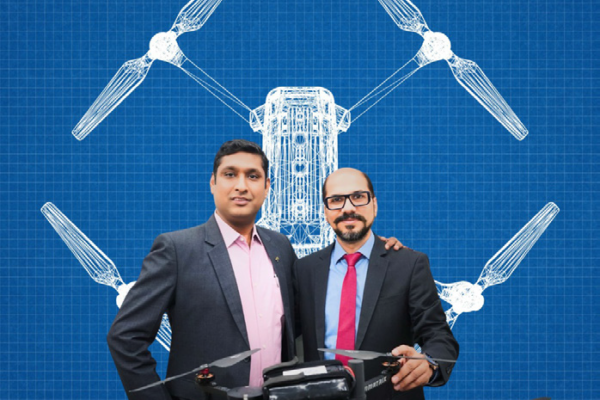
One of India’s RPTOs with 10 Approved Flying Zones by DGCA The Drone RPTO of AVPL International (AITMC Ventures Limited) in Sisai, Hisar has received official approval from the Directorate General of Civil Aviation (DGCA), marking a key milestone for drone training in North India. The RPTO now features 10 dedicated flying zones, offering extensive hands-on training for students. The RPTO offers students hands-on experience in flying and maintaining drones, adhering to national safety and training standards. The RPTO aims to empower young men and women with drone skills for sectors like agriculture, infrastructure, logistics, security, and environmental projects, while positioning Hisar as a hub for skill development and employment opportunities. Dr. Preet Sandhuu, Founder & MD of AVPL International, said, “This DGCA approval is a proud moment for us. Our mission is to equip India’s youth with cutting-edge drone skills and create meaningful employment opportunities, especially in rural areas. We are committed to building a skilled workforce ready for the future of drone technology.” AVPL International (AITMC Ventures Ltd.) is a leading drone company. They stand at the forefront of India’s drone revolution, blending cutting-edge research, robust R&D infrastructure, and industry-driven innovation. With over a decade of leadership, AVPL is committed to shaping the future of unmanned systems globally. Their objective is to indigenously design, manufacture and operate cutting-edge unmanned aerial systems across critical sectors including Defence, Logistics, Agriculture, Urban Development, Land & Mining, Power, Forestry, Roadways, and Skill & Education, thereby strengthening national security, driving sustainable socio economic transformation, and propelling India’s drone industry to global leadership under the ‘Make in India’ initiative. Read More

Read More

Hikvision Among theFirst Companies Worldwide to Earn NISTCSF 2.0 Certification

Hikvision has successfully achieved certification under the NIST Cybersecurity Framework (CSF) 2.0, following a rigorous independent audit conducted by the British Standards Institution (BSI). With this milestone, Hikvision becomes one of the first companies worldwide to achieve this certification, demonstrating its commitment to aligning its cybersecurity governance, risk management, and compliance practices with internationally recognized standards. What is NIST CSF 2.0? The NIST Cybersecurity Framework (CSF) is a set of voluntary guidelines developed by the National Institute of Standards and Technology (NIST) to help organizations of all sizes manage and reduce cybersecurity risks. The framework consists of three main components – the Core, Organizational Profiles, and Tiers. The CSF Core defines six key functions – Govern (GV), Identify (ID), Protect (PR), Detect (DE), Respond (RS), and Recover (RC) – providing organizations with a strategic lifecycle for managing cybersecurity risks. Compared with version 1.1, which laid the foundation for lifecycle-based risk management, NIST CSF 2.0 introduces important enhancements, including: Building a robust cybersecurity and governance System Hikvision has established a robust, end-to-end cybersecurity system aligned with all six core functions. The company embeds security into its corporate strategy, risk management, compliance programs, and supply chain operations, ensuring that security practices are integrated across all business processes. Achieving NIST CSF 2.0 certification confirms that Hikvision’s cybersecurity governance aligns with international best practices. With comprehensive, layered security capabilities, Hikvision supports partners and clients worldwide in achieving safe, compliant, and reliable operations – reinforcing its commitment as a trusted global technology partner. Our ongoing commitment to cybersecurity Hikvision is committed to advancing cybersecurity and privacy protection across all aspects of its operations. The company adheres strictly to internationally recognized standards and regulatory requirements, conducting regular capability assessments and continuous improvement programs to enhance its security posture. Over the years, the company has achieved a broad portfolio of globally recognized certifications including ISO/IEC 27001:2022, ISO/ IEC 27701:2019, ISO/ IEC 27017, ISO/ IEC 29151, and ISO 38505-1:2017, in addition to the newly awarded NIST CSF 2.0 certification. Cybersecurity is at the core of trust. To date, Hikvision has earned more than 25 authoritative security and compliance certifications worldwide, reflecting its ongoing commitment to safeguarding data and building digital trust. Looking ahead, the company will continue to advance its cybersecurity programs and share best practices across the industry.

Read More