securitylinkindia

IESA Sets up Office in Taipei

First overseas office to boost investments in ESDM sector in India India Electronics and Semiconductor Association (IESA) – the premier trade body representing the Indian electronics system design and manufacturing (ESDM) industry launches its first ever international office in 101 Office Tower Taipei, Taiwan. Dr. Mignonne Chan, Director General, IESA (Taiwan) along with Ashwini K. Aggarwal, Chairman, IESA, and delegates from partner states of Andhra Pradesh, Chhattisgarh and Kerala were present at the IESA – Taiwan office launch. Both India and Taiwan attach immense importance to the event with 100 key players drawn from business, government, academia and media gracing the inauguration. Ashwini K Aggarwal designated Dr. Mignonne Chan as the Director General of IESA (Taipei Office) by handing over the official seal, followed by various remarks from Gince Mattam, Deputy Director General of the India Taipei Association; Sing-Ying Lee, Director General, Department of International Cooperation & Economic Affairs, Ministry of Foreign Affairs; Dr. Jang-HwaLeu, Director General, Industrial Development Bureau, Ministry of Economic Affairs; Mdm Jen-Ni Yang, Director General, Ministry of Economic Affairs; Chiou Chyou-Huey, Director General, Department of Academia-Industry Collaboration & Science Park Affairs, Ministry of Science & Technology; Dr. Lin-Wu Kuo, Vice Chairman, TAITRA; and Dr. Mumin Chen, Secretary General, Taiwan-India Parliamentary Friendship Association. Taiwan has played an indispensable role in the world of semiconductor manufacturing over the past 2 decades. The strengths of Taiwan in the eyes of the world are its high-quality talent pool with strong work ethics; a supportive business-friendly government and regulatory environment; a strong quality-focused technology manufacturing ecosystem that drives a cost-competitive infrastructure; and business leaders’ far-sighted vision on industry upscale and timely restructuring. Ashwini K Aggarwal said, “The Taiwan office inauguration is part of IESA’s goal to improve collaboration on manufacturing capabilities between Taiwan and India. India has seen emerging green shoots in the electronics, systems design and manufacturing space in the recent times. It has received a strong response to its ESDM policies and has seen evolution of its Solar Fab and a number of marquee industries. We are very excited by the synergies that the countries would derive from this partnership. Taiwan is the home to one of the most robust semiconductors & electronics ecosystems in the world and is by far the largest consumer of semiconductor materials. We believe India has a strong proposition to offer to Taiwanese investors, and look forward to enabling the trade bridge between the countries. The new office will be managed by Dr. Mignonne Chan. We thank Dr. Chan and her team for efforts put forward in making this inauguration a success.” Dr. Chan said, “It is an honor to be part of the IESA initiative. We look forward to contributing to IESA’s mission of enhancing supply-chain-connectivity by promoting investment to India from Taiwan and elsewhere in the region.” In 2015, India’s ESDM industry was sized at US$82 billion growing at a CAGR of 8% from 2013. By the end of 2017 the sector will become a $100+ billion opportunity and is forecast to grow further at a CAGR of 16- 23% to reach US$171-228 billion by 2020.

Read More

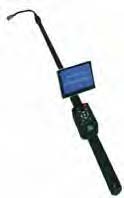
Hope GA-04 Video Inspection System

Telescopic video inspection system includes an infrared camera and a TFT LCD screen. It can be used in multiple operations day and night, to check the under carriage as well as overhead location of a vehicle. The colour camera operates at high resolution and comes with digital video recorder where optional digital recording is done. The complete system comes in a professionally packed case along with battery and battery charger. Features Vision in complete darkness. 360º rotation (manual) arm for all round vision. Easy to carry, handle and operate. It can be extended upto 3mtrs. Comes with digital video recorder. Comes with 5” hi-resolution LCD monitor for clear viewing.

Read More

ASSA ABLOY Acquires SMI in India

ASSA ABLOY has acquired SMI (Shree Mahavir Metalcraft), a leading OEM manufacturer of architectural hardware in India. “I am very pleased to welcome SMI into the ASSA ABLOY Group. The acquisition of SMI delivers on our strategy to grow our presence in emerging markets,” says Johan Molin, President and CEO of ASSA ABLOY. “SMI is an attractive addition to the Asia Pacific division and reinforces our position in the India market. The acquisition offers the potential to develop market specific competitive products and complements our existing Indian business,” says Magnus Kagevik, Executive Vice President of ASSA ABLOY and Head of Division Asia Pacific. SMI was established in 1984. It is headquartered in Jamnagar, West coast of India and has some 960 employees. Sales for 2017 are expected to reach INR 1,080 million (approx. SEK 140 million) and the acquisition will be accretive to EPS from start.

Read More

Industry’s Views

Road Safety & Transportation Security in India Road accidents have emerged as a major public health hazard globally, and more so in India that is one of the worst affected with about 5 lakhs accidents killing nearly 1.5 lakh people and leaving thrice the number injured per year for the last few years. India marks one of the highest growth rates of motorisation in the world, thanks to rapid urbanisation and economic growth of middle class, which gravely impact the road safety level of the country. Though the road safety standards and pertinent laws in India are reasonably high rated but their poor enforcement owing to various reasons has created the concerns. Road safety has also emerged as the central theme of almost the entire range of the activities of the Ministry of Road Transport and Highways. As a signatory to Brasilia Declaration, India is committed to reducing the number of road accidents and fatalities by 50% by 2020, and the Ministry is taking steps towards fulfilling this commitment. These steps include overhauling the institutional and statutory framework, employing engineering solutions to build safer roads, laying down standards for safer vehicles, building an environment for better enforcement of traffic regulations and improving emergency care. Technology plays the most significant role in Road Safety and Transportation Security. An intelligent transportation system may provide innovative services relating to different modes of transport and traffic management and enable various users to be better informed and make safer, more coordinated, and ‘smarter’ use of transport networks. SecurityLink India has recently interacted with the industry stalwarts on the comprehensive state of the Road Safety and Transportation Security in India, and collected their views on the available technologies, and the pertinent encouraging and discouraging dynamics that come their way in the course of implementations.   Milind Borkar Vice President India, Middle East and Africa, Infinova SecurityLink India: Kindly share the latest developments in transport security in India? What challenges do you face in the implementation of the solution? Milind Borkar: The road, air and metro infrastructure have progressed a long way ahead since the last 5-6 years, and one can see large scale developments across the country in terms of flyover bridges, metros, rails and airports. As infrastructure improves, so is the technology improvement in all these transportations sectors. Security risk assessment has been a major factor in these sectors, particularly due to the rise of unwanted potential threats that disrupt any growing economy. There is a rampant increase in the use of megapixel technology, latest compression technology, and enterprise level video management software and storage solutions. Unfortunately however, all these technologies are not wisely used across all the sectors in India. Transport security, though makes one of the most important critical infrastructure projects, often see projects compromising on quality, performance and network security. The criterion for the selection of an OEM in such projects is only the price, and that is unfortunate. We hope this practice improves in the near future as otherwise our transport security will keep on becoming more vulnerable to potential threats. SecurityLink India: What are the latest trends in terms of technology and solutions, and how do you compete? Milind Borkar: Transport security such as airports, metros etc., are demanding security solutions with latest standards and technology. Use of megapixel technology, H.265 compression, thermal solutions, 360-degree camera solutions, true WDR cameras is becoming a common requirement in most of the projects. Infinova’s solutions are competent enough and that have been catering to this sector since several years. SecurityLink India: What are your offerings towards transport security especially road safety and surveillance? Milind Borkar: Infinova’s latest technology offering comprises the thermal solutions, edge enabled cameras, long range IR cameras, H.265 cameras, 4MP, 5MP and 8MP solutions etc. Infinova VMS has had several new technological advances in recent years. It has been integrated to several new world class technology companies such as companies offering FR technology, ACS, fire alarm, perimeter detection, intrusion detection etc. Infinova VMS can be customized to several national and international languages and also offers a very robust video analytics module. SecurityLink India: How do you justify the PPP model for the sector? Milind Borkar: PPP model carries its own advantages and disadvantages. Some of the advantages for this type of model in transport sector include effective and efficient public resource management, ensuring higher quality and timely provision of public services, expertise sharing, check on the expenditures, check on timely completion of project schedule, higher chances of inclusion of the latest technologies, and trends into public services and proper risk management is ensured. This model also carries some disadvantages such as service and procurement cost may increase, and disputes and inflexibility can also withhold any project progress. However, the pros are positive enough for growing economies like India and is thus helping the transport sector as well where many private public partnership are bringing infrastructural growth in the country. Infinova has several installations in many public as well as PPP operated segments. SecurityLink India: Kindly share some of your current projects in the sector. Milind Borkar: Infinova is the most preferred CCTV OEM by Airport Authorities of India to combat terrorism and increase security measures at Airports across India. Over 6,000 Infinova video surveillance cameras are deployed across 62 Airports in India. About 38 Airports are deployed with Infinova video management software V2217 and rest with third party video management software. Some of the airport locations are also deployed with Infinova DVRs and switches. Infinova has been recently awarded an upgradation project for 30 airports replacing third party cameras and software. Infinova has an installation base at AAI headquarters in Rajiv Gandhi Bhawan, Delhi where more than 60 cameras are deployed. Ashish P. Dhakan MD & CEO, HIKVISION, INDIA SecurityLink India: What is the status and scope of transport security in India – especially road safety and surveillance? Ashish P. Dhakan: According to BMI Research forecast, India’s transport infrastructure sector will grow by 6.1% in real terms in 2017, and…

Read More

The Chairman, IRF Speaks

Road Safety & Transportation Security in India   Potholes and large ditches, failure of traffic signals, rash driving and incidences of road rage, and alike are the usual phenomena on roads – both city roads and national highways – causing severe life hazards for the commuters. The news of road accidents, and accidental deaths and injuries and corresponding damages are the common sights on the pages of newspapers and TV screens today. Recent security lapse of horse racing on the Noida Expressway and incidences of high speed vehicles hitting pedestrians which most often result in deaths are not uncommon today. The Ministry of Road Transport and Highways has also taken the issue seriously. As a signatory to Brasilia Declaration, India is committed to reducing the number of road accidents and fatalities by 50% by 2020, and it appears that the Ministry is taking steps towards fulfilling this commitment. But the question arises whether the commitment is achievable; and if yes, how? SecurityLink India has recently interacted with Kiran Kumar Kapila, the Global Chairman of the International Road Federation (IRF) for the third time in a row. IRF, headquartered in Geneva, is a global body which works in the field of advising and encouraging promotion of safer and more sustainable roads around the globe. Mr. Kapila is also the Chairman and Managing Director of Intercontinental Consultants and Technocrats Pvt Ltd. (ICT), a multi-disciplinary firm of consultants having an international presence, providing comprehensive professional consultancy services, for all facets of infrastructure projects. SecurityLink India (SLI): Kindly give a brief about the evolution of International Road Federation (IRF). K. Kapila (KKK): The International Road Federation (IRF) is a nongovernmental, not-for-profit organisation with the mission to encourage and promote development and maintenance of better, safer and more sustainable roads, road networks and mobility. Set up in 1964, the IRF Geneva works together with its members and associates. The federation promotes the social and economic benefits that flow from well-planned and environmentally sound road transport networks. It helps put in place technological solutions and management practices that provide maximum economic and social returns from national road investments. The IRF has a major role to play in all aspects of road policy and development worldwide. For governments and financial institutions, the IRF provides a wide base of expertise for planning road development strategy and policy. For its members, the IRF is a business network, a link to external institutions and agencies such as the United Nations and the European Union, and a business card of introduction to government officials and decision makers. For the community of road professionals like national road associations, advocacy groups, companies and institutions dedicated to the development of road infrastructure etc., the IRF is a source of support, guide and information. With a wide network across over 90 countries on six continents, the IRF believes that with the global pool of knowledge it can make a difference by providing best practices and expert advice in today’s multi-faceted world of transport. About 5 years ago, the IRF Geneva has expanded the horizon to include safe and smart mobility. After the ITS Vienna Manifesto launched in 2012, IRF is intensively focusing on ITS and its solutions. SLI: Kindly share a brief about its India operations. KKK: The IRF Geneva debuted in India during 2005, by consolidating various road safety activities in the country in a major way. They formalised their India Chapter in February 2009. There are about 70 members of IRF India which includes all major players in road segment spreading across both government and private sectors. The Ministry of Road Transport and Highways, Government of India, is our life member. Other government sector life members are the Central Public Works Department (CPWD), Public Works Department, Delhi, Rajasthan State Government, and NHIDCL; besides, Public Works Departments of Haryana, Karnataka and Maharashtra are the members. In private sector, players like L&T, ILFS, IRB, Shell, Mahindra Motors, besides, equipment manufacturers, material suppliers and consultants are members of IRF India Chapter. We work relentlessly to address the serious concern of road safety in India, which has the highest number of road fatalities in the world. SLI: What is your role towards the decision making of the Indian Government in road designing and construction? KKK: IRF has regularly been holding conferences and seminars on road safety and they have been influencing the decision making of the government to a great extent. Our roles are certainly advisory but our recommendations are considered so valuable that they are most often incorporated in their circulars and guidelines, and made part of the policy. For instance, a policy circular of the government of India in April 2010 had lucidly brought out the IRF conferences and deliberations therein, that was issued as a sequel to the recommendations of an IRF Conference. We keep in close interactions and involvement with the stakeholders in the road transport departments such as the Ministry of Road Transport and Highways, National Highways Authorities of India, and also with the NHIDCL which is now a life member of IRF. We also undertake road safety audits, and train the people on how to audit. We have in the last few years carried out a number of 5 day training programms in association with the Australian Research Board and the Central Road Research Institute (CRRI) and have trained about 300 people on road safety audit. Last year we held a 6 week training programme in three modules of 2 weeks each, along with Indian Academy of Highway Engineers, and ARRB. A similar programme is now on-going. SLI: What are the international road safety standards? KKK: Internationally, the vision and perception of the road safety standards vary in terms of design, products and technology, gradients, curves, and other necessary implements. There is a wide variance between developed world and developing countries. Developed ones distinctly maintain very high standards. Sweden holds zero fatality vision for road accidents. Western world and even the Australian standards are very high. They comply very lucidly…

Read More

Autonomy & Safety Technology for Vehicles

New research on consumer preferences for full autonomy in new vehicles finds the technology is not yet popular among a broad audience, according to analysts at IHS Markit. Ironically, the same audience ranked it among the very features they would be willing to pay the most for in their next new vehicle purchase. The IHS research findings demonstrate a wide variety of viewpoints from consumers across leading global markets. Blind spot detection ranked highest as the most desired features among all audiences, young and old, and propensity to pay for it varied by region, with the U.S. respondents reporting they would be willing to pay significantly more for the technology than consumers in other regions. Responses from more than 5,000 vehicle owners intending to purchase a new vehicle within the next 36 months were reviewed in the 2017 Autonomous Driving and Urban Mobility Consumer Analysis , representing five key automotive markets – the U.S., Canada, China, Germany and the United Kingdom. This is the fifth annual survey of its kind from IHS Markit and identified key attributes for consumers, providing insight into preferences, desires and future interest as new vehicle intenders return to market. A number of subjects were covered. “In terms of ADAS safety features like automatic emergency braking and blind spot detection, consumers wanted to see these features standard across the board,” said Colin Bird, Senior Automotive Technology Analyst for IHS Markit and Co-author of the report, “There is a large subset of consumers who are willing to pay for full autonomy features demonstrating that consumers see this more as a value-add rather than a necessary safety component, at least for now.” Just 44 percent of all respondents indicated that full autonomy would be a desirable feature on their next car, the lowest rank of all of the technologies included in this subsection of the survey. Interestingly, however, it also ranked as the technology that consumers would be most willing to pay for, according to IHS Markit. Price points varied by country, with US consumers indicating they would pay the highest price to have the feature in their next new vehicle. German consumers surveyed about the cost of the technology added to a new vehicle purchase, German respondents indicated they would be willing to pay $1016 for it, nearly 20 percent more than the US audience. Among consumers surveyed in China, more than 72 percent of respondents reported desire for full autonomy as a feature in their next new vehicle, the highest of all the regions surveyed. They also expressed a willingness to pay for it at the highest cost among other technologies, noting a price point of $557. Many also were interested in related technologies, according to IHS Markit. These included blind spot detection (89 percent), automatic emergency braking (92 percent), lane departure warning (88 percent), highway autopilot (83 percent), autonomous co-pilot (81 percent). In comparison, just over half of U.S. consumers surveyed indicated full autonomy is a desired feature in their next new vehicle, though they too seem willing to pay the most for it over other technologies; noting an average willingness to spend $780 to have the technology on their next new vehicle. In addition, U.S. consumers are interested in blind spot detection, navigation systems, automatic emergency braking and steering wheel mounted controls. From a global perspective, highway autopilot also was mentioned as a top technology among consumers surveyed from all regions, but also at a variety of costs. US consumers indicated a willingness to pay $107 more than their nearest counterparts to have their next new vehicle equipped with the technology. Younger drivers more comfortable with full autonomy than older drivers The survey also researched comfort level with vehicle technology by age of the respondent groups. Across all geographies, younger drivers, including Millennials and Generation Z respondents, were more interested in full autonomy than other generational groups, with 61 percent suggesting it as a feature of interest in their next new vehicle. Generation X, baby boomers and the swing generation all trail in level of interest significantly, even though these new and evolving technologies will present the greatest opportunity to make transportation and mobility easier for older generations. In addition, respondents widely reported that driving alone was their leading form of transportation, seconded by walking and public transit. In addition, respondents in China indicated a very strong response to ride hailing and car-sharing services, with 42 percent indicating use of ride-hailing and 16 percent having engaged in car sharing in the last 12 months. US respondents were less likely; while respondents from Germany and the UK reported some use. If vehicle insurance rates were based on how often consumers used self-driving features, consumers felt slightly different about it. In China, 70 percent of respondents indicated they would be more open to self-driving features. Respondents in Germany were least likely, with just 32 percent reporting it would have an impact for them. “Among new car intenders, ride-hailing services aren’t used as often as a daily commuting option. Instead, the research found that ride-hailing is used more often for weekend trips, errands, and vacations,” Bird said, “Interestingly, new car intenders are more likely to be drivers for hailing service companies like Uber and DiDi than they are to be passengers. This is particularly the case in the UK, Germany and Canada, which suggests there could be a lucrative sales model in these markets for automakers.”

Read More

Smart City Solution

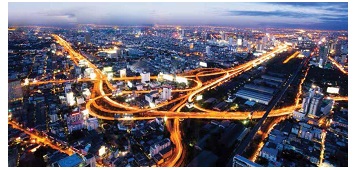
Ever expanding, cities today must pay more attention to protect their people and properties. It is evident to anyone with access to global news that now even the most developed cities are faced with huge safety threats, ranging from terrorists’ attacks aiming at well-populated areas and historically significant places to road accidents that keep increasing with the number of automobiles. A smart and integrated system for urban security is an urgent need, which Dahua is competent to provide. Time to do it smartly Boasting its AI technologies and highly integrated platform, Dahua smart city solution aims to address safety issues of mega-cities without dramatically expanding police forces. To be more specific, the deep-learning empowered video surveillance performs timely and effective risk detection. The unified platform allows faster emergency response, and the powerful data mining helps get more insights from the data front-end systems collected. Combined together, Dahua smart city solution gives unprecedented advantages. For example, the deep-learning redefines the capabilities of video analysis. Dahua achieved 99.78% facial recognition accuracy in LFW (Labeled Faces in the Wild, a well-known facial recognition benchmark for academic purpose) in October, 2016. Moreover, deep-leaning even allows instant classification of human and vehicle appearing in video, capturing extract detailed features such as clothe color, gender, headwear, bag for human and license plate number, vehicle color, size, mark, model, cellphone usage, seat belt usage for vehicle etc.  Four working stages of Dahua smart city solution The overall working process of Dahua smart city solution can be viewed in four stages that are prevention, detection, response and investigation. By improving each, it can improve the city running in general. The Stage of Prevention means picking out and focusing on potentially dangerous persons and factors before they really do harm to public safety. This requires the ability of collecting and analyzing big data. Dahua’s smart city solution provides advanced forecasting models that give a better chance of predicting events. For example, with comprehensive analysis of violation data collected by traffic enforcement cameras, the system can generate a watch list for the vehicles with numerous violation records. The Stage of Detection involves real time surveillance in various forms, including deployment of 360-degree panoramic camera and ultra-long range, all weather monitoring thermal camera etc. In addition to multifunctional cameras, Dahua’s deep-learning empowered smart video surveillance can automatically detect risky individuals and activities from massive data collected. In fact, Dahua traffic enforcement system helped Hangzhou city automatically detect 29,823 vehicles’ illegal behavior during G20 Summit, which greatly reduced the burden on policemen who thus could put more focus on protecting key summit area. The Stage of Response enables key organizations in the city to react to security threats in real time. Dahua improves the communication efficiency through its integrated platform, allowing unified command and centralized data storage as well as cross-department information sharing. if a natural disaster takes place in the city, Dahua smart city solution can report it on a single e-map with available emergency response resources to all relevant departments and agencies, while providing seamless monitoring of the site to all units approaching. The Stage of Investigation analyzes all data collected by different systems and provide insights to facilitate the recovery of crucial incident like crime after it happened. In this stage, technologies such as video synopsis provide a short summary including all moving objects of a long video and supports query moving object according to different characteristics like size, color, direction and speed. Besides, there’re a rich set of data mining methods like active area analysis, active target analysis and trajectory analysis. So if a criminal tries to escape with different clothes or cars he is highly unlikely to make it in a city equipped with Dahua smart city solution. Multidimensional benefits Smart City Solution delivers on Dahua’s promise of ‘Safer society, smart living’ in 4 key metrics. Government investment measures the level of continued commitment by governments to maintain good function and development of systems in place. After deploying smart city solution, London’s police investment declined by 10% yet the criminal activity prevention score actually improved by 0.5% since 2015. Safety result measures changes in the levels of crime and risk to citizens. It also assesses the public’s perception of how well the city’s authorities can respond to incidents. This is improved by the efficiency savings that Dahua’s surveillance systems provide. Social benefits assess the ability of the public to enjoy entertainment and leisure activities safely and how their affinity for the government changes. Economic benefit accounts for personal wealth, spending on tourism and retail along with employment rates and the city’s protection against short-term economic fluctuations. Smart city solutions benefit everyone in all four aspects above. Governments can decrease spending and crime rates at the same time whilst increasing citizen safety, survival rates and citizen approval rating. Citizens will be safer and enjoy better living standards without the burden of increased public spending. In short, they will be happier with both the government and their lives. Summary By remaining ahead of the market with expertise in intelligent visual processing technologies and emphasizing its core value propositions of innovation, quality and service, Dahua Technology will continuously contribute to a safer society and smarter living, benefiting city dwellers worldwide.   By Balasubramanian Jayam Head of Marketing (India & SAARC) Dahua Technology Co., Ltd.  

Read More

Taking the Pulse of City Traffic

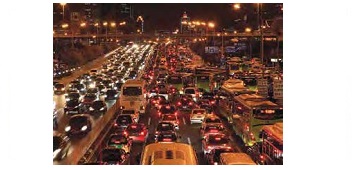
Smart sensors provide insight in city traffic dynamics and provide the basics for informed decisions and traffic improvements The problem of traffic congestion in cities is not likely to go away in the next decades. In order to get a grip on the problem, city authorities around the world are increasingly making use of smart technologies to get real-time insight into their traffic situation. By collecting traffic data, they are hoping to make informed decisions to improve the quality of life of anyone living, working and travelling in the city. Economic development and quality of life has always been a difficult marriage for city authorities and urban planners. Traffic congestion is considered to be a necessary by-product of economic growth. But at the same time, idling times and traffic jams are very costly to the economy and thus pose a serious threat to further economic growth. In an estimate made by the U.S. Environmental Protection Agency (U.S. EPA) long duration idling is said to consume over one billion gallons of diesel fuel annually, at a cost of over $5 billion. In addition, congestion creates frustration with traffic users, and it results in more emissions, more pollution and increased health risks. Enabling smart cities Next to promoting public transportation use, carpooling and ride sharing, city authorities increasingly turn to smart technologies to make the city traffic run smoother and more efficiently. One measure that has already proven to be very efficient in many cities is the installation of traffic sensors to control the operation of traffic signals. By monitoring traffic at intersections, traffic signal scheme scan be adapted according to the amount of traffic, which as a result can reduce vehicle idling times and relieve city traffic. As an example, the UK’s national Automobile Association stated that cutting queuing time by just one minute per day on three major roads leading into a city could save more CO2 than switching off 2,000 streetlights. The use of road sensors and software systems fits into the broader idea of smart cities, a vision which aims at better managing the city’s assets including transportation, law enforcement, power plants, hospitals, and many more, and as a result improving the quality of life in the city. By integrating smart technologies into the city infrastructure, real-time traffic data can be collected to provide a basis for smarter decisions on traffic management, parking management, urban planning, energy management and many more. Smart city sensors FLIR Systems has been providing smart sensors to traffic authorities for many years, in order to collect real-time data at intersections and arterial roads, which are typical traffic bottlenecks. Smart sensors from FLIR are based on visual CCTV and thermal imaging technology and can be used to measure a variety of parameters and provide valuable insight into traffic flows. FLIR video detection sensors are a highly reliable and accurate alternative to loops and other detection technologies for signalized intersection control and management. FLIR’s integrated visual sensors provide information on the presence of vehicles approaching or waiting at an intersection, information that can be used to control the traffic lights more efficiently. Pedestrian presence detectors are able to give pedestrians the appropriate green-time and visibility, so mobility and safety of both motorists and vulnerable road users are guaranteed. Thermal imaging sensors use heat energy emitted from vehicles and bicyclists to make a distinction between both and make it possible to adapt green times according to the specific road user type (bike or other vehicle). Traffic sensors can also be used to collect a variety of relevant traffic data, like volume, average speed and occupancy. Better insight, better decisions The collection of various types of traffic data ultimately allows traffic authorities and urban planners to make more informed decisions, on a wide variety of topics. Intersection traffic control Traffic data can be used to better manage traffic lights and to provide dedicated signal schemes according to traffic volume. Traffic authorities can use real-time data to keep traffic moving and impose variable speed limits or dynamic green waves. Small adaptations of signal times at intersections based on historical data can already have a large impact on vehicle idling times. City authorities could for example, choose to adapt signal times according to the time of day, giving more green time for vehicles in one particular direction during rush hour. Real-time traffic data can be communicated on electronic message signs or traveller apps and help the traffic user make informed decisions about his travel options. Signal schemes could also be adapted in favour of pedestrians, for example near schools or sports arenas. Thermal imaging sensors can even make a distinction between the detection of vehicles and bicyclists, allowing traffic authorities to provide a dedicated signal scheme for bicyclists, which allows them to cross the intersection safely. Priority for public transportation or emergency vehicles Measures to improve the quality of life in the city often coincide with the promotion of public transportation. Smart technology can further support this vision by giving public transportation vehicles more priority rights in traffic and enabling them to make movements that the general traffic is not allowed to make. This could include priority bus lanes or dedicated signal schemes for buses. Priority can also be given to reduce delays for emergency vehicles in operation. When activated, an emergency vehicle priority scheme can adapt traffic signals ahead of an emergency vehicle’s arrival to provide a green wave allowing the emergency crew to arrive at the destination in the shortest possible time while also reducing the need to cross intersections against a red light. Energy management 19% of energy use in the world is used for lighting, and 6% of greenhouse emissions in the world derive from this energy used for lighting. Light pollution is a global problem caused by inefficient, intrusive and unnecessary use of artificial light. Smart lighting is an efficient way to save energy and reduce the amount of light along our roads. By using smart occupancy sensors, public street lighting can be…

Read More

Deepening the Value of Surveillance

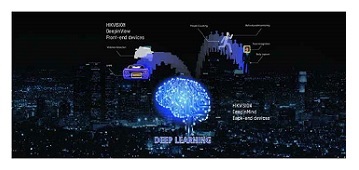
Deep Learning has swept through the IT industry, bringing benefits and better classifications to a number of applications. Inspired by the way the human brain works, the technology uses a layered learning process to enable the computer to classify, store and access data, which it can then refer to for learning. This means it can use a whole image to recognise, rather than relying on separate elements of that image. This is a cumulative process – the more elements it has to draw on, the better the classification – thus, the better the ‘learning.’ The benefits of this technology for face recognition and image classification make it hugely valuable in the field of security. It touches on every aspect of the security industry – from facial and vehicle detection to behaviour analysis. This, in turn, starts to change the focus of security from being reactive to being able to predict problems before they happen. Hikvision has taken this technology and innovated a family of products to maximise its use. The DeepInview IP camera range and the DeepInmind NVR range work together to provide all the power and benefits of Deep Learning. While the cameras provide the smart ‘eyes’ of the system, the NVR represents the analytic and storage capabilities of the brain. The products help to tackle security on two fronts – recognition, monitoring and counting of people, and recognition and detection of vehicles. This uses Deep Learning technology at its most effective – for its ability to classify and recognise thousands of ‘features.’ Obviously, this multi-layered approach uses a lot of memory and performance, which is one of the reasons why the technology has become much more widespread in the past few years. To put this into perspective, in the first stages of the technology, it took 1,000 devices with 16,000 CPUs to simulate a neural network; now, just a few GPUs are needed. Hikvision is partnering with the largest of the chipset brands – Intel and nVidia – to explore the possibilities of Deep Learning for the surveillance industry. Hikvision’s innovation also facilitates and improves on this. The H.265+ codec radically reduces transmission bandwidth and data storage capacity requirements. This means there’s no loss of quality even though the data being shared and stored is exponentially higher. Applications are numerous. The technology could enable the system to provide a black list/ white list alarm, which could come in very handy in access control scenarios. It could also be used to recognise unusual behaviour – possibly allowing security staff to prevent an issue if people are found loitering nearby, for example. The new premium range of products will further extend the quality and capabilities of security systems. They will also allow security professionals to start planning to avoid issues, rather than reacting to them. This could be the next evolution of the whole industry – using AI to change the world, one Hikvision solution at a time.     By Ashish P. Dhakan – MD & CEO, Prama Hikvision  

Read More

CP PLUS Secures Shah Abdul Latif University

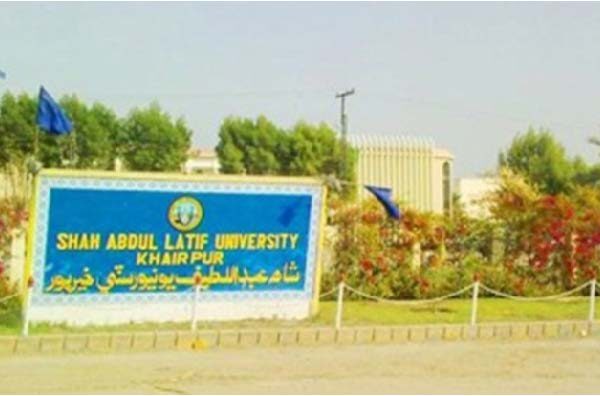
The vast premises are now under the vigilant eyes of CP PLUS high definition security cameras Shah Abdul Latif University is one of the most recognized bodies providing higher education in the field of arts, commerce, and science and technology. It is located in Khairpur – a former princely state that joined Pakistan in 1955 – right at the heartland of Upper Sindh. The main campus is located just 3 kilometers away from the town, spanning an area of 340 acres of land, plush with greenery and demarcated playgrounds. The university houses over 8000 students and staff across its campus, and the management wanted to ensure their safety and security. The existing security manned by a few security personnel was, by far, insufficient and hence they required a specifically designed intelligent surveillance system that would ensure not only the safety of premise but also help in maintaining discipline within the university. They required monitoring the entire expanse, especially the entrance, exits and boundary walls; and expected from the system to facilitate real-time recording and crystal clear display. Solution The university’s vast premise required careful screening to determine the locations and angles where cameras could be installed to fetch the best results. The choices of cameras, cabling, and related equipment/ peripherals were also the matter of careful evaluation. It was important to ensure that the installation was tamper proof. After a thorough survey and analyzing, high definition CP PLUS cameras were selected along with one of the best recorders and a VMS to ensure high definition images, 24 hour recording and hassle-free operation. A central control room was also set up where footage could be monitored and recorded. The control room has distributed monitoring units connected by underground optical fiber cabling. Results The conceptualization of this project has ensured easy identification and immediate action. Shah Abdul Latif University has greatly benefited from the installation of this surveillance system. The installed surveillance system has been able to efficiently monitor the campus round-the-clock, zoom-in where needed and provide real-time images to authorities to enable authorities to tackle emergency situations and take corrective actions. “The client wanted to deploy a surveillance system that would seamlessly integrate into their organizational design without requiring major infrastructural overhauls. The image clarity offered by the CP PLUS cameras we installed impressed the client and they were very happy with the end results,” said Yogesh B. Dutta, COO – CP PLUS.

Read More