securitylinkindia

Rajkot Smart City & Surveillance

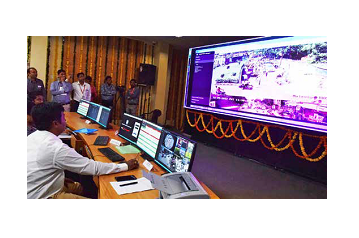
Honeywell, a global leading company in Connected Buildings, announced its project with Rajkot Municipal Corporation and Rajkot Police to implement a smart city command-and-control center along with a citywide surveillance system. The project for Gujarat’s fourth-largest city includes more than 450 integrated closed-circuit televisions (CCTVs) and Wi-Fi at 13 key public places, supported by software and servers across 107 strategic locations in the city. The efforts are aimed to boost security, prevent crimes, maintain law and order, fine traffic violators, control traffic, and effectively monitor the city. The surveillance system was formally launched by Vijaybhai R. Rupani, Hon’ble Chief Minister, Gujarat, in the presence of Banchhanidhi Pani (IAS), Municipal Commissioner, Rajkot, and Anupam Singh Gehlot, Police Commissioner, Rajkot. The project covers a citywide installation of CCTVs, including an automatic number plate reading system (ANPR), and monitoring via two command-and-control rooms. Honeywell will also deploy intelligent traffic management technologies including a red-light violation detection system with e-challan, and digital signboards at critical public places.  In addition, Honeywell will install 50 environmental sensors across the city to monitor air pollution and contamination level. Banchhanidhi Pani said, “The implementation of these smart city technologies will add to our efforts in resolving urban challenges and contribute to the city’s overall development.” Anupam Singh Gehlot said, “These smart surveillance technologies will not only drive operational efficiencies and aid day-to-day policing, but will make our citizens feel more safe and secure.” Honeywell has already been working on smart city initiatives including city surveillance projects in Aurangabad in Maharashtra state; an 11-city project in Madhya Pradesh state, including a successful Ujjain Simhastha Kumbh event requiring security management of a 70 million devotee gathering; and in Bhubaneswar in Orissa state. The Rajkot Police team has been progressive as an early adopter of technology, which will help meet their modernization goals, and we are pleased to support them. With our broad technology portfolio, Honeywell will deliver scalable communication, surveillance, and sensing solutions to our customers, in line with the Indian government’s 100 Smart Cities vision. – Aseem Joshi Country General Manager, Honeywell Building Solutions  

Read More

Coca-Cola Trusts Matrix

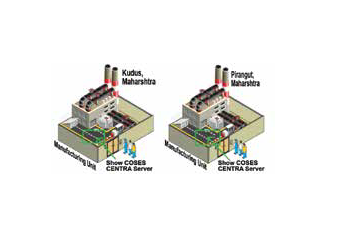
Coca-Cola’s manufacturing units in Kudus and Pirangut were looking for biometric solutions to secure their premises. They required individual servers at both locations. Their prime requirement was to restrict unauthorized user entry into the secured area. They also required user events for both the locations separately. As locations didn’t have many power supply ports, providing separate power to door lock, biometric device and exit switch was a concern. Coca-Cola was in search of a solution where the basic requirements of user events as well as the power issue to devices were solved easily. Matrix offered individual software platforms which act as servers for both the locations i.e., Kudus and Pirangut, and their premium range of COSEC biometric devices which offer power to door lock and exit switch by itself. Thus, Matrix biometric solution helped in solving both the challenges faced by Coca-Cola. Results Restrict unauthorized user entry in secure premises. Reduction in cumbersome HR tasks. Accurate maintenance of user data.

Read More

Synology Partners with Supertron

Synology® has recently announced the partnership with Supertron Electronics, one of the leading distributors specializing in Enterprise IT facilities in India. With this association, Supertron Electronics will deliver Synology solutions to businesses of any size in need of advanced storage and networking services. “We’re excited to take this step forward into the Indian market,” said Mike Chen, Sales Director of Synology Inc., “With the growth of mobile users and the maturing internet infrastructure, we believe this is the perfect timing to explore new opportunities with a new partner in India.” “Synology solutions have been phenomenal in many regions of the world. We’re pleased to be one of the missionaries of Synology products and help this company expand,” said Vibhor Agarwal, Marketing Director of Supertron Electronics Pvt. Ltd., “Supertron offerings are better and stronger now with Synology on our portfolio. Also, with years of channel experience, we’re confident in delivering world-class services in line with the quality of Synology products.” Supertron Electronics has started shipping Synology products and providing consultancy services in its 35 branch offices and 18 satellite branches in India. Synology creates network attached storage, IP surveillance solutions, and network equipment that transform the way users manage data, conduct surveillance, and manage network in the cloud era. By taking full advantage of the latest technologies, Synology aims to help users centralize data storage and backup, share files on-the-go, implement professional surveillance solutions, and manage network in reliable and affordable ways. Synology is committed to delivering products with forward-thinking features and the best in class customer services. Times New Roman PS RomanTimes New Roman PS RomanTimes New Roman PS RomanTimes New Roman PS RomanTimes New Roman PS RomanTimes New Roman PS Roman

Read More

Barco Reinvents LCD Video Walls

Barco brings a spectacular viewing experience to LCD video walls with the launch of Barco UniSee. By completely rethinking and optimizing every aspect of tiled LCD video walls, Barco UniSee introduces a single uniform view while ensuring faster installation, easier servicing, and higher reliability. This makes it the perfect LCD video wall platform for a multitude of applications – including control rooms, corporate lobbies, experience centers, brand showrooms and meeting rooms. As a leader and innovator in large screen visualization, Barco maintains close connections with end-users, resellers and distributors. Following their market feedback, Barco decided to completely rethink the concept of LCD video walls and their mounting structures. The result is Barco UniSee − a revolutionary modular platform that surpasses traditional LCD video walls on every level, and that will define the LCD video wall market for many years to come. The narrowest gap, using NoGap technology By introducing a bezel-less LCD video wall with unmatched intra-tile uniformity, higher brightness and optimal reliability, Barco UniSee creates an unprecedented viewing experience in LCD video walls. Thanks to the patented NoGap technology, the visual impact of the inter-tile gap is significantly reduced. This means Barco UniSee now makes it possible to spread content over multiple video wall tiles without the disturbance of a bezel. In addition, to guarantee the smallest possible gap without damaging the panels’ edges, Barco has created the UniSee Mount – a radically innovative mounting structure that uses the power of gravity to perfectly and automatically align panels – and keep them in place over time. UniSee Mount also eases setup and maintenance efforts, allowing swift undocking of the separate panels. Automatic calibration for perfect uniformity Sense X − Barco’s automatic, continuous and real-time color and brightness calibration system − ensures that the complete wall produces a perfectly balanced image at all times. Barco has also re-engineered the design of the panels to counter all possible variations in brightness from the center to the edges. The result is perfect and unmatched intra-tile and inter-tile uniformity. Easy to diagnose and service Because the LCD video wall is often part of a business-critical application, Barco has taken all possible measures to ensure optimal uptime. The platform is built in such a way that it can easily be diagnosed and serviced. The software platform (UniSee Connect) that manages the entire video wall automatically assigns and calibrates the panels and acts as the single point of connection for remote diagnostics and control. Flexibility in any environment Contrary to traditional LCD video wall solutions, Barco UniSee is a modular platform,” says Gerrit Vermeire, Barco’s Director of Product Management – Operator Experience, “The modular power supplies, input board, and software platform not only enable faster installation, servicing and diagnosis, but also ensure that the system can be upgraded to support further technological evolutions.” Suchit Rout, Strategic Marketing Director – Operator Experience at Barco, underlines the system’s flexibility and said, “The magnificent images, NoGap experience, and highest reliability will amaze users, visitors and managers in a wide variety of professional markets, including corporate reception areas, control rooms, experience centers, high-end meeting rooms, brand showrooms, and many more. Barco UniSee will define the seamless LCD video wall market for many years into the future, underlining Barco’s dedication to this market.

Read More

Schneider Electric Recognised as ‘Employer with Best Health and Wellness Initiative’

Schneider Electric, the global specialist in energy management and automation, has been honoured with the prestigious SHRM India HR Excellence Award 2017 in the category of ‘Employer with Best Health and Wellness Initiative.’ The award was presented at SHRM India’s Annual Conference recently held at New Delhi, and was received by Rachna Mukherjee, CHRO, Schneider Electric, and Lipika Verma, Director Rewards alongwith her team. The accolade recognizes organisations for designing effective health and wellness programs that support the wellness needs of their employees, understanding the importance of employee’s health quotient and its impact on business productivity. Speaking on the occasion, Rachna Mukherjee, CHRO, Schneider Electric said, “I express my gratitude to SHRM for acknowledging our efforts and multiple initiatives in this most important area. Our efforts are directed towards ensuring the wellbeing and health of our employees by promoting work-life balance and thereby raising their productivity. I accept this award on behalf of the entire HR team at Schneider Electric.” Presenting the award, Achal Khanna, CEO, SHRM India said, “SHRM India would like to congratulate Schneider Electric on their win and the remarkable commitment they have shown in the health and wellness space. Their practices are unique and employee focused, which will surely serve as a benchmark for other organisations.” The SHRM India HR Excellence Awards have been instituted as an exemplary platform to recognise organizations that put people first, deliver future focused excellence in the field of people management and understand the importance of human capital as a key contributor to business outcomes. It follows a robust nomination and selection procedure, which is conducted over a period of 3 months. SHRM India and CGP (Chestnut Global Partners – India) also released a ranking of the top 10 companies under this category during the SHRM India Annual Conference. Schneider Electric has always been at the forefront in terms of boosting employee efficiency and performance. As a part of its Wellbeing Program, the company believes that wellbeing boosts performance and performance in turn ensures wellbeing, and these two in sync finally leads to the overall business growth of an organisation. The Wellbeing initiative is categorised under four main pillars namely – Social well being, emotional well being, mental well being and physical well being, imparting regular tips to employees and encouraging them towards a healthy lifestyle. The company ensures overall health and wellness of employees through regular health camps, on-site yoga, revised insurance policies and also promotes flexibility at work to help employees ensure proper work-life balance. Schneider Electric’s leadership team also involves itself to encourage employees towards well-being, through regular meetings. The organization consistently delivers an encouraging ambience through soothing music, energizing atmosphere, regular polls to understand employee requirements, etc. The initiatives have been well received by all and sundry.

Read More

WAD Conference in Delhi

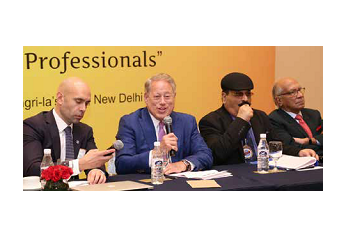
A knowledgeable assembly of the world’s topmost detectives and security practitioners brainstormed in Delhi, India to discuss and devise for the prevailing security scenario and challenges around the globe including India. The 92nd Annual Conference of the World Association of Detectives was held in Shangri-La, New Delhi during 10-14 October 2017. The Conference holds special significance as it discussed important issues related to India including blackmoney, counterfeit currency, anti-corruption challenges, cyber security threats and so on. This is the second time that the WAD Annual Conference has been hosted in New Delhi, the first one was held in 1984. However, the recent one was organised under the guidance of the immediate President of WAD belonging to India, Kunwar Vikram Singh, who is also the Chairman of Central Association of Private Security Industry (CAPSI), Association of Private Detectives & Investigators (APDI), and Security Sector Skill Development Council (SSSDC), India. Being an Indian, Mr. Singh took the lead to acquaint nearly 100 top sleuths and security professionals from around the world with the Indian culture and practices, the laws of the land, the scope and viability of security and investigation business in India, the approach of the Indian Government towards private security professionals, and other pertinent information. APDI supported the WAD in organizing the event in India, and hosted and sponsored a great cocktail and dinner for all WAD delegates in Gymkhana Club. This happened first time in the history of WAD that a local association has offered a gala reception to their delegates. “It is an honour to get an opportunity to host this prestigious event in India. India has several threats including black money, counterfeit currency, corruption and cyber security threats, and so on, and we will discuss these concerns on the forum,” Kunwar Vikram Singh said at the beginning of the session, “Issues like financial frauds, and tracking black money and people who disappear after embezzling money are a growing concern. We are here to support the government and help them establish a corruption free India as called by the Prime Minister Narendra Modi.” As discussed during the inaugural session of the conference, there is an exponential growth in the financial frauds and the requirement for background screening by companies and individuals. It leads the private detective market in India to grow at a rate of around 30 per cent annually and this is expected to touch a figure of INR1,700 crore by 2020. “There is a huge private investigation market in India that ranges around INR500-600 crore, and as there are now background screening of top and middle level executives who join a company, due diligence in mergers & acquisitions, keeping tab on counterfeit goods and trade, insurance frauds, credit card frauds, marriage frauds due to the influx of matrimonial websites etc., we need a lot of new detectives, expectedly around 50,000 in the coming years,” Mr. Singh continues, “Given the tremendous growth of the sector, it needs to be a certified professional field. The government has brought a Bill called the Private Detective Agency (Regulation) Bill 2007 which is pending in the Parliament and we expect the Act to pass soon. The Act will provide for the licensing and creating the do’s and dont’s for the sector, and will pave way for the government to work with private detectives.” The WAD is Colorado, USA based world’s largest and longest established association that represents investigation and security practitioners in more than 80 countries. It promotes and maintains the highest ethical practices among its members and fosters cooperation between investigators globally. The Conference was inaugurated by Lt. Gen. Rajinder Singh (Retd.), former Director General (Infantry), Indian Army and former Commander of UN Peace Keeping Forces. In his inaugural speech he said, “The world has evolved exponentially in the last couple of decades, specifically in terms of how the society is governed, the role of citizens in it and how businesses are run. There are entities and individuals who are tempted to take short cuts for reaping benefits in a short span of time and it is here that private detectives can play a major role in checking them to practise such illegal and undue influences on the society and businesses.” “Today the success of the corporate world largely depends on the novelty of an idea or intellectual property rights (IPRs) that they create, and that they need to protect as competitors or other pertinent ones are interested to know what they are doing. There are attempts to buy out people, bribe key officials etc., to get that information. The role of detectives starts here to protect them and ensure that ethical practices are taking place. Therefore, the private investigators can play a big role in checking corruption in the corporate world,” Gen. Singh adds. Alongside internal Executive and Board meetings of WAD, Awards, as well as hosting networking opportunities, the 5-eventful day happening saw a seminar on Cyber Security and  Dark Web by Pawan Duggal, the eminent Indian Cyber expert; a Round table dialogue on Anti-corruption Partnerships chaired by Michael Hershman, Group CEO, ECSS; and the insights of Anselm Lopez, Director, Strategic Relation Directorate, MHA, Singapore on  ‘Threats to the Security Environment and Role of Interpol,’ and Shivindra Pratap Singh, MD, Lancers Risk Consulting on ‘Doing Business in India – Opportunity and Challenges’ respectively. The stage also saw the election of the WAD new Board of Officers, which democratically takes place every year during the Annual Conference. Kunwar Vikram Singh has been elected as the new Chairman of WAD, followed by Conflict International Chairman Mike LaCorte as the President, who was earlier the 1st Vice President of WAD. The 93rd WAD Annual Conference will be convened in Las Vegas, Nevada during 27 September – 1 October 2018. Michael J. Hershman, currently the Group CEO of the International Centre for Sport Security – an independent and non-profit organisation at the forefront of efforts to safeguard sport – is an internationally recognized expert on matters relating to transparency, accountability, governance,…

Read More

Smart Cities Conclave at Varanasi

Hikvision Partakes the BW Businessworld and Varanasi Smart City’s National Smart City Conclave in Varanasi on 13th October 2017. Varanasi Municipal Corporation and Varanasi Smart City Limited, Government of Uttar Pradesh, along with Businessworld Media Group, has organized Smart City Conclave – a national summit on urban infrastructure, IT & transportation on 13th October 2017 in Varanasi. Hikvision participated as the security partner of the event which was a perfect forum to showcase their wide range of products and solutions for smart city surveillance requirements. Varanasi, one of the oldest cities in India, famous for its ghats, temples and Kala Bhawan, is set to develop as a Smart City, and as a commitment towards the project the government has budgeted a sum of `321 Crores. Suresh Khanna, Honorable Minister for Urban Development, Uttar Pradesh spoke on the progress of Smart Cities mission in the state of Uttar Pradesh, and specially on how the historical city can be turned into a smart city. “We discussed Hikvision’s complete smart city solutions including city transportation, security center, public parking, rail transit & stations, temporary surveillance, town square, water guarding and perimeter monitoring at National Smart Cities Conclave and presented them to all the stakeholders. We also  suggested them Hikvision’s technologies such as PanoVu, Darkfighter, 4K Ultra HD for smart city surveillance solutions. Hikvision thermal cameras can be a perfect match for cities like Varanasi for river bank surveillance requirements. We also highlighted Hikvision’s key strength as world’s leading video surveillance solution provider,” said Ashish P. Dhakan, MD & CEO, Prama Hikvision India. Representatives from Government of Jammu & Kashmir, Karnataka, Tamil Nadu, Gujarat, Maharashtra, Uttar Pradesh and various other states presented their key innovations for the smart cities mission. The BW Businessworld National Smart Cities Conclave was very good in terms of footfall and response. It was worthwhile participating in this show as it gave a wide platform for Hikvision to reach a vast audience of government officials and decision makers in the implementation of Smart City including other service providers. – Ashish P. Dhakan MD & CEO, Prama Hikvision India We are working towards developing Varanasi into a smart city keeping in mind its heritage and cultural background. We have rolled out RFPs for development of command and control centre, smart parking, water management, hospitals and waste management in this city and we will be starting the projects shortly, we are trying to create an ecosystem where not only a city develops, but an individual too. The government of Uttar Pradesh is focused on completing the projects, which were stated under Prime Minister’s smart cities agenda. – Dr. Nitin Bansal Municipal Commissioner, Varanasi  

Read More

Videonetics Secures FIFA U-17 at Salt Lake Stadium, Kolkata

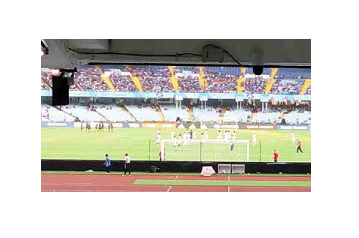
Videonetics, the leading visual computing platform development company, has been selected as the technology provider to secure Salt Lake Stadium, Kolkata, for the largest football tournament ‘FIFA U-17 World Cup’ India, 2017. Covering an area of 76.40 acres, the stadium has the seating capacity of nearly 85,000. An international tournament like the FIFA U-17 World Cup India 2017 attracts huge masses of both Indian and International visitors including dignitaries, VIPs and government officials. Considering underlying challenges associated with this massive occasion, Videonetics has successfully designed and deployed a combined solution of intelligent video management system (IVMS) and intelligent traffic management system (ITMS) comprising more than 250 cameras including 4K, full HD, 360° pan tilt & zoom, and specialized license plate cameras. The solution is not only to secure various areas like field area, entry & exit gates, galleries, VIP lounge, parking, food court and other sensitive locations, but also to respond to potential security issues in a proactive manner. The 24/7 real-time monitoring is being conducted at the command control center by the authorized officials, who can search, analyze and replay footages of an event. Videonetics’ IVMS is based on a unified, monolithic architectural framework to capture and handle video and audio data over IP network in an efficient and elegant way. It provides investigation-friendly monitoring software at the front-end, while relegating all the complexity of the server software to the back-end. ITMS is specially designed and architected to replace tedious manual processes to track, regulate and analyze vehicle movements on entry/ exits, roads, and to enforce traffic rules for safety of citizens and their properties. “Videonetics has shown great amount of professionalism in designing and developing solutions as per project need. I am sure that EMBEE Software and Videonetics as a team will set a benchmark in securing high profile and large-scale projects across the country,” said Uday Bhanu Bose, Sr. General Manager, BD at EMBEE. This is a proud moment for Videonetics to be associated with Salt Lake Stadium in securing such a prestigious sports event. We are thankful to authorities involved and EMBEE Software for extending their support and commitment in completing the project on time. – Avinash Trivedi VP, Business Development, Videonetics Technology

Read More

Enhanced Ethernet Technology (ePoE)

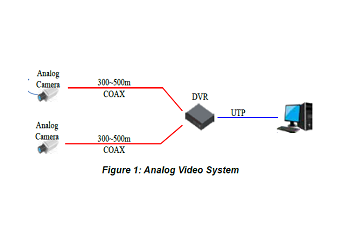
The current strongly developing surveillance industry has given rise to a significant number of solutions and technologies that can be divided into two main areas – Analog Technology and Network Surveillance Technology. Analog surveillance systems adopt a point-to-point connection to transmit data directly from one device to another – namely, an analog camera connected by coaxial cable to the port of a DVR allows the camera feed to be viewed, thus achieving its surveillance functionality. If the camera feed is to be viewed remotely, a remote network connection must be established through the DVR. (Figure 1) A network video monitoring system adopts modern Ethernet technology and uses a LAN connection between camera devices and an NVR. All front-end network cameras and back-end network storage devices are connected to the same Ethernet network, which is then used for communication between the devices. Any node on the network may access any device on the network as long as it obtains authorization from the accessed device. (Figure 2) Pros and cons The main advantages of an analog video system are convenient plug-and-play connections and no delays in transmission. Disadvantages include – it is difficult to improve resolution and it is hard to achieve unified management in large-scale system solutions. In order to overcome these disadvantages, a new generation of analog monitoring technologies has emerged in the industry including CVI, AHD and TVI, which provide HD resolutions for analog systems. As for unified system management, hybrid DVRs have been created alongside other unified management platform product solutions. In a network video monitoring system, advantages lie in easy unified management, flexible upgrade to higher resolutions, and remote PoE power supply. However, disadvantages include long video feed delays and network bottlenecks caused by multiple devices sharing the same amount of bandwidth. As with analog devices, with the development of the industry, network video monitoring technologies are also continuously being upgraded. For example, the new generation of H.265 encoding technology has greatly reduced network bandwidth usage and stronger encoding processors have lessened video codec delay. Currently network camera video delay has been reduced to just 150ms, unnoticeable when viewing video feeds. Overall, along with the differentiation of the industry and technological development, two systems are constantly merging – nothing more than merging of the best of both technologies. From a macro perspective, there are mainly two main appeals in the development of security industry – higher resolutions and greater networking. However, there are still a large number of HD analog monitoring systems on the market which adopt standard resolution basic coax wiring. Additionally, due to many factors, the cost of labour for transforming such a system is continuously increasing while the device costs are decreasing, which has led to a situation where reconstruction during the system upgrade or transformation process has become less viable, giving way to a new requirement i.e., coaxial upgrade. So far, the new generation of HD analog technologies such as CVI, AHD and TVI has only satisfied the first and third requirements (HD and coaxial upgrade). In accordance with the future development of the Internet of Things (IoT), connecting devices over LAN is becoming an irresistible trend. Therefore, it is necessary that analog monitoring is transformed into network management in order to improve the operability of centralized management and dispatch, which is the second requirement in networking. As for current analog technology, it is hard to meet this requirement. Equally, for network technology, it is hard to achieve the third requirement of coaxial upgrade. Coaxial Ethernet technology that converts network into coax does already exist on the market, but it is achieved only through multiple parts and at a high cost, making it inviable as a universal technology. Therefore, the most urgent need in the current market is a technology that provides network coaxial functionality at a low cost. Dahua’s ePoE Dahua’s patented enhanced Ethernet (ePoE) consists of two core technologies: The first adopts advanced physical layer 2D-PAM3 coding modulation, and can achieve full duplex transmission over 800 meters at a speed of 10Mbps, or 100Mbps at shorter distances via a pair of twisted or coaxial cable media. It also supports PoE and PoC power supply technology for both the transmission media, greatly simplifying construction and wiring. The other one adopts a Dahua-patented application-layer synchronous negotiation mechanism that guarantees self-adaptive compatibility of enhanced Ethernet via implementing first the time base sync and then mode negotiation. When connecting to matching devices via any media, it can automatically determine the current mode of use, whether it is enhanced mode or general network mode. Thus, the system is fully self-sustaining and requires no manual configuration, achieving true plug and play. Application scenarios Enhanced Ethernet technology (ePoE) is automatically compatible with three connection modes operating over the same network at the same time – traditional network, long-distance network, and coaxial network. As shown in the figure 3, for traditional HD upgrade projects, in order to reduce wiring and construction, it uses original analog coaxial wiring, equipped with HD analog cameras and HD DVR, and connects to back-end services via network switch. Meanwhile, additional network cameras (IPC) are connected to the back end directly via network switch, and thus a centralized surveillance system is formed. This makes the mixed monitoring of both analog and digital possible, although it is quite complex for centralized management of configurations. The new generation of Dahua enhanced Ethernet technology (ePoE) is compatible with traditional Ethernet networks and so it can reuse original switches, IPCs and other network devices, requiring no large-scale device upgrades. In addition, ePoE directly converts network signals to and from coax through a passive converter, which allows the reuse of existing coaxial wiring, greatly reducing upgrade costs. Power over Coax (PoC) functionality provided by this technology eliminates the need for renovations to add power wiring for new cameras. Finally, future surveillance area expansion can be performed without a need of adding additional repeaters. Simply use additional cables to add new monitoring devices into the 800m capable network. ePoE makes…

Read More

Bridging Privacy and Cybersecurity for Federal Systems

Because information technology (IT) deeply affects privacy at individual and societal levels, systems should be built in a trustworthy manner, consistent with widely recognized, high-level privacy principles such as the Fair Information Practice Principles (FIPPs). The National Institute of Standards and Technology (NIST) regularly conducts research into technology, aiming to improve innovation and competitiveness, thereby advancing U.S. national and economic security and quality of life. Much of NIST’s previous guidance into the trustworthiness of systems in various technical areas – including cybersecurity, cloud computing, big data, and cyber-physical systems – has focused on the security objectives of confidentiality, integrity, and availability (CIA). While unauthorized access to personally identifiable information (PII) is a subset of information security and a critical aspect of privacy, there is a less-developed understanding of other ways in which a system impacts individuals’ privacy and how to identify and address risks that extend beyond unauthorized access. Thus, there is a need to bridge cybersecurity and privacy as two different attributes of trustworthiness. NIST’s Information Technology Laboratory has developed a new Internal Report (NISTIR) 8062, Introduction to Privacy Engineering and Risk Management in Federal Systems – building on several years’ collaboration with public and private sector partners – including two public workshops and a webinar. While all organizations benefit from effective privacy engineering, NISTIR 8062 will be particularly helpful for U.S. federal agencies. Federal privacy protections have been in place for more than four decades, and the need to protect individuals’ privacy remains as critical today as ever. The U.S. Office of Management and Budget’s recent update to Circular No. A-130 includes a new emphasis on managing privacy risk, so federal agencies will need guidance on repeatable and measurable approaches to bridge the gap between privacy principles and effective implementation. To that end, NISTIR 8062 will: Lay the groundwork for future guidance on how federal agencies will be able to incorporate privacy as an attribute of trustworthy systems through the management of privacy as a collaborative, interdisciplinary engineering practice; Introduce a set of objectives for privacy engineering and a new model for assessing privacy risks in federal systems; and Provide a roadmap for evolving these preliminary concepts into actionable guidance, complementary to existing NIST guidance for information security risk management, so that agencies may more effectively meet their obligations under Circular A-130 and other relevant policies. NISTIR 8062 is an introductory report intended to foster further discussion. To better support the operational needs of agency privacy programs, and to help develop guidance that is comprehensive enough to promote compliance with policy directives, NIST will continue to collaborate with the privacy community through open processes. An Engineering Approach to Privacy A significant body of work already addresses security in federal systems. Recently, the term ‘privacy’ has begun to be added to these security documents. This addition implies that privacy shares enough characteristics with security that the guidance should be applicable to address privacy. However, even the fact that ‘privacy’ is used as a separate term confirms that privacy has a separate meaning and brings with it issues distinct from security. That is why it is important to understand the relationship – particularly the distinctions – between information security and privacy. Doing so will improve understanding of how to apply established systems engineering and risk management processes to address privacy concerns. As noted in Circular A-130: “Federal information is a strategic asset subject to risks that must be managed to minimize harm. Protecting an individual’s privacy is of utmost importance. The Federal Government shall consider and protect an individual’s privacy throughout the information life cycle. While security and privacy are independent and separate disciplines, they are closely related, and it is essential for agencies to take a coordinated approach to identifying and managing security and privacy risks and complying with applicable requirements.” At the same time, throughout the Circular, there is clear recognition that privacy and security needs require separate leadership with unique skills, and that a coordinated approach does not necessarily mean an identical approach. Public discourse on the relationship between security and privacy often includes colloquial phrases such as ‘Security and privacy are two sides of a coin’ and ‘There is no privacy without security.’ Clearly, confidentiality of PII plays an important role in the protection of privacy. However, there are security issues unrelated to privacy (e.g., confidentiality of trade secrets), just as there are privacy issues unrelated to security. For example, some communities have responded negatively to smart meters due largely to concern that the information being collected can reveal behavior inside a person’s home, and less so from concerns that the utilities cannot keep the information secure. Even actions taken to protect PII can have privacy implications. For example, security tools such as persistent activity monitoring, can create concerns about the degree to which that monitoring reveals information about individuals that is unrelated to cybersecurity purposes. These cases illustrate that systems designed to achieve beneficial objectives (e.g., improved efficiency of the electrical grid and increased security) can adversely affect individuals’ privacy as an unintended consequence or byproduct of the system as it is collecting and using information about individuals. This by product risk model is conceptually distinct from the security risk model. In the security risk model, concerns focus on unauthorized activity that causes a loss of confidentiality, integrity, or availability of information or systems. In the by product risk model, the processing of PII is planned and permissible (i.e., authorized), but it creates implications for individuals’ privacy. So, while some privacy concerns arise from unauthorized activity, privacy concerns also can arise from authorized processing of information about individuals. The below figure shows a non-proportional representation of the relationship between the privacy and security domains. Recognizing the boundaries and overlap between privacy and security is key to determining when existing security risk models and security-focused guidance may be applied to address privacy concerns – and where there are gaps that need to be filled to achieve an engineering approach to privacy. For instance, existing information…

Read More