securitylinkindia

OSH India 2017

Enhancing safety and well-being of the Indian workforce UBM India has recently held the 6th edition of the Occupational Safety & Health (OSH) India 2017 at the CIDCO Exhibition Centre, Navi Mumbai. The show brought together internationally renowned exhibitors, consultants, business experts and key government officials on one common platform, to discuss global best practices and seek solutions to some of the most pressing challenges in the field of workplace safety and health. The participation of leading exhibitors from across the industry reaffirmed the need and focus of OSH India as an industry event. The inaugural ceremony took place in the presence of SudhakarPrabhuRathod, Director, Directorate Industrial Safety & Health, the Department of Labour, Government of Maharashtra; Santosh Warrik, CFO & Advisor, MIDC, Government of Maharashtra; Arvind Mandke, Chief Fire Officer, CIDCO, Government of Maharashtra; Pankaj Jain, Group Director, UBM India Pvt. Ltd., and Yogesh Mudras, Managing Director, UBM India, amidst an august industry gathering. Speaking at the inauguration Yogesh Mudras said, “As a big chunk of the population belongs to the working age group, organisations need to look at the safety and health along with emotional well-being of these employees on priority to retain the best of talent and ensure good productivity. Companies in manufacturing and allied sectors such as automobile, oil and gas, construction etc., are becoming aware of occupational hazards and are working towards creating a safer working environment. Governments for their part are through regulations emphasising on developing infrastructure and providing resources centred around workplace safety, coupled with increasing global investments. Despite a greater focus on occupational safety and health, there is still inadequate education at various levels and public awareness is still absent, as managements and workforce don’t always place safety as a top priority. Although, many organisations have taken the initiative to organize training sessions to create awareness, a concentrated and cohesive strategy is clearly not in place. UBM India’s OSH India is geared to filling this vital gap.” “Also, this year we are glad to have a gender sensitive approach to safety and health as one of the topics at the conference seminar. A broad stratagem for the enhancement of women workers’ safety and health has to be built with an increasing number of women at the workplace, enhancing productivity and breaking the glass ceiling,” he further added. The expo was supported by DISH (Directorate of Industrial Safety and Health) – Maharashtra, Gujarat and Tamil Nadu; Gujarat Safety Council; Indian Technical Textile Association; Taloja Industrial Association; Thane Manufacturer Association and Indian Society of Ergonomics. OSH India 2017 also witnessed the ‘OSH India Safety Awards 2017’ on the evening of day 1 which was open to Indian operating businesses, organizations, alliances and individuals in the public or private sector with a workplace health and safety initiative. This year, OSH Awards received a total of 120 nominations from across industry verticals.

Read More

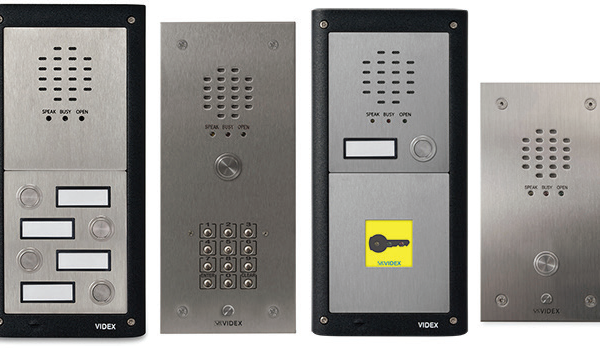
Videx New Vandal Resistant GSM Range

The new vandal resistant systems include many new advanced features making it more flexible then ever. Using mobile technology to communicate and operate doors, automatic gates, car parks and remote site applications makes it a perfect security solution for unmanned sites and communications outside of normal business hours. It is available as a part of the 4000 series modular door entry system in a range of styles including surface and flush panels in 12 gauge 316 grade stainless steel, the VR120 vandal resistant range and custom panel sizes. All vandal resistant panel variations can be engraved with legend or provided with back lit name plate windows. The system also provides optional proximity access control for up to 1,000 users. GSM systems enable calls to be placed from an entrance point to any mobile or land line telephone. Entry can then be granted using the telephone keypad. Two key innovative features of the new vandal resistant GSM system are – it can call up to 24 users with a divert facility of up to three numbers if the others are engaged or unanswered, and up to 1,000 telephone numbers can be stored to take advantage of the ‘dial to open’ feature which enables callers to dial the intercom and release the door/ gate without being charged for the call. Proximity access control is also an option, and a voice annunciation and LCD display can also be connected ‘if required’ which can include scroll buttons to search for users via the screen. GSM systems require minimum installation and setup time, and can be installed in places which would be too difficult or too expensive for hard wire. There is no need of any cabling to telephone points as the system utilises the existing mobile network infrastructure. The installation in a very short time requires only the mounting of the entrance panel, and the connection of a power supply, antenna and gate or door releasing device. The new system also comes with an event log that can record events that can be viewed by PC software. Programming and maintenance of the user’s details, access control codes and fobs can all be controlled via SMS text messages and USB connection. The GSM system’s flexibility allows changes to be made remotely without the need to revisit the site. Dry contact relay output, additional switched 0V output, push to exit button input and auxiliary input are all available.

Read More

See Tec Experience Video Management Solutions First Hand in 5 Themed Areas

SeeTec will present their video management applications for a wide range of areas and industries at next year’s Intersec trade fair in Dubai. They will exhibit on their own booth for the very first time. KajSvenningson, Vice President Business Development, is looking forward to welcoming customers and prospects on the 50 sqmSeeTec booth. He said, “The Middle East has become a major market for SeeTec in the past years. The projects that we realize here are of a scope that have created a visibility for us that reaches far beyond just the gulf region. And Intersec as the leading regional trade fair is mirroring the importance with its own growth towards a show of a really global scope.” The focus of the presentation in the Dubai International Convention and Exhibition Centre will be five hands-on stations that will not only showcase the video management functionalities of SeeTec Cayuga R11 but also demonstrate, how the software becomes an essential part of security and business ecosystems. “The new trend of adding ‘intelligence’ to the video feeds recorded and managed through SeeTec software will be visible in a dedicated area for video analytics as well as our SeeTec Business Video Intelligence (BVI) range of products. Here, we will show how SeeTec can help our customers to link video data to business processes e.g., in logistics, transportation or banking to safeguard their processes and to make better decisions for the future,” Andreas Conrad, Marketing Director at SeeTec, explains, “We are constantly striving to provide added value to our customers with our software solutions. We want to show that modern video management technology can be the basis of much more than just remote observation of assets, restricted areas and public space.”

Read More

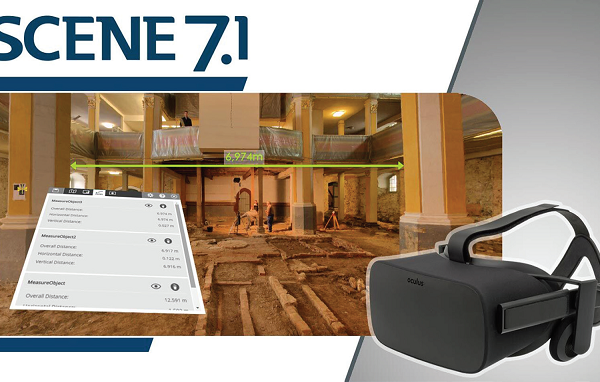
Faro Scene 7.1 Software for Virtual Reality

Leading in virtual reality for construction, design and forensics FARO® has released virtual reality (VR)-ready SCENE 7.1 software that enables an immersive VR experience with integration of detailed photographic textures i.e., surface details of an object and rendering of 3D scan data so quickly that it appears to be generated in real time. While SCENE 7.1 is optimized for the FARO laser scanning product portfolio e.g., FocusSor Freestyle, it is also device agnostic, and so it can seamlessly accept and manage 3D scan data from other non-FARO laser scanner products. Immersive virtual reality SCENE 7.1 enables users to view an entire project i.e., the full range of related scans in full 3D virtual reality through a compatible VR headset from the comfort of the user’s office or workstation chair. This significantly elevates the beneficial use and reduces project cycle time by enabling architecture, engineering and construction professionals, public safety forensics experts and product designers to quickly simulate and compare reality for such tasks as evaluating as-built documentation, reconstructing crime or accident scenes, or optimizing design plans. Productivity enhancements in virtual reality SCENE 7.1 advances well beyond the ‘see it better to understand it better’ concept common in most industrial VR solutions. It enhances productivity by enabling users to take/ capture screenshots, tag comments or notes specific to images, and navigate the system overview map in real time, all without needing to exit the virtual reality environment. Merging of FARO terrestrial and handheld scanning data Historically, the FARO Focus and Freestyle products have had their own unique, coded targets (markers that identify scan areas/ specific targets), which could not be shared by the other scanning device. With SCENE 7.1 enhanced functionality, not only can both devices share coded targets, but they can also now verify registration of scans from both devices in a single, real time registration report. This ensures not only a more cohesive workflow between these devices but also enables projects to be completed faster. “We have been actively pushing the agenda to integrate high value VR capability and compatibility into our reality capture products,” stated Andreas Gerster, Vice President, Global Construction BIM-CIM, “This is the third major introduction in this area from FARO over the past year and we are confident that facilitating the way our customers interact in a virtual project environment with access to real time, simulated real world information makes the planning processes more tangible and less error prone.”

Read More

A10 DDoS Protection Solution Enhanced

As distributed denial of service (DDoS) attacks increase in size and scope, A10 Networks, a Secure Application Services™ company has recently launched its latest defenses against these threats with the most powerful DDoS protection solution available on the market. The company is strengthening its A10 Thunder™ TPS (Threat Protection System) platform with surgical flow-based detection via the new A10 Thunder TPS Detector, which integrates with A10 aGalaxy TPS management to provide automated mitigation for TPS mitigator. The A10 Thunder TPS Detector is available as a virtual machine on the A10 aGalaxy® 5000 management appliance or on other TPS mitigation appliances via the configuration option. It more than doubles the industry’s nearest competitive flow-based DDoS detection performance by managing 500,000 flows per second. The A10 Thunder TPS Detector is tightly integrated with A10’s TPS Mitigator and A10 aGalaxy TPS management solutions. Together, A10 Detector, aGalaxy TPS and A10 Mitigator comprise a complete A10 Thunder TPS solution, which enables IT organizations to quickly detect, manage and mitigate attacks. When an attack is detected via an analysis of user traffic by A10 Detector, aGalaxy TPS management is then notified, which triggers A10’s Mitigator with the recommended mitigation templates resulting in fast responses across the attack lifecycle. By understanding and assessing the severity of the attack, the A10 Thunder TPS solution then automates effective escalation and automatically runs countermeasures to help mitigate DDoS attacks before they spread and wreak havoc. The A10 Thunder TPS solution uses more than three dozen threat intelligence sources to block malicious traffic, and monitors performance and security baselines with 28 behavioral indicators – considerably more than major competitors – inspecting suspicious traffic and escalating policies to help avoid legitimate traffic drops and eliminate false positives. A10’s continued innovation in DDoS protection comes at the right time. Security teams face increasing sophistication from adversaries responsible for DDoS attacks. According to a recent report commissioned by A10, large DDoS attacks greater than 50 Gbps have quadrupled the past two years. The number of companies experiencing between 6-25 attacks per year has increased more than four times in that same time span. However, with the complete Thunder TPS solution, A10 is improving protection for companies looking to augment mitigation capacity, SecOps-friendly automation, and reduction of false positives. “With the new Thunder TPS options and flexibility, A10 is helping service providers, cloud providers, gaming companies and enterprises combat aggressive DDoS attacks with greater intelligence and agility,” said Raj Jalan, CTO of A10 Networks, “We believe the intelligent automation, combined with the industry’s highest-performing combination of powerful detection, mitigation, and management, will increase SecOps efficiency and drive more effective defense for businesses.”

Read More

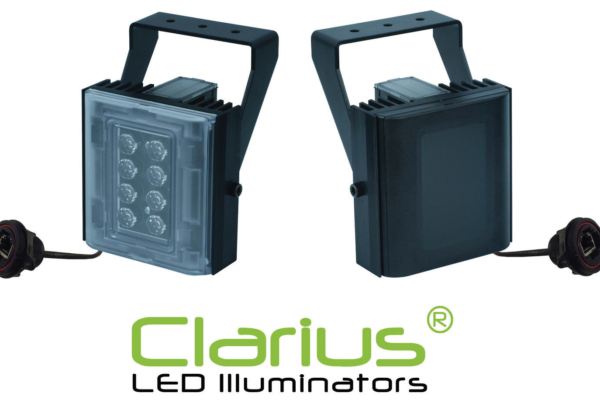
GJD Clarius® PLUS IP LED Illuminator Range

GJD, one of the world’s leading manufacturers and designers of innovative LED Illuminators, has launched its new Clarius PLUS IP Infra-Red and White-Light LED lighting range for networked based security applications. The range provides dedicated lighting for IP cameras via Power-over-Ethernet (PoE), providing a smart and integrated lighting solution. All models feature the latest dual core surface mount LEDs with enhanced optical output and an interchangeable lens diffuser system to deliver extremely clear night time images with no hot spots. Clarius PLUS IP offers unbeatable levels of performance and seamless integration with third party VMS providers. Keith Fenwick, CCTV Lighting Director commented, “We are pleased to announce our new range of network illuminators. The Clarius PLUS IP range provides all the advantages of the standard Clarius, but with added secure IP technology for smart integration and easy installation with remote setup.” In addition to the comprehensive features of existing Clarius illuminators, the IP models provide real time remote monitoring access via a user-friendly secure web-based interface. Adjustable settings include temporary power boost, light pulsing mode for intruder deterrent, and timer functions for energy and cost savings. Each Clarius IP is built with a unique anti-vandal shock sensor to ensure optimal intruder deterrent. For example, if an intruder attempts to vandalise the illuminator by throwing a brick at the unit, the illuminator will automatically detect and alarm. Designed with flexibility in mind, it comes with an interchangeable lens kit as standard. This useful installation feature allows the user to quickly and easily change the angle of illumination when on site. The versatility of Clarius PLUS IP makes it perfect for a wide range of applications including protecting residential properties, commercial buildings and industrial sites, as well as rural and isolated areas. All of GJD’s Clarius PLUS IP illuminators are covered by a five-year warranty, with a projected working life of over ten years.

Read More

Nice Actimize Debuts Autonomous Financial Crime Management

To significantly reduce costs of compliance and increase detection accuracy Autonomous Financial Crime Management addresses such complexities as changing regulatory requirements, mounting costs for personnel, and dramatic shifts in technology In the face of mounting pressures on compliance departments at financial services organizations, NICE Actimize, a NICE business, is leading the revolution to more efficient and cost-effective financial crime and compliance operations with the debut of Autonomous Financial Crime Management. Addressing a paradigm shift where machine-led functions are driving operations, which are today performed manually, this innovative process will create a unique environment that more effectively addresses the challenges and pain points that financial services organizations are facing by allowing them to tailor their operations to lower costs and drive greater profitability, all while improving accuracy and throughput. Autonomous Financial Crime Management also allows organizations to configure which decisions to direct to human experts, supporting either semi-autonomous to fully autonomous operations. By addressing such complexities as changing regulatory requirements, mounting costs for personnel, and dramatic shifts in technology, NICE Actimize’s Autonomous Financial Crime Management offers a unified view of risk through targeted utilization of big data, advanced analytics everywhere, artificial intelligence and Robotic Process Automation which enables these issues to be more effectively processed. Autonomous Financial Crime Management also streamlines and creates more productive use of personnel, therefore improving an organization’s overall effectiveness. NICE Actimize’s innovative Autonomous Financial Crime Management approach relies on its deep domain knowledge and expertise in financial crime and compliance. This new method creates a seamless connection to data from anywhere, from any source at any volume, to work quickly to turn raw data into intelligence. This acquired intelligence is then used to detect, decide, investigate and resolve alerts and cases with limited human intervention, enabling financial services organizations to mitigate various types of financial crime with greater speed and accuracy. Joe Friscia, President, NICE Actimize said, “Financial services organizations are facing a true paradigm shift. Where humans once drove and assisted machines to execute processes in financial crime management, the reverse is becoming true and machines are now driving operations, thereby creating dramatic gains in cost savings, creating vastly better models and improving detection accuracy. This rapid technology transformation, coupled with vast regulatory change, requires a new approach. NICE Actimize’s Autonomous Financial Crime Management leads the market and our customers into the future while providing a vision and strategy that streamlines the specialized operational requirements of financial crime fighting by unifying advanced analytics, machine learning and intelligent automation.”

Read More

A New Alternative to Video Transmission Over Ethernet For Industrial Security Applications

By Bruce M. Berman – ComNet Vice President of New Business Development The industrial security market has been witnessing the gradual transition to video, audio, and data transmission over Ethernet since the beginning of this decade. This change has impacted numerous other markets as well, including the transportation, factory automation/ industrial control, and utility/ electric power transmission and distribution markets. Prior to the introduction of video over IP (or Internet Protocol), a separate network of analog or digitally encoded video was typically utilized for hauling the video from the edge of the network back to the monitoring location. Audio for telephony or a communications intercom system; RS-232, RS-422, or RS-485 serial data, commonly used for CCTV camera pan-tilt-zoom (PTZ) control or the card access element of the system, was transmitted from the field devices back to the control center on other dedicated and parallel networks (see figure 1). The transmission media of choice was usually optical fiber for reasons of robustness and bandwidth.    These technologies and system design approaches are still very viable solutions for hauling high-quality full-motion video, audio, and data, and when optical fiber is employed as the communications media, extremely long transmission distances and electrically noisy environments are easily accommodated. The difficulty of installing and maintaining two or more parallel and technically diverse networks, one for video, one for audio, and another for serial or other data, has motivated many users to consider the use of Ethernet as their preferred communications networking system. The relative ease of integration of the key components of the system onto a common platform has largely made Ethernet the networking solution of choice in many markets, including the industrial security market. With the advent of Ethernet, it now became practical and cost-effective to consolidate the video, audio and data elements of a security communications subsystem onto a single network (see figure 2). Although in theory this should be the ideal platform for the typical local or wide area communications network utilized for industrial security and other surveillance applications, in practice several key and recurring issues are frequently encountered by the systems integrator and end-user responsible for the installation, maintenance, and operation of the system. When analog video is to be deployed onto the network, a video encoder is required to convert the camera video output into an electrical signal that is compatible with transmission over an Ethernet-based network. These encoders employ signal compression technology to reduce the bandwidth occupied by the video, so as to increase the number of potential video, audio, or data signals that may share the finite bandwidth available on the network. Present video compression standards include MPEG-2, MPEG-4 and H.264, with MPEG-4 currently most widely used. The H.264 standard is newer and offers the advantage of enhanced video quality with the benefit of reduced bandwidth. MPEG-2 was originally developed for use by the commercial television broadcast industry, and although capable of superb video quality, its bandwidth requirements are large. As such, it has not been widely accepted for use within those communications networks employing Ethernet. Regardless of the compression standard utilized, hardware decoders or decoding software compatible with the encoded video are required for viewing the video. One major issue involves the relative lack of MPEG-4 or H.264 video encoders that are environmentally hardened when these devices are installed in an out-of-plant operating environment. In this kind of environment, issues such as ambient operating temperature, voltage transient protection, vibration, mechanical shock, and humidity with condensation must be considered to ensure that the video encoders or other field equipment are capable of providing long-term reliability and stable performance. The market is full of suppliers that build quality encoders designed for deployment in benign, conditioned operating environments such as when the equipment is fielded in an adequately heated and cooled communications equipment room. However, those manufacturers that build hardware capable of withstanding the extended operating temperature range, humidity with condensation, and electrical voltage transients and noise encountered in an outdoor or out-of-plant environment are few and far between, and the equipment is costly as a result. The MPEG-4 and H.264 video compression standards are suitable for transmission over Ethernet. As these standards rely upon video compression, the video in these standards is not transmitted in real time, and exhibits a certain amount of latency depending upon the compression standard utilized. Some users may encounter potential legal issues with video transmission systems that are not real-time. Other users may have operator issues with the time lag or delay between executing a pan-tilt-zoom command, and the actual execution of the command as viewed on the CCTV monitor. Full-motion 30 frames per second true broadcast-quality video with zero latency is not achievable considering the current state of Ethernet-based systems, and significant system bandwidth is required to achieve acceptable video quality. The high system bandwidth requirement imposed by the video ultimately limits the total number of video channels and other signal sources that may be inserted onto the Ethernet platform. Many end-users have been disappointed with the video quality of their video-over-Ethernet system, especially when the video is viewed on highly revealing wall monitors. In addition, some video surveillance or monitoring applications mandate the use of high resolution cameras, and much of the resolution provided by these cameras may be lost when the video is compressed to MPEG-4 or H.264 and inserted onto the network. Although Ethernet is based upon the industry accepted IEEE 802.3 standard, and in theory any manufacturer’s Ethernet equipment should be completely interoperable with any other manufacturer’s equipment, in practice this is very frequently not the case. Interoperability issues require the involvement of a trained IT professional to resolve, and in some cases, resolution is not possible. Trained IT or technical personnel are required for the initial installation, setup, and long-term maintenance of the system, and the long-term cost associated with this are obvious and frequently not within the budget of many users. They must be considered as part of the overall life-cycle cost of owning and operating the…

Read More

SIA Launches Code of Conduct

The Secure Identity Alliance, the global identity and secure eServices advisory body, announces the adoption of a Code of Conduct that all the Alliance’s members will voluntarily commit to Developed in consultation with individual members to support best practices and enforce industry standards, the new Code enshrines the commitment of Secure Identity Alliance’s members to transact, engage and operate in a manner that conforms to highest standards of ethics and excellence in the design and implementation of digital ID systems. “As a multi-stakeholder association, the Secure Identity Alliance represents members that demonstrate the highest degree of professionalism, expertise and ethical standards in every aspect of their operations,” says Frederic Trojani, President of the Secure Identity Alliance. “The Secure Identity Alliance’s Code of Conduct sets out an unequivocal ethical framework for interventions and provides a minimum standard of behaviour that any public, private and non-government organization or entity engaging with a Secure Identity Alliance member can expect to encounter. Indeed, it is the Secure Identity Alliance’s belief that strict adherence to high ethical standards is the key to enabling the full potential of trusted digital identities and secure eServices.” New Code of Conduct sets out the commitment of Secure Identity Alliance members to highest standards of ethics and excellence in the design and implementation of digital ID systems, the beating heart of Government eServices delivery, upon which sustainable social and economic inclusion is built “The Secure Identity Alliance is acutely aware of the important responsibilities that fall on the shoulders of suppliers of digital ID solutions. Today’s ID systems represent the beating heart of Government eServices delivery, upon which sustainable social and economic inclusion is built. Indeed, a robust digital ID platform is the primary enabler for governments and businesses looking to reach and serve populations in new and more efficient ways – and the Code enshrines the commitment of our members to highest standards of ethics and excellence in the design and implementation of digital ID systems and program roll-outs,” concludes Frederic Trojani. The newly instituted Code sets out the primary principles Secure Identity Alliance’s members must observe in relation to their business practices and commercial actions and has been adopted to facilitate and enhance business relations in the marketplace with all relevant stakeholders (private and government entities and agencies).

Read More

Apollo Celebrates 40 Years of Manufacturing Excellence

HRH The Duke of Kent visits Apollo Headquarters His Royal Highness, the Duke of Kent recently visited the headquarters of Apollo Fire Detectors in Havant, Hampshire to commemorate 40 years of excellence in UK manufacturing by the company. During his visit, the Duke took a tour of the manufacturing facilities and met some of the engineers and assembly workers who are behind the award-winning and life-saving fire detection technology made by Apollo. The royal visit and Apollo’s longstanding achievement in manufacturing excellence are documented by an official plaque, unveiled by the Duke during his visit. “We are very proud to be able to share this important milestone in our history with HRH the Duke of Kent,” said Charles Lombard, Managing Director EMEA at Apollo, “In addition to celebrating Apollo’s long history of manufacturing excellence, this event reaffirmed our commitment to Apollo’s status of Royal Warrant Holder.” Apollo Fire Detectors Ltd. specialises in the design and manufacture of high quality fire detection products. Over the last 40 years, the company has broadened its capability from a straightforward focus on conventional fire detectors to include the manufacture of sophisticated analogue addressable detectors and interfaces for monitoring and controlling equipment in fire protection systems. Apollo has some of the most advanced manufacturing technologies to ensure consistently high quality products and fast response to customer requirements. With more than 3000 international approvals along with exporting to over 100 countries, Apollo has cemented its position as a world-class fire solutions provider. Apollo is part of the HALMA group of companies.

Read More