securitylinkindia

Skybox’s Security Threat-Centric Vulnerability Management for Virtual and Cloud Networks

Expands solutions to enable organizations to consistently and securely manage day-to-day security processes across all networks in one platform Skybox™ Security continues to expand its cloud security management solution, Skybox for the Cloud™. The solution now includes threat-centric vulnerability management (TCVM) for virtual and multi-cloud environments and extends capabilities for security policy management, attack surface visibility and network path analysis. With one platform, the Skybox™ Security Suite, organizations are now able to consistently and securely manage day-to-day security processes across their entire network infrastructure, whether on premises or in the cloud. As businesses continue to migrate to virtual and cloud environments, security becomes more complicated due to the nature of cloud architecture, from multi-tenancy to elasticity and the shared responsibility for the computing stack. For example, security mechanisms in virtual and cloud networks are different from physical environments, and even differ amongst cloud service providers. In addition, cloud elasticity means virtual machines are quickly spun up and down, making traditional vulnerability scanning insufficient as the environment may change significantly between scans. To counteract these challenges and reduce the chance of human error, Skybox helps automate security processes not only in virtual and cloud environments, but across all networks within a single, unified dashboard. Whether an organization’s network infrastructure is physical, virtual, cloud or a hybrid of all three, Skybox for the Cloud addresses a number of use cases in the following areas: Comprehensive visibility of the attack surface in a single network model, capable of incorporating data from 120+ security and networking technologies. End-to-end path analysis from any source to any destination across or within physical, virtual and multi-cloud networks, including detailed path analysis on the devices, rules, etc., along the path. Unified security policy management across all networks including out-of-the-box compliance checks for key industry regulations such as NIST and PCI DSS. Vulnerability discovery, prioritization and remediation planning with the context of an organization’s on-prem and multi-cloud networks; this information is correlated to current threat intelligence of exploits in the wild. As cyber events like the Equifax breach (caused by the Apache Struts vulnerability) continue to increase, it’s obvious that organizations are struggling to quickly identify and effectively remediate vulnerabilities in their systems. This challenge can be compounded by the nature of cloud environments and even procedural requirements from service providers that impact third-party scans. Skybox for the Cloud gives security teams the power to assess vulnerabilities in the cloud on demand by combining data from cloud-based patch and asset management systems, scanners and network devices. The results are analyzed and prioritized using the TCVM approach, taking into account: The vulnerabilities on the virtual machine and its importance to the organization. The virtual machine’s exposure based on the hybrid network topology and security controls in place. Threat intelligence on available and active exploits in the wild. TCVM also gives prescriptive guidance of what action can be taken to prevent exploitation and how urgently that action should be performed. IT teams are tasked with launching new services and applications on a daily basis. By leveraging cloud architecture, they can achieve that in minutes – opposed to days of work. The challenge is that this leads to a fluid security situation where assets (virtual machines) can be assigned to the wrong security group, resulting in immediate exposure. Security teams need to be on the top of this, and the only way to do it is to have global visibility and management across all your networks – Ravid Circus Skybox VP of Products

Read More

IFSEC International Takes New Industry Role Addressing Critical Global Security Challenges

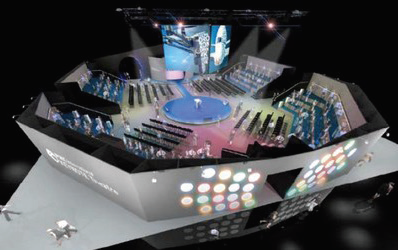
Security has never been a more critical discussion. 2017 has been a year where organisations and governments became increasingly aware that the manner of threat which they were working to prevent has changed irrevocably. Europe fell victim to a string of unpredictable attacks; Yahoo saw their share value fall by $350 billion over 48 hours after the largest security breach in history was revealed; the NHS found their physical assets left vulnerable after a ransomware attack disrupted their ambulance service; the FBI and Apple went to war on encryption and Airbnb properties were left in chaos when a smartlock update went wrong. These represented a pivotal theme, the need for all those influencing security to adapt to reflect the more complex world, and the ever-closer interweaving of physical and cyber security. The time is now for the security profession to unite their knowledge and their technologies to protect people, property and profits. As of 2018, it is IFSEC’s commitment to become the place for the profession to create a safer world. More than just a prominent trade show, IFSEC must foster the global security conversation, be the vessel that sets and carries the agenda and be the antenna for broadcasting the safety and security dialogue. 2018 will be the inauguration year of a transformation of IFSEC’s 40 year heritage as a physical security show into a high level security summit and integrated security event. When IFSEC was first conceived, the threats were merely physical. Society has adapted and this is the year we must too. The security profession must evolve to meet modern needs. IFSEC is gladly becoming the arena for the big discussions, however difficult they may be. The security profession must discover solutions that are a driving force in protecting businesses, people and data. IFSEC will give the security industry the platform to display and discover products and services to help national, corporate and home security adapt to the changing tides of tomorrow’s challenges. The security profession must drive the agenda. IFSEC will exist for the world’s leading security experts to find a platform for provocative debate on global security and propel intercommunication forward between the installer, integrator, end user and vendor. To pilot this in 2018, IFSEC will drive an emphasis on major keynote addresses from strategic global security leaders in a dedicated Summit, host a multitude of high level panel debates from government and industry influencers in the striking Amphitheatre and provide the opportunity to hear from those leading the way in identifying, installing and maintaining transformational security practices between physical and IT. Establishing the impartial voice of security equipment will also be key to the IFSEC 2018 proposition, rigorously holding technology up to the test in real-life Testing, across attack scenarios and surveillance situations. This will allow security innovation to be delivered to the world, revealing thousands of differentiated products that will filtrate from government, to the boardroom, and to every individual in the security profession. Tall Building Fire Safety Conference 2018 The tragedy at Grenfell Tower, along with several other similar fires in tall buildings around the world has highlighted the need for a review of fire safety practice, engineering and risk management. The rate and complexity of tall building construction is increasing, and cities will house many more people in tall buildings. The 5th International Tall Building Fire Safety Conference will take place on 19-21 June 2018 at Excel, London alongside the FIREX International Exhibition, supported by organisers UBM. Day 1 will consider design and fire engineering in tall buildings; day 2, management and insurance of fire risk in tall buildings; while the last day will consider firefighting in tall buildings. With Early Bird rates available, anybody interested in attending is advised to book now as space will be limited. Conference Director Russ Timpson commented, “This is a timely opportunity to get the Global fire safety community together and discuss a ‘way forward’ for tall building fire safety. FIREX provides a great platform to encourage people to travel to London and take part. With a great line up of world class speakers, this should be a seminal event for those concerned with learning lessons from Grenfell and other recent tall building fires”. All delegate will also get VIP access to FIREX and associated exhibitions.

Read More

Videx Secures North Tyneside Housing

Videx has expanded its presence in the housing market by winning a three year contract with North Tyneside Council. North Tyneside Council provides a range of accommodation across the region to meet the differing needs of the local community. The Council wanted to refurbish 16 sheltered housing schemes with better suited door entry systems and provide new systems to a further 10 new builds. These schemes ranged in size from a new build development comprising 8 bungalows to a 54 bed extra care scheme. The number of properties in total that required access control additions or modifications was 1,000. Videx, working with Goldshield Securus, has provided door entry systems that offer flexible access control that meets both the changing needs of the residents and also the operational aspects of the staffing arrangements. Steve Natton, Projects Manager at Videx, said, “The requirement was clear – the Council wanted an easy way for residents to report issues such as anti-social behaviour, general maintenance faults and any other non-emergency related issue that did not require a call through their warden call system. With the Videx IP based door entry system, tenants have been provided with a remote IP help line through to a dedicated team at North Tyneside Council. By using the door entry handset the tenant can place a call through to the Council which is handled by an operator on a PC based concierge. The operator views the call on the screen and can call the resident back over the IP connection. This call has no cost associated to it as it utilises the authority intranet and also provides inclusion for all tenants living within their schemes whether they have a telephone line or not. Another main benefit of this feature is that it also relieves the strain on the Warden Call system freeing up time for emergency calls.” A full access control and CCTV system with IP remote monitoring covers the external perimeter, controlled access doors, lobby area, and an additional camera is set up in the Scheme Manager’s office. The controlled access door cameras are made available on the residents’ communal IRS TV system allowing them to validate the visitor and the office camera can be switched on to also broadcast on to the TV system to allow the residents to view the Scheme Manager during morning calls. This feature was a specific request by the client to provide the residents with a visual presence if they wish during the call process. Perimeter intruder alarm detection was also provided with remote monitoring which interfaced with the CCTV and provided a complete security package. Steve added, “What’s particularly reassuring for the Council is that our door entry systems come with a lifelong guarantee of support so if the client has any issues with the system or needs to modify it to meet the changing needs of residents, they can. That is one of the most unique aspects of the Videx service – lifelong support – and one of the reasons why we are able to grow our client base in the housing market.”

Read More

STM32H7 Series MCU

STMicroelectronics, a global semiconductor provider serving customers across the spectrum of electronics applications and a leading supplier of Arm-based microcontrollers (MCU) used in Internet-of-Things (IoT) devices, welcomes Platform Security Architecture (PSA) from Arm as a major enabler for ubiquitous, best-in-class cyber security. ST’s STM32H7 high-performing MCUs are designed with the same security concepts as the PSA framework, and combine these principles with STM32-family enhanced security features and services. People and organizations are increasingly dependent on connected electronic devices to manage time, monitor health, handle social interactions, consume or deliver services, maximize productivity, and many other activities. Preventing unauthorized interactions with these devices is essential to protecting identity, personal information, physical assets, and intellectual property. As the IoT grows in scope and pervasiveness, public safety and national security are also at stake. As device manufacturers must always innovate to beat new and inventive hacking exploits, PSA helps them implement state-of-the-art security cost-effectively in small, resource-constrained devices. “Security is a major priority to ensure the success of the IoT. Winning the confidence of end users – from individual consumers to businesses and government agencies – is critical to adoption,” said Michel Buffa, Microcontroller Division General Manager, STMicroelectronics, “PSA from Arm is making core security capabilities like device identity and over-the-air (OTA) updates more affordable and scalable for small autonomous IoT devices, and we’ve made it work with the existing security features of STM32 microcontrollers including on our high-performing STM32H7 series.” ST’s STM32H7 MCU devices integrate hardware-based security features including a true random-number generator (TRNG) and advanced cryptographic processor, which will simplify protecting embedded applications and global IoT systems against attacks like eavesdropping, spoofing, or man-in-the-middle interception. In addition, secure firmware loading facilities help OEMs ensure their products can be programmed safely and securely, even off-site at a contract manufacturer or programming house. To enable secure loading, security keys and software services already on-board the MCU permit OEMs to provide manufacturing partners with already-encrypted firmware, making intercepting, copying, or tampering with the code impossible. This enables programming and authenticating the device to establish the root-of-trust mechanism needed for the device to be connected to the end-user’s network and remotely updated over the air (OTA) to apply security patches or feature upgrades throughout the lifetime of the device. “Arm is working with our ecosystem to shift the economics of security with the introduction of PSA as a common industry framework for securing the next trillion connected devices,” said Paul Williamson, Vice President and General Manager, IoT Device IP, Arm, “To secure hardware blocks and firmware-loading services ST has embedded in the Cortex-M based STM32H7 series, and utilizes the Arm PSA principles to drive innovation in security for a broad range of applications, including communication gateways and connected objects.”

Read More

Wavesight Appoints New Director

Wavesight India appoints Shrikant Gupta as the Director who is joining on 1 December 2017. Shrikant is a passionate leader with proven abilities to conceptualize long term goals and rally the team on that path. He would be the change agent to deliver results. A business manager with sales experience in wireless for over 17 years and business development experience across IT and Telecom domains, Shrikant has specifically excelled in building new relationships/ verticals, recruitment of channel partners and growing new business into multimillion US dollar successes. Prior to joining Wavesight, Shrikant was the Head of Cambium Networks in India for 7+ years. Earlier he helped set up and establish Radwin in India. Some of the key projects he has worked on in India include Airtel, Tikona, TCL, Reliance, Dialog, Grameen phone, Assam e-Govt, Tripura e-Govt, Nepal Telecom Authority and rural connectivity for Wi-Fi with Aircel.

Read More

Focus on Critical Infrastructure

Local authorities and central government departments throughout the world have long recognised the key role that video surveillance systems can play in ensuring that the general public can safely go about their lives. Detecting and deterring criminal activity and anti-social behaviour, enforcing traffic regulations and managing crowds are just a few of the ways in which an integrated video surveillance system solution can assist security and safety personnel provide an effective response to any threat or unacceptable behaviour. In the current economic climate it has to be acknowledged that government bodies are likely to have restrictions placed on their expenditure and yet the need for effective video surveillance systems is just as great, if not greater, than it has ever been. Fortunately, help is on hand in the form of a diverse range of security products which can provide cost effective solutions for virtually any project. A comprehensive choice of cameras is available which includes models that are weather and vandal resistant and are able to perform effectively regardless of the environmental conditions. Many of the latest cameras offer multiple streaming, with a choice of MJPEG, MPEG-4 and bandwidth friendly H.265 compression methods, providing the option to simultaneously transmit images to multiple locations at various frame rates and at different resolutions. This allows different authorised users to monitor live images at one location, whilst recording video evidence at another. At the same time, images can be saved onto an on-board SD memory card and email notifications of any incidents sent to a smartphone. Progressive Scan technology incorporated into a large number of cameras optimises high quality video capture of moving objects making it possible, for example, to read car number plates without a motion blur effect. Advanced features delivering practical benefits to critical infrastructure projects Digital Auto Tracking: 4K (12 megapixel) cameras capture extremely high definition images. Some models such as  those from the Wisenet P range, also feature Digital Auto Tracking which, during times of low activity such as night time, can be used to detect moving objects or people. This makes it much easier for operators to keep a close eye on activity in public areas. Analytics: Cameras with powerful open platform DSP chipsets developed by leading manufacturers such as Hanwha Techwin, mean a diverse range of edge-based specialist analytic applications can be run on the cameras. An audio analysis function can recognise critical sounds, such as gunshots, explosions, screams, and broken glass, and then immediately raise an alarm to enable emergency services to react quickly and effectively to any incident. WDR: Most cameras feature WDR which composes 2 frames with different exposures to ensure clear, sharp images can be captured in locations where there may be strong contrasting lighting conditions. The latest 150dB WDR built into many Wisenet cameras uses 4 frames to create a more natural image and offers sharp images without any blurring, which is a critical weakness of standard WDR. It’s an exciting innovation for cameras which need perhaps to be deployed in areas where they may be exposed to varying degrees of sunlight. 360-degree cameras: A single 360-degree camera is quite often all that is required to efficiently and cost-effectively cover a whole area where a much larger number of standard cameras might normally be required. A 360 degree camera will complement a video solution perfectly by giving the operator a complete view of an area whilst high definition static or pan/ tilt cameras can be deployed to zoom in to see close up detail of any incident and to ensure there are no blind spots. Complementary compression technology: The latest generation of Full HD and 4K cameras could become costly when  there is a need to store the high resolution video for operational or evidence purposes. This is because multi-pixel, high definition images can all too quickly fill up the capacity of an NVR or server when recorded at full frame rate and resolution. Recently available complementary compression technology dynamically controls encoding, balancing quality and compression according to movement in the image. When this is combined with H.265 compression, bandwidth efficiency can be improved by up to 99% compared to current H.264 technology ensuring the cameras are the most bandwidth friendly camera ranges available. Video Management: Manufacturers such as Hanwha Techwin offer management software which maximises the efficiency and ease of use of their IP network cameras, recording devices and servers. Smart Security Manager (SSM) Enterprise from Hanwha Techwin also facilitates integration with third party systems such as intruder alarms, fire detection, access control and ANPR (vehicle number plate recognition), to offer a fully integrated security solution. Full HD images over coax cable: There are many existing critical infrastructure installations where for a variety of reasons security or operations managers are not yet ready to migrate from analogue to an IP network based video surveillance solution. With this in mind, Hanwha Techwin has introduced its HD+ cameras and DVRs that deliver 1080p Full HD images over existing coax cable. The cyber threat The ability of hackers to access live images or retrieve recorded images captured by cameras located in private or security sensitive areas is obviously a major concern for critical infrastructure site security. Manufacturers of video surveillance solutions such as Hanwha Techwin, have recognised that there are some simple actions which can be taken to minimise the hacking threat, including the obvious step of addressing the security credentials of a camera at its design stage, and not as a ‘nice’ added extra feature, as well as removing the potential to gain access through the ‘back door’ and the mandatory setting up of a secure comprehensive password during the initial installation process. Whilst no manufacturer can offer 100% guarantees, Hanwha Techwin have a sustained testing and monitoring programme designed to identify evolving new threats to the integrity of its solutions and is able to move quickly to develop further advanced versions of its firmware to combat them. Video surveillance has for many years provided a powerful tool for those responsible for…

Read More

Business Intelligence Software for Retail Reduces Shrink

Retailers, like most businesses, are attempting to do more with less in an effort to increase competitiveness and profitability. Hardest hit have been corporate support organizations (Target and Best Buy are recent high-profile examples) where corporate loss prevention personnel who specialize in identifying and investigating corporate shrink typically reside. These developments, combined with growing shrink numbers, are further exacerbated by decreasing employee loyalty as many retailers have reduced employees’ weekly hours. This has resulted in some employers increasing their number of part-time employees by up to 30 percent or more. In fact, the Bureau of Labor Statistics estimates the number of involuntary part-time workers has nearly doubled from 2006 to 2013 and that trend continues. The state of the market today Retail employees today have to frequently juggle multiple jobs to earn the same income, further impacting already-low employee loyalty. There are fewer people who oversee a greater number of people who have relatively low-wage jobs and less than stellar loyalty to their employer. Is it any wonder that upwards to 50% of retail shrink is internal? Employees stealing from their company – the type of theft that isn’t opportunistic like most shoplifting – is chronic, and happening over and over again. The focus for retail loss prevention tools is on return on investment (ROI) to be sure, but just as important they must demonstrate a return on time invested (ROTI) as well. That is, if I spend an hour using this tool it will be more productive than an hour using traditional approaches and tools. Also the better, newer tool must be able to capture and apply the insights of those few LP specialists and then make the results available for use to a wider audience within the company. Some retailers outsource this function to companies whose employees will have little insight into the company itself. This means the best loss prevention tools have to be intuitive and easy enough to use for just about anyone. Employee theft that originates at the register is a huge and persistent problem. It generally makes up nearly 50% of the loss in any retail operation, some contending even 80%. This means that a single employee can steal day in and day out from an employer using the same methods, if undetected, and losses exceeding thousands of dollars are not uncommon. Therefore, catching a single dishonest employee generally has a greater impact on shrink than catching several shoplifters who may only steal opportunistically once or twice from that retailer. The sooner a company can identify and remove these employees, the greater the impact on reducing shrink. A Loss Prevention (LP) Manager mentioned that an employee who was doing item returns for cash, started out stealing eight dollars on their first night. By the end of the month, when the employee was finally caught he was doing over $600 a day. A total loss of $18,000 dollars is certainly not a pocket change. The employee is now in jail, but the retailer is out of $18,000. Think about a company that has 1,500 stores across the country. If only 1% of the stores have dishonest employees like Mr. $18,000, It cost the retailer $270,000…in just one month. Implementing business intelligence analysis While a number of companies specialize for sometime in tools to help identify suspect transactions, the new focus needs to be on how to not only identify a suspect individual transaction, but on a comprehensive, data-driven method to identify employees who are the worst offenders – by company, region, division, store etc. All retailers have learned over time which type of Point of Sale (POS) transaction or combinations of transactions may indicate employee theft in their stores. Typically, retailers will have 20-30 types of transactions (cancel followed by… or no sale followed by… or excessive returns, etc). Of the 20-30 transaction types, some are much more likely to be theft. 3xLOGIC’s Cloud-based VIGIL Trends business intelligence solution uses algorithms to identify top offenders by assigning a weight to each type of transaction or exception (giving higher weights to transactions with higher potential for theft), so that chronic offenders visibly bubble to the top of the list. VIGIL Trends combines this with a straightforward and quick way to review all transactions and the associated video, increasing the effectiveness of the trained loss prevention professional, and also provides a tool where regional managers and others can easily get involved and contribute to reducing shrink. This sounds great, but what’s happening in the actual stores? A recent Aberdeen Group study indicated that 45% of retailers struggle to get timely data and only 26% of retailers have implemented any exception reporting program like those described above. Since Big Data management tools that deliver timely data are increasingly available, and there is minimal capital investment to implement a cloud-based Big Data exception reporting solution, we expect the percentage of retailers who implement such reporting systems to greatly increase over next few years. Case studies: Business intelligence in action One of my favorite retail loss stories is from one of the first end users I worked with to implement our VIGIL Trends business intelligence software product. Upon implementation and full monitoring of POS data from this head of loss prevention’s 1,500 stores, the company had 8,000 employees processing over 2.5 million transactions daily. We scheduled a webinar training session with his team to get them started with the Trends software, and in the email invitation we included a login and password he could use for the dashboard of his new LP solution. Five minutes after sending him the email, he wrote back,“I love it, it’s so easy to use I just caught the first person!” The best, most effective BI packages must be very easy to use and capable of finding “the needle in the haystack” without 16 complicated maneuvers and writing your own code. It must provide that all-important return on time invested. I recently learned that this same end user projects that one of their analysts…

Read More

Home Security with First Security System

Nest Labs, Inc., architect of the thoughtful homes, introduced a home security solution that includes the Nest Secure alarm system, Hello video doorbell, Nest Cam IQ outdoor security camera, and corresponding software and services. Nest Secure Alarm System A home security system designed to be tough on intruders and easy on residents. The Nest Secure starter pack includes following products: Nest Guard is an all-in-one security base that provides the alarm, keypad and a motion sensor, along with a friendly voice. Nest Detect is a category first sensor that detects both motion and open or close movement in one compact, battery-powered product. Put it on a window and it will know when it opens. Stick it on a wall and it senses motion in a room. Place it on a door and it can do both. Nest Tag is a convenient fob that can attach to a keychain, allowing you to easily arm and disarm Nest Secure without a passcode. Nest Tags are easy to share with family members and trusted people who regularly enter the home, like dog walkers. Nest Hello video doorbell combines the trusted security and intelligence of a Nest Cam with the familiar convenience of a doorbell. Nest Cam IQ outdoor security camera is a purpose-built outdoor security camera that protects homes with best-in-class imaging and intelligence, and tamper resistant, weatherproof components. “Today, Nest is delivering on the next phase of our strategy to create the thoughtful home,” said Marwan Fawaz, Chief Executive Officer of Nest, “We’ve had quite a year so far, expanding into 11 more countries, growing our product portfolio with the successful launches of Nest Cam IQ indoor and the Nest Thermostat E, and today we’re debuting yet another product industry – home security. By building product experiences, Nest has experienced more than 60% growth on devices shipped in recent years and continues to expand to millions of homes around the world.” Nest Secure Nest Secure is the first alarm system that is actually enjoyable to live with, designed to be convenient for homeowners as they come and go. “When we looked at the home security market, we saw a similar landscape to when we entered the thermostat market,” said Matt Rogers, Nest’s Founder and Chief Product Officer, “Just as people tend not to use programmable thermostats because of their complexity, the current home security offerings are also a huge pain to live with – whether it’s bulky hardware, false alarms or loud and stressful countdowns. That’s why 43 percent of people with alarm systems don’t ever arm them. We set out to design a product that isn’t just effective during a security incident, but is delightful and easy to use when people are at home with their families, living their lives, which is the majority of the time.” Everyone in the family has a different routine, so Nest provides multiple ways to arm and disarm – by tapping Nest Tag onto Nest Guard, through the Nest app, or by entering a code on the Nest Guard keypad. Nest Secure makes it easy to monitor from anywhere, sending a notification if something needs attention. Customers have the option to add additional monitoring and deterrence by adding Nest Cams to their system, which are all controlled from the same Nest app. Nest Detect sensors combine both motion and open/ close detection so they can be placed on either doors, windows or walls. They also provide the option to temporarily bypass the alarm on the way out, with the press of a button, thanks to a feature called Quiet Open. And if someone forgets to turn on the alarm, Nest sends a ‘remind me’ notification to arm it directly from the app. Nest Guard is designed to remain on guard – with battery backup and an optional cellular backup service – even if Wi-Fi is down or the power is out. And with an easy, voice-guided setup that doesn’t require tools, screws or wires, it’s simple for either the customer or a Nest Pro to install. Nest Hello Video Doorbell Today, Nest is shipping intelligent and powerful cameras, but there is one important area of the home not completely addressed by Nest Cams – the front door. It’s the place people come in and out. Where the action happens. And one of the first places burglars check for occupants. Nest Hello can detect a person, then send an alert and a snapshot, even if that person doesn’t ring the bell. With Nest Aware, customers can get alerts when strangers or suspicious activity like people talking or dogs barking are detected. Nest Hello customers can engage with guests and strangers at the door from anywhere and have a natural conversation with HD Talk and Listen. Echo suppression and ambient noise cancellation ensure it’s easy to hear each other, even on noisy streets. A list of pre-recorded responses makes it easy to quickly and effortlessly answer visitors with one tap from the app. Nest Cam IQ Outdoor Buying a security camera is driven by the peace of mind that comes from knowing the home and family are protected. But when it comes to keeping an eye on the home, we know people don’t want more information, they want better, actionable information. Earlier this year, with the launch of Nest Cam IQ Indoor, Nest introduced one of the most intelligent and powerful cameras on the market to bring better security to the inside of your home. Now, Nest is extending that intelligence outside. Featuring a brand new design, Nest Cam IQ outdoor is a camera that does more and requires less time from customers. Instead of just showing what’s happening, it will deliver critical, actionable information via an alert – like spotting someone unfamiliar in the yard – so users know that the alert is important. Google Assistant on Nest Cam IQ Indoor Not only is Nest bringing new hardware to its camera portfolio, but will provide customers the option to add the Google Assistant to Nest…

Read More

Machine Learning Algorithms Improve CNP Fraud Detection by 30%

Silicon Valley analytic software firm FICO’s new Falcon consortium models for payment card fraud detection include machine learning innovations that improve card-not-present (CNP) fraud detection by 30% without increasing the false positive rate, a standard metric for fraud model performance. These new Falcon consortium models for both credit and debit cards will be available first for FICO® Falcon® Platform customers in the UK and Europe this fall, and then to customers in other markets worldwide. CNP fraud, which includes online card and e-wallet transactions, is the most prevalent form of card fraud in most countries. FICO and Euromonitor International found that CNP fraud represented some 70 percent of card fraud in 19 European countries, and rates are similarly high in many other parts of the world. “Consumer convenience is driving rapid growth in online transactions. As a result, criminals are looking to use this convenience to their advantage as chip cards and other security features have made physical card fraud more difficult,” said TJ Horan, Vice President for Fraud Solutions at FICO, “Our goal is to help card issuers promote a positive consumer experience while protecting them from financial harm. These CNP machine learning innovations are important tools to help issuers spot fraud faster, and take on even greater importance in the light of recent data breaches, which will lead to more fraud attempts.” The Falcon consortium – a pool of anonymized transaction details collected from 9,000 financial institutions worldwide – allows FICO data scientists to test and prove the performance of new models prior to release. Developed based on analysis of 4 billion transactions, these new CNP machine learning models have demonstrated the ability to: Cut CNP fraud losses by 30% without increasing false positive rates. Reduce CNP transaction review rates without increasing fraud risk. Double the detection of fraudulent, high-value CNP transactions on the first attempted transaction. “Machine learning algorithms are greedy – they gobble up data,” said Dr. Scott Zoldi, FICO’s Chief Analytics Officer, “Fortunately, our unique Falcon consortium has rich, anonymized transaction data on billions of payment cards and merchants, allowing us to build and validate algorithms that represent deep behavioral patterns. In production, these learned highly predictive behavioral variables and profiles of cardholders and merchants are updated with each transaction, in real time, in order to identify and adapt to behavioral outliers.” For 25 years, FICO has applied AI-based behavioral analytics to detect fraudulent transactions across billions of payment transactions, with sub-second response times. The FICO® Falcon® Platform protects more than 2.6 billion payment cards worldwide. The company today holds more than 90 patents related to artificial intelligence and machine learning in fraud detection.

Read More

VIVOTEK to Double Revenue Growth by 2019

VIVOTEK, the global leading IP surveillance solution provider is aggressively looking to double its revenue in two years. The company is growing at the rate of 30% year-on-year. The stellar growth is primarily driven by factors such as smart city development. VIVOTEK’s key focus areas in the Indian market are two pronged – both solution as well as product oriented. The vertical markets where the company has a major play includes transport and highways, smart city projects, retail market, industrial market and hospitality industry among others. Commenting on the future roadmap that the company is strategically looking at, Sanjeev Gulati, India and SAARC Country Manager, VIVOTEK Inc., commented, “In India, burgeoning terrorist attacks, increasing occurrences of crime, data thefts, remote monitoring, development of public infrastructure, increasing IT spending, government initiatives and increasing security spending are driving the IP surveillance market in way hitherto unforeseen. The procurement of security surveillance products have become a lot easier, if compared to traditional modes. Also, Tier 1, 2, 3 and even Tier 4 cities and towns are displaying stupendous growth and they represent an important market for us. Initiatives like the ‘Make in India’ and 100 smart cities will give the IP surveillance industry a major fillip to move in the right path. These are the dominant trends we will be leveraging to our advantage.”

Read More