
securitylinkindia

Genetec Security Center 5.7

Genetec Inc. has recently introduced a new version of Security Center, an open-architecture platform that unifies video surveillance, access control, automatic license plate recognition (ALPR), communications, and analytics. Security Center 5.7 allows users to make insight-driven decisions based on security and analytics data. This latest version also adds privacy protection for individuals, efficiently distributes HID mobile access control credentials, and ensures business continuity with native access control fail-over. Protecting data, the network, and the organization Cyber resilience is about securing communications, authenticating users, and protecting businesses from employees unwittingly allowing vulnerable network-connected devices to threaten the business. To improve overall cybersecurity, Security Center now automatically identifies whether connected edge devices are running the most recent and secure device firmware. Once notified of known vulnerabilities and given firmware recommendations, administrators can take immediate action and eliminate known security gaps. ‘GDPR-ready’ privacy and video analytics More than a trend, protecting individual privacy is fast-becoming a necessity of security management. In some regions like Europe, it is already becoming codified in law. By embedding the KiwiVision™ Privacy Protector ™ module, Genetec enables organizations to automatically blur and mask sensitive video, and anonymize people to protect their privacy. Privacy protector was recently re-certified for its fourth consecutive term with the European Privacy Seal (EuroPriSe), and remains the only video solution to hold this certification.Privacy protector is also rated as ‘GDPR-ready,’ meeting the stringent compliance criteria of the General Data Protection Regulation (GDPR), which will go into effect May 25th, 2018 in the European Union. The KiwiVision Intrusion Detector™  module is also unified with SecurityCenter 5.7 to generate real-time alarms that automatically notify security staff when individuals or vehicles enter sensitive areas, secured perimeters, or restricted zones. Through an accompanying analytics-based intrusion report, operators can now engage in deeper investigations. Additionally, to assist users in scanning through hours of footage, a new Quick Search forensics tool identifies changes in recorded scenes in seconds, ignoring irrelevant footage to narrow down searches. Enterprise access control with native failover and HID mobile credential support The Security Center Synergis™ access control system now comes with built-in failover, so customers can take advantage of continuous monitoring of devices and events. This safeguards critical information and ensures business continuity, even when servers fail. The new HID Mobile Access Portal API integration allows organizations to efficiently deploy mobile credentials to their employees, contractors, and visitors. These credential holders receive an email to download the HID Mobile Access Portal application on their devices, which enables access via Bluetooth® or NFC wireless technology. Employees and visitors will now be able to use their smartphone, wearables, and tablets to gain approved access credentials to securely open doors and defined areas of the premises. Insight-driven reporting and decision support The new advanced Security Center reporting feature intuitively displays data in dynamic charts and graphs, helping organizations gain a deeper understanding of their data, identify trends, and spot undetected patterns. Visualization of physical security data can be employed to quickly isolate security gaps and suspicious activity, identify maintenance issues, find valuable opportunities to improve operations, and ultimately make smarter decisions.    

Read More

Top Four Smart Cities Predictions for 2018

Global smart city market growth will accelerate in 2018 according to a new report from business information provider IHS Markit. The report reveals that options are quickly expanding in the market, thanks to narrow band- Internet of Things (NB-IoT) and long term evolution category-M1 (LTE Cat-M1) deployments. In its Market Insight report, IHS Markit divides the IoT market into the following categories – connect, collect, compute and create. The following describes the top four trends within these categories, which will shape the smart city market in 2018 and beyond. Funding on the rise Lack of funding has been one of the main issues within the smart city market, however, new public and private initiatives are tackling this problem – fostering market growth for 2018 and beyond. Few initiatives were launched in 2017, but more are expected to come in the following years. Australia and other governments recently launched national challenges and funding in order to speed the growth of their smart city sectors. The industry is also providing funding. For example, in November 2017, Cisco announced a $1 billion financing program to help cities develop smart city solutions. Smart city platforms “The smart city platform is the brain enabling the creation of a smart city, shattering siloes and unlocking its real data-driven potential,” said Pablo Toma-si, Senior Analyst, Smart Cities and IoT, IHS Markit, “They are a key element for the long-term smart city vision, and companies of all types are focusing on them. Multiple competitors have found opportunity in the platform space, including network vendors, telecom operators, software vendors and application providers. Along with market expansion in 2018, competition among platform developers is ramping up.” Technologies on top of IoT New technologies are also expanding on top of the IoT. “Machine learning and artificial intelligence, edge computing, drones and blockchain are now part of smart cities,” Tomasi continued, “Their importance will grow in 2018 and they will doubtless play a defining role in the future.” Artificial intelligence (AI) and machine learning (ML) include video analytics and chatbots, like those deployed in Los Angeles this year to provide citizens with information and answers about city services. There is also increasing industry attention on edge computing, as Microsoft, Huawei and Dell focus on these types of solutions. Drones, used for maintenance and security, and blockchain, used to improve government services, will also accelerate in smart cities. Line between smart homes and smart regions Smart cities are now entering the smart home through mobile apps and digital assistants. To communicate with their citizens, Los Angeles and Las Vegas both launched Alexa skills in the last two years, and Las Vegas even created its own channel, bringing city content to owners of Apple TV and Roku. “These types of developments are not the end of the road, rather the starting point,” Tomasi concluded.  

Read More

Cisco Survey : Revealing Divide Between IoT Value and Trust

Cisco has released the findings of its first IoT Value/ Trust Paradox report, based on a survey of 3000 consumers, designed to provide businesses with actionable insights on how to increase consumer confidence in and adoption of Internet of Things (IoT) services. Cisco has released the findings of its first IoT Value/ Trust Paradox report, based on a survey of 3000 consumers, designed to provide businesses with actionable insights on how to increase consumer confidence in and adoption of Internet of Things (IoT) services. While the survey reveals that consumers are willing to accept risk and trade off value for trust, they do so reluctantly. Their desire for transparency and visibility into how their data is being used remains strong. Companies that can resolve the paradox for their customers have the opportunity to accelerate and sustain the growth of their IoT businesses. The data Awareness: More than twice as many consumers recognize personal IoT devices than public ones. When consumers were provided with a broad list of devices and asked to identify which were part of the Internet of Things, 63 percent on average correctly identified personal IoT devices (wearables, home security systems, and so on), while only 27 percent were aware of public IoT implementations (street lighting, energy meters, traffic systems and so on). Value: Across the IoT spectrum, the perceived value that IoT brings to consumers’ lives is quite high. 53 percent of respondents feel that IoT makes their lives more convenient, 47 percent say IoT makes them more efficient, and 34 percent say IoT increases their safety. Trust: While consumers are seeing increasing value in IoT services, they are very concerned about the security of their data and how it is being used. Only 9 percent of respondents say that they trust that their data collected and shared through IoT is secure. And only 14 percent feel that companies do a good job of informing them what data is being collected and how it is used. The IoT paradox: Consumers value IoT but don’t trust it. Despite this lack of trust, they are not willing to disconnect. 42 percent said that IoT is too integrated into their daily lives to disconnect from these devices and services, regardless of the perceived risk. “As more companies build their businesses around IoT services, they need to first understand the importance of educating customers on how they are using their data to deliver new, valuable services that will enhance their lives,” said Macario Namie, Head of IoT Strategy at Cisco, “Consumers are asking for more visibility into IoT data practices, mand to increase transparency around your IoT data governance and management, you first need to be able to determine who gets what data, where and when. Today’s IoT platforms solve this problem and can give you the ability to enhance consumer confidence and trust, which can lead to greater adoption of your IoT services.” The Cisco® IoT Value/ Trust Paradox report recommends businesses to use these insights and implement the following steps to address the gap between value and trust in IoT:  Establish a clear, concise data policy and share that with your users:  Companies must be able to provide transparency into how they are using and securing data and how this helps improve their customers’ experiences. Take granular control of your data: To increase transparency around IoT data governance and management, companies first need an IoT platform that can help determine who gets what data, where and when. Create accountability throughout your IoT value chain: Companies must evaluate all the providers in their IoT value chain and put IoT solutions in place to enforce minimum security standards and requirements so they can hold each provider accountable.  

Read More

UL Full Scale Live Fire Test with IITGN

 UL  a global safety science organization, in association with Centre for Safety Engineering (CSE) at Indian Institute of Technology Gandhinagar (IITGN) conducted a live fire test at the institute’s Palaj campus. This test is the fifth in line, after the first four tests conducted last year as part of Phase 1, revealed immediate issues and concerns that needed attention in order to improve fire safety of building envelopes. The test involved setting a three-storey building on fire to study the impact of dangers posed by modern construction methods and materials, thereby defining the need to modernise fire engineering. The building comprised of an insulating material along with an ACP-glass facade, and was conducted in the presence of several stakeholders including fire experts from India and the US, researchers, practicing engineers, policymakers, contractors and manufacturers. UL and IIT Gandhinagar had joined hands last year, with the understanding that fire safety as part of disaster management is the topmost priority, given the increasing use of facades of different types (glass, aluminium, composite etc.) in building construction. A spate of accidents in India and elsewhere underlined the need for rigorous standards and codes in this area. Suresh Sugavanam, UL’s Managing Director of South Asia said, “Over the last one year, our association with the Indian Institute of Technology, Gandhinagar and the commitment to study fire safety has opened the doors to several interesting and important findings. This partnership is helping us realise our safety mission while working towards developing India-specific fire safety standards. We are extremely pleased to release the research findings of the Phase I project, titled ‘A first of its kind report on glass façade testing project: Research on glass façade fire testing.’ This live fire test as part of the second phase will further help us in gaining insights in order to recommend relevant standards and solutions.” Prof Sudhir K Jain, Director, IITGN shared his insights on the fire tests and said, “The installation of glass, aluminium or composite facades was found to be the culprit of few major building fire accidents in the recent years in India and abroad. It is expected that such tests will provide scientific insights into the interaction between insulating materials, facade materials and building compartments in realistic fire scenarios and help improve their safety.” Earlier during the day, a discussion on building facades and fire safety was conducted were research findings of the Phase I of the IITGN-UL project were also presented and discussed, and the formal report of findings was released. Titled ‘A first of its kind report on glass façade testing project: Research on glass façade fire testing,’ the report was released at the hands of Prof Jain and Mr Suresh Sugavanam. Eminent speakers included D K Shami, Fire Advisor, Ministry of Home Affairs; Dr. Pravinray Gandhi, UL LLC; Mr. Sugavanam; and Prof. Gaurav Srivastava, Principal Investigator of the Project, IITGN. Additionally, the William Henry Merrill Fire Engineering Laboratory was also inaugurated by Prof. Jain and Mr. Sugavanam. The centre reinforces the strong commitment of IIT Gandhinagar and Underwriters Laboratories towards enhancing safety within and outside India.  

Read More

The Value of Intelligent Solutions For Hospitality Security

The hospitality industry is constantly evolving. Hotels focus on leveraging technology to enhance the user experience, which includes streamlining processes and adding additional amenities that draw repeat visits. At the same time, efforts to maintain the safety and security of individual hotels and hotel chains face a sea change. Although security began as a property protection function, it has broadened to include plans to mitigate several types of threats, ranging from fraud and malfeasance to terrorism to response to major events including natural and manmade disasters. It is clear from the growing demand for technology solutions within this segment that hospitality is very focused on ensuring a safe environment for those inside the facility. Hotels strive to deliver exceptional customer service while balancing the safety and security of guests, employees and visitors with a welcoming environment. Modern risks, including those related to cybersecurity, liability and compliance, have propelled the need for stringent yet creative security strategies to be integrated into a hotel’s overall business strategy. As hotels don’t report incidents, there is limited public data regarding the safety and security of these properties. However, it’s still clear that threats exist in hotels and resorts. A 2009 study that examined crimes reported by 64 Miami Beach hotels to the Miami Beach Police Department showed that theft is a chief problem, with nearly half of the 756 reported crimes being thefts. Growth ahead Threats like those mentioned above continue to be a significant driver in the deployment of video surveillance, video intelligence technologies and other security systems. The demonstrated value of video drives further interest in surveillance platforms, and this along with other factors propels the use of video surveillance as it continues to advance globally. According to a 2017 report from Research and Markets, the video surveillance market is projected to grow at a CAGR of 9.6 percent from 2017 to 2023, with hospitality, healthcare and education verticals forecasted to grow at an even higher rate. Technology plays a critical role in the effectiveness of a security function in all organizations, and the hospitality industry is no exception. In research conducted by Professor Alexandros Paraskevas, Chair in Hospitality Management at the University of West London, with assistance from the International Centre for Hotel and Resort Management, a large majority of hotels reported that video surveillance is by far the ‘core’ solution in use today. According to one participant, “95 percent of the discussion on security technology investment is about video surveillance.” Most executives consider video to be the leading investment, used as a deterrent or as an investigative tool. It is predominantly used in a reactive, not proactive manner. Even though technology is considered a force multiplier, many hotels struggle with allocating sufficient budget for security measures. Security investment within the hospitality sector is typically a ‘reluctant spend’ since it is not considered a revenue generator. That does not mean that the hospitality industry doesn’t prioritize security, it’s just a matter of setting the right mindset. Owners and managers who realize the importance of employee and guest safety, and the overall benefit of security are keener to discuss investment. This is why security leaders must be willing and able to educate senior leaders on the technology being proposed. As video surveillance becomes more prominent as a business operations tool in addition to a critical piece of a comprehensive security plan, valuable innovations such as panoramic and 360-degree cameras and video analytics, are important tools to reduce cost and increase coverage of large areas such as hotel lobbies and parking lots. But these products are only one piece of the puzzle – a comprehensive security solution can not only prevent and provide investigative/ forensic support, but also reduce insurance premiums and increase business. It is critical that video cameras and other security solutions are integrated to form a more comprehensive view of a hotel’s overall security posture. Simple, intelligent systems that bring information to the operator are optimal because they help hotels gain new levels of intelligence to help mitigate risks more effectively and proactively. The future is now Advancements in technologies propel new ways for security technology – most predominantly video – to be leveraged throughout an organization. Video data can be leveraged for additional uses that span several departments including business operations and marketing. The capital investment in video capture technology then becomes more widely distributed as more departments utilize the information, going from a required ‘grudge purchase’ to a ‘Swiss Army Knife’ of operational benefits. For example, the future of analytics provides heat-mapping functionality that hotels can use to identify busy areas for target marketing. Users can analyze traffic and people flow, and use that information to determine how to best use specific areas. With facial recognition software, hotels can better address the needs of VIPs by allowing hotel staff to be alert when a frequent guest arrives. How’s that for customer service? Hotels and resorts can use advanced technologies to better serve guests in an effort to deliver the kind of personalized service that customers will come to expect from their visit in the future. This will allow brands to build long-term relationships and ensure return visits, leading to increased revenue streams and a successful sustained business model. At the same time, hotels will be able to realize new levels of safety and security to keep their most important assets protected.                                    Author:-       Abhishek Kumar ( Regional Director, Southeast Asia, Oncam)

Read More

New NIST Forensic Tests

Data found on a suspect’s computer, cell phone or tablet can prove to be crucial evidence in a legal case. A new set of software tools developed at the National Institute of Standards and Technology (NIST) aims to make sure this digital evidence will hold up in the court. The software suite, referred to collectively as federated testing tools, is designed to help law enforcement and forensic practitioners with a critical early step in evidence collection – making a copy of the data from a seized electronic device. Because a suspect’s guilt or innocence can hang in the balance, both the prosecution and the defense must agree that the digital forensic process did not introduce any unseen errors into the data, and that the methods they are using work as expected. Extracting and copying data is a risky process because of the rapidly shifting digital landscape that the devices inhabit. Confronting the practitioners are all the differences in data and format that can exist between one device and the next – because of the sheer number of different manufacturers, and because of the frequent software updates pushed to various makes and models. “It’s hard to keep up,” said Barbara Guttman, one of the suite’s developers at NIST’s Computer Forensics Tool Testing project, “You don’t want to risk your copying software failing when you try to get data from some new computer that is critical to your case. So, we created these tools to help ensure that the copying software works effectively and transparently.” The federated testing tools allow authorities to run tests in advance on their digital forensic software to make sure ahead of time that it will not fail them when a suspect’s personal computer, media or device arrives in the forensic science lab. Guttman describes the suite as the three most critical tools for evidence acquisition and preservation, each addressing one aspect of the copying process. “One tool tests software for copying computer disks, while another tests mobile device data extraction software. These two test protocols were available previously, but the suite is now completed with a new third test for ‘write blockers,’ which are a sort of one-way valve for data-copying software. An effective write blocker allows data to flow only from the seized device to the copying computer, not the other way around. Later updates to the suite will address additional forensic functions,” said Guttman. The full suite is a freely available Linux file that anyone can download and burn to a blank CD. They can use the disk to boot their workstation and test their copying tools via a user-friendly interface. The NIST software also allows different forensics labs to exchange the results of their tests with each other, so that they can share the burden of exploring how well a copying method works on a specific platform and operating system. Running copying software through its paces generates a report that disparate organizations can share among themselves or with the world, allowing them to indicate whether they found anomalies during the testing or not. “Pooling these traceable results will mean less work for any given lab or organization,” Guttman said, “We don’t require they share the tests, but a rising tide should raise all boats.” Guttman cautioned that the tools will not ensure that a copying or digital forensic process is flawless, only that the results of the job are clearly visible to anyone. “Evidence doesn’t have to be complete to be admissible,” she said, “The key here is that copying does not introduce errors into the data that no one can see.” “Interest in federated testing will go beyond law enforcement agencies,” Guttman added, “Any organization that performs forensics such as civil law firms and corporate enforcement offices, will find a use for the test suite.”  

Read More

Maximising the Benefits of C3 (Command & Control Centre)

A command and control centre (CCC), by definition, centralises the monitoring, control and command of an organisation’s overall operations. It is most often associated with crisis or disaster management in the context of a city or state government body, police or even military agencies. It is also used by universities, transportation departments, utility companies, and any other organisations that need to manage distributed operations. Command centres have been a critical element for successful management of operations and/ or security management, and have been transforming with the advancements in the technological space. With the introduction of rapidly evolving new technologies, new organisational challenges and threats, command centre design and construction have become more complex and challenging than ever before. Today, CCCs need to be modular and should be equipped with correlation rules, process flows, rich algorithms, analytics, reporting, a geospatial platform, an Internet of things (IoT) platform, and other open platform systems. Since each organisation has its own specific needs and purposes for establishing such infrastructure, the command centre should be highly configurable, scalable and operator friendly. In the case of a city governance or safety body, a social media platform can cover voice, text, video, and mobile apps for citizens to interface with the CCC and thus take it to an entirely new level and provide better and efficient services to citizens. Challenges faced by organisations in the planning and operations of CCCs Perception of command centres today A CCC is a centre for information collection, analysis, decision making and management. Its primary purpose is to gather and process all the information required to plan and respond – quickly and effectively – to potential emergency incidents. The fig. 1 next page depicts the building blocks of a command and control solution, which primarily comprises field sensors as data collection points, database systems as information repositories, and communication systems as means for information dissemination, along with the key modules that empower information analysis and presentation of outcomes in a command centre application. The following are a few examples of factors driving the need for CCCs: Increasing technology dependence leading to the need for an integrated and efficient control and management platform. Efficient data handling needs for big data, data mining, analytics, IoT etc. Integrated view to address social, residential, commercial and national security needs. Need for reliable, flexible, sustainable, real-time and scalable systems to provide an integrated view of all sensors compatible with proprietary networks and legacy systems. Need for a collaborative work environment across teams working in silos at different locations. Disparate systems impacting operational efficiencies of businesses and driving up costs. Structured methodology for incident handling ensuring effective decision making and response. Transition from manual processes to system-defined automated or hybrid process. Evolution of command centres The concept of a command centre can be traced back to the 19th century and has continued to evolve since then. In conjunction with technological advancements, a new variety of threats have also arisen. However, each incident has fuelled innovations in counter response, resulting in further advancements in technologies. The fig. 2 next page represents the advancements in terms of threats and counter-response systems over the last three centuries. Establishment of a command centre Often, command centres are conceptualised at later stages of establishing the technology components and infrastructure, and in most of these cases, they end up as inadequate or unsuitable control rooms which are not able to achieve the organisational goals. The first and foremost step is to ensure that the functional goals and measurable key performance indicators are clearly defined at the pre-design stage itself. The selection of the right technologies and service level agreement (SLA) requirements is essential as it directly impacts the end results and the budget required for setting up such infrastructure. Once the functional requirements are documented, the requirements in terms of equipment specifications and other IT and non-IT requirements can be finalised. One of the key parameter for efficient operations of a command centre is defining an incident and its severity. This primarily helps in identification of associated stakeholders, operational process, sensors and systems for finalising the steps to be followed as part of the standard operating procedures (SOPs). Many a times we primarily emphasize upon the digital part only while forgetting about the importance of physical infrastructure design in the operations of a command centre. Being a monitoring and command centre which operates 24×7 for all 365 days of a year, the physical infrastructure for such a facility should be designed post considering the vital parameters such as ergonomics, seating layout in order of operational needs for better collaboration, secure and resilient operations. Once we are clear with the functional requirements and the physical infrastructural design, the next step shall be building capacities within the organisation for operating under such technologically advanced systems in line with the defined goals and KPIs for operations. A regular performance assessment and feedback process ensure that there is a continuous improvement in operating efficiency of the command centre by addressing the feedback for optimisation in relation to the people, process or systems. The last but not the least step is to devise a framework with periodic reporting of welldefined SLAs for measuring the KPIs through performance evaluation. Key challenges in today’s CCCs Presence of manual integrations A key indicator of a wrongly designed command centre is when manual integration of multiple information feeds is done by analysts to provide the operators the tools they need. This can lead to an inefficient utilisation of resources and time. Taking steps to train and improve the efficiency of operators, to derive information efficiently from the feeds puts them in a position to respond to events in a timelier manner, and potentially adds additional value to the organisation. Inconsistent information In many cases, there is a gap between the exchange of information between command centre operators and field personnel. This results in the loss of ‘crucial’ time and a loosely prepared response. Information overload Many command centres get information from various sources, but…

Read More

Ministry of Finance, Republic of Indonesia Trusted Matrix for Centralized Time- Attendance

Financial management exists right from the era of kingdoms in Indonesia. Ministry of Finance is an institution under Indonesian Government, which has an important role in conducting economic development. Business challenges After having a word with the officials, Matrix found that the palm geometry readers got dirty when users placed their palm on its surface, and the devices were not able to reflect real-time attendance in the system. Hence, they were not getting correct time-attendance data for timely and accurate salary payment. To resolve this they wanted latest contactless technology for centralized time-attendance solution, which can connect its 141 locations with the head office in Jakarta. Furthermore, they needed a solution which could be easily integrated with their existing time-attendance and payroll software. Solution Matrix gave a comprehensive People Mobility Management Solution that took care of all their business challenges. The centralized solution connects 141 different locations with the COSEC CENTRA server at their corporate head office in Jakarta. Attendance of each employee can be marked from any location as all the terminals are interconnected with each other as well as with the central server through VPN network. User credentials will be transferred automatically to every device connected with the COSEC CENTRA server. It will prevent users to enroll at every location. Furthermore, Matrix provided COSEC DOOR PVR, which is a contactless technology that reads internal vascular pattern of palm and gives accurate results to provide utmost security and hygiene. These palm patterns are unique to each individual and exist underneath the skin layer so they cannot be faked, thereby making it more secure than any other biometric technology. Results Reduced salary calculation time by 80%. Improved productivity. Error free time-attendance data for salary. Faster decision making with the help of informative reports.  

Read More

CP PLUS Outshines at Secutech Thailand

CP PLUS outshines at Secutech, Thailand yet again. A long time participant of the show, CP PLUS pulled off a successful show this year with an elaborate display of its state-of-the-art security products and solutions. Up on showcase at the show were some of the best products and technologies from CP PLUS – Edge analytics that offer capabilities such as facial recognition, people counting, missing/ abandoned object detection, area protect and more; HD and Ultra HD surveillance that offers unmatched clarity and details; CP PLUS EzyKam, which offers the convenience of viewing home on the phone from anywhere in the world; advanced WDR offering incredible visibility in varying light conditions; and cutting-edge mobile DVR solutions that are 100% tamper proof, 100% shock resistant, 100% vibration resistant, and come with GPS tracking, Wi-Fi to transfer data, and super capacitor for power protection. The event saw an overwhelming response as visitors poured in through all the 3 days of the show, curious to learn about the technologies on showcase, and how they can be leveraged to secure their establishments.    It was a great show. Months of hard work have gone into making this show a success, and to see   the footfall volume gives us immense content and pleasure. We had some of our best solutions on   display, such as our Edge analytics, advanced WDR solutions, mobile DVR solutions, HD   solutions, among others. – Aditya Khemka MD, CP PLUS  

Read More

Milestone Certified Arxys Video Storage

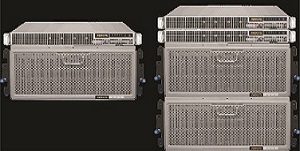
Arxys Software Orchestrated Storage, Arxys | Shield, is now a Milestone Certified Solution. The testing and documentation were carried out with Milestone XProtect, the world’s leading open platform IP video management software (VMS). The certification verifies the interoperability of the tested solution with the full line of Milestone XProtect VMS offerings and describes a proven solution to deliver confidence and security for specifying, implementing and operating it. Benchmark capabilities “The Milestone Solution Certification shows the Arxys | Shield – Prime delivered the highest HD camera counts (2,944 cameras) and the highest total camera throughput (3.6Gb/s) of any storage platform tested to date by Milestone Systems,” said Mike Tarras, Solutions Integration Engineer for Milestone Systems, “These were all high-performance tests, with the goal of finding the maximum number of cameras which the system could support, given the video stream profile that was used.” The aim of these tests was to simulate video surveillance scenarios similar to those seen in the corrections and detention vertical market. In this sector, high definition video resolutions are required, with regulation retention periods that can be 180 days to 2 years. Video frame rates also need to be sufficient to capture human movement (12-15fps is minimally acceptable). In addition, busy correctional facilities can have very high camera counts, and are often co-located with medical facilities, law enforcement and other high-security areas, which leads to increased demands on the system performance. By combining storage, compute, networking and virtualization on commodity hardware, Arxys orchestrates the complexity of disparate systems into an optimized solution. The Arxys | Shield – Prime provides highly available (HA) storage resources for both the Milestone live video and archive databases with no single point of failure and full HA failover, redundancy and double parity data protection. “Security professionals demand robust data security plus maximum throughput regardless of the number of cameras or frame rates,” said Andy Newbom, VP Marketing of Arxys, “Arxys clients can achieve the highest throughput and camera counts at a dramatically lower TCO.” Milestone certifications focus on testing a solution’s architecture, functionality, performance impact and usability.  

Read More