securitylinkindia

Top Video Surveillance Trends for 2018 & Analyses

Demand for professional video surveillance cameras has been growing quickly and is forecast to continue growing in 2018. It is estimated that less than 10 million surveillance cameras were shipped globally in 2006, which grew to over 100 million in 2016, and is forecast to make over 130 million during 2018. Despite this increase in demand, the average price of cameras and other video surveillance equipment will continue to fall quickly. As a result, IHS Markit forecasts that in terms of US dollar revenues the world market for video surveillance equipment will grow at an annual rate of less than 6% in 2018. It will be challenging for vendors to continue to grow revenues and margins, but there will be opportunities for well-placed vendors. For example, both the South East Asian and Indian markets are forecast to grow at higher than average rates. There is also great potential for the next generation of products powered by technologies like deep learning and cloud computing. So, what will be the big stories during 2018? Deep learning, GDPR compliance and drone detection technologies are just some of the trends discussed in this eighth annual trends IHS white paper. The following articles are designed to provide some guidance on the top trends for 2018 in the video surveillance industry.     By Jon Cropley   The A to I of Video Surveillance Terminology The past 12 months have seen a range of new terms becoming regularly used in the video surveillance industry. We attempt to provide a brief summary of some of these. AI (artificial intelligence): Computers are able to perform specific tasks as well as, or even better than human intelligence. In the context of video surveillance, AI is used in the field of computer vision to classify visual images and patterns within them. Big data: Huge amounts of different information are  stored, organized and analyzed by computers to identify trends, patterns, and relationships. In the context of video surveillance, the data could be metadata describing hours of video surveillance footage combined with other data sources to highlight patterns relating to security or business operations. Cloud computing: Instead of using a local server to store or manage video surveillance data, use a network of internet-connected remote servers. Generally this network has the ability to provide additional resource if and when required from a larger available pool. The available resource may be clustered into a datacenter or network of datacenters. These may be private (entirely or partly owned for exclusive use by specific organization/s) or public (resource accessible to multiple separate users). Deep learning: A branch of machine learning and subset in the field of AI. Deep learning makes use of algorithms to structure high-level abstractions in data by processing multiple layers of information, emulating the workings of a human brain (a neural network). Edge computing/ storage: Performing data processing and analytics/ storage closest to the source of the data (normally, in this context, in a video surveillance camera). Face recognition: When a video surveillance system can automatically match a person’s face against a database of individuals. GPU (graphics processing unit): A programmable chip specialized for use in image processing. Due to the requirement to be able to simultaneously processing multiple large data blocks required in modern image processing, GPUs have been found to be highly suitable for deep learning/ neural network processing. H.265 (or MPEG-4 part 2): H.265 is a video compression codec standard approved by the International Telecommunications Union (ITU-T). Compared with H.264, H.265 has the potential to use 30-40% less bandwidth for a video stream of the same quality. IoT (Internet of things): IoT is not a specific device or technology – it is a conceptual framework, driven by the idea of embedding connectivity and intelligence in a wide range of devices. IHS Markit defines an IoT device as a device which has some form of embedded connectivity that allows the device to be directly connected to the internet (i.e., IP addressable), or allows the device to connect (tether) to an IP addressable device. In the context of video surveillance, this could be using video surveillance data with other sensors or sources of information.   Big Differences between the Chinese Market and the Rest of the World China is forecast to account for over 46% of global professional video surveillance equipment revenues in 2018. Despite this, the Chinese market has some unique characteristics that make it very different to other regional markets. This has led to the suggestion that there are two markets for video surveillance equipment – the Chinese market and the world market excluding China. Below are 5 ways in which the Chinese market differs from the rest of the world. Supply of equipment is more concentrated in China The two largest vendors of branded video surveillance equipment accounted for over 50% of the Chinese market in 2016. This compares to the world excluding China where the two largest vendors accounted for less than 20% of the market. Shipments of deep learning-enabled equipment are much higher in China It is forecast that three quarters of all deep learning-enabled servers for video surveillance shipped worldwide in 2018 will be shipped in China. Domestic vendors dominate supply of equipment in China Chinese vendors account for more than 80% of Chinese market revenues. There are other countries where domestic brands dominate supply (Germany, Japan and South Korea are all examples). However, in most other country markets, foreign vendors account for a much higher proportion of revenues. Shipments of HD CCTV are proportionally lower in China It is forecast that HD CCTV cameras will account for only around 10% of all cameras shipped in China in 2018. It is forecast they will account for over half of all camera shipments in the world excluding China. The market has been growing faster The Chinese market has grown at an average annual rate of 13.3% between 2012 and 2017. In comparison, the World market excluding China has grown at an average annual rate of…

Read More

Indian INCs Look at Investment in Security

2017 will undoubtedly be considered as the ‘Year of ransomware,’ the year when the global security landscape was forever changed by attacks like WannaCry and NotPetya. The havoc caused by these attacks reached far beyond the paltry ransom demand. Hospitals turned away patients, production lines came to a halt, nuclear radiation monitoring was disrupted, and so on. Cyber events like these were a wake-up call to the brave new world of cyberattacks and how they could reach further into the ‘real world’ than ever before. But it’s not just ransomware and the threat landscape that have changed; digital transformation initiatives like the move to the cloud and the increasing convergence of IT and operational technology (OT) have drastically changed networks and expanded responsibilities of security teams tasked with protecting them. These initiatives, for all their business benefits, have caused network complexity to skyrocket – an issue cyberattackers are all too eager to exploit. All the while, the labour force to safeguard against attacks remains stubbornly inadequate. As we head into 2018, here’s a look at the cybersecurity trends sure to emerge amid the intersection of the most capable threat landscape, the most complex networks and a worldwide – including India – skills shortage. Hybrid networks stretch attack surfaces The attack surface – the total sum of the ways an organization is susceptible to cyberattack – is like a balloon. It expands with the introduction of new attack vectors and attack targets, like extensions into virtual, cloud and operational technology environments. It contracts with the good cyber hygiene and risk reduction. The larger your attack surface, the more likely it is to pop. To control an attack surface that encompasses hybrid networks and that’s affected by a constantly evolving threat landscape, organizations will need to unify visibility and centralize management. Gaining seamless visibility across physical IT and OT networks, as well as virtual and cloud networks, will give them a holistic foundation on which to build a security program ready to address an agile threat landscape. While different technologies, processes and teams may be involved to secure various types of networks, attackers don’t pay attention to such divisions. If anything, they exploit these divisions in security management, and simply follow the path of least resistance to reach their intended target, no matter where the attack originates. In 2018, we’ll likely see attackers leverage hybrid network connectivity to infiltrate cloud and OT networks where traditional cybersecurity measures are still being fleshed out. Ongoing evolution of distributed attacks While NotPetya was originally dubbed a ransomware attack, seemingly a new iteration of WannaCry, it was pretty lousy at the ransom part. What it and WannaCry demonstrated, though, was the distributed attack model on which modern ransomware relies. It targets as many victims possible, looking for low – hanging fruit, so attacks can be carried out easily and automatically, maximizing the attacker’s ROI. Ransomware is a perfect fit for this model, in that any target can be extorted for payment. Now that the distributed attacks have proven global-reach capabilities, we’re sure to see more mass-scale attacks in 2018. The good news about the distributed attack model is that the cyber-criminals sell or share proven attack methods such as vulnerability exploits, to carry out distributed attacks. Again, this practice gives them a better ROI than developing new, native exploits or exploits for a specific target. It also means a relatively small number of vulnerabilities exploits are being used and reused. If vulnerability management programs can take a threat – centric approach and focus on this subset of vulnerabilities, they’ll have a greater impact on their organization’s security than if they targeted only CVSS critical vulnerabilities. Security goes automated out of necessity As mentioned earlier, networks are growing increasingly complex, meaning that IT security teams must contend with growing amounts of data that needs to be contextualized, analyzed and acted upon. At the same time, the industry is suffering from a worrying talent shortage, which means that there are fewer skilled workers available to manage these issues. This is creating an environment where attack vectors abound, increasing the organization’s risk of attack. As a result, in 2018 we expect to see a surge in the adoption of automated solutions, particularly for integrated analytical workflows. These can deliver actionable intelligence to security practitioners of what to focus on – such as vulnerabilities posing an imminent threat – what tools are at their disposal to take action, and tracking the workflow to ensure tasks are carried out to completion. The scales tip to the Cloud At present, most firms are in a transition phase, with networks made up of a hybrid of physical, virtual and multi-cloud environments. 2018 is set to be the tipping point, as corporate networks become predominantly or entirely virtual or cloud-based. Organizations will need to be sure they understand and can support the shared responsibility model of the cloud, in that the cloud service provider is responsible for security of the cloud while the organization is responsible for security in the cloud. The assumption that cloud networks are inherently secure needs to be overcome, and security teams need to have the means to understand how traffic moves into, out of and within cloud networks to put the proper security controls in place. The importance of automation, as mentioned above, becomes even more important in cloud-networks. The elasticity of clouds makes their security management too much to handle via manual processes. If organizations are aiming for a complete move to the cloud, they need to ensure that security programs are poised to support the approach. Increased attacks on operational technology The convergence of IT and OT networks presents several advantages in terms of productivity, ease of management and cost-effectiveness. But it has also introduced new cyber risks to critical infrastructure organizations such as utilities, energy producers and manufacturers that could have very real impacts on uptime, human safety and the environment. Because of the havoc that can be caused, OT networks have become an attractive…

Read More

Arecont Vision AV NVR™ for Small to Medium Sized Projects

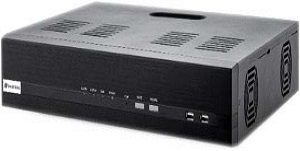
Arecont Vision® announces the availability of the AV NVR™ all-in-one network video recorder series. “Customers have increasingly requested that Arecont Vision provide them with a NVR platform for their small to mid-sized project requirements,” said Brad Donaldson, Vice President of Product Development, Arecont Vision, “The new AV NVR will address those specific needs, while our ongoing integration with the industry’s leading hardware and software providers will continue for customer projects of all sizes.”     The AV NVR offers the choice of 8 or 16 channel models (one channel = one camera sensor), each with built in PoE network switch, customer-replaceable hard drives, and Arecont Vision GUI interface. Smart plug-and-play technology simplifies setup with both auto discover and auto configuration. Camera licenses are included for a complete all-in-one solution. A free mobile app is available for remote viewing and playback. A power status utility and instant playback capability round out the AV NVR series capabilities. Both the AV NVR AV800 and AV1600 models offer H.264, H.265, and MJPEG compression. Arecont Vision SNAPstream™ (Smart Noise Adaptation and Processing) technology reduces bandwidth without impacting image quality. The 8 channel AV800 model offers up to 10MP resolution recording per sensor, including 4K resolution and 40MP panoramic cameras. The AV1600 offers 16 channels and up to 5MP resolution recording per sensor. For maximum video recording reliability, WD Purple Surveillance Hard Drives from Western Digital are included in with-drive configurations. No-drive configurations are available for customers wishing to install their own hard disk drives within Arecont Vision recommendations. The AV1600 could be configured up to 16 channels in the same manner, using a variety of Arecont Vision camera choices. Designed for use with Arecont Vision-brand single and multi-sensor cameras, ONVIF type S cameras are also supported.  

Read More

Hikvision: Deep Learning in Smart Retail Solution

In this ever-expanding era of artificial intelligence (AI), Deep Learning will soon become the foundational technology for the security industry. Technologies that ‘learn’ will become more common and more powerful. This trend will strengthen critical security efforts in every sphere. Hikvision introduces three camera models equipped with deep learning algorithms in the smart retail industry. With the growing popularity of shopping online, the retail sector has felt the disruptive impact of Internet e-commerce more than most industries. Some have reacted to online competition by closing physical stores, but others are attempting to overcome challenges through technological transformation. Traditional retail lacks intelligent tools for accurate data collection and visualization, making it unable to provide a basis for business decision-making at the shop. People counting There is an old saying in the trade industry – ‘Small profits but quick turnover;’ and footfall is a ‘KPI’ – key profit indicator – that helps make that turnover. Compared to e-commerce, traditional offline retail stores lack the capabilities to accurately calculate customer flow. Hikvision’s dual-lens people-counting camera provides accurate customer counting and generates customer flow trends to evaluate performance and strategic initiatives. Although in a real-world scenario, shadows or other objects may easily cause miscounts, but the dual-lens people-counting camera, equipped with two cameras and powered by a deep learning algorithm, easily overcomes such interferences and delivers highly accurate data. A key advantage of deep learning algorithms over surveillance cameras’ vision algorithms is that deep learning can be continuously trained and improved with better and more data-sets. This means the longer it works, smarter it gets. Featuring binocular stereo vision, 3D people detection, and height filtering technologies, the dual-lens people-counting camera is able to accurately distinguish human beings from non-human objects, and movements in the background. By analyzing customer flow data, store management can optimise the allocation of the workforce to ensure better customer service and reach higher profits. Store managers can schedule staff strategically for peak and off-peak hours. Furthermore, they can also develop strategic marketing activities to attract customers by analyzing the data of incoming rates (entering vs. passing by). Heat mapping When customers enter the store, retailers are concerned to know about what merchandise customers are interested in. Before that, what’s more important is how to get the route they walk through and where they stop. With Hikvision’s Heat Mapping function, retailers can determine the amount of time shoppers spend in specific areas of a store, identify hot spots and dead zones, and measure the number of people who actually shop for specific products, rather than just casually walk by. Heat mapping is used to monitor and measure the size of target traffic in a region. It is a graphical representation of data represented by colors, and it is usually used to analyze the visit times and dwell times of customers in a specified area. The heat mapping function is often used in shopping malls, supermarkets, museums etc., that can find customers’ preferences over time through heat maps, offering insight how to best place items and design the store layout. As a representative product, Hikvision’s fisheye cameras, equipped with heat mapping function, not only capture a panoramic high-definition image but also learn about heat conditions in different regions within a store. In spacious areas, fewer cameras means reduced installation and labour fees. Hikvision’s  fisheye cameras are ideal for these areas, maximising monitoring views and image quality insurance. Queue detection What do you do if you always have to queue for a long time while shopping? Keep waiting, or give up shopping and avoid that store in the future. In the retail industry, waiting time is one of the most important factors affecting the customer experience. Hikvision’s Queue Detection function can help retailers manage checkout lines. When too many customers enter a queue, it can notify management to open a new checkout line. More specifically, Hikvision’ queue detection cameras can monitor the queuing situation in real-time. Firstly, cameras count the number of people in each queue and then track the dwell time of each customer. Once it is found that the number of people in a queue is too many, or the average dwell time of customers is too long, an alarm is triggered to prompt a response. Store management is reminded to open checkout windows to reduce waiting times, improving transaction efficiency and the entire shopping experience. Hikvision smart retail solution is designed to help retailers bring offline stores into a digital world, allowing data to support management and operations. It promotes retailers’ technological transformation in response to increased industry competition through the use of innovative retail technology. Ashish P. Dhakan – MD & CEO, Prama Hikvision    

Read More
Two-Wire Video Intercom securityLink india

Hikvision Launches Two-Wire Video Intercom

Hikvision, the world’s leading supplier of innovative video surveillance products and solutions, has launched a new two-wire design video intercom. With a healthy list of features, this video intercom system provides the latest in residential security with high-definition imaging and convenient installation for the consumer market. Hikvision’s advanced two-wire video intercom includes both indoor and outdoor video intercom stations along with a distributor. When replacing outdated or non-functioning equipment, this hi-tech visual communication system uses existing wiring for simple, speedy, and economic installation. This advanced design features vivid video synchronization signals and exceeds power and audio transmission expectations. Whether replacing an aging system or simply installing a new one, Hikvision’s two-wire video intercom brings harmony and high video quality to consumer contexts. Users will enjoy in-home security with the latest features such as: 2 MP fisheye cameras with excellent night imaging and self-adapting IR light supplement. Noise suppression & echo cancellation for optimum voice audio. The mobile Hik-Connect App to  identify visitors and even unlock doors when away from home. “Hikvision is continuously looking for innovative ways to develop our products and solutions for better user experience. Apart from the professional video surveillance industry, Hikvision has also been committed to providing more services and technologies for end-users in community and home security,” said Keen Yao, VP of Hikvision’s International Business Centre.  

Read More

Fico Enhances Cyber Underwriting

Silicon Valley analytics firm FICO has recently partnered with Barbican Insurance Group (Barbican), a multi-platform insurance group that underwrites business predominantly through its syndicates at Lloyd’s of London, and which provides global cyber insurance coverage to its insureds. Barbican will use the FICO® Enterprise Security Score to measure the cybersecurity risk of insured ones, and will also provide them with access to the FICO® Enterprise Security Score Portrait product, which can help a firm identify and mitigate weaknesses in its defenses. As cyber insurance is a relatively new class of insurance, underwriters have lacked historic actuarial data upon which to base underwriting decisions. The FICO Enterprise Security Score provides an accurate, empirical, and forward-looking assessment of the overall cyber risk exposure of an enterprise, which insurers can use for underwriting, pricing and ongoing portfolio management. “We partnered with FICO because of its expertise and experience in predictive analytics and its strong focus on risk quantification,” said Graeme King, Business Group Leader for Cyber at Barbican, “The FICO Enterprise Security Score gives our underwriters a predictive, stable and objective rating to help better assess cyber risks. It also encourages our insureds to improve their cybersecurity. Using the FICO Enterprise Security Score Portrait product, our insureds receive actionable information to help them proactively strengthen their defenses and reduce their exposure to potential risks.” The FICO Enterprise Security Score is unique in its machine learning approach, internet-scale data collection and pool of curated exemplars. While other firms leverage judgmental assessments, and focus on producing the longest possible list of potential vulnerabilities, FICO’s purely empirical techniques apply data-driven risk quantification, and allow the user to focus exclusively on issues that are demonstrably correlated with breach outcomes. Jeffrey Wheatman, Research Director at Gartner, notes, “By 2022, cybersecurity ratings will become as important as credit ratings when assessing the risk of business relationships.” “FICO has a history of delivering powerful risk metrics to the insurance industry and the consumer credit space,” said Doug Clare, FICO’s Vice President for Cybersecurity Solutions, “Partnering with Barbican Insurance to give their underwriting team the ability to better measure and manage their portfolio risk is part of our focus on delivering an industry-standard score to the cyber insurance market. By offering premium credit to their cyber policy holders for the use of the FICO Enterprise Security Score Portrait, Barbican is taking risk mitigation much further than the yearly assessments that are common today.”  

Read More

SIPO Recognizes Dahua as the Major Innovator

Dahua Technology has been officially crowned by the State Intellectual Property Office (hereinafter referred to as SIPO) as one of the ‘2017 National Intellectual Property Role Model Enterprises.’ Its patented ‘HD digital video signal transmission methods and devices, cameras, and aggregation equipment’ are recognized as a winner of the 19th China Outstanding Patent Award. According to the notice issued by SIPO, Dahua is one of the 182 companies crowned with the title. These companies are widely acknowledged as key companies that can lead and greatly influence industry in their own realms. In 2016, Dahua continued its high investment in R&D, which reached 10.69% of sales revenue this year. Till the end of November, 2017, Dahua R&D center, with more than 6000 employees, has filed more than 1340 patents; 654 have been granted including 146 invention patents. Dahua is working hard to accelerate the transformation of technological achievements to actual productivity, creating added values to its customers and partners.

Read More
Asis SecurityLink India

ASIS International Announces 2018 Commission on Standards and Guidelines

ASIS International, the world’s leading association of security management professionals, has announced its 2018 Commission on Standards and Guidelines. The 28-member commission ensures the standards and guidelines development process is voluntary, nonproprietary, and consensus-based, utilizing the knowledge, experience, and expertise of ASIS members and the global security community. “This past year, the Commission took purposeful steps to broaden its membership composition and to chart a path forward that aligns with new organizational goals and strategies, as well as addressing the needs of security professionals worldwide,” said Sue Carioti, ASIS International Vice President, Certifications, Standards & Guidelines, “We are pleased to welcome 20 new members to the 2018 Commission. These individuals bring diverse perspectives, fresh ideas and a wealth of global experience to their roles.” The commission, which doubled in size in 2018 and now includes representatives from eleven countries, will be led by Bernard Greenawalt, CPP, Vice President, Securitas Security Services USA, Eugene Ferraro, CPP, PCI, Chief Executive, Forensic Pathways, Inc. will serve as Vice Chair. Top priorities include continuation of work on standards in the areas of security awareness, private security officer selection and training, and workplace violence prevention and intervention. The Commission will also review existing standards and guidelines with an emphasis on relevance and gap analysis, consider the restructure of standards and guidelines programs, and increase integration in ASIS knowledge and learning programs.  

Read More

Olive Heritage Inaugurates Skilling Centre for Security Training in Gurugram

Olive Heritage Education and Welfare Society has recently inaugurated a state-of-the-art skill training centre in collaboration with National Skill Development Corporation (NSDC), at Gurugram in the esteemed presence of Jayant Krishna, ED & COO, NSDC. Olive Heritage Education and Welfare Society, a funded training partner of NSDC, has received loan for executing short-term and long-term training courses in accordance to National Skills Qualifications Framework (NSQF).  Targeted to train over 30,000 security personnel in next seven years, Olive would primarily undertake fee-based trainings.   Speaking on this occasion, Jayant Krishna, ED & COO, NSDC said, “The Private Security Sector is amongst the largest employers of manpower in the country.  With an increasing demand of trained, motivated and well equipped security personnel, this unorganized sector has immense potential to become mainstream.” Olive’s skill centre in Gurugram and six other locations in the country, will provide training in job roles such as unarmed security guard, armed security guard and security supervisor. Its centres are well equipped with world-class amenities to provide training in the security sector. Olive boasts of a qualified team of trainers which is well-versed with strategic training design and modules to make the candidates employable and industry-ready. Its Gurugram centre aims to provide for increasing demand of security personnel from industries and corporates, especially in Delhi-NCR.  The job roles such as unarmed security guards have immense demand from malls, corporates, hotels and more. Olive also has associations with private security providing agencies like G4S, Securitas India, Trig Guard Force, Peregrine and more to provide post placement training and placement to trained personnel.   “It is a matter of immense pride for us to be associating with NSDC to shoulder this ambitious mission of skilling the youth of the country. We aim to provide high-class trainings to candidates to get them respect, better livelihood and higher wages.” – Col. K K Singh (Retd.) Director of Olive Heritage Education and Welfare Society

Read More
cp_SecurityLink_India

CP Plus’ Elaborate Displays at Intersec

CP PLUS, the leading global security & surveillance brand, staged an elaborate showcase at Intersec 2018. Hosted at the Dubai International Convention and Exhibition Centre from 21st to 23rd January 2018, the event saw more than 1300 exhibitors and thousands of security patrons come together under a roof. CP PLUS showcased some of its latest innovations including integrated software solutions with advanced analytics, 4K high definition surveillance solution, video door phones, time & attendance solutions, home on phone solutions that offer a range of compact cameras offering hassle free surveillance on your smartphone, PoE switches, body-worn professional security solutions, and mobile vehicle surveillance solutions. With its innovative range of security solutions on display, the CP PLUS arena saw a packed audience throughout the 3 days of the exhibition, and also received immense appreciation from the security patrons present, thereby concluding another successful show.   “Despite being a part of this show for many years now, Intersec still holds the same excitement and energy for us. This time around, we had some distinct solutions on display such as the body-worn solutions for the armed forces, paramilitary forces, and other security forces; 4K Ultra HD resolution for detailed imagery; intelligent and integrated software solutions; and cloud based solutions amongst others ” – Aditya Khemka  MD, CP PLUS  

Read More