
securitylinkindia

securityLink India

Advanced Threat Landscape Report 2018 by CyberArk

CyberArk survey shows organizations are failing to secure privileged accounts and credentials in the cloud, on endpoints and across IT environments. According to the CyberArk Global Advanced Threat Landscape Report 2018, nearly half (46 percent) of IT security professionals rarely change their security strategy substantially – even after experiencing a cyber-attack. This level of cyber security inertia and failure to learn from past incidents puts sensitive data, infrastructure and assets at risk. Security starts with protecting privileged accounts An overwhelming number of IT security professionals believe securing an environment starts with protecting privileged accounts – 89 percent stated that IT infrastructure and critical data are not fully protected unless privileged accounts, credentials and secrets are secured. Respondents named the greatest cyber security threats they currently face, including: Targeted phishing attacks (56 percent), insider threats (51 percent), Ransomware or malware (48 percent), unsecured privileged accounts (42 percent), unsecured data stored in the cloud (41 percent).  IT security respondents also indicated that the proportion of users who have local administrative privileges on their endpoint devices increased from 62 percent in 2016 survey to 87 percent in 2018 – a 25 percent jump and perhaps indicative of employee demands for flexibility trumping security best practices. The Inertia that could lead to data compromise The survey findings suggest that security inertia has infiltrated many organizations, with an inability to repel or contain cyber threats – and the risks that this might result in – supported by other findings: 46 percent say their organization can’t prevent attackers from breaking into internal networks each time it is attempted; 36 percent report that administrative credentials were stored in Word or Excel documents on company PCs; Half (50 percent) admit that their customers’ privacy or PII (personally identifiable information) could be at risk because their data is not secured beyond the legally-required basics. Inertia and a ‘Hands-Off’ approach to securing credentials and data in the cloud create cyber risk The automated processes inherent in cloud and DevOps mean privileged accounts, credentials and secrets are being created at a prolific rate. If compromised, these can give attackers a crucial jumping-off point to achieve lateral access to sensitive data across networks, data and applications, or to use cloud infrastructure for illicit crypto mining activities. Organizations increasingly recognize this security risk, but still have a relaxed approach toward cloud security. The survey found that: Nearly half (49 percent) of organizations have no privileged account security strategy for the cloud; More than two-thirds (68 percent) defer on cloud security to their vendor, relying on built-in security capabilities; and 38 percent stated their cloud provider doesn’t deliver adequate protection. Changing the security culture Overcoming cyber security inertia necessitates it to become central to organizational strategy and behavior, not something that is dictated by competing commercial needs. According to the survey: 86 percent of IT security professionals feel security should be a regular board-level discussion topic; 44 percent said they recognize or reward employees who help prevent an IT security breach, increasing to nearly three quarters (74 percent) in the U.S.; and Just 8 percent of companies continuously perform Red Team exercises to uncover critical vulnerabilities and identify effective responses. “Attackers continue to evolve their tactics, but organizations are faced with cyber security inertia that is tipping the scales in favor of the attacker,” said Adam Bosnian, Executive Vice President, Global Business Development, CyberArk, “There needs to be a greater urgency in building cyber security resilience to today’s attacks. This starts by understanding the expanding privileged account security attack surface and how it puts an organization at risk. Successfully battling inertia requires strong leadership, accountability, clearly defined and communicated security strategies, and the ability to adopt a ‘think like an attacker’ mindset.”

Read More
hochki

Role of Women in the Fire Safety Industry

The economic development of the nation is dependent on the participation of all sections of the society, more particularly women, who constitute fifty per cent of the population. There are massive employment potentialities that can be utilized by women folk. India is the world’s fastest growing economy, but has one of the lowest rates of female employment. This is the most true especially in the firefighting industry which has seen a major dearth of women in professional roles. Women are both the victims as well as strong enablers when it comes to the fire safety industry. In India, 17,700 Indians died due to fire incidents in 2015. About 48 people die of fire accidents every day out of which 62% are women. While the numbers continue to rise, the awareness on fire safety has hardly gained much recognition. Strikingly, in this whole conversation on fire safety, the female voice is missing. Unlike in the West, where a job in the fire safety industry is revered and a matter of great pride, India still has a long way to go. The instances of women working in the firefighting industry in India are far and few. In 2003, the Tamil Nadu Fire and Rescue Services appointed Priya RaviRole of Women in the Fire Safety Industry chandran as a Divisional Fire Officer, making her one of the first female fire officers in the country, and the first one to win Anna Medal for Bravery in Tamil Nadu. In 2013, the department inducted its second batch of women firefighters. In 2012, the Mumbai Fire Brigade inducted five women firefighters, making them the first in the history of the organisation. One of the biggest reasons for the low participation is the absence of a female role model. Over the last several decades, it has become an accepted understanding that improving the status of women is one of the most critical levers of international development. When women are educated and can be employed, a volley of good results follow. According to a recent study by McKinsey, if women played an identical role in labour markets to that of men, as much as US$28 trillion could be added to the global annual GDP by 2025. We require more and more women in the industry as they have the right ability to prove their mettle in various fields including defense services. One such example can be the appointment of Shrimati Nirmala Sitharaman as the Defence Minister of India. Recently Avani Chaturvedi, has also been appointed as the first Indian woman fighter pilot to fly solo. The fighter stream was opened for women in 2015 and Avani Chaturvedi, along with two other women, Mohana Singh and Bhawana Kanth were inducted into the Indian Air Force fighter squadron in 2016 where they have undergone strenuous training programme to fly fighter jets. Fire safety should also be considered as an industry to support and encourage women diversity and empowerment. The policy of fire and safety industry to recruit only male officers might be reinforcing gender stereotypes and should keep pace with international trends. While even in the West, the number of women staff is very low, but in India its much below the international statistics. One has to remember that the practice of hiring only men could be construed as demeaning to the female gender. We, in the industry, know their real purpose is to provide the safety of everyone in case of emergencies. While women have made significant gains in the past decade in terms of their noteworthy roles in different spheres of life including education, health, technology, economic participation, and political leadership, we as a nation still have a long way to go when it comes to attaining gender equality. By – Rohit Harjani Country Manager, Indian Sub-continent, Hochiki    

Read More
videonetics

Videonetics Bags FIST Award

Videonetics’ path-breaking technology ‘No Helmet Detection System’ (NHDS) has been recognized with the prestigious FIST ‘Make in India – Best Innovation award of the year’ at Fire & Safety India Expo 2018, organized by FSAI. Highly acclaimed in the industry, FIST Award recognizes extraordinary contribution of organization and individuals in the field of security, safety, firefighting and emergency response. The gala award night was attended by eminent figures from the industry fraternity. By overcoming rigorous stages of evaluation with flying colors and competing to cutting-edge products presented by other companies, the judging panel and industry experts highly voted for No Helmet Detection System which is designed and developed on ‘Indian Deep Learning’ Framework. NHDS aims to bring down road accidents and enforce traffic discipline amongst people by penalizing two-wheeler riders who do not wear helmet while driving and eventually put their lives to risk. Commenting on the achievement, Dr. Tinku Acharya, MD & Founder, Videonetics said, “We are thankful to FSAI for acknowledging and honoring our R&D efforts with the FIST award. We are committed to promote culture of innovation in India and to introduce such advanced and smart technologies that can address challenging environment for highly populated countries like India. No Helmet Detection System (NHDS) is the pioneering solution which will certainly inculcate traffic discipline amongst people, build traffic management more robust, increase road safety, eventually to make India smarter and safe.”

Read More
dahua_h.265

Dahua Technology H.265 XVR Product Series

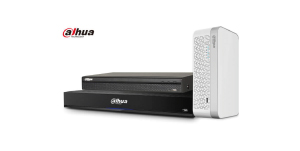
Dahua Technology has recently launched its H.265 XVR product series. After upgrading its codec format from H.264 to H.265 and then to H.265+, H.265 XVR delivers a more cost-efficient storage method with smaller storage, stronger compatibility and enhanced intelligence, solving the much higher demand on storage capability placed by the widespread of 4K/ 4MP UHD devices, and offering the customers and partners more business opportunities. Equal quality, smaller storage under H.265 codec With the H.265+/ H.265 supreme compression technology applied in HDCVI products, Dahua H.265 product series provides new choices for the video surveillance industry. As a cutting-edge video codec, H.265+ is able to reduce up to 90% of transmission bandwidth and storage while maintaining excellent image quality, resulting in the use of less HDD space and resources. Seamless connection with strong compatibility The widespread compatibility of the H.265 XVR guarantees a seamless connection with multiple cameras and all H.265 encoding-based platforms or devices. With a stronger processor, it even supports a maximum of 4 channels of intelligent video surveillance and a maximum N+N channels with IPC access, where each channel receives up to 8MP input. For existing video surveillance systems, H.265 XVR can also serve as an upgrade by replacing the storage device only. Also, by converting audio into digital signal, the entire product series support broadcast-quality audio through loss-less audio transmission, vastly improving audio quality. XVR 4.0 powered intelligent device H.265 XVR series brings a user-friendly experience with a new generation XVR4.0 GUI interface, providing with flat interface and simplified functional modules. Also, supported by IoT system, H.265 XVR product enables multidimensional surveillance by linking with diverse sensors to collect information such as temperature and humidity that can wirelessly trigger an alarm if necessary. Keep working during power-cut with builtin battery Moreover, the built-in battery in the Dahua XVR E Model can feed the XVR and cameras to keep the surveillance system working for up to 1 hour, eliminating worries from unplanned power-cut.

Read More
invixium

Invixium Multimodal IXM TITAN

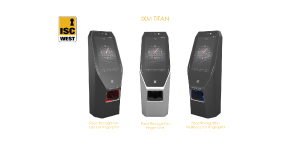
Invixium, an innovator of biometrics solutions, will be unveiling a new benchmark in multimodal authentication technology at ISC West 2018. The new IXM TITAN promises to be the most advanced biometric product ever engineered, reflecting Invixium’s drive to become the world leader in multi-purpose authentication solutions. TITAN is equipped with facial recognition as the primary biometric modality, fingerprint or finger vein authentication as the secondary, and consolidates features for access control, time and attendance, video intercom and video surveillance into a single device that accommodates a diverse host of applications with extreme efficiency and convenience. TITAN was conceived and engineered using a unique set of design parameters including unparalleled application versatility, simplicity of use and implementation, industryleading processing power and exquisite aesthetics that clearly differentiate it from traditional biometric devices. “TITAN is a master stroke,” says Shiraz Kapadia, CEO and President of Invixium, “We engineered TITAN to be an iconic biometric product – beautiful enough to be installed in luxury homes and corporates, extremely rugged for installation in the harshest environments, technologically futuristic to be an IoT connected device, and security focused with its multimodal and multifactor authentication versatility. The introduction of IXM TITAN at ISC West is a milestone for Invixium as this marks our entry into North America with a plethora of biometric products and solutions.”

Read More
hid convergence

The Convergence of Physical & Logical Access

For many security professionals, recent high-profile data breaches have shifted attention to external cyber threats. Despite this newfound focus, the Institute for Critical Infrastructure Technology reports that more than half of all cybersecurity incidents can be traced to insiders with legitimate access to corporate facilities and networks. Another survey from the Ponemon Institute reveals that the majority of respondents are more concerned by outside threats than those that originate internally. While external threats are very real, working to confront internal vulnerabilities can prevent incidents from happening in the first place. By addressing both physical and logical access in a more unified approach, organizations can reduce their risk for a costly breach while also improving user experience and operational efficiency. This idea is frequently referred to by the industry buzzword of ‘convergence.’ From a technical standpoint, convergence is defined as “the merging of distinct technologies, industries, or devices into a unified whole.” In terms of access control, convergence can be viewed as “the merging of physical and logical access control technologies to provide a more unified and simplified approach to identity management.” “Convergence means a simplified approach,” said Sheila Loy, Director of Healthcare Industry, Identity and Access Management at HID Global, “That can mean many different things, but it’s essentially making it easier for the user to get both digital access and door access. That usually comes in the form of a card or a mobile device – something that can do both.” While the notion of convergence is nothing new, this approach to security is becoming an increasingly viable way to mitigate threats. To explore this further, ASIS International recently partnered with HID Global to survey security professionals regarding their experience and related plans on convergence projects. The data in this paper is based on the responses of 745 ASIS International members who have direct responsibilities in physical and/ or information security. The benefits of convergence: Improved user experience, operational efficiency and security Security administrators are looking for solutions that are easy, convenient and fast. By introducing solutions that better blend physical access control (PACS) with logical access control (LACS), organizations of all types will enjoy three key benefits including: 1) positive user experience, 2) enhanced administrative experience, and 3) improved security. Positive user experience Oftentimes, the weakest link in even the strongest of security systems lies within the end user. If interactions with security technologies are confusing or cumbersome, employees will take shortcuts that introduce unnecessary vulnerabilities. Converged PACS and LACS solutions help reduce this risk by boosting convenience, particularly by requiring employees to only carry one card or mobile device. This type of solution also eliminates the need to constantly refresh passwords. In today’s world, most end-users wear an ID badge to access facilities, which is a form factor they are accustomed to using. Even more, many employees either use a user name and password or a one-time password fob or token to access networks. While this approach may provide an additional layer of security, it is prohibitive in terms of convenience. Alternatively, providing a single form factor for both physical and logical access creates a more streamlined user experience, which ultimately increases user adoption to desired security policies. “Building occupants who have entitlements to both physical areas and logical applications will see an enhancement in their experience,” said Brandon Arcement, Director of Product Marketing at HID Global, “Convergence results in greater employee efficiency and a more pleasant work environment for building occupants. It’s easier for employees to carry one card or one mobile device to access both systems, rather than having to carry a card for the door as well as a fob for the computer or having to remember passwords.” In terms of logical or network access, one major pain point for end users is the need to remember and frequently reset their passwords. When ASIS International members were asked, “How access to network and logical applications is done today,” a resounding 85% of respondents indicated that they use a user name and password. 85% of respondents also indicate that they have an organizational policy regarding the creation of passwords such as requiring numbers or special characters. Not only is this inconvenient for users and administrators, it presents another common security risk – employees writing their passwords on notes left visible on their desk. Enhanced administrative experience Converged access control solutions provide an improved administrative experience. When survey respondents were asked to rank a series of benefits of PACS and LACS convergence, the top response was ‘easier to manage employee credentials,’ followed by ‘one card for multiple applications.’ These top responses reflect two key angles within an improved administrative experience. First, many applications used to manage credentials are now web-based with secure, simple access for administrators. This allows security teams to issue, modify, or revoke credentials away from the office or during off-hours. The second angle is the ability to deploy a converged ‘high value’ form factor that allows for multiple applications. For example, using one card for multiple uses reduces costs for additional or replacement cards, as well as reduces the time required to produce multiple credentials for individual applications. According to survey data, the value of leveraging smartcards for applications beyond physical access is more than theoretical – 73% of respondents agree that they have interest in using smart cards for applications beyond traditional physical access control. Finally, more converged access control solutions provide security administrators with more visibility into audit data. This makes achieving compliance easier, thus reducing the potential for associated fines and damaged reputations. Improved security The most important benefit of any technology is improved security. Innovative technologies for physical access include contact and contactless cards with encryption that adds additional layers of security upon entering doors, elevators or parking garages. Meanwhile, digital certificates loaded onto that same smart card can ensure trusted login to networks and applications, as well as encrypt e-mails and digitally sign documents. Converged solutions improve security in three key areas: Increased adoption rate of converged…

Read More
Hikvision_Retail Leadership_Summit_2018

Hikvision participates at Retail Leadership Summit 2018

Hikvision has participated in the 11th edition of Retailers Association of India’s (RAI) recently held Retail Leadership Summit (RLS), Mumbai to showcase its latest products and solutions in the video surveillance and security domains for the retail sector. The Retail Leadership Summit (RLS) was flagged off with an inspiring opening speech by B.S. Nagesh, Chairman, RAI and Founder, TRRAIN. The Summit revolved around the central theme ‘Customer Centricity- Redefining Values and Valuations. “Retail Leadership Summit (RLS) is a great platform for networking among existing and potential retailers, developers, logistics and supply chain organizations. It is a right place to showcase the latest innovations in the surveillance and security solutions for retail and eCommerce sector,” said Ashish P. Dhakan, MD & CEO, Prama Hikvision India Pvt. Ltd. At the event, K.K. Dakhara, Retail Vertical Head, Prama Hikvision India gave a presentation on Hikvision’s new solution for warehouse, logistic and supply chain and explained their advantages. “Hikvision retail smart solution focuses mainly on analytics, consumer behavioral analysis and artificial intelli gence. It is useful in multiple aspects such as retail business surveillance, manpower management, business operations, selection of appropriate product based on target customer, designing marketing plan and loss prevention,” said Mr. Dakhara, “The wide applications of machine learning and DeepinMind technology will set the trend for the retail industry by getting critical data and deep insights from consumer behavioral analysis.” “The Retail Leadership Summit has been created to ensure that retail leaders across the country can come in and discuss matters that are relevant to retail at industry-level. Modern retail in India is becoming more and more competitive and is growing at more than 15 per cent. This kind of growth requires a different focus for retailers to be able to exist and thrive. RLS is about customer centricity and the resulting valuation. However, the values that a company works with are an important contributor to the way a company gets formed and functions. The three aspects i.e., customer centricity, values and valuation are an apt set of topics for every retailer who is trying to grow and flourish in this consumption-led market,” said Kumar Rajagopalan, CEO, Retailers Association of India. Hikvision also displayed their retail solution at a booth there. The visitors were keen to know more about people count, heat map, POS integration, face analysis, parking management solution, and warehouse, logistic and supply chain solutions. The event turned out to be a good platform for Hikvision’s retail solutions for promotions and getting enquiries.

Read More

Smiths Detection Meets Highest Security Standards in EU

The Smiths Detection HI-SCAN 10080 XCT has achieved ECAC approval as a Standard 3.1 explosives detection system for hold baggage – the highest, defined security standard in the EU. This significant advance was made possible by using a dual-view, dual-energy line scanner with high resolution 3D Computed Tomography (CT) to deliver exceptional data. This achievement gives airports currently upgrading to Standard 3 technology, the option to increase detection levels even further to 3.1; and any standard 3 systems already installed can be easily elevated to 3.1 via a software upgrade. The detection algorithms are interchange able on a bag by bag basis depending on the destination and associated risk level. This offers additional flexibility and productivity. “With the capability to meet detection requirements for both current and emerging threats, the HI-SCAN 10080 XCT is a future proof investment, which offers high levels of security and operational efficiency,” commented Matt Clark, VP Technology and Product Development, Smiths Detection, “We are helping airports across Europe to make the transition to Standard 3 and are delighted to now also offer the more stringent Standard 3.1 approved technology.” The belt speed is an impressive 0.5m/sec, enabling the HI-SCAN 10080 XCT to handle up to 1800 bags per hour and hence making the screening process faster and more efficient. A large rectangular tunnel (107x81cm), extremely high quality, full colour images and a low false alarm rate all also support the challenging performance levels demanded by airports. In addition to Standard 3.1 approval, the HI-SCAN 10080 XCT has been laboratory certified by the US Transportation Security Administration (TSA) as meeting current regulatory requirements for hold baggage.  

Read More
nist

Safeguards for Securing Virtualized Servers By NIST

This bulletin outlines the security recommendations that NIST recently provided in Special Publication (SP) 800-125A – security recommendations for Hypervisor Deployment on Servers. The document provides technical guidelines about the secure execution of baseline functions of the hypervisor, regardless of the hypervisor architecture. In the past, a user wishing to set up a computing server generally needed to use a dedicated host with dedicated resources such as a central processing unit (CPU), memory, network and storage. Modern systems have technology that lets one create virtual machines to emulate what used to be physical, dedicated resources. This practice is known as virtualization and supports more scalable and dynamic environments. A critical component of this technology is the hypervisor, the collection of software modules that enables this virtualization and thus enables multiple computing stacks – each made of an operating system (OS) and application programs – to be run on a single physical host. Such a physical host is called a Virtualized Host and is also referred to as a Hypervisor Host. The individual computing stacks are encapsulated in an artifact called a Virtual Machine (VM). To make a VM an independent executable entity, its definition should include resources such as CPU and memory, allocated to it. The VMs are also called ‘Guests,’ and the OS running inside each of them is called ‘Guest OS.’ The resources associated with a VM are virtual resources, as opposed to physical resources associated with a physical host. The hypervisor forms part of the virtualization layer in a virtualized host and plays many of the same roles that a conventional OS does on a non-virtualized host, or server. Just as a conventional OS provides isolation between the various applications, or processes, running on a server, the hypervisor provides isolation between one or more VMs running on it. Also, like an OS, the hypervisor mediates access to physical resources across multiple VMs. Therefore, all other functions needed to support virtualization – such as emulation of network and storage devices and the management of VMs and the hypervisor itself – can be accomplished using kernel-loadable modules, although some hypervisor architectures accomplish these tasks using dedicated VMs. The hypervisor can be installed either directly on the hardware, or bare metal (Type 1 Hypervisor), or on top of a fullfledged conventional OS, called Host OS (Type 2 Hypervisor). Here, we discuss the baseline functions of a hypervisor, how these functions are distributed in a hypervisor, and how this information is used to develop security recommendations that provide assurance against potential threats to the secure execution of tasks involved in the hypervisor’s baseline functions. Hypervisor baseline functions It might appear that all activities related to the secure management of a hypervisor and its hardware host – collectively called the hypervisor platform – should simply consist of established best practices for any server class software and its hosting environment. However, closer examination reveals that the unique functions provided by the Hypervisor Platform require a dedicated set of security considerations. These functions are called hypervisor baseline functions (HY-BF) and are labeled HY-BF1, HY-BF2, HY-BF3, HYBF4, and HY-BF5. They are described below: HY-BF1: VM process isolation Scheduling of VMs for execution, management of the application processes running in VMs (e.g., CPU and memory management), and context switching between various processor states during the running of applications in VMs; HY-BF2: Devices mediation & access control Mediates access to all devices (e.g., network interface card [NIC], storage device such as IDE drive etc). One mediation approach is to emulate network and storage (block) devices that are expected by different native drivers in VMs by using emulation programs that run in the hypervisor kernel; HY-BF3: Direct execution of commands from guest VMs Certain commands from Guest OSs are executed directly by the hypervisor instead of being triggered through in terrupts and context switching. This function applies to hypervisors that have implemented para-virtualization instead of full virtualization; HY-BF4: VM lifecycle management This baseline function involves all functions from creation and management of VM images, control of VM states (start, pause, stop etc), VM migration, VM monitoring, and policy enforcement; and HY-BF5: Management of Hypervisor This baseline function involves defining some artefacts and setting values for various configuration parameters in hypervisor software modules including those for configuration of a Virtual Network inside the hypervisor. NIST SP 800-125A provides detailed security guidance based on an analysis of threats to the integrity of all the above functions. The only exceptions are the set of guidelines for configuration of virtual network (subset of HYBF5), which are covered in a separate document (NIST SP 800-125B). The above functions are carried out by different hypervisor components, or software modules. There are some minor differences among hypervisor products in the way that they distribute these functions. The mapping of these functions to hypervisor components and the location of these components within a hypervisor architecture are described in the table below: Approach for developing security recommendations Developing security recommendations for the deployment and use of a complex software such as the hypervisor requires knowledge of potential threats which, when exploited, would affect the three basic security properties – confidentiality, integrity, and availability – of hypervisor functions. The approach adopted for developing security recommendations for the deployment of hypervisors in NIST SP 800125A is as follows: Ensure the integrity of all components of the hypervisor platform, starting from the host BIOS to all software modules of the hypervisor. This action is accomplished through a secure boot process, outlined as recommendation HY-SR1; Identify the threat sources in a typical hypervisor platform. The nature of threats from rogue or compromised VMs is briefly discussed in SP 800-125A; and For each of the five baseline functions HY-BF1 through HY-BF5 (except for HY-BF3, the direct execution of certain commands from guest VMs by the hypervisor), identify the different tasks under each function, and for each of the tasks, identify the potential threats to the secure execution of the task. The countermeasures that will provide assurance against exploitation of these threats…

Read More
IHS Markit

Global Access Management Market By IHS Markit

Access management can be defined as the process of granting authorized users the rights to use a service, while preventing access to non-authorized users. Following are the key access management growth factors over the next five years. GDPR deadline fast approaching Traditionally, finance, banking, insurance, government, utilities and other heavily regulated end-user sectors have focused on identity- and accessmanagement solutions. However, over the past year there has been growth in non-traditional markets. Not only have the manufacturing and retail sectors become more security conscious, but the increase in the number of data breaches and the looming legislation around General Data Protection Regulation (GDPR) in May 2018 has also piqued renewed interest in security and identity and access management (IAM) solutions. ● Highlight ● The global access management market is projected to increase from $5.4 billion in 2016 to $9.6 billion in 2021. ● Companies with 5,000 or more employees are projected to contribute the largest revenue growth to the access management market over the next five years. ● Over the past year, there has been growth in non-traditional market sectors such as manufacturing and retail. Smaller organizations using access management solutions Access management solutions have traditionally been deployed by larger organizations. In fact, companies with 5,000 or more employees are projected to contribute the largest revenue growth over the next five years, increasing from $4.38 billion in 2016 to $5.4 billion in 2021. The proportional importance of this segment is forecast to decline from 80 percent of total access management revenue in 2016 to around 56 percent in 2021. Small and medium-sized enterprises (SMEs) will steadily increase the amount of access management solutions they deploy. For example, revenue from companies with between 1 and 499 employees is projected to increase from $109.6 million in 2016 to $705 million in 2021. This segment managed to grow from 2 percent of total revenue in 2016 to 7.3 percent in 2021. The introduction of more cloud solutions within the access management market is likely to help SMEs, in particular, because cloudbased access management solutions can be more cost effective and scalable for small and medium enterprises. On-premises hybrid and cloud solutions As there are still a lot of applications running on premises at companies, a significant portion of larger organizations still want some on-premises solutions. Larger organizations are more likely to move to a hybrid model, with some applications running in the cloud as a stepping stone toward full adoption of cloud solutions. Hybrid solutions are projected to increase from $1.1 billion in 2016 to $1.7 billion in 2021. In contrast, smaller organizations are more likely to deploy software-as-a-service (SaaS) solutions, which for them can be more cost effective than on-premises solutions. Technological developments and the battle with hackers There is a continuous battle being waged as hackers increasingly try to gain control of the networks they want to compromise. It is important for organizations to take into account people’s locations, to help detect fraudulent activity and ensure the right people have the right access, at the right time and at the correct location. Technologies like machine learning (ML) and artificial intelligence (AI) are also important weapons in this battle. Leveraging emerging technologies, such as behavioral biometrics, will help to reduce the burden on end-users and increase the validity of identity proofing. Organizations can learn a lot about how people interact with their networks, to give a full picture of how things are evolving, but these technology developments are a bit of a cat-and-mouse game. Blockchain makes security cheaper and more accessible Many organizations have isolated and centralized identity management systems, but the current landscape demands federation and single sign-on (SSO). These systems make identity management, protection and verification very cumbersome, costly and risky for industry enterprises and government agencies. Blockchain has the potential to introduce improvements that can make security more accessible and budget friendly. With smart contract capabilities, there can even be a secondary market where users benefit from sharing resources back to the network. Smart contracts automatically execute pieces of code carrying valuable data or performing other condition-based executions. A permissioned blockchain technology provides core capabilities that enable a trusted digital identity network to build and operate the following: A shared, append-only ledger, with one version of the facts shared across all permissioned network participants in real time. Smart contracts that ensure verifiable and signed business logic is executed in each transaction. Trust between known participants, to verify transactions and ensure records are valid. Privacy and security measures that grant access only to permissioned parties. Cybersecurity – Access Management Report 2018 This two-volume report provides coverage in several key areas of the identity and access management market, including access management and identity governance and administration. It provides detailed analysis of individual vertical markets from market-specific operating models to key trends and development opportunities.

Read More