

securitylinkindia

gujrat_infinova

Gujarat CSITMS Project of City Surveillance

A few years back, when Gujarat government decided to deploy CCTV based city surveillance and intelligent traffic management system (CSITMS) across major cities such as Ahmedabad, Vadodara and Gandhinagar, Infinova with successful integration with Larsen & Toubro (L&T) provided a real-time surveillance system that was able to integrate digital maps, video with good quality, and high-quality evidences for challan generation as well as court proceedings. Infinova’s video analytic capabilities included red light violation detection, wrong lane detection, over speed detection, automatic number plate recognition identifying traffic rule offenders, and other criminal activities. It was an initiative taken by the Government of Gujarat for intelligent traffic monitoring and also to bring transparency in the imposition of traffic lines. Infinova’s round-the-clock surveillance system provides real-time information including audio and video to enhance quick response in all emergencies situations and heavy traffic. The integrated system helped prevent crimes, reduce threats, and enhanced safety and security in public area. Infinova deployed 220 PTZ cameras for accurately monitoring traffic across major cities of Gujarat. The IP based PTZ cameras with in-built remote control provide immediate response to the operators’ commands, making it highly responsive during emergency situations. Infinova’s smart surveillance system assures 360 degree coverage and offers highest precision in day and night. The camera system installed is dynamically efficient and resistant to bad weather conditions. The project has marked significant progress by creating smart surveillance and intelligent traffic management solutions, and generated a spectrum of scalable security solutions by executing large number of cameras over the cities. By providing extensive video management systems, picture intelligence units and geographical information systems, the project has tremendously helped deal with increase in road traffic. The integrated surveillance solutions have reduced traffic congestions by improving incident response time and optimizing traffic flow proactively. Infinova’s multi-faceted traffic management solutions have also helped analyze and even predict traffic patterns by leveraging automated information. Infinova is a leading security and surveillance product manufacturer, acclaimed globally, and is committed to technology, innovation and quality. It manufactures end-to-end analog and digital surveillance solutions and is specialized in offering integrated video surveillance solutions. Infinova has the technical ability and manufacturing flexibility that allows integrators to propose customized solutions. Additionally, it collaborates with other manufacturers of surveillance equipment and software to help the channel partners create turnkey solutions. Infinova backs-up partner’s products to assure integrator’s as well as customer’s trust.  

Read More
smart_coding_technology

Smart Coding Technology

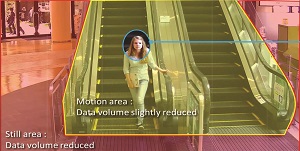
Video surveillance techniques since the launch of IP cameras have seen many technological advances that have delivered increased resolution and improved picture quality through better lenses, sensor and image processing technology. These advancements are capable of bringing much needed improvements in evidential image quality and enable the user to realize the investments made in CCTV through deliverable results in terms of clear identification. Delivering these advancements requires additional design thinking in terms of total bit rate throughput. Typically higher resolutions FHD & 4K require much greater bandwidths that impact on the design and cost of both the network to stream high definition images across and the recording hard drive capacity needed to store them on. System designers now not only need to think in terms of the angle of view or depth of field that a camera needs to produce but also to think of the content within the camera image in terms of what is useful and what is not. For example, streaming and recording scenes in high definition of empty streets devoid of movement, people or cars, or the skyline create lots of useless image data that requires lots of bandwidth to stream and store. Panasonic have now developed a cost viable solution to the high definition bandwidth problem by enabling important content to stream as high definition whilst economizing or eliminating on unimportant content in an image. This technology is called Panasonic Smart Coding and its employment reduces the total cost of ownership and makes the investment in high definition within the reach of a much wider section of the video surveillance marketplace. Smart Coding Technology Smart Coding is a license free feature available on Panasonic i-PRO and i-PRO Extreme cameras. Total bit rate throughput can be reduced by combining the two main technologies that make up the Panasonic Smart Coding innovation; Technology that assigns high resolution data to important content such as people or cars. Technology to reduce noise generated in low-illumination environments or at night, therefore eliminating the streaming of noise seen as movement in current compression algorisms. As we are eliminating the unnecessary streaming or high resolution data, even greater results in overall bit rate throughput can be saved by combining Smart Coding with Panasonic high-resolution 4K surveillance cameras. Panasonic’s Smart Coding Technology is based on the coding of the moving video standard, and as such special modules and the likes are not needed for display or playback by a client who is employing this technology. The two technologies that make up the Panasonic Smart Coding innovation are made of several elements that are described as follows; Technology to assign data only to subjects to be monitored Bit rate is sufficiently assigned to subject matter that is important such as people or cars, and therefore it needs to be streamed and recorded as high definition video. However, so-called background elements such as walls and roads are not so important therefore they don’t really need to be as sharp as content, and so a lower or no bit rate is assigned to them. Overall the total bit rate that needs to be streamed and recorded is reduced. This technology uses various techniques to accomplish the overall reduction in throughput. GoP Control The video stream comprises I-frame data encoded closed in the screen (as still image) and P-frame data where the difference from the previous frame is encoded. If the refresh cycle is set to 1 second (the default setting for Panasonic  cameras) at a frame rate of 30fps, stream data is generated where 29 P-frames follow after one I-frame. The data from this I-frame to the next I-frame is called Group of Picture (GoP). To playback stream data generated in this way, decoding must be done in order from the I-frame. For that reason, the I-frame is also called the reference frame. If the refresh interval (interval between I-frames) is long, much decoding is performed until playing back the end frame of that GoP. I-frames encode the entire screen, so the volume of data is large. P-frames encode the difference from the previous frame, so the volume of data becomes smaller. The GoP Control function detects motion of subjects. It makes the interval between I-frames shorter if there is a motion or longer if there is no motion. By making the interval longer in scenes with no motion, the number of I-frames with large data volume can be reduced, greatly reducing the total bit rate. In scenes with motion, the interval is made shorter to secure accessibility to scenes the user wants to view. Advanced mode utilizes the concept of long term prediction frames. Its reference frame structure consists of I-frames, and P-frames, which reference two frames (an I-frame and the previous P-frame), and key frames (P#30,#60), which reference the first I-frame (IDR) in the GoP. Figure 4 shows the reference relationship at 30fps with an I-frame interval of 60 sec and key frame interval of 1 sec. If there are no key frames in the GoP, decoding needs to be done sequentially from the I-frame at the head of the GoP. However, key frames can be decoded using just the I-frame. For example, if key frames are present in the GoP, #61 can be displayed by decoding just IDR#0, P#60, and P#61. Additionally, by inserting key frames, random accessibility can be secured. The advanced mode improves prediction efficiency by using two reference P-frames and reduces the bit rate by expanding the I-frame interval whilst maintaining random accessibility. Auto-VIQS Control Auto-VIQS (variable image quality on specified area) Control can automatically deter mine areas with and without motion and therefore reduces the data volume of those without motion. In the example below Auto-VIQS has realized two areas of importance that have a lot of movement (seen in red) and one area of little or no movement (seen in yellow). Smart facial coding Smart facial coding reduces bit rate by detecting the face and motion areas and keeping the face area at high image quality, slightly…

Read More

NIST New Roadmap Charts Path to Reduced Fire Hazards from Materials

NIST firefighters Justin Grossnickle and Martin Neal look over the end of a controlled test to study the impact of fire on cross-laminated timber buildings. CLT is a construction material identified in a new NIST report as needing more flammability research. Fire researchers tell that there’s a simple solution for reducing fire hazards and that is to eliminate flammable materials. If it doesn’t burn, the experts say, then there won’t be a fire. Of course, that option isn’t very practical or realistic; after all, who wants to sit on a block of cement when one can have a cushiony recliner? A better strategy for reducing the thousands of deaths and injuries and billions of dollars in damage resulting from the more than a million fires each year in the United States is detailed in a new research roadmap published by the National Institute of Standards and Technology (NIST). The roadmap provides guidelines for developing science-based approaches to solving numerous fire problems for multiple materials, from lightweight automobile composites to cross-laminated timbers, and prioritizes the most critical and urgent fire hazards to which they can be applied such as upholstered furniture. “Our hope is that this roadmap will help the global fire community develop research strategies and implementation plans for addressing fire and materials problems, now and in the future,” said NIST Materials Research Engineer Rick Davis, one of the authors, “The roadmap identifies and describes the major challenges associated with these problems and then detailed potential solutions so that users such as designers and manufacturers can continue to create safer materials that still yield quality products with high consumer satisfaction and market profitability.” The research roadmap resulted from a recent NIST-led workshop that brought together key national and international stakeholders from industry, government, academia and public laboratories. Workshop attendees focused their discussions on four areas in which fire hazards are major concerns. They are innovative construction materials such as the growing use of cross-laminated wood for tall buildings, advanced polymers and composites such as polyester fabrics used in furniture and lightweight composites used in automobile bodies, next-generation fire retardants with an emphasis on those that suppress combustion without being health hazards, and transportation and infrastructure vulnerabilities such as fire risks on trains. For each of these areas, the experts considered the direction of current R&D and how it may impact future fire hazard reduction goals such as developing new materials, establishing product flammability standards and advancing computational tools. They also addressed emerging technologies and practices such as the increasing use of high-energy density (lithium-ion) batteries that have been in the news for flammability concerns. The workshop participants agreed that the highest priority for future scientific studies and development projects in flammability should go to cross-cutting research approaches that can work against multiple hazards across a wide range of materials and applications. These are: Real fire behaviors: To understand how the actual use of a product impacts its fire service-life (the fire resistance over the life of a product) and burning behavior; Engineered fire-safe products: To enable the development of technologies that yield products compliant with flammability regulations for their entire lifetime; and problems, now and in the future,” said NIST Materials Research Engineer Rick Davis, one of the authors, “The roadmap identifies and describes the major challenges associated with these problems and then detailed potential solutions so that users such as designers and manufacturers can continue to create safer materials that still yield quality products with high consumer satisfaction and market profitability.” The research roadmap resulted from a recent NIST-led workshop that brought together key national and international stakeholders from industry, government, academia and public laboratories. Workshop attendees focused their discussions on four areas in which fire hazards are major concerns. They are innovative construction materials such as the growing use of cross-laminated wood for tall buildings, advanced polymers and composites such as polyester fabrics used in furniture and lightweight composites used in automobile bodies, next-generation fire retardants with an emphasis on those that suppress combustion without being health hazards, and transportation and infrastructure vulnerabilities such as fire risks on trains. Bench-scale and computational tools: To develop and use physical testing methods and computer modeling systems that accurately predict a material’s real-life fire behavior. The new roadmap strongly recommends that these research approaches be applied to the five most critical and urgent fire hazards as defined by the experts at the recent workshop. These are residential upholstered furniture, residential buildings in Wildland Urban Interface (WUI) communities, timber used for multi-storey buildings, passenger railway cars and insulation applied to the exteriors of high-rise buildings. “The workshop participants determined that these application areas should be prioritized for R&D because reducing flammability in all five should significantly reduce the overall losses from fires in the future,” Davis said, “The benefits from the new research roadmap, Davis said, could eventually be greater than just getting low-fire-hazard products to market. It’s our hope that the research resulting from the roadmap will lead to science-based quality control measures, testing procedures and performance standards for materials flammability, which in turn, should reduce the costs of making products, simplify regulatory compliance for manufacturers, and provide consumers with more fire-safe product choices.” Davis added that along with being actively engaged with its partners to promote and urge acceptance and use of the new roadmap by others, NIST has already begun putting it to work. “Based on extensive discussions with our in-house experts after considering the roadmap’s guidelines, we are planning changes in our upcoming year’s research and modifying our longterm strategies,” he said.

Read More

NIST : Updates Risk Management Framework to Incorporate Privacy Considerations

Augmenting its efforts to protect the nation’s critical assets from cybersecurity threats as well as protect individuals’ privacy, the National Institute of Standards and Technology (NIST) has issued a draft update to its Risk Management Framework (RMF) to help organizations more easily meet these goals. The RMF update, formally titled Draft NIST Special Publication (SP) 800-37 Revision 2, is a guidance document designed to help organizations assess and manage risks to their information and systems. Previous versions of the RMF were primarily concerned with cybersecurity protections from external threats. The updated version adds an overarching concern for individuals’ privacy, helping to ensure that organizations can better identify and respond to these risks, including those associated with using individuals’ personally identifiable information. The update will interest federal agencies and contractors that do business with them, as it connects the RMF with NIST’s well-known Cybersecurity Framework (CSF), highlighting relationships that exist between the two documents. “Until now, federal agencies had been using the RMF and CSF separately,” said NIST’s Ron Ross, one of the publication’s authors, “The update provides cross-references so that organizations using the RMF can see where and how the CSF aligns with the current steps in the RMF. Conversely, if you’re using the CSF, you can bring in the RMF and give your organization a robust methodology to manage security and privacy risks.” In addition to the RMF-CSF alignment, the update has several important objectives including: Integrating security and privacy into systems development: Building security and privacy into information systems at the initial design stage is a major concern. The RMF also references NIST systems security engineering guidance at appropriate points, including NIST’s SP 800-160, which addresses the engineering of trustworthy secure systems. Connecting senior leaders to operations: The RMF provides guidance on how an organization’s senior leaders can better prepare for RMF execution, as well as how to communicate their protection plans and risk management strategies to system implementers and operators. Incorporating supply chain risk management considerations: The RMF addresses growing supply chain concerns in the areas of counterfeit components, tampering, theft, insertion of malicious software and hardware, poor manufacturing and development practices, and other potential harmful activities that can impact an organization’s systems and systems components. Supporting security and privacy safeguards: The RMF update will provide organizations with a disciplined and structured process to select controls from the newly developed consolidated security and privacy control catalog in NIST’s SP 800-53, Revision 5 (link is external). Aligning the RMF with other NIST guidance and publications will provide clarity for federal agencies, which are required to implement multiple frameworks. While adhering to the CSF is voluntary for private companies, its use for the federal government is mandatory under Executive Order 13800. Compliance with the RMF is mandatory for federal agencies in accordance with the Federal Information Security Modernization Act (FISMA (link is external)). The RMF is also required and in widespread use in the Department of Defense and the intelligence community. “It was imperative for us to figure out how these frameworks fit together,” Ross said, “Many agencies are trying to follow both.” Ross added that the privacy enhanced RMF might be valuable to companies and organizations beyond the federal government, considering how high profile the subject of privacy has become of late. “Many folks are discovering how vulnerable they are with respect to their personal information and may begin to demand some standard level of protection,” he said, “If such a demand occurs, the government will be looking for clearly stated requirements for privacy, privacy safeguards, and a disciplined and structured process on how those controls could be applied. The timing of this publication could not be any better.”

Read More
moxa

MOXA Remote Connect Suite

To serve the needs of OEMs and machine builders who require remote connections to manage and maintain their machines at remote sites, Moxa has launched the Moxa Remote Connect Suite. The suite is a remote connection management platform that includes server and client software, and a hardware gateway to facilitate secure remote access. The Moxa Remote Connect Server is a connection management platform that is hosted on Amazon EC2. The Moxa Remote Connect Gateway connects Ethernet-based edge devices to the server portal securely. Last, the Moxa Remote Connect Client is a software tool that can connect an engineer’s laptop to the server portal. This solution provides OEMs and machine builders with an easy and secure way to connect to their remote machines and equipment to perform troubleshooting, maintenance, data acquisition and device management remotely, which enables faster and smarter maintenance support. Easy deployment The auto configuration function makes installation as simple as plug and play, and there is no need to configure VPNs or have extensive IT knowledge. In addition, there is no need to perform complex firewall settings or reconfigure IP addresses. The Moxa Remote Connect provides smart IP mapping to avoid IP conflicts, and is firewall friendly to comply with existing IT security policies, which allows companies that need secure remote access to minimize the amount of time and effort spent on deployment. Enhanced security In order to combat the numerous security risks when data is collected through the Internet, the Moxa Remote Connect is equipped with security features including end-to-end encryption to prevent man-in-the-middle attacks. The smart protection function includes an embedded firewall that allows remote access under whitelist control without disrupting local networks. In order to provide an on-demand maintenance service, access to machines is fully controlled by machine operators. Flexible and scalable connectivity The Moxa Remote Connect solution allows for greater flexibility by supporting a variety of connections including one-to-one, multiple-to-multiple, and site-to-site to satisfy different user scenarios. The Moxa Remote Connect solution also allows companies to remotely manage numerous machines and users at different locations, which makes it easier to manage when businesses expand. “With its easy to use design, secure connections and flexible connectivity, the Moxa Remote Connect allows OEMs to access their remote machines effortlessly and streamline their maintenance efforts,” stated Li Peng, a Product Manager in Moxa’s Industrial Ethernet Infrastructure business unit.

Read More

Hikvision Certified Security Associate (HCSA) Program

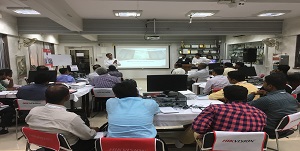
Hikvision has recently introduced the Hikvision Certified Security Associates (HCSA) Program in India. The first batch of three-day HCSA training program was conducted from 26 to 28 April 2018 in Mumbai which got overwhelming response from the young security professional community. The participants at the Program received certificates along with the enriching technology and product training experience. The HCSA training program will be conducted regularly in the coming months. The comprehensive HCSA Program included training sessions on optics basics, Turbo HD analog solution, PTZ configuration, network basics, IP camera, NVR, fish eye camera, iVMS 4200, and smart functions and applications. The aim and intention of the Program were to give hands-on training and demonstrations, and thereafter a dedicated online examination was conducted to felicitate the successful participants with HCSA certificates. “Hikvision has set an industry standard by offering professional video surveillance certification to validate video expertise under Hikvision Certified Security Associate (HCSA) program in India. Hikvision certification program is upcoming and open to Indian customers and partners. Besides, Hikvision provides meaningful endorsement to those who pass and become Hikvision Certified Professionals,” said Ashish P. Dhakan, MD & CEO, Prama Hikvision India Pvt. Ltd. The Hikvision Certified Security Associate (HCSA) level certification focuses on training participants in essential configurations, operations and maintenance of Hikvision video surveillance products and its features. It is designed for technical engineers who have worked in the security industry for several years and have already gained some security basics. The certification program is open to anyone looking to gain expertise in video surveillance and total security solution. The trainee should have at least one-year of work experience in the security industry and be familiar with security basics.

Read More

Airports Soar to Smarter, Safer Airside Operations

Honeywell has recently announced new smart airport technology that helps enhance the safety and efficiency of airside operations. The Honeywell NAVITAS™ software suite intelligently integrates air and ground traffic control with maintenance operations so airports can more easily accommodate growing air traffic while promoting safety and on-time performance.   Developed to comply with the latest industry standards set forth by organizations – including the International Civil Aviation Organization (ICAO), European Aviation Safety Agency (EASA), International Electrotechnical Commission (IEC), Federal Aviation Administration (FAA) and European Organisation for Civil Aviation Equipment (EUROCAE) – Honeywell NAVITAS includes modular and scalable software components, combined with an intuitive userfriendly interface, providing real-time insights for air traffic controllers and maintenance operators. The components assist personnel in visualizing and routing aircraft movements – from enhancing situational awareness about traffic conditions and more safely expediting aircraft turnaround times, to automating fault diagnostics for airside equipment – all despite the increasing complexity and stress associated with today’s airport operations. “Airports around the globe are seeing dramatic increases in traffic, and while that makes the world more connected, it increases complexity to ensure safe and reliable operations,” said Sonja Strand, Vice President and General Manager for Honeywell’s Global Airports Business, “NAVITAS helps orchestrate these complex environments like never before through mobile applications, dashboards and heads-up displays that are intuitive. By harnessing the power of the Internet of Things, we’re making data user friendly, and making airports smarter in the process.” The Honeywell NAVITAS modules include: Honeywell NAVITAS Tower Manager helps improve the productivity of air traffic controllers by enhancing situational awareness of airport surface operations. It gives controllers access to rich, real-time information on ground, air traffic and meteorological conditions, presenting the information in a single, easy-touse interface, and providing visibility into a multitude of traffic events while reducing the chance for error. The system helps manage the air traffic controller’s responsibilities, while making it easier to issue and track aircraft clearance information to keep landings and takeoffs safer and on time.   Honeywell NAVITAS Surface Manager helps airports get more out of their existing infrastructure by enhancing ground traffic safety, fluency and throughput in a wide range of weather conditions, while helping New Roadmap Charts Path to Reduced Fire Hazards from Materials NIST firefighters Justin Grossnickle and Martin Neal look over the end of a controlled test to study the impact of fire on cross-laminated timber buildings. CLT is a construction material identified in a new NIST report as needing more flammability research. Fire researchers tell that there’s a simple solution for reducing fire hazards and that is to eliminate flammable materials. If it doesn’t burn, the experts say, then there won’t be a fire. Of course, that option isn’t very practical or realistic; after all, who wants to sit on a block of cement when one can have a cushiony recliner? A better strategy for reducing the thousands of deaths and injuries and billions of dollars in damage resulting from the more than a million fires each year in the United States is detailed in a new research roadmap published by the National Institute of Standards and Technology (NIST). The roadmap provides guidelines for developing science-based approaches to solving numerous fire problems for multiple materials, from lightweight automobile composites to cross-laminated timbers, and prioritizes the most critical and urgent fire hazards to which they can be applied such as upholstered furniture. “Our hope is that this roadmap will help the global fire community develop research strategies and implementation plans for addressing fire and materials to reduce their fuel burn and carbon footprint. The module also provides the software necessary for airports to use all four levels of an AdvancedSurface Movement Guidance and Control System (A-SMGCS), including surveillance, routing, guidance and airport safety support, along with enhanced movement conflict detection and resolution, which can include ‘follow-the-greens’ based guidance that automatically illuminates lighting on the tarmac to guide aircraft to clear taxiways.   Honeywell NAVITAS Engineering Manager helps engineers and technicians manage maintenance by enabling them to more effectively monitor system health, more easily perform fault diagnostics and to streamline workflows, which also often helps reduce operational costs. It features a mobile interface and automates the diagnostics and failure reporting, while simplifying manual tasks and reducing paperwork, giving personnel better visibility into the availability, reliability and performance of airside systems. Personnel can easily create, manage and issue work orders to expeditiously resolve issues and keep equipment up and running. Honeywell NAVITAS Performance Manager features dashboards that allow airport staff to collaborate and analyze operations in line with key performance indicators. The module which is accessible both on premise and remotely provides access to a common base of holistic information and allows for the application of big data analytics for real-time and predictive insights, often enabling more efficient and informed decisionmaking.

Read More

Record-Breaking Education Program for Global Security Exchange

ASIS International has recently announced the education program for upcoming Global Security Exchange (GSX). Produced in partnership with InfraGard and ISSA, the five-day event is expected to attract more than 20,000 operational and cyber security professionals to the Las Vegas Convention Center for a comprehensive education program, unparalleled networking, and an immersive exhibit floor showcasing thousands of cutting-edge security products and services. “This has been a record-setting year,” said Nancy Green, ASIS International Vice President of Learning, “We received a staggering 700+ proposals to our GSX 2018 call for presentations, and our program lineup features more than 300 sessions led by ASIS, InfraGard, and ISSA subject matter experts. This enthusiastic response mirrors the excitement we have been hearing from security professionals about the investments and enhancements we’ve been making to GSX, as the security industry’s flagship event.” Learning formats will include deep dives, case studies, lectures, mock trials, panels, simulations, and workshops. There will also be a spotlight on enterprise security risk management (ESRM), with education sessions ranging from in-depth pre-conference workshops to practical presentations that bring this business strategy to the dayto-day workplace. “There is an abundance of expertise and hands-on experience represented among speakers and attendees at GSX,” noted Darren T. Nielsen, CPP, PCI, PSP, Chair, 2018 GSX Education Selection Committee, “The education program will tap into this collective wisdom, and learning will be bidirectional – a true exchange of insights and lessons learned.” A selection of topics being addressed include: Securing Big Data in an Evolving Regulatory Landscape. How Augmented and Virtual Reality Affect Security. Ransomware: Managing Data Extortion Crises. School Emergency Preparedness Using a Tabletop Exercise. The Dark Web: Protecting Brand, Reputation, and Assets. Surviving a Mass Shooting: Case Studies in Successful Tactics and Techniques. The Psychology of Radicalization in the Lone-Actor Terrorist: Making Sense of the Senseless. Education will extend beyond the classrooms with more theaters on the exhibit floor, as well as expanded Career Center programming and a career fair. An exciting addition in 2018 will be the X Stage featuring TED-style talks from global thought leaders, academia, and government officials. These sessions will address high-level, thought-provoking ideas around emerging risks and technology innovations that could fundamentally change the profession. More details will be announced this summer. “GSX brings the industry together to share ideas and engage in meaningful discussions,” stated Richard E. Chase, CPP, PCI, PSP, 2018 president, ASIS International. “Sessions are problem-centric/outcome-focused and designed to give attendees the opportunity to learn, interact, and most importantly, be part of the solution.”

Read More

Hikvision New Turbo HD 5.0 Security Solutions

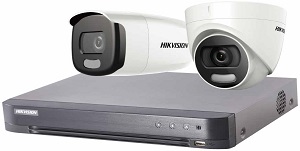
To bring HD clarity to analogue surveillance systems, Hikvision launched its first-generation Turbo HD DVRs and cameras in 2013. Since then, subsequent generations of Turbo HD products have delivered a wealth of innovations including ultra-low-light video recording and super-efficient bandwidth and storage usage – helping Hikvision customers enhance their security and perimeter protection. Building on these revolutionary security advances, Hikvision has now announced the Turbo HD 5.0 family of surveillance products, which includes AcuSense Turbo HD Building on these revolutionary security advances, Hikvision has now announced the Turbo HD 5.0 family of surveillance products, which includes AcuSense Turbo HD DVRs and ColorVu Turbo HD cameras. These technologies make it even easier for organizations and individuals to identify and react to security breaches, while also minimizing manual interventions and security costs. AcuSense Turbo HD DVR Incorporating eleven different DVR models, the AcuSense family uses the latest deep learning technologies to enhance object detection. Specifically, AcuSense Turbo HD DVR detects vehicles or humans, filters out false alarms triggered by animals, leaves and other insignificant objects, and minimizes costly, time-consuming manual checks. As an additional benefit, the AcuSense Quick Target Search feature identifies and extracts footage of humans and vehicles from vast video datasets automatically, saving staff from searching through massive datasets. ColorVu Turbo HD camera ColorVu Turbo HD cameras provide bright color video images 24/7, even in the lowest light conditions. The camera’s round-the-clock color boosting capabilities are powered by a large iris and ED optical glass, an anti-glare diffusion lens, large sensing pixels, warm supplemental lighting, and a range of other innovative video technologies. With brighter and more colourful video images, Hikvision customers are protected against security breaches, even when they happen at night. Turbo HD 5.0: Heightened security at a reduced cost Hikvision’s latest Turbo HD 5.0 takes the capabilities of traditional analogue and CCTV systems to new heights, helping organizations to maximize their security and lower surveillance costs. Hikvision’s latest Turbo HD 5.0 takes the capabilities of traditional analogue and CCTV systems to new heights, helping organizations to maximize their security and lower surveillance costs.  

Read More

Video Walls at the Heart of GIFT City

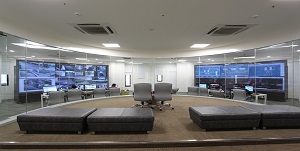
Delta, a leading provider of video wall solutions, in collaboration with their channel partner Alpha Digital, has set up state-of-the-art video walls at the control and command centre of GIFT City (Gujarat International Finance Tec-City). With this addition, operators would be able to monitor real-time data and improve the availability, safety and efficiency of services in GIFT City. Being one of India’s first smart cities that has been constructed from scratch, GIFT has been included in the Smart City Mission Statement with its futuristic infrastructure. It’s an underconstruction central business district, located between Ahmedabad and Gandhinagar in the Indian state of Gujarat. GIFT is also home to BSE’s & NSE’s International Exchange which has earned for India a place in global capital markets. The city control and command centre (C-4) of this smart city is the first of a kind ICT platform, allowing effective utility infrastructure monitoring/ management as well as city surveillance from a single location.   “The City Control and Command Centre (C-4) is a mix of software and hardware platform that acts as a single central command and control location for managing traffic and utilities remotely. Delta video walls at the center will not only monitor utilities but will also provide real-time monitoring of security and surveillance. Operators can manage the city’s growing population and infrastructure with this solution – with minimum effort and maximum efficiency,” commented Nilesh Purey, Vice President IT at GIFT City. Being a leader in DLP® technology, Delta has always been active in providing reliable video wall solutions known for their high brightness and sharp image quality. With its indepth knowledge and rich experience in the smart cities sector, Delta has installed two sets of 100 square feet of DLP video wall made up of 72” WUXGADLP cubes with redundant power supply at the city control and command centre. The sharp image quality of Delta’s video walls ensures to offer operators’ a high level of attention to every kind of detail, from intricate graphics to minute text. The command and control system is responsible for coordination and integration among various service providers, disaster management, and emergency services, ensuring efficient services to users, safety and security, and record keeping/ documentation. India, Narendra Modi, GIFT also hosts India’s only International Financial Services Centre (IFSC), which will certainly aid in the economic growth of the entire nation. India, Narendra Modi, GIFT also hosts India’s only International Financial Services Centre (IFSC), which will certainly aid in the economic growth of the entire nation. GIFT City is also home to multiple financial institutes including insurance, reinsurance companies, banks and stock exchanges along with many reputed IT & ITeS companies. Currently there are more than 10,000 people working in various sectors in GIFT City. Delta Displays, a division of Delta, is a pioneer in developing professional displays for control rooms in surveillance, security, traffic, command & control, utilities, process control, telecom and broadcast applications. Delta offers a wide array of display technologies including rear projection 4K and full HD laser DLP® video walls, LED-DLP® video walls, Xtra thin-bezel LCD video walls, and high-resolution indoor/ outdoor LED displays with a powerful and highly flexible wall management software suite.  

Read More