

securitylinkindia

Face_recognisation

How Facial Recognition can Prevent Crime and Improve Security

Why facial recognition? Public security threats and demand for new security solutions from end-users continuously push security manufacturers to innovate and upgrade technologies. International news and media reports on terror incidents of violence often shock public consciousness. They act as a grim reminder of present danger to public security. These security concerns need to be addressed with innovative solutions. For everything from safe city projects to home protection, developments are underway all over the world, with their respective challenges. Safeguarding family members, homes, property, and vehicles are the most common applications using these emerging technologies. But the number of video surveillance cameras used in well in very specific environments, and subtle changes in lighting, environment, etc., sacrifice accuracy. The second step is ‘Classification Learning,’ which uses shallow learning and analysis. Far from ideal, the results here directly restrict the breadth and depth of intelligent applications. Deep-learning benefits for intelligent video surveillance Deep learning is intrinsically different from other algorithms. The way it solves the insufficiencies of traditional algorithms is encompassed in a few concepts. From ‘Shallow’ to ‘Deep’ The algorithmic model for deep learning has a much deeper structure than that of traditional algorithms. Sometimes, the number of layers can reach over a hundred, enabling it to process large amounts of data in complex classifications. Deep learning is very similar to the human learning process, and has a layer-by-layer featureabstraction process. Each layer will have different ‘weighting,’ and this weighting reflects on what was learned about the images’ ‘components.’ The higher the layer level, the more specific the components. Simulating the human brain, an original signal in deep learning passes through layers of processing; further it takes a partial understanding (shallow) to an overall abstraction (deep) where we can perceive the object. From ‘Artificial Features’ to ‘Feature Learning’ Deep learning does not require manual intervention but relies on a computer to extract features by itself. This way it is able to extract as many features from the target as possible, including abstract features that are difficult or impossible to describe. More the features, more accurate the recognition and classification will be. Some of the most direct benefits that deep learning algorithms can bring include achieving comparable or even better-than-human pattern recognition accuracy, strong anti-interference capabilities, and the ability to classify and recognize thousands of features. With deep learning technology, the average accuracy of facial recognition increases significantly. Hikvision has demonstrated its ability to advance ahead of the competition. Its advantages in artificial intelligence in security have come about by having its own excellent algorithm development team and using the most powerful GPUs in our computer platforms. The results include winning in multiple international deep learning algorithm competitions such as ImageNet, PASCAL VOC, the MOT Challenge, and more. Achieving the best results come from a combination of having the right hardware and developing algorithms that can perform the computational requirements. Hikvision has the industry’s first data computing platform with bestin-class hardware, and completely independent algorithm team. Hikvision’s facial recognition solution Hikvision’s facial recognition solution pushes the limits of what is possible with today’s advancements in recognition abilities. This solution detects human faces and recognizes attributes creating pre- and post-event face contrasting. With immense capabilities for data storage behind this solution, Hikvision’s Face Library can generate blacklists and whitelists to trigger alarms and automate entry and exit authorizations in a range of applications. Hikvision embeds its algorithms within the cameras and recorders, so no PC server is needed. This means less delay in transmission, decreasing the burden on back-end devices. More than just efficiency, Hikvision holds high success rates – the facecapture rate can reach to 95% accuracy, with face-comparison accuracy rate up to 98% (Based on controlled tests, the facial recognition engine requires face images with minimum 40 pixels between the subject’s eyes (‘inter-pupillary’ distance), preferably 60 to 300; the maximum pan and tilt angles are 25 degrees and 15 degrees respectively for facial image capture). Multiple models and types are available with a wide variety of front-end or back-end combinations to meet multitudes of scenarios and environments, and with world wide support, all human faces are supported. (At the time of writing this article, faces fitting characteristics of Asian ethnicities have the highest degree of accuracy.) Systems integrators will see a wide range of applications becoming possible with this facial recognition solution. It can be applied in banks, luxury shops and hotels to recognize VIP customers and initiate specialized services. Hikvision’s solution can also be applied in security scenarios like police stations, customs, international airports, government installations, and much more, to improve security and investigation efficiency.   By Ashish P Dhakan – MD & CEO, Prama Hikvision India Pvt. Ltd.  

Read More
CAPSI Demands

Security Guards to get Free Bus Rides in Delhi : Assures Kejriwal

The Chairman apprised the CM that there are over four lakh security guards working in Delhi at present which can act as a force multiplier in ensuring safety and security to the habitants and infrastructure of the state. This work force is currently approximately 30% deficient and with an estimated annual growth rate of 22%, the private security industry is one of the major job facilitators in the state. In this preview, CAPSI is keen to work in conjunction with the Delhi Government in areas of mutual interest in order to achieve the desired level of safety for populace. CAPSI offered that a security guard in uniform on the way to his duty and back home travelling in the public transport can act as a deterrent to the criminals’ planning and their unlawful activities, and he mere can force them to refrain from such acts. In other words, a security guard by his sheer presence in the bus or in any other public transportation system can be able to provide incidental security to passengers. The private security guards are duly authorised and verified by the police and so their services can be used to boost safety of bus passengers in lieu of free ride given to them. They will act as ‘eyes and ears’ to ensure safety of women and children travelling in buses. “The Chief Minister agreed to consider this demand. The association offered services of security guards to keep watch in buses and boost safety of women and children,” Somnath Bharti said. CAPSI in a statement also confirmed that Mr. Kejriwal has agreed to consider the demand of the association to allow private security personnel to travel free in public buses in the city. The proposed ‘concession’ will be given to the security guards in uniform commuting to and from the places of their duty only. “Each security guard shall be given a special badge so that public may recognise him/ her as protector of citizens. The Chief Minister appreciated the social responsibility character of CAPSI and wanted us to organise security training to students of the 12th class in all schools. The Delhi Government will sign a MoU to commence these programmes at the earliest. It will also launch the publicity campaign to popularise its partnership with CAPSI for ‘Yatri Suraksha’,” said Kunwar Vikram Singh.

Read More
FICCI _Cyber_Crime_Management

FICCI Homeland Security 2018 : Cyber Crime Management

FICCI has recently organized a two-day conference on Homeland Security 2018 on the theme of ‘Cyber Crime Management’ in association with Vivekananda International Foundation. The Conference was inaugurated by S. S. Ahluwalia, the Union Minister of State for Electronics and IT who cautioned against indiscreet use of internet as it is fraught with grave threats of cyberattacks, thereby depriving the user of precious data and loss of privacy. On the occasion, the Minister also released the FICCI-EY report on ‘Confronting the New-Age Cybercriminal: Disrupting the Web of Crime.’ National Cyber Security Coordinator at National Security Council Secretariat, Gulsan Rai called upon industry professionals to put their heads together to design a framework and system to test whether the processes in place were resulting in doing the job efficiently. He underlined the need for government, industry and other stakeholders to come together to evolve standards and guidelines on the use of systems to ward off cyber-attacks and create internal security systems to suit the country’s needs. Dr. Arvind Gupta, Director, Vivekananda International Foundation & former Deputy National Security Adviser suggested that India would do well to protect itself from the growing menace of cyber-crime through a series of measures, which include review of criminal justice system, greater investment in cybercrime management, creation of indigenous security products, laying down extensive testing infrastructure, greater contribution in setting security standards at international fora, legally empowering the national coordinator to deal with security issues, and high spending by industry on R&D. FICCI President, Rashesh Shah, while lauding the work being done by the government to create digital infrastructure in the country, stressed the need for a robust mechanism to tackle the menace of cyber-crime. He suggested proactive cyber patrolling and monitoring of everything digital. Rahul Rishi, Partner, Advisory Services, EY, said that to confront the new age cyber criminals, a well thought and effective cybercrime management strategy needs to be devised. If the law enforcement agencies have to win this battle, there is a need for a paradigm shift in the approach to policing. The focus needs to shift from conventional to contemporary methods with the right blend of upskilling, and upgrading the three pillars – people, processes and technology. Predictive policing is needed to disrupt the expanding web of crime. “Self-regulation and exercise of utmost care in uploading and downloading information from the Net is a must as any indiscretion would lead to involuntarily aiding to the cyber criminals in their malicious intent. Training people and creating professionals trained in ethical hacking will play a major role in countering the designs of the cyber criminals” – S. S. Ahluwalia Union Minister of State for Electronics and IT, Govt. of India  

Read More
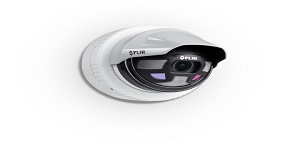
FLIR_Saros

FLIR Systems “ Saros “

FLIR Systems has recently announced the Saros™ line of security cameras, its next-generation outdoor security product line that combines multiple traditional perimeter protection technologies into a unified solution. This approach is designed to deliver accurate, actionable alerts and verified alarm data. The FLIR Saros camera line enables commercial businesses to implement stateof-the-art outdoor intrusion detection in a cost-effective manner. Traditional perimeter security systems can require substantial investment, both in infrastructure and in ongoing expenses stemming from false alarms. FLIR Saros not only greatly reduces the cost of initial deployment by minimizing the amount of equipment required, but also reduces false positives with built-in advanced analytics, expanding the outdoor perimeter protection market for security alarm monitoring companies. A single FLIR Saros unit combines numerous security technologies, including: Multiple FLIR Lepton® thermal sensors: Provides the ability to deliver wide-area monitoring regardless of unfavorable lighting or weather conditions. High-definition optical cameras: Option of 1080p or 4K resolution to realize accurate visual identification of intruders. IR and visible LED illuminators: Ability to deter intruders with white light illumination. Advanced onboard analytics: Accurate target detection and classification, to help reduce false alarms. ● 2-way audio and digital input/outputs: Enables realtime audio response. The FLIR Saros platform was designed and engineered with today’s cybersecurity risks in mind, with end-to-end encryption for setup, web, and video streams, and configuration lockdown after initial setup for increased tamper prevention. FLIR Saros also eliminates the need for port-forwarding, so devices are less exposed to remote security attacks. “FLIR Saros, equipped with multiple FLIR Leptons, represents a new security paradigm for wide-area commercial locations that face the threat of loss,” said James Cannon, President and CEO of FLIR, “FLIR Saros products open new business opportunities for both central monitoring stations and security integrators looking to distinguish themselves in the industry. The Saros family is an important addition to FLIR’s security portfolio and supports our goal of innovating technologies that increase perception and awareness to support professionals in decision-making that saves lives and livelihoods.”

Read More