securitylinkindia

TechnoPurple IT Solutions Unveils TechnoPurple 2.0

A Bold New Chapter in Innovation and Growth TechnoPurple IT Solutions, a trusted technology SmartUp with a strong 15-year legacy, proudly announced the launch of its upgraded identity – TechnoPurple 2.0, along with a brand-new website and portal. With a vision to scale higher into technology & services and deeper into global markets, this new avatar brings enhanced objectives, wider solutions, and a stronger presence across territories. Currently serving nearly 500 clients across Asia, the Middle East, and Africa, including large business houses, TechnoPurple has offices in Mumbai, Gurugram, and Dubai and is now set to expand its impact even further. At the heart of TechnoPurple’s offering is its flagship platform – EFFY. More than just software, EFFY is a precision engine powered by location intelligence. It helps businesses turn inefficiencies into measurable gains by improving productivity, profitability, and operational control. In today’s fast-paced world where vehicles, people, and operations are constantly moving, EFFY ensures that nothing goes unnoticed. It provides real-time visibility and actionable insights, allowing businesses to scale with control – ‘one platform, five robust solutions, & infinite business impact.’ “We built TechnoPurple to make the unseen visible and verifiable,” said Amit Jain, Promoter and Managing Director of the Company. Sharing his 5-year vision, he emphasized TechnoPurple’s aim to become a global technology leader. The launch event was graced by Col. S. M. Kumar, Co-founder & MD of MitKat Advisory, who was the Chief Guest. In his powerful and motivating address, he stressed the importance of being omnipresent in tech adoption and staying ahead of the curve. He endorsed Amit Jain’s global vision, highlighting the need for speed and innovation in the digital age. Dr. Rajiv Mathur, Partner at MIGS Global Consulting, highlighted the importance of teamwork and how every employee is equally important in achieving the dream together. The company’s core leadership team – Amol Ambekar, Shailesh Manjrekar, and Chandan Ambekar – reflected on their nostalgic journeys and expressed excitement about the road ahead. The event was full of celebrations, energy, and optimism. Every member of the TechnoPurple family joined hands to mark the beginning of this new chapter, ready to grow, innovate, and lead the way forward. To know more, visit: www.TechnoPurple.com

Read More

Recfaces ACS Product Id-Gate is Certified By Genetec

RecFaces, a leading developer of ready-made Facial Recognition software, is proud to announce the seamless integration of its cutting-edge facial biometric solution, Id-Gate, with Genetec Security Centre. This collaboration brings a new level of security, efficiency, and automation to access control and identity verification. Id-Gate is a ready-made facial recognition software solution designed to enhance access control systems. It fully supports the GDPR compliance and can easily be synchronized across Access Control System (ACS) from various technology partners. Id-Gate’s integration with the Genetec Security Centre provides a more powerful and reliable biometric authentication system without disrupting existing workflows. It provides bi-directional profile synchronization, ensuring real-time updates and eliminating manual data entry, so changes in Id-Gate are immediately reflected in Genetec system. The system facilitates real-time access control by instantly verifying identities and making intelligent decisions based on security protocols and facial recognition results. With customizable alerts for specific access attempts, enhancing proactive security measures. Additionally, the integration enables advanced reporting and activity logs for compliance and incident investigations, supports multi- factor authentication to strengthen security, and maintains offline functionality to ensure uninterrupted access during network outages, automatically syncing data once connectivity is restored. “With the integration of Id-Gate into Genetec Security Centre, we are reinforcing our commitment to providing secure, efficient, and automated biometric solutions,” said Tamara Morozova, CEO, RecFaces, “This collaboration not only streamlines access control but also empowers security teams with real-time monitoring and advanced authentication capabilities.” “Partnering with Genetec allows us to enhance our Id-Gate offering, ensuring that organizations benefit from an advanced, automated security framework,” said Farida Baichora, Head-Training & Development, RecFaces. RecFaces’ Id-Gate is designed to meet the evolving security needs of organizations across industries, from corporate enterprises to critical infrastructure and public venues. The software operates with top-tier biometric algorithms, ensuring accurate and swift identity verification. RecFaces invites security professionals, system integrators, and industry leaders to explore the benefits of this integration. RecFaces is one of the leaders in developing ready-to-use software products with facial recognition functions. RecFaces develops off-theshelf solutions that help to quickly increase the efficiency of VMS, ACS, as well as ERP, CRM, and time tracking systems. RecFaces’ solutions are based on a highly accurate facial recognition algorithm. RecFaces has a range of ready-made integrations with leading security system products, which helps to quickly deploy solutions on any customer equipment. Our software allows businesses to quickly, securely, and accurately identify and verify the identity of employees, customers, and visitors. The quality of RecFaces’ off-the-shelf solutions is confirmed by numerous installations worldwide, including the MENA, APAC, and LATAM regions. Together with our global partners, we provide solutions for security, finance, transportation, retail, and other industries, providing free demo versions and training on company products. Read More

Read More

Radware Launches New Cloud Security Service Centers in India and Kenya

Offers local customers world-class network and application protection Radware® , a global company in application security and delivery solutions for multi-cloud environments, announced the launch of new cloud security service centers in Chennai and Mumbai, India, and Nairobi, Kenya. Today, Radware supports a network of more than 50 cloud security service centers worldwide with a mitigation capacity up to 15Tbps. Radware’s global network of data centers mitigates attacks closest to their point of origin. This helps organizations improve application response times for in-region traffic and reduce mitigation response times against a variety of attacks, including denial-of-service attacks, web application attacks, malicious bot traffic, and attacks on APIs. It also helps them keep data within their borders to meet strict data privacy regulations. Our ongoing investments in our security network continue to play an important role in our cloud security growth strategy. Cloud innovation is central to our mission in providing customers industry-leading cyber protection, reliability, and availability at a time when cyber threats are not only increasing in frequency and magnitude but also sophistication Haim ZelikovskyVice President,Cloud Security Services, Radware According to Radware’s 2025 Global Threat Analysis Report, Web DDoS attacks, which appear as high intensity, Layer 7 application attacks, surged globally 550%, while web application and API attacks rose 41% between 2023 and 2024. “Our ongoing investments in our security network continue to play an important role in our cloud security growth strategy,” said Haim Zelikovsky, Vice President of Cloud security services for Radware, “Cloud innovation is central to our mission in providing customers industry-leading cyber protection, reliability, and availability at a time when cyber threats are not only increasing in frequency and magnitude but also sophistication.” Radware has received numerous awards for its DDoS mitigation, application and API protection, web application firewall, and bot detection and management solutions. Industry analysts such as Aite-Novarica Group, Forrester, Gartner, GigaOm, IDC, KuppingerCole and QKS Group continue to recognize Radware as a market leader in cyber security. Radware® is a global player in application security and delivery solutions for multi-cloud environments. The company’s cloud application, infrastructure, and API security solutions use AI-driven algorithms for precise, hands-free, real-time protection from the most sophisticated web, application, and DDoS attacks, API abuse, and bad bots. Enterprises and carriers worldwide rely on Radware’s solutions to address evolving cybersecurity challenges and protect their brands and business operations while reducing costs Read More

Read More
Surveillance

Synology Unveils C2 Surveillance for Scalable and Reliable Cloud Monitoring

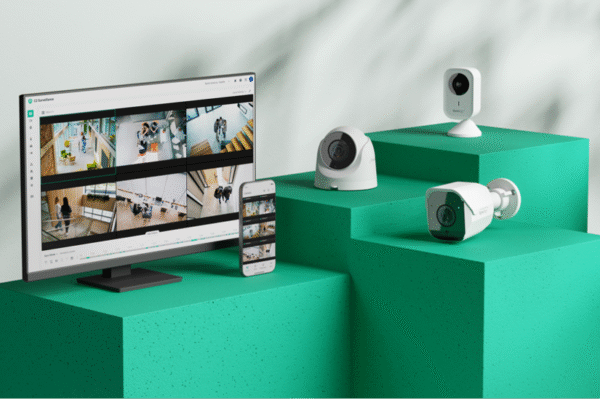
Synology recently introduced C2 Surveillance, a new Video Surveillance as a Service (VSaaS) solution designed to provide a server-less, fast-to-deploy, and non-disruptive cloud monitoring with multi-site scalability. “Our goal has always been to build a comprehensive surveillance ecosystem that enables seamless integration and management for our customers,” said Josh Lin, Director of Synology’s Surveillance Group, “With the addition of C2 Surveillance, customers now have the flexibility to deploy their surveillance solutions entirely on-premises or in the cloud, depending on their unique requirements.” C2 Surveillance is built to simplify surveillance deployment and management, especially for multi-site operations. With no device license requirements, users can add cameras without worrying about additional costs or constraints. Key highlights of C2 Surveillance include: C2 Surveillance is Synology’s new Video Surveillance as a Service (VSaaS) solution designed to provide a server- less, fast-to-deploy, and non-disruptive cloud monitoring with multi-site scalability. Effortless setup C2 Surveillance is built with ease of deployment and management at its core. The setup process is designed to be completed within minutes even on mobile devices. Benefit from its intuitive installation experience, administrators can quickly bring new sites online without any specialized training, making it highly accessible for businesses of all sizes. Advanced AI-powered detection tasks can also be configured easily through the user-friendly Synology interface, ensuring both accessibility and powerful functionality in just a few clicks. Continuity-first architecture C2 Surveillance is designed with a continuity-first architecture, ensuring uninterrupted recording even in the event of network disruptions. All footage is edge recorded to microSD cards, with the option to back up recordings to the C2 Cloud for extra protection. Additionally, C2 Surveillance supports failover offline mode, enabling local monitoring even when disconnected from the internet. To safeguard sensitive footage and user access, the system incorporates AES-128 encryption, multi-factor authentication, and granular permission settings, and adheres to industry-leading compliance standards including ISO 27001, SOC 2 Type II, and NDAA. Smart scalability To support organizations operating across multiple locations, C2 Surveillance leverages cloud infrastructure to centrally manage cameras across sites. With seamless integration with Windows Active Directory, it enables centralized identity and access management. Role-based access control allows administrators to easily delegate specific permissions across teams or locations. In addition, C2 Surveillance supports low bandwidth mode to reduce bandwidth consumption by up to 50% with minimal impact on video quality, making it ideal for environments with bandwidth constraints. C2 Surveillance leverages cloud infrastructure to enable customers centrally manage cameras across sites. Availability C2 Surveillance will be available later this year. For the latest updates, please visit the official Synology website. Read More

Read More
Matrix

Are Smartphones the Next Surveillance Cameras?

As security threats evolve, so must the tools we use to respond to them. Fixed cameras, once the backbone of any surveillance system, are now only part of a bigger picture. Today’s risks are dynamic, mobile, and unpredictable – and in many cases, they don’t wait to happen in front of a network camera. Security teams know this reality all too well. A theft in the far end of a parking lot, a conflict in a hallway just outside a camera’s view, an incident at a temporary event with no infrastructure – these aren’t rare cases – they’re everyday blind spots. And here’s the truth: even with the best camera placements, there will always be moments the system misses. So the question is no longer – “Where can we place more cameras?” It’s becoming: “What if the people already on the ground could become the camera?” Why security can’t stay static In fast-changing environments, static infrastructure alone can’t keep up – and everyday use cases prove it. A security guard notices suspicious activity near a parked car, but the incident unfolds just outside the camera’s view. A warehouse supervisor spots damaged goods during delivery, needing quick documentation for accountability. At a public event, crowd movement spills into areas where cameras weren’t installed – and there’s no time to reroute coverage. These are the moments where security depends on the people on the ground – the first to notice, assess, and act – often before the control room is even aware. As security threats evolve, so must the tools we use to respond to them. Fixed cameras, once the backbone of any surveillance system, are now only part of a bigger picture. Today’s risks are dynamic, mobile, and unpredictable – and in many cases, they don’t wait to happen in front of a network camera security guard notices suspicious activity near a parked car, but the incident unfolds just outside the camera’s view. A warehouse supervisor spots damaged goods during delivery, needing quick documentation for accountability. At a public event, crowd movement spills into areas where cameras weren’t installed – and there’s no time to reroute coverage. These are the moments where security depends on the people on the ground – the first to notice, assess, and act – often before the control room is even aware. And increasingly, it’s the people on the ground who are stepping into that role – not just as responders, but as real-time eyes for the system. When the first responder feeds the frontline intelligence Security guards, floor managers, supervisors – they’re often the first to witness something unusual, long before a control room is even alerted. Now imagine this: what if, in that exact moment, they could pull out their phone, open a secure app, and stream live video directly into your surveillance system, with full context? Instead of hoping a camera catches it, you equip your team to document the moment as it happens. No delays, no evidence lost in transit, and no blind spots. And that single shift makes your entire security system more agile, more accurate, and far more complete. it’s already happening in the real world – across sectors and scenarios where traditional surveillance systems alone aren’t enough. Smartphones as surveillance tools: The next step The idea isn’t to replace traditional surveillance – it’s to extend it. To turn every authorized smartphone into a secure, mobile surveillance point. To let your team record critical incidents and immediately route that footage into your central surveillance system – not minutes or hours later, but as it happens. What’s needed is a solution that makes mobile footage just as reliable and authentic as fixed-camera feeds – and that’s where the next step in surveillance begins. Now in Matrix: Push Video for On-the-Go Surveillance With this vision in mind, Matrix introduces Push Video – a feature that enables authorized users to stream live video directly from their smartphone to Matrix Video Management System (VMS). The footage is geotagged, time-stamped, and securely stored, ensuring that no moment is lost or disconnected from the larger surveillance story. And the power doesn’t end at streaming. Once archived in the VMS, Push Video clips can be analyzed with the same tools used for fixed camera footage. Investigators can apply video analytics like motion detection, tripwire alerts, loitering detection, and more. They can also use smart investigator tools – such as timeline filtering, bookmarking, evidence locking, and multi-camera correlation – to review the footage thoroughly and act decisively. It’s simple, it’s smart, and it’s built for the way modern security actually works – fast, mobile, and always in motion. Read More

Read More
Gallagher

Gallagher Security Unveils a New Era of Remote Security with the Launch of Onelink Available with Command Centre V9.30

Award-winning global security manufacturer, Gallagher Security is set to shake up the world of remote security with the launch of One- Link, available today as the headline feature of Command Centre v9.30. OneLink is a game-changing, cloud-based solution that makes it faster, easier and more cost-effective to deploy powerful security anywhere in the world. By enabling Gallagher Controller 7000’s to connect to a base Command Centre server via the cloud, without the need for VPN’s or extended corporate networks, OneLink transforms how security can be delivered to remote sites and distributed infrastructure. Gallagher Security, Chief Product Officer Meredith Palmer said, “OneLink is a major step forward in how organizations secure remote locations. By connecting controllers to Command Centre via the cloud, we’re removing traditional barriers and extending powerful, enterprise-grade security to anywhere it’s needed.” Whether it’s public infrastructure, critical utilities, construction sites, or branch networks, OneLink empowers organizations to secure more with less, while gaining centralized control and improved operational efficiency. Beyond OneLink, Command Centre v9.30 unlocks new possibilities in security with the introduction of a suite of enhancements and integrations, solidifying it as one of the most powerful releases to date. With v9.30 users can access a Warranty Report Generator, capable of instantly identifying outdated devices to maintain optimal system performance. Automated Credential Management ensures expired credentials can be set to automatically delete, ensuring up-to-date access control, and expanded integrations including support for IDEMIA VisionPass SP and Vortex ground sensors further broadens system capabilities. “As one of the most feature rich platforms on the market, our Command Centre releases continue to push the boundaries of what’s possible. We’re committed to innovating and uncovering new ways we can unlock even greater value for our users through the power of our solutions and our integration capabilities,” said Meredith For multi-site organizations, or those with complex security needs, Command Centre v9.30 offers significant operational benefits. With integrations aimed at enhancing deployment, efficiency, and system performance. Command Centre v9.30 enables faster setup and troubleshooting, and reduced downtime via the Network Connectivity Tool, simplified controller configuration, enhanced card coding capabilities, Z20 sensor support for the Controller 7000 product range, and improved controller update, minimizing disruption. Meredith concluded, “With Command Centre v9.30 we are putting more power in the hands of our customers, enabling innovative ways to meet business needs, and unlocking even greater value for everyone in the Gallagher ecosystem.” Read More

Read More
Eventus Security

Eventus Security Takes Home Four Major Awards at the 13th Annual Global InfoSec Awards 2025

Eventus Security, a fast-growing global provider of managed security services, is proud to announce its sweeping success at the prestigious 13th Annual Global InfoSec Awards, hosted during RSA Conference 2025. Eventus has been honored across all four categories it was nominated for: ● Cutting Edge Cybersecurity Service Provider. ● Market Leader – Managed Detection and Response (MDR) Service Provider. ● Most Innovative Managed Security Service Provider (MSSP). ● Editor’s Choice – SOC-as-a-Service Provider. These awards stand as a testament to Eventus Security’s unwavering commitment to continuous innovation, customer-centric excellence, and delivering next-generation cybersecurity outcomes for businesses worldwide. This achievement adds to the company’s consistent track record of excellence – following its wins as Top Infosec Innovator Award 2023 and Managed Security Service Provider of the Year – Publisher’s Choice 2024. Together, these recognitions affirm Eventus Security’s evolution from a leading cybersecurity provider in India to a truly global player, expanding its footprint into new geographies, with a particular focus on accelerating growth across North America and the Middle East. Commenting on the latest milestone, Sunil Sapra, Co-Founder and Chief Growth Officer of Eventus Security, shared, “We are honored and humbled to be recognized across multiple categories at the Global InfoSec Awards. This is a truly remarkable moment for all of us at Eventus Security. It reflects the hard work, passion, and relentless pursuit of excellence by our incredible team. As we expand globally, with a dedicated focus on innovation and customer success, we remain committed to empowering businesses with intelligent, scalable, and resilient cybersecurity solutions.” Sachin Jain, Sr. Vice President – Technology – North America, added, “These recognitions are not only a validation of our technology leadership but also a reflection of our global ambition. Our North America expansion is a key pillar of our growth strategy, and we’re already making strong inroads by bringing our proven capabilities and trusted services to a wider customer base. The future of cybersecurity is borderless, and Eventus is poised to lead that future.” Gary S. Miliefsky, Publisher of Cyber Defense Magazine, added, “Eventus Security embodies the major qualities we judges look for in our winners – they have a keen understanding of future threats, provide cost-effective solutions, and continuously innovate in ways that help organizations stay ahead of cyber risks. Their proactive approach to cybersecurity puts them a step ahead of the next breach.” Recognizing cybersecurity trailblazers The Global InfoSec Awards, organized by Cyber Defense Magazine, celebrate organizations that demonstrate unique, forward-thinking approaches to combating cyber threats. Winners are carefully selected by an independent panel of cybersecurity experts who evaluate each nominee based on innovation, effectiveness, and the ability to deliver real-world value in securing businesses. As Eventus Security continues its journey of global expansion and technological advancement, these accolades reinforce the company’s vision of becoming a trusted global partner for organizations seeking to build resilient digital defenses in an ever-evolving world. Read More

Read More

Five Global Cyber security Trends to Watch in 2025

Technological advancement has ushered in a new wave of innovation and efficiency – but it has also opened the door to vulnerabilities that cyber attackers are eager to exploit. With billions in damages and reputational costs at stake, businesses must evolve their security posture to match these emerging threats. As cybersecurity continues to evolve in 2025, organizations around the world will have to rethink their approach to protecting their most critical assets and operations. Here are five cybersecurity trends to watch in 2025 and beyond. Attacks on operational technology will increase No longer content to target IT, cyber attackers are increasingly taking aim at critical operational technology (OT) systems. Prominent examples like the Colonial Pipeline [i] and MGM Grand [ii] attacks demonstrate the way that threat actors are now more focused on completely shutting down facility operations instead of just stealing information. This shift shows how cybercriminals and state-sponsored groups are evolving their tactics to inflict a more direct, crippling impact on business operations globally. In 2025, protecting OT systems from these types of targeted, disruptive attacks will be a major cybersecurity challenge for industrial organizations. Cybersecurity regulation will intensify Globally, governments are recognizing the systemic risks posed by attacks and are taking a more active and collaborative role in driving cybersecurity best practices. This will significantly impact the way that organizations approach security. For instance, there are now regulations like the European Union’s NIS2 Directive [iii] that can hold executives personally liable if appropriate security measures are not implemented at their organizations. This will drive stronger collaboration among government and the C-suite, boards and cybersecurity leaders. As cybersecurity continues to evolve in 2025, organizations around the world will have to rethink their approach to protecting their most critical assets and operations. Here are five cybersecurity trends to watch in 2025 and beyond In the U.S., there are new SEC rules [iv] that require prompt reporting of cyberattacks to provide greater protection for investors. Meanwhile, Australia is set to implement stringent cyber regulations of its own through the Security of Critical Infrastructure (SOCI) Act [v] . Though SOCI was first enacted in 2018, the grace period for compliance ended in August 2024. This means that going forward, Australian organizations in critical infrastructure sectors will now be required to comply with this enforceable regulation or face potential fines. Overall, organizations across the globe will have to closely monitor evolving government regulations and align their security strategies accordingly to avoid penalties and reputational damage in the coming year. Asset visibility will improve In 2025, a key cybersecurity challenge for organizations, particularly building operators, will be gaining full visibility into the myriad connected assets on their networks. Many building owners struggle to identify all the connected devices, from security cameras to HVAC systems to access control panels, which make up their OT infrastructure. Without a clear understanding of their complete asset inventory, organizations are unable to effectively defend against threats. Attackers who gain access to unmonitored systems can disrupt critical building functions and cripple operations. Honeywell’s Cyber Insights is an OT-focused solution designed to help provide building operators with near real- time visibility into their full asset landscape. It delivers the comprehensive asset discovery and management that is essential for protecting OT environments in 2025 and beyond. AI’s role in security will grow In 2025, there will be greater reliance on AI-powered solutions to enhance cybersecurity capabilities. For example, in the building operations space, AI can be used to automate patch management and mitigate disruptions. Instead of simply deploying patches, AI can analyze the risks and impacts, and selectively apply patch updates in a way that minimizes downtime. AI is also enhancing security monitoring and incident response. For example, AI can help in analyzing log data to quickly identify true threats and prioritize the most critical issues. This allows organizations to eliminate false positives and respond to incidents faster and more effectively. OT security expertise will be in demand As cyberattacks are increasingly targeted at OT systems, organizations are recognizing the critical need for security teams to deeply understand OT infrastructure and its unique vulnerabilities. Traditional IT personnel often lack the specialized knowledge required to secure OT assets like HVAC, access control and building management systems. Going forward, security leaders must make sure that their teams can identify and mitigate risks across the full IT-OT convergence. This includes understanding OT communication protocols, equipment architectures and the potential cascading impacts of disruptions. Without comprehensive OT security expertise, organizations remain dangerously exposed to attacks that could cripple critical systems and operations Read more

Read More

AI’s Unstoppable Surge : Rewriting the Technology Landscape in 2025

Sudhakar Aruchamy Chief Technology OfficerEverestIMS Technologies Artificial Intelligence isn’t just another tech buzzword – it’s a runaway train barreling through the global technology landscape, tearing up the tracks of convention and leaving a trail of awe, disruption, and existential questions in its wake. In 2025, AI’s fingerprints are everywhere – from the networks humming beneath 5G cities to the autonomous drones delivering medical supplies in war-torn Ukraine, from the AI-crafted climate models guiding Pacific Island nations against rising seas to the deepfake controversies rocking democratic elections worldwide. This isn’t a quiet evolution – it’s a seismic shift, and the world is still scrambling to catch up. The Global AI Arms Race: Innovation Meets Chaos Start with the numbers – AI investment is forecast to approach $200 billion globally by 2025 (Goldman Sachs). Beijing’s state-backed push has birthed AI-driven surveillance systems so advanced they can predict social unrest by analyzing crowd behavior, while Silicon Valley’s tech giants – Google, Microsoft, and xAI – counter with models like Grok, Deepseek and Manus AI powering everything from chatbots to quantum computing simulations. Meanwhile, Europe’s AI Act, now in full swing, tries to rein in the chaos with strict ethical guidelines, but enforcement feels like a game of whack-a-mole against a flood of innovation. Artificial Intelligence isn’t just another tech buzzword – it’s a runaway train barreling through the global technology landscape, tearing up the tracks of convention and leaving a trail of awe, disruption, and existential questions in its wake In Africa, AI is a double-edged sword. Startups in Kenya are using it to optimize solar grids for off-grid villages, but the continent’s digital divide means many are left out of the AI boom – exacerbating inequality while others reap the benefits. Across the Middle East, AI-powered oil extraction algorithms are slashing costs for Saudi Aramco, but they’re also raising alarms about job losses in an already volatile region. This isn’t just tech; it’s geopolitics, economics, and culture colliding at warp speed. AI’s Tech-Space Makeover : From Networks to Creativity Dig deeper, and AI’s reshaping the tech stack itself. Take networks – like those powered by EverestIMS Technologies Infraon IMS, are using machine learning to predict failures, allocate bandwidth, and fend off cyber threats in real time. 5G’s rollout, now covering 60% of the globe, relies on AI to manage its insane data throughput, but it’s also creating new vulnerabilities – DDoS attacks doubled last year, with AI both the culprit and the cure. In the future, Infraon IMS will enhance its capabilities to drive self-optimizing systems, enabling intelligent automation and adaptive performance improvements. Then there’s the creative frontier. The 2024 Writers Guild strike over ‘AI replacement’ fears showed the human backlash brewing. In music, platforms like Suno use AI to generate chart-topping tracks, but artists like Billie Eilish are crying foul, accusing the tech of stealing soul. Meanwhile, in gaming, NVIDIA’s AI-driven DLSS 4.0 is rendering photorealistic worlds in real time, but it’s also sparking debates about accessibility – can every gamer afford the hardware to keep up? The Ethical Quagmire: AI’s Dark Mirror AI’s promise is intoxicating, but its shadow looms large. Deepfakes – once a niche trick – went mainstream in 2024, with AI-generated videos swaying elections in Brazil, and the U.S. The tech’s so convincing that even seasoned fact-checkers are stumped, eroding trust in digital media. In China, AI surveillance is tracking citizens’ every move, raising Orwellian alarms, while in the West, facial recognition controversies – like the U.K.’s scrapped live facial recognition trials – are forcing a reckoning over privacy versus security. Climate tech, too, is a mixed bag. AI models predicting sea level rise are saving lives in the Maldives, but their energy hunger – data centers now consume 4% of global electricity – is accelerating carbon emissions unless paired with renewable grids. And let’s not forget the jobs question – McKinsey predicts 800 million jobs could be automated by 2030, with AI-driven logistics and manufacturing already displacing workers in Detroit and Shenzhen. The tech boom is brilliant, but it’s also brutal. The Human-AI Frontier: Who’s in Control? What’s most mind-bending is how AI is forcing us to redefine ‘intelligence’ itself. In 2025, xAI’s Grok 3, Deepseek and Manus AI aren’t just answering questions – they are sparking philosophical debates, writing poetry, and even advising CEOs on strategy. But as AI creeps into decision-making – think AI judges in Estonia’s courts or AI doctors diagnosing patients in rural India – we’re grappling with a core question: Who’s in the driver’s seat? Humans or machines? Philosophers like Kate Crawford warn we’re sleepwalking into a ‘technological unconscious,’ where AI’s black-box algorithms make life-altering choices we can’t fully understand or audit. Yet, innovators like Demis Hassabis at DeepMind argue AI could solve humanity’s grand challenges –cancer, climate change, even interstellar travel – if we harness it right. The tension is palpable: AI’s a tool, a threat, and a mirror, reflecting our hopes and fears back at us. Start with the numbers – AI investment is forecast to approach $200 billion globally by 2025 (Goldman Sachs). Beijing’s state-backed push has birthed AI-driven surveillance systems so advanced they can predict social unrest by analyzing crowd behavior, while Silicon Valley’s tech giants – Google, Microsoft, and xAI – counter with models like Grok, Deepseek and Manus AI powering everything from chatbots to quantum computing simulations. Meanwhile, Europe’s AI Act, now in full swing, tries to rein in the chaos with strict ethical guidelines, but enforcement feels like a game of whack-a-mole against a flood of innovation. The Road Ahead: A Call to Shape the Future So, where does this leave us? AI’s not slowing down – it’s accelerating, reshaping tech, society, and our very notion of progress. In Japan, AI-powered robots are caring for an aging population, while in South Korea, AI-driven urban planning is reimagining Seoul’s skyline. But the stakes are sky-high – if we don’t address the ethical gaps, digital divides, and job disruptions, we risk a world where AI’s…

Read More

Malaysia Cyber security Center of Excellence Marks First Anniversary with New Partnerships, Scholarships and Expanded Programs

BlackBerry expands CCOE Curriculum with free cybersecurity training for women, students, government and low-access communities, fostering a more inclusive and skilled cyber workforce BlackBerry Limited recently announced several new initiatives in support of the Government of Malaysia’s efforts to upskill and grow local talent and foster diversity in the nation’s fast growing cybersecurity sector. To mark the 12-month anniversary of the Malaysia Cybersecurity Center of Excellence (CCoE), BlackBerry is providing scholarships for cybersecurity training to numerous women cyber-defenders, people with limited access to education and qualifications, as well as university lecturers and students. At a ceremony and open day in Cyberjaya today, BlackBerry also revealed it will soon be introducing EC Council Learning, an enhanced cybersecurity skill development platform to expand the CCoE’s comprehensive curriculum with self-paced learning model for Malaysian Government employees, helping more men and women to complete courses in their own time. The hybrid cybersecurity program, featuring online and in-person modules, is expected to be announced in the coming weeks. Just over a year ago, Malaysia envisioned the Malaysia Cybersecurity Center of Excellence as a global hub for workforce training, skill development and intelligence-sharing. Today, through partnerships with BlackBerry, ASEAN and global leaders, the nation is advancing this mission-equipping Malaysians with critical cyber-skills to boost capacity, inclusivity and defense against digital threats. Over 40% of attendees at the Malaysia CCoE last year were women, reflecting positive diversity in the nation’s cybersecurity sector. To build on this progress and create more opportunities for all, BlackBerry is expanding its partnership with the ISC2 Malaysia Chapter to offer 50 scholarships for Malaysian women to access specialized training at the CCoE. The flexible program will include in-person and online courses from June to July 2025, with recruitment starting this month. In addition, BlackBerry is working with 42KL, a tuition-free, Malaysia Cybersecurity Center of Excellence Marks First Anniversary with New Partnerships, Scholarships and Expanded Programs self-paced computer science academy, to sponsor 25 CompTIA ITF+ certifications for individuals with limited access to traditional education opportunities. This news follows the recently announced partnership with Talent Corporation Malaysia Berhad (TalentCorp) to launch the CyberNext Program, a national initiative designed to equip Malaysian students and educators with essential cybersecurity skills. In Phase One of the partnership, BlackBerry and TalentCorp, together with training partners ISC2 and CompTIA, are offering free cybersecurity training for 1,000 students and 250 lecturers at the world-class facility, commencing from July. Senior Vice President for BlackBerry Secure Communications in APAC, Tash Stamatelos said, “In collaboration with the Government of Malaysia, we are proud to witness the Cybersecurity Center of Excellence (CCoE) thrive in its first year-strengthening partnerships, expanding programs, and offering scholarships that help to build digital human capital and support diversity in the cybersecurity sector. As a hub for learning, training, and collaboration, the CCoE is laying a strong foundation for cross-border and cross-sector engagement, advancing Malaysia’s ambition to lead in cybersecurity excellence across ASEAN.” Jodi Robinson, High Commissioner of Canada to Malaysia, said, “In late 2024, the Government of Canada pledged a $3.9M CAD investment in cybersecurity skills training programs at the Malaysia CCoE, to be implemented by the Rogers Cybersecure Catalyst and BlackBerry – a clear example of Canada’s Indo-Pacific Strategy in action. On this first anniversary, I commend the progress the Malaysian Government, BlackBerry, and its partners are making at the CCoE in addressing the critical shortage of cyber skills and advancing diversity in the sector. I look forward to the CCoE developing into a hub of regional cybersecurity excellence in Southeast Asia.” Read More

Read More