
securitylinkindia

STQC

Superior Security Begins with a Single Pane of Glass

With the growing cyber threats across infrastructure sectors, STQC-certified Vicon Valerus VMS provides assurance that the system has been rigorously tested for vulnerabilities, encryption strength, data integrity, and secure software architecture. It not only meets the government’s Essential Requirements (ER) for cybersecurity but also builds confidence among end users deploying surveillance solutions in critical sectors such as smart cities, transportation hubs, defense, and public infrastructure. This certification makes Vicon Valerus VMS a trusted and future-ready choice for mission-critical deployments By Gaurav Taywade, Director, India Operations, VICON Introduction Open APIs have made it easy for leading VMS platforms to link video to instances of doors being propped open, LPR events, and other security incidents. The added value of integrated solutions makes them the norm for today’s enterprise systems, and common in small to medium-sized installations. However, in most integrations the VMS is not the dominant interface for viewing video with its associated data. Instead, users click on an event of interest within their access control software, for example, to see a short video clip captured by a nearby camera. Then, to search for more related clips, they turn to the VMS interface. While such integrations are better than no integration, the operator experience is clumsy and inefficient for use as a core security management platform. A video-centric platform allows security personnel to remain within the VMS interface to view and manage events from integrated solutions – like access control, LPR, vape detection, and more – all through a single pane of glass. To explain its inherent superiority, let’s begin with a hypothetical security threat and envision how such a system would facilitate a response. Imagine this Larry was terminated from his job last week. Today, he drives to his former workplace. A security officer monitoring the property sees live video from a parking lot camera pop up within the VMS interface. On the same screen, data from an integrated License Plate Recognition (LPR) system shows that the vehicle belongs to Larry Larkin, former employee. Larry’s plate is not on security’s ‘forbidden on property’ list, but the officer is curious whether Larry’s visit is expected. He checks his list of approved visitors for the day and sees that Larry has an appointment with HR to finalize severance paperwork. Therefore, there’s no need to dispatch an officer to the parking lot. Larry heads to the employee entrance instead of the main entrance. As he approaches the door, a nearby camera’s motion detection analytic pushes video to the officer’s screen again. In addition, the VMS displays a facility map pinpointing the location of the active camera. Larry is in the wrong place, as he is no longer an employee. From within the VMS screen, the officer opens a 2-way communication channel with the intercom mounted next to the employee door. He plans to instruct Larry to use the main entrance, where he must sign in and be met by someone from HR. Just then, a staff member arrives at the employee door, swipes in, and improperly permits Larry to follow her through the entrance. Her name and department display next to the video. The officer follows Larry’s movement through the facility via surveillance cameras, instructs another officer to intercept him, and alerts HR that Larry is approaching their department unescorted. Furthermore, as a precaution, the officer calls up the status of door to the HR department and confirms that it is locked. The episode ends without incident. Larry’s use of the employee entrance was an honest mistake driven by habit. HR greets him at the door and allows him to enter the office area, where he meets with a benefits representative as planned. To summarize, within the VMS, the officer was able to: This example is purely hypothetical, but it illustrates the advantagesof a centralized video platform presenting disparate systems withina single pane of glass. Capabilities will vary by VMS manufacturerand the integrations they offer, but in all cases, system operators,administrators, onsite workers, and visitors benefit. Let’s dig deeper. Enhanced Situational Awareness and Actionable Intelligence Video is much more meaningful when supported by live, corresponding data. When security officers are trying to understand the nuances of a security event, having all relevant information presented and seamlessly accessible is ideal. In the previous example, there were many times the guard received additional information within the VMS to explain what he was seeing. In a non-integrated solution, with only video immediately available, the officer would only know that someone had tailgated through an employee entrance. He would lack sufficient knowledge to assess the risk and respond appropriately. An overreaction by his security team could cause unnecessary stress and inconvenience to everyone in the building; a weak response could jeopardize their safety. With a video-centric integrated solution, operators have the data they need to differentiate between ‘real’ security threats and harmless situations. They can prioritize where to focus their attention and quickly understand when it’s necessary to deploy additional resources. A Faster, Better, More Informed Response Without a single pane of glass, security guards must navigate several solutions, search for, and pull up, relevant data to stitch together and make sense of what they observe – a cumbersome process that’s impossible to perform in real time. Our example ended peacefully, but what if Larry was emotionally unstable and seeking revenge for what he perceived as wrongful termination? Imagine if HR had flagged him as a volatile individual who was not welcome on site? Or, if the guard observed Larry removing a firearm from his car while in the parking lot? That guard could have initiated a lockdown immediately from within the VMS. These are ways in which a video-centric centralized solution facilitates a faster response. A centralization solution also better equips officers who monitor security from their mobile devices. Patrolling guards can maintain situational awareness without toggling between apps. When officers in the field have access to the same information as those behind a desk, they can respond immediately and spontaneously to security risks, like a…

Read More

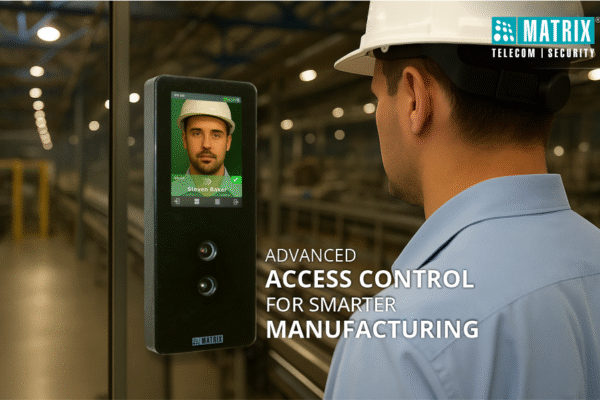
Advanced Access Control System for a Smarter Manufacturing Industry

In today’s industrial landscape, ensuring security isn’t just about guarding entry points – it’s about securing processes, assets, and people with intelligence. That’s where the Advanced Access Control system steps in. For manufacturing plants, this system offers more than just card-based entry – they deliver operational safety, traceability, and compliance. An industry report by Markets and Data reveals significant growth in the global access control and authentication market. Starting at $13.2 billion in 2022, it’s set to expand to $26.1 billion by 2030, reflecting a robust 8.9% CAGR for the period between 2023 and 2030. In fact, a study by IBM shows that internal threats account for nearly 60% of manufacturing-related data breaches, making identity-based access control a critical need. Why traditional access control isn’t enough Manufacturing plants operate with high-value assets, dangerous machinery, and round-the-clock shifts. Legacy access system – limited to basic RFID or PINs – fails to monitor who, where, and when with precision. The traditional system lacks real-time visibility, contextual intelligence, and scalability to meet these evolving needs. A breach here isn’t just a loss – it could halt production or trigger a safety hazard. Most importantly, they can’t adapt dynamically to shifts, roles, or emergency overrides. In an era where cyber-physical threats are rising and compliance audits are tighter, traditional access just isn’t equipped to protect modern manufacturing setups. Modern manufacturing facilities are adopting multiple types of advanced access control system, such as: ● Biometric Authentication: Fingerprint, iris-based, or facial access control system eliminates the risk of credential sharing. According to the Lift HCM article, ‘Slash Time Theft: Choosing Between Biometric and Digital Time Clocks,’ for a 100-employee company, a biometric system typically eliminates an average of 2.5 hours of time theft per employee per month, translating to approximately $45,000 in annual savings based on average wage calculations. ● Multi-factor Authentication (MFA): Combining credentials (card and biometric access control system) to strengthen entry authorization. According to CISA (Cybersecurity and Infrastructure Agency), the use of MFA makes users 99% less likely to be hacked! ● Mobile-based Access: Access through secure mobile apps enhances user convenience and hygiene. The global mobile access control system market size is predicted to be valued at $1,638,455.4 thousand by 2032, surging from $228,690.0 thousand in 2022, at a noteworthy CAGR of 22.4%, as noted by the research dive, a market research firm. ● Role-Based Access: Access is customized based on job function or hierarchy to critical zones. According to a report by Tata Communications, Role-Based Access Control (RBAC) is a key practice that limits the potential effect of insider threats by allowing workers the right to do their duties. How Matrix empowers manufacturing security For manufacturing entities seeking to enhance industrial safety and operational excellence, a robust and advanced access control system is paramount. Solutions such as those offered by Matrix provide capabilities like modular, rolebased, time and zone-based, and device-based user access control policies, real-time alerts, and tamper detection mechanisms. These features are designed to help streamline operations, ensure compliance with regulatory standards, and mitigate security risks, ultimately contributing to optimized efficiency, enhanced safety, and asset protection within a dynamic industrial landscape. Ready to embrace a future where industrial safety and operational excellence harmoniously converge? Discover how advanced access control solutions can enlighten your manufacturing environment with unparalleled security, seamless efficiency, and complete peace of mind. Read More

Read More

TRASSIR Expands Operations in India

TRASSIR, a global player in intelligent video surveillance and security solutions, is proud to announce its official expansion into the Indian market. With a strong international presence and over two decades of experience in security innovation, TRASSIR is bringing its full suite of advanced surveillance technologies to one of the world’s most dynamic and rapidly growing regions. Meeting India’s Evolving Security Needs India’s increasing focus on infrastructure development, smart cities, public safety, and digital transformation has led to a significant demand for intelligent, scalable, and future-ready surveillance solutions. TRASSIR recognizes the unique opportunities and challenges of the Indian market and is committed to delivering tailored solutions that address the country’s diverse security requirements. What TRASSIR Offers As a full-cycle video surveillance manufacturer, TRASSIR offers a wide range of solutions, including: ● Video Management Systems (VMS): Powerful, flexible platforms for centralized monitoring and control. ● AI-Powered Video Analytics: Facial recognition, license plate detection, object tracking, behaviour analysis, and more. ● Smart IP Cameras and NVRs: High-performance hardware for every environment and use case. ● Industry-Specific Solutions: Custom solutions for retail, transportation, education, government, and critical infrastructure. With TRASSIR’s technology, businesses and institutions can transform traditional surveillance into proactive, intelligent security ecosystems. Building a Local Presence As part of its expansion strategy, TRASSIR is building a strong local presence through channel partners, distributors, and service networks across India. The company is also focused on creating opportunities for collaboration with Indian system integrators, security consultants, and enterprise clients to support both private and public sector projects. A Vision for a Safer Tomorrow TRASSIR believes in creating a safer, smarter world through cutting-edge surveillance solutions, India is a key strategic market for us, and they are excited to bring their global expertise and innovative technologies to support the country’s growing security needs. As TRASSIR enters this new chapter in India, it remains committed to innovation, reliability, and customer success, continuing its mission to redefine the future of video surveillance – now in India. TRASSIR is an international video surveillance company headquartered in Cyprus, delivering a complete range of intelligent security solutions including VMS, IP cameras, AI analytics, and access control systems. With installations in over 40 countries, TRASSIR serves industries such as retail, transport, manufacturing, public safety, and more. Read More

Read More

Hikvision Introduces WonderHub and Elevates Smart Collaboration across Industries

Hikvision unveiled its fully upgraded smart collaboration business. The range of innovative products designed to transform collaboration in education, meetings, retail, and more. Among the highlights were cutting-edge solutions like WonderHub interactive displays, digital signage, and video conference devices. These products underscore Hikvision’s commitment to driving digital transformation and enhancing user experiences in an increasingly connected world. At the heart of this ecosystem is WonderHub, which features WonderOS, an AI-powered platform that seamlessly connects devices and enhances collaboration. With tools like WonderSpark for interactive whiteboards and WonderCast for wireless content sharing, WonderHub enables users to communicate, create, and collaborate more effectively than ever. Boosting Classroom Engagement with Innovative Solutions In education, WonderHub is designed to elevate classroom experiences. The interactive displays enable students to share and express ideas effortlessly, creating a more engaging and dynamic learning environment. The built-in WonderSpark smart whiteboard software uses AI to recognize equations, provide solutions, and generate interactive 3D teaching materials across subjects like mathematics, chemistry, and natural sciences. Teachers can also access licensed images and videos through Creative Commons integration, enriching lesson content and boosting student engagement. Classrooms equipped with WonderHub also benefit from multi-window modes and a suite of 19 educational tools. These include subject-specific templates and interactive applications. For remote learning, WonderHub integrates seamlessly with third-party conferencing platforms, allowing students to collaborate in real-time, no matter their location. Empowering Business Meetings with Intelligent Features Hikvision’s smart collaboration solutions transform business meetings into more efficient and immersive experiences. The WonderHub Ultra Series allows users to easily connect personal devices and leverage the interactive display’s camera, speakers, and microphone for high-quality remote conferencing. The HiSpire meeting management system streamlines meeting logistics, including room scheduling, attendee notifications, post-meeting summaries, and distribution of materials. Advanced AI features such as auto-framing and speaker tracking, ensure optimal video quality. Meanwhile, appfree screen casting allows for easy sharing of presentation materials. By bridging advanced technology with practical applications, WonderHub, along with Hikvision’s broader range of smart collaboration solutions, is leading the way in providing more efficient and intelligent solutions for users worldwide. Read More

Read More

Innovation in Focus: CP PLUS Champions ‘Make in India’ at ELCINA’s 5th Electronics Supply Chain Summit

CP PLUS, India’s leading surveillance and security solutions provider, has yet again underscored its commitment to driving indigenous innovation and strengthening India’s electronics manufacturing ecosystem by participating in the prestigious 5th Electronics Supply Chain Summit (ESCS) hosted by ELCINA (Electronic Industries Association of India). The summit, held at the Radisson Blu Hotel in Noida on 16 May 2025, brought together visionaries, policymakers, and industry leaders to chart the next phase of growth for India’s electronics and component supply chain. As ELCINA marked its 55th year of dedicated service, the summit served as a confluence of thought leadership and collaborative ideation. CP PLUS’ presence at the event not only reflected its technological prowess but also its strategic foresight in aligning with India’s national vision of self-reliance in electronics manufacturing, especially in high-tech domains such as surveillance, AI, and secure infrastructure. One of the key highlights of CP PLUS’ participation was the presence of M.A. Johar, Director of CP PLUS, who joined a high-impact panel discussion titled ‘Role of States in Enhancing Competitiveness and Focus Segments for Accelerated Growth.’ The session delved into how state governments, in collaboration with central policies, can become active enablers of industrial transformation by fostering electronics clusters, improving infrastructure, and driving policy frameworks conducive to innovation. Bringing decades of experience from the surveillance and security sector, Mr. Johar articulated a compelling vision of how India’s future in electronics hinges on a robust, decentralized approach that leverages the unique strengths of individual states. He emphasized the growing role of electronic security infrastructure in India’s development narrative and how state-level policy innovation can unlock massive potential across urban safety, transportation, public surveillance, and smart governance. In keeping with the summit’s broader theme of strengthening India’s electronics supply chain, CP PLUS showcased its latest innovations in STQC-certified, Madein- Bharat surveillance solutions. These include advanced IP cameras, PTZ cameras, intelligent video analytics, and its proprietary Instastream and AI-Instastream video compression technologies, designed to meet India’s growing demand for high-resolution, bandwidth-efficient surveillance. As India eyes leadership in critical technology domains, CP PLUS stands tall as a brand synonymous with indigenized excellence. Its deep R&D investment and in-house capability development have not only brought cutting-edge products to market but also contributed to employment generation and ecosystem development in India. We need to look at states as not just administrative divisions but as innovation hubs, each with distinct capabilities to contribute to India’s electronics and digital infrastructure vision. From surveillance to semiconductor ecosystems, the time is ripe to align policy with purpose Mr. Johar during the panel CP PLUS’ role in the summit was a reflection of its long-standing commitment to the ‘Make in India’ and ‘Digital India’ missions. With its state-of-the-art manufacturing facilities and a growing portfolio of STQC-certified technologies, CP PLUS is helping reduce dependency on imports while ensuring that India’s security infrastructure is built on the foundations of trust, quality, and reliability. As ELCINA continues its role as a guiding force for India’s electronics industry, CP PLUS’s active collaboration signifies a unified industry commitment to quality, competitiveness, and growth. With new partnerships, policy engagements, and technology adoption dialogues stemming from the summit, CP PLUS aims to play an even more proactive role in building a resilient national electronics backbone. Read More

Read More
ASIS

ASIS CXO CONCLAVE: Strategies for Reinvention and Business Impact 2025

ASIS INTERNATIONAL NEW DELHI, INDIA CHAPTER recently organized it first ever high end leaders CXO Conclave, with the theme ‘Strategies for Reinvention and Business Impact 2025.’ The event took place at the cutting-edge DLF Cyber Park Auditorium in Gurgaon bringing together an elite group of executives. With 140+ Attendees including C-suite Executives and diverse business leaders from various industries and domain, the meeting kicked off with Mahesh Singh Chauhan, Chairman ASIS International New Delhi India Chapter giving the opening speech. That set the tone for an afternoon full of eye-opening talks. The conference started with a keynote speech by the powerful industry Leader Kumaran W R, Senior Executive Director DLF Ltd. He talked about ‘Changing the C-Suite, Pushing Risk Leaders/ CSOs to take on big roles,’ and also focused on the importance of AI in today’s business security. He emphasised on need of security and technology together working hand in hand. He also reflected his dream vision of a highly automated security command centre. DLF is designing under his direct supervision which will bring DLF into next space of security automation and AI in managing physical security of the infrastructure. The conference provided a crucial space to talk about how important security is in today’s business world. The events followed with next two panel talks: CEO Panel Group The panel discussed the topic ‘The Next Big Bang: Industries of the future: what Chief Security & Risk Officers should expect & how to help them get ready for what’s coming.’ The leaders on this panel were Arun Karna, MD & CEO AT&T Global Services India, Neerav Nanavaty, CEO, Blu- Pine Energy, Vivek Bhatia, MD & CEO, TKIL Industries, and. Amit Narayan Partner and MD, Control Risk, India & South East Asia. The session pointed to various security demands & challenges encountered by different domains in industry, use of AI & tech driven solutions to tackle security related issues like geo tagging, facial recognition and drones for surveillance. Second Leadership Panel The session focused on ‘Inclusive Leadership – What CSO’s should do to support business owners & how business can work well with CSOs/ risk leaders.’ The people on this panel were Col Davinder Kassal, Head of Security, HCL Technologies, Ms. Kalpana Sachdeva, Regional Director Asia, Unique Logistics International, Ms. Kanika Bhutani, Head of Ethics & Compliances, Pernod Ricard India, Maj Chander Dadlani, Vice President, Security – DLF India, Roopali Mehra, Director – GCA, and Rumit Singh, Vice President, Ops-CorroHealth. These sessions delved into modern security issues, team-based answers, understanding one’s risk and how to weave security ideas into every part of a business. Having top bosses from different domains showed that everyone agrees that a strong security stance is the key to grow and keep things running. The eager participation showed everyone agreed with a concluding note that security is a job we all share that leads to success. The conference aimed to support that view and prepare leaders for today’s tricky environment. The conference was concluded with a final speech and vote of thanks by Girish Kaushik, Vice Chairman, and Mrs. Jyotsana Bhalla Chapter Secretariat, ASIS New Delhi – thanking our respected hosts Kumaran W R, Senior Executive Director DLF Ltd., Shrish Wagh, Executive Director – Operations Head Pan India, Maj Chander Dadlani, Vice President and Head of Security DLF India, and Amit Nirwal – Head Security North India, DLF Limited respectively. The CXO Conference also thanked the sponsor – Lt. Col Arvind Sirohi, MD and Maj Manoj Varma, CEO of Jaguar Security Services Pvt Ltd for their exceptional Support. ASIS Executive Committee also thanked the Media Partners Santosh Pathak from SecurityLinkIndia for covering the conference, and Association Partners OSAC New Delhi, GACS India, CAPSI Kunwar Vikram Singh, and ISACA Delhi President. Rajiv Nandwani for their exceptional Support. The ASIS New Delhi Chapter keeps working to enhancing security awareness and skills, and the CXO Conclave shows its efforts to bring important security talks to the top of executive lists. Read More

Read More

Governing Council Meeting 2025 CAPSI SIGNS MoU WITH DIRECTOR GENERAL OF CIVIL DEFENCE

The Central Association of Private Security Industry (CAPSI) and the Association of Private Detectives & Investigators (APDI) have recently conducted their Governing Council Meeting, scheduled on 14 June 2025 at the PHD Chamber of Commerce, New Delhi. A key highlight of this prestigious gathering was the signing of a Memorandum of Understanding (MoU) between CAPSI and the Directorate General of Fire Services, Civil Defence & Home Guards (DG FS CD & HG), Ministry of Home Affairs (MHA), New Delhi, along with ASIS International – Delhi (India) Chapter. This strategic partnership aims to bolster national capabilities in hostile attack and disaster preparedness, covering all phases from prevention and response. The event also witnessed the official release of the White Paper titled ‘Guarding the Future: AI & Cyber Security in India’s Private Security Revolution,’ prepared by CAPSI’s dedicated AI & Cybersecurity Task Force. This forward-looking document presents a visionary roadmap to empower the private security workforce and integrate advanced technologies into India’s evolving security architecture. The meeting was graced by several distinguished guests, including Vivek Srivastava, IPS, Director General – Fire Services, Civil Defence & Home Guards (Chief Guest), Umesh Sharma, Assistant Director General (Communication) – Fire Services, Civil Defence & Home Guards, MHA, Wg Cdr (Dr) B Sandeep Krishnan, Assistant Director General Civil Defence – MiHA, and K. Shekar, Central Labour Commissioner (Central), Ministry of Labour & Employment. The gathering brought together CAPSI’s Board of Governors, National Office Bearers, State Chapter Presidents, and senior representatives from across the country. This annual council meeting provides an essential platform to reflect on the achievements of the past year and to define strategic priorities for the future. CAPSI launched its AI & Cybersecurity Task Force, marking a pivotal shift toward strengthening digital capabilities within the Private Security Industry (PSI). In collaboration with CyberPeace Foundation, IITM Pravartak, and top cybersecurity firms, CAPSI is spearheading the development of National Centres of Excellence (CoEs) across India. These CoEs are envisioned to: ● Provide cutting-edge training to PSI professionals. ● Conduct targeted research in cybersecurity and AI. ● Formulate AI-driven best practices for private security. ● Foster strategic collaborations among government, industry, and academia. This landmark event underscores CAPSI’s commitment to future-proofing India’s private security landscape through innovation, collaboration, and resilience. Special Badge of Honour Ceremony As a mark of respect for their contributions to the nation and the PSI sector, CAPSI conferred the prestigious ‘Commander of Frontline Warriors’ Badge of Honour to various distinguished individuals during the meeting. CAPSI proudly celebrates their commitment and exemplary service to the nation, which continues to strengthen the backbone of India’s internal security ecosystem. Read More

Read More

Sensor Orchestrationin Security & Safety: What the next decade will demand of built – Environment Professionals

By Anand Bhat, Chairman & Managing Director, BNB Security & Automation Solutions Why the conversation is shifting Until recently the goal of most safety or security projects was clear-cut – install the right sensors & equipment, route alarms to a control room, keep false positives manageable and respond within a written SLA. That formula is no longer enough. Three forces are reshaping expectations: 1. Data saturation Modern campuses already host thousands of points – surveillance cameras, access control systems & readers, fire smoke & heat detectors, intrusion & occupancy sensors, range of ambient & energy measurement sensors – yet nearly 70 percent of that data is never correlated. 2. Business continuity pressures Downtime is now measured in reputation minutes as much as in rupees. Stakeholders want documented proof that small incidents are isolated before they interrupt service. 3. Regulatory tightening India’s Digital Personal Data Protection Act, the revised National Building Code, Public Safety Act and emerging ESG disclosure norms all require real-time evidence, not retrospective logbooks. Sensor orchestration – turning every sense point into a single, contextual feed for the operations centre – moves from ‘nice to have’ to ‘table stakes.’ A simple definition Sensor orchestration is the practice of: ● Collecting data from every relevant safety, security or environment- related sensor, regardless of brand. ● Normalising it into a common, time-aligned stream. ● Fusing multiple streams into a higher-level event (e.g., ‘over-temperature + carbon-monoxide rise + camera flame pattern = verified fire’). ● Responding according to a playbook that blends automation (doors release, HVAC dampers close) with human escalation. ● Auditing the entire chain in a way that regulators and insurers can examine the audit trail. A typical 3-6-9-year outlook (next decade) Timeframe What will change Implications for professionals Next 0-3 years – Integration phase •Most large projects will specify open protocols (MQTT, ONVIF, BACnet/ IP) as mandatory.•Sensor fusion will tackle the everyday irritants first – false fire alarms, redundant guard patrols,energy waste. •Engineers must learn basic data normalisation and security segmentation. •Engineering design spec teams must/ will write ‘deliver raw API data’ into ‘actionable intelligence’ and ‘performance contracts.’ Next 0-3 years – Integration phase •AI models trained on multi-sensor data sets become common in GSOCs. • Routine incidents (80% today) trigger full closed-loop responses without operator intervention. • Insurers start discounting premiums when buildings prove sub-10-second incident containment. •Security & Facility managers’ upskill in AI ‘explainability’ – being able to justify how amodel chose an action.•Legal and data-privacy officers are increasingly involved in sensor placement and data retentionpolicies. Next 6-9 years – Predict-and prevent phase •Digital twins combine BIM, real-time sensors and historical fault data.•Regulations shift from ‘respond within x seconds’ to ‘show that you can predict and avoid.’•Smart-city feeds (weather, crowd density, air quality) mesh with building sensors. •Risk managers prioritise scenario modelling over traditional checklist audits.•Vendors differentiate through ‘micro-services’ (e.g., lithium-battery thermal-runaway predictor) that plug into a common orchestration platform. Key capability gaps to close now 1. Open data skills Most teams still rely on proprietary GUIs now. They need fundamentals in: ● Time-series basics – sampling, latency, synchronisation. ● Lightweight messaging – MQTT topics, REST calls, simple JSON parsing. An operator does not need to code AI models, but must understand how ‘sensor A’ synchronises with ‘sensor B’ and what happens if one timestamp drifts. 2. Cyber-physical discipline Multiple small breaches in the last 24 months began with an unsecured surveillance camera and ended in an HVAC shutdown. OT segregation, encrypted NFC-enabled devices, certificate management and patch cadence must become part of the FM playbook, not an afterthought delegated to IT. Those low-code design inclusion competencies must now be at the edge. 3. Playbook design Automated response is only as good as the playbook behind it. Each event class requires: ● Threshold (when to trigger). ● Dependencies (which other sensors confirm or cancel). ● First automated act. ● Operator escalation path. ● Audit closure. Writing clear, testable playbooks is a new professional skill set somewhere between process engineering and emergency planning. Until recently the goal of most safety or security projects was clear-cut – install the right sensors & equipment, route alarms to a control room, keep false positives manageable and respond within a written SLA. That formula is no longer enough 4. Continuous audit culture The future regulator will ask for a digital traceability, audit trail & explainability, not a binder. Life-safety drills, valve closings, data-retention decisions – all must leave an immutable log. Building teams should practice incident retrospectives the way airlines analyse near misses. Product and solution directions BNB and its OEM partners will plan to collaborate on four solution stacks aligned to the roadmap above. 1. Multi-sensor edge gateways – Devices that accept legacy 4-20 mA loops, modern IP streams and encrypted wireless payloads in one enclosure, forwarding normalised MQTT to the GSOC. 2. AI-ready data lake – A dedicated cloud or on-prem storage that keeps raw and derived sensor data for at least five years for customers, ready for carbon reporting, forensic analysis or model retraining. 3. Low-code playbook engine – Drag-and-drop logic so security supervisors, not programmers, can update responses when floor layouts or customer needs change. 4. Assurance dashboards – Simple widgets: average response time this week; top three sensor faults; compliance score against energy, water, wellness targets. Modern campuses already host thousands of points – surveillance cameras, access control systems & readers, fire smoke & heat detectors, intrusion & occupancy sensors, range of ambient & energy measurement sensors – yet nearly 70 percent of that data is never correlated Preparing the workforce 1. Short, targeted training – Certified 20-hour or similar micro-courses on basic sensor networking, AI alarm correlation and OT cyber hygiene. 2. Cross-functional drills – Quarterly exercises where security, MEP, IT and data-privacy teams walk through one orchestrated event.3. Graduate outreach – Partnering with universities to include sensor-network basics in mechanical and electrical engineering electives. How the industry should cooperate 1. Shared taxonomies & ontologies – Agree on naming conventions for devices and events….

Read More

PROTECTION AGAINST HARM TO ONE’S REPUTATION & DIGNITY

Dr Banusri VelpandianSenior Law Specialist Bhavya JhaLaw Graduate Co-author Though it sounds very personal, the nature of harm caused to one’s reputation and dignity also has public aspect inherent to it. Even the Apex Court of our country gives reasoning that individuals constitute the community and the law relating to defamation protects the reputation of each individual in the perception of the public at large. In this age of all pervasive freedom and preference to privacy, a delicate balance between free speech and expression that is considered to be a fundamental right, and certain reasonable restrictions have to be arrived at. Starting July 1 last year, three criminal laws, of the British-era viz; The Indian Penal Code of 1860, the Code of Criminal Procedure of 1973 and the Indian Evidence Act, 1872 have been replaced by the Bharatiya Nyaya Sanhita (BNS), the Bharatiya Nagarik Suraksha Sanhita (BNSS), and the Bharatiya Sakshya Adhiniyam (BSA) respectively. Not only are these laws a part of the Government’s efforts to decolonising our legal system, but they also seek to create a more accessible and efficient justice delivery mechanism. The laws are more comprehensive and in tune with the needs of the present-day system. For instance, the BNS places greater emphasis on national security and public order, removes colonial terminologies and expands the scope of some definitions in sexual offences. On the other hand, the BNSS has integrated technology into criminal proceedings, is transparent and more citizen-centric. The BSB makes a massive difference by adopting 21st Century evidence standards and greater reliance on electronic data. This article specifically focuses on the basic principles and established norms related to harms caused to any ones’ reputation and associated dignity. It also focuses on the growing role of AI and IT in harming reputation, and to gain a basic understanding on the subject. Harm to Reputation under India’s new Criminal Laws: Legal continuity, Digital threats, and Emerging jurisprudence The right to reputation is fundamental for individual dignity and personal liberty, and is protected under Article 21 of the Indian Constitution. It operates in harmony with the freedom of speech and expression guaranteed under Article 19(1)(a), subject to reasonable restrictions under Article 19(2). The constitutionality of criminal defamation was also upheld by the Supreme Court in Subramanian Swamy v. Union of India, (2016) 7 SCC 221, stating that reputation is intrinsic to Article 21, and that reasonable restrictions under Article 19(2) are justified. The implementation of the new criminal laws set in motion a transformative shift in its criminal justice framework. One key area of continuity and adaptation is the law relating to harm to reputation. Now that the world is perpetually online, and new technologies such as AI are emerging every day, the facets of both harm to and protection of reputation are increasingly evolving. In light of this, the matter of how the legal system deals with these issues becomes even more pertinent. As far as defamation under tort (Civil wrongs) law is concerned, as a general rule, the focus is on libel (i.e., written defamation) and not on slander (i.e., spoken defamation). In order to establish that a statement is libelous, it must be proved that it is (i) false, (ii) written; (iii) defamatory, and (iv) published. Defamation under BNS: Retaining the Legacy of the IPC The Bharatiya Nyaya Sanhita, 2023, which replaces the Indian Penal Code, retains the offence of criminal defamation under Section 354, reproducing nearly verbatim the language of Section 499 of the IPC. It defines defamation as ‘making or publishing any imputation concerning a person with intent or knowledge that it will harm their reputation.’ The punishment is prescribed under Section 354(2) as imprisonment up to two years, or fine, or both. The essential elements in causing harm to reputation involve the following and it depends upon their interpretation: a. Imputation and targeting. b. Means of communication and causal link. c. Harmful intent or knowledge or reason to believe. Further, the principle of noscitur a sociis, a Latin term meaning ‘it is known by its associates,’ is a rule of legal interpretation. It states that the meaning of an unclear or ambiguous word should be determined by considering the other words and phrases surrounding it The ten exceptions listed under the IPC have been retained without any changes. This continuity ensures doctrinal consistency while simultaneously allowing for newer procedural and evidence mechanisms under BNSS and BSA. The exemption will also include certain privileged communications such as the statements made during Parliamentary proceedings. The ten exceptions under Section 354 are: 1. Truth for Public Good: True statements made for the public good are not defamation. 2. Public Servant Conduct: Good faith opinions on a public servant’s official conduct are exempt. 3. Public Questions: Good faith remarks on a person’s conduct in public affairs are allowed.4. Court Proceedings: Accurate reports of judicial proceedings are not defamatory. 5. Merits of a Case: Fair comments on the merits of a case or conduct of involved parties are exempt. 6. Public Performances: Honest reviews of works submitted to public judgment are not defamation. 7. Censure by Authority: Lawful censure by someone in authority made in good faith is protected. 8. Accusation to Authority: Complaints made in good faith to proper authorities are not defamation. 9. Protection of Interests: Imputations made in good faith to protect one’s or another’s interests are exempt. 10. Caution for Good: Warnings given in good faith for someone’s or public benefit are not defamatory. Comparison with the IPC-Era Even as the substantive content of the law on defamation remains the same, the procedural and evidentiary frameworks have changed. The BNSS introduces faster timelines for investigation and trial [BNSS, 2023, Chapter XII], which can expedite defamation cases. Legal explainer: Chapter XII of the Bharatiya Nagarik Suraksha Sanhita, 2023 deals with police procedures for investigation, mirroring CrPC’s Chapter XII but with modern upgrades. Key points for defamation cases: ● Section 173: FIRs must be registered promptly for cognizable offences. ● Section 176: Police can…

Read More

Security as a Profit Protector

REDEFINING THE ROLE OF SECURITY IN THE CORPORATE WORLD ANIL PURICMD, APS Group A first generation serial entrepreneur, thought leader and an action catalyzer rolled into one – Anil Puri is a rare combination of a visionary, an innovator and a strategic thinker. He has used this combination to innovate and implement on-ground many new business ideas. His rich experience in various businesses has enabled him to nurture & mentor innovative ideas and scale them up. “In a world of rising risks, security is the new RoI” Introduction In today’s volatile, unpredictable, complex, and ambiguous (VUCA) world, corporations face a wide range of threats – cyber, physical, reputational, and geopolitical. Security, once considered a passive cost burden, is now being redefined as an active protector of profits, business continuity, and corporate reputation. With rising incidents of cyberattacks, insider threats, industrial sabotage, and disruptions caused by natural disasters and civil unrest, the role of corporate security has expanded from guarding gates to safeguarding value chains. It makes a bold move and great sense to transform the corporate mindset – from viewing security as a cost center to appreciating it as a strategic investment that protects profits, fuels resilience, and builds competitive advantage in the global market. “When security leads, losses retreat” 1.Understanding the Legacy Perception: Security as a Cost Center Security was traditionally viewed as a non-productive overhead. Historically, security was confined to physical guarding, with minimal alignment to strategic business goals. This perception relegated it to a cost on the profit and loss account without tangible contribution to revenue or growth. Security budgeting is often reactive and not outcome-linked. Corporate boards often allocate security budgets after an incident, making it reactive rather than preventive. There’s minimal linkage between security inputs and organizational outcomes or profitability. RoI of security investments is difficult to quantify. Unlike marketing or production where inputs and outputs can be directly measured, the returns from security (e.g., prevention of incidents, reputation protection etc.,) are intangible. This causes reluctance in investing significantly in security measures – poor integration with business strategy. In many organizations, security functions operate in silos without integration with operations, HR, finance, or IT, further weakening their strategic relevance and visibility. 2.Evolving Threat Landscape: A Paradigm Shift in Risk Perception “Every breach avoided is revenue protected – security is silent profitability“ Rise of hybrid and complex threats Modern threats are no longer isolated – cyber and physical threats now converge. For instance, a disgruntled insider can physically access a server room and launch a ransomware attack. This hybrid nature makes security far more strategic. Globalization and expanded risk perimeters Global supply chains, remote operations, and digital platforms mean that organizations now face risks from multiple geographies, jurisdictions, and threat actors – ranging from state-sponsored espionage to transnational crime networks. Political, economic, and environmental risks Geopolitical tensions, trade wars, climate-induced disasters, and pandemics like COVID-19 have demonstrated how non-traditional threats can cripple operations and cause massive financial losses. Regulatory tightening and compliance pressures From GDPR in Europe to India’s Digital Personal Data Protection Act, and evolving ESG norms – security and privacy compliance have become core to business licensing, investor trust, and global market access. Increased accountability of C-suite and Boards Security breaches now result in reputational damage, legal scrutiny, and even removal of CXOs. Leadership is increasingly accountable for lapses in data protection, crisis management, and employee safety. “Security transforms from expense to asset the moment a threat is blocked” 3.Security as a Profit Protector: Strategic Reframing Loss prevention equals profit protection Security measures reduce theft, fraud, and operational disruptions – translating directly to cost savings and enhanced margins. Retail chains globally invest heavily in surveillance and analytics to prevent inventory loss (shrinkage). Security sustains business continuity and investor confidence A well-secured environment ensures minimal operational downtime during crises, assuring investors and clients of organizational resilience. For example, firms with robust Business Continuity Plans (BCP) performed better during the COVID-19 lockdown. Brand trust is rooted in security and compliance Customers, regulators, and stakeholders are more loyal to companies that protect their data, ensure safe workplaces, and comply with laws. A breach in security can wipe out years of brand building – as seen in high-profile data leaks. Security mitigates legal and regulatory penalties Failure to implement adequate security can lead to lawsuits, sanctions, and insurance claim denials. Proactive compliance with security standards (e.g., ISO 27001, ISO 18788) reduces liabilities. Cybersecurity is a competitive differentiator In sectors like BFSI, IT, and e-commerce, robust cyber defense systems enhance customer confidence, driving sales and global competitiveness. “No margin is safe without protection – security defends the bottom line” “In today’s volatile, unpredictable, complex, and ambiguous (VUCA) world, corporations face a wide range of threats – cyber, physical, reputational, and geopolitical. Security, once considered a passive cost burden, is now being redefined as an active protector of profits, business continuity, and corporate reputation. With rising incidents of cyberattacks, insider threats, industrial sabotage, and disruptions caused by natural disasters and civil unrest, the role of corporate security has expanded from guarding gates to safeguarding value chains” 4.Case Studies: Global and Indian Examples Target Corporation, USA. A 2013 data breach led to 40 million customer credit card details being stolen. The company faced $200 million in losses and lost customer trust. Since then, they have invested heavily in cybersecurity, positioning themselves as an industry leader in retail security. Tata Consultancy Services (TCS), India TCS integrates information security within its project lifecycle, ensuring client data protection and compliance with global norms like GDPR. This has made it a preferred vendor for Fortune 500 clients. Taj Mumbai 26/ 11 Attack Response During the 2008 Mumbai attacks, security and hotel staff protected guests and facilitated emergency evacuation. Their preparedness became a global case study in disaster response and resilience. Amazon’s Security Architecture Amazon deploys AI-driven surveillance, warehouse robotics, and encrypted data architecture to ensure smooth operations even under peak demand. This contributes directly to customer satisfaction and profitability. “In today’s corporate battlefield, security…

Read More