securitylinkindia

Pan-India CCTV Audit: This Time We Caught Them. What About The Next Time?

Gautam D Goradia, Founder & CEO, Com-sur Winter is coming: Are you ready? Ask your CCTV infra provider/ system integrator – “Where is the auditing tool that allows me to audit/ review 24 hours of footage from multiple cameras in minutes, reduce data size, support disaster recovery, and generate intelligent reports? That is what we need, not just cameras, storage, VMS, and AI.” In Game of Thrones, House Stark warned – “Winter is coming.” Most ignored them – until the White Walkers arrived. Ghaziabad just happened – Pakistan-linked operatives installed solar-powered CCTV cameras at Delhi Cantonment and Sonipat railway stations. Live feeds streamed to ISI handlers for months. Government has ordered pan-India camera audits. This time, we caught them. What about the next time? Because that is where the real gap lies. A one-time audit of who installed the cameras is necessary. But it is not enough. The larger question is whether the critical location itself is routinely auditing its own footage. Here is the uncomfortable truth – Existing cameras around a sensitive site may well capture the warning signs before an incident – installation activity, repeated visits, unusual loitering, equipment handling, pattern study, environmental change, new vantage points, unfamiliar observers and so on. Cameras may see all of this, but unless someone reviews the footage in a structured and disciplined manner, the signal remains buried. Today we got lucky. Tomorrow? Government audits will identify unauthorized cameras today. Tomorrow, the threat may return in another form. A new camera across the street. A temporary setup on a rooftop. Repeated surveillance with binoculars. Drone-based observation. Slow mapping of movement patterns. Cameras will capture it all. But seeing what the cameras saw is key. Auditing mandates will come. In Raipur, 2,000+ schools are already mandated to audit footage daily. In Maharashtra, all schools are required to ‘check’ (audit/ review/ inspect) CCTV footage at least three times a week. The pattern is clear. Installation alone is not enough. Review discipline will become part of governance. MHA’s PRAHAAR policy demands ‘intelligence-led prevention.’ Critical infrastructure may be required to prove footage review discipline. And remember – critical infrastructure isn’t just nuclear plants, defence, power, telecom. Everything is critical – from airports to zoos. So, once again, ask your CCTV Infra Provider/System Integrator the above question. Because when the mandate arrives, ‘we have cameras’ won’t be enough. You’ll need to prove you reviewed systematically, all of it. Winter is coming. Are you ready – or will you wait until you freeze?

Read More

Datasurfr: Empowering Decisions, Safeguarding Future

Datasurfr is an AI-powered operational risk intelligence and travel risk management platform designed to help organizations stay ahead of disruptions, threats, and emerging risks. By combining advanced AI capabilities with expert human analysis, Datasurfr enables businesses to make informed decisions, safeguard personnel and assets, and respond effectively to global and local incidents. At the core of the platform is SamAI, an agentic AI trained on Datasurfr’s global risk events database. SamAI automates the work of risk analysts by generating structured alerts, advisories, assessments, and executive reports while ensuring analysts remain in full control of the final output. SamAI – Intelligent Risk Analysis SamAI helps organizations stay ahead of disruptions and threats, understand vulnerabilities across sites, cities, and regions, automate advisories and assessments, deliver timely alerts and intelligence reports, and create polished reports for executives and leadership teams. Key features of SamAI Smarter Research Consistency Control Productivity Boost Datasurfr Predict & GoSafe Solutions Datasurfr Predict Datasurfr Predict is an AI-powered operational risk monitoring solution that combines advanced analytics with expert human analysis. The platform enables security teams to monitor worldwide, regional, and local incidents in near real time while generating tailored alerts, advisories, and mitigation recommendations. Core Capabilities Key benefits Datasurfr is an AI-powered operational risk intelligence and travel risk management platform designed to help organizations stay ahead of disruptions, threats, and emerging risks. By combining advanced AI capabilities with expert human analysis, Datasurfr enables businesses to make informed decisions, safeguard personnel and assets, and respond effectively to global and local incidents Why Predict? Datasurfr Predict empowers organizations with proactive risk visibility, helping businesses anticipate disruptions, monitor operational threats, and implement mitigation strategies before incidents escalate. Datasurfr GoSafe GoSafe is Datasurfr’s AI-powered travel risk management solution developed to safeguard corporate travelers and critical assets. Powered by SamAI, GoSafe integrates global risk intelligence, contextual travel data, and analyst workflows to deliver real-time protection before, during, and after travel. Key Capabilities Why GoSafe? Datasurfr operates across – India, Singapore, London, and Indonesia.

Read More

Leading from the Front: CP PLUS Shapes the Next Frontier of Surveillance at Major Expos Across the Country

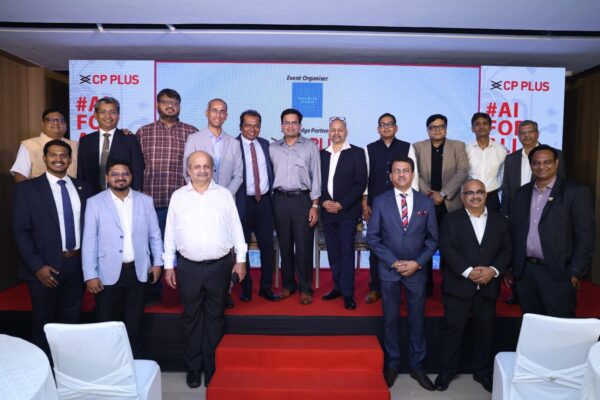
In a decisive display of innovation, thought leadership, and technological excellence, CP PLUS marked a commanding presence across some of India’s most influential industry platforms this month, reaffirming its role as a pioneer in shaping the future of security and intelligent ecosystems. Smart Home Expo At the Smart Home Expo, Mumbai, where the convergence of automation and intelligent living takes center stage, CP PLUS delivered a defining showcase of its next-generation security and smart home ecosystem. With solutions designed to seamlessly integrate safety, convenience, and intelligence, the brand demonstrated how modern surveillance is evolving into a holistic, responsive environment – one that anticipates needs and ensures peace of mind. Moving beyond traditional paradigms, CP PLUS presented a vision where security is not just reactive, but intuitively proactive. Elevating this vision to a broader dialogue, Omar Farooq, PMP®, DGM – Presales at CP PLUS, took the stage as a distinguished panelist in a compelling discussion titled ‘Security That Thinks Ahead: Smart Locks, Sensors & Predictive Intelligence.’ The session underscored a critical shift in the industry, where predictive technologies and AI-led systems are transforming security into an intelligent framework capable of analysis, foresight, and decision-making. His insights reinforced CP PLUS’ commitment to driving this transformation through indigenized innovation and advanced engineering. Smart Build Alliance Knowledge Conclave Continuing its momentum, CP PLUS also made a strong impact at the Smart Build Alliance Knowledge Conclave in Mumbai, an influential forum bringing together visionaries shaping the future of smart infrastructure. Here, the brand highlighted its AI-powered surveillance capabilities, showcasing how data-driven intelligence is redefining situational awareness, operational efficiency, and urban resilience. With future-forward thinking at its core, CP PLUS positioned itself not merely as a participant but as a key architect of next-generation surveillance ecosystems. IBEX India Further extending its footprint, CP PLUS engaged with industry leaders at IBEX India, one of the country’s premier platforms for banking and financial technology. From insightful discussions to immersive live demonstrations, the brand showcased specialized security solutions tailored for the evolving needs of the banking sector. As financial institutions navigate increasingly complex threat landscapes, CP PLUS emphasized robust, scalable, and intelligent security frameworks designed to safeguard critical infrastructure while enabling seamless operations. Across these platforms, a unified narrative emerged – CP PLUS is not just keeping pace with the future of security; it is actively building it. With innovations that are powered by cutting-edge technology and proudly built for Bharat, the brand continues to set new benchmarks in reliability, intelligence, and trust. As industries evolve and security demands grow more sophisticated, CP PLUS stands resolute – driving transformation, enabling safer environments, and shaping a smarter, more secure tomorrow.

Read More

Hikrobot’s Machine Vision Solutions Resolve Multiple Challenges in Logistics Sector

The emergence of machine vision effectively solves the problems of means of a single, high error rate of code reading, large fluctuation of bubble counting efficiency and rising labor cost in traditional logistics industry. A series of visual solutions such as automatic capture, code reading, volume measurement and document tracking, are becoming indispensable intelligent means in the logistics sector. Visual tracking management Comprehensively supervise the key production nodes, trace back the visual problem scene accurately, and improve the efficiency of customer complaint processing. However, a large number of goods and packages are often damaged, which will affect the normal operation of enterprises. Although enterprises increase the number of regular inspection and other means to improve the quality of production. However, when the problem really occurs, it is often difficult to quickly lock in the production defects, which requires a lot of manpower, material resources and time cost to systematically investigate the causes of the occurrence, which cannot become the routine means of enterprise daily management of production and operation. Automatic sensing of cargo information Relying on the AI cloud technology framework, the package is automatically weighed, volume measured, barcode recognized, and the data is fused and transmitted to the system server. HikRobot perceives the logistics product data, and then feeds the data back to the business system through the open API interface. For example, DWS system perceives the cargo information such as barcode data, weight and volume data, and then transmits it to the logistics business system, and communicates with the whole sorting system behind to realize data collection and subsequent goods sorting. Logistics perception HikRobot is based on AI for technology empowerment, and uses deep learning and multi-dimensional sensing technology to realize barcode reading, OCR identification and volume measurement of packages. The code reading technology based on deep learning can be competent for all kinds of complex situations such as super large depth of field, wrinkle, dirt, reflection and other abnormal conditions. At the same time, because our camera adopts AI chip platform, it can realize the functions of code reading, surface single picking, OCR recognition and single image enhancement in one equipment manufacturer, which is also the biggest advantage of our products compared with competitive products at home and abroad. Single piece separation system The traditional DWS system needs manual unloading in turn, which is inefficient. Manual unloading cannot strictly control the package spacing, and cannot ensure the maximum operation efficiency of DWS. The single separator + DWS method cannot improve the sorting efficiency. The results show that the output efficiency of the single separator does not match with the sorting efficiency of DWS, and cannot be linked, so the price is expensive and the actual effect is not good. Based on the development needs of the current logistics industry, HikRobot launched a single piece separation system. In logistics, they combine industrial cameras, smart code readers, 3D vision, and AI to automate inspection, sorting, and tracking. Here’s how Hikrobot’s Machine Vision Solutions resolve the sector’s biggest pain points: High error rates in manual sorting & data entry Inaccurate Dimensioning & Weight = Revenue Leakage Damaged Goods & Returns Due to Poor Quality Check Slow Throughput in Peak Season Labour Shortage and Safety in Warehouses No Real-Time Traceability

Read More

Women & Fire Safety Leadership for Safer Spaces

In a powerful step towards creating safer and more aware communities, NISCAM (National Institute for Skills, Compliance and Management), under the leadership of Pooja Mago, Founder – NISCAM, successfully organized an impactful event titled ‘Women & Fire Safety: Leadership for Safer Spaces’ on 25 April 2026 at The Circle.Work, Gurgaon. The event emerged as one of the first initiatives of its kind dedicated to bringing women to the forefront of fire safety awareness, emergency preparedness, leadership, and community responsibility. At a time when incidents related to fire hazards, emergency negligence, and safety failures are increasing across workplaces, residential societies, schools, and public spaces, the initiative aimed to create awareness that goes beyond compliance and becomes a culture-driven movement. The session witnessed participation from women leaders, educators, safety professionals, legal experts, entrepreneurs, corporate leaders, and social contributors from diverse domains, all united with one common purpose – building safer spaces through awareness, preparedness, and leadership. Addressing the audience, Pooja Mago, Founder – NISCAM, emphasized that safety should not remain limited to policies and technical frameworks alone. A first-of-its-kind initiative empowering women through fire safety awareness & leadership “Women are natural custodians of homes, institutions, workplaces, and communities. When women become aware and prepared, safety becomes stronger at every level of society. This initiative was not just about fire safety; it was about leadership, responsibility, and creating a culture where preparedness becomes a way of life,” she shared. The event was graced by Chief Guest Somnath Bharti, Advocate, Supreme Court of India and Ex-MLA Delhi, whose presence added immense value to the initiative. He appreciated the effort taken by NISCAM in creating a socially relevant platform that connects safety awareness with women leadership and community empowerment. The panel discussion brought together distinguished personalities from varied backgrounds including – S.G. Mahapatra – Principal, BGIS ISKON Vrindavan, Rekha Gairola – Director, Security & Safety, Adobe, Babita Nagar – International Wrestler & Gold Medalist, World Police & Fire Games, Netherlands, and Veena Gupta – Founder, Seam Risk Solutions. The session was effectively moderated by Bharti Singh Kalappa, Head Facilities – Noida International Airport, who brought practical insights into leadership, workplace preparedness, and safety consciousness. The keynote session by Adv. Neyha Chaudhary on ‘Why & How Women’s Awareness Can Save Lives’ became one of the most impactful highlights of the event. Her powerful perspective on legal awareness, women’s rights, compliance, and preparedness deeply resonated with the audience and reinforced the importance of informed action during emergencies. A major attraction of the event was the live fire safety awareness and demonstration session conducted by the knowledge partner – Act Masters Team, which received tremendous appreciation from the audience for its practical learning approach and real-time demonstrations. The session was led by Gurpreet Singh, Founder – Act Masters, who emphasized the urgent need for practical fire safety education in everyday environments. Speaking during the session, Gurpreet Singh said, “Fire safety awareness should not begin after an incident occurs. Preparedness must become a habit. Every workplace, school, institution, and household should understand the basics of emergency response because awareness, timely action, and calm decision-making can save lives.” The live demonstrations conducted by the Act Masters team educated participants on Emergency Response techniques, Fire Extinguisher handling, basic evacuation awareness, Fire prevention practices, and immediate actions during crisis situations. The audience highly appreciated the practical and engaging approach of the session, especially the focus on empowering women to confidently respond during emergencies instead of depending entirely on external help. The event concluded with a strong message that safety is not gender-driven, but women-led awareness can significantly influence safer homes, safer workplaces, and safer communities. Participants described the initiative as – Following the overwhelming response and appreciation, NISCAM now aims to take this movement forward through future awareness drives, leadership forums, training initiatives, community outreach programs, and dedicated women-led platforms focused on safety, empowerment, and preparedness. The initiative has set the foundation for a larger movement where women are not only participants in safety conversations – but leaders driving change, resilience, and responsibility across society.

Read More

Panoramic Surveillance Reimagined: The Rise of Intelligent360° Security Camera

For years, surveillance system design has relied on a familiar approach – deploy multiple fixed cameras to eliminate blind spots and increase coverage. While effective, this method often introduces higher infrastructure costs, increased storage requirements, complex monitoring workflows, and greater operational overhead. As modern environments become more dynamic and security expectations continue to rise, the industry is shifting toward a more intelligent approach – panoramic surveillance. Today’s advanced 360° cameras are no longer simple wide-angle devices. They have evolved into intelligent, AI-enabled sensors capable of delivering complete situational awareness, intelligent event detection, and operational efficiency through a single device. The need for complete situational awareness Traditional fixed cameras provide focused visibility, but large areas such as airports, retail environments, warehouses, manufacturing facilities, educational campuses, transportation hubs, smart city deployments and likes often require multiple cameras to achieve full coverage. This increases installation complexity, cabling and switching requirements, VMS licensing costs, and monitoring fatigue for operators. Panoramic cameras address these challenges by delivering a true hemispherical field of view capable of monitoring an entire scene through a single installation point. Modern 360° surveillance is therefore not only about wider coverage – it is about simplifying surveillance architecture while improving operational visibility From wide-angle viewing to intelligent monitoring Earlier generations of fisheye cameras were often limited by image distortion and reduced usability. Advances in imaging technology, processing power, and edge AI have significantly changed this perception. Next-generation panoramic cameras now combine high-resolution imaging, edge and backend de-warping, AI-driven analytics, multi-stream architecture, intelligent event classification, and low-light optimisation. Together, these capabilities transform panoramic devices from passive overview cameras into intelligent operational tools. The latest generation of panoramic cameras also integrates advanced deep neural network acceleration engines capable of improving object classification accuracy and reducing false alarms in complex environments. The industry is moving toward surveillance systems that deliver maximum situational awareness with minimal infrastructure complexity. Intelligent panoramic cameras are playing a critical role in this transition by combining full-scene visibility, edge AI, and operational efficiency into a single platform Gaurav TaywadeManaging Director – India, Vicon Why de-warping matters One of the most important advancements in panoramic surveillance is de-warping technology. A fisheye lens naturally captures a curved image to achieve 360° coverage. De-warping processes this image into multiple usable viewing modes such as panorama view, quad view, digital PTZ, and multi-region monitoring. This allows operators to monitor large areas intuitively without losing the benefits of full-scene coverage. Modern systems now support both Edge de-warping – processing directly inside the camera; and Backend de-warping – processing at the VMS or workstation level. This flexibility improves bandwidth efficiency while enhancing the user experience. The role of AI in panoramic surveillance As panoramic cameras cover larger scenes, intelligent filtering becomes essential. Without analytics, operators can easily become overwhelmed by excessive visual information. AI-enabled panoramic cameras now support advanced analytics such as human and vehicle classification, people counting, line crossing detection, object classification, motion analytics, and tampering alerts. By processing events directly at the edge, these systems reduce false alarms while improving response speed and operational efficiency. This becomes especially valuable in high-traffic or mission-critical environments where operators need to focus only on relevant events. Optimising performance in challenging environments Modern surveillance systems must operate reliably in difficult lighting and environmental conditions. Advanced panoramic cameras now integrate technologies such as High Dynamic Range (HDR), Infrared illumination, 3D motion-compensated noise reduction, and true day/ night functionality. These features ensure consistent image clarity in bright backlit scenes, low-light areas, indoor-outdoor transitions, and night-time surveillance conditions. Additionally, ruggedised construction with IP66 weather protection and IK10 vandal resistance ensures long-term reliability in exposed or high-risk installations. Cybersecurity and future readiness As cameras become smarter and more connected, cybersecurity is becoming equally important. Modern intelligent surveillance platforms are expected to support secure communication protocols, role-based access control, secure firmware architecture, TPM-based hardware trust, and encryption for data in transit and at rest. These capabilities ensure that intelligent edge devices remain secure, scalable, and future-ready within enterprise and critical infrastructure environments. The shift toward multi-function intelligent sensors The role of panoramic surveillance is also expanding beyond traditional security. Today’s intelligent panoramic platforms are increasingly used for occupancy monitoring, operational analytics, safety compliance, crowd flow analysis, incident verification and situational awareness enhancement. This evolution aligns with a broader industry trend where surveillance devices are becoming multi-functional intelligent sensors capable of supporting both security and operational decision-making. A leadership perspective From an industry standpoint, panoramic surveillance is evolving rapidly from a convenience feature into a strategic surveillance architecture. Building future-ready panoramic surveillance Reflecting this industry direction, Vicon recently expanded its Roughneck® Pro portfolio with an intelligent panoramic surveillance platform engineered for modern security environments. Designed with advanced edge AI capabilities, ruggedised construction, and enterprise-grade cybersecurity, the platform has also undergone STQC testing and complies with BIS Essential Requirements (ER), reinforcing its readiness for critical infrastructure and future-focused deployments. The platform combines 12MP panoramic imaging, edge de-warping, AI-powered analytics, and multi-stream architecture to deliver comprehensive situational awareness while reducing infrastructure complexity. Support for ONVIF Profiles S, G, T, and M further enables seamless interoperability across modern surveillance ecosystems. The future of 360° surveillance As AI, edge processing, and intelligent video management continue to evolve, panoramic cameras will become increasingly central to modern surveillance deployments. Future systems will focus on – greater edge intelligence, enhanced metadata integration, smarter event correlation, multi-sensor convergence, and autonomous incident awareness. The objective is no longer simply recording wider scenes – it is enabling systems to understand, interpret, and respond intelligently across the entire environment. Conclusion Panoramic surveillance has evolved far beyond the traditional fisheye camera. With advancements in AI, de-warping, cybersecurity, and intelligent edge processing, modern 360° cameras are redefining how organisations approach coverage, efficiency, and situational awareness. As security environments become larger and more interconnected, intelligent panoramic surveillance will play an increasingly important role in building scalable, future-ready security ecosystems.

Read More

CP PLUS Launches New TVC with Punjab Kings: Showcasing the Power of Smart Security Through Sport-Led Storytelling

Unveils campaign through immersive meet-and-greet engagements across New Delhi and Chandigarh Aditya Infotech, the parent company of India’s leading surveillance brand CP PLUS, recently announced the launch of its latest TVC in collaboration with Punjab Kings, marking a significant milestone in the brand’s ongoing association as the team’s Title Sponsor. Conceptualized to blend the high-performance energy of sport with the precision and reliability of next-generation security solutions, the TVC reinforces CP PLUS’ positioning as a technology leader driving a safer, smarter India. The campaign leverages the mass appeal of cricket to bring alive the brand’s core values of trust, vigilance, and performance at scale. As part of this campaign, CP PLUS curated a series of immersive on-ground experiences, including exclusive meet-and-greet events held in New Delhi and Chandigarh. These engagements brought together Punjab Kings players, brand leadership, partners, media, and community members, creating a dynamic platform for interaction and brand storytelling. The New Delhi engagement, which also marked the official unveiling of the TVC, was designed as a vibrant and inclusive experience featuring informal play sessions, interactive activities, and participation from underprivileged children – underscoring CP PLUS’ commitment to purpose-driven brand building. Similarly, the Chandigarh event extended the campaign’s reach, deepening regional engagement and strengthening the emotional connect with fans and stakeholders. Moving beyond conventional launch formats, these experiences reflect CP PLUS’ vision of building meaningful, people-centric narratives that go beyond products to create lasting impact. Commenting on the launch, Aditya Khemka, Managing Director, CP PLUS, said, “Our association with Punjab Kings is a strategic step towards building deeper cultural and community connections beyond our core business. At CP PLUS, we believe true leadership lies not just in technological innovation, but in creating meaningful impact. This TVC and the larger campaign reflect our vision of engaging audiences through powerful storytelling, while reinforcing our commitment to a safer and smarter India.” Through this campaign, CP PLUS continues to strengthen its integrated marketing approach – merging brand partnerships, mass media storytelling, and on-ground experiences to drive deeper consumer connect and recall.

Read More

India’s Accessibility Push Meets a Ground Reality Check

Designers Like Apoorva Avadhana are Rewriting the Approach India’s rapid expansion in IoT, smart surveillance, and AI-driven security systems has brought data privacy into sharp focus. From CCTV networks and biometric authentication to mobile-based identity verification, the country is building one of the world’s largest data ecosystems. Yet, within this transformation lies a complex paradox – the same data pipelines raising privacy concerns are also enabling unprecedented breakthroughs in accessibility. For millions of Indians with disabilities, especially those with visual or motor impairments, access to everyday systems such as banking, governance, and identity verification, often remains deeply uneven. Technologies like ‘Seeing AI’ demonstrate this tension clearly. Acting as a ‘virtual eye,’ such tools can read documents, detect objects, and even guide users to signature fields. But they also require processing sensitive personal data, often raising concerns around where that data goes and how it is used. This is not a new trade-off. Historically, accessibility has been a quiet catalyst for technological advancement. Alt text and captions that originally designed for people with vision impairments or low-bandwidth environments, have become foundational datasets for training computer vision systems. Today, those same systems power generative AI to enabling machines to create images from text. Accessibility, in many ways, has been the unseen infrastructure behind modern AI. Apoorva talking on Rural Inclusive Innovation Methodologies at The Invisabal Panel With The Tata Steel Foundation at The International Purple Fest 2025, Panjim, Goa. But in India’s current IoT and security landscape, the stakes are higher. For individuals with motor disabilities, even something as basic as writing or signing a document can be a barrier to accessing financial systems, government schemes, or legal identity. Increasingly, mobile cameras and sensor-based systems are being used to track facial movements, gestures, and expressions to enable interaction without touch. These systems, while powerful, operate at the intersection of biometric data, surveillance, and personal autonomy. It is within this intersection that Apoorva Avadhana’s work offers a critical alternative. At the International Purple Fest 2025, where global conversations on inclusion met grassroots realities, Apoorva emphasized a shift in thinking – accessibility is not about high-end solutions, but about enabling ‘survival, dignity, and participation.’ Speaking at the InviSabal panel on rural inclusive innovation, she highlighted how technologies designed for controlled, urban environments often fail in rural India – where infrastructure is fragile, maintenance is limited, and costs are prohibitive. Her work directly engages with one of the most overlooked barriers in India’s digital ecosystem – the inability to produce a consistent signature. Without it, individuals can be excluded from banking, welfare enrollment, and identity systems. While biometric solutions exist, they often introduce new privacy risks and dependencies on centralized systems. Apoorva Explaining Concept of Human-Centered Design & Receptive Design Methodologies Through her research with the NYU Ability Project, Apoorva contributed to the development of a low-cost, open-source assistive tool that reimagines this problem through a privacy-aware lens. Using AI-based face mesh tracking, the tool converts subtle neck movements into digital strokes, allowing users with severe mobility impairments including quadriplegia to draw signatures independently. Crucially, the system operates differently from conventional camera-based tracking technologies. It runs locally on the device, does not capture or store images, and instead relies on geometric relationships such as the distance between facial key-points like the eyes and nose to interpret movement. The output is stored directly on the user’s phone, ensuring that sensitive data, including signatures, never leaves the device. In an era where IoT systems often default to cloud-based data processing and continuous surveillance, this approach is significant. It demonstrates that accessibility does not have to come at the cost of privacy. Instead, through thoughtful design, it is possible to build systems that are both empowering and secure. Apoorva’s broader methodology, what she terms ‘receptive design,’ extends beyond technology itself. It is participatory in nature and receptive to people’s everyday way to living and working. Her work draws from India’s culture of jugaad, emphasizing adaptability, local materials, and co-creation with communities. Whether it is designing assistive tools that function without stable internet or leveraging everyday devices like smartphones as accessibility interfaces, her approach resists the notion that innovation must be expensive or centralized. Her professional experience with organizations such as IBM and MetLife further grounds her work in large-scale systems, where accessibility, security, and compliance intersect. Yet, her focus remains consistent – designing technologies that work in the real world, across diverse socio-economic conditions. As India continues to expand its IoT and surveillance infrastructure, the question is no longer just how to secure data but also how to ensure that the systems built on that data are inclusive by design. Accessibility and privacy are often framed as competing priorities. Apoorva Avadhana’s work challenges that assumption, showing that they can and must be designed together. Because in a data-driven society, true security is not just about protecting information. It is about ensuring that the systems we build do not exclude the very people they are meant to serve. About Apoorva Avadhana Apoorva Avadhana is a recognized design researcher specializing in accessibility, inclusive design, and assistive technology. Based in Mumbai and affiliated with The Ability Lab at New York University, she is CPACC certified and identified as a neurodivergent design researcher. With an MPS from NYU’s Interactive Telecommunications Program and a BDes in Human-Centered Design from the Srishti Institute of Art Design and Technology, Apoorva’s work bridges grassroots innovation with inclusive design, using low-cost and open-source emerging technologies to address accessibility in activities of daily living (ADL). She has professional experience as a UX researcher and Accessibility SME, for clients like IBM, TSB, and MetLife. Her research, residencies, and exhibitions have received international recognition, with her work presented at leading conferences and supported by numerous grants and awards. She has gained badges, honours and laurels and she led many important workshops and trainings in Accessibility and Corporate Design Thinking Frameworks. Her work spans a vast gamut of inclusive design, research, teaching, and interdisciplinary collaborations at the intersection of AI,…

Read More

Enterprises Are Logging Everything. They’re Still Failing Firewall Audits

Ashish BaliCountry Manager India, FireMon India’s enterprise technology sector has expanded at a pace that few markets can match. In banking and financial services, digital infrastructure that took other markets decades to build has been assembled in years – payment rails processing billions of transactions monthly, cloud environments layered onto legacy core banking systems, new digital services extended to hundreds of millions of customers. When you build that quickly, firewall rules rarely keep up. Access gets opened to support a new service and never closed. Exceptions get granted to keep a project moving and become permanent. Boundaries that made sense at design time get redrawn by operational pressure. For large organisations, including the Global Capability Centres now running significant security operations for global enterprises from Indian soil, the result is a divergence between access as it exists and access as it was intended. The pattern shows up reliably in firewall audits. FireMon’s benchmarking work shows that across large enterprise estates, close to 60% of firewalls fail at least one high-severity check. In environments that have expanded rapidly, that figure rarely surprises anyone. That it no longer surprises is precisely the problem. Nothing in day-to-day operations flags this. Indicators look stable, services run, and nothing breaks in a way that demands attention. Rules stay open and access stays excessive. And it accumulates that way until an audit makes it visible. The failure mode nobody plans for It is tempting to call these findings misconfigurations. That label implies a discrete mistake, something identifiable, correctable, closed. What audits actually uncover is different. The rules that fail high-severity checks are rarely the result of careless work. They are the residue of reasonable decisions – access granted because a project needed it, an exception created because something urgent could not wait, a rule that made sense in context and has simply never been revisited. Over time, policy stops reflecting decisions and starts reflecting history. The rule-base accumulates. Shadowed rules sit beneath active ones, creating the appearance of control while leaving effective access unchanged. Segmentation that looked defensible on paper does not hold under real traffic patterns. The result is a policy surface – every rule, exception, and inherited access decision across the estate – that no longer reflects deliberate decisions. This, as reflected in audit findings, is not an outcome anyone ever plans for. In almost every case, it happens because the environment kept changing and the governance around it did not keep up. Compliance evidence is not the same as governance Most large enterprises are responding to a significantly tightened regulatory environment. CERT-In requires organisations to retain ICT logs, including firewall logs, for 180 days and to report qualifying incidents within six hours of detection, one of the strictest windows anywhere in the world. SEBI’s Cybersecurity and Cyber Resilience Framework requires documented access policies, network segmentation controls, and mandatory audit submissions. The RBI places equivalent obligations on banks and NBFCs around continuous monitoring and independent audit. That investment in compliance tooling is necessary. But log retention and audit reporting answer a different question to the one that produces recurring firewall failures. Retaining firewall logs tells a regulator what happened. It does not tell you whether your policy reflects what you actually intended to permit. Similarly, a SIEM captures events; it does not govern the rules that determine what those events mean. Recurring high-severity audit findings are rarely a failure of logging. They are a failure of policy management. The organisation was capturing evidence of a problem it had not diagnosed. Security teams can usually describe architectural intent – where boundaries should sit, which flows should not exist. What they cannot consistently show is that enforced policy reflects that intent today, across data centres, cloud environments, and the legacy infrastructure running core operations. When regulators examine that gap, the audit does not create the problem. It simply makes it visible. Policy stops being a control when it loses its meaning A firewall rule-base can be technically operational and still not express a coherent access model. When it reflects years of exceptions and inherited decisions rather than current intent, teams lose confidence in their ability to test the impact of changes. Change control becomes conservative because nobody can reliably say what a given change will affect. The firewall becomes something that must not be disturbed. From there, the deterioration is predictable. Rationalisation gets deferred and access widens because tightening it feels riskier than leaving it alone. Audits become reconstruction exercises – explaining after the fact what findings mean – rather than evidence of a security posture that is understood and in control. A periodic review can describe that state. It cannot fix it, because the problem is produced every day by ordinary operational change. What continuous oversight actually looks like Network Security Policy Management addresses this by connecting intent, enforced policy, and observed dependencies in a single, continuously updated view. Used as an operational discipline rather than a reporting layer, it gives teams the means to see where access has expanded beyond what is justified, where segmentation has softened, and where exceptions have become the default. Crucially, it also allows teams to test changes before deployment, rather than discover their impact afterwards. What security teams need is a current, accurate picture of what their policy actually permits – not the intended state, but the enforced one – across firewalls, cloud controls, and the on-premise infrastructure that continues to run core operations. When a change is proposed, it can be tested before deployment – what it will affect, whether it complies, whether it stays within the intended access model. When drift occurs – and in any active environment, it will – it is surfaced before it becomes a finding rather than after. Our tech, for example, maintains the audit evidence trail that regulators ask for – what policy was in place at any point, what changed, and whether those changes remained aligned to stated business intent. That is the difference between compliance as a reporting exercise…

Read More

Why Multi-Vendor Visibility is the Biggest Challenge in Modern Network Management

Sumit SharmaSr. Director – Pre Sales, Echelon Every network engineer knows the feeling – something’s wrong, the alerts are firing, and you’re bouncing between multiple management consoles trying to piece together what’s actually happening. It’s not that the tools are bad, each one does its job. It’s that none of them can see past their own vendor’s edge, and the problem almost certainly lives in the gap between them. Today’s enterprise networks have sprawled across cloud environments, remote offices, IoT deployments and data centers and to manage it all, organizations naturally turn to multiple vendors, each offering something the others don’t. It makes sense on paper. But every new vendor added to the mix is also another blind spot added to the map. That gap between what each tool sees and what your team actually needs to see is a visibility problem and it’s quietly become the defining challenge of modern network management. The rise of the multi-vendor network Modern enterprise environments are built incrementally over time. A single organization may use routers from one vendor, switches from another, wireless infrastructure from a third and cloud networking services from multiple providers. Mergers, acquisitions, regional deployments and evolving technology needs further contribute to heterogeneous infrastructures. In industries such as transportation, manufacturing, smart cities and telecom, the challenge becomes even more complex. Critical systems like surveillance, passenger information systems, IP telephony, IoT sensors, access control and data communication networks often rely on devices from different manufacturers operating simultaneously. This diversity creates interoperability and management challenges that traditional monitoring approaches were never designed to handle. Multi-vendor isn’t a problem we can architect our way out of. It’s the reality of every enterprise we work with. The only practical answer is visibility that works across all of it, not just parts of it. Why visibility matters in network management Visibility is the foundation of effective network management. IT and operations teams depend on real-time visibility to understand device health and availability, network traffic patterns, faults and performance bottlenecks, security anomalies and unauthorized access, bandwidth utilization, and service dependencies and application performance. When visibility is fragmented across multiple management consoles and vendor-specific tools, teams lose the ability to view the network holistically. Instead of operating proactively, organizations become reactive, responding to incidents only after users experience disruptions. In mission-critical environments, this lack of visibility can directly impact operations, customer experience and business continuity. The problem with vendor-specific monitoring tools Most networking vendors provide their own management platforms designed specifically for their devices. While these tools work effectively within their individual ecosystems, they often fail to integrate seamlessly with devices from other manufacturers. As a result, enterprises end up managing multiple dashboards simultaneously. For example – one platform monitors routers, another tracks wireless access points, a separate tool handles firewalls, and yet another manages IoT devices. This fragmented approach creates several operational issues. Operational Silos Different teams often manage different technologies using isolated systems. This leads to fragmented workflows, inconsistent monitoring practices and communication gaps during incident resolution. Without centralized visibility, correlating issues across systems becomes difficult. Increased Mean Time to Resolution (MTTR) When a fault occurs, engineers must manually switch between multiple platforms to identify the root cause. This slows troubleshooting and increases downtime. A simple network outage may involve checking logs, traps and alerts from several systems before identifying the affected device or link. Alert Fatigue and Noise Vendor-specific tools generate alerts independently without understanding broader network context. This creates duplicate alarms, false positives and excessive notification noise. IT teams become overwhelmed with alerts while critical incidents may go unnoticed. Inconsistent Data Formats Different vendors use different telemetry standards, reporting methods and management protocols. Even when SNMP or APIs are supported, data normalization becomes challenging. This inconsistency prevents organizations from building unified operational intelligence. Limited End-to-End Correlation Modern services rely on interconnected infrastructure. A failure in one subsystem may impact several downstream applications. Without unified visibility, identifying service dependencies and correlating events across vendors becomes extremely difficult. The impact on modern enterprises The consequences of poor multi-vendor visibility extend beyond IT operations. Reduced Network Reliability Incomplete monitoring creates blind spots. Issues that could have been detected early often escalate into major outages. In sectors like metro rail, airports, utilities and healthcare, even minor disruptions can affect public safety and critical operations. Higher Operational Costs Managing multiple tools requires additional licensing, training and maintenance. IT teams spend more time manually consolidating information instead of focusing on optimization and innovation. Operational inefficiencies also increase staffing and support costs. Slower Digital Transformation Organizations investing in AI, IoT and cloud adoption require intelligent, scalable monitoring systems. Fragmented visibility limits automation and prevents organizations from achieving true digital transformation. Without centralized insights, advanced capabilities like predictive analytics and autonomous operations become difficult to implement. Security Risks Security visibility gaps are among the most serious consequences of fragmented network management. Different devices may report events differently or not at all. This creates opportunities for threats to remain undetected across distributed environments. A lack of centralized monitoring also makes compliance reporting and forensic analysis more challenging. Why traditional NMS platforms are struggling Traditional network management systems were designed for relatively static environments. They focused primarily on uptime monitoring, SNMP polling and basic fault management. However, modern networks demand far more – such as real-time telemetry, multi-cloud visibility, IoT monitoring, AI-driven analytics, automated remediation, unified dashboards, and cross-domain correlation. Legacy NMS platforms often lack the scalability and intelligence needed to handle today’s heterogeneous infrastructures effectively. The shift toward software-defined networking (SDN), edge computing and distributed architectures further increases the need for adaptive, vendor-agnostic monitoring solutions. The need for unified multi-vendor visibility To address these challenges, organizations are increasingly adopting centralized and vendor-neutral NMS platforms capable of integrating diverse infrastructure into a single operational view. A modern NMS must provide: For example, transportation networks rely on interconnected communication systems including surveillance, passenger information displays, signaling, telephony and emergency communication systems. If each subsystem is monitored independently, operations teams lack a unified understanding…

Read More