securitylinkindia

India’s Accessibility Push Meets a Ground Reality Check

Designers Like Apoorva Avadhana Are Rewriting the Approach India’s rapid expansion in IoT, smart surveillance, and AI-driven security systems has brought data privacy into sharp focus. From CCTV networks and biometric authentication to mobile-based identity verification, the country is building one of the world’s largest data ecosystems. Yet, within this transformation lies a complex paradox – the same data pipelines raising privacy concerns are also enabling unprecedented breakthroughs in accessibility. For millions of Indians with disabilities, especially those with visual or motor impairments, access to everyday systems such as banking, governance, and identity verification, often remains deeply uneven. Technologies like ‘Seeing AI’ demonstrate this tension clearly. Acting as a ‘virtual eye,’ such tools can read documents, detect objects, and even guide users to signature fields. But they also require processing sensitive personal data, often raising concerns around where that data goes and how it is used. This is not a new trade-off. Historically, accessibility has been a quiet catalyst for technological advancement. Alt text and captions that originally designed for people with vision impairments or low-bandwidth environments, have become foundational datasets for training computer vision systems. Today, those same systems power generative AI to enabling machines to create images from text. Accessibility, in many ways, has been the unseen infrastructure behind modern AI. But in India’s current IoT and security landscape, the stakes are higher. For individuals with motor disabilities, even something as basic as writing or signing a document can be a barrier to accessing financial systems, government schemes, or legal identity. Increasingly, mobile cameras and sensor-based systems are being used to track facial movements, gestures, and expressions to enable interaction without touch. These systems, while powerful, operate at the intersection of biometric data, surveillance, and personal autonomy. It is within this intersection that Apoorva Avadhana’s work offers a critical alternative. Apoorva talking on Rural Inclusive Innovation Methodologies At The Invisabal Panel With The Tata Steel Foundation At The International Purple Fest 2025, Panjim, Goa. At the International Purple Fest 2025, where global conversations on inclusion met grassroots realities, Apoorva emphasized a shift in thinking – accessibility is not about high-end solutions, but about enabling ‘survival, dignity, and participation.’ Speaking at the InviSabal panel on rural inclusive innovation, she highlighted how technologies designed for controlled, urban environments often fail in rural India – where infrastructure is fragile, maintenance is limited, and costs are prohibitive. Her work directly engages with one of the most overlooked barriers in India’s digital ecosystem – the inability to produce a consistent signature. Without it, individuals can be excluded from banking, welfare enrollment, and identity systems. While biometric solutions exist, they often introduce new privacy risks and dependencies on centralized systems. Through her research with the NYU Ability Project, Apoorva contributed to the development of a low-cost, open-source assistive tool that reimagines this problem through a privacy-aware lens. Using AI-based face mesh tracking, the tool converts subtle neck movements into digital strokes, allowing users with severe mobility impairments including quadriplegia to draw signatures independently. Crucially, the system operates differently from conventional camera-based tracking technologies. It runs locally on the device, does not capture or store images, and instead relies on geometric relationships such as the distance between facial key-points like the eyes and nose to interpret movement. The output is stored directly on the user’s phone, ensuring that sensitive data, including signatures, never leaves the device. In an era where IoT systems often default to cloud-based data processing and continuous surveillance, this approach is significant. It demonstrates that accessibility does not have to come at the cost of privacy. Instead, through thoughtful design, it is possible to build systems that are both empowering and secure. Apoorva’s broader methodology, what she terms ‘receptive design,’ extends beyond technology itself. It is participatory in nature and receptive to people’s everyday way to living and working. Her work draws from India’s culture of jugaad, emphasizing adaptability, local materials, and co-creation with communities. Whether it is designing assistive tools that function without stable internet or leveraging everyday devices like smartphones as accessibility interfaces, her approach resists the notion that innovation must be expensive or centralized. Her professional experience with organizations such as IBM and MetLife further grounds her work in large-scale systems, where accessibility, security, and compliance intersect. Yet, her focus remains consistent – designing technologies that work in the real world, across diverse socio-economic conditions. As India continues to expand its IoT and surveillance infrastructure, the question is no longer just how to secure data but also how to ensure that the systems built on that data are inclusive by design. Accessibility and privacy are often framed as competing priorities. Apoorva Avadhana’s work challenges that assumption, showing that they can and must be designed together. Because in a data-driven society, true security is not just about protecting information. It is about ensuring that the systems we build do not exclude the very people they are meant to serve. About Apoorva Avadhana Apoorva Explaining Concept of Human-Centered Design & Receptive Design Methodologies Apoorva Avadhana is a recognized design researcher specializing in accessibility, inclusive design, and assistive technology. Based in Mumbai and affiliated with The Ability Lab at New York University, she is CPACC certified and identified as a neurodivergent design researcher. With an MPS from NYU’s Interactive Telecommunications Program and a BDes in Human-Centered Design from the Srishti Institute of Art Design and Technology, Apoorva’s work bridges grassroots innovation with inclusive design, using low-cost and open-source emerging technologies to address accessibility in activities of daily living (ADL). She has professional experience as a UX researcher and Accessibility SME, for clients like IBM, TSB, and MetLife. Her research, residencies, and exhibitions have received international recognition, with her work presented at leading conferences and supported by numerous grants and awards. She has gained badges, honours and laurels and she led many important workshops and trainings in Accessibility and Corporate Design Thinking Frameworks. Her work spans a vast gamut of inclusive design, research, teaching, and interdisciplinary collaborations at the intersection of AI, accessibility, and…

Read More

Matrix Geo Solutions Secures North Western Railway Contract for Drone-Led Project Monitoring

Matrix Geo Solutions Limited, a geospatial technology and engineering consultancy, has received a Letter of Acceptance from North Western Railway for project monitoring of the ongoing Luni-Samdari-Bhildi double line project. The contract North Western Railway, headquartered in Jaipur, involves aerial videography-based monitoring of the 271.97 km rail corridor using drone systems. The project will be executed over a period of 30 months, with a total contract value of INR3,07,62,599.51. As railway infrastructure projects expand in scale and complexity, the need for continuous, accurate, and data-backed monitoring has become more critical. Through drone-led aerial surveys and high-frequency data capture, the project will enable better tracking of construction progress, early identification of deviations, and improved coordination across stakeholders. On a monthly basis, advanced UAVs equipped with high-resolution cameras and sensors will capture 4K geo-tagged video data along the alignment, with precise GPS metadata mapped to each frame. This data will be post-processed to enable change detection across the corridor, covering key construction stages such as earthwork, ballast laying, rail installation, bridge construction, and associated infrastructure development. The approach is expected to support tighter timelines, enhance on-ground safety, and bring greater transparency to project execution. Speaking on the project win, Amit Sharma, Whole Time Director, Matrix Geo Solutions Limited, said: “This mandate from North Western Railway further expands our work in railway infrastructure projects. Corridors of this scale require continuous oversight and precise data to keep execution on track. Through UAV-led monitoring, we aim to provide clear, real-time visibility into progress, enabling faster decision-making and better coordination. We are confident in our ability to support efficient execution while maintaining strong control over timelines across the project lifecycle.” The use of drone-led monitoring is also expected to deliver measurable efficiencies, including a reduction of approximately 50% in the need for physical site visits by senior officials, a decrease of around 25% in reporting turnaround time, and improved visibility into critical project locations through real-time drone feeds. Matrix Geo Solutions brings more than 25 years of experience across the USA, Europe, Africa, and Asia, delivering high-precision geospatial intelligence for large-scale infrastructure and industrial projects, including railways, highways, mining, water resources, power transmission, oil and gas, and urban development. The company’s capabilities span satellite imagery, drone-enabled data capture, aerial mapping, mobile mapping, GIS, and remote sensing, enabling accurate and reliable insights for planning, monitoring, and execution. This depth of experience positions the company to manage complex, multi-kilometre projects such as the Luni-Samdari-Bhildi double line corridor, where precision, consistency, and timely data are critical to maintaining alignment with on-ground realities. Read More

Read More

PSA Singapore Strengthens Global Maritime Leadership with Motorola Solutions’ Technology

PSA Singapore has chosen Motorola Solutions’ advanced TETRA digital radio communications to strengthen safety and efficiency across its operations while supporting its ongoing expansion through the Tuas Mega Port project. “PSA Singapore is a strategic hub for global trade that facilitates the movement of more than 40 million Twenty-foot Equivalent Unit (TEU) shipping containers annually across 600 ports around the world,” said Philbert Chua, container division managing director, PSA Singapore, “The development of the Tuas Mega Port is a long-term strategic investment that leverages advanced technologies and innovations to strengthen Singapore’s competitiveness, resilience and agility in managing the growing complexities and challenges of global supply chains.” Motorola Solutions’ TETRA network supports more than 4,000 users with an average of 540,000 voice calls made every day to coordinate complex, 24/7 port operations and maintain safety as containers, vessels and staff move between terminals. Tuas Mega Port will become the world’s largest, fully automated container terminal and is being developed in four phases. When fully operational in the 2040s, the Tuas Port will be capable of handling up to 65 million TEU shipping containers annually. “Our 20-year relationship with PSA Singapore is built on a shared understanding that safety is the foundation of productivity,” said Rajat Gupta, Vice President for Asia Middle East & Africa, Motorola Solutions, “As Tuas Port scales to become the world’s largest container terminal, our focus remains on providing the secure and reliable communication and services that personnel need to collaborate seamlessly every day.” Safety and security are at the heart of everything we do at Motorola Solutions. We build and connect technologies to help protect people, property and places. Our solutions foster the collaboration that’s critical for safer communities, safer schools, safer hospitals, safer businesses, and ultimately, safer nations. Read More

Read More

Future-Proof Thanks to System Expansion Scalable Video Security Technology for Snoqualmie Casino & Hotel – A Solution That Grows with You

Snoqualmie Casino & Hotel is located about 30 minutes east of Seattle in the US state of Washington. It is named after the Native American tribe of the same name – the ‘People of the Moon.’ The casino offers nearly 1,800 slot machines and 58 Vegas-style table games. Since 2015, Snoqualmie Casino & Hotel has relied on Dallmeier’s video surveillance solutions, and these proven technologies are being used for the current system expansion. Proven foundation, new requirements Video surveillance covers all relevant areas of the property, including the gaming floor, front-of-house and back-of-house areas, restaurants, and car parks. The Dallmeier system has proven itself reliable and scalable for over a decade, despite growing requirements and technical developments. However, renovations, expansion plans and new requirements for internal processes have made it necessary to expand the existing surveillance solution. Jolene Stewart, Snoqualmie Casino & Hotel’s Executive Director of Security and Surveillance, reported on the requirements and advantages of a Dallmeier solution. A system that grows with you The Washington State Gambling Commission requires casinos to be continuously monitored. The aim was therefore to adapt the existing system to the changed conditions, both functionally and technologically, without replacing the proven infrastructure. It was essential to meet the regulatory requirements while ensuring a safe and pleasant environment for guests and employees. The focus was on reliability, as well as process optimization, system availability, and the capacity for easy integration of new technologies. Customized solution for a comprehensive overview As part of the expansion, the existing surveillance system was upgraded to include specific features. Only Dallmeier components were used, including the modular video management system, Hemisphere® SeMSy® (version 5), and Domera® cameras. The dome cameras feature pre-installed neural networks and integrated edge analytics apps, offering a wide range of intelligent video analysis applications. In addition, the motorized three-axis adjustment allows for easy and flexible remote configuration. The overall solution enables central control of the 1,500 cameras and efficient evaluation of video data. Planning and implementation were carried out in close cooperation with integrator North American Video (NAV), who adapted the system to the spatial conditions and operational processes as required. “The long-standing and solution-oriented cooperation with all parties involved was crucial in enabling us to jointly implement a solution that meets the specific requirements,” added Joe McDevitt, President of Dallmeier USA. A sustainable solution “We have continuously expanded our video security technology over the past decade to meet our requirements,” said Jolene Stewart, Snoqualmie Casino & Hotel’s Executive Director of Security and Surveillance. The solution impresses with its high reliability, no downtime and easy maintenance. Characteristics that are crucial for efficiency in daily casino operations. It also pays off economically in the long term: “In the surveillance industry, reliability is a key cost factor. The fact that we have not had any expensive replacements or unexpected service calls over the years speaks for itself,” she added. Read More

Read More

Hikrobot’s Machine Vision and Robotics Solutions for Manufacturing Sector Add Value

Technological innovation and market variability accelerate the replacement of products. The traditional logistics mode encounters great challenges. The intelligent and flexible mobile robot solution can easily meet the demands of fast and transparent production, help enterprises to reduce costs. Hikrobot’s machine vision and robotics solutions are revolutionizing the manufacturing sector with cutting-edge technologies. Their innovative portfolio includes smart cameras, autonomous mobile robots, and AI-powered code readers, driving efficiency, productivity, and sustainability in industries like electronics, automotive, and logistics. Challenges Solution Overview Adopting G2P mode, the solution uses multiple types of mobile robots to perform transport tasks in various situations. It reduces dependence on experienced workers. In this solution, WCS integrates with devices such as elevators, and air shower doors. iWMS docks with upper-level systems including MES, ERP, PLS, and OMS. Multiple quality inspection modes and transfer strategies are supported. Hikrobot’s Machine Vision and Robotics solutions are transforming the manufacturing sector with cutting-edge technologies. Hikrobot’s Machine Vision portfolio includes: Hikrobots Robotics solutions include: These solutions cater to various industries including electronics, automotive, pharmaceuticals, and logistics. Hikrobot’s innovations are driving efficiency, productivity, and sustainability in manufacturing. RCS 2000: Hikrobot’s RCS 2000 is a Robotic Control System that plays a crucial role in their software platform architecture, working alongside the iWMS 1000 (Intelligent Warehouse Management System). The RCS 2000 is designed to build map models and dispatch various robots, enabling efficient warehouse management and logistics processes. ey Features: The RCS 2000 is part of Hikrobot’s comprehensive solution for smart logistics and manufacturing, aiming to enhance productivity and efficiency. Solution Advantages Hikrobot’s solutions offer following advantages: Application Scenario: Project in a Compressor Manufacturer This company produces world-class air-conditioning compressors with an annual production capacity of 15 million units. Not only is the factory large and complex, but also SKUs are varied and heavy. Furthermore, cross-floor transferring is needed. Background This company produces world-class air-conditioning compressors with an annual production capacity of 15 million units. Not only is the factory large and complex, but also SKUs are varied and heavy. Furthermore, cross-floor transferring is needed. Solution To automate production and logistics, and improve operation efficiency and quality, this company introduced around 140 mobile robots (including LMR and CMR) in two batches. Through integration with our RCS and iWMS, these robots support intelligent product component and inventory information management, as well as unmanned transportation across floors. Customer Benefit Read More

Read More

CP PLUS Wins Prestigious Dual Honours, Reinforcing Leadership in Smart &Made-in-Bharat Security Innovation

In a powerful testament to its steadfast commitment to innovation and indigenization, CP PLUS has been conferred with two of the industry’s most prominent recognitions, further solidifying its position as a frontrunner in the evolving landscape of smart security and surveillance. Leading this moment of pride, CP PLUS was honoured with the Best Smart Security Solution Brand award at the NDTV Gadgets 360 Awards 2026 – one of the country’s most respected platforms celebrating technological excellence. This recognition underscores the brand’s relentless pursuit of next-generation innovations, from AI-powered surveillance to intelligent monitoring ecosystems that are redefining how security is perceived and implemented. As the industry rapidly transitions toward smarter, more adaptive technologies, CP PLUS continues to lead from the front – shaping the future of security with precision, intelligence, and trust. Further amplifying this achievement, CP PLUS was also honoured at the Times Business Icons North 2026, presented by The Times of India, under the category of Made-in-Bharat Security & Surveillance Solutions. This accolade is a powerful endorsement of CP PLUS’s deep-rooted commitment to building indigenous technologies that align with India’s vision of self-reliance and global leadership. It reflects the brand’s continued focus on engineering solutions that are not only technologically advanced but also tailored to the unique security needs of the nation. Together, these recognitions highlight a defining narrative that the future of security is being reimagined, and CP PLUS is at the helm of this transformation. With a robust portfolio of STQC-certified, cyber-secure, and AI-driven solutions, the brand continues to push boundaries, delivering innovations that empower enterprises, institutions, and citizens alike. As CP PLUS continues its journey of excellence, these accolades stand as milestones in a larger vision; one that is driven by innovation, guided by trust, and committed to powering a safer, smarter India. Read More

Read More

Shunya Labs Launches Real-Time Voice Intelligence Platform for the Next Generation of Contact Centres

Supports transcription across 120+ languages, enabling seamlessengagement in multilingual and high-variability environments Shunya Labs, recently announced the launch of its real-time voice AI platform for contact centres. Built as an end-to-end intelligence layer, the platform enables organisations to process live customer interactions, extract structured insights, and act on them in real time, improving efficiency, accuracy, and overall customer experience at scale. Designed for real-world customer conversations, the platform processes voice interactions as they happen. It converts conversations, messages, and attachments into structured data, extracting intent, issue type, account information, and key actions, which can be directly integrated into CRM and ITSM systems. This addresses a fundamental gap in customer operations, where large volumes of conversational data remain unstructured and underutilised, limiting visibility and slowing decision-making. By structuring and analysing this data in real time, organisations can respond faster, automate workflows, and derive meaningful insights from every interaction. “Customer conversations are one of the richest sources of enterprise data, yet most of it remains unstructured and unused. We built this platform to change that to make conversations immediately usable, so organisations can act on them in real time while improving outcomes for both customers and agents.” Ritu Mehrotra,Co-Founder and CEO of Shunya Labs said, The platform is built to operate across diverse and complex customer environments, supporting transcription in over 120 languages while handling accents, code-switching, and background noise. This enables contact centres to deliver consistent and high-quality engagement across regions and linguistic contexts where traditional systems often struggle. In live interactions, the platform provides real-time support to agents through transcription, contextual knowledge prompts, and suggested responses. It also automates routine workflows by detecting customer intent and resolving common queries, while ensuring that more complex cases are intelligently routed to the appropriate teams, improving both efficiency and resolution quality. In addition to real-time capabilities, the platform delivers post-interaction intelligence through automated summaries, sentiment analysis, and trend identification. These insights help improve agent performance, strengthen quality assurance, and provide a clearer, system-wide understanding of customer needs and operational bottlenecks. Built with enterprise requirements in mind, the platform supports secure deployment across private cloud and on-premise environments, ensuring full control over data and infrastructure. It includes compliance-focused features such as automated quality checks, policy adherence monitoring, redaction of sensitive information, and audit-ready logs, making it suitable for regulated industries and high-trust environments. With this launch, Shunya Labs expands its focus on applied voice AI systems, building infrastructure for environments where language complexity, real-time decision-making, and data control are critical to customer engagement and operational performance. Read More

Read More

Why You Can Trust Our AI

In the modern security landscape, AI is no longer a futuristic luxury. It is the cornerstone of safety. From detecting potential hazards in real-time to optimizing traffic flow, AI has empowered organizations to see what the human eye might miss. However, as AI’s capabilities expand, so does a critical question for users, “Can we trust the intelligence behind the lens?” At Hanwha Vision, we believe that innovation without accountability is a liability. This is why we are proud to announce that we have achieved ISO/ IEC 42001 certification, the world’s first international standard for a certifiable Artificial Intelligence Management System (AIMS). But for us, this isn’t just about hanging a new certificate on the wall. It is a formal promise to our partners and customers that our entire process for developing and deploying AI is governed by a ‘human-centric’ philosophy. The shift from optional to obligatory The global community is moving fast to ensure AI remains a force for good. With the enforcement of the EU AI Act, the world’s first comprehensive AI law, and similar legislative movements in the US and Asia, the regulatory gray area is disappearing. These regulations are not just bureaucratic hurdles. They are a response to genuine concerns regarding data privacy, algorithmic bias, and the potential for surveillance overreach. For an end-user, choosing a provider that aligns with these global standards is no longer just a matter of ethics. It is a matter of long-term operational security. By adhering to ISO/ IEC 42001, Hanwha Vision proactively meets these stringent requirements, ensuring our customers are protected from the legal and ethical risks of non-compliant AI. Our core AI principles To maintain this high standard of excellence, we have institutionalized the Responsible AI (RAI) Council. This dedicated decision-making body sets internal compliance standards, conducts pre-release risk assessments, and monitors ongoing AI performance. By doing so, they ensure every innovation is rooted in our core Ethical AI Principles. Bringing principles to life How do these principles translate into the technology inside a security system? At Hanwha Vision, our AI management framework serves as the strict technical requirements that guide how our AI is built and deployed. Read More

Read More

Bosch and Qualcomm Expand Collaboration to Strategic ADAS Solutions

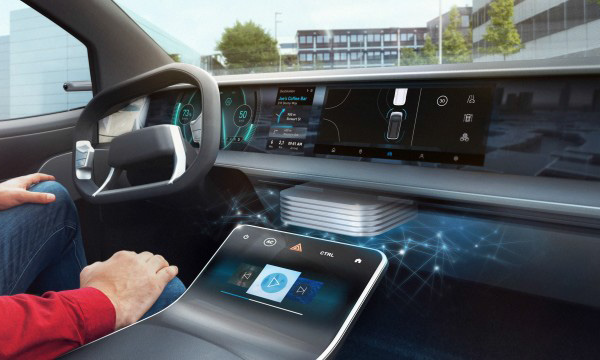
Bosch and Qualcomm Technologies, Inc. announced recently that they are expanding their strategic partnership, which has focused on vehicle computers for cockpit solutions, to also include ADAS solutions. Together, Bosch and Qualcomm Technologies are helping address one of the industry’s most pressing needs – scaling intelligent vehicle technology to meet growing consumer demand for vehicles that are automated, connected and highly personalized. The companies also highlighted a significant milestone in their longstanding collaboration – Bosch has developed and delivered more than 10 million vehicle computers based on Qualcomm Technologies’ Snapdragon Cockpit Platforms for the global automotive market. “By combining leading-edge compute technology with our system integration expertise – hardware, software, and safety – we enable automakers to meet the rising demand for personalized, safe, and comfortable driving experiences,” said Christoph Hartung, Member of the Bosch Mobility business sector board, Chief Technology Officer for Systems, Software, and Services, and President of the division Cross-Domain Computing Solutions. “The growing success of our collaboration with Qualcomm Technologies underlines a central value Bosch brings to the industry – we provide the robust, high-performance computing platforms that form the backbone of today’s software-defined vehicle,” said Christoph Hartung, Member of the Bosch Mobility business sector board, Chief Technology Officer for Systems, Software, and Services, and President of the division Cross-Domain Computing Solutions. “Our collaboration with Bosch spans the full spectrum of vehicle compute – from highperformance cockpit systems to scalable automated driving solutions and emerging centralized vehicle architectures – all powered by Snapdragon® Digital Chassis™ automotive platforms,” said Nakul Duggal, EVP and Group GM, Automotive, Industrial and Embedded IoT, and Robotics, Qualcomm Technologies, Inc. “ADAS is where performance and safety must scale in the real world. By expanding our work with Bosch into production-ready ADAS platforms, we’re helping automakers bring advanced driver assistance across vehicle lines more efficiently, with a clear path to centralized compute,” said Nakul Duggal, EVP and Group GM, Automotive, Industrial and Embedded IoT, and Robotics, Qualcomm Technologies, Inc. Building on this momentum, the companies are extending their collaboration through new ADAS production programs. These programs leverage Bosch’s cost optimized vehicle computer architecture, powered by Qualcomm Technologies’ Snapdragon Ride™ platform, to support practical and scalable ADAS deployments. The collaboration also includes purpose built combined cockpit and ADAS platforms supporting mixed criticality applications delivered on a single system-on-chip, unique to Snapdragon Ride™ Flex SoCs, aligning with automakers’ software-defined vehicle strategic initiatives. At the core of these programs is the Bosch ADAS integration platform – a scalable, modular vehicle computer designed for ADAS functions. With high bandwidth, computing power, and memory management, it meets strict safety and security standards, fuses multiple sensor technologies for a precise 360° environment model, and runs complex algorithms to deliver safe, dynamic vehicle behavior – even at high speeds. The Next Frontier: Jointly Engineering the Future of ADAS Bosch and Qualcomm Technologies’ joint approach is delivering scalable, cost-optimized vehicle computers with ADAS solutions that have secured multiple global customer design wins in the East Asian market. These joint efforts provide automakers with critical flexibility and a clear migration path to centralized computing architectures featuring a small number of highly powerful vehicle computers instead of many individual control units. Powered by the scalable Snapdragon Ride Platform from Qualcomm Technologies, Bosch´s vehicle computers support for a broad range of configurations – from entry-level ADAS, such as speed and distance regulation or lane keeping, to advanced automated driving systems. The first vehicles from these new business wins are expected on the road in 2028. In addition, ADAS and cockpit solutions can also be consolidated onto a single platform to give automakers even greater flexibility and reduce architectural complexity. To this end, Bosch and Qualcomm Technologies are also working on solutions using existing products: Snapdragon Ride™ Flex builds on this foundation by enabling the consolidation of cockpit and ADAS functions onto a single, safety-certifiable SoC, reducing system complexity, power consumption, and cost while giving automakers a path toward centralized compute architectures. Bosch’s cockpit and ADAS integration platform combines the system functions for assisted and automated driving and infotainment like personalized navigation and voice assistance functions in one high-performance computer. Both the ADAS and cross-domain computing solutions are designed to meet stringent safety requirements (up to ASIL-D) while reducing complexity and cost. For drivers, this means greater access to advanced Level 2 driving features like lane keeping, hands-free driving, and intelligent automated parking. A Story of Successful Collaboration: Defining the Modern Digital Cockpit The collaboration between Bosch and Qualcomm Technologies is re-defining the modern digital cockpit by serving the full spectrum of both the regional and global automotive market across North America, Asia and Europe. This approach has driven exponential growth since first deliveries began in 2021, scaling from one million units in 2023 to ten million in less than three years, fueled by successful program awards with vehicle manufacturers worldwide. The delivery milestone underscores the companies’ shared ability to industrialize advanced automotive technologies at global scale for the software-defined vehicle era, spanning entry-level to premium vehicles. The success is rooted in Bosch’s flexible and scalable approach, leveraging Snapdragon Cockpit Platforms. The Bosch cockpit integration platform can drive an increasing number of in-vehicle displays and camera inputs Qualcomm Technologies’ Snapdragon Cockpit Platforms combine high-performance compute with power-efficient design to enable a wide range of vehicle experiences. That includes crisp, essential displays in cost-optimized systems up to premium systems featuring ultra-low-latency HMI responsiveness, multi-display configurations, immersive multimedia, AI-powered conversational voice assistance, and higher levels of personalization – while maintaining efficiency across vehicle segments. Read More

Read More

Gunnebo Entrance Control Supports Secure Movement at UBS Office in India

Gunnebo Entrance Control has partnered with UBS at multiple sites across India to deliver security solutions designed to support controlled and reliable movement within an upgraded commercial office environment. The UBS offices regularly experience busy periods, particularly at the start and end of the working day. The company needed a solution that could handle high volumes of people without causing queues or delays, while still meeting internal security requirements. Based on the specification, Gunnebo Entrance Control installed more than 58 lanes of Revosec and Revolite full-height turnstiles in a phased approach across Kharadi, Gigaplex and Mumbai sites. These form the main entrance control system and are now the primary way access is managed. The installation creates a secure outer boundary while allowing large numbers of employees and visitors to pass through smoothly each day. This prevents unauthorised access while keeping the flow of authorised staff steady, even during peak times. Says Aniket Mathapati, Security Systems Manager, India at UBS, “We worked closely with the team at Gunnebo Entrance Control to minimise disruption and keep the building fully operational during installation. The combination of full-height turnstiles and SpeedStile units gives us a clear and reliable way to manage entry. The systems work well within our existing security setup and help maintain smooth movement through the building.” Two SpeedStile FP 1800 BA units were installed at internal access points. These help manage movement within the building and support a consistent experience beyond the main perimeter entrance. Since installation, the entrance control systems have become a routine part of daily operations. The 58 plus lanes of full-height turnstiles handle most access at the site and are built to withstand constant use. Together with the internal SpeedStile units, they provide a layered approach to security that balances control with practicality. Read More

Read More