
securitylinkindia

H4 Thermal Elevated Temperature Detection (ETD) Solution

With edge-based analytics, the solution is designed to screen for indications of elevated body temperature, helping to keep employees and customers safe throughout COVID-19 Motorola Solutions recently announced the availability of the newest addition to its video security and analytics portfolio, the H4 Thermal Elevated Temperature Detection (ETD) Solution. The Avigilon H4 Thermal ETD solution is a pre-screening solution that can be used to detect indications of an elevated body temperature in a person. “By screening for indicators of an elevated body temperature at an entry point, we are helping businesses protect their teams’ health and well-being,” said John Kedzierski, Senior Vice President, Video Security & Analytics at Motorola Solutions, “During these times of uncertainty, our technology can provide insights that help our customers better manage their operations and deliver on business outcomes more safely.”     The H4 Thermal ETD solution is composed of an infrared-spectrum thermal camera and features edge-based analytics to provide a contactless alternative to traditional screening methods. The introduction of the H4 EDT solution is a part of Motorola Solutions’ suite of analytics designed to support organizations as they explore options to return safely back into offices or facilities. These offerings focus on the key elements of safety and security around COVID-19, including prevention, protection and response, and embrace Motorola Solutions’ commitment to the responsible use of analytics, as well as individual privacy rights. The Avigilon H4 ETD solution is now available in the United States, United Kingdom, Philippines, European Union, Middle East, Brazil, Bermuda and South Africa.  

Read More

Si124 Ultrasonic Imaging Camera Now Available Globally

Acoustic imaging, or the ability to see ultrasonic sound, has emerged as an effective method for manufacturing and utility organizations to locate compressed air leaks or the existence of partial discharge (PD). It enables professionals to conduct more frequent predictive maintenance routines, helping provide a crucial first warning of impending electrical/ mechanical failure that could lead to energy loss and even worse, downtime of critical systems. To help customers take advantage of the benefits of ultrasonic imaging, FLIR recently made its Si124 industrial acoustic imaging camera available for purchase globally. The FLIR Si124 industrial acoustic imaging camera senses, displays and records sound waves producing a precise acoustic image. The acoustic image is overlaid, in real time, onto a digital camera image all with an easy-to-use, ergonomic, one-handed camera solution weighing a little more than 2 pounds (980 grams). The blended visual and sound image can be viewed live on screen to help users’ pinpoint issues from the sound source, helping staff identify issues up to 10 times faster than traditional inspection methods for common mechanical, electrical, vacuum and compressor systems. Built with 124 microphones and a high definition visible-light camera, the battery-powered Si124 can detect potential issues up to 100 meters away, even in loud industrial environments, for up to seven hours of continuous use. Pressurized air leaks & partial discharge (PD) Two primary use cases for the Si124 include detecting compressed air leaks and partial discharge (PD) such as corona, arcing, and tracking. Compressed air is often the single most expensive energy source in factories, but air is often lost due to undetected leaks or equipment inefficiencies. That leaked air can be difficult to detect by the human ear or touch, particularly in loud manufacturing environments where workers are required to wear hearing protection. The Si124 can solve this issue by visually pinpointing the exact source of a leak instantaneously, especially in hard to reach places that might otherwise go unnoticed. For high-voltage electrical systems, PD can preface a catastrophic failure, creating an unsafe environment and potential unplanned downtime. The Si124 provides the ability to perform quick non-contact inspections from a safe distance. The system then immediately provides the PD type, allowing users to prioritize repairs. Take action with Wi-Fi and onboard analytics What sets the Si124 further apart from other cameras is the FLIR Acoustic Camera Viewer cloud service. Image captures are quickly uploaded over Wi-Fi to the cloud service then immediately analyzed, providing the user in-depth information such as the size and energy cost of a compressed air leak or the PD classification and pattern of an electric fault. This information is accessible on the Si124 and through the online cloud portal. In addition, users get 8 GBs of storage and wireless data transfer capabilities, making sharing photos and data simple and efficient.  

Read More

iSTAR Edge G2

IP edge access controller offers a local database of up to one million cardholders. Streamlines installation and reduces costs by controlling and powering all access control devices at the door. Provides advanced hardware-based cybersecurity protection. i STAR Edge G2 offers an optional Power-over-Ethernet (PoE) module that provides ample power for two doors, while also allowing the controller to leverage existing network infrastructure to reduce installation costs. Additionally, iSTAR Edge G2’s firmware provides users an advanced access control feature set, including OSDP and peer-to-peer clustering and allowing a local database of up to one million cardholders. Overall system reliability is increased with iSTAR Edge G2 by providing localized decision-making at each door. The controller offers a robust local cardholder database of more than one million personnel records and local alarm and event buffering in the event communication to the host is interrupted. iSTAR Edge G2 provides advanced hardware-based cybersecurity protection by utilizing trusted execution environment (TEE), a secure, isolated environment within its CPU that runs in parallel to the main Linux OS. This guarantees confidentiality and integrity of the code and data loaded within the device. TEE provides reliable storage of keys and other cryptographic materials, and manages a secure boot process to guarantee authenticated sources for hardware and software. Designed to drastically reduce installation and startup costs, iSTAR Edge G2 can directly replace its predecessor, iSTAR Edge, as hardware configurations and connection points remain the same. Coupled with a built-in database conversion tool within C•CURE 9000, this offers existing iSTAR Edge users a seamless transition to the latest technology. By controlling and powering all access control devices at the door, installation costs are minimized. A rechargeable coin cell battery for the real-time-clock (RTC) and the use of super-caps to provide power for graceful shutdowns when power is lost help to minimize service needs, further reducing costs. Additionally, iSTAR Edge G2 features a more secure web interface for remote diagnostics, increasing its user-friendly remote servicing options. Users will be able to remotely manage and fix performance issues anywhere in their facility from any location.  

Read More

AX PRO for Comprehensive Wireless Alarm Solutions

  Prama Hikvision, India’s leading video security solution provider, has introduced a new generation of wireless alarm systems – the AX PRO – delivering comprehensive alarm solutions for both residential and commercial applications. Comprehensive and integrated alarm solutions The newly launched AX PRO product family includes a compact panel hub for a wide range of detectors and peripherals, covering intrusion detection, video verification, smoke detection, flood detection, and home automation. Developed with both the installer and user in mind, the system can be configured according to a variety of needs. Installation complexity is minimal so the end user can easily manage the system with its intuitive user interface. AX PRO panel hub with dual RF chip design The AX PRO hub itself supports several protocols for wireless integration, welcoming the connection of up to 210 peripherals. The panel has been designed with dual RF (radio frequency) chips, featuring Tri-X and CAM-X wireless technologies, to block interference across channels and enable high speed and reliable transmission of alarm messages simultaneously. Extensive range of detectors and peripherals options Alongside the panel, Prama Hikvision has developed an extensive range of detectors and sensors to tailor the system to different installation needs such as combined PIRGlass Break detector, safety detectors, door contacts, smoke sensor, water-leak detector etc. Also available is a wireless passive infrared PIRCAM detector, which detects infrared signals over a 12-meter range and collect snapshots of any moving object. With the PIRCAM, users can view those snapshots of detected activity to verify alarm notifications, receiving alerts even before intruders realize that they have been recorded on video. The PIRCAM is also equipped with LED illumination for high-quality imaging in the dark. Built with practicality in mind, Prama Hikvision has created a wide range of peripherals to maximize user safety and assist their day-to-day activities. Such devices include static and portable panic button options to keep occupants safe, while the wireless LED keypad or ergonomic key-chain fob provides multiple control options to suit the user’s preferences. Intruder Verification as a Service I f customers choose, the AX PRO hub panel can be linked to their IP cameras over the cloud or a sub-stream to initiate Intruder Verification as a Service (IVaaS). This service provides live video verification or 7 seconds of video recording for users to quickly and efficiently confirm alarm events on the system. App compatibility Users will take charge and stay connected using the AX PRO since it is fully compatible with Prama Hikvision’s proprietary Hik-Connect app. The app provides voice and video clip notifications for users, and allows them to remotely control and monitor their alarm systems. The AX PRO also supports the Hik-Pro Connect app, which can provide full configuration assistance for installers and enable them to offer cloud-based security solutions and services with customer’s authorization.  

Read More

Long-Distance Surveillance Fiber-optic communication in network video

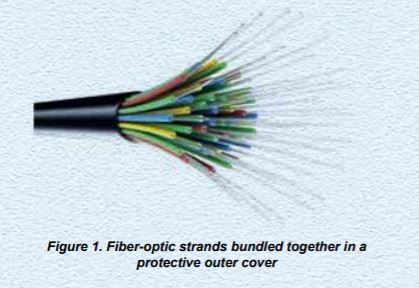
In network video, copper cables (twisted-pair) have traditionally been used to connect the camera with the control center or the recording unit. In long-range surveillance installations, however, fiber-optic cabling can be a more cost-efficient alternative. Even though it is more expensive per meter, the superior transmission characteristics of a fiber-optic cable reduces the need for expensive signal amplifiers along the way, and makes it possible to transmit more data at a time. This white paper explains what fiber-optic communication is and how it can be used in network video. It also outlines how the Axis product line is designed to support fiber-optic communication. What is fiber-optic communication? In fiber-optic communication, light signals are transmitted through glass fibers. Light reflections within a strand of glass The fibers inside a fiber-optic cable are flexible, transparent strands of very pure glass or plastic. The core of a fiber is radially enclosed by another transparent material with slightly different characteristics, the cladding. This structure makes the fiber function as a ‘light pipe,’ so that light that enters the core at one end can emerge from the other end, even when the fiber is bent or twisted. For stability and protection, the core and cladding are normally enclosed by several protective coatings, as seen in Figure 1. Whenever the light inside the fiber hits the boundary between the core and the cladding, the light will bounce in a controlled manner and essentially continue forward, bouncing back and forth between the ‘walls’ (see Figure 2). It is as if the cladding was lined with mirrors. Hardly any light is absorbed by the cladding, which is why the fiber can carry the light across great distances with nearly preserved intensity. Single-mode and multi-mode fibers Fibers come in two types, suitable for different light sources and different transmission distances. Single-mode fibers have thin cores, about 8μm in diameter, and transmit infrared laser light (wavelength = 1,300 to 1,550nm). They are usually made of glass. Single-mode fibers support only one propagation path, or mode, and are used for communication links longer than 1km. They are typically used in10-/100Mbit/s network connections spread out over extended areas. Multi-mode fibers have a larger core diameter, typically 50-100μm, and transmit infrared LED (light emitting diode) light (wavelength = 850 to 1,300nm). They are usually made of plastic-clad silica or plastic. Multi-mode fibers support many propagation paths, or modes. They are used for short-distance communication links (up to 5km), and for applications where high power must be transmitted. Duplex and simplex transmission You can transmit either two signals (full duplex) or just one signal (simplex) through one fiber-optic strand. With duplex transmission, the transmitted signal and the received signal travel through the same strand. This means that in each fiber-optic strand there are two rays of light, traveling in opposite directions at the same time (see top part of Figure 4). In simplex transmission, there is only one ray of light traveling through each fiber strand. The received signal must then travel through a second strand (see lower part of Figure 4). Duplex transmission requires only half the number of fiber strands to transmit the same amount of data compared with simplex transmission.   Why use fiber-optic communication? The most common purposes of using fiber-optic connections are illumination, communication, and medical or industrial endoscopy where many fibers are bundled together to transmit an image. For telecommunications such as network video, the light traveling through the fiber is, of course, not just random light, but rather data streams encoded as light signals. Fiber-optic connections have been used for data transmission since the 1970s, but the techniques for both transmitting of the data and for manufacturing of the fiber-optic equipment have advanced drastically over the years. Long-range installations at low cost As we have seen, a fiber-optic cable can carry a signal across great distances with only very low attenuation. For a twisted-pair copper cable to be able to carry a signal across the same distance, the signal would have to be amplified at several instances along the way. This could be done using so-called repeaters, but these are rather costly. This is why fiber-optic cables can be a cost-efficient solution at long distances, even though they are more expensive per meter than copper cables. The maximum length of a fiber-optic cable ranges from 10km to 70km, depending on the type of fiber. The maximum length of a twisted-pair copper cable is 100m. Depending on the type of fiber-optic cables used, data rates can range up to 10,000Mbit/s. The cost-efficiency of fiber-optic installations is also due to the slenderness of the fibers. This means that more fibers can be bundled into a given-diameter cable. This allows more data to go over the same cable, and makes fiber-optic cables ideal for carrying digital information. No electrical interference Transmission through twisted-pair copper cables is susceptible to electromagnetic interference (EMI). This is when external electromagnetic fields affect the current in the cable, and may cause substantial problems with data loss. Fiber-optic cables, however, are immune to such interference. Also, the signal in one fiber does not interfere with those in other fibers in the same cable. Because the signal in a fiber-optic cable does not give rise to any electromagnetic field outside of the fiber, there is no signal leakage. This means that the transmission cannot be tapped, or accessed by unauthorized people. Fiber-optic communication in network video Axis offers a range of network video products that support fiber-optic communication. The key component in connecting a surveillance system with a fiber-optic cable is the SFP (small form factor pluggable) module. Other components are media converters and network cameras with integrated SFP slots. Overview of fiber-based network video system Figure 5 shows an example of a video surveillance system where a fiber-optic cable connects the sending side with the receiving side. Sending side   On the sending side of the system is a network camera (in this case AXIS Q3615-VE network camera) which provides video data to be transmitted. The…

Read More

Wisenet7 Cameras Acquired International Cybersecurity Certification ‘UL CAP’

  Global security company Hanwha Techwin has recently acquired the UL CAP (Cybersecurity Assurance Program) certification, an international cybersecurity standards, for its newly launched network video surveillance cameras equipped Wisenet7 SoC (System on Chip). UL CAP is a certification program by UL, a leading global safety science company with over 127 years of history. The program assesses network-connectable products for the potential cybersecurity issues such as security vulnerabilities of system software and the security level against security threats. Since the program evaluates not only products but also relevant software development processes and risk management capabilities, only a handful of manufacturers in the industry have received the certification so far. Hanwha Techwin is the only security company in Korea to acquire the certification Hanwha Techwin obtained the certification by meeting all of UL’s thorough evaluation criteria such as penetration test, access control, encryption, and software update. Although it is generally known that acquiring the UL CAP certification would take 8 to 10 months, it took only around three months for Hanwha Techwin. The company had been constantly working on improving its capabilities by creating in-house cybersecurity team ‘S-CERT’ to establish standardized software development processes even before applying for the program. Hanwha Techwin’s own developed Wisenet7 cameras have embedded security solutions that can keep video data secure through all stages of product design, manufacturing and actual use. As the popularity of network security cameras continues to rise, the importance of cybersecurity is also growing worldwide. In this backdrop, Hanwha Techwin believes that its acquiring the UL CAP certification will serve as an opportunity to reaffirm its position as a leader in the global market. As the program evaluates the overall system relevant to cybersecurity, the certification will help with compliance to global security policies such as the EU’s ‘General Data Protection Regulation – GDPR.’ In global markets such as the US, Europe and the Middle East, bidding for projects led by governments or organizations mostly requires the UL CAP certification. In the private sector, many customers would also check the acquisition of the certification when building video surveillance systems for sensitive facilities such as laboratories and banks. “By winning the UL CAP certification, we can now more actively promote our cybersecurity features as one of Hanwha Techwin’s strengths,” said the source at Hanwha Techwin, “We will provide the best cybersecurity features in our future products that customers can trust.”  

Read More

Vanderbilt add QR500 Reader to in-depth Access Control Portfolio

Vanderbilt recently announced the addition of ZKTeco’s QR500 readers to their access control portfolio. The QR500 reader is a new generation of intelligent access control readers. It has fast scanning speeds, high recognition rates, high compatibility, and importantly, it can be connected to ACT365 Access Control Units. “Access control QR readers offer a convenient and cost-effective method of maintaining order and flow,” began Paul McCarthy, Product Manager at Vanderbilt, “Moreover, they have proven to be easy to use, not only for system users but also for end-users. Now Vanderbilt is adding another layer to their offering by bringing the ACT365 compatible QR500 reader into our already enhanced access control portfolio.” Simple & effective QR codes are indeed known for their simplicity and effectiveness. Here’s how they work. The QR500 reader has a recognition distance of more than 50mm for QR codes, which can be generated for visitors in ACT365 and sent to them via email. So, when a user is sent a QR code from ACT365 to their smartphone, all they have to do is simply scan this QR code at a QR500 reader, and voila, they are granted access, simple as! McCarthy explained the working mechanics of the solution in more detail, “After scanning the QR code, the reader sends the unique data captured in the code to the service provider. If the data in the code links up with the QR code reader’s data, it grants access to the individual who scanned the code.” QR codes are generated directly from the ACT365 cardholder page with validity periods. This allows for a more secure and controlled environment as only a system operator can create the temporary QR Code in ACT365 and grant access to specified individuals. A Real Value-Add   Overall, think it is fair to say that during this pandemic, access control QR readers have proven their effectiveness and have become a real value-add,” continued McCarthy, “As the user is using a mobile device, the system is on hand and avoids physical contact with any devices. And of course, the issue of QR codes is electronic, thus avoiding one to one interaction with security operators. QR codes can also apply to staff as it means they can enter and exit the building to begin their work shifts in a hands-free way. The QR500 reader is a Wiegand enabled device, simple to install, and is perfect for visitor management multiple environments. These include hotels, B&Bs, sporting facilities, VIP shopping appointments, health clinic appointments, or delivery services.  

Read More

INTERPOL Report Highlights Impact of COVID-19 on Child Sexual Abuse

Under-reporting of child sexual abuse and increased sharing of child exploitation material through peer-topeer networks are among the effects of the COVID-19 pandemic according to an INTERPOL assessment. The report highlights the trends and threats in the current context compared to pre-pandemic measures, what impact these are having in the short-term, and what changes are likely to happen as COVID-19 restrictions are changed. “What the report shows is that we are seeing just the tip of a growing iceberg in terms of online child exploitation material,” said INTERPOL Secretary General Jürgen Stock, “It is important to remember that each photo and video of child sexual abuse is evidence of a real crime involving real children. Each time an image is viewed those children are re-victimized and their very real suffering is prolonged even further.” “We must do more to make sure that the officers investigating these horrific crimes have the support they need, which is where cooperation through INTERPOL plays a vital role in fighting this transnational crime,” added the INTERPOL Chief. Key environmental, social and economic factor changes due to COVID-19 which have impacted child sexual exploitation and abuse (CSEA) across the world include: Closure of schools and subsequent movement to virtual learning environments;  Increased time children spend online for entertainment, social and educational purposes;  Restriction of international travel and the repatriation of foreign nationals;  Limited access to community support services, child care and educational personnel who often play a key role in detecting and reporting cases of child sexual exploitation. With this increase in obstacles for victims to report offences or access support, there are concerns that some offending may never be reported after a substantial delay. Forums on the Darknet Other findings include increased discussions on CSEA forums on the Darknet. Sex offenders with the technical expertise to administrate forums have had more time to create new ones, whilst users have benefited from additional time online to organize their CSEA collections. Live-streaming of child sexual exploitation for payment has seen an increase in recent years, with demand likely to further increase due to travel restrictions. The supply of livestreamed CSEA material is also likely to rise as victims may be locked down with facilitators, and economic hardship increases. In areas severely affected by COVID-19, situations where parents are hospitalized and children are placed under others’ care or are uncared for, are also likely to increase the risk of abuse. An increase in self-generated material distributed on the clear net is also highlighted in the report. Delayed reporting of abuse The COVID-19 impact on policing includes: A reduction or delay in reporting of CSEA offences as normal channels are affected; A reduction in the use of the INTERPOL International Child Sexual Exploitation database by member countries;  A reduction in specialized human resources, usually addressing CSEA investigations, and diverted to other activities in relation to the pandemic; Changes in processes and efficiency due to technical constraints of working-from-home which has impacted both law enforcement and electronic service providers reporting cases to law enforcement;  Court closures leading to delays in processing cases. Recommendations for law enforcement to address the additional threats presented by the COVID-19 pandemic include: Create prevention and awareness campaigns for victims and guardians relating to the risk of CSEA online including through gaming, messaging and social media platforms. Conduct incident mapping exercises across schools to identify emerging issues relating to CSEA, for example ‘zoom bombing’ incidents.  Ensure hotlines remain open and staffed and consider additional ways for offences to be flagged such as free texting services, integrated reporting channels for children through gaming, social media and messaging services. Regularly share information related to online CSEA with INTERPOL which can support and coordinate investigations across different jurisdictions.  

Read More

The Rise of IP-based Video Surveillance

  Open video management systems (VMS) is the preferred choice today for video surveillance as they are independent of proprietorship and closed solutions. This has led to VMS platforms integrating feature-rich software that provides a high level of control and functionality designed to make end users’ lives easier. IP-based cameras record the footages and share it with a network that is connected via the internet. IP cameras are the outputs of the Internet of Things (IoT) revolution. Understanding IP-cameras IP is internet protocol and hence IP-devices can be connected to any network of the IoT. Any electronic device that is connected to the IoT network, which can connect with a server and exchange information in an internet network, has its own IP address. IP-cameras are fundamentally a digital video camera that can receive and send data via the Internet. IP-based cameras are not dependable on local recordings but require a LAN-connection to transmit and process data. Advantages of IP-based cameras I P-based surveillance comes with scalability, flexibility and cost-effectiveness. These qualities are crucial for its application in a wide range of industries. With an IP-based video surveillance setup, users can monitor and record video remotely using an IP network as the system’s backbone. IP video installations can then be deployed in any environment, and offer many benefits previously unavailable with analog CCTV systems. Remote monitoring An IP surveillance system makes it possible for security monitoring teams to remotely view live camera feeds from any computer, mobile or handheld device with internet access. Additionally, the recorded surveillance footage can be stored at remote locations. Scalability IP-based cameras do not require cables as it is not connected to any physical computer device to function. Hence, it is easier to expand the network of surveillance in any location or even multi-locations, together in the same network. Storage capabilities Since network cameras capture digital video images, large amounts of footage can be stored on servers, where archived video can be quickly accessed and searched. In comparison to analog systems where video was stored on VHS cassette tapes, this is much more efficient. Application and features of IP-based surveillance I P-based surveillance cameras are a part of the VMS that serves the purpose of live viewing, recording, and retrieving of video footage. IP cameras support advanced motion detection, audio recording, and integration with other security systems – alarms, automated licence plate reading, facial recognition technologies etc, can auto-generate alerts itself and can also be used as a video analytics device for edge computing. For instance, IP-based camera can fire an alarm, if an individual is seen to leave a package or luggage in a public place like in a busy lobby, in the bus stop or inside the metro. With its sophisticated features, IP-based cameras have been helpful in solving several issues that are crucial in certain industries. For example, in the retail industry, there have been several concerns about mischievous employees indulging in widespread fraudulent money transactions that has led to the leakage of large amount of revenue annually. IP-based video surveillance system here has been successful in solving this, by electronically linking all transactions together with video recordings of the actions. All the information is stored in a local database so the retailer can see all the events of any given transaction and conduct a search on different parameters. Integration with other surveillance technology The open platform VMS can integrate with other security systems such as automated license plate recognition (ALPR) and facial recognition systems, and a host of many others. The integrated systems provide real-time notifications and add a searchable database. It can be easily integrated with an IP video surveillance security system. Automated license plate recognition Analytics embedded into IP cameras can capture the image of a licence plate and convert the image to digitized computer data that can be compared to a database. This system can be broken down into four major components – image collection, image analysis, image and data storage and data transmission. These aides in enhancing security, enforce toll collection, compare license plates to a list, provide parking revenue management, and provide access control, and more. IP-based door access control I P camera system can be connected to doors at the entrance of commercial buildings and workplaces, where access to individuals can be controlled via VMS. IP-based door access systems provide better security and ease of management at a much lower cost than earlier technologies as unlike, traditional door access systems. IP access nullifies the need for expensive control panels, hardware connections, and separate administrative maintenance. These devices use Power-over-Ethernet (PoE), meaning it is powered by the network switch via the Ethernet cable, instead of the building power, providing a more flexible and scalable security system installation that does not depend on expensive hardware fittings and elaborate wiring connection. IP-based door access can use facial recognition tools and help in maximizing the safety and security in different security-crucial locations such as hospitals, schools, government, military, and other organizations. The camera will be able to read the face of the individual and after matching the data with the server, it will allow entry only to authorised individuals. IP cameras can also be connected to audio or video intercoms that are network-attached providing a completely integrated solution for the manual unlock of doors. Long-range and night vision cameras Dual sensor IP cameras with long-range cameras with PTZ functions can work at any lighting condition and can also function as thermal imaging and night-vision cameras. These cameras can detect, make visible objects that are miles away and in total darkness. There are also PTZ cameras with built-in infrared (IR) illumination that can be used to see about 600ft away. These IP cameras are used by the military to view borders, military operations, and rocket launches. Conclusion As IP-based surveillance is getting a lot smarter, the video surveillance as a service (VSaaS) market is also growing by USD 6.16 billion during the period of 2020- 2024. This will undeniably see…

Read More

See in the Dark with Varied Imaging Technologies

  The need for crisp and clear video images in low-light environments always exists. The data confirms it – when committing crimes like burglary and vehicle theft, criminals definitely prefer to hide under the cover of darkness.1 So to both prevent and tackle crime, it’s vital to have security cameras that can record quality, discernible footage in a variety of light conditions, especially in near total darkness. For years, improvements in sensor technology and algorithms to enhance the image have helped deliver better surveillance in low-light conditions. Besides IR illumination, other availabilities include the addition of visible light in the vicinity of the field of view, the use of image intensifiers, low-light lenses, and thermal cameras. In this blog, we talk you through different types of cameras – including some of the latest Prama Hikvision technologies – to help you understand the workarounds for low-light and pitch-black monitoring. See in low light Low light means anything down to 0.002 Lux – that’s the same conditions as a moonless, clear night. Many surveillance cameras built today for low-light performance can deliver usable and high-quality images by applying better optics and advanced sensors. To put it simply, the lens used thereby gets as much light as possible onto the image sensor. In this way, Hikvision has two options. The first is the Prama Hikvision ColorVu cameras, which are ideal for monitoring at a closer range. With an F1.0 super aperture and an advanced sensor, these intelligent eyes pull in four times the light of a conventional camera, for daylight-like color images in low-light conditions. Should light levels fall to zero, the built-in warm supplemental lighting ensures the camera can still capture vivid color images within up-to 40 meters range. If you need low-light security monitoring over larger distances, then Prama Hikvision’s DarkFighter camera range are ideal. Featuring a large-sized progressive scan CMOS sensor and a DarkEye SLA lens with a super large F0.95 aperture, DarkFighter cameras can deliver excellent HD high color images down to 0.002 Lux. The camera’s increased field of view allows security operatives to pan around and cover a large area of attention, particularly ideal for city streets monitoring, and open environments like ports, squares, parking lots etc.     See in total darkness When there is zero ambient light, there is one industry-standard option – Infra-red cameras. Security camera manufacturers have created true day/ night cameras that add IR illuminators to capture monochrome images when the light level falls to zero lux. Specifically, IR illuminators emit infrared light that is reflected by objects and is further collected by the camera sensor to produce a sharp, black and white image. Today, the vast majority of cameras on the market come with built-in IR illuminators. But if you want to take things a step further, it’s worth considering the Prama Hikvision DarkFighterX camera range. Based on the human eye, these cameras use a single lens featuring two sensors – one for IR imaging – which ensures that video footage is bright and sharp, and the other for visible light – which allows video images to be reproduced in full and vivid color. Both signals work together to create a single, bright, full-color image in light conditions as low as 0.0005 Lux. In zero light, the cameras enable mixed supplemental lighting to render color images. See in all weather conditions But what if it’s pitch black, and your view is obscured by rain, fog or even thick foliage? If you’re trying to see in the most challenging conditions, there’s one trusty option – thermal cameras.   Rather than using light, thermal cameras measure heat – or thermal radiation – to generate images from their field of view. In this way, the rendered image is far less affected by rain, snow, fog, smog or indeed anything that can obscure light. The way thermal cameras ‘see’ allows them to pick up movements with high accuracy, giving security operatives eyes on objects, vehicles and intruders. Combined with Video Content Analysis (VCA) technology, thermal cameras can offer a range of perimeter security solutions such as line-crossing detection and intrusion detection. This means they can easily detect intruders moving through bushes or under the cover of complete darkness. Prama Hikvision offers a range of cutting-edge thermal cameras including those that deliver the best of both worlds – bi-spectrum cameras, which combine thermal and optical images to create a hybrid image, making it easier to find hidden objects and document unusual events.  

Read More