
securitylinkindia

Smiths Detection to Transform Security Screening at Munich Airport with 60 3D Cabin Bag Scanners

Over 30 million passengers will soon pass through security in a third of the time Smiths Detection, a global company in threat detection and security screening technologies, announced that it will supply Munich Airport with 60 HI-SCAN 6040 CTiX carry-on baggage scanners, which should see more than 30 million annual passengers speed through security screening in a third of the time. The ECAC EDS CB C3 approved cabin baggage screening system harnesses the power of computed tomography (CT) X-ray scanning to produce 3D images alongside Smiths Detection’s industry leading digital expertise, therefore eliminating the need to remove electronic devices, liquids and gels from hand luggage. The technology also reduces the numbers of trays that need to be returned, which ultimately speeds up the security screening process and improves passenger and security operator experience. With over 1000 units sold globally, the HI-SCAN 6040 CTiX is the most energy efficient scanner of its type worldwide, featuring low noise levels, zero vibration, and a 30% higher belt speed than other CT X-ray scanners – helping to promote a calmer checkpoint. Director Sales Germany, Markus Rossmeisl, Smiths Detection said, “We are delighted to be partnering with Munich Airport to supply our industry leading CT checkpoint scanner. Providing an improved security screening experience, the HI-SCAN 6040 CTiX will give passengers more time to relax prior to their flight. At the same time, the systems have been able to improve security and reduce burden on operators, creating a better, faster, safer experience for all.” The HI-SCAN 6040 CTiX is an advanced screening system for carry-on baggage using CT (Computed Tomography) X-ray to deliver a high level of explosive detection and can allow for cabin baggage to be scanned without removing electronic devices and liquids – expediting the screening process. ECAC EDS CB C3 approval and featured on the TSA’s CPSS QPL & APL for base, medium and large configuration checkpoint CT checkpoint screening systems. The HI-SCAN 6040 CTiX is the most energy efficient checkpoint CT on the market, helping to lower the total cost of ownership and reduce customer energy demands compared to similar products. Excluding 2020-21 numbers – Based on 2022 figures https://www.munichairport.com/press-passenger-volume-grows-sharply-in-2022-16016644#. Based on trial results from Paris Orly – Aéroports français: l’obligation de sortir liquides et ordinateurs des bagages cabine bientôt terminée? (bfmtv.com)  

Read More

‘People Are Craving Connection’ – Gallagher Security Observes Shift in Security Industry Events

As 2023 nears its close, award-winning global security manufacturer, Gallagher Security, is sharing key observations from some of the year’s biggest industry events; chief among them, the rising importance of community building these events facilitate. Executive Vice President – the Americas, Scott Elliott, who has been attending industry events such as ISC West, GSX, and, most recently, the Access Control Summit (ACS) throughout his 20-year career, attributes the growing need for connection to the changing digital frontier, which he calls ‘a seismic shift reshaping the industry’s foundational elements.’ Scott elaborated, “The digital transformation of the security industry is a multifaceted journey involving the recalibration of people, processes, products, and systems. It’s about fostering a culture of continuous learning, innovation, and agility, and the industry must embrace this transformation, not as a choice, but as a necessity to navigate the challenges of the future. “The events I attended this year made it abundantly clear that people need the opportunity to gather and learn from each other to facilitate that growth. I saw it first-hand at GSX and in the thought-provoking conversations at ACS in September, where I shared some of these observations about the impact this digital transformation is having on the people in our industry. The metamorphosis we’re undergoing is not just a technological one; it’s about reimagining and reengineering the entire security ecosystem to be more resilient, agile, and innovative, and our industry events can be a key driver of that movement.” Melissa Vidakovic, Director of Marketing – the Americas, said that the emotional impact from the transformation is already underway, “If what I witnessed at Gallagher’s booth at GSX is any in dication, people are craving connection. We prepared our booth to showcase Gallagher’s products and solutions, but it became so much more than that and felt like a hub for sharing and networking. For example, we hosted a happy hour at the end of the second day and about 50 people stuck around so long after it ended that we were the last to leave the floor. We knew it would draw people in, but the power of it took me by surprise – I’m still hearing from people who joined us, and the feedback has been overwhelmingly positive.” As the digital transformation continues to upend the security industry, gathering as a community to share ideas will become a critical component for expediting and navigating the way forward. “Innovation doesn’t happen in a vacuum,” Scott concluded, “Each new technology, feature, and tool introduced to the market propels the entire security industry forward. We observe, we learn, and then we turn inward to our own products and services and ask ourselves ‘how can we do better?’ Those who recognize that sharing holds this power are the true leaders, and their willingness to step forward challenges the industry at large to rise to the occasion.” A technology leader in integrated access control, intrusion detection, and perimeter protection, Gallagher Security’s solutions protect what matters most within the highest levels of national and local government, military, commercial, industrial, healthcare, transportation, academic organizations, and small businesses in more than 130 countries.  

Read More

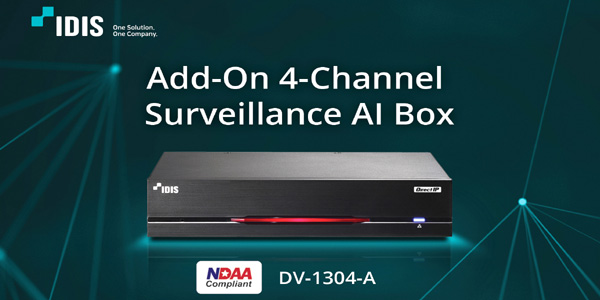
IDIS AI Box For Surveillance Comes Top in 2023 Benchmark Innovation Award

IDIS DV-1304-A analytics solution wins readers’ vote of approval An advanced plug-in AI video analytics device from IDIS has been voted top in the 2023 Benchmark Innovation Awards. The Add On AI Box for Surveillance (DV-1304-A) from South Korea’s leading in-country video manufacturer, makes it easy for any IDIS video system to be upgraded with a range of advanced analytics capabilities – and it’s an affordable yet scalable solution with no upfront or ongoing license fees. The NDAA-compliant DV-1304-A is a simple and affordable 4-channel add-on device that provides users with all the benefits of AI-video, eliminating the need for either analytics software or the deployment of edge AI cameras. The box allows highly accurate analysis from more angles than ever before from just a single camera. Pre-installed with the IDIS Deep Learning Engine, the AI in the Box is designed to be simply connected to IDIS NVRs for an instant system upgrade. And the technology is easily scalable; leveraging DirectIP® plug-and-play technology, users can deploy additional boxes to expand their systems to encompass up to 32-streams. With instant connection, users benefit from highly accurate analytics including object detection, including people, cars, and bikes, along with line crossing, loitering detection, and face detection, with the additional benefit of faster, and highly efficient event search. “We are delighted that IDIS’s AI video analytics innovations continue to make such a positive impact on the market. Winning the readers’ vote in the Benchmark 2023 awards is further a proof that our commitment to affordable, user-focused solutions is what the market most wants” James Min Managing Director, IDIS Europe The highly respected annual Benchmark Innovation Awards recognise the industry’s commitment to progress and innovation by highlighting the best product launches over the past year. IDIS is a global security company that designs, develops, manufactures, and delivers surveillance solutions for a wide range of commercial and public sector markets. As the leading video surveillance manufacturer in South Korea, headquartered just outside of Seoul and operating across 50 countries and 100+ strategic partners, IDIS is a world-leading total solution provider with more than two million recorders installed worldwide and 17 million cameras utilizing IDIS technology.  

Read More

Advantages of Bullet Camera with ColorVu Technology in Low Light Scenarios

In the numerous variety of Analog HD CCTV and IP Video Security Cameras that are available in the market, the end-user is often spoilt for choice. The advantages of bullet cameras stand out for various application scenarios. The nomenclature of this type of camera is derived from the small and sleek cylindrical size of a bullet. These cameras are specially designed for outdoor and indoor security applications. USPs of Bullet CCTV Camera The small size of the camera helps the cause of video security monitoring as it is easy to conceal. They come in moderate sizes and deliver good performance. They come with fixed focus and varifocal lenses. Some of these Bullet cameras have IR capability for applications at night or low light scenarios. They are applicable in both indoor and outdoor locations as per the required specifications. The latest bullet cameras can be installed with IP-based security systems. Advantages The key advantages of Bullet CCTV cameras are their wide range and ease of installation. Bullet CCTV cameras offer a longer range view, which makes them ideal for monitoring large areas like office and factory backyards and parking spaces. These cameras are easy to install, and due to the shape of the bullet camera, one can fit bigger lenses to its body. They are perfect for indoor and outdoor applications. These cameras are weatherproof and often embedded along with night vision capabilities. The Bullet CCTV cameras can be installed in indoor and outdoor settings. They are often mounted towards the side of the wall. Bullet cameras are easy to install compared to other variety of CCTV Cameras. The can be easily positioned to the desired area as per the requirement. It is comparatively easy to mount and install a bullet camera than other cameras. Camera Range The unique cylindrical shape of Bullet CCTV camera helps to accommodate a larger lens. These type of cameras are preferred choice where a long range is required. Light While light is usually a key consideration with any camera, the ColorVu technology ensures that the Hikvision bullet cameras can perform in low light situations. Points to Ponder In addition, there are some special features that are critical to bullet camera that one should also consider. Those essential factors are wireless versus wired, Infrared (IR) technology, and night vision. Hikvision Bullet Cameras with ColorVu Technology Hikvision ColorVu technology offers colour images in video feed 24×7 Hikvision ColorVu cameras are fitted with F1.0 advanced lenses and high performance sensors. The super aperture of F1.0 lens captures more light to produce brighter images. This advanced sensor technology improves the optimum us of light in a given environment. Hikvision bullet camera with ColorVu Technology is a smart investment to bolster the overall security management in the residential or commercial premises. The latest Hikvision smart bullet camera is a smart way to protect the property and premises. It is the best way to keep the family and residential property safe. The latest Hikvision ColorVu bullet cameras come in two variants, Hikvision ColorVu Varifocal bullet camera (DS-2CD3656G2T-IZS) and Hikvision ColorVu Fixed Bullet Camera (DS2CD3027G0E-LUF). Hikvision ColorVu Fixed Bullet Camera (DS-2CD3027G0E-LUF) comes with high quality imaging and 4MP resolution. It has an excellent low-light performance. It also has an efficient H. 265+ compression technology. The cameras is water and dust resistant (IP67 ratings). It offers 24/7 colourful images in vivid colours in any extreme weather condition. Hikvision ColorVu Varifocal Bullet Camera (DS-2CD3656G2T-IZS) comes with Varifocal Lens. These Varifocal cameras adapt to various scenarios by changing the camera’s focal length. Hikvision’s ColorVu Varifocal bullet cameras are designed with fixed F1.0 large aperture. This enables image brightness while the camera zooms in or out. These cameras help monitor the property day or night in mission critical mode and help the security management in every possible way.  

Read More

TDSi Launches Updated GARDiS Web Embedded Access Control Unit

TDSI announced an update to their GARDiS Web Embedded Access Control System, which now includes up to 12 Doors as standard thanks to a firmware update. Firmware version 3.9 now enables the inclusion of 12 doors (up from eight previously) without the need for a license dongle, while only one dongle is now required to take the system from 12 doors up to the control unit’s maximum of 44 doors. This new, improved configuration is applicable to all new GARDiS 1, 2 and 4 Door Web Embedded Master Controllers supplied both with and without Power Supply Units: GARDiS 1 Door Web Embedded Master Controller – 5002-6001. GARDiS 2 Door Web Embedded Master Controller – 5002-6002. GARDiS 4 Door Web Embedded Master Controller – 5002-6004. TDSi’s Managing Director John Davies commented, “The addition of four extra doors to our off-the-shelf master ACU’s gives significantly more scope for small businesses to set up the secure access control they need, at an all-in initial cost. These additions make it even easier to install and configure secure access control for any small to medium sized facilities looking for a simple, clean setup without the need for any dedicated computer or server hardware. Removing the additional 20 door dongle also makes system configuration easier to understand and enables the addition of extra doors, up to the system maximum of 44, through a single, one-off purchase.” John added, “This streamlined approach to the product range and setup process offers better value at the initial one to 12 door level, where this product is perfectly positioned to offer a robust access control solution, which is simple to set up and administer, all at a low cost-per-door.” The GARDiS Web Embedded Access Control Unit is a user-friendly solution designed to provide seamless and secure access control management. The innovative unit combines the power of an embedded server (removing the requirement for a dedicated PC) with robust access control features, allowing users to conveniently control and monitor access. With its web-embedded interface, administrators can easily configure and manage user permissions, schedules, and event logs, streamlining the access control process. Its scalability and flexibility make it perfect for smaller single site systems where up to 5,000 credentials are required. The updated 12 Door firmware upgrade is included on all new GARDiS 1, 2 and 4 Door Web Embedded Master Access Control Units and is available now.  

Read More

UVeye Partners with Amazon to Automate Vehicle Inspection Tasks with AI

The AI system will be rolled out across hundreds of Amazon delivery stations in the U.S., Canada and Europe UVeye, a pioneer in the development of automated vehicle inspection systems, and Amazon announced the deployment of AVI (Automated Vehicle Inspection), an AI-powered system that automates most of the daily inspection process of delivery vehicles. AVI scans for and detects automotive issues, improving fleet maintenance and reducing downtime for Delivery Service Partners (DSPs), as well as improving safety for their drivers and the communities they serve. AVI will be deployed in Amazon delivery stations in the U.S., Canada, Germany and the U.K. The system – which scans a vehicle in seconds as it drives through a tunnel of cameras and sensors – has been piloted at select Amazon delivery stations in the U.S. A study of the data shows that AVI finds more defects in hard-toinspect places such as damage to the vehicle undercarriage, or nails in the tire thread (35% of all issues stem from tires) than when that part of the inspection process was done manually. By automating part of the vehicle inspection process using computer vision and machine learning, AVI makes inspections faster, more accurate, systematic and objective. The data analysis also revealed that within weeks, the number of vehicle groundings dropped with improved maintenance of vehicles. “Three years ago, we set out to adapt our technology to the particular needs of Amazon,” said Amir Hever, Co-founder and CEO of UVeye, “Each new feature and improvement has brought us closer to where we are today and we are so proud of the system, which is now being scaled to administer tens of millions of inspections a year.” “After a successful pilot program, we’re looking forward to the deployment of AVI,” said Tom Chempananical, Global Fleet Director, Amazon Logistics, “There are over 100,000 Amazon-branded delivery vehicles on the road, bringing 20 million packages to our customers every day. With AVI, we can automate most of the inspection process at scale, to help reduce time spent on this task by DSPs and Delivery Associates, get packages to customers faster, while improving safety on the road.” UVeye is the world’s leading fully automated suite of vehicle inspection systems. The company’s AI-powered drive-thru systems can detect external or mechanical flaws and identify anomalies, modifications, or foreign objects under and around a vehicle within seconds. Uveye is installed at hundreds of dealerships, auction & fleet sites across the United States and around the world. In May 2023, the company announced a $100M series D, bringing its total funding to $200M. UVeye is backed by, and partners with, some of the largest car manufacturers in America.  

Read More

Cyberwar – The Game Changer: Demystifying India’s Geopolitical Tussle with its Neighbours and its Cyber Effects

Garima Goswamy, Co-Founder & CEO, DridhG Security International Pvt. Ltd. Cyber Attacks As technology has become an integral part of everyone’s life, threats have moved from the physical space to the virtual space. Within a week in August 2023, the websites of two educational institutes in NOIDA were hacked. We are all aware that in November 2022, Delhi’s All India Institute of Medical Sciences (AIIMS) faced a ransomware attack. Such an attack denies a user or an organization to access its files. In this attack, outpatient and research data were wiped out from AIIMS’ primary and back up servers. The database of the Unique Identification Authority of India (UIDAI) too suffered from intrusion from hacking groups in June and July 2021. Forget singular institutes, the city of Mumbai faced a blackout in October 2020 for 10 to 12 hours. It impacted business continuity, halted local transport, and even was responsible to shut down the stock market. It, too, is believed to be a possible result of a cyber-attack. One thing all these attacks have in common is that these were apparently orchestrated by foreign national cyber criminals, who might be sponsored by India’s neighbouring nation states including China, Pakistan, Bangladesh, to name a few. Associated Geopolitical Tussle Between India & Its Neighbours Just as terrorists from other nations, who may or may not have the backing of their countries, there is an army of cyber terrorists whose mission is to attack India. The ban of several Chinese apps by India’s Ministry of Electronics and Information Technology since the India-Chinese face-off along the Line of Actual Control in 2020 is not a coincidence. India’s Foreign Secretary Vinay Mohan Kwatra did state that the reason to ban some Chinese applications pertaining to betting and loans was to stop the spread of misinformation, the spread of disinformation and fake information. Many might not be privy to the speculation that in April 2022, Chinese attackers strategically targeted as many as seven Indian centers in Ladakh which help in electrical dispatch and grid control near India-China border. There are reports which suggest that the cyber-attack at AIIMS was also orchestrated by the Chinese government aimed to gather data of Very Important Persons (VIPs) of India and Indian celebrities. Similarly, Chinese hackers may be behind the Unique Identification Authority of India (UIDAI) 3 attack, for as per a report, the breaches were doctored through a malware named Winnti, deployed by Chinese Advanced Persistent Threat (APT) groups, known to be state sponsored. Recorded Future, a US based cyber security company, claims that the Mumbai 2020 blackout was the work of multiple malwares deployed by another Chinese group RedEcho. While the Chinese government denies their role in these attacks, there are some foreign national groups of cyber criminals who are very vocal about their involvement of hacking India’s websites as they are motivated by political hate towards our nation. Upon hacking a school website on 10 August 2023, they identified themselves as ‘Muslim Hackers from Bangladesh’ who believe they are freedom fighters as their message read “When liberty is at risk, expect us.” These might be rogue elements from Bangladesh and supposedly became increasingly active since an incident when a Bhartiya Janata Party leader Nupur Sharma had allegedly made some derogatory remarks against the Prophet Muhammad. These are different from cyber criminals who engage in ransomware attacks which strategically attack another nation’s critical infrastructure. Hacktivists are mainly motivated by religion and politics and want to publicize themselves and deface websites to show the loopholes in the targeted country’s cyber security. “Just as terrorists from other nations, who may or may not have the backing of their countries, there is an army of cyber terrorists whose mission is to attack India. The ban of several Chinese apps by India’s Ministry of Electronics and Information Technology since the IndiaChinese face-off along the Line of Actual Control in 2020 is not a coincidence. India’s Foreign Secretary Vinay Mohan Kwatra did state that the reason to ban some Chinese applications pertaining to betting and loans was to stop the spread of misinformation, the spread of disinformation and fake information” Game Changer – Geopolitical Cyberwar A prominent hacktivist group which has carried out several Distributed Denial of service (DDoS) attacks since June 2022 is called ‘Mysterious Team Bangladesh.’ Here hackers flood a website with so much of traffic that legitimate users cannot access it. As per a report published by Group IB, MTB is associated with 750 DDoS attacks and as many as 70 cases of website defacement mainly targeting India’s government, financial and transportation sectors. They also target Israel and other countries. While this particular group might not be state sponsored, an increase in activity by state sponsored hackers is related to the Russia-Ukraine conflict where at least 19 state sponsored groups from Ukraine, Russia, China, Belarus, North Korea and Iran carried out attacks in relation to the conflict. This probably influenced state sponsored groups from other countries not directly involved with the Russia-Ukraine conflict to conduct cyber espionage in their neighbouring countries. In fact, it is noteworthy that now ‘camps’ exist! There is a collaboration between India and Nepal Hacktivists on one side and Pakistan, Bangladesh, Malaysia and Indonesia on the other side. Unlike international ransomware groups which may have targets on occasional events, hacktivists work on a daily basis to weaken their adversaries. Let’s have a look at what are these online hackers from these two camps doing? Defacing websites: Indian Cyber Force defaced the website of Pakistan’s Regional Forensic Science Laboratory Swat. Distributed Denial of Service (DDoS) Attacks: Indonesian GANOSEC targeted Indian sites: kerala.gov.in; incometax.gov.in, and rajpolice. gov.in Data leaks: MTB managed to release internal login information of All India Council of Technical Education (AICTE). Indian Cyber Force and Black Dragon Sec leaked several passport and other government identification information of Pakistani nationals. What should be done? To be aware of such daily attacks is pertinent for government and organizations, so that they can prioritize investing in adequate…

Read More

Should We Be Aiming for Frictionless Access Control?

John Davies, Managing Director of TDSi The idea of ‘Frictionless Access Control’ is not a new one, but in the wake of the COVID pandemic we are all more aware of the need for security systems that operate and rapidly adapt to changing needs, without causing users unnecessary inconvenience. The key issue, and indeed balancing act, with this approach is always ensuring security continues to actually be ‘secure,’ whilst also making life easier for the authorised people that rely on it as part of their daily routine So, have we reached true Frictionless Access Control yet? We need to start by understanding what the concept actually means. What is Frictionless Access Control? Frictionless Access Control refers to a set of technologies and systems designed to provide secure access to physical spaces (such as buildings, offices, or restricted areas) with minimal or no inconvenience to authorised individuals. The goal is to streamline and simplify the process of gaining access while maintaining a high level of security. What Powers Frictionless Access Control? The obvious answer is technology advancements. Over the last decade or so there have been significant advancements in access control technologies, including biometrics (such as fingerprint and facial recognition), contactless card systems (like RFID or NFC), and smartphone-based access control credentials (such as Apple Wallet, Google Wallet, and the introduction of Ultra-Wide Band – UWB – for highly effective short-range communications). These technologies aim to reduce the friction associated with traditional access methods like keys or PINs. Implementation is of course another key factor. The effectiveness of Frictionless Access Control depends on how well it is implemented, be that the close integration of hardware and software, user training, and security protocols, all of which play a crucial role in achieving seamless and secure access control. Sector driven demands are also an important element in driving Frictionless Access Control. For example, the Proptech (property technology) sector uses technology to optimise the way people buy, sell, research, market, and manage a property. This includes looking for ways to deliver a better user experience by improving how people interact with the built environment, so effortless access control technology is very well placed to help with this. Making it Work As we have already discussed, security versus convenience is the crucial question here. There is often a trade-off between security and convenience and achieving higher levels of security may require additional authentication steps or slower access processes, which can introduce some friction. Striking the right balance between security and convenience is essential. This of course depends on the type of security deployment and the value/ vulnerability of the people and property it protects. For example, Frictionless Access Control may work well in certain situations such as corporate environments, where users are familiar with the technology and the access points are well-maintained. However, it may face challenges in more complex or high-security settings such as financial institutions, military installations, or sites with vulnerable people (such as schools and colleges). Potential Stumbling Blocks Careful consideration needs to be paid to how using a frictionless approach could compromise security. For example, biometric technologies used in Frictionless Access Control can raise concerns about privacy and data security (there are many ethical debates over the collection and storage of such personal data). Ensuring that user data is protected and used responsibly is critical and will always need to take precedence over user convenience. Cost is another key consideration. Implementing Frictionless Access Control systems can be expensive, particularly if it involves the deployment of advanced high security biometric or contactless technologies. Organisations need to weigh the cost against the benefits and available budget. The convenience of employees will not always be the prime concern. Is Frictionless Access Control Achievable? The short answer is yes, absolutely. In fact, although it was accelerated by the desire for ‘non-touch’ solutions thanks to COVID, Frictionless Access Control was already a reality well before the pandemic and is quickly transforming the way we, as users, interact with our Access Control Systems. The rapid development and integration of advanced technologies such as Facial Recognition and Smart or Mobile credentials, with traditional access methods, are evolving into seamless, touchless experiences. Although these advanced technologies are often more secure than the traditional card or fob-based credentials, true frictionless access is only as good as the speed and accuracy with which the technology can function – which in the past has often been a limiting factor to its mass adoption. Any organisation considering whether Frictionless Access Control is right for it needs to carefully assess its needs, risks, and resources when considering the adoption of these systems and must ensure that they are deployed and managed with a focus on both security and user experience. *Views expressed in the article are solely of the Author  

Read More

The Role of Insurance Companies in Enforcing Passive Fire Systems & Fire Protection

Dominic K. P., Managing Director, Blue & Gray With booming infrastructures in India, is no stranger to the devastating impacts of fire-related incidents. As urbanization progresses, the risk factors associated with fires in commercial and residential buildings increase. Insurance companies play a pivotal role, not only in providing financial coverage against such tragedies but also in actively promoting the adoption of robust fire systems. Here’s a closer look at their influential role. Mandatory Fire Insurance for Commercial Establishments Many Indian cities have made it mandatory for commercial establishments to have fire insurance. Insurance companies, recognizing the immense risks involved, stipulate that these businesses must have standard fire safety measures in place before they can be insured. This indirectly forces businesses to adopt fire systems and comply with safety norms. Implementing an effective functional Fire Protection system and Passive Fire Protection in a building can significantly contribute to obtaining better insurance premiums. Insurance companies must assess the risks associated with a property when determining premiums. The Role of a Passive Fire Protection in Reducing The Risk A well-designed Passive Fire System plays a crucial role in reducing risks and containing fires within a building. Passive fire protection systems should be an integral part of the building to reduce the risk and containment of fires within a building. Insurance companies must recognize the value of such systems in preserving life and property, and they may reward property owners with better premiums for investing in and maintaining a robust passive fire protection infrastructure. Regular inspections, maintenance, and documentation of these systems are essential to demonstrate an ongoing commitment to safety and risk mitigation. Premium Reduction as an Incentive Insurance companies should offer premium discounts to entities that go above and beyond the minimum fire safety requirements. This not only encourages businesses to invest in advanced fire protection systems but also promotes a culture of safety and preparedness. Regular Audits and Inspections To ensure compliance, insurance companies often conduct routine audits and inspections of the insured properties. These inspections verify the functionality and maintenance of fire safety equipment. Non-compliance or neglect can lead to a cancellation of the policy. Collaborations with Certified Contractors Insurance companies should collaborate with fire protection contractors, offering packages that include both fire protection installers and passive fire applicators. Such collaborations make it financially attractive for businesses and occupants to invest in quality fire safety equipment. Knowledge Dissemination & Training A robust fire system is only as effective as the people operating it. Recognizing this, many insurance companies in India should host workshops, training sessions, and awareness campaigns on fire safety. By educating the insured about the importance and proper use of fire systems, they not only reduce risks but also ensure that in the event of a fire, damage is minimized. Claims and Feedback Loop After any fire-related incident, insurance companies should engage a third-party Fire Risk auditor or Fire experts or Retired Fire Officers to conduct thorough investigations to determine the cause and assess the effectiveness of the installed fire systems. This feedback loop is vital. It helps in understanding any new risks and refining the requirements for future policies. Conclusion As India continues to grow and urbanize, the challenges posed by firerelated risks will only escalate. Insurance companies, by intertwining the need for safety with financial incentives, play a crucial role in ensuring that buildings are well-equipped to combat these threats. Their proactive approach not only safeguards assets and lives but also reinforces the importance of a culture of preparedness and a Fire-Safe India. *Views expressed in the article are solely of the Author  

Read More

VIVOTEK and IDTECK Collaborate to Enhance Access Control and Surveillance Solutions

VIVOTEK (3454-TW), the global leading IP surveillance solution provider, and IDTECK, a renowned access control systems provider, have joined forces to revolutionize security management. This collaboration with IDTECK aims to take the next step in access control systems by leveraging VIVOTEK VSS (VAST Security Station), achieving a comprehensive solution. The integration of access control systems and VSS offers three key advantages: Real-Time Video Streaming Boosts Access Control: VIVOTEK’s integration of real-time video streaming into access control systems represents a significant security advancement. It enables live video alerts for swift responses and enhances real-time monitoring. Audit-Ready Alarm Video Footage and Streamlined Evidence Gathering: In this collaboration, VIVOTEK and IDTECK introduce features that provide audit-ready alarm video footage, facilitating thorough incident reviews. Enhanced search records expedite evidence gathering, streamlining security operations. PTZ Control for Seamless Management: VIVOTEK and IDTECK’s collaboration introduces PTZ (Pan-Tilt-Zoom) control within the IDTECK system. This goes beyond live monitoring to track individuals at access points, simplifying access control for security personnel. The collaboration seamlessly integrates IDTECK’s access control system with VIVOTEK VSS, enhancing security, real-time monitoring, and incident investigation. Users can access key features like live camera viewing, monitoring, PTZ controls, presets configurations, and video searches, all integrated with the enterprise’s E-map. This provides an intuitive and comprehensive security management experience. IDTECK provides complete integrated access control solutions with access control, elevator control, visitor management, ID badging, and a unique brand of top CCTV VMS integration partners. IDTECK Access Control System SW provides the highest level of secure System Management.  

Read More